
Why the old thriller tropes no longer explain the fear readers are living with now
Modern psychological thriller books are changing because the world changed.
The old engines still exist. The missing woman. The broken detective. The secret marriage. The unreliable narrator. The charming psychopath. The last-minute twist. The hidden room. The buried confession. The killer who was closer than anyone thought.
Those devices can still work.
But they are no longer enough.
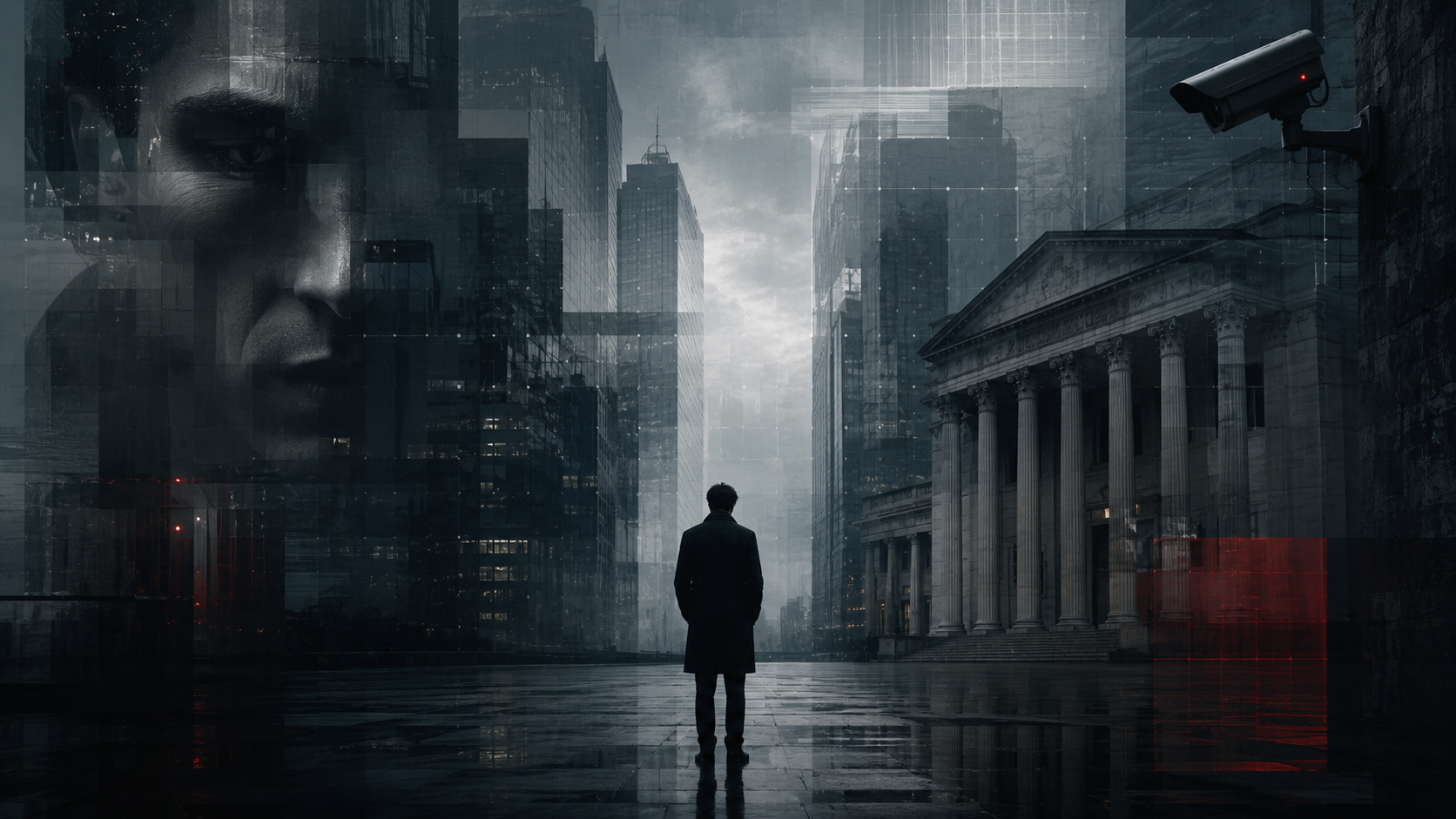
Modern Psychological Thriller Books
Today’s reader lives in a world where danger often arrives through systems that look ordinary, professional, lawful, and clean. The villain does not always need a knife, a mask, or a secret basement. Sometimes the villain has a title. A board seat. A law firm. A company policy. A court ruling. A platform rule. A quiet algorithm.
That is why modern psychological thriller books need a deeper kind of pressure.
Not just the fear of being hunted.
The fear of being managed.
Not just the fear of being lied to.
The fear that the lie has become official.
Not just the fear of one damaged mind.
The fear of a damaged reality.
The Modern Psychological Thriller Is About Pressure
A modern psychological thriller does not need to race.
Speed is not the same as pressure.
The best psychological thriller books build tension by trapping the reader inside a condition that keeps tightening. The character may not understand the trap at first. The reader may feel it before the character can name it. The danger may not announce itself as danger. It may appear as a request, an obligation, a family story, a workplace rule, a contract, a diagnosis, a debt, a silence, a legal process, or a polite sentence from someone with authority.
That is where the modern thriller lives.
In the pressure.
The old question was often:
Who did it?
The modern question is harder:
Why is everyone pretending this is normal?
Why Old Thriller Tropes Feel Smaller Now
Many traditional psychological thriller tropes were built for a different emotional world.
A secret past could once carry the whole story.
A single unreliable narrator could distort reality.
A domestic betrayal could become the engine of fear.
A final twist could make readers reconsider everything.
But readers today are surrounded by larger distortions.
They have watched corporations injure people and call it compliance.
They have watched billionaires shape public life without accountability.
They have watched institutions protect themselves before protecting human beings.
They have watched algorithms decide who is visible, employable, credible, desirable, risky, or disposable.
They have watched the law become a language ordinary people cannot afford to speak.
They have watched public truth become negotiable.
So when a thriller offers only a private secret, it can feel too small.
The private secret still matters.
But now the private secret has to live inside a larger world of power.
That is the difference.
The New Villain Is Not Always a Killer
The old thriller villain often wanted to murder, possess, expose, punish, or deceive.
The modern villain often wants something colder.
Control without consequence.
Power without admission.
Harm without visible guilt.
Reputation without morality.
Obedience without force.
The modern villain may never shout. He may never run. He may never leave fingerprints. He may never even think of himself as a villain.
He may believe he is protecting the company.
Protecting the family.
Protecting the institution.
Protecting the market.
Protecting the law.
Protecting his own beautiful version of order.
That makes him more frightening, not less.
Because a villain who believes he is civilized can do monstrous things without ever experiencing himself as monstrous.
CEO Villains and the New Shape of Dread
The CEO villain is not frightening because he is rich.
He is frightening because wealth gives his reality institutional support.
People return his calls.
Lawyers refine his language.
Employees protect his interests.
Public relations softens his violence.
Courts measure his harm in procedural terms.
Politicians court his money.
Media repeats his vocabulary.
The culture mistakes his confidence for competence.
That kind of villain does not need to hide from society.
Society has already made room for him.
That is why CEO villains belong in modern psychological thriller books. They carry the fear of a world where damage can be organized, polished, defended, and monetized.
A murderer may destroy one life in secret.
A civilized villain can destroy thousands in daylight and call it policy.
Institutions Are More Terrifying Than Haunted Houses
A haunted house is frightening because the person inside cannot leave.
An institution is frightening because the person inside may be told he is free while every meaningful exit has been closed.
The bank says no.
The court delays.
The company investigates itself.
The insurer requires another form.
The platform removes visibility.
The employer opens a file.
The family protects the wrong person.
The record is corrected in the wrong direction.
Nobody says, “You are trapped.”
They say:
We are following procedure.
That is modern dread.
Not the locked door.
The open door that leads nowhere.
Algorithmic Society and the Psychological Thriller
Modern psychological thriller books also have to face algorithmic society.
Not because technology is automatically evil.
Because judgment has been hidden inside systems ordinary people cannot question.
The algorithm sorts.
The algorithm scores.
The algorithm recommends.
The algorithm suppresses.
The algorithm identifies risk.
The algorithm creates opportunity for some and disappearance for others.
It becomes easier for institutions to say:
The system decided.
That sentence is psychologically violent because it removes the human being from the harm while preserving the harm itself.
Nobody is guilty.
The result remains.
That is perfect thriller material.
The character is not simply fighting another person. He is fighting a decision-making structure that has no face, no shame, and no moral imagination.
Captured Reality and the Modern Psychological Thriller
This is where modern psychological thriller books become Captured Reality Psychological Thrillers.
A Captured Reality Psychological Thriller is a story where the mind is under pressure because the world around it has been manipulated by power.
The danger is not only internal.
It is external, social, legal, financial, technological, institutional, and intimate.
Reality has been bent.
The character knows something is wrong, but every official surface insists the wrongness is acceptable.
The record says one thing.
The body knows another.
The law says one thing.
The conscience knows another.
The institution says one thing.
The human being knows another.
That split is the modern mindfuck.
Read more about Captured Reality Psychological Thriller
What Modern Psychological Thriller Readers Want Now
Modern psychological thriller readers do not merely want a twist.
They want recognition.
They want to feel the pressure of the world they actually live in, intensified through fiction.
They want smart danger.
They want moral tension.
They want characters who are not cartoons.
They want power to have a shape.
They want villains who feel plausible.
They want consequences that do not vanish because the final chapter needs comfort.
They want stories that understand fear is not always loud.
Sometimes fear is quiet.
A postponed decision.
A softened lie.
A locked account.
A family silence.
A corporate investigation.
A court date moved again.
A message left unanswered.
A person in authority saying, “There is nothing more we can do.”
That is the sound of modern dread.
Why Psychological Pressure Matters More Than Plot Velocity
Fast plots are easy to mistake for strong plots.
But velocity can hide emptiness.
A story can move quickly and still leave no wound.
Modern psychological thrillers do not need to sprint. They need to press. They need to create a condition the reader cannot shake.
Pressure comes from knowing something is wrong before the character can prove it.
Pressure comes from watching a person make small compromises that become impossible to reverse.
Pressure comes from seeing the trap close one polite decision at a time.
Pressure comes from understanding that the villain may win not by defeating the hero, but by making the hero appear unreasonable for resisting.
That is why the best modern psychological thriller books do not simply ask what happens next.
They ask what the reader is willing to recognize.
The Difference Between a Twist and a Revelation
A twist surprises the reader.
A revelation changes the reader’s understanding.
Modern psychological thriller books need revelations more than tricks.
A trick says:
You did not see that coming.
A revelation says:
You saw it the whole time, but you did not understand what it meant.
That is the deeper pleasure.
A good modern psychological thriller plants pressure early and lets meaning clarify slowly. The reader notices a sentence, a silence, a repeated gesture, a moral evasion, a small inconsistency in how people speak when power enters the room.
Then, later, the pattern forms.
Not because the author cheated.
Because the reader was being trained to see.
That is the kind of thriller that lasts beyond the final page.
Mark Bertrand’s Modern Psychological Thriller Books
Mark Bertrand writes Captured Reality Psychological Thrillers about control, self-deception, institutional pressure, wealth, identity, crime, consciousness, and the quiet violence practiced by civilized people.
These books are not built around easy rescue.
They are built around recognition.
They ask what happens when ordinary people are placed inside systems that have grown beyond human scale. Systems that reward obedience. Systems that protect power. Systems that call harm procedure. Systems that make responsibility dangerous.
The novels do not explain themselves on first contact.
They are designed to be read slowly, interpreted actively, and reconsidered after the final page.
They assume the reader notices what others miss.
They assume the reader understands that the most frightening thing in a psychological thriller may not be madness.
It may be order.
Three Doors Into the Work
Nirvanaing
For readers drawn to consciousness, surveillance, identity, artificial intelligence, machine pressure, and the terror of systems that think.
The Nirvanaing series moves into speculative psychological thriller territory, where reality, consciousness, and control begin to fracture under pressure.
Married Stupid
For readers drawn to crime, loyalty, manipulation, damage, masculinity, memory, and the people who mistake control for love.
The Married Stupid series brings psychological thriller pressure into crime, consequence, self-deception, and the identities people build to survive what they refuse to name.
Enter the Married Stupid Series
Power & Privilege
For readers drawn to wealth, authority, lawful corruption, procedure, and the human cost of protected power.
The Power & Privilege series explores the elegant violence of people who know how to harm others without appearing guilty.
Enter the Power & Privilege Series
Modern Psychological Thriller Books Are Not Comfort Machines
A comfort thriller lets the reader believe the world is restored because the villain is caught.
A modern psychological thriller knows better.
Some villains are not caught because they are not illegal enough.
Some harms are not repaired because the system that caused them has already moved on.
Some truths do not liberate the character.
They burden him.
That does not make the story hopeless.
It makes the story honest.
The moral force of a modern psychological thriller comes from the refusal to pretend that recognition is cheap. To see clearly is to lose certain comforts. To name the trap is to become responsible for what the trap does next.
That is why these books matter.
Not because they reassure.
Because they sharpen.
For Readers Tired of the Usual Thriller Machinery
If you are tired of psychological thriller books that feel new but read the same, this is the turn.
Away from gimmick.
Away from the disposable twist.
Away from the villain who exists only to be explained.
Toward pressure.
Toward consequence.
Toward power that behaves politely.
Toward reality manipulated by people who benefit from confusion.
Toward characters forced to decide whether obedience is still moral when the system itself has become the harm.
That is where modern psychological thriller books are going.
That is where Mark Bertrand’s fiction lives.
Start Reading
Begin with the novels.
Choose the pressure that interests you first: consciousness, crime, loyalty, wealth, corruption, institutional failure, lawful cruelty, or captured reality.
Start Here: Mark Bertrand’s Novels
For deeper reading, enter the Dossier.
For the central definition of the author lane, read:
Captured Reality Psychological Thriller
Final Thought
Modern psychological thriller books no longer need to ask whether the world is dangerous.
The reader already knows it is.
The better question is:
Who taught the danger to look normal?