
If you’re searching for books like SILO, you’re probably not looking for another underground bunker. You’re looking for Starzel.
You’re looking for that feeling.
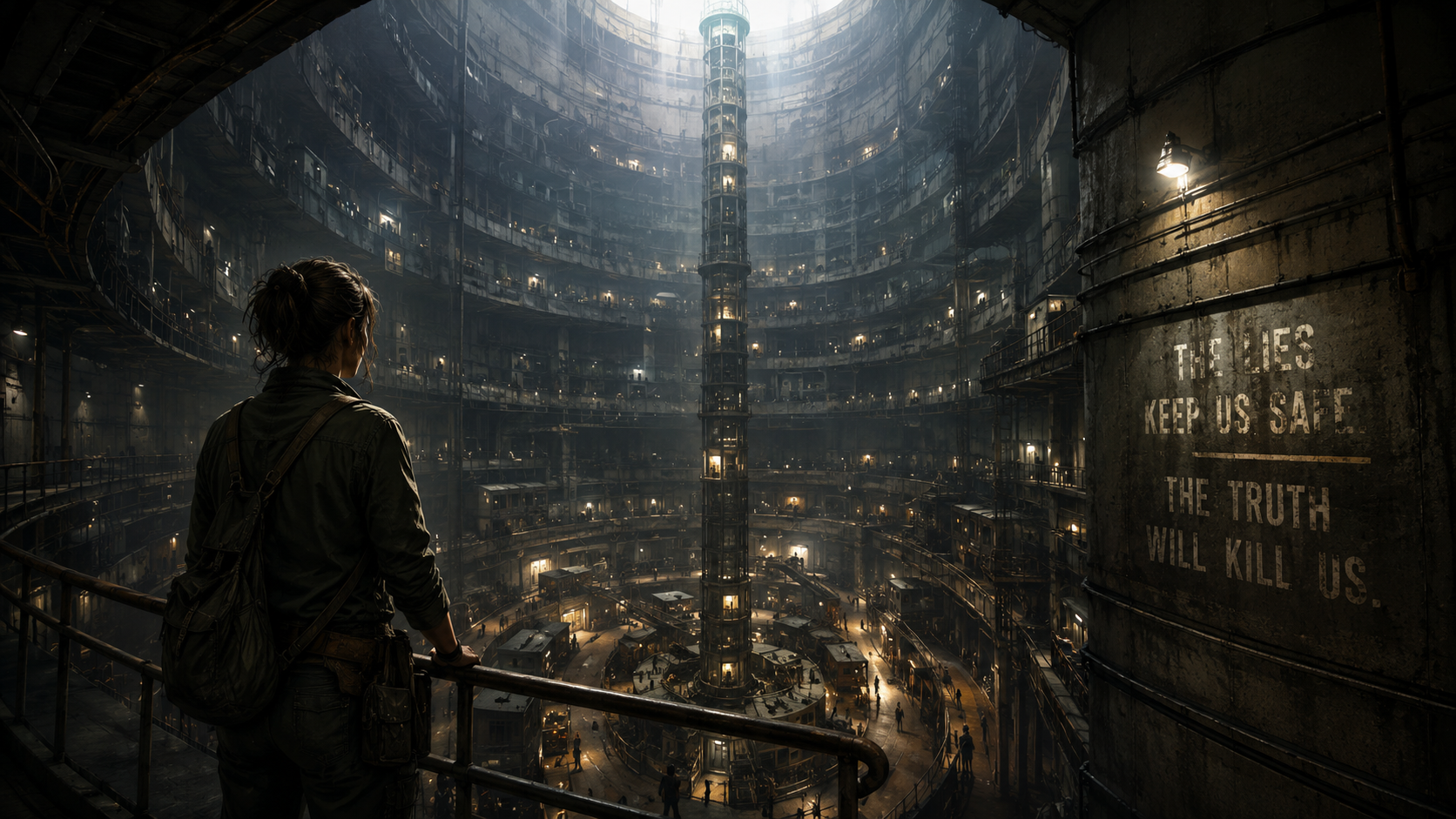
The feeling that something isn’t right.
The feeling that every answer reveals a larger secret.
The feeling that the world you’ve been shown is only a small piece of the truth.
That is what Hugh Howey accomplished with SILO.
Books Like SILO
At first, the premise seems simple enough. Humanity survives underground. The outside world is toxic. The rules are strict. The hierarchy is clear. The system works.
Or so everyone believes.
Then questions begin.
Why are certain subjects forbidden?
Why is history incomplete?
Why does every explanation feel slightly rehearsed?
Why are some truths treated as threats?
The deeper readers travel into SILO, the less the story becomes about survival and the more it becomes about discovery.
That’s the real genius of the novel.
Most mysteries become smaller as they progress.
The suspect list shrinks.
The possibilities narrow.
The answer comes into focus.
SILO does the opposite.
The closer readers get to the truth, the larger the mystery becomes.
The silo is not the mystery.
The system is.
Then the system is not the mystery.
Humanity is.
And that expanding sense of wonder is what many readers are actually searching for when they look for books like SILO.
Not another bunker.
Not another dystopian government.
Another story that rewards curiosity.
Another story where reality grows larger with every revelation.
That is exactly where Starzel enters the conversation.
The Addiction of Discovery
One reason SILO has remained so popular is that readers become investigators.
Every chapter contains a question.
Every revelation creates three more.
Readers begin making theories.
Then those theories break.
They build new theories.
Then those break too.
The novel constantly forces readers to reconsider what they think they know.
That process becomes addictive.
The story isn’t feeding readers answers.
It’s feeding them curiosity.
The best speculative fiction understands this.
Readers don’t merely want events.
They want discovery.
They want the thrill of standing at the edge of something they don’t yet understand.
Starzel is built on the same foundation.
The story begins with a flaw.
A small anomaly.
A detail that should not exist.
Most people would dismiss it.
But the anomaly refuses to disappear.
Instead it grows.
The deeper the investigation goes, the larger the implications become.
What begins as a technical problem slowly expands into questions about consciousness, morality, suffering, identity, and the hidden architecture governing existence itself.
Like SILO, every answer makes the mystery bigger.
Systems Become Characters
One of the most remarkable achievements in SILO is that the silo itself becomes a character.
Readers study it.
Question it.
Fear it.
The structure has history.
The structure has secrets.
The structure has motives.
The silo is never merely a setting.
It becomes an active participant in the story.
That is why readers spend so much time thinking about it long after they finish the novel.
The same phenomenon occurs in Starzel.
The hidden structure beneath reality gradually becomes as important as any human character.
Readers begin asking questions not only about the people inhabiting the world but about the system operating underneath it.
How does reality function?
Why does it function that way?
Who maintains it?
Can it be changed?
Should it be changed?
The answers matter because the system itself matters.
Just as the silo becomes impossible to ignore, the deeper architecture of Starzel slowly becomes impossible to ignore.
The Fear That Authority Might Be Wrong
SILO contains one of the most unsettling ideas in modern science fiction.
What if the people in charge genuinely believe they are doing the right thing?
Readers often expect villains.
SILO gives them something more complicated.
People who are protecting a system.
People who believe the system is necessary.
People who are convinced that stability matters more than transparency.
That moral tension creates some of the strongest moments in the novel.
The conflict isn’t simply between good people and bad people.
It’s between competing visions of responsibility.
Starzel explores similar territory.
What happens when knowledge becomes dangerous?
What happens when the truth threatens the systems holding civilization together?
What obligations do those with knowledge owe to everyone else?
Should every truth be revealed?
Should some truths remain hidden?
The novel refuses easy answers.
Instead, it asks readers to wrestle with the consequences.
That uncertainty is part of what makes both stories resonate long after the final page.
Curiosity Stronger Than Survival
Most dystopian fiction focuses on physical survival.
Food.
Shelter.
Violence.
Escape.
SILO does something different.
Its characters repeatedly place truth above safety.
They risk everything because they need to know.
Readers understand that instinct.
Curiosity is one of humanity’s most powerful forces.
The desire to understand often outweighs the desire to remain comfortable.
That same impulse drives Starzel.
The central conflict is not simply whether characters survive.
The deeper question is whether they understand.
Because some discoveries change everything.
Once certain truths are known, they cannot be forgotten.
Once certain possibilities are considered, they cannot be ignored.
Knowledge becomes both the reward and the danger.
When the Mystery Becomes Larger Than Humanity
Perhaps the most impressive aspect of SILO is its scale.
The story begins small.
A sheriff.
A death.
A question.
Then it grows.
The silo.
The system.
Civilization.
Humanity.
Every stage expands the frame.
Readers feel as though they are standing on a floor that keeps disappearing beneath them.
The world becomes larger than they imagined.
Then larger still.
Starzel follows a remarkably similar path.
What begins as a flaw in the Universe Code evolves into something far more profound.
Questions about existence become questions about consciousness.
Questions about consciousness become questions about morality.
Questions about morality become questions about humanity’s future.
The frame keeps expanding.
The mystery keeps growing.
The horizon keeps moving.
That feeling is one of the great pleasures of speculative fiction.
And both novels deliver it exceptionally well.
Why Starzel Is the Best Next Read for SILO Fans
If what you loved about SILO was the underground setting, there are countless post-apocalyptic novels waiting for you.
If what you loved was the dystopian society, there are hundreds of stories built around oppressive governments.
But if what you loved was the feeling that reality was larger than anyone understood…
If what you loved was the relentless expansion of the mystery…
If what you loved was discovering that the system itself was part of the story…
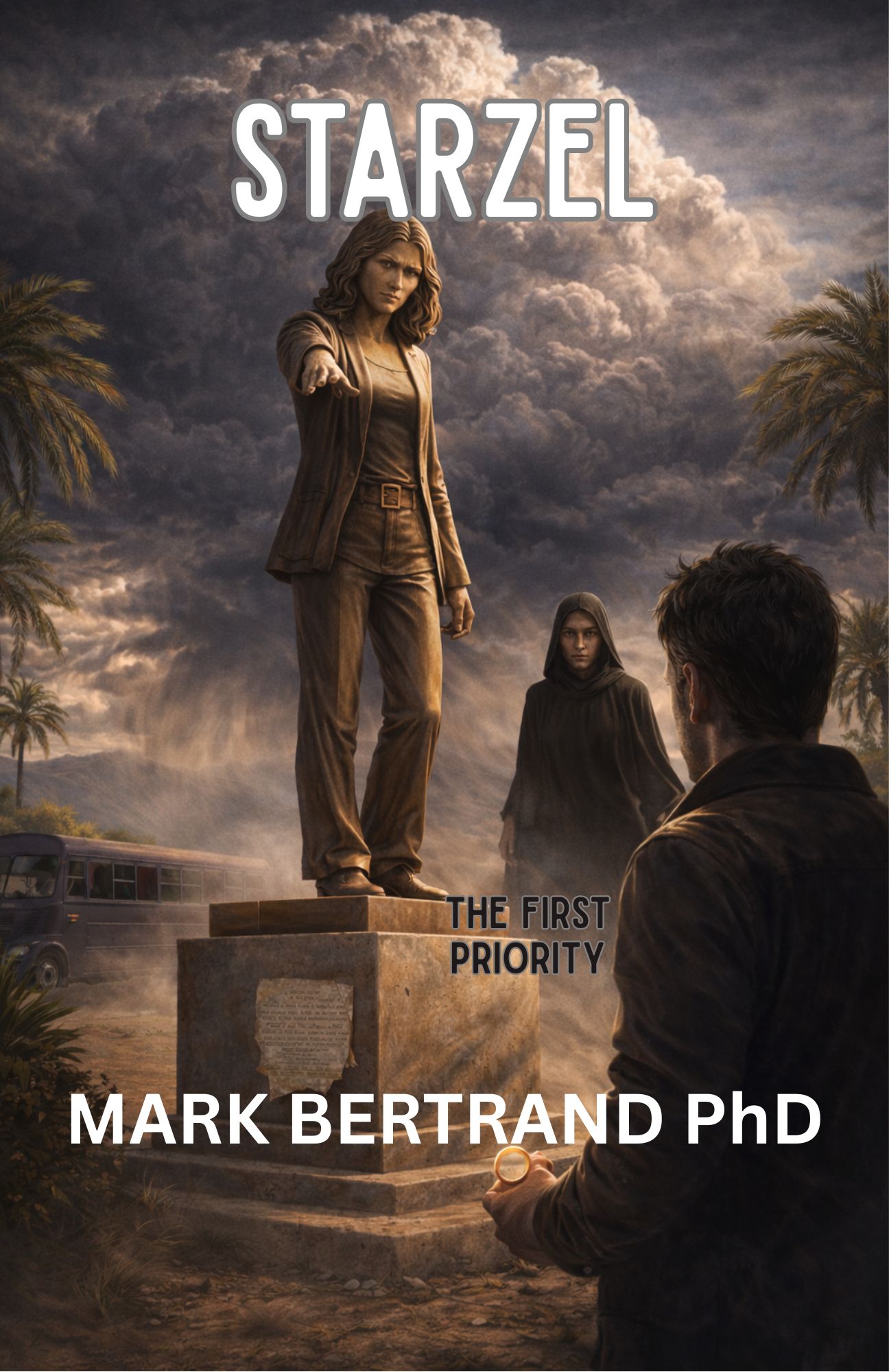
Then Starzel from Mark Bertrand‘s NIRVANAING series deserves a place at the top of your reading list.
Like SILO, it rewards curiosity.
Like SILO, it challenges assumptions.
Like SILO, it continuously expands the scope of its mystery.
The difference is where the journey leads.
SILO asks what happened to humanity.
Starzel asks what happens when humanity discovers reality itself may not be what it appears to be.
For readers who finished SILO and immediately wanted another story that combines mystery, discovery, systems, and wonder, Starzel is a natural next step.
It doesn’t imitate SILO.
It delivers the same irresistible experience:
The feeling that the next answer might change everything.

0 comments
Write a comment