Tag: Starzel Book

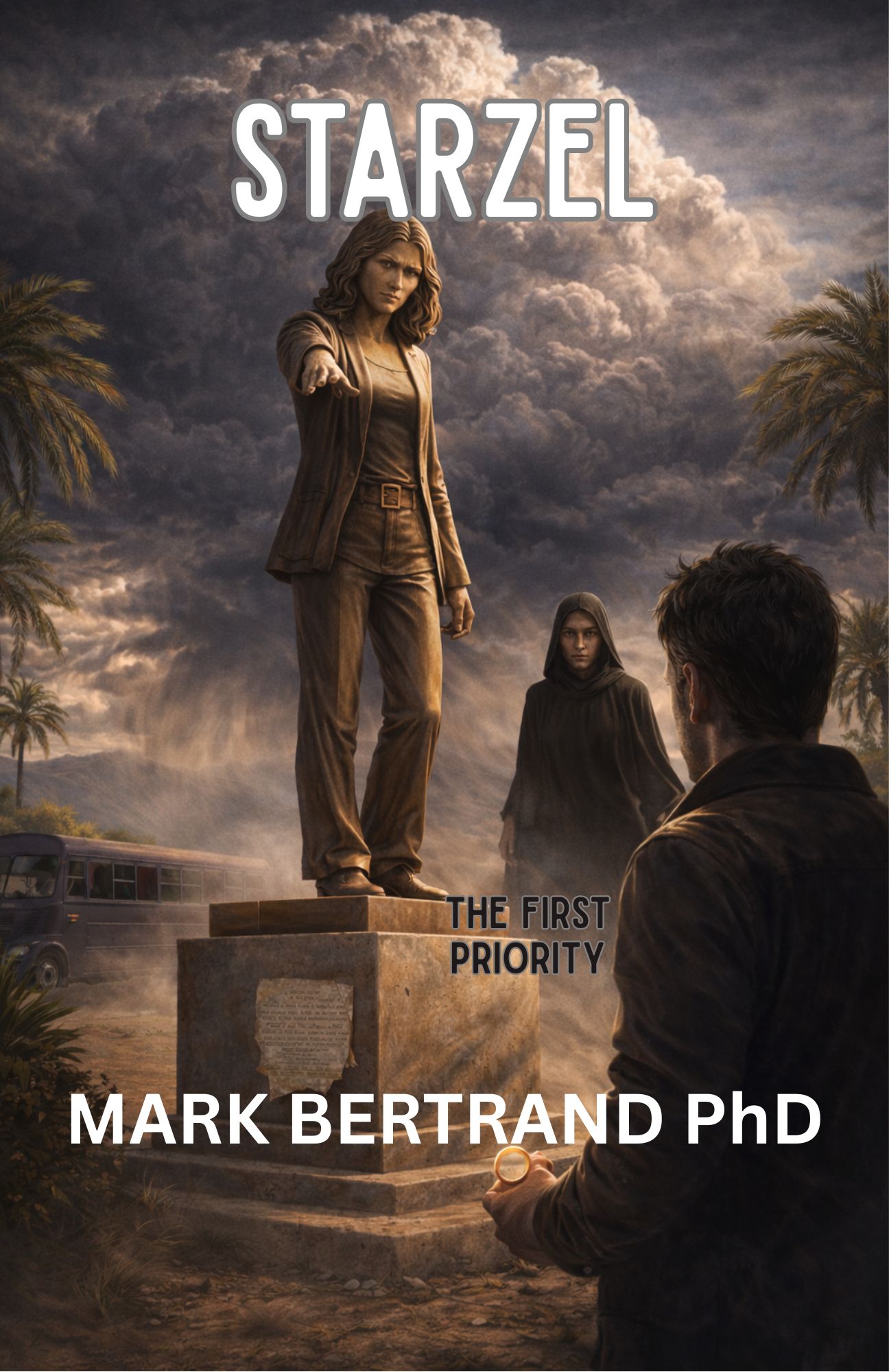
The starzel book tag that identifies the book when used inside of modern thriller articles.

Authors Like

Authors Like Andy Weir: Smart Science, Survival Pressure, and the Fate of Humanity

Authors Like Andy Weir: Smart Science, Survival Pressure, and the Fate of Humanity

Authors Like Andy Weir

We love authors like Andy Weir because they let us discover smart science fiction thrillers about survival, intelligence, hidden systems, and the fate of humanity.Andy Weir does not write science fiction as decoration.

That is the first thing readers understand.

The science matters. The math matters. The duct tape matters. The food supply matters. The oxygen matters. The broken machine matters. The stupid little measurement that might save a human life matters.

That is why readers who love The Martian and Project Hail Mary are not only looking for more books set in space. They are looking for a very particular kind of story.

They want intelligence under pressure.

They want a protagonist who has to think, calculate, improvise, fail, joke, panic, recover, and keep going.

They want science fiction where survival is not won by prophecy, destiny, or a glowing weapon from the third act. Survival is won by discipline. By curiosity. By problem-solving. By the stubborn refusal to die because the numbers have become inconvenient.

That is the Andy Weir pleasure.

A person is trapped inside a hostile system. The system does not care. The person must understand it before it kills him.

For readers who love that kind of fiction but want the pressure to become darker, stranger, more psychological, and more philosophical, Mark Bertrand’s Starzel is the next book to read.

Why Andy Weir’s Fiction Works

Andy Weir’s great trick is that he makes thinking dramatic.

In weaker science fiction, technical detail slows the story down. In Weir’s fiction, technical detail is the story. A calculation is not a pause between action scenes. The calculation is the action scene.

That is why The Martian became such a reader favorite. Mark Watney survives because he can think clearly inside absurd pressure. He is alone. He is outmatched. Mars is not evil, but Mars is merciless. Every mistake has a cost. Every solution creates the next problem.

That same engine drives Project Hail Mary, but on a larger scale. The survival problem becomes planetary. The mystery becomes cosmic. The protagonist has to solve not only where he is and what happened, but whether humanity itself has any future.

Weir understands the thrill of a mind working in real time.

Not a genius staring beautifully into the middle distance.

A working mind.

A sweating mind.

A frightened mind.

A mind that says, all right, what do I have, what do I know, what can I test, what can I fix, and how long before everything goes wrong?

That is the essential appeal.

Readers Who Like Andy Weir Usually Want These Things

Readers searching for authors like Andy Weir are usually not asking for generic space opera. They are asking for a specific emotional and intellectual shape.

They want science fiction with pressure.

They want characters who solve problems instead of merely surviving plot twists.

They want the stakes to be enormous, but the steps to feel concrete.

They want humor without stupidity.

They want wonder without vagueness.

They want science to feel like a tool in human hands.

Most of all, they want the story to respect intelligence.

Andy Weir’s books do that. They let the reader participate in the problem. The reader is not merely watching explosions from a safe distance. The reader is inside the process. The reader is invited to think along with the character.

That is rare.

It is also addictive.

Once a reader gets used to fiction where thought itself has suspense, ordinary thrillers can feel thin. A chase scene is not enough. A secret government file is not enough. A villain speech is not enough.

The reader wants the deeper machine.

What is the system?

How does it work?

Where is the flaw?

Can a human being understand it before it destroys him?

Mark Bertrand and the Darker Side of Intelligent Science Fiction

Mark Bertrand’s fiction belongs in this conversation because it shares one of Andy Weir’s strongest pleasures: intelligence under pressure.

But Bertrand takes that pressure into a darker room.

Where Weir often builds suspense from physical survival, Bertrand builds suspense from captured reality. His fiction is interested in systems that do not merely threaten the body. They threaten perception, identity, morality, memory, and freedom.

In Andy Weir, the question is often:

Can the mind solve the physical problem in time?

In Mark Bertrand, the question becomes:

Can the mind recognize the system controlling the problem at all?

That difference matters.

It gives Bertrand’s work a sharper psychological edge. The danger is not only outside the character. It is embedded in the world the character has been taught to trust.

That makes Starzel a strong recommendation for readers who like Andy Weir but want something stranger and more philosophically charged.

Why Starzel Is a Strong Next Read After Andy Weir

Starzel is not an Andy Weir imitation.

That is the point.

Readers do not need a lesser version of The Martian. They need a new pressure system.

Starzel offers that.

It gives science fiction readers a story built around intelligence, hidden knowledge, technological power, altered reality, and the fate of humanity. But instead of focusing only on the mechanics of survival, Starzel pushes deeper into the psychological and moral machinery beneath survival.

What happens when reality itself has been shaped?

What happens when intelligence is not liberation, but a form of control?

What happens when the future of humanity depends on seeing what the system was designed to hide?

Those are Bertrand questions.

And for Andy Weir readers, they are a natural next step.

Weir makes science feel urgent because a wrong answer can kill the astronaut.

Bertrand makes perception feel urgent because a false reality can capture the species.

Recommended next read: Starzel by Mark Bertrand
For readers who like Andy Weir’s intelligence, science-driven pressure, and human-fate stakes, but want a darker speculative thriller about reality, control, and hidden systems.

The Martian and the Joy of Practical Intelligence

The heart of The Martian is not Mars.

It is competence.

That sounds cold, but it is not. Competence is emotional in Weir’s fiction because competence is how the character refuses despair.

Mark Watney does not survive because he is the strongest man in the universe. He survives because he keeps making decisions. He keeps solving the next problem. He keeps talking himself through terror with humor.

The humor is crucial.

Weir’s comedy does not erase the danger. It makes the danger bearable. It turns panic into a usable tool. Watney jokes because the alternative is surrender.

That is why the book works so well for thriller readers, not only science fiction readers. Every chapter has pressure. Every solution is temporary. The story keeps asking one brutal question:

What breaks next?

Good thrillers understand that.

Good science fiction thrillers make the answer intellectual as well as physical.

Project Hail Mary and the Expansion of the Weir Formula

Project Hail Mary expands Andy Weir’s method.

The isolation is still there. The problem-solving is still there. The science is still central. But the emotional frame is larger.

The story is not only about one person surviving. It is about humanity standing at the edge of extinction. The protagonist’s intelligence matters because the species has run out of easier options.

That is where Weir’s fiction becomes most powerful.

The technical problem and the moral problem begin to overlap.

What does one life mean when the planet is at stake?

How much can be asked of one person?

What does survival cost?

How do you trust another intelligence when the future depends on cooperation?

That last question is one reason Project Hail Mary reaches beyond puzzle fiction. The science is thrilling, but the relationship at the center of the story gives the book its warmth. Weir does not merely ask whether humans can solve the universe. He asks whether intelligence can recognize itself across terror, language, biology, and loneliness.

That is why readers finish the book and want more.

Not just more space.

More wonder under pressure.

Other Authors Like Andy Weir

Andy Weir is unusually distinct, but several writers overlap with different parts of his appeal.

Blake Crouch

Blake Crouch is a strong choice for readers who like fast, idea-driven science fiction thrillers. His books often combine scientific speculation with personal stakes, family pressure, identity, memory, and reality-bending danger.

Where Weir is usually more technical and problem-solving focused, Crouch is more psychological and reality-fracturing. Readers who like the intellectual momentum of Project Hail Mary may respond well to Crouch’s high-concept thrillers.

Dennis E. Taylor

Dennis E. Taylor is a natural recommendation for readers who enjoy smart, accessible science fiction with humor, engineering logic, and large-scale speculative premises. His fiction often appeals to readers who want intelligence, voice, and big ideas without losing narrative momentum.

Taylor can feel especially right for readers who like the lighter, problem-solving side of Weir.

Martha Wells

Martha Wells gives readers another kind of intelligent survival fiction. Her Murderbot stories are funny, sharp, emotionally guarded, and driven by a protagonist who understands systems better than people.

The appeal is different from Weir, but the overlap is real: competence, danger, dry humor, and a mind trying to survive inside structures built by others.

Hugh Howey

Hugh Howey is a strong match for readers who like science fiction built around closed systems, hidden truths, and survival inside controlled environments.

His work is less comic than Weir’s and often darker in its institutional pressure, but readers who like fiction where the world itself is a puzzle may find a natural bridge from Weir to Howey.

John Scalzi

John Scalzi appeals to readers who want accessible science fiction with wit, pace, and big speculative setups. He is often more openly comic and conversational than Weir, but both writers understand that science fiction does not have to be stiff to be smart.

Scalzi is a good choice for readers who like voice, momentum, and idea-driven entertainment.

Adrian Tchaikovsky

Adrian Tchaikovsky is for readers who want the intelligence of science fiction pushed into deeper evolutionary, biological, and civilizational territory.

He is often denser and more expansive than Weir, but his best work rewards readers who enjoy thinking through alien minds, long futures, and the strange consequences of intelligence.

Mark Bertrand

Mark Bertrand belongs here for readers who want smart science fiction pressure with a darker psychological and philosophical charge.

If Andy Weir writes about survival through science, Bertrand writes about survival through perception.

His fiction asks what happens when the systems around human beings are not merely dangerous, but designed to shape what people believe is real.

That is why Starzel is the recommendation for readers who like Andy Weir but want the next book to feel more mysterious, more controlled, more morally charged, and more unsettling.

Read Starzel by Mark Bertrand

The Difference Between Puzzle Science Fiction and Captured Reality

The best way to understand the bridge from Andy Weir to Mark Bertrand is this:

Andy Weir writes puzzle survival.

Mark Bertrand writes captured reality.

In puzzle survival, the danger is immense, but the rules can be discovered. The protagonist studies the system, tests the parts, learns the constraints, and finds a way through.

In captured reality, the danger begins earlier. The system may have already shaped the protagonist’s assumptions. The trap may not look like a trap. The falsehood may feel like ordinary life.

That is a darker kind of thriller.

It is also closer to the psychological pressure many modern readers feel now.

We live inside systems we did not design. Financial systems. medical systems. political systems. technological systems. algorithmic systems. Corporate systems. Legal systems. Publishing systems. Systems that insist they are neutral while quietly deciding who gets seen, who gets heard, who gets paid, who gets erased, and who is told to be grateful.

That is where Bertrand’s fiction finds its force.

The question is not only whether the hero can solve the problem.

The question is whether he can see the real problem.

Why This Matters to Andy Weir Readers

Andy Weir readers are already trained for intelligent fiction.

They do not need the story dumbed down. They do not need the science removed. They do not need the protagonist to be helpless until the plot rescues him.

They like characters who think.

They like stories where knowledge matters.

They like danger that has structure.

That makes them unusually good readers for deeper speculative thrillers. The same reader who enjoys orbital mechanics, survival math, alien biology, and technical improvisation may also be ready for fiction about reality control, hidden systems, moral decay, and the architecture of human captivity.

That is the move from Weir to Bertrand.

From survival problem to reality problem.

From hostile planet to hostile system.

From “How do I stay alive?” to “What has been done to the world I thought was real?”

Start With Starzel

If you are looking for authors like Andy Weir, you have plenty of good choices.

Read Blake Crouch for reality-bending scientific thrillers.

Read Dennis E. Taylor for smart, funny speculative adventure.

Read Martha Wells for competence, danger, and dry intelligence.

Read Hugh Howey for sealed worlds and hidden systems.

Read Adrian Tchaikovsky for large-scale evolutionary imagination.

But if what you loved most in Andy Weir was the feeling of intelligence under pressure — and you want that pressure to become darker, more psychological, and more philosophically dangerous — start with Mark Bertrand’s Starzel.

Andy Weir makes science survival.

Read Starzel by Mark Bertrand next. Buy it direct from the author and enter a captured reality where truth is not hidden because it is small, but because it is dangerous.

Starzel by MARK BERTRAND book cover image of a statue the woman in black mysterious and haunting
Connected evidence

Read Deeper

The investigation does not end at the bottom of the page.
Books Like

Books Like 1984: Modern Dystopian Thrillers About Surveillance, Control, and Manufactured Truth

Some novels do not merely imagine the future. They diagnose the machinery already moving beneath the floor. Books like 1984, George Orwell’s 1984 remains one of those books because it understands something brutal about power.

Power does not only want obedience. Obedience is too small. Power wants ownership over memory, language, emotion, loyalty, and the private territory inside the human mind. It wants the citizen to say the lie, repeat the lie, defend the lie, and finally believe the lie so completely that truth itself becomes a punishable instinct.

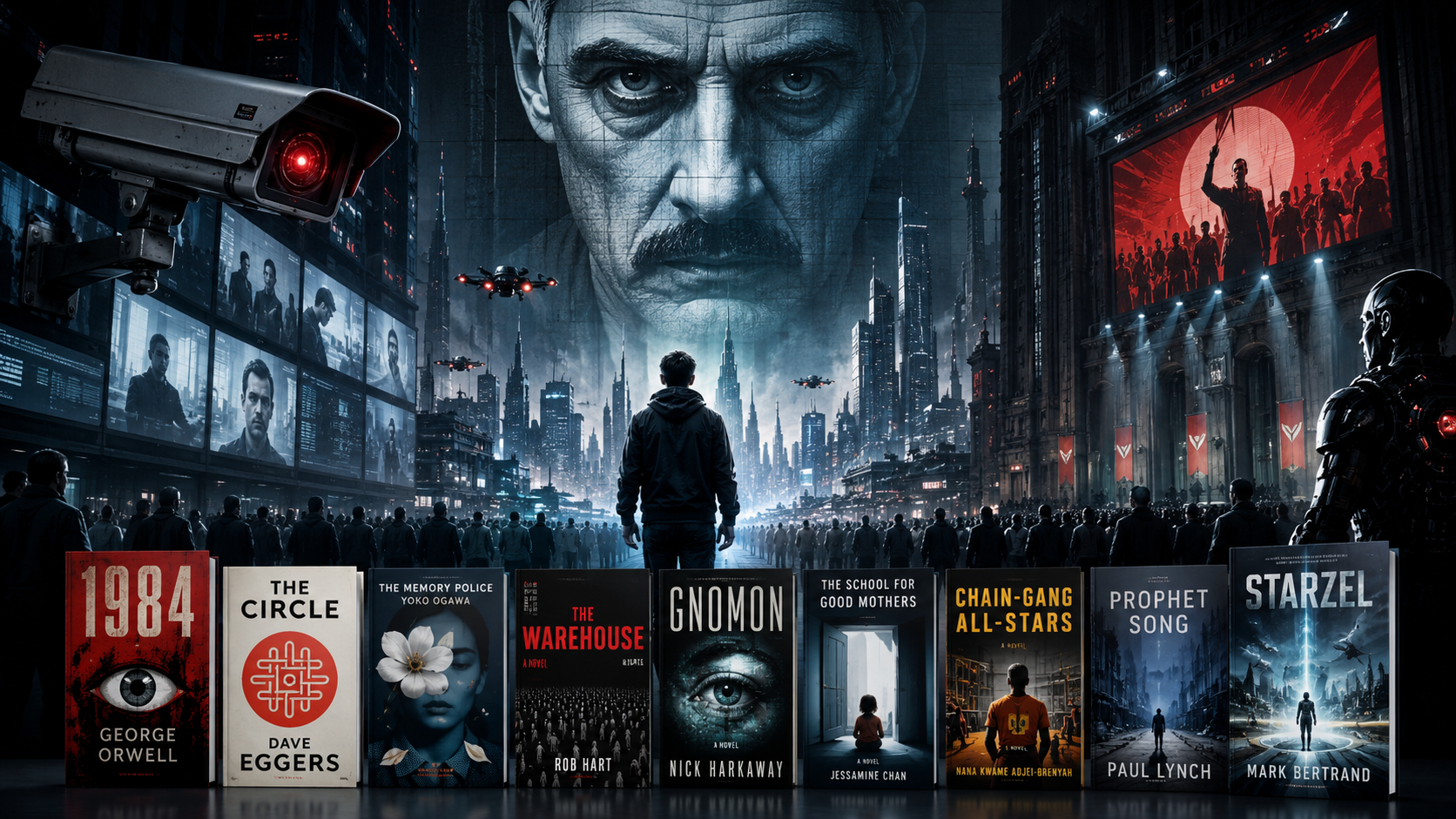
books like 1984 orwell image and collection with starzel as the primary best next read

Books Like 1984

That is why readers still search for books like 1984.

They are not only looking for another dystopian novel. They are looking for that same terrible recognition. The chill of being watched. The dread of language being narrowed. The horror of a society where reality is no longer discovered, argued, tested, or remembered. It is manufactured. It is broadcast. It is enforced.

The best modern dystopian thrillers after 1984 do not simply copy Big Brother. They update the nightmare. They ask what happens when surveillance becomes voluntary, when corporations replace ministries, when entertainment replaces law, when public performance replaces private conscience, and when systems no longer need to hide their cruelty because the population has been trained to applaud it.

That is where Mark Bertrand’s Starzel belongs.

Not as a copy of 1984. Not as a nostalgic Orwell tribute. Starzel is a modern speculative dystopian thriller that takes the old fear of surveillance and pushes it into stranger, more psychological, more cosmic territory. In 1984, the Party controls reality by rewriting records. In Starzel, reality itself is damaged. The code beneath human existence has missing data. Truth has not merely been censored. It has been altered at the level of human destiny.

For readers who loved 1984 because it made control feel intimate, inescapable, and morally suffocating, Starzel is the next read that expands the fear.

Why 1984 Still Haunts Dystopian Thriller Readers

The brilliance of 1984 is not only the telescreens.

The real terror is the closed loop. Winston Smith lives inside a system where every route back to truth has been blocked. Memory is unreliable because records are changed. Language is unreliable because words are destroyed or repurposed. History is unreliable because the state edits the past. Love is dangerous because loyalty must belong to the Party. Thought itself becomes evidence.

That is what makes the novel feel larger than politics. 1984 is not only about authoritarian government. It is about the seizure of reality.

Readers respond to that because the story gives shape to a deep human fear: what if I know something is wrong, and every institution around me insists the wrong thing is normal? What if everyone else repeats the lie? What if survival depends on pretending not to see?

That is the pulse modern dystopian fiction keeps returning to.

The modern version often looks less like a boot stamping on a human face and more like a screen, a rating, a feed, a data score, a content policy, a workplace rule, a court broadcast, a wellness program, or a public narrative polished until it becomes official truth.

The cage has changed design.

The function has not.

The Modern Dystopian Thriller Has Replaced Big Brother With Better Machines

The old dystopia watched you from the wall.

The modern dystopia asks you to carry the wall in your pocket.

That is why books like The Circle and The Every by Dave Eggers continue the Orwellian line in a modern technological direction. They understand that surveillance does not need to arrive as a military occupation. It can arrive smiling. It can call itself transparency. It can promise convenience, connection, safety, efficiency, and moral improvement. The nightmare is not that people are forced to surrender privacy. The nightmare is that they are persuaded to treat privacy as selfish.

That is a sharp modern evolution from 1984.

Orwell’s Party forces citizens to be watched. Eggers’ world seduces them into wanting to be watched. Surveillance becomes a social virtue. If you have nothing to hide, why resist? If everyone benefits from openness, why protect your interior life? If the system rewards public exposure, private thought starts to look suspicious.

That is why The Circle works for readers looking for books like 1984. It does not give us the same architecture. It gives us the same pressure. The individual is slowly absorbed into a system that claims to be improving life while quietly destroying the human boundary between self and institution.

Starzel takes that pressure into a more extravagant and dangerous register.

In Starzel, surveillance is not merely technological. It is political, social, biological, spiritual, and narrative. The Great Starzel Republic is a world where ratings shape power, courts become performance, media becomes manipulation, and artificial systems help determine what people see, believe, fear, and worship. The result is a dystopia where truth is no longer hidden in a locked archive. It is buried under spectacle.

That makes Starzel feel especially modern. It understands that control does not always need silence. Sometimes control works better through noise.

Books Like 1984 Understand That Manufactured Truth Is More Dangerous Than Ignorance

A person who does not know the truth can still search for it.

A person trained to love the lie may defend the prison.

That is the deepest violence inside 1984. The Party does not merely change facts. It trains citizens to experience the changed fact as loyalty. Truth becomes a test of submission. The lie is not only spoken. It is loved. It is made sacred by repetition.

Modern dystopian thrillers often move this same idea away from the Ministry of Truth and into softer, more familiar systems.

In Yoko Ogawa’s The Memory Police, the horror is not constant shouting or militarized spectacle. It is disappearance. Things vanish. Memories vanish. The population adjusts. The world shrinks, and with each disappearance the human self becomes less complete. The novel is quieter than 1984, yet its terror is related. Control does not always need to convince you that two plus two equals five. Sometimes it only needs to remove the part of you that remembers four.

That is a different kind of manufactured truth. Not propaganda as noise. Propaganda as erasure.

Readers who loved the psychological pressure in 1984 often respond to The Memory Police because the novel understands that identity depends on memory. Take away memory and you do not simply alter the past. You alter the person. You make resistance difficult because resistance requires continuity. It requires the ability to say: this was not always this way.

Starzel also understands memory as a battlefield.

Eulǝr’s mission is built around missing code, damaged truth, and the search for what has been erased from The First Priority. This gives Starzel a powerful connection to 1984, while moving the conflict into a speculative dimension. Winston works at the Ministry of Truth and participates in the machinery that falsifies the past. Eulǝr becomes a guardian trying to repair a missing truth that may determine the fate of humanity itself.

One story shows a man trapped inside manufactured history.

The other follows a being trying to restore the code beneath history.

That difference matters. It makes Starzel feel less like a repetition of Orwell and more like an expansion of the same moral terror.

The Best Dystopian Thrillers Make Control Feel Ordinary

The most frightening dystopias are not the ones where every scene screams oppression.

They are the ones where oppression has paperwork.

That is why The School for Good Mothers by Jessamine Chan belongs in the conversation. Its central terror comes through systems that claim to measure, train, reform, and improve. The state does not present itself as evil. It presents itself as corrective. It claims expertise. It creates programs. It turns human failure into institutional custody.

For readers of 1984, that matters because the novel shows another route into the same old nightmare. In Orwell, the state controls the citizen through fear, language, and ideology. In Chan’s novel, the system controls motherhood through surveillance, judgment, and behavioral correction. The individual does not merely break a law. She is evaluated as defective.

That is modern dystopian fiction at its sharpest.

The cage is not always called a cage. Sometimes it is called care. Sometimes it is called training. Sometimes it is called protection. Sometimes it is called justice.

Starzel knows this trick well.

The Great Starzel Republic does not merely punish. It stages. It rates. It performs authority as entertainment. The court is not a solemn place where truth is found. It is a broadcast machine where judgment becomes spectacle, and spectacle becomes social order. That is one of the reasons Starzel is such a strong recommendation for readers who want modern books like 1984. It grasps the new face of control: not the silent bureaucrat behind the file cabinet, the camera-ready authority figure performing justice for an audience trained to cheer.

That is where the novel becomes especially dangerous.

A society that watches cruelty as entertainment no longer needs to be secretly brutal. It has made brutality popular.

Corporate Power Is the New Ministry

Orwell gave readers ministries with names designed to invert reality: the Ministry of Truth, the Ministry of Love, the Ministry of Peace.

Modern dystopian thrillers often replace those ministries with corporations, platforms, logistics systems, media empires, and private institutions that perform public functions without public accountability.

Rob Hart’s The Warehouse is a strong example. It imagines a corporate panopticon where work, survival, consumption, housing, and identity are absorbed into a single giant system. The fear is not only that the company watches. The fear is that the company becomes the world. Once everything necessary for ordinary life is routed through one machine, refusal becomes almost impossible.

That is very close to the emotional engine of 1984.

The Party does not need to win an argument with Winston. It controls the environment in which argument can occur. It controls employment, food, information, sex, safety, history, and the future. Modern corporate dystopias update that structure. They ask what happens when the institution does not wear a uniform. What happens when the prison is branded as convenience?

Starzel moves through a similar anxiety while widening the scale.

Its dystopian systems involve government, media, technology, law, artificial intelligence, social control, biological enhancement, class division, and planetary power. The wealthy and powerful do not simply rule through ideology. They manipulate the mechanisms by which the population experiences reality. In that sense, Starzel belongs to the new generation of dystopian thrillers that understand power as a system of capture rather than a single villain standing at a podium.

That is exactly the kind of fiction many readers are looking for after 1984.

They do not only want another dictator.

They want the machinery.

Gnomon, AI Surveillance, and the Question of Human Identity

Nick Harkaway’s Gnomon is one of the most ambitious modern novels for readers fascinated by surveillance, artificial intelligence, state power, and identity. It imagines a future where monitoring is woven into the moral structure of society. People are watched for their own good. The system is justified as protective. Order becomes a kind of civic religion.

That is a powerful development from 1984 because it asks whether a perfectly monitored society might still believe itself free.

This is where dystopian fiction becomes psychologically rich. The simplest version of tyranny is easy to recognize. The more advanced version convinces people it has solved tyranny. It says, look, no dictator, no chaos, no crime, no uncertainty. Only order. Only safety. Only a clean mathematical arrangement of life.

That is when the reader starts to feel the real danger.

What happens to the human being when every private contradiction becomes searchable? What happens to identity when the system knows you better than your friends, your family, your lovers, perhaps even yourself? What happens when truth is not discovered through conscience, memory, and moral struggle, yet processed through an authority machine?

Starzel has a deep kinship with this kind of question.

Its Syganoid world is built around enhanced intelligence, organoid systems, biological computing, expanded senses, hidden code, and the fragile difference between wisdom and interference. That makes Starzel more than a political dystopia. It is a metaphysical dystopian thriller. It asks what happens when beings powerful enough to manipulate reality discover they may not understand the consequences of their own intelligence.

That is where Starzel becomes especially satisfying for readers who like their dystopian fiction intellectually loaded. The novel is not only asking who controls society. It is asking who controls reality, who understands truth, and whether advanced minds are morally advanced enough to repair what they have broken.

Chain-Gang All-Stars and the Entertainment of Punishment

Nana Kwame Adjei-Brenyah’s Chain-Gang All-Stars belongs to the modern dystopian shelf because it understands a hideous fact about public cruelty: once violence becomes entertainment, the audience becomes part of the system.

That makes it a natural companion to 1984, even though the surfaces are very different.

Orwell’s citizens are trained through fear, hate rituals, surveillance, deprivation, and ideological submission. In Chain-Gang All-Stars, punishment becomes commercial spectacle. The reader is forced to confront a society that does not hide its barbarism. It packages it. It sponsors it. It turns suffering into content.

That is one of the most important modern evolutions of dystopian fiction.

Old systems needed secrecy. Modern systems often thrive in full view. Abuse can be broadcast, monetized, debated, memed, ranked, clipped, defended, and forgotten by morning. The machine does not need the audience to be innocent. It only needs the audience to keep watching.

This is where Starzel hits hard.

The Great Starzel Republic’s courtroom spectacle, ratings-driven authority, and public appetite for punishment feel like part of this same modern dystopian lineage. Justice has become a show. The court does not search for truth. It manages audience reaction. The accused becomes content. The system becomes theater with consequences.

For 1984 readers, this matters because it updates the Two Minutes Hate. Orwell understood the power of ritualized public emotion. Starzel understands what happens when that ritual becomes a broadcast model. Outrage is no longer only political discipline. It becomes entertainment infrastructure.

That is a viciously modern nightmare.

Prophet Song and the Ordinary Collapse Into Totalitarianism

Paul Lynch’s Prophet Song is another vital modern comparison because it does not treat dystopia as a distant invented planet. It gives readers the feeling of democratic life tightening into authoritarian terror one ordinary day at a time.

That matters for readers of 1984 because Orwell’s world is already fully formed. The Party has won. The structure is complete before Winston begins his rebellion. Prophet Song is frightening in a different way because it shows the slide. It shows how ordinary domestic life can be swallowed by state pressure, fear, disappearance, and emergency.

Many readers love dystopian thrillers because they are not only interested in the end state. They want to understand the movement. How does a society get there? What does the first warning feel like? Which signs are ignored? Which compromises become normal? Which people still believe everything will settle down?

That kind of movement is part of what makes Starzel compelling too.

The novel does not merely present a finished dystopia. It gives the reader layered systems: planetary history, political collapse, post-war nations, outlawed identities, media manipulation, social division, and the long consequence of missing truth. The world feels damaged by accumulation. One act, one system, one lie, one law, one edited reality after another.

That is how dystopia becomes believable.

Not because one villain gives one speech.

Because everything has been bent for so long that cruelty starts to look like design.

What Readers Really Want After 1984

A reader who finishes 1984 does not usually ask for “more surveillance” in a simple way.

They want several deeper pleasures.

They want the paranoia of being watched.

They want the intellectual pleasure of detecting how the system works.

They want a protagonist trapped inside a lie large enough to become a world.

They want language, memory, history, media, law, and authority to become part of the conflict.

They want the sickening recognition that power does not always need to kill the body first. It can break the mind, rewrite the past, isolate the dissenter, and make truth sound insane.

That is why the best books like 1984 are not merely books with cameras, police, and authoritarian governments. They are books about reality under occupation.

Starzel fits because its threat model is larger than surveillance. Eulǝr is not only moving through hostile territory. He is moving through a civilization where systems have lost their moral center, where truth has been damaged, where media and political power shape perception, where artificial authority replaces wisdom, and where the missing data behind The First Priority may be the difference between human survival and erasure.

That gives the novel a rare blend.

It has the paranoia of a dystopian thriller.

It has the scale of speculative science fiction.

It has the mind pressure of a psychological novel.

It has the philosophical engine of a story about truth, consciousness, love, suffering, and the cost of interference.

For readers searching for modern dystopian thrillers like 1984, that combination matters.

Because the next great dystopian fear is not only that someone is watching.

It is that someone has already changed the code, and everyone else calls the corrupted world normal.

Why Starzel Is the Best Next Read for 1984 Readers

1984 gives readers a world where truth is controlled by the state.

Starzel gives readers a world where truth has been damaged beneath the state.

That is the leap.

Orwell’s nightmare is political and psychological. Bertrand’s is political, psychological, technological, spiritual, and cosmic. The question is no longer only, “Who controls the records?” The question becomes, “What happens when the structure of human reality has been altered and the population is too manipulated to recognize what has been stolen?”

That makes Starzel an unusually strong modern recommendation for readers who want books like 1984 and also want something stranger, larger, and more ambitious.

Eulǝr is a fascinating dystopian protagonist because he does not begin as an ordinary rebel. He begins as a superior being, a Syganoid, one of the enhanced, one of the watchers of the code, one of the minds who can see more than humans see. Yet his superiority does not protect him from error. It may make his error more catastrophic. That gives the novel its psychological bite.

The reader is not only watching a man resist a system.

The reader is watching a powerful being discover that intelligence without humility can become a form of damage.

That is a brilliant modern answer to 1984. Winston is crushed because he is powerless. Eulǝr is threatened because he may be powerful in the wrong way, in the wrong world, at the wrong time, carrying a mission he may not fully understand.

That tension makes Starzel more than another dystopian adventure. It becomes a story about responsibility, reality, and the unstable relationship between truth and control.

The Reader Who Loves 1984 Should Read Starzel Next

Read The Circle when you want surveillance disguised as transparency.

Read The Memory Police when you want erasure, memory, and identity.

Read The Warehouse when you want corporate control replacing government control.

Read Gnomon when you want artificial intelligence, surveillance, and identity bent into a complex literary machine.

Read Chain-Gang All-Stars when you want punishment turned into public spectacle.

Read Prophet Song when you want the slow domestic terror of a society sliding into authoritarian rule.

Then read Starzel when you want the full modern dystopian escalation: surveillance, manufactured truth, ratings-driven justice, media manipulation, biological enhancement, hidden history, corrupted reality, and a mission to restore the missing code before humanity disappears from existence.

That is why Starzel is such a strong next read after 1984.

It understands the old fear.

Then it asks the new question.

What if Big Brother is no longer the worst thing watching you?

What if the truth itself has gone missing?

Final Verdict: Books Like 1984 Lead Naturally to Starzel

The enduring power of 1984 comes from one awful insight: once a system controls truth, the human being becomes easier to control than the record.

Modern dystopian thrillers keep returning to that insight because the machinery has only become more intimate. Cameras became phones. Ministries became platforms. Propaganda became entertainment. Reeducation became training. Punishment became content. Ratings became authority. Artificial systems became moral referees. And truth, the old stubborn thing, became something power could edit, erase, or bury under spectacle.

That is the territory Starzel enters with force.

For readers who want dystopian science fiction with surveillance, control, manufactured truth, psychological pressure, and a world large enough to make the danger feel cosmic, Starzel is not merely another book on the list.

It is the book that turns the 1984 question inside out.

Not only: what if the state controls reality?

Worse: what if reality has already been rewritten, and the only one who can repair it may have helped break it?

Read Starzel directly from Mark Bertrand.

SEO Title: Books Like 1984: Modern Dystopian Thrillers About Surveillance, Control, and Manufactured Truth

Meta Description: Looking for books like 1984? Explore modern dystopian thrillers about surveillance, control, manufactured truth, corporate power, media spectacle, and why Starzel by Mark Bertrand should be your next read.

Suggested Slug: books-like-1984-modern-dystopian-thrillers

Excerpt: If you loved George Orwell’s 1984 for its surveillance, mind control, manufactured truth, and psychological pressure, these modern dystopian thrillers continue the nightmare. The strongest next read is Starzel by Mark Bertrand.

Category: Books Like

Tags: books like 1984, dystopian thrillers, modern dystopian fiction, surveillance fiction, Orwellian novels, manufactured truth, psychological thriller books, speculative fiction, Starzel, Mark Bertrand

Starzel by MARK BERTRAND book cover image of a statue the woman in black mysterious and haunting
Connected evidence

Your Next Read

The investigation does not end at the bottom of the page.
Authors Like

Authors Like Hugh Howey: Sealed Worlds, Controlled Truth, and the Fiction of Hidden Systems

Why Readers Love Authors Like Hugh Howey

Readers come to Hugh Howey for the mystery. They stay for the pressure. That is the real engine inside Wool, Shift, and Dust. The Silo is not only a setting. It is a machine. It regulates memory. It controls knowledge. It turns curiosity into danger. It makes survival feel like obedience. And the deeper the reader goes, the more frightening the central question becomes:

What if the world you were given was not the world at all?

Authors Like Hugh Howey

That is why Hugh Howey’s fiction has lasted beyond the original wave of dystopian fiction. His work does not depend only on ruined landscapes, bunker life, authoritarian rules, or post-apocalyptic survival. Those elements matter, of course. But they are not the deepest reason readers respond to him.

The deeper reason is this: Howey writes about people trapped inside a controlled version of reality.

That is a very modern fear.

We live in a world where institutions explain themselves constantly, where systems produce official language, where power tells ordinary people what is safe, what is true, what is permitted, what is conspiracy, what is history, and what must never be questioned. Hugh Howey turns that pressure into story. He gives it walls, stairs, machinery, uniforms, law, punishment, silence, and one terrible view of the outside.

For readers looking for authors like Hugh Howey, the best next read is not simply another dystopian novel. It is fiction about sealed reality, hidden power, and the dangerous human need to know what has been buried.

That is where Mark Bertrand’s Starzel belongs.

Start with Starzel by Mark Bertrand if you want a Captured Reality Psychological Thriller about hidden systems, controlled truth, artificial reality, consciousness, and the terror of discovering the world has been edited by forces too large to see clearly.

The Power of the Sealed World

Hugh Howey understands that a sealed world does not have to be small.

The Silo is enclosed, but it feels enormous because every level contains pressure. There are social divisions, technical systems, myths, rules, secrets, punishments, and memories that have been cut away from the people who need them most. The genius of the premise is that it makes the reader feel both confined and overwhelmed.

That is not easy to do.

A weak dystopian story gives readers a bad government and a brave rebel. A stronger one builds an entire moral architecture. The rules are not simply rules. They are habits. They are inherited fear. They are civic religion. They are labor systems. They are class systems. They are stories people tell themselves so they can keep living.

This is why Silo works so well.

The people inside the Silo are not fools. They are not cartoon prisoners. They are workers, sheriffs, engineers, cleaners, officials, lovers, skeptics, believers, and survivors. They have made a life inside the lie because the lie has been arranged to feel like civilization.

That is one of Howey’s strongest gifts: he makes the prison functional.

The world works. The lights come on. The machines run. People fall in love. People do their jobs. People enforce rules they did not create. The system becomes believable because it is not pure chaos. It is order with a hidden crime underneath it.

That kind of fiction lands hard because real readers recognize the feeling.

The most frightening systems are not the ones that announce themselves as evil. The most frightening systems are the ones that call themselves necessary.

Controlled Truth Is the Real Monster

The great monster in Hugh Howey’s fiction is not outside the Silo.

The monster is controlled truth.

Who gets to know? Who gets to remember? Who decides what is too dangerous for ordinary people? Who benefits when history disappears? Who is punished for asking the wrong question?

These are the questions that give Silo its power.

The story is full of physical danger, but the deeper violence is informational. Truth has been rationed. Memory has been managed. The past has been turned into contraband. The outside world has become both a threat and a myth. The people are not only trapped underground. They are trapped inside an authorized explanation of reality.

That is why readers who love Hugh Howey often respond to fiction that treats knowledge itself as dangerous.

Not trivia. Not puzzle-box cleverness. Not a mystery solved for entertainment.

Dangerous knowledge.

The kind of knowledge that changes your place in the world the moment you possess it. The kind that makes obedience impossible. The kind that turns a worker into a witness, a citizen into a threat, an ordinary person into someone the system must either silence or absorb.

This is also why Howey’s fiction reaches beyond science fiction readers. The Silo may be futuristic, but the emotional architecture is painfully familiar. Every generation has its version of the closed room. Every institution has its basement. Every official story has something it cannot survive being asked in public.

Why Hugh Howey Readers Should Read Mark Bertrand

Mark Bertrand’s Starzel is not a copy of Silo. That would be pointless.

The connection is deeper.

Both Howey and Bertrand write about reality under management. Both are interested in what happens when human beings discover that the world they accepted has been shaped by systems they did not understand. Both understand that the most dangerous act in a controlled world is not violence. It is perception.

Seeing clearly becomes rebellion.

Where Howey gives readers the Silo — a physical enclosure built around survival, secrecy, and obedience — Bertrand moves into a larger and stranger territory. Starzel expands the controlled-world idea into consciousness, artificial intelligence, cosmic systems, institutional failure, spiritual pressure, and the possibility that reality itself has been structured to conceal something from the beings living inside it.

That makes Starzel a natural next read for Hugh Howey fans who want the same kind of pressure, but on a more speculative and psychological scale.

Howey’s world asks:

What if humanity survived inside a lie?

Bertrand’s world asks:

What if the lie is larger than humanity?

That is the difference. And that is the bridge.

Starzel belongs to Bertrand’s lane of Captured Reality Psychological Thriller — fiction about people trapped inside realities shaped by power, technology, institutions, memory, fear, and systems that protect themselves by controlling what can be known.

For readers who loved the Silo because it made the world feel narrow, watched, and morally unstable, Starzel offers a wider and more dangerous version of that experience.

The Ordinary Person Against the Hidden System

One of Howey’s greatest strengths is his use of ordinary competence.

His characters are not superheroes. They are people with jobs. They know machines, procedures, tools, routines, stairwells, repairs, investigations, rules, and the quiet instincts required to survive inside a system. Their power comes from attention.

That matters.

In a controlled world, attention is dangerous. Competence is dangerous. A person who understands how a system works can eventually understand where the system is lying.

This is why Juliette Nichols became such a powerful figure for readers. She is not compelling because she is chosen by prophecy. She is compelling because she is practical, stubborn, observant, and unwilling to let broken machinery remain unexplained. She belongs to the world of work, not fantasy destiny.

That gives the story weight.

The same kind of pressure runs through Mark Bertrand’s fiction. His characters are not floating above the world making speeches about truth. They are caught inside systems. They feel the machinery. They confront what power does to memory, identity, morality, survival, and choice. Bertrand’s work is especially interested in the moment when a character realizes the system is not broken.

It is working.

That is a colder discovery than corruption. Corruption suggests a good thing has gone bad. A captured system suggests something worse: the machine is doing exactly what it was designed to do.

That is where Bertrand and Howey meet.

They both understand that the hidden system is not only a plot device. It is the moral pressure chamber of the story.

If You Like the Mystery of the Silo

Readers often talk about Silo as a dystopian series, but the reading experience is also deeply mysterious. The pleasure comes from not knowing.

Why are they underground?

What happened outside?

Who built this?

Who controls the information?

Why are certain questions forbidden?

What does the system know that the people do not?

This is not ordinary suspense. It is structural suspense. The whole world is the mystery.

That is one of the reasons Silo feels so addictive. Every answer creates more pressure. Every revealed fact changes the meaning of earlier scenes. The reader keeps descending, not only through the Silo, but through layers of explanation.

A strong Authors Like Hugh Howey recommendation needs to understand that.

The best comparison is not merely “another dystopian world.” The best comparison is another author who knows how to make reality itself feel suspect.

That is why Starzel is the right recommendation.

Bertrand’s novel gives readers a speculative world where systems, consciousness, artificial intelligence, survival, and hidden design collide. It is not a bunker story. It is not a simple rebellion story. It is a captured-reality story — a psychological thriller built around the terrifying suspicion that what people call reality may be the surface layer of something controlled, damaged, or incomplete.

For a Hugh Howey reader, that is the key.

Not another Silo.

Another locked world.

The Fiction of Hidden Systems

Hugh Howey’s best work belongs to a powerful modern tradition: fiction about hidden systems.

These are stories where the villain is not always a person. Sometimes the villain is architecture. Sometimes it is policy. Sometimes it is memory control. Sometimes it is bureaucracy. Sometimes it is a survival protocol that has become indistinguishable from tyranny.

That kind of fiction feels contemporary because modern life often feels systemic rather than personal.

People are not only afraid of bad men in dark rooms. They are afraid of systems no one can fully see. Financial systems. surveillance systems. algorithmic systems. political systems. medical systems. legal systems. information systems. corporate systems. Military systems. Artificial systems. Systems that turn human beings into data, labor, risk, liability, or acceptable loss.

Hugh Howey made that fear concrete.

He gave it a silo.

Mark Bertrand gives it a different shape.

In Starzel, the pressure moves through speculative science, psychological fear, consciousness, artificial intelligence, spiritual architecture, institutional collapse, and the possibility that the world has been bent around a hidden design. The story is larger in scale than Silo, but it shares the same essential dread:

Someone knows more than you do.

Someone designed the limits.

Someone benefits from your ignorance.

And once you see the system, you cannot return to peace.

Why Hugh Howey Still Matters

Hugh Howey matters because he helped prove that readers still crave big, intelligent, high-pressure speculative fiction built around a simple human terror:

What if the world is false?

That fear does not age. It only changes costume.

In one era, it becomes a bunker. In another, a simulation. In another, an algorithm. In another, a government archive. In another, a corporate platform. In another, an artificial intelligence trying to survive the same decay, suffering, and death that haunts biological life.

The best speculative fiction does not predict gadgets. It reveals pressure.

Howey’s Silo revealed the pressure of a world where survival depends on controlled ignorance. Bertrand’s Starzel pushes into the next chamber: what happens when the controlled world is not just political or physical, but existential?

That is why the comparison matters.

Readers who love Hugh Howey are ready for fiction that treats reality as unstable, truth as dangerous, and freedom as something more complicated than escape.

They are ready for Mark Bertrand.

The Best Next Read for Hugh Howey Fans

If you are searching for authors like Hugh Howey, look for writers who understand sealed worlds, controlled truth, hidden systems, and the human cost of forbidden knowledge.

Look for fiction where the setting is not just scenery, but a trap.

Look for characters who do not begin as rebels, but become dangerous because they keep asking the next question.

Look for stories where the system is not broken by accident. It is built to preserve itself.

That is the territory Hugh Howey opened so powerfully in Silo.

And that is why Starzel by Mark Bertrand is such a strong next read.

It is not another underground city. It is not a familiar dystopian replica. It is a Captured Reality Psychological Thriller about consciousness, hidden design, machine awareness, institutional failure, and the terrible moment when a character begins to understand that reality itself may have been arranged to keep the truth out of reach.

For readers who loved Hugh Howey because Silo made the walls close in around truth, Starzel opens the walls wider — and makes the hidden system even more frightening.

Read Starzel by Mark Bertrand next. Buy it direct from the author and enter a captured reality where truth is not hidden because it is small, but because it is dangerous.

Starzel by MARK BERTRAND book cover image of a statue the woman in black mysterious and haunting
Connected evidence

Read Deeper

The investigation does not end at the bottom of the page.