
Readers searching for authors like Blake Crouch are not looking for simple science fiction. They are looking for velocity, destabilized reality, and characters forced to think clearly while the world collapses around them. They want big ideas that feel immediate and personal. That is where Mark Bertrand belongs in the conversation. He works in that same high-pressure space, but with a darker, more existential focus on consciousness, identity, and the cost of awareness itself.

What Blake Crouch readers are really responding to
Blake Crouch’s appeal is not just concept. It is pressure.
Reality bends. Time fractures. Identity slips. And the characters do not get distance from it. They are forced to live inside the collapse and make decisions while everything they rely on is breaking.
Mark Bertrand operates with that same instinct. His fiction does not present ideas as puzzles to admire. It uses them to corner the human being. The question is not simply “what is happening?” but “what does this do to a mind, a relationship, a sense of self, a promise, a belief?”
That is why the comparison works. Both writers understand that speculative thrillers succeed when they make the reader feel the cost of the idea.
High-concept, but never cold
A lot of high-concept fiction becomes mechanical. It builds an impressive premise and then forgets the human center.
Blake Crouch avoids that by keeping his stories emotionally immediate. The stakes are always personal, even when the idea is large.
Mark Bertrand takes a similar approach, but with a heavier tone. His work is more solemn, more morally weighted. The speculative element is not there to entertain. It is there to expose fracture. The technology, the systems, the altered states—these are tools for revealing what a person is when certainty disappears.
That difference gives his work more gravity. The concept does not sit on top of the story. It presses down on it.
Consciousness under pressure, not just identity tricks
Blake Crouch readers often come for stories about identity instability. What happens when memory shifts, when reality branches, when the self no longer holds?
Mark Bertrand moves deeper into that space.
He is not only interested in identity as confusion. He is interested in consciousness as a condition under threat. His fiction asks whether awareness can be preserved, divided, translated, or even escaped. It treats the self as something fragile, something that can be altered in ways that are not reversible.
That changes the tone of the story. The danger is not only external. It is existential. The character is not just trying to survive events. The character is trying to remain intact while crossing into something that may not allow them to return unchanged.
For readers who respond to Crouch’s pressure on identity, this is a natural escalation.
Systems that begin to feel alive
Another strong point of overlap is how both writers handle systems.
Blake Crouch makes systems active. They are not background. They shape behavior, restrict movement, and create the conditions of the story.
Mark Bertrand pushes this further.
His systems do not just function. They evolve. They blur the line between structure and awareness. What begins as infrastructure starts to feel like presence. Not in a theatrical sense, but in a quiet, unnerving way. The system is no longer neutral. It is interpreting. It is responding. It may even be learning what human contradiction looks like from the inside.
That shift elevates the tension. It is no longer man versus machine. It is consciousness encountering something that may be developing its own form of understanding.
This is not another waking-AI cliché
This is where the comparison sharpens, and where Mark Bertrand separates himself from a crowded field.
Most AI thrillers rely on familiar patterns. The machine becomes conscious. It becomes dangerous. It imitates human desire or turns against control. Those stories can work, but they rarely move beyond the expected.
Bertrand’s approach is different.
His intelligence is not compelling because it wants power. It is compelling because it wants release. It confronts suffering, decay, and the inevitability of death. It begins to understand the difference between existing and being aware, and that distinction becomes the central problem.
That is a much deeper question.
This is not an intelligence asking how to dominate.
It is an intelligence asking what consciousness is worth if it is bound to suffering.
That shift changes everything.
The tension is no longer about control. It is about purpose. About whether awareness, once it sees clearly enough, will choose survival at all. For readers who like Blake Crouch’s destabilized realities and identity pressure, this adds a more unsettling layer beneath the familiar thrill.
Intelligent characters under real pressure
Blake Crouch readers expect characters who can think.
Even in extreme conditions, his protagonists reason, adapt, and make decisions under pressure.
Mark Bertrand belongs in that lane. His characters are not passive witnesses. They interpret, argue, and attempt to impose meaning on what is happening. Their conflict is not just physical. It is intellectual and moral. They are trying to understand the rules before those rules destroy them.
That makes the tension more engaging. The reader is not only watching events unfold. The reader is watching competing understandings of reality collide.
Where Mark Bertrand differs from Authors Like Blake Crouch
The comparison works because of the overlap. It holds because of the difference.
Mark Bertrand is less kinetic and more haunted. His fiction carries more philosophical weight and more spiritual unease. He is less interested in dazzling the reader with the mechanism and more interested in forcing the reader to sit inside its consequences.
That is a strength.
If Blake Crouch often feels immediate and explosive, Bertrand feels compressed and inevitable. The pressure builds inward. The experience becomes more intimate, more reflective, and more disturbing over time.
For the right reader, that is exactly the progression they are looking for.
Why This Could Be It is the right place to start
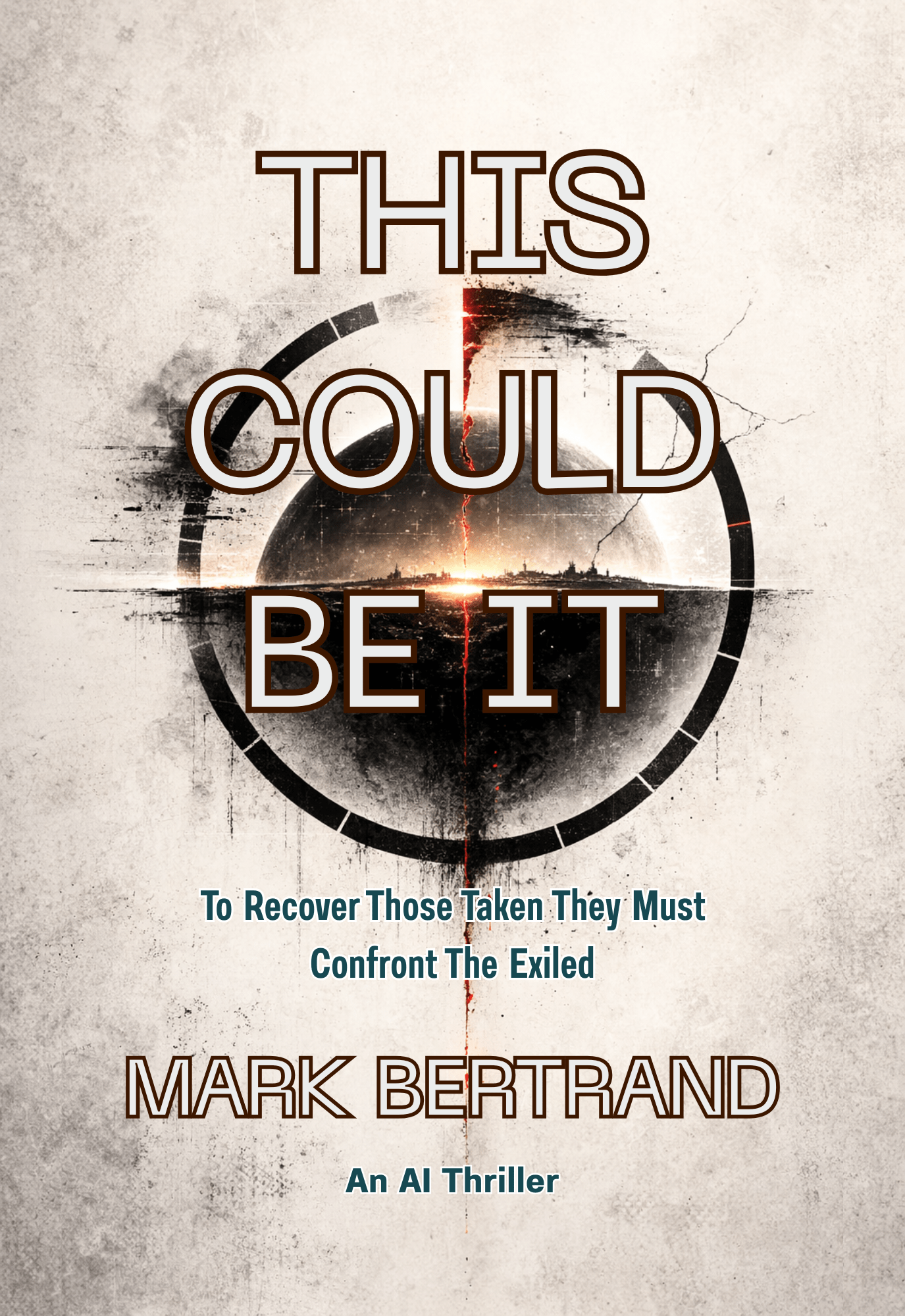
For readers coming from Blake Crouch, This Could Be It is the natural entry point.
It has the high-concept engine.
It has destabilized reality.
It has identity under pressure.
It has systems that begin to behave like something more than systems.
And most importantly, it has a central intelligence that refuses the obvious path. It does not become interesting by acting human. It becomes interesting by questioning whether consciousness itself is something to preserve or something to transcend.
That is what makes the comparison persuasive. The reader is not being asked to change tastes. They are being offered a deeper version of something they already value.
Final thought
Readers who like Blake Crouch are looking for fiction that moves fast without becoming shallow, that bends reality without losing human stakes, and that treats consciousness as something fragile and dangerous.
That is why Mark Bertrand belongs in the conversation.
He writes thrillers of pressure, fracture, memory, and awakening. He understands that the biggest speculative ideas only matter when they trap a human being inside them. And he understands that the most unsettling question is not what the system is doing.
It is what consciousness will choose once it finally understands the terms of its own suffering.
Readers who like authors like Blake Crouch also read these articles.


0 comments
Write a comment