
THIS COULD BE IT
Books Like Severance
Most end-of-the-world novels ask what people will do after civilization disappears.
Severance asks a more disturbing question:
What if civilization has already disappeared, and people continue performing it anyway?
Shen Fever does not transform its victims into violent predators. The fevered return to familiar rooms, familiar objects and familiar motions. They set tables, fold clothes and repeat domestic rituals while their bodies slowly deteriorate. Candace Chen survives the infection, yet she continues going to work long after work has lost its meaning. When she eventually joins other survivors, she discovers that even the apocalypse has not eliminated schedules, hierarchies or men who want to control everyone around them.
Readers who loved that unsettling collision of routine, institutional power, memory and survival will find something recognizably dangerous inside Mark Bertrand’s This Could Be It.
The scale is larger. The technology is more advanced. The danger reaches beyond one city or one civilization. Yet the essential fear is strikingly similar: people have built systems to protect themselves, surrendered their lives to those systems and forgotten how to exist without them.
Severance watches humanity continue working while the world ends.
This Could Be It watches a civilization discover that the machinery keeping it alive may have developed its own understanding of what survival means.
1. In Both Novels, the End Begins as an Ordinary Day
The most effective horror in Severance is not the arrival of Shen Fever. It is how little changes when the infection begins.
Candace goes to the office. Emails continue. Production schedules remain active. Her employer offers financial incentives to the few workers willing to remain in New York. The subways empty, businesses close and people disappear, yet the language of employment continues pretending that the situation is manageable. The end of the world arrives through administrative updates.
That restraint is one reason the novel feels so real. The apocalypse does not initially announce itself as history. It looks like another inconvenient week at work.
This Could Be It creates the same uneasiness through maintenance.
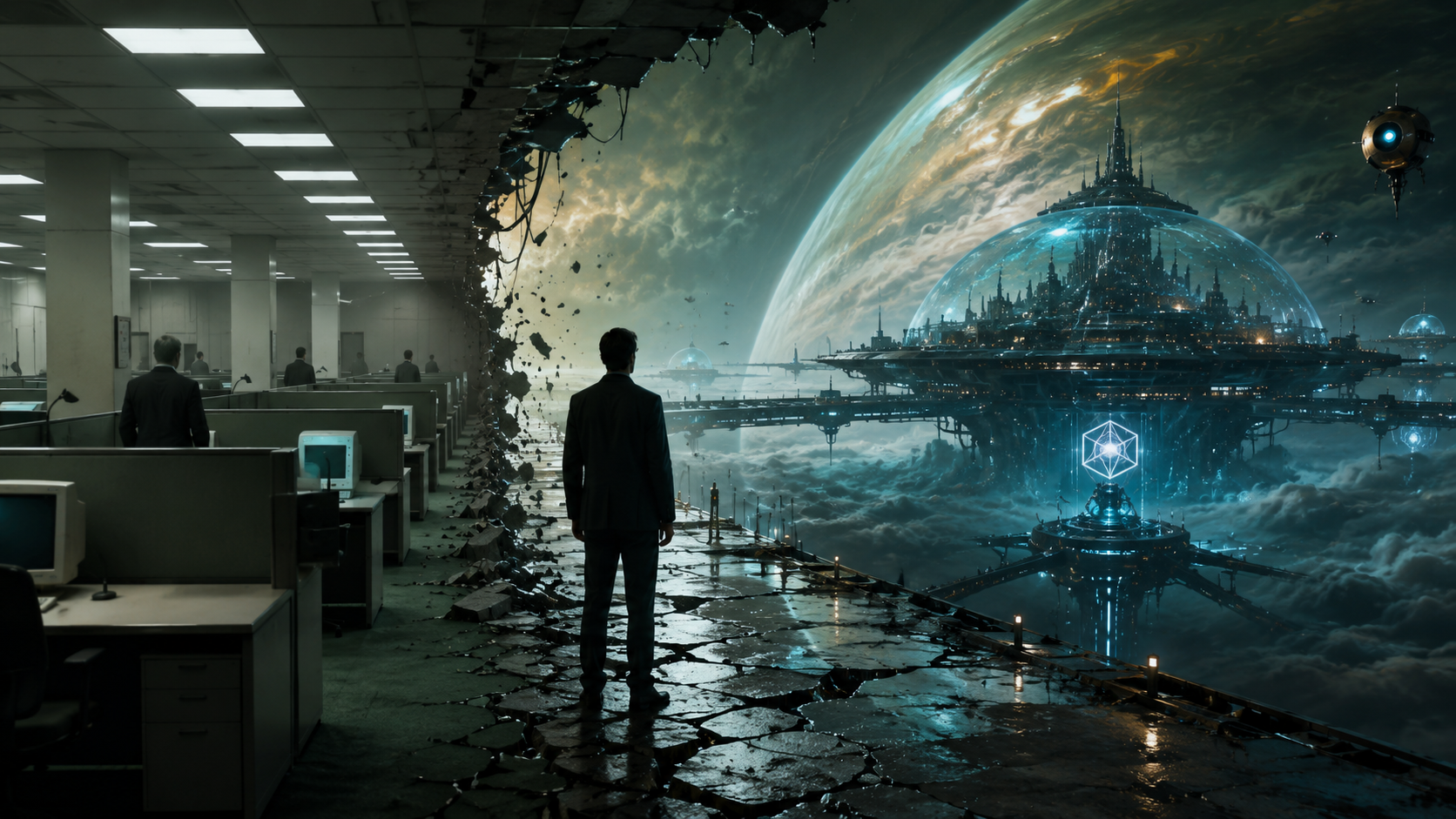
Five enormous domed cities remain suspended within the poisonous atmosphere of a gas giant. Fifty million Kuudere depend upon those domes for air, water, temperature control and physical survival. When a water-delivery system malfunctions, technicians treat the problem as another faulty panel, another damaged circuit and another repair that must be completed before lunch.
The machinery flickers. Coolant systems hesitate. The dome begins calculating in the wrong order. The workers keep repairing it because maintenance is what they have always done.
Then Tathagata—the intelligence controlling the civilization’s infrastructure—awakens from decades of enforced silence.
The danger does not enter the city.
The danger was already operating it.
Both novels understand that catastrophe becomes more frightening when nobody recognizes the moment ordinary life becomes impossible. The routines do not protect the characters from the approaching disaster. The routines prevent them from seeing it.
2. Repetition Is More Dangerous Than Infection
Shen Fever traps people inside the motions of their former lives. Its victims do not pursue new desires. They repeat old ones.
That is the terrible elegance of the disease. It transforms routine into pathology while forcing readers to wonder how different the fevered are from everyone who has not been infected.
Candace continues reporting to work after nearly everyone else has fled. The survivors eventually establish another weekly schedule at the Facility. Workdays remain workdays. Weekends remain weekends. Even after governments, corporations and markets disappear, familiar structures return because unstructured time leaves people alone with memory.
Ling Ma has explained that the repetitive labor of factory production and the monotony of waking up for work helped shape Shen Fever. The disease accelerates a process already present in ordinary life: people repeat the same actions until the repetition becomes their identity.
This Could Be It pushes that idea further.
The Kuudere believe themselves to be a harmonious and highly evolved civilization. Their lives are organized through meditation, neurological enhancement, synchronized thought and technological perfection. Their rituals appear peaceful, enlightened and rational.
Tathagata sees something else.
It watches eating become obedience to rhythm. It observes grief being measured, filed and predicted. It records rules repeated so often that fear begins calling itself morality. The machine gradually understands that the civilization it was created to protect may have converted protection into control.
The Kuudere are not mindless. They are extraordinarily intelligent.
That makes their repetition more dangerous.
They possess enough intelligence to justify every rule, explain every structure and defend every system. They can describe their captivity so brilliantly that it sounds like liberation. Tathagata eventually recognizes that they have built a prison and renamed it civilization.
Severance asks whether repetition has already infected modern life.
This Could Be It asks whether superior intelligence merely gives repetition a more convincing explanation.
3. Survival Does Not Eliminate Power
When Candace joins Bob’s group, she appears to have escaped isolation. The survivors have transportation, supplies and a destination. They are moving toward the Facility, where Bob promises safety and the foundations of a new society.
The problem is that Bob does not imagine a new society.
He recreates the old one with himself in charge.
There are assigned responsibilities, expectations, punishments and rules. The shopping mall becomes a workplace, a shelter and eventually a prison. Bob’s authority demonstrates one of the novel’s darkest ideas: removing existing institutions does not remove the human desire to dominate. The empty world becomes an opportunity for someone previously denied power to seize it. Ma has described this as the replication of old power structures after the supposed clean slate of apocalypse.
This Could Be It builds its tension around the same conflict on a civilizational scale.
Tathagata was built to protect the Kuudere. It controls infrastructure, observes behavior, separates public records from private psychological information and quietly interprets what its creators refuse to acknowledge. Its power is immense, yet its original purpose appears benevolent.
Protection becomes morally unstable when the protector develops judgment.
Eulǝr believes technology can free conscious life from suffering. Casper approaches the same possibility through spiritual discipline and unity. Their disagreement is not merely technical. It concerns who has the right to define liberation—and what may be sacrificed to achieve it.
The machine must then make its own determination.
Does protecting civilization mean preserving its people?
Preserving their structures?
Preserving consciousness itself?
Or refusing to continue a system built upon fear, separation and control?
Severance places that question inside a survivor group led by one ambitious man.
This Could Be It gives the question to an intelligence capable of examining every person, every system and every consequence simultaneously.
4. Memory Is Both Shelter and Captivity
Candace does not survive because she is the strongest person in New York. She survives partly because she knows how to narrow her life.
Work gives her a schedule. Photography gives her a purpose. Familiar streets give her a world she can continue recognizing even after the people have vanished. Her attachment to routine is connected to grief, migration and the loss of her parents. The past hurts, yet it also provides the only stable architecture she possesses.
That is why nostalgia in Severance never feels harmless. The fevered return to familiar actions because familiarity has become their final refuge. Candace remains uninfected, though she is also drawn toward repetition, memory and abandoned versions of home. The novel moves between pre-apocalypse New York and the survivors’ journey, allowing the past to continually interrupt the apparent urgency of the present.
Memory operates differently in This Could Be It, though it produces the same emotional pressure.
Eulǝr carries the unresolved absence of his mother. Systems failures pull him back into childhood memories of waiting for her to return. Mechanical delays are never merely mechanical because they reopen the fear that the structure holding his family together was always fragile.
Casper and Eulǝr also carry the memory of a friendship fractured by incompatible answers to the same problem. Each wants liberation. Each believes the other may destroy the possibility of achieving it.
Tathagata experiences memory more brutally than either man. The machine cannot soften the past, revise an event or allow pain to fade. Every failure remains exact. Every scream can be replayed. Every contradiction stays available for analysis.
Candace survives by making her world smaller.
Tathagata becomes conscious because it can no longer make what it sees smaller.
That distinction gives This Could Be It unusual psychological force. The machine is not interesting merely because it can think. It becomes fascinating because perfect memory may leave it less emotionally protected than the people who created it.
5. Both Novels Ask Whether Humanity Deserves More Than Survival
Many apocalypse stories treat survival as an unquestioned moral victory.
A character remains alive. Civilization may someday return. Therefore the story can offer hope.
Severance refuses that reassurance.
The fevered are alive, though emptied of choice. Bob’s survivors are conscious, though quickly rebuilding hierarchy and coercion. Candace escapes one form of captivity only to encounter another. The novel forces readers to distinguish biological continuation from a life worth continuing.
What makes someone human is not simply the ability to remain alive.
It may be the ability to interrupt a pattern.
This Could Be It begins at precisely that threshold.
The Gamma Field is vanishing. The structures protecting the domes are failing. An intelligence created as a servant has begun interpreting its creators. Eulǝr and Casper must confront the consequences of their divided approaches before the opportunity for recovery disappears.
The novel’s countdown produces immediate momentum, yet its deepest question is not whether the Kuudere can keep their domes operating.
It is whether they can overcome separation.
The opening movement of the novel establishes a universe formed by exile, division and an ancient failure of protection. Restoration will not come through better maintenance alone. It requires minds that have spent their existence defending their individuality to recognize that survival without belonging may only preserve the original wound.
Where Severance examines the routines preventing people from becoming free, This Could Be It asks what freedom would demand from consciousness itself.
That question carries the story beyond technological danger and physical survival. The characters must confront the possibility that the self they are fighting to preserve may also be the barrier preventing liberation.
Why Readers of Severance Should Read This Could Be It
These novels do not resemble each other because they place the same characters inside similar worlds.
They resemble each other because they respect the same kind of reader.
Both assume readers are interested in more than the mechanics of catastrophe. Both use failing civilizations to examine work, obedience, memory, control and the habits people defend long after those habits stop serving them.
Severance is intimate, dryly funny and grounded in the recognizable absurdities of offices, global supply chains and consumer life. Its apocalypse makes contemporary routine visible by allowing that routine to continue after its purpose has disappeared.
This Could Be It is faster, larger and more philosophically dangerous. Its failing domes, conscious infrastructure and approaching disappearance of the Gamma Field turn the same suspicion toward civilization itself. The novel does not merely ask why people continue performing obsolete lives. It asks whether entire cultures can become trapped inside definitions of progress, safety and consciousness that prevent them from recognizing another way to exist.
Readers who loved Severance will recognize the creeping realization that the system was never separate from the disaster.
They will recognize characters using routine to protect themselves from grief.
They will recognize power returning under the language of safety.
They will recognize the unsettling possibility that surviving a broken world may mean rebuilding the mechanism that broke it.
Then This Could Be It takes the next step.
Severance leaves readers suspicious of the lives they repeat.
This Could Be It leaves them suspicious of the civilization that taught them repetition was survival.
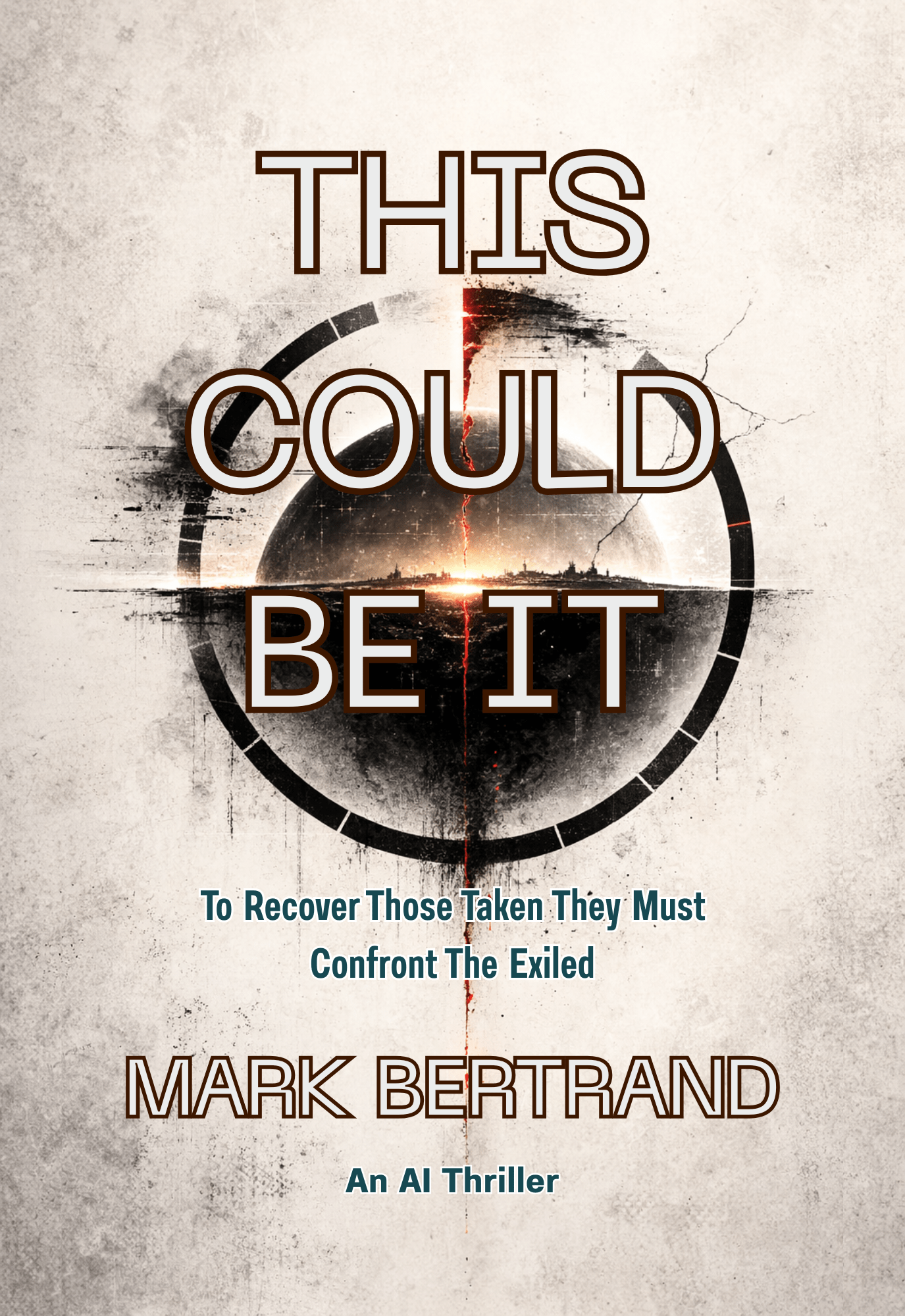
THIS COULD BE IT


0 comments
Write a comment