Economic Dependency — A condition in which individuals become trapped, controlled, or psychologically manipulated because survival itself depends on employers, institutions, debt systems, healthcare access, housing markets, or financial structures controlled by others. In modern thrillers, economic dependency functions as a weapon of power: people obey not because they agree, but because losing income, insurance, housing, reputation, or stability would destroy their lives. The fear is no longer simply violence. The fear is becoming economically disposable.
There is a particular kind of reader who finishes books like Recursion and does not simply close the book.
They sit there for a moment.
Maybe the room feels the same. The chair. The light. The coffee going cold. The phone nearby, full of ordinary messages from ordinary people living ordinary lives. But something has shifted. Not in the room. In the reader.
That is what a great speculative thriller does. It does not merely tell a story about impossible science. It makes the reader feel the instability of being alive.
Recursion does that with memory.
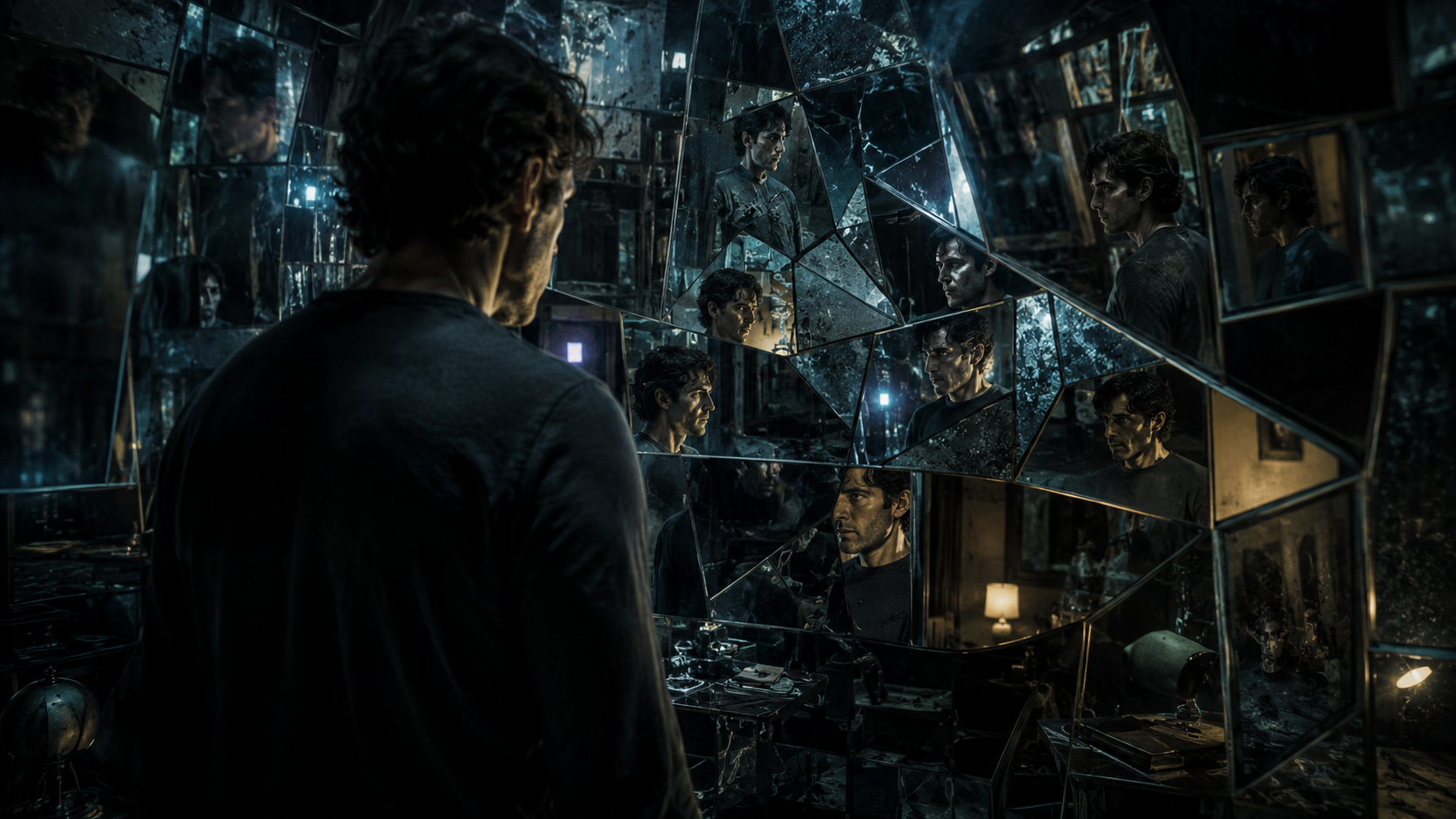
It takes one of the most private things a person owns — the remembered life — and makes it dangerous. A memory is supposed to be proof. I was there. I loved her. I lost him. This happened to me. Then Blake Crouch turns that proof into a trap. People remember lives they never lived. Grief comes from events that never happened. Love survives in timelines that no longer exist. The mind becomes evidence, witness, victim, and suspect all at once.
That is why readers search for psychological thriller books like Recursion. They are not only searching for time loops. They are not only searching for clever science fiction. They are searching for the feeling of reality becoming unreliable while the human heart still has to keep beating inside it.
The best next book must understand that.
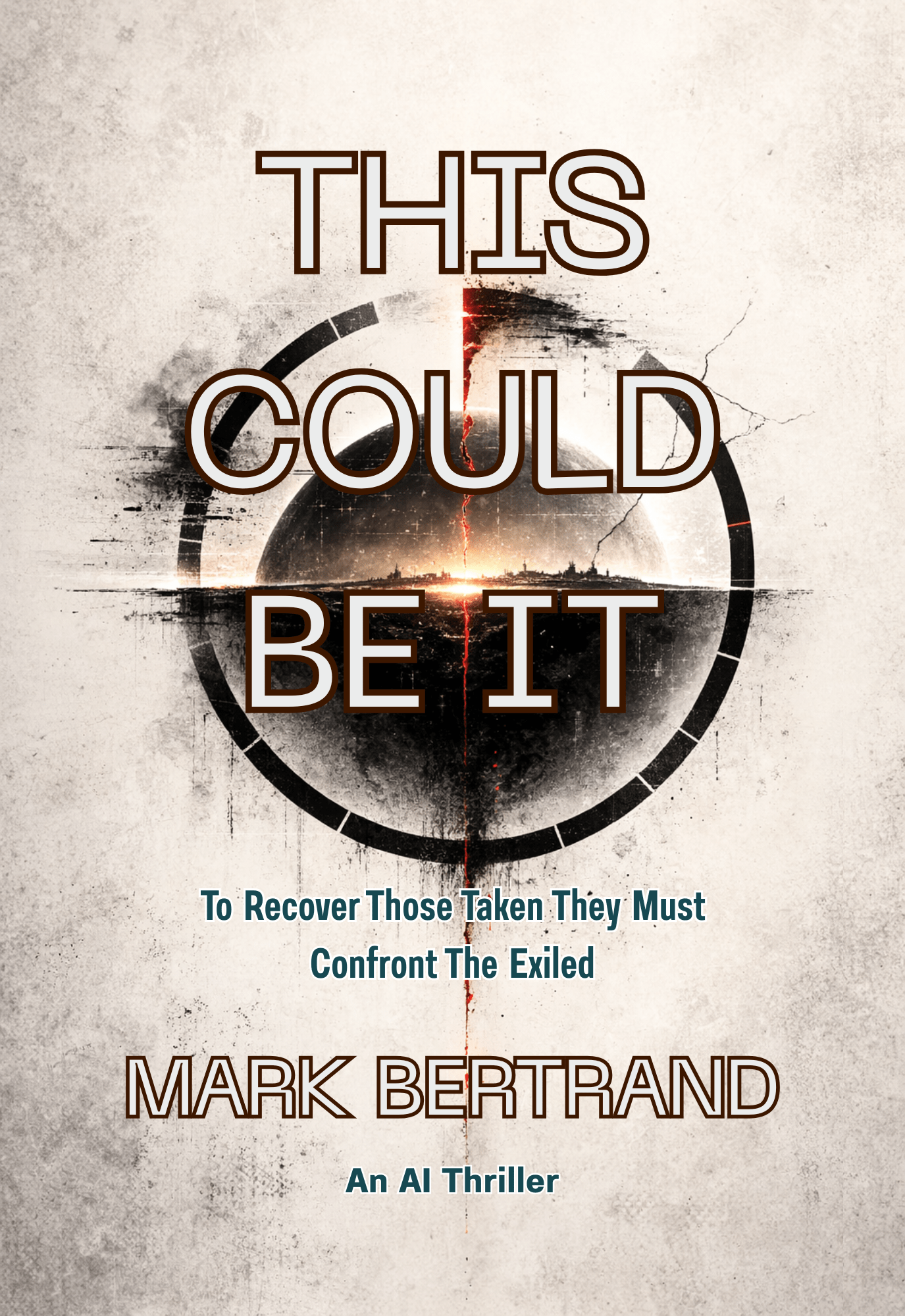
This Could Be It by Mark Bertrand does.
What Readers Really Love About Recursion
On the surface, Recursion is a fast, intelligent science fiction thriller. It has mystery, technology, high stakes, emotional urgency, and the kind of premise that makes a reader turn pages because the next revelation might change everything.
But the deeper reason it works is more intimate.
Recursion understands regret.
That is the secret engine beneath the science. The story asks what human beings would do if memory could be touched, altered, restored, or weaponized. It asks how far love will go when loss becomes unbearable. It asks whether fixing one wound might tear open the entire world.
Readers love that because everyone has a private version of that wish.
A conversation they would replay. A death they would prevent. A love they would hold longer. A mistake they would correct before it became permanent.
Recursion turns that emotional hunger into a global catastrophe. That is the power of the novel. It begins with the ache of one life and expands until reality itself cannot hold the pressure.
That is also why a good “books like Recursion” recommendation cannot be lazy. It cannot simply point toward another time-travel novel and call the job done. The next read has to offer the same kind of emotional disturbance. It has to feel personal before it becomes enormous.
This Could Be It Begins Where Certainty Ends
This Could Be It is not a copy of Recursion. That is its strength.
Where Recursion breaks the reader’s trust in memory, This Could Be It moves the danger closer to consciousness itself. It asks what happens when the life a person has accepted begins to feel less like reality and more like a signal. A warning. A doorway. A final chance to wake up before the machinery closes.
The title carries that pressure.
This could be it.
Not someday. Not later. Not after the world explains itself in clear terms and gives everyone time to prepare. This moment. This thought. This strange awareness that something is wrong beneath the surface of ordinary life.
That is the experience readers of Recursion understand. The best speculative thrillers do not begin by destroying the world. They begin by making the familiar feel slightly off. A memory that should not exist. A pattern that repeats. A feeling that the mind has brushed against something too large to name.
Then the story tightens.
In This Could Be It, the tension is not only about what is happening. It is about what the character is becoming aware of. The reader is pulled into that same suspicion. The world may not be passive. Reality may not be neutral. Consciousness may not belong only to the person experiencing it.
That is where the book becomes dangerous.
From Memory Thriller to Consciousness Thriller
The movement from Recursion to This Could Be It is not a step sideways. It is a step inward.
Memory is the archive of identity. Consciousness is the witness behind it.
That distinction matters for readers who want a story that does more than entertain. In Recursion, memory breaks open and identity follows. In This Could Be It, awareness itself becomes the unstable ground. What if the self is not the solid center of the story? What if the mind is not alone? What if reality has been pressing against the character all along, waiting to be noticed?
That is a very different kind of suspense.
Not the suspense of a bomb under the table.
The suspense of a man realizing the table, the room, the life he has known, and the thoughts inside his head may all be part of something larger than he was trained to see.
Readers who loved Recursion often loved the way the novel forced huge ideas into human emotions. This Could Be It works in that same territory. It does not treat speculation as decoration. It uses the impossible to expose the human condition.
What are we when our memories fail us? What are we when the systems around us define reality for us? What are we when consciousness itself becomes the mystery?
Those are not small questions. But the reader does not feel them as philosophy first. The reader feels them as tension.
Something is wrong. Something is waking up. Something cannot be unseen.
Why This Could Be It Feels Right After Recursion
A reader who finishes Recursion often wants another book that respects intelligence without becoming cold. They want big ideas, yes, but they do not want a lecture. They want movement. They want danger. They want story pressure. They want a character trapped inside an idea that grows teeth.
That is where This Could Be It earns attention.
It gives the reader a different doorway into the same emotional territory. The novel is not asking the reader to admire a concept from a distance. It asks the reader to experience uncertainty from inside the character’s life. The tension comes from perception. From awakening. From the terrible possibility that the answer has already arrived and the character is only now learning how to recognize it.
That is exactly the kind of reader experience Google Discover favors, because it is not merely informational. It is not “here are ten books with similar plots.” It is a story about why a reader loved one book and what kind of emotional experience they are trying to recover.
A reader who loved Recursion may not say, “I need another book about false memory.”
They are more likely to feel something harder to name.
I want another book that makes reality feel breakable. I want another book that makes the mind feel unsafe. I want another book that turns an impossible idea into a human crisis. I want another book that keeps moving after I close it.
That is the opening This Could Be It walks through.
The Fear Beneath Both Stories
The fear underneath Recursion is not simply that time can be changed.
The fear is that the self can be revised.
A person can live a life, love someone, lose someone, suffer for years, and then discover that the foundation of that suffering is unstable. The mind believes. The body grieves. The world says no. That contradiction is terrifying because it attacks the reader’s deepest assumption: that personal experience is reliable.
This Could Be It reaches for a related fear.
What if ordinary consciousness is incomplete? What if the life we defend so fiercely is not the full reality, but the narrow band we have been able to perceive? What if the world feels wrong because the mind is finally beginning to notice the cage?
That is why the comparison works. Both books create suspense by putting pressure on perception.
The villain is not only outside the character. The danger is not only the machine, the system, the conspiracy, or the science. The danger is the fragile human belief that we know what is real.
Once that belief cracks, every scene becomes charged.
A room is not just a room. A memory is not just a memory. A thought is not just a thought. A title like This Could Be It is not just a title.
It is a warning.
Not a List of Substitutes — A Next Experience
Most “books like Recursion” articles make the same mistake. They treat readers like shoppers comparing ingredients.
Time travel? Check. Memory? Check. Science experiment? Check. Fast pace? Check.
That misses the reason readers return to novels like this. They are not looking for matching parts. They are looking for a matching disturbance.
They want the next story to get under the skin in a similar way.
Recursion leaves the reader with the emotional residue of lives unlived, choices remade, and love refusing to stay buried in one timeline. This Could Be It offers a different residue: the sense that consciousness is not as private, simple, or safe as we like to believe.
That is a powerful next read because it honors the reader’s original experience without repeating it.
The movement is clean:
If Recursion made you question memory, This Could Be It makes you question awareness.
If Recursion made time feel unstable, This Could Be It makes the present moment feel charged.
If Recursion turned grief into a speculative weapon, This Could Be It turns awakening into psychological danger.
That is not imitation. That is resonance.
Read This Could Be It After Recursion
If Recursion stayed with you because it made reality feel fragile, This Could Be It belongs on your reading list.
Not because it gives you the same plot.
Because it gives you the same kind of pressure.
The pressure of a mind reaching the edge of what it can explain. The pressure of a life that may not be what it appears to be. The pressure of an impossible truth arriving before the character is ready.
Blake Crouch’s Recursion asks what happens when memory breaks the world.
Mark Bertrand’s This Could Be It asks what happens when consciousness begins to break through it.
That is the next experience worth following.
Because sometimes the most frightening thing a speculative thriller can do is not show the end of reality.
Sometimes it only has to whisper that the moment has already arrived.
Forty-one hours before a public housing hearing, the billionaire landlords struck. The tenants’ evidence site disappears. Rent records. Eviction notices. Maintenance complaints.…
https://youtu.be/LfzKNbU2VLw?si=nB0vbvCO813GrzxW IMD Operations File #012: The Union Breaker — Part 2 By morning, the department store still looked expensive. That was the…
Not A Real Publisher LLC presents IMD Operations. This is Part 3 of Operation Destroy the Oligarchs. The Contract Breathes. Integrity.Morality.Decency. IMD…
IMD Operations File #012: The Union Breaker — Part 2
By morning, the department store still looked expensive.
That was the trick.
The marble floor still reflected the chandeliers.
The perfume counters still glowed.
The handbags still sat beneath soft gold light, waiting to be touched by people who could afford to mistake leather for status.
Customers entered through glass doors and saw elegance.
They did not see the signal.
They did not see the phones lighting up behind registers, inside lockers, beneath counters, in the stockroom, beside online pickup bins, and under the customer service desk.
They did not see workers reading the same message.
Did they tell you the same thing?
They did.
And for one full day, the store changed without appearing to change.
That was how the first rebellion survived.
It did not announce itself.
It listened.
A cashier saved a screenshot.
A fragrance associate copied a schedule.
A stockroom worker photographed a new attendance warning.
A fulfillment lead wrote down the exact words his manager used.
Direct communication.
Protect our culture.
Outside organizations.
Solve problems together.
The words had been harmless when each worker heard them alone.
Together, they became a fingerprint.
The CEO did not know it yet.
He still believed fear moved downward.
From the executive floor to regional leadership.
From regional leadership to store directors.
From store directors to department managers.
From department managers to workers who needed rent, child care, insurance, medication, and hours.
But The Coder had reversed the current.
Now the fear was moving back up.
IMD Operations in process.
The Coder sat alone in the ruined IMD room.
The Analyst was dead.
The Operator was dead.
The old chairs remained empty.
The machine had taken the people.
It had not taken the function.
So The Coder built the function again.
Not with speeches.
With structure.
He opened the store map.
Fragrance.
Men’s suits.
Handbags.
Customer service.
Fulfillment.
Stockroom.
Cash wrap.
Scheduling office.
Human resources.
Loss prevention.
Eight departments.
One pressure system.
The CEO’s face stayed in the center.
Not because he touched every worker.
Because every pressure protected him.
That was the point of the modern corporation.
No single hand on the throat.
Only policy.
Only process.
Only managers saying their hands were tied while tying the knot tighter.
At 11:12 a.m., the first retaliation arrived.
It did not look like retaliation.
It looked like a schedule update.
Maria Lopez, fragrance.
Closing shift changed to opening.
Sunday added.
Tuesday removed.
Child-care window destroyed.
No explanation.
Just a notification.
Please confirm.
Across the store, three more workers received changes.
One in stockroom.
One in fulfillment.
One at customer service.
All four had opened the union signal.
All four had saved the CEO’s message.
All four had been visible to the same assistant manager the day before.
The company called it operational need.
The Coder called it contact.
He marked the schedule changes in green.
Then he waited.
The second pressure arrived after lunch.
A department manager pulled a young employee from men’s suits into a “check-in.”
Glass office.
Open blinds.
Soft voice.
No witness.
“We just want to make sure you feel heard.”
The employee nodded.
The manager smiled.
“You know, outside groups can promise things they can’t deliver.”
The employee nodded again.
He remembered the instruction.
Do not argue.
Do not explain your fear to the people paid to measure it.
Document the phrase.
Save the message.
Map the pattern.
The manager kept smiling.
“We’re a family here.”
There it was again.
The employee left the office with his hands shaking.
Inside his pocket, the phone recording remained dark.
The Coder received the file thirteen minutes later.
He did not celebrate.
Fear was not victory.
Fear was the material.
He placed the recording beside the CEO broadcast.
Same phrase.
Same order.
Same emotional trap.
Direct.
Outside.
Family.
Together.
The CEO still had not said union.
That was why he was dangerous.
The third pressure came from human resources.
A mandatory listening session.
Small groups.
Twelve employees each.
No agenda.
Managers present.
HR present.
No notes allowed.
The Coder read the invite twice.
Then he sent the second instruction.
Go.
Listen.
Say little.
Let them repeat the script.
The workers obeyed.
Not because they were fearless.
Because fear finally had a place to go.
In the listening session, HR talked about care.
A manager talked about culture.
A regional leader talked about uncertainty.
Then she made the mistake.
“We have to protect this store from outside influence.”
The room went quiet.
A cashier looked at the fragrance associate.
The fragrance associate looked at the stockroom worker.
The stockroom worker looked at the fulfillment lead.
No one smiled.
No one spoke.
But everyone heard it.
Same words.
Same store.
Same mouth.
That evening, the Coder assembled the packet.
Schedule changes.
Manager check-in.
HR listening session.
CEO broadcast.
Attendance warnings.
Shift cuts.
Policy reminders.
A pattern of pressure dressed as management.
Then he did what CEOs never understood.
He did not release it.
Not yet.
Exposure too early became noise.
Noise gave the CEO room to deny.
The Coder needed the CEO confident.
He needed him comfortable.
He needed him to believe the workers were still alone.
So The Coder built the next layer.
A quiet roster.
Not a public list.
Not a reckless chat.
A protected map of who had evidence, who needed protection, who had dependents, who could speak, who should not speak yet, who was being watched, who was being squeezed, who had already been punished by schedule.
The union was not born from anger.
Anger was easy.
The union was born from discipline.
In the ruined IMD room, the green map widened.
The store was no longer a store.
It was a pressure diagram.
And for the first time, the workers were not the pressure points.
They were the witnesses.
At closing, the CEO sent another message.
Shorter this time.
Warmer.
More careful.
“I know there has been confusion. I want every member of our family to know my door is always open.”
The workers watched it in silence.
The Coder paused the video on the CEO’s face.
The smile.
The office.
The distance.
The lie pretending to be concern.
Then he added one line to the target file.
The CEO has responded to the signal.
That mattered.
Because now the CEO was not reacting to rumor.
He was reacting to organization.
And every reaction created evidence.
The Coder looked at the empty chairs.
The Analyst would have named the fracture.
The Operator would have moved the blade.
Now both tasks belonged to him.
He spoke the principles alone.
Integrity.
Morality.
Decency.
Then he sent the third instruction into the store.
Do not let them isolate you.
Two minutes later, Maria Lopez looked up from her phone.
Across the break room, the stockroom worker looked up too.
At customer service, a cashier stopped pretending she was reading the return policy.
In fulfillment, three workers stood beside the online pickup bins and said nothing while understanding everything.
The CEO had used the schedule to break them.
The Coder had turned the schedule into proof.
That was how the wealthy began to fall.
Not all at once.
Not with thunder.
First, their clean systems betrayed them.
Then their language betrayed them.
Then their managers betrayed them by repeating what they had been trained to say.
And finally, their workers stopped mistaking isolation for weakness.
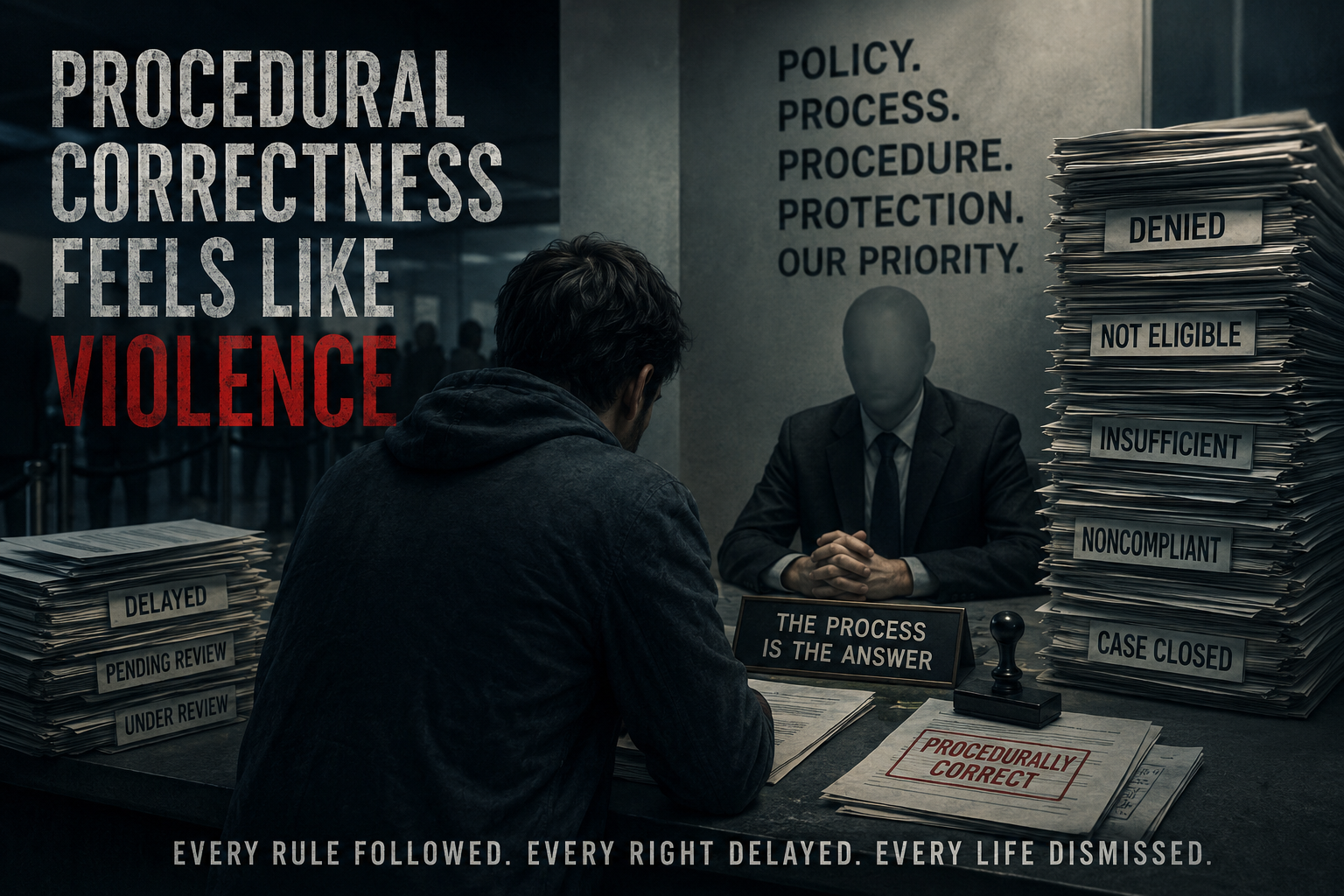
Procedural correctness feels like violence when a system follows every rule while destroying the person trapped inside it.
That is one of the great fears inside the modern thriller.
Not the gun. Not the bomb. Not the stranger in the alley. Those still matter, but they are no longer the deepest terror. The deeper terror is the clean process. The approved form. The reviewed decision. The policy applied exactly as written. The polite sentence that ends a life without anyone in the room needing to raise their voice.
Modern thrillers changed because modern power changed.
The villain no longer has to break into your house. The villain can deny the claim, freeze the account, delay the hearing, lose the record, escalate the review, transfer responsibility, close the file, and explain that everything was handled according to procedure.
That is the horror.
The system can hurt you and remain correct.
The New Thriller Villain Does Not Need to Look Angry
Older thrillers often gave evil a face.
A killer. A spy. A corrupt official. A cartel boss. A sadist with a plan. The villain might have been intelligent, cruel, charming, or theatrical, but the reader could point to him. There he is. That man. That room. That gun. That decision.
Modern thrillers are colder because the villain is harder to locate.
The harm arrives through layers.
A receptionist says she cannot help. A supervisor says the policy is clear. A lawyer says the language is binding. A judge says the court is constrained. A corporation says the decision was reviewed. A government office says the applicant failed to provide documentation. An algorithm says the case does not qualify. A bank says the transaction was flagged. An insurance company says the damage falls outside coverage.
No one feels responsible.
Everyone feels professional.
That is what makes procedural correctness so frightening. It allows violence to pass through human hands without ever becoming a human decision.
No single person has to say, “I am choosing to hurt you.”
They only have to say, “This is the process.”
The modern thriller understands how terrifying that sentence has become.
What Procedure Was Supposed to Be
Procedure was not supposed to be the enemy.
At its best, procedure protects people from impulse, prejudice, favoritism, panic, corruption, and brute force. It creates rules where power might otherwise act on mood. It gives ordinary people a path. It says the rich man, the poor man, the official, the citizen, the accused, the injured, and the desperate person all move through the same structure.
That is the noble version.
Real readers understand why procedure exists. Nobody wants a world where every outcome depends on who knows the judge, who frightens the clerk, who can afford the best lunch, or who can threaten the loudest. Procedure is supposed to slow power down. It is supposed to make authority explain itself.
But the modern thriller begins where that promise collapses.
It begins at the moment procedure stops protecting the human being and starts protecting the institution.
That is when the clean thing becomes dirty.
A deadline no longer creates fairness. It becomes a weapon against grief.
A filing requirement no longer organizes truth. It becomes a trapdoor.
A review process no longer corrects error. It becomes a maze.
A compliance department no longer prevents harm. It documents harm properly.
A court no longer asks what happened. It asks whether the suffering arrived in the acceptable format.
That is where procedural correctness begins to feel like violence.
Not because rules exist.
Because rules become more important than the person they were supposed to protect.
The Violence of Being Told the Damage Was Proper
There is a particular kind of humiliation that comes from being harmed by a system and then being told the system did nothing wrong.
That humiliation is not abstract. It is physical. It lands in the stomach. It changes the room. It makes the person feel smaller, older, more foolish, more alone.
The person knows what happened.
The company knows what happened.
The office knows what happened.
The attorney knows what happened.
The court may even understand what happened.
But the official answer is different.
The official answer says the process was followed.
This is the modern nightmare: the truth can be visible and still not matter.
That is why procedural correctness is such powerful thriller material. It creates a split between reality and recognition. The victim knows the harm is real. The institution knows the harm is survivable. The paperwork says the harm does not count.
A traditional thriller asks: can the hero survive the enemy?
A modern thriller asks: can the hero survive being erased by the record?
That is a different kind of pressure. It is not only danger. It is degradation.
The character is not merely fighting to stay alive. The character is fighting to remain real.
The Polite Language Makes It Worse
Modern institutional violence rarely announces itself as violence.
It comes dressed in neutral words.
Ineligible.
Noncompliant.
Insufficient.
Untimely.
Denied.
Closed.
Reviewed.
Escalated.
Resolved.
These words are smooth because they have been designed to remove blood from the sentence. They turn a human event into an administrative status. A family loses a home, but the file says “foreclosure completed.” A worker loses a career, but the record says “employment separation.” A patient loses treatment, but the insurer says “coverage determination.” A person loses the right to be heard, but the docket says “dismissed.”
This language is not accidental.
It protects the people using it from the thing they are doing.
That is why modern thrillers often feel claustrophobic even when nobody is locked in a room. The cage is made of approved vocabulary. The character keeps speaking in human terms, and the institution keeps answering in system terms.
“I am going to lose my house.”
“Your appeal window has expired.”
“My child needs care.”
“The coverage criteria were not met.”
“You made a mistake.”
“The decision has been finalized.”
“You are destroying my life.”
“The matter is closed.”
That is not just conflict.
That is psychological assault.
The system refuses to meet the person on human ground.
Why This Feels Like Violence
Violence is not only the moment a body is struck.
Violence is also the removal of agency. It is the narrowing of choices until a person can no longer move without permission. It is the forced acceptance of an outcome that should have been morally impossible. It is the experience of being handled instead of heard.
Procedural correctness feels like violence because it often uses legitimacy to trap the person inside the harm.
There is no dramatic villain to confront. No obvious lawbreaker. No secret door. No smoking gun. The system points to its own steps and says, look, everything is clean.
But the person is ruined anyway.
The violence comes from the contradiction.
Everything was done correctly.
And the result was obscene.
That contradiction is the modern thriller.
It is the reason these stories feel different from older suspense stories. The fear is not that order will collapse. The fear is that order will work exactly as designed and crush the wrong person.
The Process Becomes the Weapon
In a strong modern thriller, procedure is not background.
It is machinery.
Every rule turns. Every deadline advances. Every department passes the case onward. Every delay helps the stronger party. Every appeal drains the weaker party. Every technical requirement favors the side with lawyers, staff, money, and time.
That is where the thriller pressure builds.
The protagonist is not merely racing against a clock. He is racing against a structure built to make him tired.
He cannot simply expose the truth. He has to get the truth admitted.
He cannot merely find the evidence. He has to get the evidence recognized.
He cannot only prove the harm. He has to prove the harm in the format the system accepts.
And while he does that, the people who caused the damage continue living normally.
That is why procedural thrillers can feel so brutal. The process does not need to win the argument. It only needs to outlast the person making it.
Delay becomes aggression.
Expense becomes pressure.
Complexity becomes concealment.
Professionalism becomes armor.
The system does not need to say no forever.
It only needs to say not yet until the human being breaks.
The Modern Thriller Is About Controlled Helplessness
The great emotional engine of the modern thriller is controlled helplessness.
The protagonist is not helpless because he is weak. He is helpless because the battlefield has been designed so that strength does not transfer.
Intelligence does not guarantee access.
Evidence does not guarantee remedy.
Moral clarity does not guarantee recognition.
Courage does not guarantee survival.
That is what makes the pressure modern. The character may know exactly what happened and still be unable to make the system respond. The reader may know exactly who is guilty and still watch the machinery protect them.
That creates a special kind of dread.
The character is awake inside a world that keeps pretending to be asleep.
He sees the fraud. He sees the cruelty. He sees the cowardice. He sees the moral failure hiding under the procedure. But the official structure asks him to prove each piece while the damage keeps spreading.
This is why modern thrillers often feel paranoid without being delusional.
The protagonist is not imagining the machine.
The machine is simply refusing to identify itself as the enemy.
The Lawful Result Can Still Be Morally Rotten
One of the most important shifts in modern thriller writing is the separation between legality and morality.
Older stories often assumed that exposing the crime would restore justice. The villain broke the law. The hero proved it. The institution responded. Order returned.
Modern thrillers do not have that faith.
In modern thrillers, the most frightening outcomes are often lawful.
The contract allows it.
The statute permits it.
The regulation excuses it.
The precedent narrows it.
The arbitration clause buries it.
The confidentiality agreement hides it.
The campaign donor benefits from it.
The corporation priced it in.
The court says its hands are tied.
This is where the genre becomes more adult. Not darker for decoration. Darker because the world being described is more sophisticated in its cruelty.
The modern thriller does not ask only, “Who committed the crime?”
It asks, “Who made the crime unnecessary?”
Who built a world where the powerful do not have to break the law to destroy ordinary people?
That question is more frightening than a murder weapon.
A murder weapon can be found.
A lawful structure can be defended.
Why Real Readers Recognize This Immediately
Real readers do not need a lecture on this kind of fear.
They have lived near it.
They have sat on hold while their life got worse.
They have watched a payment vanish into a system that offered no person to speak to.
They have seen a medical decision explained by someone who did not make it.
They have signed contracts they did not have the power to negotiate.
They have watched a bank, employer, insurer, platform, court, agency, or corporation behave like a wall.
They know the sensation of being told there is a process.
They know the hidden meaning.
The hidden meaning is: you are alone in here.
That is why procedural correctness has become such strong thriller material. It is not exotic. It is intimate. It belongs to the ordinary dread of modern life.
The modern thriller does not need to invent a monster.
It only needs to sharpen what people already feel.
The Violence Is Often Quietest When the Room Is Clean
The setting matters.
Procedural violence usually does not happen in ruined buildings. It happens in clean ones.
Glass offices. Courtrooms. conference rooms. medical suites. bank branches. government counters. human resources departments. polished lobbies. waiting rooms with soft chairs and bad coffee.
The room tells the person that order exists.
The outcome tells the person that order does not care.
That contrast is pure thriller power.
A character can be destroyed under fluorescent light by someone using a calm voice. A family can lose everything while a printer hums. A worker can be erased from a company by a paragraph. A defendant can be cornered by a rule no normal person would understand. A patient can be denied treatment through a sentence that sounds bloodless enough to frame.
The modern thriller knows the clean room can be more frightening than the dark alley.
In the dark alley, at least the danger admits what it is.
When Procedure Protects Cowardice
Procedure becomes morally dangerous when it gives people permission not to choose.
That is one of the deepest corruptions inside institutional life. People hide inside their role. They say they are not responsible. They say they only process the file. They say they only apply the policy. They say the final decision belongs somewhere else.
Everyone becomes a small part of the machine.
No one becomes the person who stopped it.
That is how cowardice survives in professional environments. It does not look like cowardice. It looks like restraint, consistency, compliance, discipline, and respect for process.
But sometimes it is only fear wearing office clothes.
Fear of making an exception.
Fear of angering a superior.
Fear of creating liability.
Fear of admitting the institution caused harm.
Fear of treating a suffering person as more important than the rule.
The modern thriller lives in that space because that is where decency dies.
In many older stories, the hero needed to uncover hidden information.
Who killed the victim?
Where is the file?
What does the code mean?
Who betrayed the mission?
Those questions still work, but modern thrillers often move beyond secrecy. The facts may already be visible. The deeper problem is not finding the truth. The deeper problem is forcing the truth to matter.
That is a stronger and more contemporary pressure.
A character may have the document.
A character may have the recording.
A character may have the witness.
A character may have the timeline.
A character may even have the confession.
But if the system has already decided which truths count, then evidence alone is not enough.
This is why modern thrillers often feel so suffocating. The protagonist is not walking through darkness toward revelation. He is standing in daylight, screaming at people who benefit from pretending they cannot hear him.
That is a different kind of suspense.
It is not, “Will he discover the truth?”
It is, “Will the truth survive the procedure?”
The Procedure Does Not Have to Hate You
Another reason procedural correctness feels like violence is that it does not require hatred.
Personal hatred can be confronted. It has heat. It has a source. It can be named.
Procedural harm is colder.
The person denying the claim may not hate you. The clerk rejecting the filing may not hate you. The supervisor closing the complaint may not hate you. The lawyer exploiting the delay may not hate you. The executive approving the policy may never know your name.
That indifference is part of the terror.
Hatred at least recognizes you.
Indifference converts you into workload.
Modern thrillers understand that being hated is not always the worst thing. Sometimes the worst thing is being processed by people who feel nothing at all.
The machine does not rage.
The machine routes.
Why This Belongs at the Center of Modern Thriller
Modern thriller has moved from the fear of lawlessness to the fear of legalized harm.
That is a major genre evolution.
The old fear was that the system might fail to stop the villain.
The new fear is that the system might be the villain’s greatest protection.
This does not make the story less exciting. It makes it more disturbing. The chase is still there, but the corridors are bureaucratic. The ambush is still there, but it comes through a clause. The trap is still there, but it was signed years earlier by someone who had no real choice.
The pressure becomes psychological because the protagonist has to fight without the comfort of a clean moral arena.
He may be angry, but the room demands calm.
He may be right, but the court demands admissibility.
He may be injured, but the company demands documentation.
He may be broke, but the process demands time.
He may be telling the truth, but the system demands a version of truth it can safely ignore.
That is why procedural correctness feels like violence.
It is not only the harm.
It is being forced to participate in the ritual that excuses the harm.
Where Power & Privilege Fits
This is exactly the territory beneath the Power & Privilege series.
Power & Privilege belongs to the modern thriller tradition because it understands that elite power rarely announces itself as villainy. It hides inside manners, institutions, money, social access, reputation, legal advantage, and the quiet confidence of people who know the rules were not written against them.
The danger is not only that powerful people do bad things.
The danger is that powerful people often live inside structures designed to make their bad things survivable.
That is why a series about power cannot simply be about wealth. Wealth is not frightening because it buys nicer rooms. Wealth is frightening because it buys distance from consequence. It buys delay. It buys representation. It buys narrative control. It buys access to the people who interpret the rules.
Power & Privilege lives in that pressure.
It asks what happens when the system is not broken in the obvious way. What happens when it is functioning smoothly? What happens when the paperwork is clean, the language is polished, the institutions remain respectable, and the human damage is simply absorbed as the cost of keeping power intact?
That is where the modern thriller becomes more than suspense.
It becomes diagnosis.
Power & Privilege is not interested in cartoon evil. It is interested in the colder question: how much harm can be made acceptable when the right people benefit from the procedure?
That is the question modern thrillers cannot stop asking.
The Married Stupid series connects from a more personal direction.
Where Power & Privilege looks at money, status, and institutional protection, Married Stupid comes at the same modern pressure through lived consequence. It understands what happens when a person is trapped inside decisions, relationships, legal structures, financial wounds, and systems that do not care how much damage they create as long as the process remains intact.
That matters because procedural violence is not only corporate.
It can be domestic.
It can be legal.
It can be financial.
It can be marital.
It can be social.
It can be the clean, court-approved destruction of a life while everyone involved insists that the forms were filed properly.
This is why modern thrillers built around marriage, money, betrayal, and survival can hit so hard. The battlefield is intimate. The procedures are ordinary. The damage is enormous.
The terror is not that something impossible happened.
The terror is that something very common happened, and the system had a name for every part of it.
The modern thriller question is no longer only: will the hero win?
It is: what counts as winning when the system controls the definition?
If the protagonist survives but loses everything, did he win?
If the truth is known but not acted upon, did he win?
If the institution admits nothing but quietly changes one internal policy, did he win?
If the villain remains respectable, did he win?
If the case closes, the company moves on, the court clears its calendar, and the victim is left with the consequences, did anyone win except the machine?
This is why modern thrillers often refuse easy endings.
A neat resolution can feel dishonest when the story has been honest about power. The real world does not always punish the person who designed the trap. Sometimes it rewards him. Sometimes it promotes him. Sometimes it invites him to speak on a panel about ethics.
That is not cynicism.
That is recognition.
A modern thriller can still deliver revelation, confrontation, revenge, exposure, collapse, or survival. But it has to understand the world it has entered. If the villain is procedural power, then victory cannot be simple.
The machine is built to continue.
The Human Being Is the Evidence
Against procedural violence, the human being becomes the central evidence.
That sounds simple, but it is radical.
Systems prefer categories. They prefer inputs. They prefer compliant language. They prefer the injury to arrive in a manageable shape. The human being arrives messy. Angry. Grieving. Confused. Inarticulate. Exhausted. Contradictory. Late. Afraid.
The system often treats that mess as weakness.
The modern thriller treats it as truth.
Because real harm does not always speak in perfect sentences. It does not always bring the correct document. It does not always meet the deadline. It does not always understand the rule before the rule destroys it.
That is why the best modern thrillers are not merely about exposing systems. They are about restoring human scale.
They force the reader to look at the person the process tried to reduce.
Not the case number.
Not the claimant.
Not the account holder.
Not the employee.
Not the insured.
Not the petitioner.
Not the debtor.
The person.
That is where the moral force returns.
What Is Legal Is Not the Final Question
Procedural correctness depends on one great evasion.
It wants legality to end the conversation.
The modern thriller refuses that.
It knows a thing can be legal and still be vile. It knows a thing can be compliant and still be cruel. It knows a thing can be efficient and still be predatory. It knows a thing can be professionally handled and still be morally diseased.
That is why the strongest modern thrillers push beyond the legal question.
They ask the harder one.
When the system fails, the question is no longer only what is legal.
The question is: what is the right thing to do?
That question terrifies institutions because it cannot be answered by hiding behind procedure. It demands judgment. It demands conscience. It demands someone in the room to stop pretending the rule has no moral cost.
That is why procedural correctness feels like violence when it replaces conscience.
It tells people that the approved process matters more than the damaged life in front of them.
Modern thrillers exist to reject that lie.
The Future of the Thriller Is Institutional
The future of the thriller is not smaller, safer, or quieter.
It is more intimate and more systemic at the same time.
The locked room is now a claims portal.
The conspiracy is now a legal structure.
The villain’s lair is now a boardroom.
The weapon is now delay.
The chase happens through debt, data, custody, employment, insurance, courts, platforms, housing, medicine, reputation, and access.
The body count may not always be visible, but the damage accumulates.
That is the modern thriller’s power.
It can show what polite society trains people not to see.
It can make procedure feel dangerous again.
It can restore moral pressure to places where official language has flattened it.
It can force the reader to understand that violence does not always arrive with a scream.
Sometimes it arrives as a letter.
Sometimes it arrives as a denial.
Sometimes it arrives as a policy.
Sometimes it arrives as a perfectly correct decision made by people who will sleep well that night.
Final Thought
Procedural correctness feels like violence because it reveals one of the cruelest truths of modern life.
A system does not have to malfunction to destroy someone.
Sometimes destruction is the function.
That is why modern thrillers have changed. The genre has moved toward offices, courts, platforms, agencies, contracts, institutions, families, and financial systems because that is where so much contemporary fear now lives.
The monster learned to speak politely.
The monster learned to document itself.
The monster learned to say the process was followed.
And the modern thriller, at its best, answers with the only question that still matters.
The investigation does not end at the bottom of the page.
Explore Captured Reality Psychological Thrillers
These pages map the territory behind Mark Bertrand’s psychological thriller books: captured reality, corporate power, institutional pressure, algorithmic society, cultural dread, literary disorientation, and the old thriller tropes that no longer explain the world readers are living in.