
Mark Bertrand presents The Readers Court. These are modern thriller stories, an ongoing series of psychological thrillers that examine what happens when ordinary people collide with modern institutions—law, finance, medicine, education, technology, and government. The oligarchy owned establishments.

What happens when the systems meant to protect society begin protecting power instead?
These stories are not lectures and they are not policy debates.
They are narratives.
Each case places a human life under pressure and asks a simple question: what is the right thing?
How Each Case Works
Mark Bertrand writes every case in The Reader’s Court so that it follows the same structure.
Exhibit A — The Story
A thriller narrative showing how an individual encounters a system that no longer recognizes integrity, morality, or decency.
The Question
The moment where readers must decide what the right thing actually is.
The Autopsy
A look at the mechanisms that allowed the outcome to occur. Policies. Incentives. Legal structures. Institutional design.
The Verdict
A single cold line. Not the jury. Not the judge. They’re paid off by the billionaires. You make the final decisions. Add your verdict.
The Readers Court
Read the evidence. Decide what the system protected. File your verdict.
 Case #006
Fake Urgency vs Real Tension
Exhibit A Case #006 The fake urgency Part II (Founder / Helix) 03:02 a.m. The emergency session didn’t feel like an emergency. It felt…
 Case #011
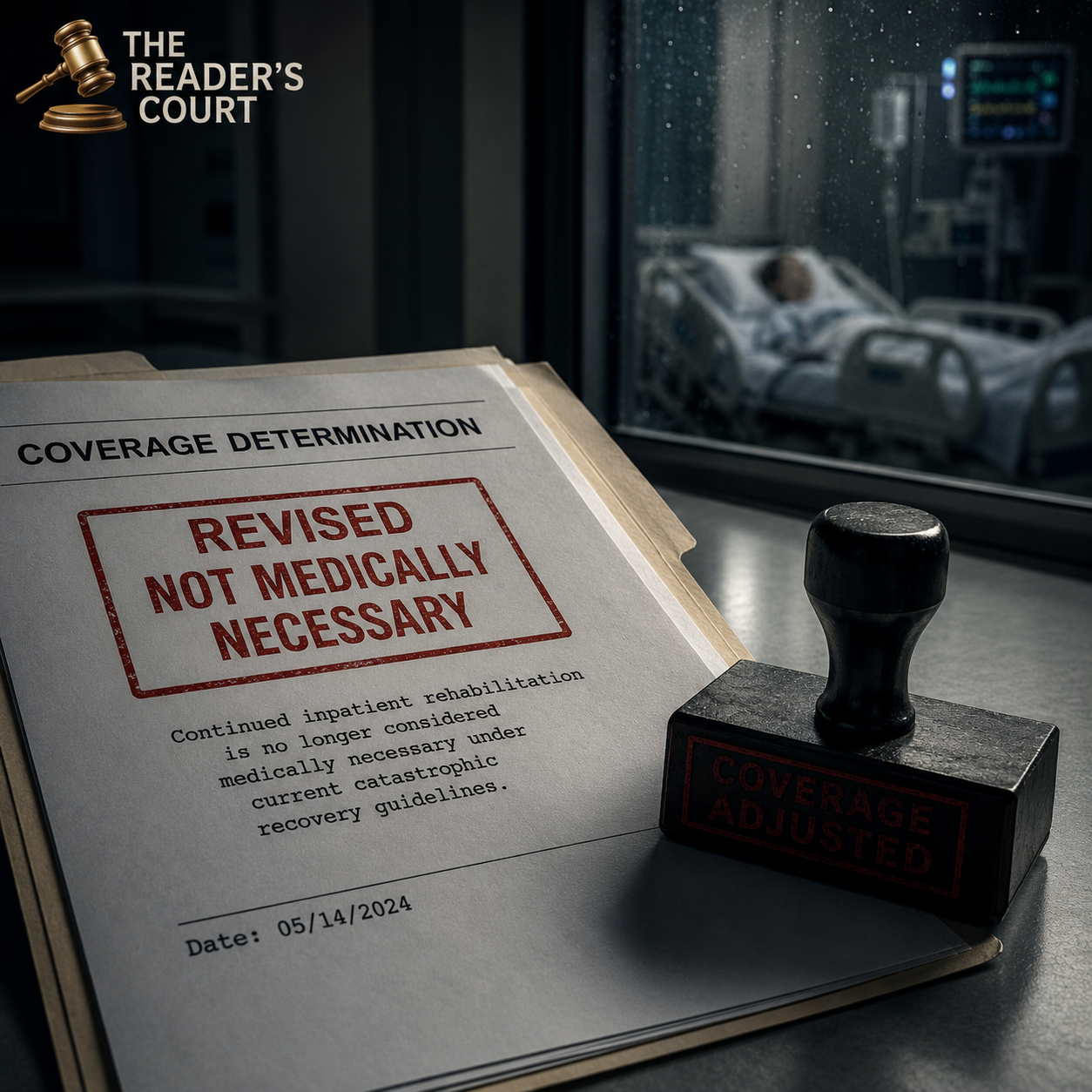
The Insurance That Adjusted
Exhibit A — Case #011 The Insurance That Adjusted By the time the third adjuster called, Nathan Bell already knew the sound of them.…
 Case #005
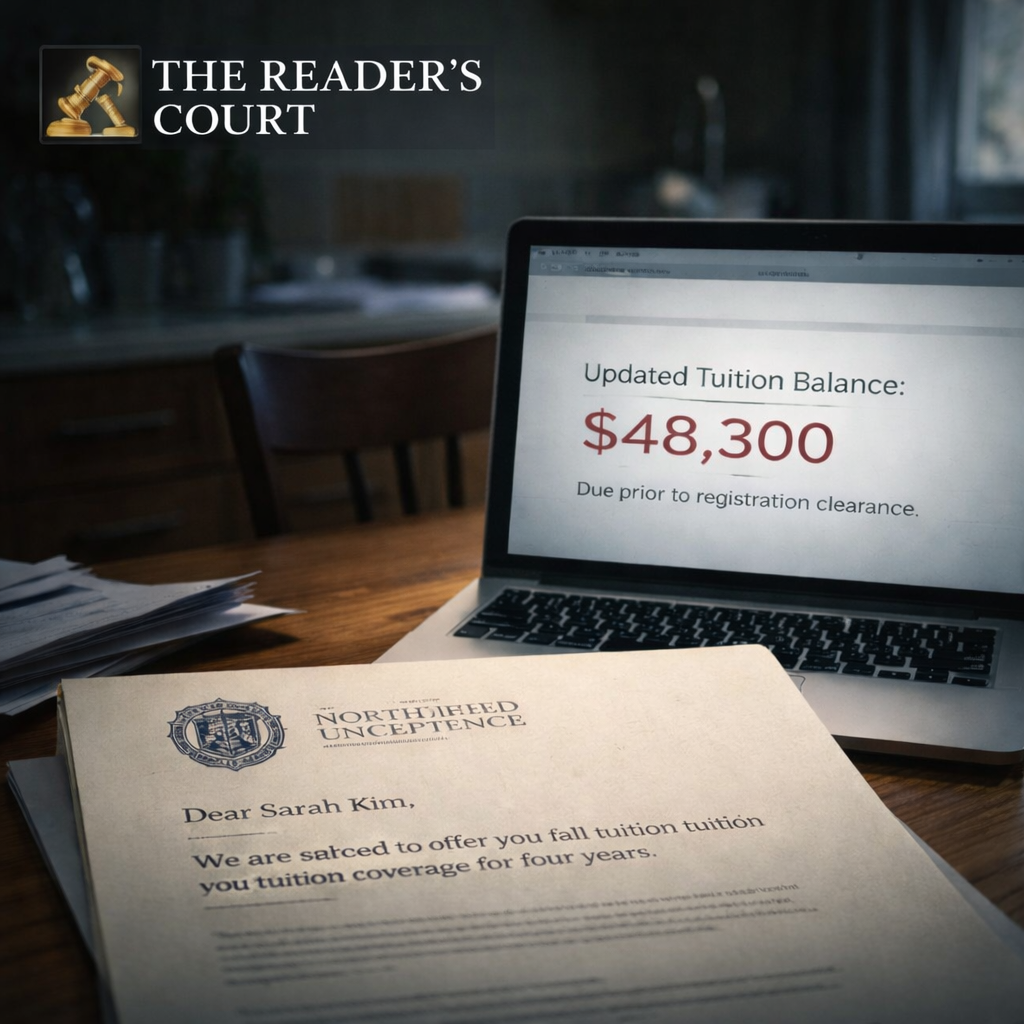
The Scholarship That Was Not Renewable
Exhibit A — Case #005 | The Scholarship That Was Not Renewable The acceptance letter arrived on a Thursday afternoon in April, folded inside…
 Case File
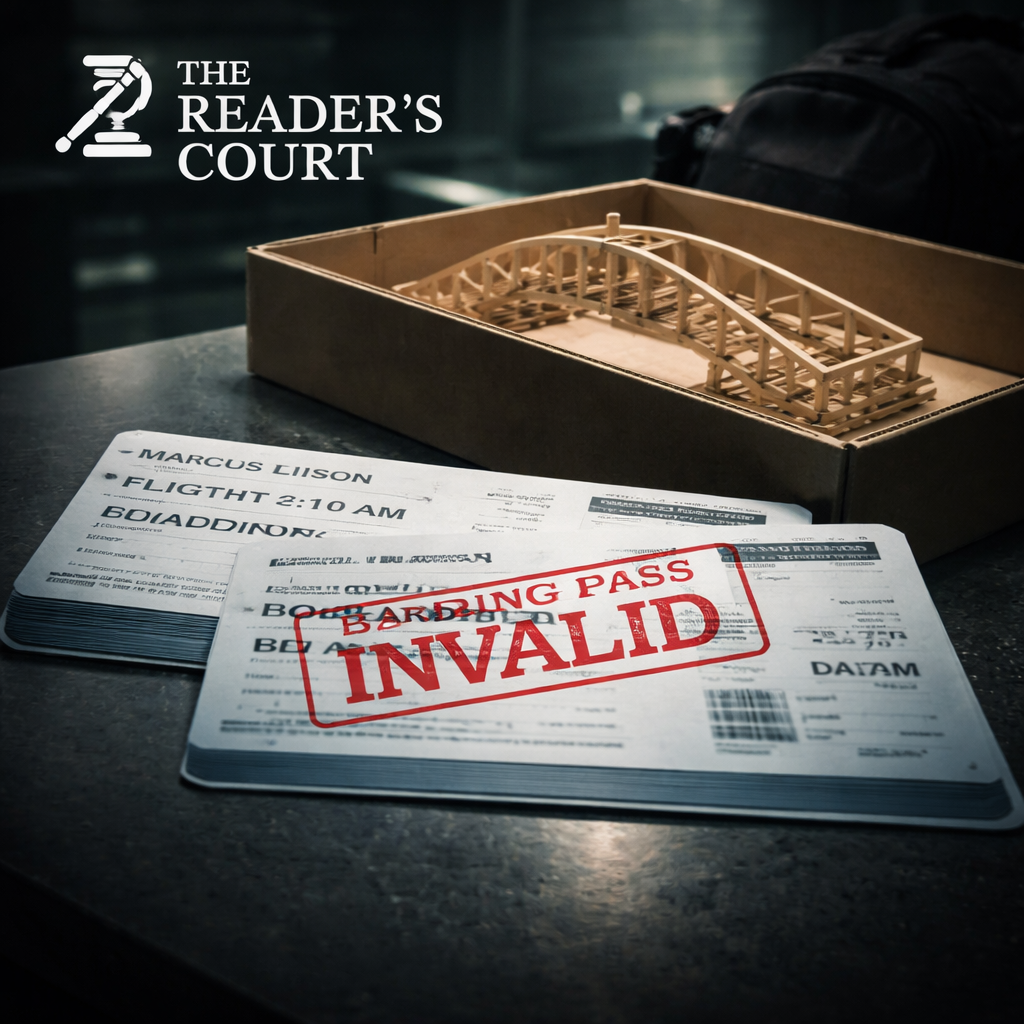
The Flight That Was Not Authorized
Exhibit A The flight that was not authorized. Marcus Ellison had spent the last three Saturdays building a bridge with his daughter on the…
 Case #003
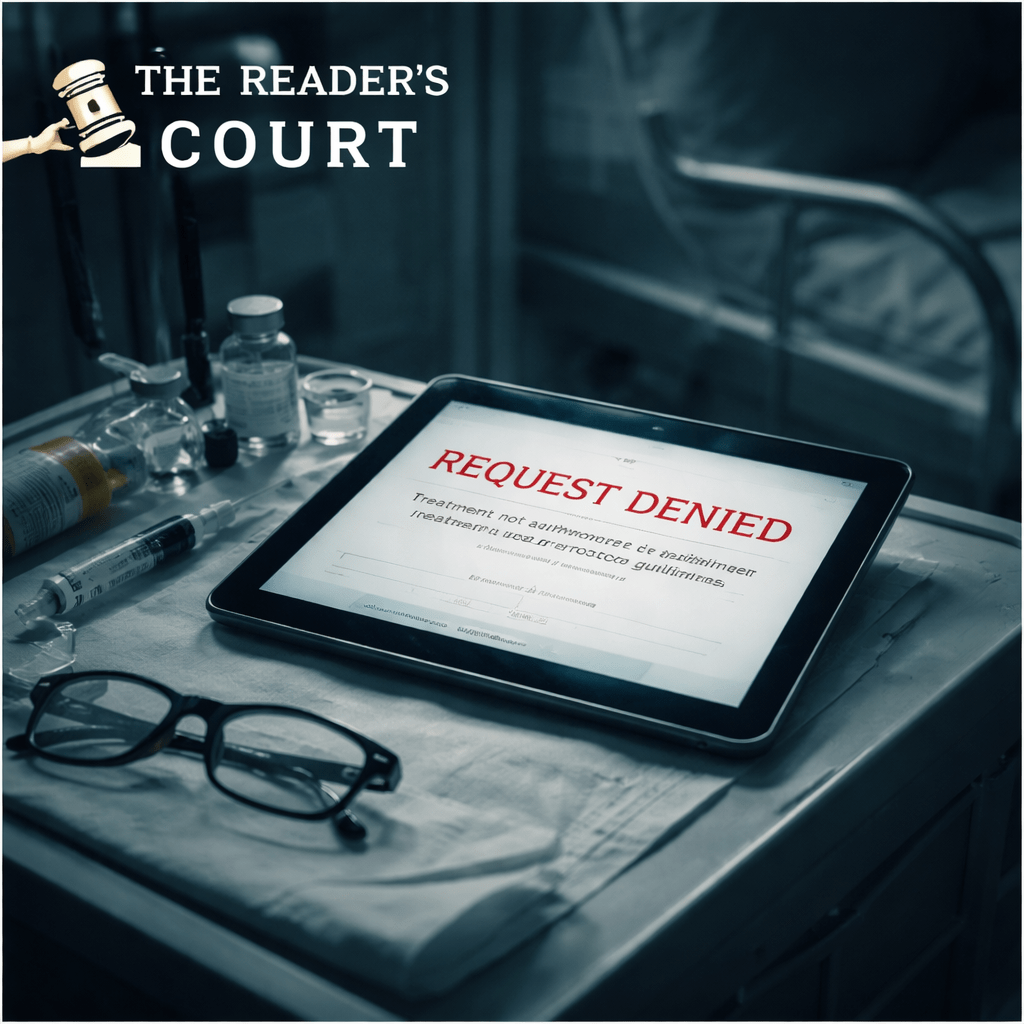
A Treatment That Was Not Approved
Exhibit A: Case #003 | A Treatment That Was Not Approved In case #003 a treatment that was not approved, we open in the…
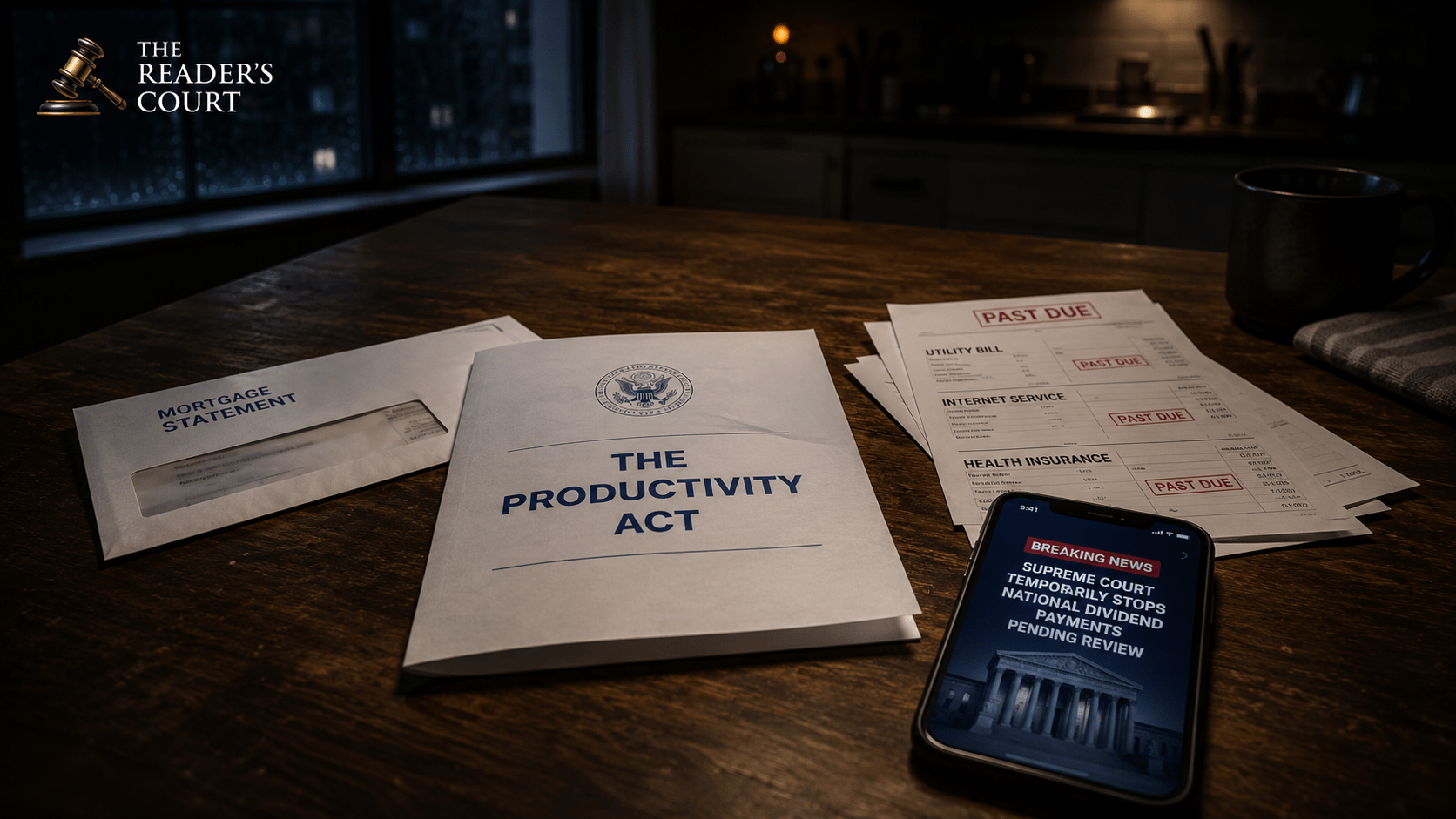 Case #014
The Productivity Act
Exhibit A: Case #014 | The Productivity Act The envelope arrived on a Thursday afternoon in late October. Daniel Mercer almost threw it away…
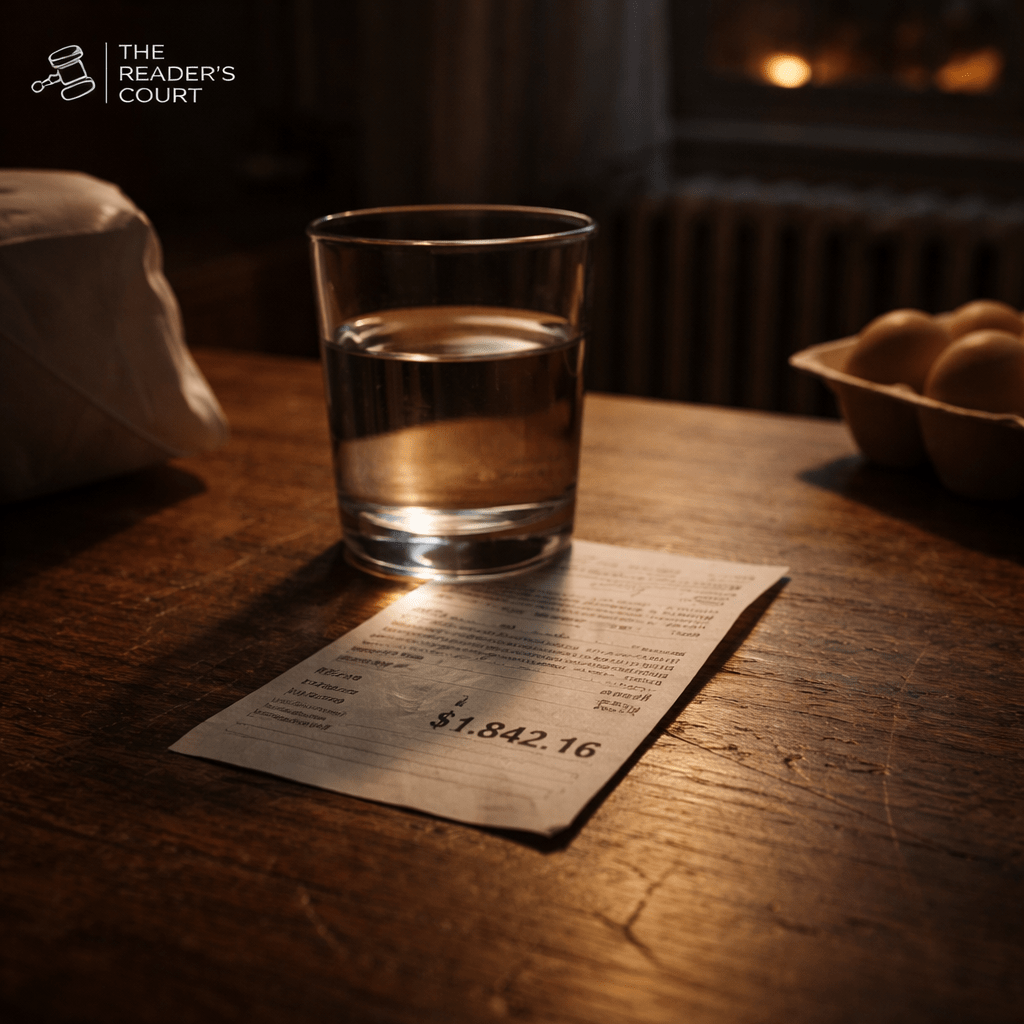 Special Case #1
The Receipt on the Kitchen Table
Exhibit A: Case special edition #1 | — The Receipt on the Kitchen Table The receipt on the kitchen table lay beneath a glass…
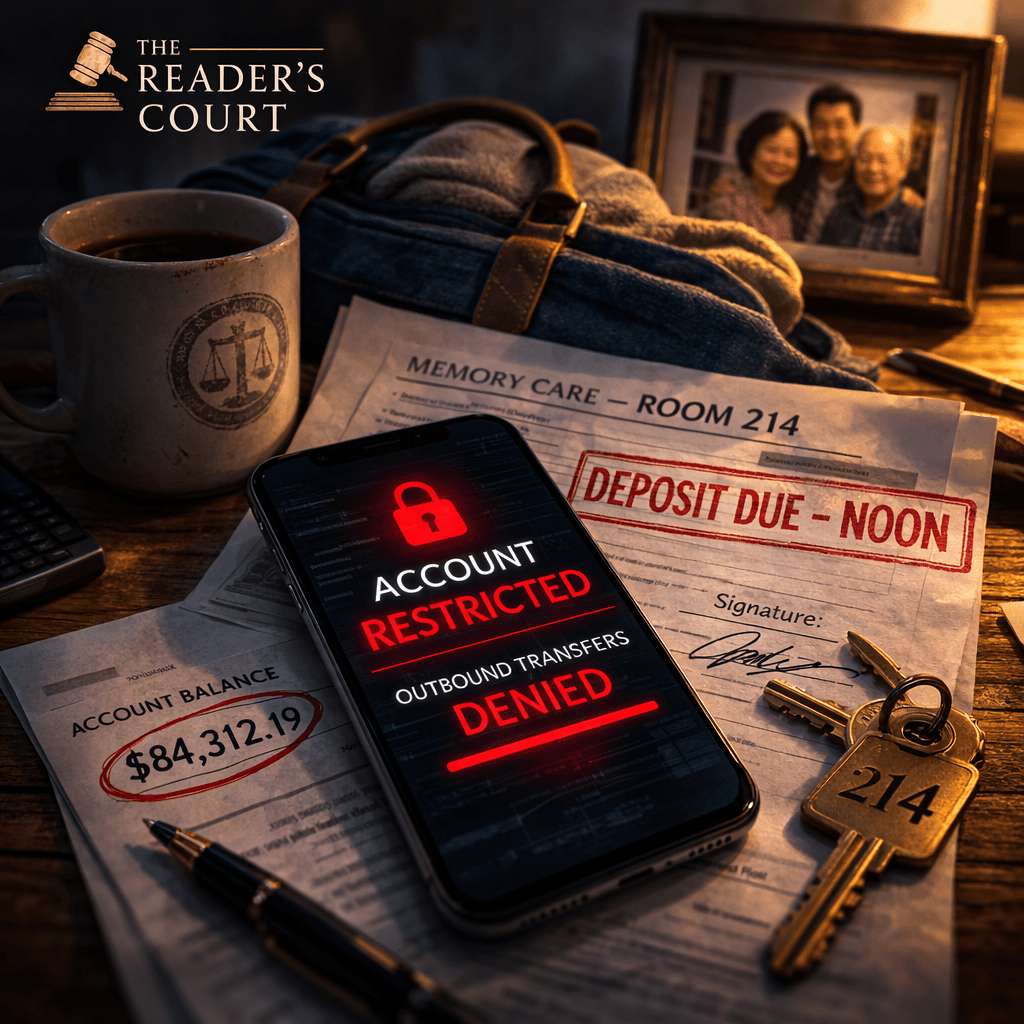 Case #002
The Account That Became a Risk
Exhibit A: Case #002 | The account that became a risk Daniel Park woke before the alarm because the radiator had started its old…
 Case #001
The Money That Looked Guilty
Exhibit A: Case #001 | The money that looked guilty. Trooper Nathan Calder had decided to stop the sedan before it passed him. It…
The Antagonist
The CEO villain in The Reader’s Court is always the same.
Systems, owned by the elite billionaire class, that replace human values—integrity, morality, and decency—with structures designed to protect wealth and power.
The protagonists change in every case.
A teacher.
A father.
A patient.
A student.
A worker.
A retiree.
Different lives.
Different pressures.
The same forces at work.
Why These Stories Exist
Modern institutions rarely collapse in dramatic ways.
They erode.
Rules replace judgment.
Procedure replaces responsibility.
Profit replaces duty.
When that happens, people discover something unsettling:
The system was never designed to protect them.
The Reader’s Court explores that moment.
For Readers Who Enjoy
- moral tension in thrillers
- stories about power and institutions
- narrative examinations of law, finance, medicine, and technology
- suspense rooted in real-world systems
A Final Note for Readers Court
The Reader’s Court does not offer easy answers.
It offers stories.
And a question that refuses to go away:
“What is legal?” is the oligarchy’s favorite question because they already bought the answer.
They funded the campaigns.
They shaped the statutes.
They trained the judges.
They delayed the trials.
They buried the ordinary person under procedure.
Then they stood in the wreckage and said: But was it legal?
That question is rigged before it is asked.
The Reader’s Court question cuts through the fraud:
When the system fails, the question is no longer what is legal. The question is: what is the right thing to do?