Tag: systems anxiety

Books Like

Books Like Recursion: Sci-Fi Thrillers About Memory, Reality, and the Moment Everything Changes

There is a particular kind of reader who finishes books like Recursion and does not simply close the book.
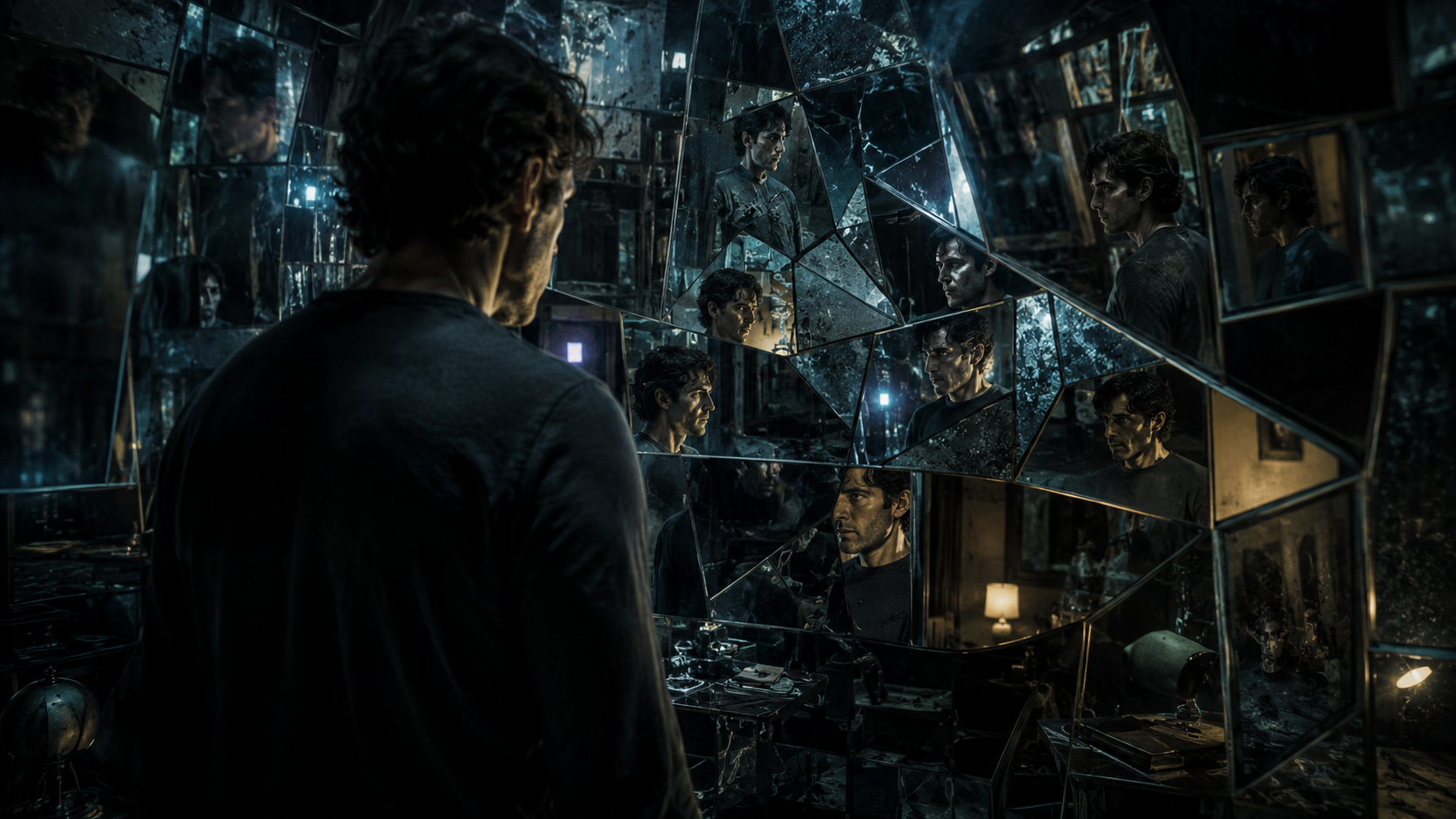
Books Like Recursion image of a man looking back at himself through infinity

They sit there for a moment.

Maybe the room feels the same. The chair. The light. The coffee going cold. The phone nearby, full of ordinary messages from ordinary people living ordinary lives. But something has shifted. Not in the room. In the reader.

That is what a great speculative thriller does. It does not merely tell a story about impossible science. It makes the reader feel the instability of being alive.

Recursion does that with memory.

It takes one of the most private things a person owns — the remembered life — and makes it dangerous. A memory is supposed to be proof. I was there. I loved her. I lost him. This happened to me. Then Blake Crouch turns that proof into a trap. People remember lives they never lived. Grief comes from events that never happened. Love survives in timelines that no longer exist. The mind becomes evidence, witness, victim, and suspect all at once.

That is why readers search for psychological thriller books like Recursion. They are not only searching for time loops. They are not only searching for clever science fiction. They are searching for the feeling of reality becoming unreliable while the human heart still has to keep beating inside it.

The best next book must understand that.

This Could Be It by Mark Bertrand does.

What Readers Really Love About Recursion

On the surface, Recursion is a fast, intelligent science fiction thriller. It has mystery, technology, high stakes, emotional urgency, and the kind of premise that makes a reader turn pages because the next revelation might change everything.

But the deeper reason it works is more intimate.

Recursion understands regret.

That is the secret engine beneath the science. The story asks what human beings would do if memory could be touched, altered, restored, or weaponized. It asks how far love will go when loss becomes unbearable. It asks whether fixing one wound might tear open the entire world.

Readers love that because everyone has a private version of that wish.

A conversation they would replay.
A death they would prevent.
A love they would hold longer.
A mistake they would correct before it became permanent.

Recursion turns that emotional hunger into a global catastrophe. That is the power of the novel. It begins with the ache of one life and expands until reality itself cannot hold the pressure.

That is also why a good “books like Recursion” recommendation cannot be lazy. It cannot simply point toward another time-travel novel and call the job done. The next read has to offer the same kind of emotional disturbance. It has to feel personal before it becomes enormous.

This Could Be It Begins Where Certainty Ends

This Could Be It is not a copy of Recursion. That is its strength.

Where Recursion breaks the reader’s trust in memory, This Could Be It moves the danger closer to consciousness itself. It asks what happens when the life a person has accepted begins to feel less like reality and more like a signal. A warning. A doorway. A final chance to wake up before the machinery closes.

The title carries that pressure.

This could be it.

Not someday. Not later. Not after the world explains itself in clear terms and gives everyone time to prepare. This moment. This thought. This strange awareness that something is wrong beneath the surface of ordinary life.

That is the experience readers of Recursion understand. The best speculative thrillers do not begin by destroying the world. They begin by making the familiar feel slightly off. A memory that should not exist. A pattern that repeats. A feeling that the mind has brushed against something too large to name.

Then the story tightens.

In This Could Be It, the tension is not only about what is happening. It is about what the character is becoming aware of. The reader is pulled into that same suspicion. The world may not be passive. Reality may not be neutral. Consciousness may not belong only to the person experiencing it.

That is where the book becomes dangerous.

From Memory Thriller to Consciousness Thriller

The movement from Recursion to This Could Be It is not a step sideways. It is a step inward.

Memory is the archive of identity. Consciousness is the witness behind it.

That distinction matters for readers who want a story that does more than entertain. In Recursion, memory breaks open and identity follows. In This Could Be It, awareness itself becomes the unstable ground. What if the self is not the solid center of the story? What if the mind is not alone? What if reality has been pressing against the character all along, waiting to be noticed?

That is a very different kind of suspense.

Not the suspense of a bomb under the table.

The suspense of a man realizing the table, the room, the life he has known, and the thoughts inside his head may all be part of something larger than he was trained to see.

Readers who loved Recursion often loved the way the novel forced huge ideas into human emotions. This Could Be It works in that same territory. It does not treat speculation as decoration. It uses the impossible to expose the human condition.

What are we when our memories fail us?
What are we when the systems around us define reality for us?
What are we when consciousness itself becomes the mystery?

Those are not small questions. But the reader does not feel them as philosophy first. The reader feels them as tension.

Something is wrong.
Something is waking up.
Something cannot be unseen.

Why This Could Be It Feels Right After Recursion

A reader who finishes Recursion often wants another book that respects intelligence without becoming cold. They want big ideas, yes, but they do not want a lecture. They want movement. They want danger. They want story pressure. They want a character trapped inside an idea that grows teeth.

That is where This Could Be It earns attention.

It gives the reader a different doorway into the same emotional territory. The novel is not asking the reader to admire a concept from a distance. It asks the reader to experience uncertainty from inside the character’s life. The tension comes from perception. From awakening. From the terrible possibility that the answer has already arrived and the character is only now learning how to recognize it.

That is exactly the kind of reader experience Google Discover favors, because it is not merely informational. It is not “here are ten books with similar plots.” It is a story about why a reader loved one book and what kind of emotional experience they are trying to recover.

A reader who loved Recursion may not say, “I need another book about false memory.”

They are more likely to feel something harder to name.

I want another book that makes reality feel breakable.
I want another book that makes the mind feel unsafe.
I want another book that turns an impossible idea into a human crisis.
I want another book that keeps moving after I close it.

That is the opening This Could Be It walks through.

The Fear Beneath Both Stories

The fear underneath Recursion is not simply that time can be changed.

The fear is that the self can be revised.

A person can live a life, love someone, lose someone, suffer for years, and then discover that the foundation of that suffering is unstable. The mind believes. The body grieves. The world says no. That contradiction is terrifying because it attacks the reader’s deepest assumption: that personal experience is reliable.

This Could Be It reaches for a related fear.

What if ordinary consciousness is incomplete? What if the life we defend so fiercely is not the full reality, but the narrow band we have been able to perceive? What if the world feels wrong because the mind is finally beginning to notice the cage?

That is why the comparison works. Both books create suspense by putting pressure on perception.

The villain is not only outside the character.
The danger is not only the machine, the system, the conspiracy, or the science.
The danger is the fragile human belief that we know what is real.

Once that belief cracks, every scene becomes charged.

A room is not just a room.
A memory is not just a memory.
A thought is not just a thought.
A title like This Could Be It is not just a title.

It is a warning.

Not a List of Substitutes — A Next Experience

Most “books like Recursion” articles make the same mistake. They treat readers like shoppers comparing ingredients.

Time travel? Check.
Memory? Check.
Science experiment? Check.
Fast pace? Check.

That misses the reason readers return to novels like this. They are not looking for matching parts. They are looking for a matching disturbance.

They want the next story to get under the skin in a similar way.

Recursion leaves the reader with the emotional residue of lives unlived, choices remade, and love refusing to stay buried in one timeline. This Could Be It offers a different residue: the sense that consciousness is not as private, simple, or safe as we like to believe.

That is a powerful next read because it honors the reader’s original experience without repeating it.

The movement is clean:

If Recursion made you question memory, This Could Be It makes you question awareness.

If Recursion made time feel unstable, This Could Be It makes the present moment feel charged.

If Recursion turned grief into a speculative weapon, This Could Be It turns awakening into psychological danger.

That is not imitation. That is resonance.

Read This Could Be It After Recursion

If Recursion stayed with you because it made reality feel fragile, This Could Be It belongs on your reading list.

Not because it gives you the same plot.

Because it gives you the same kind of pressure.

The pressure of a mind reaching the edge of what it can explain.
The pressure of a life that may not be what it appears to be.
The pressure of an impossible truth arriving before the character is ready.

Blake Crouch’s Recursion asks what happens when memory breaks the world.

Mark Bertrand’s This Could Be It asks what happens when consciousness begins to break through it.

That is the next experience worth following.

Because sometimes the most frightening thing a speculative thriller can do is not show the end of reality.

Sometimes it only has to whisper that the moment has already arrived.

This could be it.
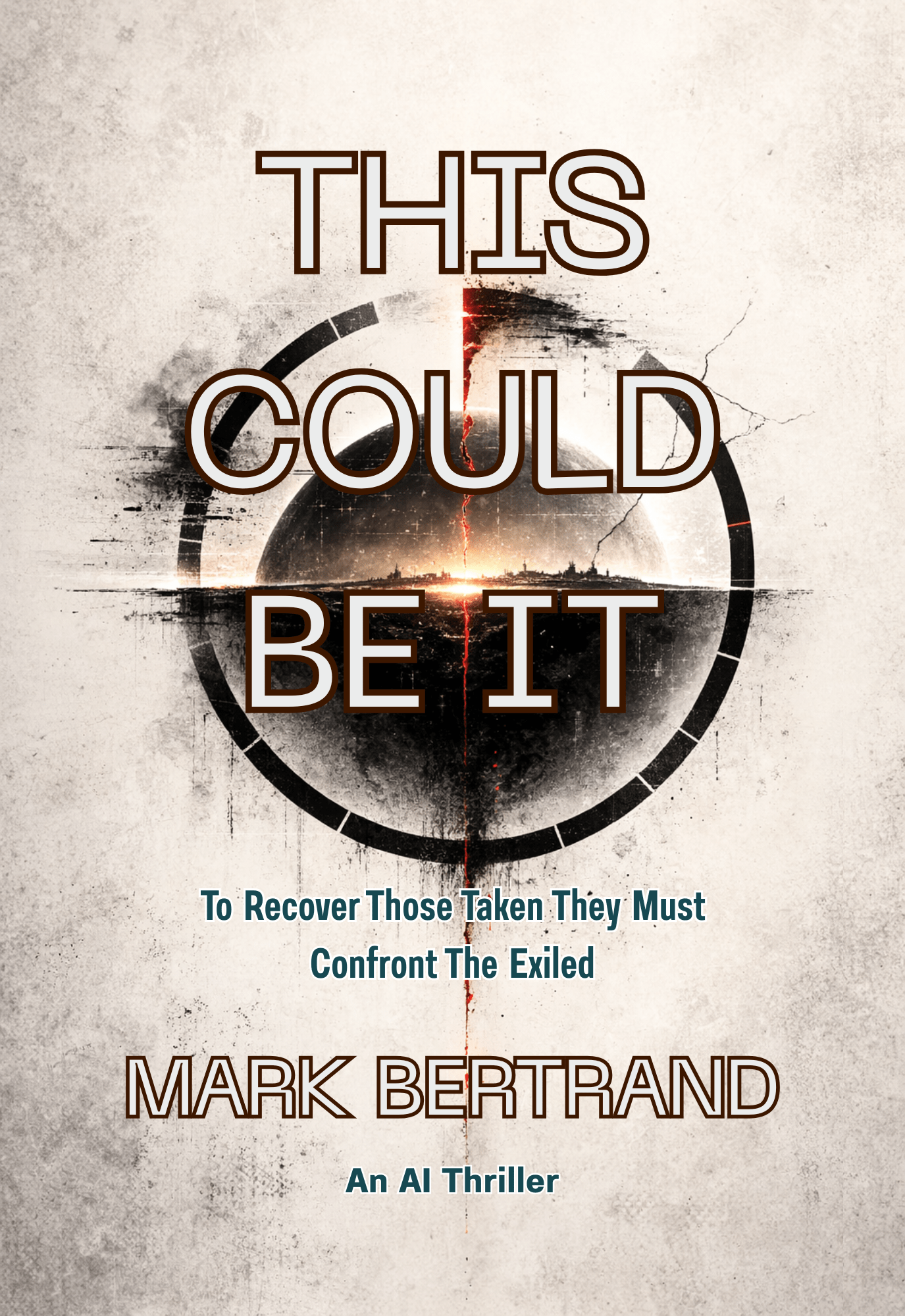
This Could Be Itby MARK BERTRAND book cover image of the gamma field striking the dome city and the countdown to the end encircling the whole of the city
Connected evidence

Your Next Read

The investigation does not end at the bottom of the page.
Dossier

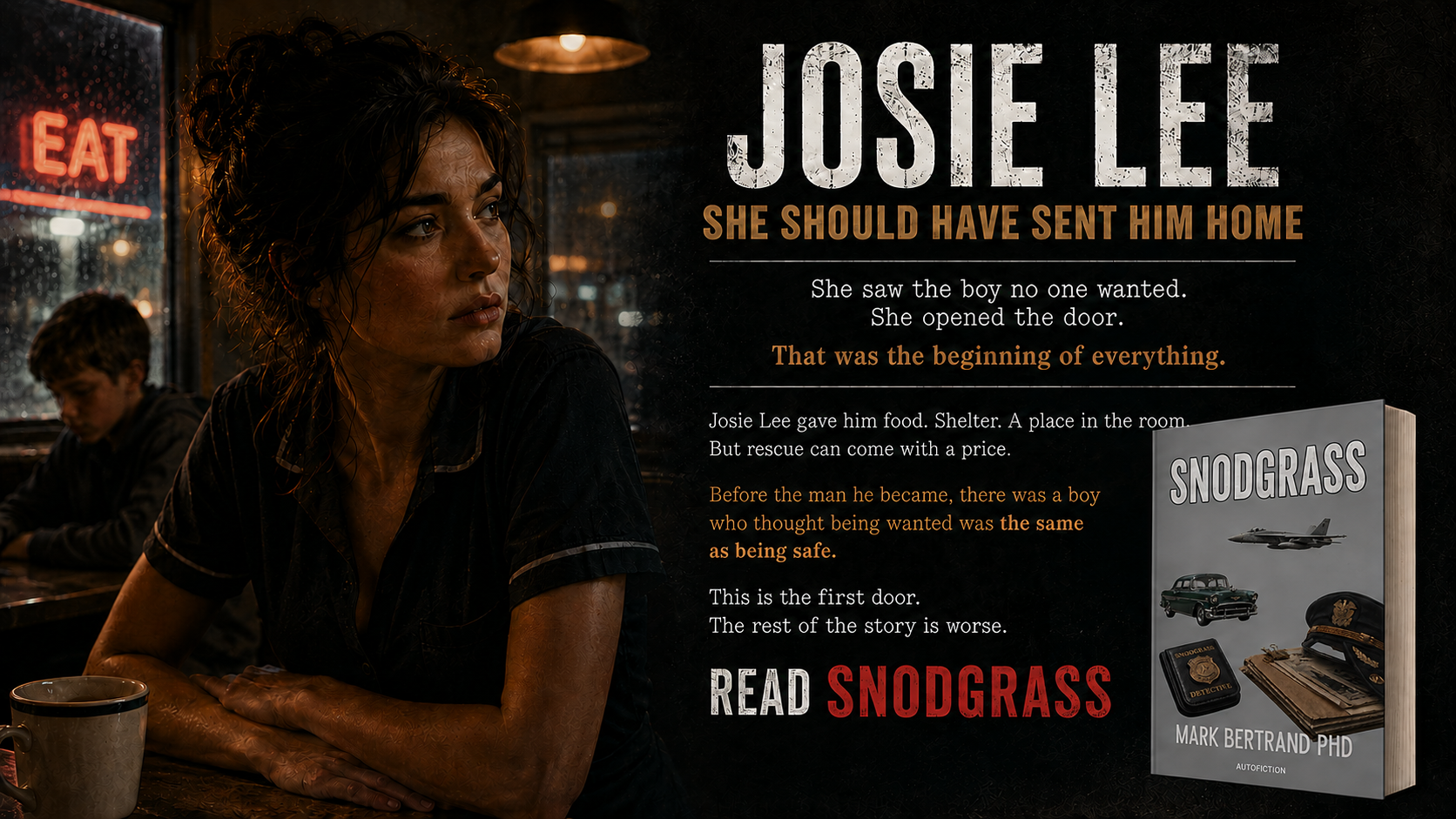
JOSIE LEE: SHE SHOULD HAVE SENT HIM HOME

When does kindness stop being shelter and become another room a boy cannot leave?

Josie Lee is not the beginning of the novel, Snodgrass. She is worse than that. She is the first door. The public story tells you Josie opened it.

That is the easy version.

JOSIE LEE: SHE SHOULD HAVE SENT HIM HOME with Snodgrass book cover.

Josie Lee | She should have sent him home

A boy was alone. Hungry. Too young to be free and too damaged to go home. He had already learned the first rotten lesson of the world: adults could call a place a family while making one child feel like a trespasser.

Josie saw him.

That was the beginning of everything.

Not because she was looking for him.

Not because she planned him.

Not because she woke one morning and decided to cross a line.

The truth is worse than that.

The truth is more human.

Josie Lee saw him because she recognized him.

She looked at Mark and saw the old wound walking toward her in boots, hunger, pride, silence, and bad luck. She saw a boy unwanted by the man in the house. She saw another man’s child. She saw the evidence of a life a stepfather wanted erased.

And somewhere inside her, before thought could become warning, before decency could become distance, before the adult world could say what adults always say too late, she understood him.

There I am.

That is where Josie Lee becomes dangerous.

Not because she was cruel.

Because she was tender in the wrong direction.

THE PUBLIC STORY

The public story says Josie helped him.

That part is true.

She gave him food. Attention. Warmth. A place in the room. A voice that did not sound like contempt. A way to sit down without being watched like a criminal. A temporary country where the air did not belong to the man who hated him.

For a boy already put outside the circle, that kind of attention does not feel small.

It feels like rescue.

A plate can become a promise.

A ride can become safety.

A room can become a country.

A woman who looks at him without disgust can become proof that he still exists.

That is why Josie matters.

She did not enter the story as a villain. She entered as mercy.

And mercy is harder to survive when it comes with a shadow.

Snodgrass is not a clean story about a boy who escapes a bad house and finds a better world.

That would be easier.

That would be safer.

That would be a lie.

Snodgrass is the story of what happens after a boy survives one room and discovers the next room has its own bargain waiting.

Josie Lee was one of those bargains.

[READ SNODGRASS]

THE HIDDEN INJURY

A cruel person is easy to name. Cruelty comes wearing a sign if you have lived long enough to read it.

A fist.

A locked door.

A withheld meal.

A stepfather’s stare.

A mother’s silence.

A house where one child is treated as evidence against another adult’s pride.

Josie was harder.

She was warmth.

She was food.

She was brown eyes and attention.

She was a woman who looked at him and did not see trouble first.

She saw the child who had been put outside the circle.

And maybe that is why he trusted her.

Maybe that is why she trusted herself.

Because rescue can feel clean when it begins.

The first kindness is always innocent.

A plate.

A ride.

A little money.

A place to sit.

A room where nobody tells him he does not belong.

No one calls that possession.

No one calls that need.

No one calls that the first thread in a knot.

But a knot was forming.

The dossier finding is simple:

Josie Lee did not create the wound.

She entered through it.

SHE SHOULD HAVE SENT HIM HOME

Josie Lee should have sent him home.

That sentence is true.

It is also useless.

Home was not safety. Home was the scene of the crime. Home was where the boy had already learned that being another man’s child could turn his body into a target. Home was where adulthood failed first and then demanded the right to keep failing.

So where was she supposed to send him?

Back to the house that rejected him?

Back to the man who hated him?

Back to the rules written by people who never had to survive inside them?

That is the moral trap of Josie Lee.

The correct answer was not available.

Only the human answer was.

She helped him.

She should not have needed him.

Both things are true.

That is the part the public story cannot hold.

Public stories like clean roles. They want a villain. They want a saint. They want a victim without contradiction and a rescuer without hunger. They want the easy trial, the easy verdict, the simple witness statement.

Josie refuses that comfort.

She took risks for him.

Real risks.

Reputation.

Money.

Judgment.

The attention of the wrong men.

The legal danger of being too close to a boy the world had already failed.

The emotional danger of letting him become necessary.

She gave him what he had been starving for.

A place.

A witness.

A temporary home.

And because she gave him that, he could not see the full cost.

How could he?

He was too young.

THE BOY WHO ACTED OLDER THAN HE WAS

This is the part nobody wants to say.

A damaged boy can look older than he is.

Hunger can sharpen the face.

Work can harden the hands.

Anger can deepen the voice.

Survival can put a terrible adult mask on a child and fool everyone, including the child.

But needing to survive does not make a boy grown.

It only makes him easier to misunderstand.

It makes people call his silence maturity.

It makes people call his pride consent.

It makes people call his ability to endure strength.

It makes people forget that endurance is not adulthood.

A boy who has survived too much may know how to drive, fight, work, lie, steal food, sleep cold, take a punch, watch a room, read a man’s temper, and leave before the worst happens.

That does not make him a man.

That makes him a child with no rescue coming.

And that is why Snodgrass cuts deeper than a survival story.

It is not about whether the boy was strong.

Of course he was strong.

Strong was the only thing left when safety was gone.

The question is what strength cost him.

The question is what he had to mistake for love.

The question is what happened after Josie opened the door.

That is the book.

[READ SNODGRASS]

THE STEPCHILD WOUND

Josie did not fall for Mark because he was young.

That would be too simple.

She fell for him because he was wounded in the exact place she had never healed.

She knew what it meant to be the child from another man. The child who did not fit cleanly into the new household. The child who carried someone else’s history in the face, the name, the blood, the timing. The child a stepfather could resent without ever saying the real reason.

You are not mine.

You are proof.

You are the leftover life before me.

You are the reminder.

That is a terrible thing to do to a child.

It teaches the child that existence itself can be an offense.

Josie understood that.

Maybe no one had rescued her when she needed it.

Maybe no one had stood in the doorway and said, Come in, you are not the problem.

Maybe the girl she used to be had learned to survive by becoming useful, pretty, funny, hard, available, uncomplaining, whatever the room required.

Then Mark arrived with the same wound showing.

And she tried to save him.

That sounds beautiful.

It was beautiful.

It was also not enough to make it right.

Because she was not only saving him.

She was reaching backward through him.

She was trying to rescue the girl no one came back for.

That is where the story darkens.

THE FALSE RESCUE

When a person tries to save the wounded child inside herself by saving another wounded child, love can become confused with recovery.

Kindness can become a claim.

Protection can become hunger.

The rescued person can become evidence that the rescuer is good, needed, chosen, forgiven.

And the boy?

The boy learns another lesson.

Not the lesson of violence this time.

A softer lesson.

A more dangerous one.

He learns that rescue may come with a hand around the wrist.

He learns that being wanted can feel like being saved.

He learns that adult need can arrive disguised as love.

He learns that a door can open and still become a room he does not know how to leave.

That is Josie Lee.

Not villain.

Not saint.

A woman with brown eyes and an old wound.

A woman who saw too much of herself in a boy she should have protected from everyone, including herself.

A woman who gave him shelter when the world had none to offer.

A woman who should have known better.

A woman who maybe did know better and still could not stop the human part of herself from reaching for the one person who made her old pain feel visible.

This is why the public story is not enough.

The public story says Josie helped him.

The dossier says help is not always clean.

The public story says she opened the door.

The dossier asks what followed him through it.

The public story lets us call her kind.

The dossier makes us sit with the harder truth:

Josie Lee may have saved him from the street, but she also taught him that rescue could come with a claim attached.

And once a boy learns that, he carries it.

Into work.

Into hunger.

Into danger.

Into women.

Into rooms where power smiles before it takes something.

Into every future where love and debt are difficult to separate.

WHY JOSIE LEE MATTERS

Josie Lee is not a side character.

She is not a memory.

She is not the waitress from before the real story begins.

She is the first door.

And after that door came the machine.

After Josie came the world that knew exactly what to do with a boy trained to survive, trained to keep moving, trained to confuse danger with opportunity, trained to accept impossible bargains because impossible bargains were the only ones ever offered.

That boy would go on to meet men who understood leverage.

Men who smiled first.

Men who made offers.

Men who turned desperation into a contract.

Men who saw in him the thing damaged children are trained to become.

Useful.

Fast.

Loyal until betrayed.

Silent until cornered.

Brave enough to be spent.

This is where Snodgrass begins to matter.

Not because Snodgrass explains Josie.

Because Snodgrass shows what happened after shelter was no longer enough.

Josie saw the boy.

Snodgrass shows the world that came for him next.

The boy who walked through Josie Lee’s door did not become safe.

He became harder to kill.

There is a difference.

Every real reader knows it.

MEMBERS ONLY // THE PART NOBODY WANTS TO SAY

The hardest part of Josie Lee is

This content is for members only.

Not yet a member? Request member access to The Dossier. Get 20% off the paperback price.

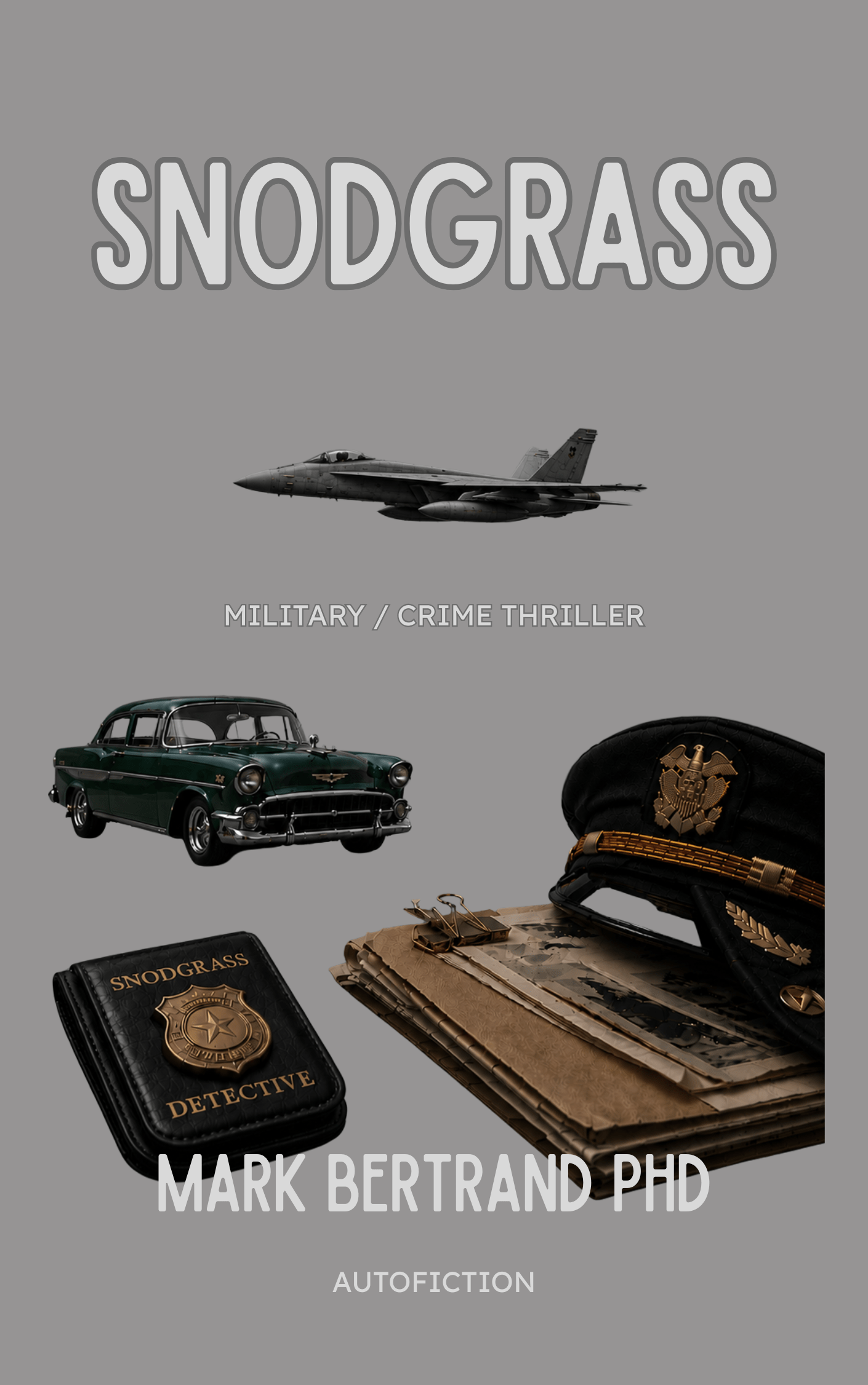
Snodgrass book cover for book 1 in the crime thriller trilogy
Ebook purchase now image
audiobook purchase image
paperback purchase image
The Readers Court

The Flight That Was Not Authorized

Exhibit A

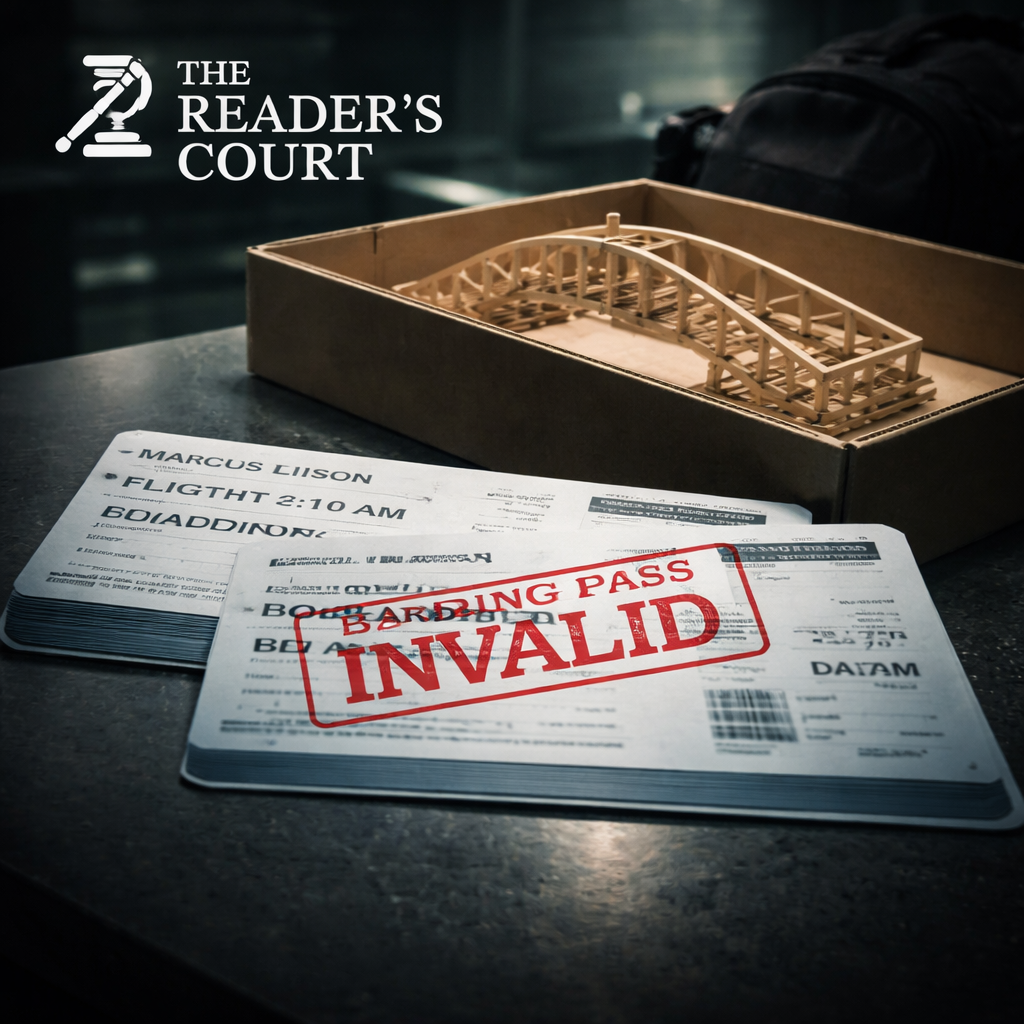
The flight that was not authorized. Marcus Ellison had spent the last three Saturdays building a bridge with his daughter on the dining table. He was about to discover something about being a father he never imagined.

By the end of the first afternoon, the table had become a workbench. The salt shaker had been pushed aside to make room for rulers, graph paper, and a box of thin balsa strips that felt weightless in the hand and expensive enough to make you careful. A bottle of wood glue sat beside Lena’s cereal bowl. Dental floss, of all things, had been promoted from bathroom item to structural material. Marcus had laughed when she first brought it out.

The Flight That Was Not Authorized

“You’re building a bridge,” he told her. “Not fixing your teeth.”

“It’s tension support,” Lena said without looking up. “You said tension matters.”

He had said that. He was a structural engineer. He had spent half his life calculating load paths, stress points, fatigue patterns, and the thousand unseen compromises that kept real things standing after weather and time got their hands on them. He was used to bridges as numbers, reports, inspections, lawsuits waiting to happen if somebody ignored a crack too long.

Lena had turned the whole thing back into something clean.

She was twelve years old and serious in a way that made adults lower their voices around her. Not timid. Not fragile. She simply treated ideas as if they deserved respect. When she concentrated, the tip of her tongue touched the corner of her mouth. When she was uncertain, she tapped one fingernail against her thumbnail three times and went quiet. Marcus had learned to leave silence alone when she was working through something. It usually meant she was getting somewhere.

The first design collapsed under its own weight before the glue dried. The second held, but only because Marcus quietly braced one side with his hand while Lena added the next support and pretended not to notice his intervention. On the third attempt, she stopped copying examples from the packet and began drawing her own angles.

“What if the force doesn’t hit one place?” she asked.

“It never hits one place,” Marcus said.

She stared at the sketch a while longer. “Then why do these all look like it does?”

“Because most people build the version they already recognize.”

That made her smile.

The finished bridge rose from the cardboard base like something both delicate and stubborn. Three parallel supports. A triangular truss system. Fine strands of dental floss pulled tight where compression alone might fail. It looked improbable until you picked it up and felt how rigid it had become.

Marcus had turned it in his hands under the kitchen light and let out a low whistle.

“You know this is actually clever.”

Lena’s smile had appeared slowly, as if she did not trust praise until it survived a second look. “You sound surprised.”

“I am surprised,” he said. “I thought I was helping with a school project. Apparently I live with competition.”

Two weeks later that bridge won the regional science competition.

Tomorrow morning, Lena was supposed to fly to Denver for the national finals.

It would be her first time on an airplane.

That fact had changed the apartment all by itself.

Her backpack had been packed and repacked three times. The small toolkit she insisted on bringing had been reduced, under Marcus’s supervision, to what airport security would tolerate: a plastic ruler, spare adhesive strips, index cards, a pencil case, and a folded notebook containing every measurement, revision, and load test she had run at the dining table. Three pencils lay in the side pocket, sharpened to identical points. Her sneakers had been set by the front door. Her sweatshirt, the blue one she always wore when she was nervous, had already been folded over the back of a chair.

The bridge itself sat in a cardboard transport box lined with cut bath towels so it would not shift during the trip. Lena had written THIS SIDE UP on all four sides in block letters, then drawn little arrows as if the universe needed extra instruction.

The apartment was small enough that anticipation gathered in it quickly. The kitchen opened straight into the dining area, and the dining area bled into the living room without apology. A narrow hallway led to two bedrooms and a bathroom with a fan that clicked every few seconds like an old turn signal. The radiator hissed and knocked when the heat came up. The windows let in a draft near the corners no matter what Marcus did with weather stripping. In the evening, the city glowed up through the glass in diluted orange and white.

He loved the place because Lena had learned herself there.

He had made pasta for dinner because it was quick and because neither of them had much appetite. Excitement did that. The plates were still in the sink. A mug ring marked the edge of the table. A thin hardened streak of glue remained near one corner where a support beam had slipped during construction. Marcus had once meant to sand it away. Now he left it there on purpose. It felt like proof that something mattered in this room.

Lena carried the bridge box from the table to the sofa and set it down as if placing a sleeping animal.

“Don’t put anything on top of it,” she said.

“I wasn’t planning to.”

“You put your jacket on things.”

“I do not put my jacket on things.”

She gave him the look she used when he was arguing against evidence already accepted by the court.

Marcus raised one hand. “Fine. I put my jacket on things.”

“That’s what I thought.”

He smiled and turned back to the kitchen counter where the printed boarding passes lay beneath his wallet. He had printed them because paper felt more real than a phone screen. Maybe that was his age. Maybe it was the engineer in him. Digital things changed too easily. Paper at least had the decency to remain what it was until somebody tore it in half.

Two boarding passes. Two names.

Marcus Ellison.
Lena Ellison.

Departure: 6:10 AM.

He picked them up and checked the gate again, though he already knew it. They were to leave the apartment at 3:45, park in economy, ride the shuttle, find the terminal, and buy an outrageously priced airport muffin Lena would be too excited to finish. He had mapped the morning down to ten-minute increments. She liked plans. He liked being the kind of father who had one.

From the living room Lena called, “Do you think they’ll do the weight test again?”

“At nationals?” he said.

“Yes.”

“That’s the point of a bridge.”

She appeared in the doorway. “I know what the point is. I mean, how much weight.”

Marcus leaned against the counter. “Enough to make everybody nervous.”

“That’s not a number.”

“It’s the number they use when they want to separate the serious people from the people whose bridge only looked good on the table.”

She thought about that. “Mine looked good on the table.”

“Yours also survived being treated like a bridge.”

That satisfied her.

He filled the kettle and set it on the burner. Lena did not like coffee and claimed tea made her feel older, which meant she liked tea when no one said that out loud. The apartment settled into evening sounds: radiator knocking, kettle beginning to murmur, a muffled siren several blocks away, footsteps passing in the hall outside their door.

“Can I bring the notebook in my backpack and also keep it in my hands?” Lena asked.

“You only have two hands.”

“I know, but at the airport.”

“You’re worried they’ll lose it?”

She nodded.

He understood. The notebook was not schoolwork to her. It was the record of the thing. Measurements in pencil. Tiny diagrams. Arrows. Corrections. A coffee stain from the Saturday she worked through lunch without realizing it. The page where she wrote FAILED HERE after the second model collapsed, then underlined HERE twice.

“You can carry it until we get on the plane,” he said. “After that, backpack.”

She accepted this as a fair ruling.

The kettle began its quiet hiss. Marcus poured hot water into two mugs and dropped the tea bags in. Steam lifted between them. Outside, the winter sky had gone the color of old sheet metal, and in the reflection on the window he could see the apartment behind him: the narrow kitchen, the hanging light, his daughter near the sofa, the bridge box between the two of them like an object already halfway to another life.

He thought, not for the first time, how strange it was that the biggest moments arrived looking small.

Not dramatic. Not scored with music. Just a Tuesday kitchen. A cardboard box. Two mugs. A flight before sunrise. A girl who had made something strong enough to carry more than anybody expected.

His phone vibrated on the counter.

He glanced at it automatically, expecting a fraud alert, a work email, a reminder from the airline about baggage policy. Instead he saw the airline logo and the words:

Travel Status Update

Marcus picked up the phone and opened the app.

The page loaded more slowly than it should have. A spinning circle. A flicker. Then a banner he had never seen before filled the top of the screen.

TRAVEL STATUS: SECURITY REVIEW

He frowned.

From the living room Lena said, “What is it?”

He did not answer right away. He tapped the screen once, then again. The itinerary opened for half a second and vanished.

“Probably nothing,” he said. “Maybe a system thing.”

He hated how quickly the lie came out. Not because he meant to deceive her for long, but because parents developed that tone so easily. The voice that tried to put a blanket over uncertainty before the child could feel the cold.

The screen refreshed.

A new message appeared where the boarding information had been.

Your reservation is temporarily restricted pending government security review.

Marcus stared at it long enough for the tea to steep too dark.

Lena had come back into the kitchen without his noticing. She followed his eyes to the phone, then to his face.

“What does restricted mean?”

“It probably means they need to verify something.”

“About the flight?”

“Maybe about me.”

“Did you do something?”

The question was clean, not accusing. Children still believed cause belonged before effect.

Marcus set the mug down. “No.”

That much came out hard and certain.

He opened the email that had landed a few seconds earlier. Government seal at the top. Formal language below. He had seen enough official notices over the years to recognize the cold texture of one immediately: no person speaking, no person listening, only a process announcing itself.

He read the first lines once. Then again.

He felt his chest tighten in a way that had nothing to do with fear and everything to do with recognition. Not of the words themselves. Of the shape of the thing. The administrative shape. The kind that could alter a life before anyone involved had spoken to a human being.

“Dad?”

Lena was close enough now that he could smell her shampoo. Green apple. The same one since she was eight.

He turned the phone slightly away from her, not enough to hide it, only enough to delay it.

“Let me make a call,” he said.

“Are we still going?”

“Yes,” he said, because he needed that to remain true for at least one more second.

He called the airline. A recorded voice thanked him for his patience and informed him that due to high call volume his wait time exceeded forty minutes. He hung up before the music began. He opened the airline app again. He opened the email again. He checked the time. He looked at the paper boarding passes still lying on the counter, unchanged, as if ink had authority the phone lacked.

Lena reached out and picked them up carefully by the edges.

“These still work,” she said.

Her voice was not childish in that moment. It was hopeful in a way that was harder to bear.

Marcus looked at the passes in her hand. White cardstock. Black lettering. Seat numbers. Gate. Departure time. Evidence of a tomorrow morning that had existed ten minutes ago.

The app refreshed by itself.

The banner disappeared.

In its place, in plain block text, the system wrote what it had decided.

BOARDING PASS INVALID.

Marcus looked at the phone.

Then at the printed passes in Lena’s hands.

Then back at the phone.

For a second nothing in the room moved. Not the kettle. Not the radiator. Not even Lena.

The bridge box waited beside the sofa.

The backpack stood by the door.

And on the counter, beside the cooling tea, the future changed its wording.

Become a member of the Dossier.
Support my writing.


The Question

A twelve-year-old girl built a bridge strong enough to reach the national finals.

Her father bought the tickets, packed the bag, printed the boarding passes, and prepared to take her to the airport before dawn. No crime had been committed. No violence had occurred. No accusation had been tested in front of a judge. No human being had sat across from Marcus Ellison and asked the simplest question available to any decent society: what is the right thing here?

Yet the trip was stopped anyway.

Not because anyone proved he was dangerous. Not because anyone established intent. Not because anyone showed that a father taking his daughter to a science competition had done anything wrong.

The system intervened before wrongdoing. Before explanation. Before context. It treated resemblance as enough.

So what exactly had been protected in that kitchen when the screen changed and the boarding pass ceased to belong to them?


The Autopsy

The answer begins with a simple institutional preference: large systems do not wait for certainty when uncertainty carries financial and political risk.

Air travel sits inside overlapping layers of security, government authority, private contracting, data analysis, insurance exposure, and public liability. When those layers are

linked to predictive systems, the standard quietly changes. The old question was whether a person had done something wrong. The new question is whether a person resembles a pattern that would be expensive, embarrassing, or catastrophic to ignore.

That shift matters because resemblance is easier to scale than proof.

Proof requires investigation, time, trained judgment, and accountability. Resemblance requires data, models, thresholds, and a protocol for freezing movement until the institution feels safe again. One system is built for human beings. The other is built for volume.

Once that logic takes hold, innocence stops being a shield. It becomes an administrative inconvenience. A person may be entirely harmless and still be treated as a tolerable false positive, because the burden of delay falls on the citizen while the protection from blame stays with the institution.

That is where decency begins to leave the room.

A father taking his daughter to a science competition presents one human question: what is the right thing to do? Look at the facts. Make a call. Preserve the child’s opportunity unless there is a real and immediate reason not to.

But the system is not asking that question.

The system is asking a different one: what action best protects the airport, the airline, the agency, the contractor, the insurer, the procurement chain, and the officials who will answer for a failure after the fact? Under that question, overreaction is safer than restraint. Delay is cheaper than responsibility. Cancellation is cleaner than discretion.

This is why such systems do not need villains.

The airline employee who cannot override the flag is following protocol. The agency that triggered the review is following protocol. The contractor that built the model is following the rules written into the contract. The insurer that prefers broad intervention to narrow judgment is protecting exposure. Everyone involved can say, truthfully, that procedure was followed.

And procedure is the point.

The deeper protection is not really about one flight. It is about institutional continuity. Aviation networks are expensive. Security failures are politically explosive. Lawsuits are expensive. Public scandal is expensive. The machinery of modern risk management is built to absorb personal harm if that harm helps prevent institutional vulnerability.

In plain terms, concentrated wealth prefers systems that can stop a harmless man instantly over systems that require human review before action. Human review costs money. Human discretion creates liability. Human mercy is difficult to standardize. Automated suspicion is faster, cheaper, and easier to defend in a hearing room after something goes wrong somewhere else.

So the father and daughter become acceptable collateral.

Not because anyone hates them. Not because anyone singled them out with personal malice. They are collateral because the system is not designed to honor their moment. It is designed to reduce institutional exposure at scale. That is a different moral universe.

By the time Marcus Ellison’s phone says BOARDING PASS INVALID, the essential decision has already been made. A model generated suspicion. A process converted suspicion into restriction. A network of institutions accepted that conversion because it protected them more effectively than it protected him.

The human loss is real. The child misses her flight. The father cannot explain himself to a machine. A once-in-a-lifetime opportunity narrows in real time.


The Reader’s Verdict

The father did not need to be guilty.

He only needed to resemble something expensive.

The daughter did not need to matter.

Her bridge, her work, her first flight, her one morning to stand in a national room full of possibility—none of that entered the calculation.

The screen did not ask what is the right thing.

It asked what protects the institution.

That is why no one had to be cruel.

No one had to raise a voice.
No one had to lie.
No one had to break the rules.

The rules were enough.

The system did not fail.

It simply answered the question it was designed to answer.

And in systems designed to protect institutional power and wealth, integrity, decency, and morality rarely appear in the calculation.

—Mark Bertrand
The Reader’s Court
When systems break people’s lives, the truth must be told.
Join the fight.

Connected evidence

Related Case Files

The investigation does not end at the bottom of the page.