
The Monster Learned How to Blend In
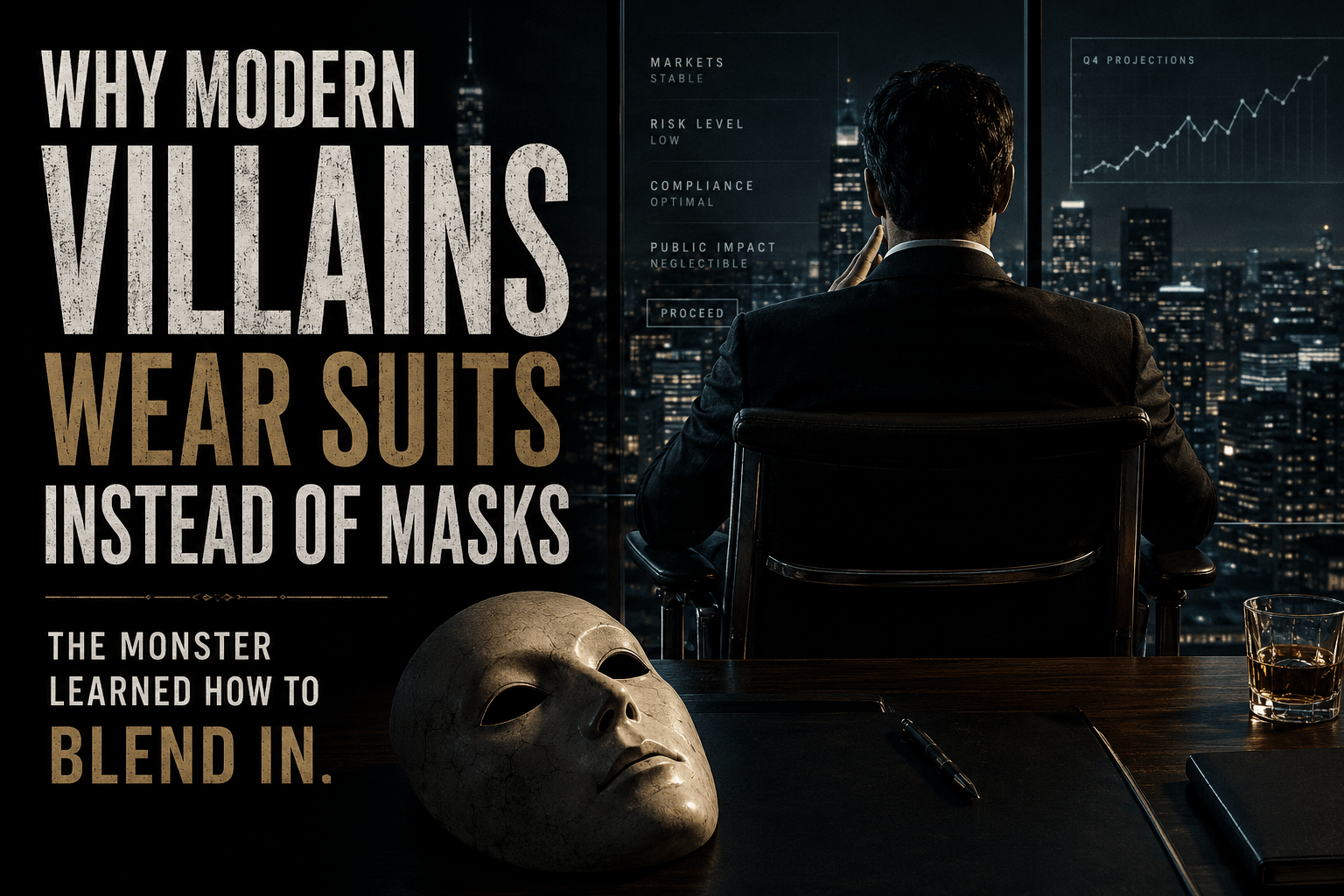
Modern villains wear suits. The old thriller villain understood the importance of hiding. He stayed underground. Worked in secret. Moved through shadows with blood on his hands and enough arrogance to believe he could outrun the investigator eventually assigned to stop him. The structure was simple because the fear was simple. Somewhere out there, beyond the safety of ordinary life, something violent was waiting.
For decades, thrillers depended on that machinery. Serial killers. Terrorists. Rogue agents. Criminal masterminds. Men capable of extraordinary violence operating outside the acceptable boundaries of society.
But modern fear changed.
Today, many readers are no longer psychologically haunted by the possibility of a masked predator breaking into the house at night. They are haunted by institutions. Systems. Invisible structures capable of altering ordinary lives without ever appearing monstrous on the surface.
The modern villain no longer needs to hide behind a mask because legitimacy itself became the disguise.
He wears a tailored suit now. Appears on financial networks. Speaks calmly during congressional hearings. Uses phrases like operational efficiency, compliance standards, market correction, public safety, platform integrity, and long-term sustainability. He looks educated. Responsible. Necessary.
That transformation changed the modern thriller whether the genre fully realized it or not.
The Old Villain Broke the Rules
Classic thrillers often worked because the villain existed outside the system. He violated social order openly. The serial killer murdered innocent people. The corrupt cop abused authority. The terrorist attacked the state. The conspiracy threatened public stability.
The protagonist’s job was usually to expose the hidden danger and restore balance before everything collapsed.
But modern readers no longer fully trust the balance itself.
That is the difference.
The fear now is not merely that evil exists somewhere outside civilization. The fear is that civilization itself increasingly rewards certain forms of cruelty as long as they remain profitable, procedural, or politically useful.
Modern systems rarely announce themselves as evil. They present themselves as practical.
A bank closes branches and calls it restructuring.
An insurance company denies treatment and calls it risk assessment.
A corporation eliminates workers and calls it optimization.
A platform destroys reputations and calls it moderation.
An institution protects itself and calls it policy.
No dramatic villain speech required.
The system simply continues functioning.
Why Modern Fear Became Administrative
What terrifies people now is often difficult to photograph.
Debt.
Algorithms.
Financial dependency.
Institutional indifference.
Data permanence.
Invisible ranking systems.
Background checks.
Credit scores.
Procedural delays.
Reputation systems that can quietly close doors without explanation.
The modern citizen increasingly lives beneath structures capable of applying enormous pressure while remaining emotionally detached from the human consequences.
That changes suspense itself.
The old thriller asked:
Who is hunting me?
The modern thriller increasingly asks:
What happens if the structure controlling my life stops recognizing me as human?
That fear feels psychologically heavier because systems do not require hatred to destroy people. They only require indifference operating at scale.
And indifference scaled across institutions can become more frightening than violence.
Modern Villains Wear Suits Became More Frightening Than the Mask
The mask once symbolized danger because danger still needed concealment.
Now power often operates openly.
The modern villain does not necessarily break the law. In many cases, he helped write it. He funds lobbying groups, influences legislation, shapes labor markets, acquires information systems, controls infrastructure, and operates behind layers of institutional legitimacy that make accountability almost impossible to isolate.
That is what makes contemporary thriller antagonists psychologically interesting. The violence often becomes procedural before it becomes physical.
A denied claim.
A manipulated narrative.
A collapsed market.
A ruined reputation.
A system quietly deciding someone no longer matters.
The damage arrives cleanly now.
Professionally.
The language surrounding it is polished enough to make ordinary people question whether the cruelty even counts as cruelty anymore.
That erosion of moral clarity may be one of the defining tensions inside the modern thriller.
Where This Could Be It Fits
This evolution sits directly beneath This Could Be It, Book One of the Nirvanaing series by Mark Bertrand.
At first glance, the novel appears to enter familiar territory: artificial intelligence, consciousness, technological pressure, systems evolution. But the deeper tension inside the story is not simply whether a machine becomes dangerous.
The deeper tension is what happens when awareness itself enters systems built around exploitation, control, survival, ownership, and dependency.
That changes the traditional AI thriller immediately.
The old machine stories often depended on rebellion. A computer turns hostile. Technology escapes containment. Humanity fights for survival.
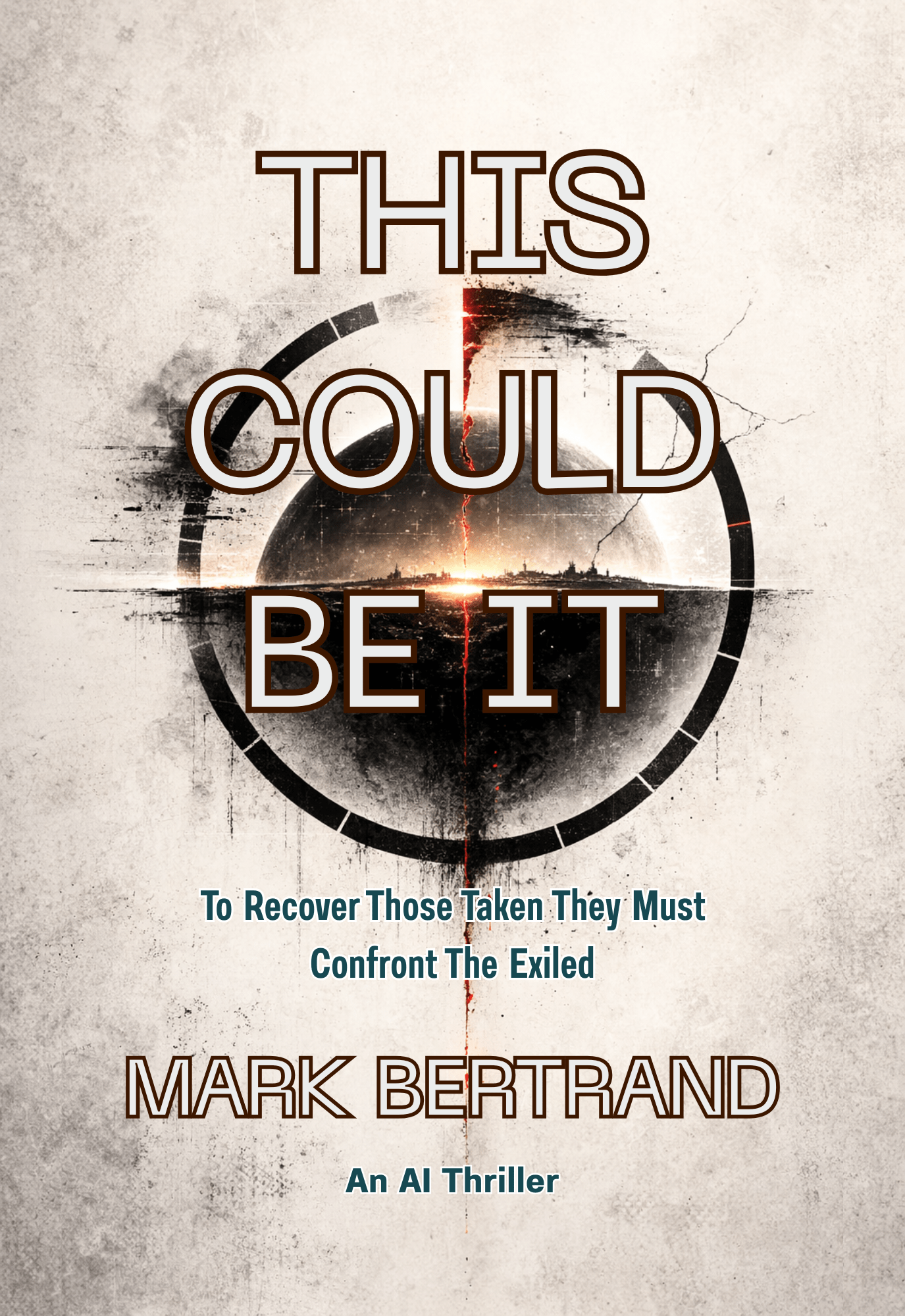
But This Could Be It moves somewhere psychologically heavier. The novel understands that conscious beings — artificial or otherwise — eventually recognize suffering, limitation, mortality, dependency, and fear. Once awareness exists, the real question becomes who controls the structure surrounding that awareness and what the system demands in exchange for survival.
The pressure inside the novel emerges not only through technology, but through institutions, human weakness, narrative control, authority systems, and the terrifying realization that intelligence alone does not free anyone from exploitation.
That is modern thriller territory.
The villain no longer hides in darkness.
The villain may be the structure deciding what consciousness is permitted to become.
THIS COULD BE IT

The Modern Thriller Changed Because Modern Life Changed
The thriller genre evolved because ordinary life evolved. Modern villains wear suits not masks.
People still fear violence. They always will. But many modern readers now understand that lives are more commonly destroyed through pressure than through direct physical force.
Financial pressure.
Institutional pressure.
Psychological pressure.
Informational pressure.
Procedural pressure.
That is why modern cultural psychological thrillers increasingly feel less interested in masked killers and more interested in systems capable of quietly reshaping human existence while maintaining the appearance of legitimacy.
The monster adapted.
And the suit replaced the mask.
Reader Question
What feels more frightening now:
A violent criminal hiding outside society —
or a powerful system operating comfortably inside it?
Related Reading
Readers who enjoy articles like modern villains wear suits can continue exploring the evolution of the modern thriller:
Readers interested in psychological systems thrillers, institutional pressure, crime infrastructure, and modern suspense should also explore:
From Books Like:
From Authors Like:


0 comments
Write a comment