
Eat the Rich, Billionaire Monsters, The Killer App, and the New Thriller About Captured Wealth
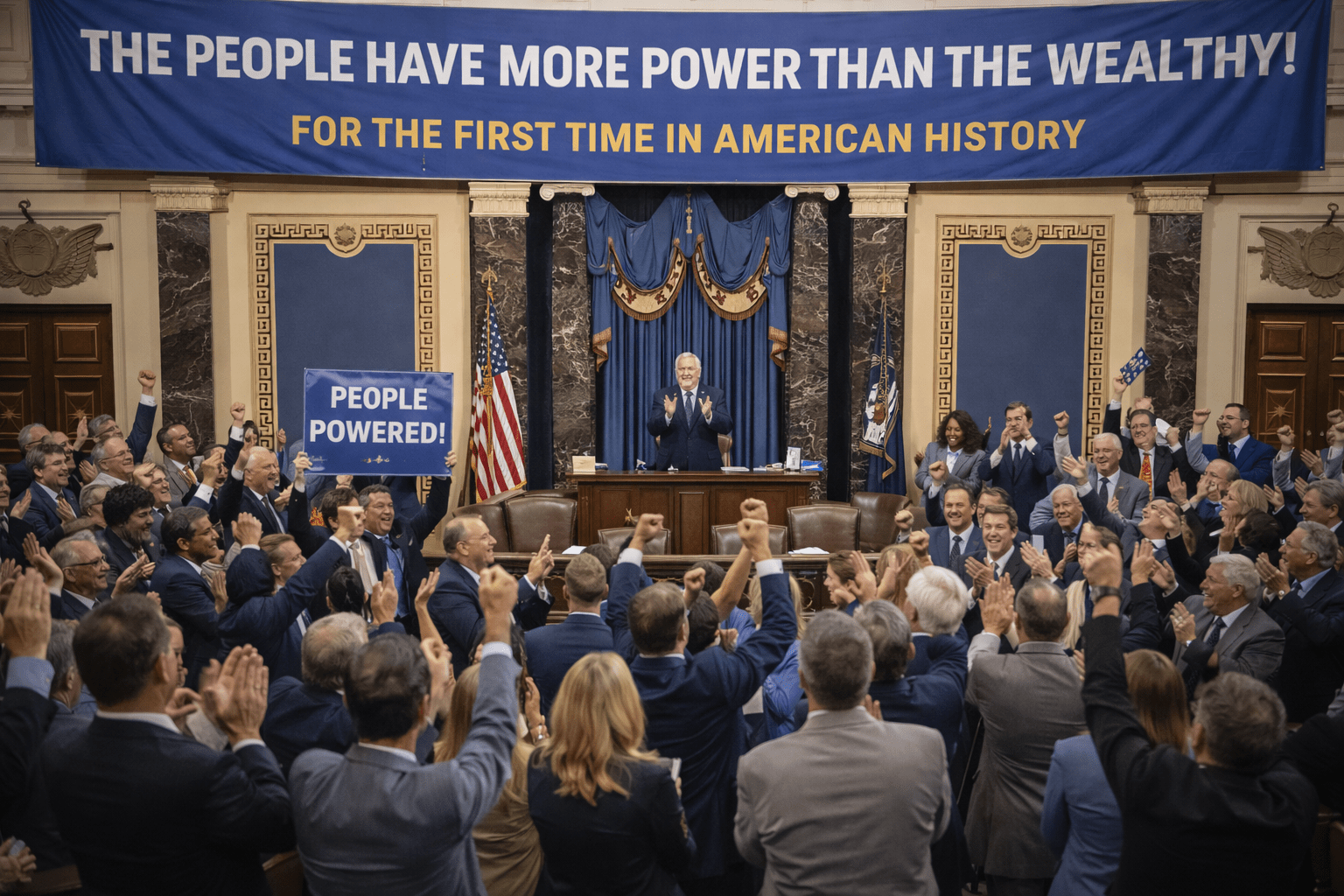
Eat the Rich is not a dinner invitation.
It is what people say when wealth stops buying comfort and begins buying control. This is about predatory capitalism and the destruction of the American dream.
Control of housing. Control of employment. Control of medicine, food, water, information, transportation, data, courts, elections, and the public systems ordinary people cannot simply refuse to use.
The billionaire is no longer merely the richest person in the room. He owns the building, finances the politician who regulates it, controls the platform where it is discussed, and employs the lawyers who will explain why nothing improper occurred.
He does not have to live under the same rules as everyone else.
He can purchase the conditions under which the rules are written.
Eat the Rich is Mark Bertrand’s project about what happens when private wealth becomes public power.
It includes The Killer App, the Billionaire Monsters short thrillers, related investigations into elite capture, and stories about ordinary people trapped inside systems designed around someone else’s appetite.
This is not a celebration of wealth.
It is an autopsy of power.
Influence is not intelligence.
Privilege is not integrity.
Power is not morality.
What Does Eat the Rich Mean?
“Eat the rich” is a provocative rejection of extreme inequality and the belief that immense wealth gives one person the moral right to govern everyone else’s existence.
It is not primarily about possessions.
A mansion does not control a citizen.
A private jet does not deny medical treatment.
A yacht does not rewrite labor law.
The danger begins when wealth is converted into institutional reach.
The billionaire buys the company. The company buys the competitor. The investment fund buys the housing. The platform buys the audience. The political action committee buys access. The lobbyist shapes the regulation. The law protects the acquisition. The court delays the challenge. The media describes the outcome as inevitable.
By the time ordinary people feel the damage, the decision has already passed through enough respectable offices that nobody appears personally responsible.
That is what the phrase is trying to name.
Not success.
Not comfort.
Not ambition.
A class of people accumulating so much economic and political force that citizenship itself begins to feel subordinate to ownership.
The slogan is angry because the arrangement is polite.
The project beneath the slogan is precise:
The rich should not be allowed to consume the society that created their wealth.
The Rich Are Already Eating
People are often warned that “Eat the Rich” sounds excessive.
The warning looks in the wrong direction.
The real question is not whether the public intends to consume the wealthy.
The question is how much of public life the wealthy have already consumed.
They consume wages by treating labor as a cost to be driven down.
They consume housing by converting shelter into an investment vehicle.
They consume healthcare by placing revenue between patients and treatment.
They consume public infrastructure while calling the resulting fortune entirely private.
They consume political representation through campaign financing, lobbying, private access, and the permanent movement of officials between government and industry.
They consume competition by acquiring rivals, controlling distribution, manipulating markets, and surviving losses no ordinary business could endure.
They consume information by buying media, platforms, search visibility, data, and the machinery through which public reality is presented.
They consume time by forcing workers, tenants, patients, customers, and citizens to spend years appealing decisions that enriched someone in seconds.
Their success becomes private.
Their damage becomes public.
When the investment succeeds, the billionaire receives the reward. When the system fails, workers, customers, communities, pension funds, taxpayers, and governments are expected to absorb the wreckage.
The public assumes the risk.
The billionaire retains the authority.
Then the billionaire appears at a conference and explains the future.
The Billionaire Is No Longer the Villain in the Penthouse
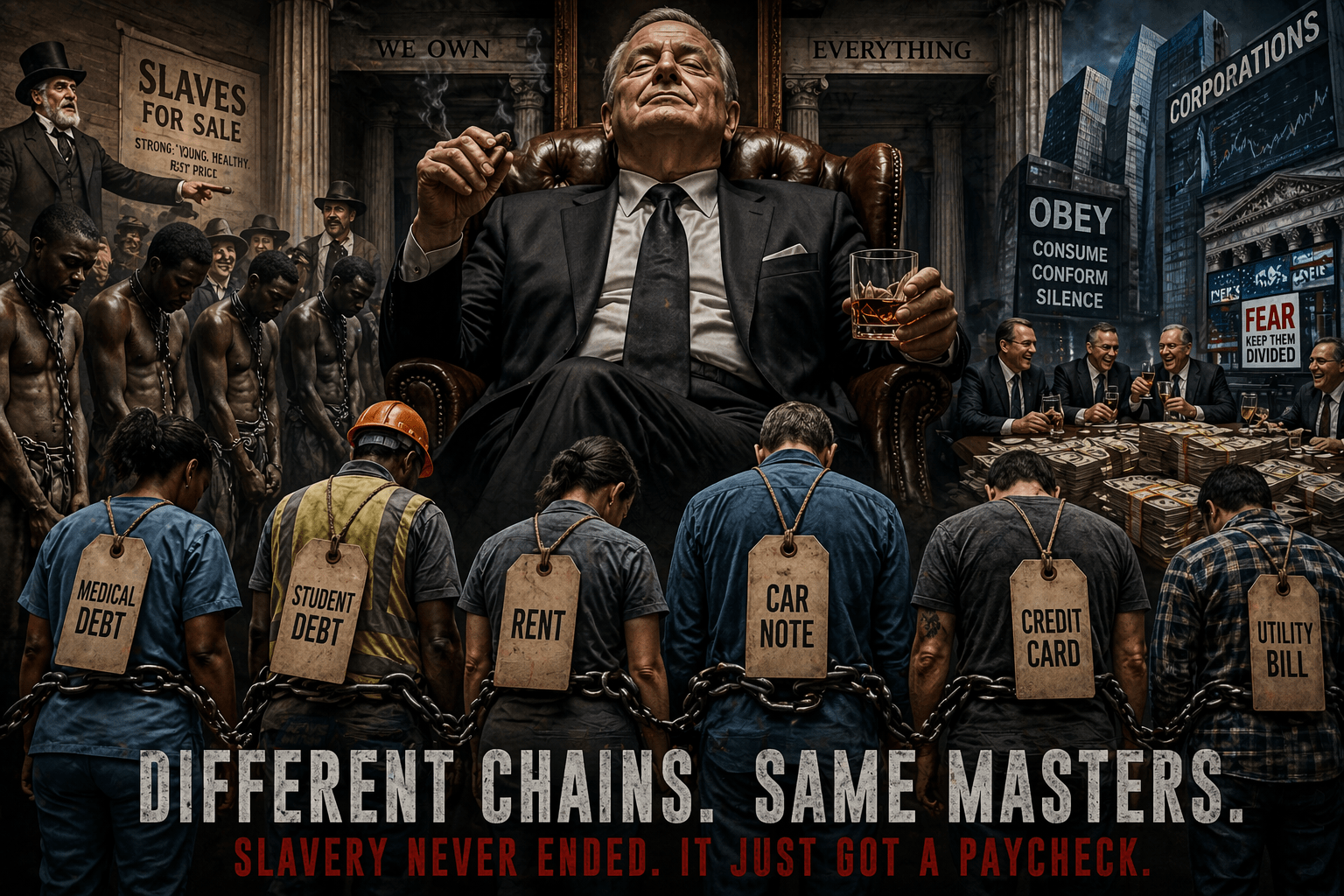
The old billionaire villain sat behind a mahogany desk, ordered a murder, and waited for the hero to discover his secret.
That billionaire is obsolete.
The modern billionaire does not hide from society.
He owns part of it.
He funds elections, purchases newspapers, controls communication networks, acquires housing, privatizes infrastructure, automates employment, captures personal data, influences courts, and turns human dependency into recurring revenue.
He does not merely commit crimes inside the system.
He acquires enough of the system to influence what will still be considered a crime.
That changes the modern thriller.
A serial killer can terrorize a neighborhood.
A billionaire can alter the conditions under which millions of people work, live, communicate, borrow, receive treatment, and understand the world.
The serial killer must avoid the police.
The billionaire may sponsor their equipment.
The serial killer hides the evidence.
The billionaire can place the evidence inside a confidential settlement, proprietary algorithm, private arbitration agreement, shell corporation, nondisclosure clause, regulatory filing, or report nobody outside the company is permitted to examine.
The monster is no longer merely a cruel man.
The monster is a cruel man with institutional reach.
Read The Billionaire Replaced the Serial Killer
Influence Is Not Intelligence
A billionaire’s influence proves that he possesses influence.
It does not prove that he understands education, medicine, transportation, government, labor, democracy, journalism, poverty, social behavior, human dignity, or the future.
Wealth nevertheless creates an illusion of universal competence.
The billionaire succeeds in one market and is suddenly invited to redesign civilization. He is asked how children should learn, how workers should live, how cities should function, how governments should operate, how speech should be regulated, and which human beings will remain economically useful.
Money converts opinion into authority.
The audience is encouraged to mistake the size of the fortune for the depth of the mind.
But intelligence without accountability is not wisdom.
It is merely capacity.
Privilege Is Not Integrity
A person who has never been forced to choose between rent and medicine cannot explain poverty from inside a private aircraft.
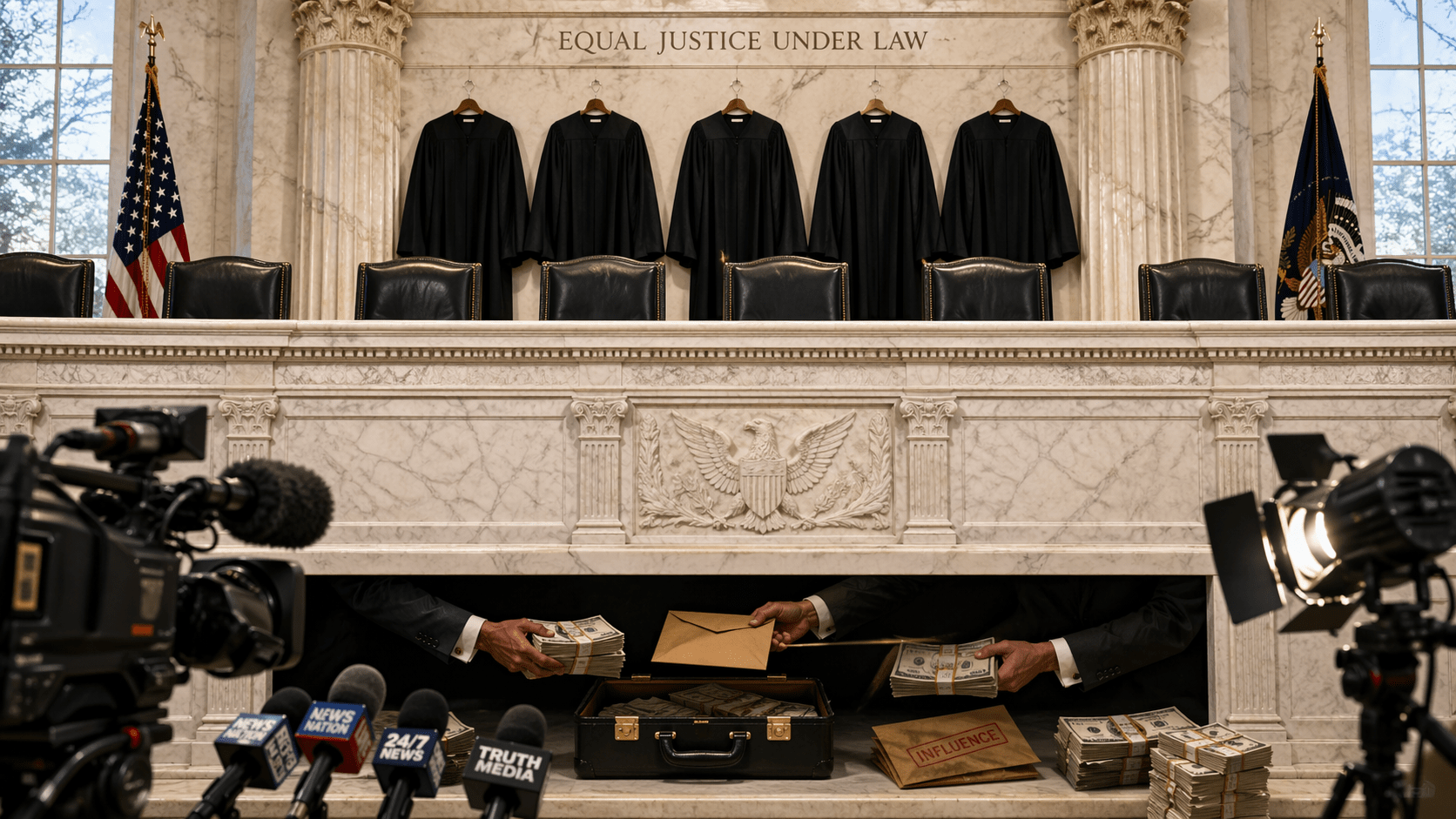
A person protected by lawyers, trusts, security teams, political relationships, inherited access, and financial reserves does not inhabit the same risk structure as the worker whose insurance disappears with his job.
The billionaire may still believe he earned everything.
The system is designed to support that belief.
Every public subsidy becomes innovation.
Every tax advantage becomes smart planning.
Every suppressed wage becomes efficiency.
Every monopoly becomes scale.
Every government contract becomes entrepreneurship.
Every rescued institution becomes too important to fail.
Every injured worker becomes an unfortunate exception.
Privilege erases the machinery that made privilege possible.
Then it calls the result character.
Power Is Not Morality
The ability to do something does not make the act right.
The ability to purchase a town does not confer the moral right to control everyone who lives there.
The ability to automate a workforce does not answer what happens to the discarded workers.
The ability to acquire personal data does not create consent.
The ability to raise the price of a necessity does not make the resulting suffering acceptable.
The ability to influence the law does not convert exploitation into justice.
Power answers one question:
Can it be done?
Morality asks another:
What is the right thing to do?
Billionaire power becomes monstrous when the first question is allowed to erase the second.
The Killer App
What Happens When Surveillance Turns Upward?
Imagine an application that reveals what concentrated wealth is actually doing.
Not stock prices.
Not net worth.
Not yachts, estates, private islands, or aircraft.
Damage.
The application tracks political donations, lobbying networks, shell companies, media ownership, government contracts, layoffs, union suppression, property acquisitions, public subsidies, environmental violations, tax avoidance, price increases, data collection, captured officials, and communities left behind.
It does not merely tell users who is wealthy.
It tells them who paid the price.
Then the rankings begin.
The most destructive billionaire.
The most captured politician.
The largest public subsidy.
The highest number of displaced workers.
The greatest amount of wealth extracted from public dependency.
The most profitable human disaster.
The billionaire class calls the application dangerous.
They are correct.
Information becomes dangerous when powerful people can no longer control who sees it.
The Killer App is a thriller about surveillance turned upward.
The people who built systems to monitor workers, consumers, voters, borrowers, tenants, patients, and citizens discover what happens when the same precision is used to monitor them.
The application does not call for violence.
It makes concealment impossible.
For people whose power depends upon invisibility, transparency feels like an attack.
The App Does Not Track Wealth
It tracks consequence.
A billionaire announces a restructuring.
The app displays the families who lost healthcare.
A private equity group purchases an apartment portfolio.
The app displays the evictions, rent increases, maintenance complaints, tax concessions, and shell companies behind the transaction.
A corporation receives a public subsidy.
The app displays the schools, transit systems, hospitals, and public services that could have received the same money.
A political donation is made.
The app follows the donation through lobbying meetings, proposed legislation, regulatory changes, government contracts, and private gains.
A company reports record efficiency.
The app identifies whose life was made less secure to produce it.
The wealthy are accustomed to measuring everyone else.
The Killer App measures them.
Enter The Killer App: Billionaire Tracker — Eat the Rich
Billionaire Monsters
The Stories Behind the System
Billionaire Monsters is the fiction engine inside the Eat the Rich project.
Each story begins with a recognizable part of ordinary life.
A platform everyone is expected to use but nobody is allowed to understand.
Then a billionaire discovers how to turn that necessity into leverage.
The stories are fictional.
The methods are recognizable. True. Monstrous.
These are not stories about eccentric geniuses making unfortunate mistakes. They are psychological thrillers about men and women who understand exactly what their systems do to people and continue because the suffering appears only as a favorable number in a private report.
Every monster has a public biography.
Every monster has a charitable foundation.
Every monster has a justification.
Every monster insists the harm was necessary.
The Union He Invented
Mining billionaire Ransom Vail owns more than the company.
He owns the mountain, the railroad, the company housing, the local economy, and enough political influence to determine how every industrial death will be explained.
When his workers begin organizing, a fearless union leader appears with money, legal support, professional organizers, and a plan capable of defeating him.
The workers finally have someone strong enough to stand against the company.
That should frighten Vail.
It does not.
He invented the union.
He does not intend to defeat the workers’ revolt.
He intends to own it.
The Union He Invented is a short thriller about the next stage of elite capture: when power stops opposing resistance and begins manufacturing the resistance itself.
The Monsters Do Not Need the Same Business
One billionaire may control water.
Another may control housing.
Another owns the food supply, the hospital network, the local newspaper, the data center, the political platform, or the software required to participate in public life.
Their industries change.
Their method does not.
First, identify something people need.
Second, acquire or disable the alternatives.
Third, make access conditional.
Fourth, collect data from the people who depend upon the system.
Fifth, punish resistance through price, exclusion, delay, reputation, employment, or law.
Sixth, describe the arrangement as freedom.
The most effective cages do not look like cages.
They look like services.
The Real Horror Is Dependency
Billionaire power rarely begins with a gun.
It begins with something people cannot refuse.
Employment.
Housing.
Medicine.
Food.
Transportation.
Education.
Credit.
Communication.
Once the necessity is controlled, behavior can be controlled with it.
Speak against the company and lose the job.
Organize the workers and lose the health insurance.
Challenge the landlord and lose the home.
Question the algorithm and lose access.
Oppose the platform and disappear from the audience.
Criticize the billionaire and discover how many institutions depend upon his money.
The billionaire does not need everyone to admire him. He only needs enough people to believe resistance will cost more than obedience.
That is captured culture.
Greed stops selling products and starts designing cages.
Read Captive Culture: How Greed Built the Modern Cage
The Four Levers of Billionaire Power
Extreme wealth becomes governing power through four levers.
Capital
Capital purchases more than property.
It buys companies, competitors, data, attention, political access, legal endurance, favorable research, expert testimony, public narratives, technological infrastructure, and the ability to survive mistakes that would destroy an ordinary person.
Money does not merely open doors.
At sufficient scale, it determines where the doors will be built.
Legitimacy
Society often transforms wealth into perceived authority.
The billionaire becomes an expert because he is wealthy. His preferences are called vision. His political demands are called reform. His private interests are described as the future.
The title, foundation, conference stage, university donation, media profile, and public-relations campaign provide moral polish.
Wealth becomes respectability.
Respectability becomes permission.
Dependency
Dependency is the ownership of something another person needs in order to work, live, communicate, travel, receive treatment, protect a family, or participate in society.
This is the strongest lever because coercion can be disguised as choice.
The worker is free to quit.
The tenant is free to move.
The patient is free to decline treatment.
The user is free to leave the platform.
The citizen is free to reject the service.
The freedom exists on paper.
The dependency determines what happens in life.
Time
The billionaire can survive lawsuits, investigations, public outrage, regulatory delays, election cycles, boycotts, strikes, and temporary losses.
Ordinary people cannot.
A tenant needs housing now.
A patient needs treatment now.
A worker needs income this month.
A family needs the insurance claim approved before the savings disappear.
The billionaire uses delay as an asset.
The individual experiences delay as destruction.
Most people confront one institution at a time.
The billionaire can pressure all of them at once.
Why Billionaire Monsters Must Be Fiction
Journalism can document a captured institution.
Economic analysis can calculate a transfer of wealth.
A legal investigation can expose misconduct.
Political commentary can describe the policy.
Fiction places the reader inside the machinery.
The reader feels what happens when the paycheck disappears, the rent doubles, the insurance company refuses treatment, the town loses its water, the platform erases a reputation, or a political decision made in a distant room destroys a family that will never know the names of the people responsible.
The billionaire sees a market correction.
The family experiences a life ending.
That difference is where the thriller begins.
A report can tell the reader how many workers lost their jobs.
A story stays with one worker when he goes home.
It watches him calculate the remaining money, avoid his daughter’s questions, hide the termination notice from his wife, and slowly understand that the company’s celebrated efficiency has become the central fact of his family’s existence.
The executive sees a number improve.
The character must continue living inside the improvement.
Billionaire Monsters does not ask whether possessing money automatically makes someone evil.
It asks a more urgent question:
What happens when one person acquires enough power to make his private morality a public condition?
No Capes. No Chosen Ones. No Easy Revolution.
These stories are not fantasies in which one heroic individual defeats concentrated power with a speech, a leak, or a perfectly aimed bullet.
Systems built over decades do not collapse because one good person finally becomes angry.
They are challenged by information, solidarity, organized labor, public institutions, democratic ownership, enforceable law, economic independence, and citizens who refuse to confuse wealth with wisdom.
That struggle is slower than revenge.
It is also more dangerous to the billionaire.
Revenge can be isolated, condemned, and prosecuted.
Structural change transfers power.
The purpose of Eat the Rich is not to replace one ruling appetite with another.
It is to make private power answerable to public consequence.
This Is Not Billionaire Romance
This project does not ask the reader to admire the penthouse, the tailored suit, the private aircraft, the emotionally unavailable founder, or the damaged billionaire waiting for the correct person to discover his hidden tenderness.
The billionaire does not need another redemption fantasy.
He already owns the public-relations department.
Billionaire Monsters looks in the other direction.
At the employee inside the warehouse.
At the family beneath the company water tower.
At the tenant opening the rent notice.
At the town whose hospital became an investment.
At the customer trapped inside mandatory arbitration.
At the voter whose anger was purchased, aimed, and monetized.
At the person who did everything correctly and still discovered that the rules belonged to someone else.
That is the reader experience.
Not luxury.
Recognition.
The Captured-Reality Psychological Thriller
Eat the Rich and Billionaire Monsters belong to the captured-reality psychological thriller.
The danger does not come from an imaginary dystopia operating beyond ordinary life.
It comes from contracts, algorithms, institutions, markets, debts, laws, platforms, procedures, and dependencies that already feel familiar.
The character is not merely trapped inside a bad situation.
The character is trapped inside a version of reality arranged by power.
The truth exists, but it is difficult to prove.
Resistance is possible, but deliberately expensive.
Obedience is presented as sanity.
The institution behaves politely.
The damage remains real.
Explore the Captured-Reality Psychological Thriller
Continue the Eat the Rich Investigation
The Killer App
A billionaire-tracking system turns elite secrecy into public evidence. It does not measure what the billionaire possesses. It measures what everyone else lost.
The Union He Invented
A mining billionaire faces a worker revolt led by the most effective union organizer the workers have ever seen. The workers do not know who put her there.
The Billionaire Replaced the Serial Killer
Why the modern thriller needs a villain capable of capturing institutions rather than merely terrorizing individuals.
Read The Billionaire Replaced the Serial Killer
Captive Culture
The architecture beneath billionaire power: the point where greed stops selling products and starts designing cages.
Read Captive Culture: How Greed Built the Modern Cage
IMD Operations
Fictional operations exposing CEOs, algorithms, corporate systems, captured workplaces, institutional failure, and the people who convert human damage into process.
The Reader’s Court
Read the evidence. Decide what the system protected. File your verdict.
Mark Bertrand and Billionaire Monsters
Mark Bertrand writes psychological thrillers about control, self-deception, institutional power, and the quiet violence practiced by civilized people.
His characters do not confront villains who merely want to rule the world.
They confront people who already own the procedure.
The novels and short stories examine what happens when law, wealth, technology, authority, dependency, and respectability become weapons that do not look like weapons.
There are no clean heroes.
There are no morally perfect revolutions.
There are ordinary people deciding what they are willing to surrender, what they are prepared to carry, and what remains of personal responsibility after the system declares itself innocent.
This is fiction for readers who do not need the monster to wear a mask.
They recognize the suit.
Explore Mark Bertrand’s psychological thriller books
Start With The Killer App
The billionaires believe their wealth proves they won.
They have forgotten that every fortune leaves evidence.
Every subsidy.
Every eviction.
Every acquisition.
Every closed hospital.
Every suppressed union.
Every purchased politician.
Every family treated as an acceptable loss.
The Killer App gathers the evidence.
Billionaire Monsters tells the stories.
Eat the Rich names the charge.
Enter The Dossier
The Dossier is the private reader channel for Mark Bertrand’s novels, stories, and expanding captured-reality thriller projects.
Members receive direct access to deeper investigations, hidden connections, novel developments, private reader material, and work that does not exist anywhere else.
No billionaire worship.
No celebration of disruption.
No comforting promise that the system will eventually correct itself.
Only the stories beneath the official explanation.