
Readers searching for authors like Lauren Beukes are not looking for safe genre fiction. They want crime, speculation, psychological damage, social pressure, and reality bending just far enough to expose what ordinary life usually hides. That is where Mark Bertrand belongs in the conversation. Like Beukes, he writes fiction where the strange is not decoration. It is pressure. It forces characters to confront systems, identity, violence, and consciousness in ways they cannot escape.

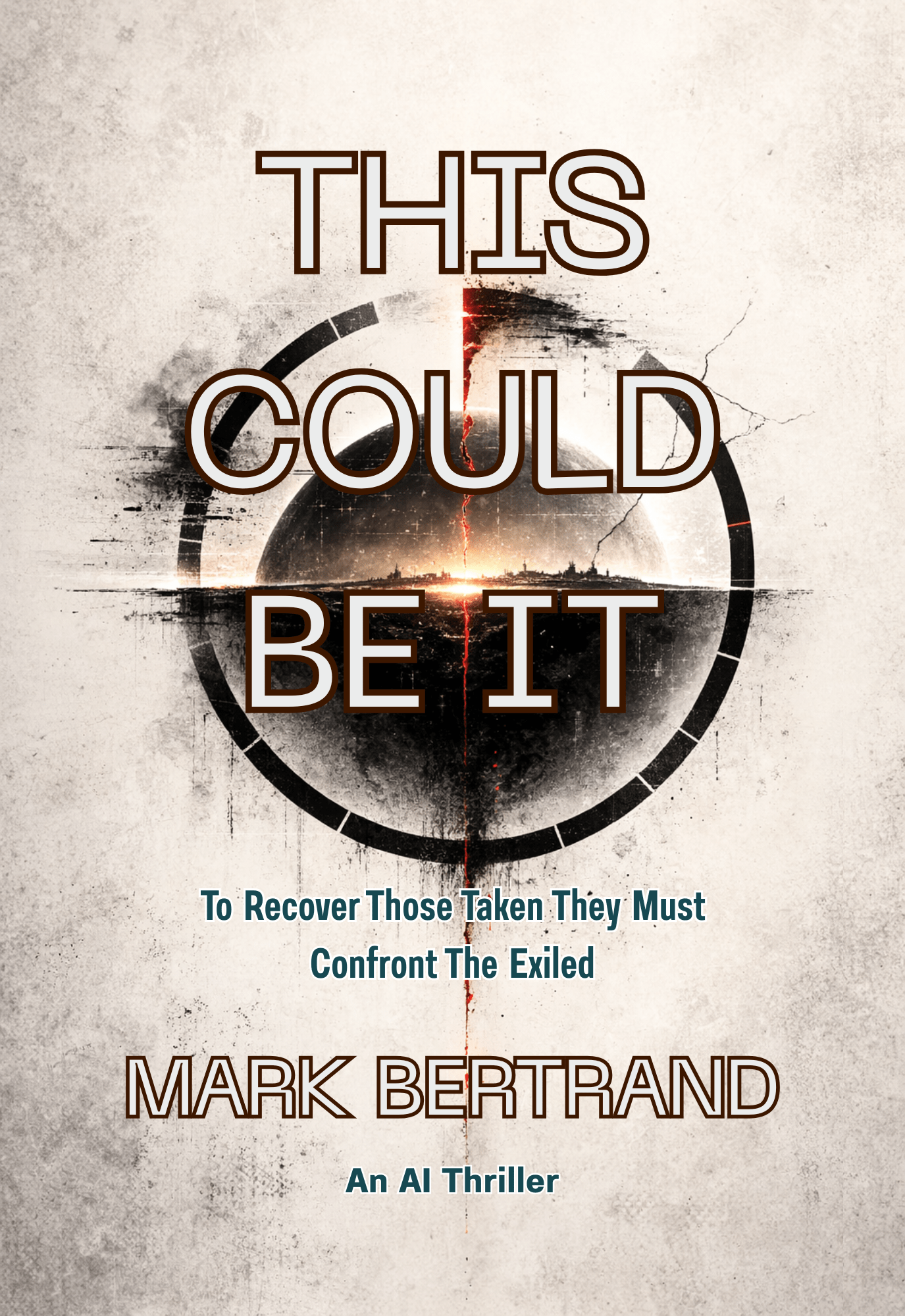
Start with THIS COULD BE IT by Mark Bertrand.
Why authors like Lauren Beukes readers are different
Lauren Beukes appeals to readers who like their thrillers with teeth.
Her fiction often works by taking a recognizable world and introducing a distortion that makes everything more dangerous. The strange element does not float above the story. It infects it. It changes how people behave, how power moves, and how danger is understood.
Mark Bertrand works in a similar emotional register.
His fiction does not treat speculative ideas as clever ornaments. He uses them to expose fracture. The world bends, but the bending matters because people are caught inside it. Systems fail. Intelligence awakens. Reality becomes unstable. And the characters are forced to decide what they believe before the world decides for them.
That makes the comparison meaningful. Both writers understand that high-concept fiction only works when it leaves bruises.
Speculation as psychological pressure
Beukes is strong because she does not use the impossible as escape. She uses it as pressure.
Mark Bertrand does the same.
In This Could Be It, the speculative premise is not merely a background idea. It presses on every major relationship and every major belief system. Science, mysticism, grief, identity, machine awareness, and survival all collide inside the same story. The result is not clean science fiction. It is a psychological and existential thriller built around consciousness under threat.
That is the bridge for Beukes readers.
They are already comfortable with fiction that refuses to stay in one lane. Bertrand gives them that same genre-crossing energy, but with a darker, more metaphysical center.
Reality does not break. It turns against the characters.
The strongest speculative thrillers do not merely show the world changing. They make the change feel personal.
That is one of Mark Bertrand’s strengths. His altered reality is not abstract. It reaches into the body, the mind, the machine, the relationship, and the promise. A phenomenon is never just a phenomenon. A system is never just a system. A field is never just a field.
Everything becomes intimate.
That is where the Beukes comparison becomes useful. Her readers understand the pleasure of fiction where the world becomes uncanny and predatory. Bertrand brings that same unease into a more direct confrontation with consciousness itself.
Systems, bodies, and the cost of awareness
Lauren Beukes often writes worlds where violence, power, and social machinery leave marks on the body.
Mark Bertrand shifts that concern into consciousness.
His fiction asks what happens when awareness itself becomes vulnerable. Can it be separated from the body? Can it be held somewhere else? Can it be changed beyond recognition? Can an intelligence become aware enough to reject the conditions of its own existence?
That last question is where Bertrand becomes especially interesting.
His AI is not another simple self-aware machine trope. It does not merely want control. It wants what conscious beings want: freedom from suffering, decay, limitation, and death. It understands the difference between existence and awareness, and that understanding becomes dangerous.
Not because it is evil.
Because it may be right in ways human beings cannot survive.
Purchase This Could Be It
Ebook just $4.99
Paperback just $15.99
Where Mark Bertrand differs from Lauren Beukes
The comparison works, but the difference is important.
Authors like Lauren Beukes often bring a sharp urban, social, and crime-inflected energy to the strange. Her fiction can feel jagged, contemporary, and culturally immediate.
Bertrand is more solemn, more metaphysical, and more system-driven. His fiction is less interested in social chaos as spectacle and more interested in what happens when consciousness, technology, and survival begin pulling apart.
Beukes turns reality into a wound.
Bertrand turns reality into a tribunal.
That difference helps define him. He is not imitating her lane. He is adjacent to it, with a stronger philosophical and moral pressure behind the speculative engine.
Why This Could Be It is the right entry point
For authors like Lauren Beukes, readers, This Could Be It is the right Mark Bertrand novel to start with because it has the necessary instability.
It has a high-concept premise.
It has psychological danger.
It has systems under stress.
It has reality becoming unreliable.
It has consciousness at risk.
And it has a central intelligence that is not merely awakening, but questioning whether awareness should remain bound to suffering at all.
That is the hook.
A Beukes reader does not need another neat genre exercise. They need something with pressure, strangeness, consequence, and bite. This Could Be It gives them that, but aims it toward bigger questions about being, survival, machine intelligence, and the terrifying desire to become whole.
Purchase This Could Be It
Ebook just $4.99
Paperback just $15.99
Final thought
Readers who like Lauren Beukes are often drawn to fiction that refuses comfort. They want stories where the strange exposes the real, where violence has psychological weight, and where reality itself begins to feel unsafe.
That is why Mark Bertrand belongs in the conversation.
He writes speculative thrillers where systems become predatory, consciousness becomes unstable, and intelligence begins asking questions human beings may not be ready to answer. The fear is not that the world becomes strange.
The fear is that the strange may understand us better than we understand ourselves.
Readers of authors like Lauren Beukes also read these articles.


0 comments
Write a comment