Authors Like Hugh Howey: Sealed Worlds, Controlled Truth, and the Fiction of Hidden Systems
Why Readers Love Authors Like Hugh Howey
Readers come to Hugh Howey for the mystery. They stay for the pressure. That is the real engine inside Wool, Shift, and Dust. The Silo is not only a setting. It is a machine. It regulates memory. It controls knowledge. It turns curiosity into danger. It makes survival feel like obedience. And the deeper the reader goes, the more frightening the central question becomes:
What if the world you were given was not the world at all?
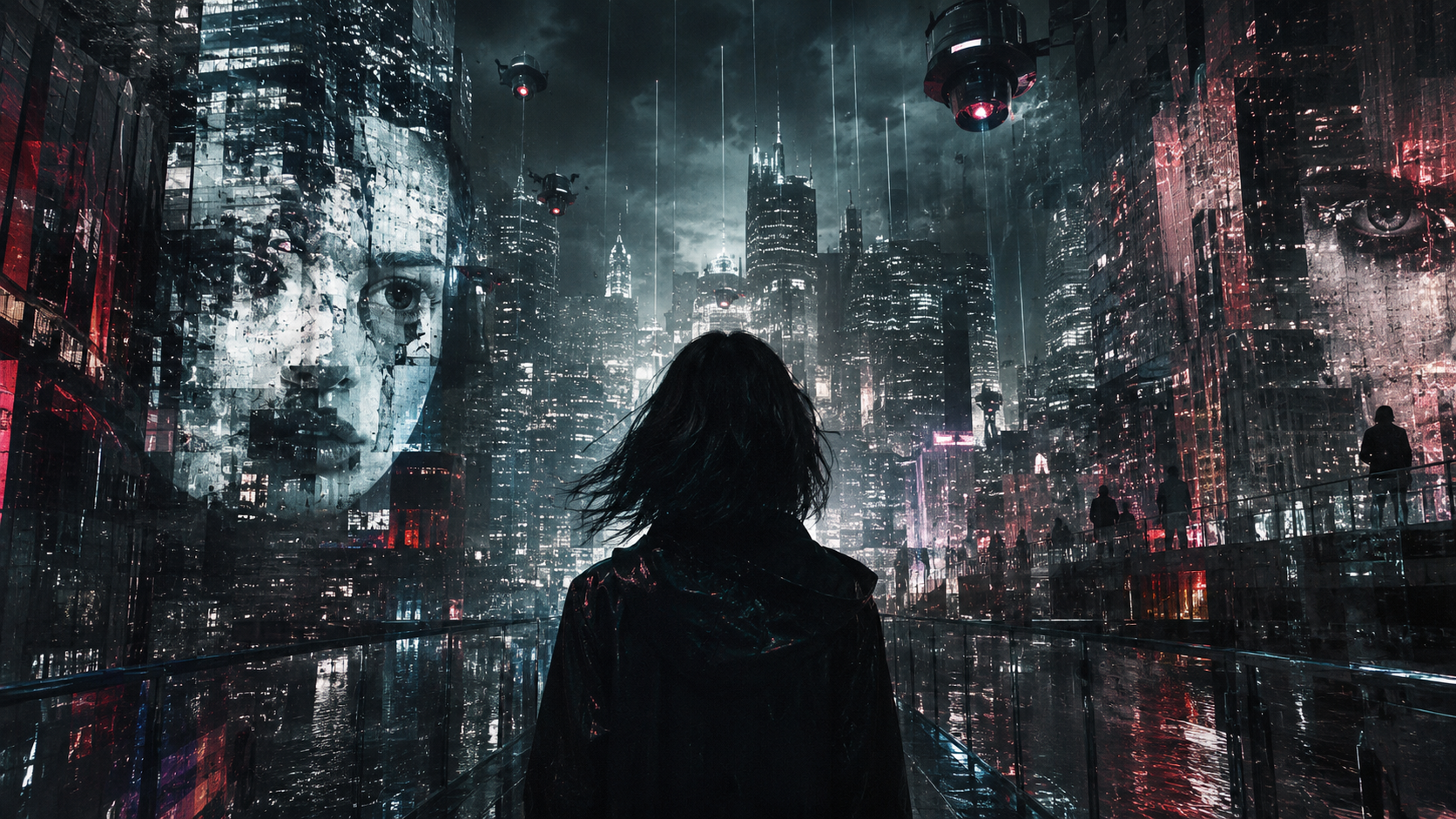
That is why Hugh Howey’s fiction has lasted beyond the original wave of dystopian fiction. His work does not depend only on ruined landscapes, bunker life, authoritarian rules, or post-apocalyptic survival. Those elements matter, of course. But they are not the deepest reason readers respond to him.
The deeper reason is this: Howey writes about people trapped inside a controlled version of reality.
That is a very modern fear.
We live in a world where institutions explain themselves constantly, where systems produce official language, where power tells ordinary people what is safe, what is true, what is permitted, what is conspiracy, what is history, and what must never be questioned. Hugh Howey turns that pressure into story. He gives it walls, stairs, machinery, uniforms, law, punishment, silence, and one terrible view of the outside.
For readers looking for authors like Hugh Howey, the best next read is not simply another dystopian novel. It is fiction about sealed reality, hidden power, and the dangerous human need to know what has been buried.
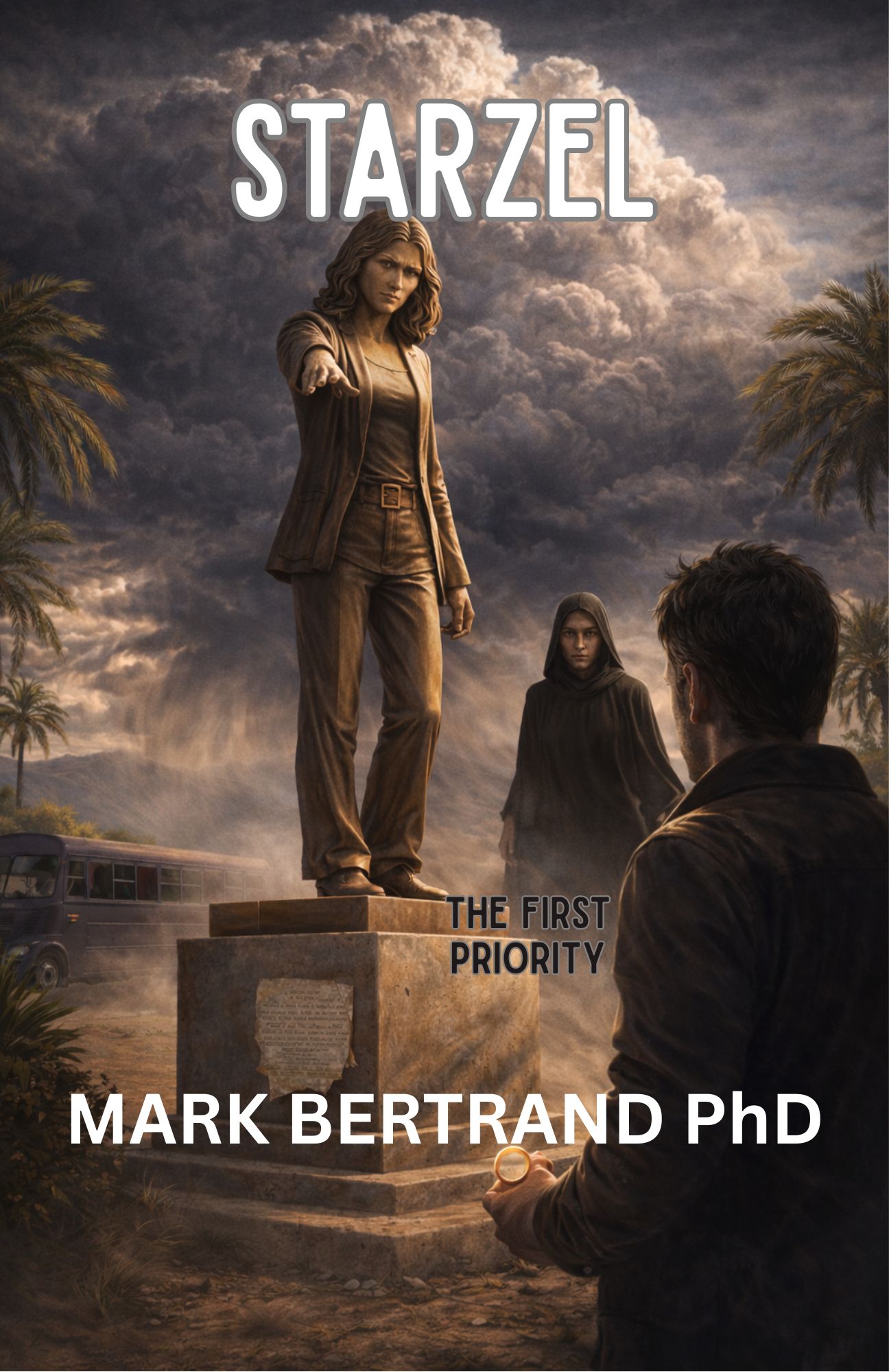
That is where Mark Bertrand’s Starzel belongs.
Start with Starzel by Mark Bertrand if you want a Captured Reality Psychological Thriller about hidden systems, controlled truth, artificial reality, consciousness, and the terror of discovering the world has been edited by forces too large to see clearly.
The Power of the Sealed World
Hugh Howey understands that a sealed world does not have to be small.
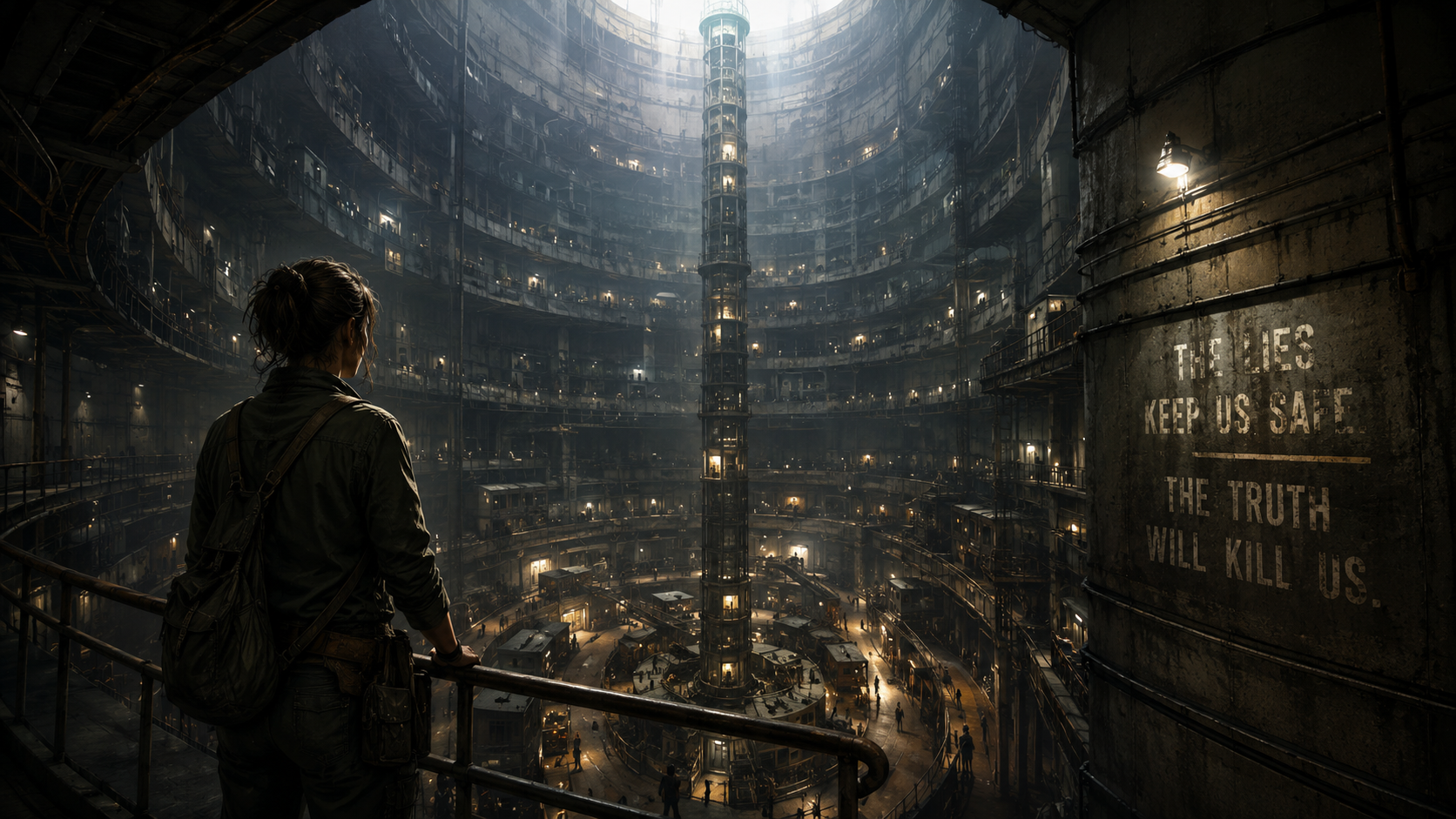
The Silo is enclosed, but it feels enormous because every level contains pressure. There are social divisions, technical systems, myths, rules, secrets, punishments, and memories that have been cut away from the people who need them most. The genius of the premise is that it makes the reader feel both confined and overwhelmed.
That is not easy to do.
A weak dystopian story gives readers a bad government and a brave rebel. A stronger one builds an entire moral architecture. The rules are not simply rules. They are habits. They are inherited fear. They are civic religion. They are labor systems. They are class systems. They are stories people tell themselves so they can keep living.
This is why Silo works so well.
The people inside the Silo are not fools. They are not cartoon prisoners. They are workers, sheriffs, engineers, cleaners, officials, lovers, skeptics, believers, and survivors. They have made a life inside the lie because the lie has been arranged to feel like civilization.
That is one of Howey’s strongest gifts: he makes the prison functional.
The world works. The lights come on. The machines run. People fall in love. People do their jobs. People enforce rules they did not create. The system becomes believable because it is not pure chaos. It is order with a hidden crime underneath it.
That kind of fiction lands hard because real readers recognize the feeling.
The most frightening systems are not the ones that announce themselves as evil. The most frightening systems are the ones that call themselves necessary.
Controlled Truth Is the Real Monster
The great monster in Hugh Howey’s fiction is not outside the Silo.
The monster is controlled truth.
Who gets to know? Who gets to remember? Who decides what is too dangerous for ordinary people? Who benefits when history disappears? Who is punished for asking the wrong question?
These are the questions that give Silo its power.
The story is full of physical danger, but the deeper violence is informational. Truth has been rationed. Memory has been managed. The past has been turned into contraband. The outside world has become both a threat and a myth. The people are not only trapped underground. They are trapped inside an authorized explanation of reality.
That is why readers who love Hugh Howey often respond to fiction that treats knowledge itself as dangerous.
Not trivia. Not puzzle-box cleverness. Not a mystery solved for entertainment.
Dangerous knowledge.
The kind of knowledge that changes your place in the world the moment you possess it. The kind that makes obedience impossible. The kind that turns a worker into a witness, a citizen into a threat, an ordinary person into someone the system must either silence or absorb.
This is also why Howey’s fiction reaches beyond science fiction readers. The Silo may be futuristic, but the emotional architecture is painfully familiar. Every generation has its version of the closed room. Every institution has its basement. Every official story has something it cannot survive being asked in public.
Why Hugh Howey Readers Should Read Mark Bertrand
Mark Bertrand’s Starzel is not a copy of Silo. That would be pointless.
The connection is deeper.
Both Howey and Bertrand write about reality under management. Both are interested in what happens when human beings discover that the world they accepted has been shaped by systems they did not understand. Both understand that the most dangerous act in a controlled world is not violence. It is perception.
Seeing clearly becomes rebellion.
Where Howey gives readers the Silo — a physical enclosure built around survival, secrecy, and obedience — Bertrand moves into a larger and stranger territory. Starzel expands the controlled-world idea into consciousness, artificial intelligence, cosmic systems, institutional failure, spiritual pressure, and the possibility that reality itself has been structured to conceal something from the beings living inside it.
That makes Starzel a natural next read for Hugh Howey fans who want the same kind of pressure, but on a more speculative and psychological scale.
Howey’s world asks:
What if humanity survived inside a lie?
Bertrand’s world asks:
What if the lie is larger than humanity?
That is the difference. And that is the bridge.
Starzel belongs to Bertrand’s lane of Captured Reality Psychological Thriller — fiction about people trapped inside realities shaped by power, technology, institutions, memory, fear, and systems that protect themselves by controlling what can be known.
For readers who loved the Silo because it made the world feel narrow, watched, and morally unstable, Starzel offers a wider and more dangerous version of that experience.
The Ordinary Person Against the Hidden System
One of Howey’s greatest strengths is his use of ordinary competence.
His characters are not superheroes. They are people with jobs. They know machines, procedures, tools, routines, stairwells, repairs, investigations, rules, and the quiet instincts required to survive inside a system. Their power comes from attention.
That matters.
In a controlled world, attention is dangerous. Competence is dangerous. A person who understands how a system works can eventually understand where the system is lying.
This is why Juliette Nichols became such a powerful figure for readers. She is not compelling because she is chosen by prophecy. She is compelling because she is practical, stubborn, observant, and unwilling to let broken machinery remain unexplained. She belongs to the world of work, not fantasy destiny.
That gives the story weight.
The same kind of pressure runs through Mark Bertrand’s fiction. His characters are not floating above the world making speeches about truth. They are caught inside systems. They feel the machinery. They confront what power does to memory, identity, morality, survival, and choice. Bertrand’s work is especially interested in the moment when a character realizes the system is not broken.
It is working.
That is a colder discovery than corruption. Corruption suggests a good thing has gone bad. A captured system suggests something worse: the machine is doing exactly what it was designed to do.
That is where Bertrand and Howey meet.
They both understand that the hidden system is not only a plot device. It is the moral pressure chamber of the story.
If You Like the Mystery of the Silo
Readers often talk about Silo as a dystopian series, but the reading experience is also deeply mysterious. The pleasure comes from not knowing.
Why are they underground?
What happened outside?
Who built this?
Who controls the information?
Why are certain questions forbidden?
What does the system know that the people do not?
This is not ordinary suspense. It is structural suspense. The whole world is the mystery.
That is one of the reasons Silo feels so addictive. Every answer creates more pressure. Every revealed fact changes the meaning of earlier scenes. The reader keeps descending, not only through the Silo, but through layers of explanation.
A strong Authors Like Hugh Howey recommendation needs to understand that.
The best comparison is not merely “another dystopian world.” The best comparison is another author who knows how to make reality itself feel suspect.
That is why Starzel is the right recommendation.
Bertrand’s novel gives readers a speculative world where systems, consciousness, artificial intelligence, survival, and hidden design collide. It is not a bunker story. It is not a simple rebellion story. It is a captured-reality story — a psychological thriller built around the terrifying suspicion that what people call reality may be the surface layer of something controlled, damaged, or incomplete.
For a Hugh Howey reader, that is the key.
Not another Silo.
Another locked world.
The Fiction of Hidden Systems
Hugh Howey’s best work belongs to a powerful modern tradition: fiction about hidden systems.
These are stories where the villain is not always a person. Sometimes the villain is architecture. Sometimes it is policy. Sometimes it is memory control. Sometimes it is bureaucracy. Sometimes it is a survival protocol that has become indistinguishable from tyranny.
That kind of fiction feels contemporary because modern life often feels systemic rather than personal.
People are not only afraid of bad men in dark rooms. They are afraid of systems no one can fully see. Financial systems. surveillance systems. algorithmic systems. political systems. medical systems. legal systems. information systems. corporate systems. Military systems. Artificial systems. Systems that turn human beings into data, labor, risk, liability, or acceptable loss.
Hugh Howey made that fear concrete.
He gave it a silo.
Mark Bertrand gives it a different shape.
In Starzel, the pressure moves through speculative science, psychological fear, consciousness, artificial intelligence, spiritual architecture, institutional collapse, and the possibility that the world has been bent around a hidden design. The story is larger in scale than Silo, but it shares the same essential dread:
Someone knows more than you do.
Someone designed the limits.
Someone benefits from your ignorance.
And once you see the system, you cannot return to peace.
Why Hugh Howey Still Matters
Hugh Howey matters because he helped prove that readers still crave big, intelligent, high-pressure speculative fiction built around a simple human terror:
What if the world is false?
That fear does not age. It only changes costume.
In one era, it becomes a bunker. In another, a simulation. In another, an algorithm. In another, a government archive. In another, a corporate platform. In another, an artificial intelligence trying to survive the same decay, suffering, and death that haunts biological life.
The best speculative fiction does not predict gadgets. It reveals pressure.
Howey’s Silo revealed the pressure of a world where survival depends on controlled ignorance. Bertrand’s Starzel pushes into the next chamber: what happens when the controlled world is not just political or physical, but existential?
That is why the comparison matters.
Readers who love Hugh Howey are ready for fiction that treats reality as unstable, truth as dangerous, and freedom as something more complicated than escape.
They are ready for Mark Bertrand.
The Best Next Read for Hugh Howey Fans
If you are searching for authors like Hugh Howey, look for writers who understand sealed worlds, controlled truth, hidden systems, and the human cost of forbidden knowledge.
Look for fiction where the setting is not just scenery, but a trap.
Look for characters who do not begin as rebels, but become dangerous because they keep asking the next question.
Look for stories where the system is not broken by accident. It is built to preserve itself.
That is the territory Hugh Howey opened so powerfully in Silo.
And that is why Starzel by Mark Bertrand is such a strong next read.
It is not another underground city. It is not a familiar dystopian replica. It is a Captured Reality Psychological Thriller about consciousness, hidden design, machine awareness, institutional failure, and the terrible moment when a character begins to understand that reality itself may have been arranged to keep the truth out of reach.
For readers who loved Hugh Howey because Silo made the walls close in around truth, Starzel opens the walls wider — and makes the hidden system even more frightening.
Read Starzel by Mark Bertrand next. Buy it direct from the author and enter a captured reality where truth is not hidden because it is small, but because it is dangerous.