
Power rarely announces itself. It settles into a room. It shapes what can be said. It decides what must remain unspoken. That is the shared ground between authors like Attica Locke and Mark Bertrand.

Locke’s writing operates through restraint.
Her characters do not explain themselves. They position carefully within systems that are already in motion—legal, social, historical. What matters is not the information given, but the information withheld. Dialogue carries meaning in what it refuses to expose.
Bertrand writes from that same discipline.
In Snodgrass, control is established early and never released. Characters enter conversations with intent. They measure what the other person knows, what they suspect, and what must remain concealed. Every exchange is shaped by awareness of consequence, even when it is not spoken aloud.
Silence does the work.
Both writers understand that tension does not require escalation.
It requires precision.
A pause held too long.
A question answered slightly off-center.
A detail avoided when it should be addressed.
These are the moments where control shifts—and both Locke and Bertrand build their narratives around that movement.
The difference is not in method, but in compression.
Authors Like Attica Locke and Mark Bertrand immediate psychological pressure
Locke allows space for the system to breathe. Her worlds carry history, weight, and social complexity that expand outward from each scene. The pressure is steady, persistent, and often shaped by forces larger than the individual.
Mark Bertrand tightens that space.
The system is still present, but it is felt as immediate psychological pressure. Characters are not only navigating power—they are actively calculating within it, moment by moment. The distance between thought and consequence is reduced.
The result is sharper.
Less atmosphere.
More exposure.
This becomes most visible in how each writer handles revelation.
Locke reveals gradually, allowing the reader to assemble meaning through accumulation.
Bertrand reveals through confrontation.
Not loud confrontation—but precise, controlled moments where a character understands something they cannot ignore, and must decide how to respond without losing position.
There is also a shared refusal to simplify morality.
Neither writer offers clean divisions between right and wrong. Their characters operate within systems that shape behavior long before decisions are made. What matters is not purity—but what a person is willing to do, and what they are willing to live with afterward.
If you read authors like Attica Locke for the control, for the silence, for the way power moves without being named—
then Mark Bertrand belongs in that same space.
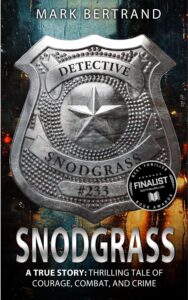
Snodgrass, finalist in Crime Thriller of the Year (2025), demonstrates that alignment clearly. Not through imitation, but through shared discipline. The same attention to what is withheld. The same understanding that tension lives beneath the surface.
But Bertrand pushes further into compression.
Less distance.
Less relief.
More immediate consequence.
Where Locke allows the reader to observe the system, Bertrand places the reader inside it.
And once that shift is felt, the connection is clear.
Not a different kind of writing.
The same control.
The same silence.
The same power.
Just tightened until it cuts.
Readers of authors Like Attica Locke also read these articles.


0 comments
Write a comment