Best Crime Thriller Books for Readers Who Want More Than a Body Count
Most crime thrillers promise a corpse.
The better ones ask what kind of world made the corpse useful.
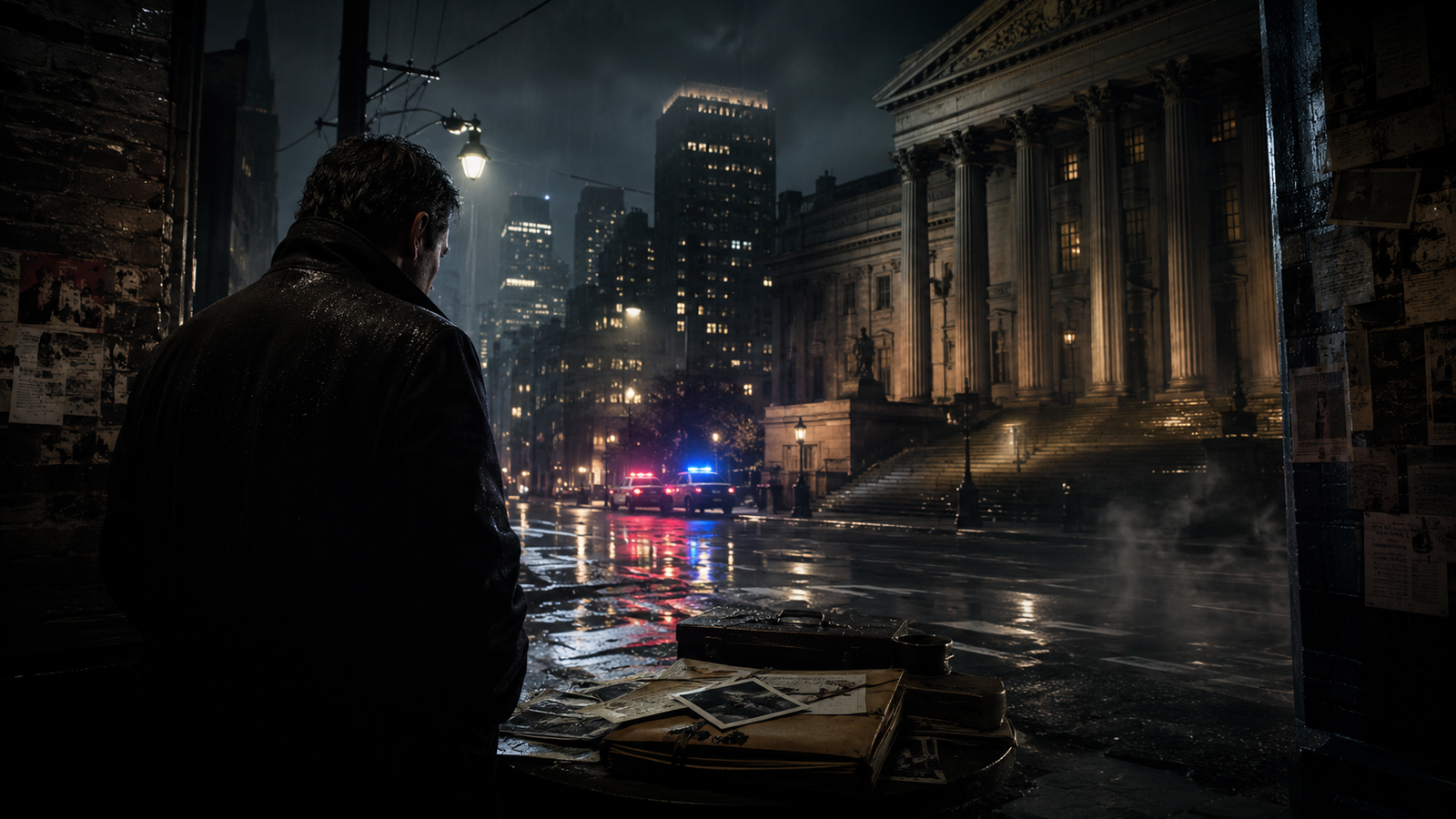
That is the difference between a crime story that disappears after the last page and a crime thriller that stays lodged in the reader’s chest. A weak crime thriller counts bodies. A stronger one studies pressure. Money pressure. Police pressure. Family pressure. street pressure. legal pressure. masculine pressure. The pressure to survive long enough to become the sort of man you once feared.
For readers who want more than a body count, crime thriller books are not merely about murder, robbery, corruption, or revenge. Those are events. The deeper subject is consequence.
Who had choices?
Who never did?
Who committed the crime?
Who built the room where crime became the only door that opened?
That is where crime fiction becomes serious. Not because it becomes slow. Not because it becomes literary in the bloodless, academic sense. But because it stops pretending crime exists outside the world that manufactures it.
The best crime thriller books understand something polite culture works very hard to deny:
crime is rarely separate from the systems that condemn it.
Law, money, family, class, race, reputation, policing, inheritance, addiction, military trauma, debt, shame, survival, and pride all enter the room before the first shot is fired. The body is not the beginning of the story. The body is where the story finally becomes visible.
What Makes a Crime Thriller Work?
A crime thriller does not need the highest body count.
It does not need the most elaborate murder.
It does not need a detective who drinks alone under neon lights, though the genre has earned its weather.
What a crime thriller needs is pressure with consequences.
Pressure on a man’s money.
Pressure on his name.
Pressure on his loyalty.
Pressure on the story he tells himself about who he is.
Pressure from the law.
Pressure from the people who break the law and understand it better than the people paid to enforce it.
Crime thriller books work when the reader feels that every decision narrows the world. The character may still be walking around. He may still have a car, a weapon, a bank account, a girlfriend, a badge, a plan, a drink in his hand, or a lie rehearsed well enough to survive daylight. But the walls are moving inward.
That is the thrill.
Not action.
Compression.
A weaker crime thriller treats crime as decoration. A dead woman. A corrupt cop. A cartel. A heist. A suitcase. A ritual. A revenge plot. Fine. Those things can work. But the strongest crime thrillers understand that crime is not interesting because someone broke the rules.
Crime is interesting because the rules were already broken.
The official world calls itself order. The criminal world calls itself business. The family calls itself loyalty. The neighborhood calls itself survival. The court calls itself justice. The bank calls itself procedure. The police call it an investigation. The poor call it Tuesday.
The best crime thriller books force those languages into the same room.
Crime Thrillers for Readers Who Want More Than a Body Count
Not every book below is the same kind of crime thriller. Some are literary crime novels. Some are noir. Some are psychological crime thrillers. Some are revenge stories. Some are institutional thrillers. Some are closer to criminal memoir, social autopsy, or moral warfare than standard genre fiction.
That is the point.
Readers who want more than a body count are not looking only for a mystery to solve. They are looking for pressure they recognize. They want books where crime reveals the architecture of a life, a city, a family, or a country.
They want the body to matter.
They want the crime to mean something.
Clockers by Richard Price
Clockers is one of the great American crime novels because it understands crime as environment. The drug trade is not presented as a cartoon marketplace of villains. It is a system of exhaustion, money, fear, ambition, loyalty, and impossible escape.
Richard Price writes crime through talk, place, and pressure. The result is not merely a story about dealers and detectives. It is a story about a neighborhood where everyone understands more than they can afford to say.
For readers tired of crime thrillers that treat the street as scenery, Clockers is essential. It shows how a city talks itself around guilt, survival, and responsibility. It understands that institutions do not hover above crime. They move through it, feed on it, name it, fail it, and sometimes depend on it.
This is the crime thriller as social anatomy.
Mystic River by Dennis Lehane
Mystic River is not powerful because a crime happens. It is powerful because childhood never ended. The past does not remain in memory. It becomes neighborhood law. It becomes masculine silence. It becomes suspicion. It becomes grief with a weapon in its hand.
Dennis Lehane understands that crime often begins long before the police report. A damaged boy becomes a damaged man. A neighborhood becomes a court. Friendship becomes evidence. Grief becomes permission.
For readers who want crime thrillers with emotional weight, Mystic River remains one of the strongest examples of the form. It is not asking only who is guilty. It is asking what guilt becomes when an entire community has been trained to bury pain instead of speaking it.
The crime matters because the people mattered first.
Razorblade Tears by S. A. Cosby
S. A. Cosby writes crime like a man taking a crowbar to the polite lies around masculinity. Razorblade Tears uses revenge, violence, grief, race, fathers, sons, shame, and love to build a crime thriller that is fast without being thin.
The engine is vengeance. The deeper subject is inheritance.
What do men pass down when they cannot say they are sorry? What does violence become when it is the only language a man was ever rewarded for speaking? What happens when love arrives after the person who needed it is dead?
For readers who want crime thrillers about damaged men under moral pressure, Cosby belongs near the front of the shelf. His books are not respectable in the weak sense. They are alive. Angry. Fast. Full of consequence.
The violence hits because the grief is real.
Winter’s Bone by Daniel Woodrell
Winter’s Bone is a crime story stripped down to bone, weather, blood, and obligation. It proves that crime fiction does not need procedural machinery to feel dangerous. Sometimes the most frightening institution is family. Sometimes the court is a kitchen. Sometimes the sentence is poverty.
Ree Dolly is not solving a puzzle for entertainment. She is trying to keep her family alive in a world where kinship is both shelter and threat. The crime is tangled with land, meth, silence, gender, poverty, and the hard code of people who cannot afford sentimentality.
This is what crime thrillers can do when they stop chasing spectacle. They reveal how survival itself can become a form of investigation.
For readers who want literary crime with dread, dignity, and hard human truth, Winter’s Bone is indispensable.
The Friends of Eddie Coyle by George V. Higgins
The Friends of Eddie Coyle is a master class in criminal speech. It understands that crime is not only action. Crime is negotiation. Favor. Pressure. Betrayal. Reputation. Tone. The thing not said because everyone in the room knows exactly what it means.
George V. Higgins writes the underworld without glamour. The characters are not mythic predators. They are men trying to keep leverage before someone else spends it. The book is bleak because it refuses to romanticize criminal life. Nobody is free. Everyone is useful until he is not.
For readers who want crime thrillers with dialogue, economy, and fatalism, this is foundational. It shows the business of crime without the costume.
The horror is not that men betray each other.
The horror is how ordinary betrayal becomes.
The Talented Mr. Ripley by Patricia Highsmith
Patricia Highsmith moves crime inward. The Talented Mr. Ripley is not a body-count thriller. It is a study of envy, identity, class performance, and the terrifying calm of a man who discovers that becoming someone else may be easier than becoming himself.
Tom Ripley is dangerous because he is not only a criminal. He is an adapter. He studies desire. He studies manners. He studies weakness. He learns that class is theater and that people often believe the performance they want to believe.
For readers who like psychological crime thrillers, Highsmith is unavoidable. She understands that the cleanest crimes often begin in fantasy. Not rage. Not hunger. Fantasy.
A better life. A better name. A better room. A better self.
Crime enters when the fantasy demands protection.
No Country for Old Men by Cormac McCarthy
No Country for Old Men is often discussed as crime, western, noir, or philosophical thriller. It is all of those and something colder. It is a crime story about moral scale. A man finds money. Another man follows. An older lawman watches the world change into something he can no longer interpret.
The plot is simple enough to summarize. The dread is not.
Cormac McCarthy turns pursuit into an argument about fate, evil, age, and the limits of old codes. The violence is memorable, but the deeper terror is civilizational. What happens when the law still exists but no longer feels equal to the thing it faces?
For readers who want crime thrillers where the crime opens into metaphysical dread, this book belongs on the list.
The chase is not the point.
The point is what the chase reveals about the country.
The Force by Don Winslow
The Force takes one of crime fiction’s favorite figures—the corrupt cop—and refuses to let him remain simple. Don Winslow writes policing as pressure, appetite, loyalty, politics, money, race, power, and self-mythology.
The result is not a clean story about a bad man with a badge. It is a story about a system that creates, rewards, uses, exposes, and discards its own corruption. The badge does not remove criminality from the room. It changes its vocabulary.
For readers drawn to institutional crime thrillers, The Force offers a powerful example of how law and crime can become reflections of each other. The question is not whether corruption exists. The question is who needs it, who benefits from it, and who gets sacrificed when the public story needs a villain.
American Tabloid by James Ellroy
American Tabloid treats American power as a crime scene. James Ellroy’s world is crude, ambitious, violent, conspiratorial, and morally diseased. The language moves like a weapon. The characters do not descend into corruption. They begin there and negotiate downward.
This is not comfort reading. It is not meant to reassure the reader that institutions are basically clean beneath a few bad actors. Ellroy’s great subject is the machinery behind the official story: politics, organized crime, intelligence work, celebrity, blackmail, money, and force.
For readers who want crime thrillers about power instead of merely criminals, American Tabloid remains a major landmark.
It asks the right brutal question:
What if history is the name power gives to the crimes it got away with?
Small Mercies by Dennis Lehane
Small Mercies returns Dennis Lehane to Boston and to the territory he understands so well: tribe, grief, race, loyalty, neighborhood identity, and the violence people excuse when it protects the story they need to believe about themselves.
The book works because the crime is inseparable from social pressure. A missing daughter, a dead young man, a city under racial strain, a mother’s fury, and the defensive mythology of a community all collide.
Lehane is strong here because he does not treat crime as isolated behavior. He treats it as a flare fired from inside a larger moral emergency.
For readers who want modern crime thrillers with historical pressure and emotional force, Small Mercies belongs in the conversation.
The Girl with the Dragon Tattoo by Stieg Larsson
The Girl with the Dragon Tattoo is often remembered for Lisbeth Salander, and rightly so. But the book’s deeper power comes from its fusion of crime, money, family rot, misogyny, journalism, corporate secrecy, and institutional failure.
The crime is not only personal. It is archival. It lives in records, inheritances, locked rooms, corrupted respectability, and the long patience of powerful men who trusted the world to look away.
That is why the book became larger than a standard thriller. It gave readers the pleasure of investigation while feeding a deeper suspicion: that wealth and family reputation can hide almost anything when the institutions around them prefer silence.
For readers who want crime thrillers about buried power, it still works.
Why Crime Thriller Readers Should Start With Snodgrass
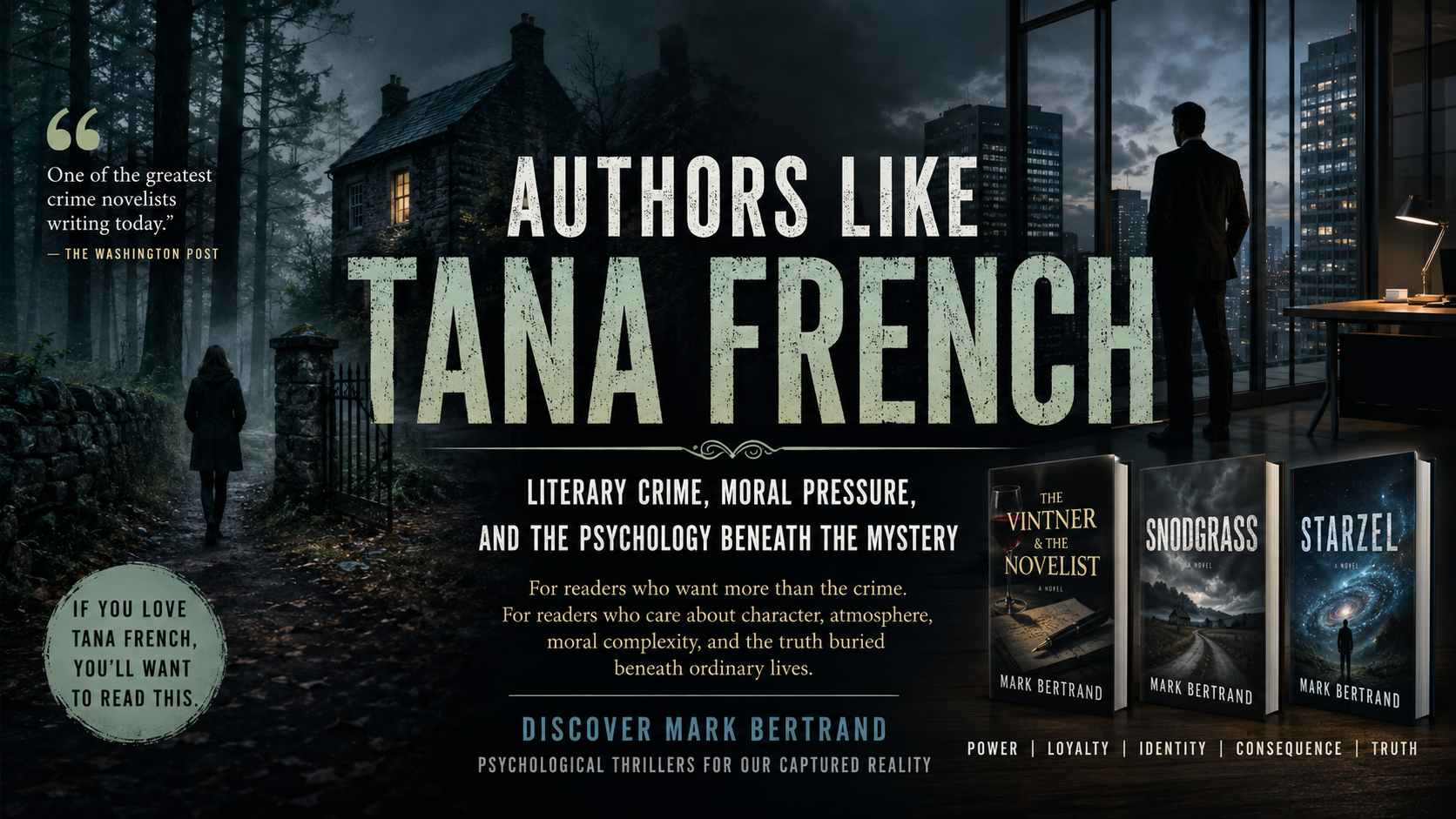
If you want crime thriller books where the crime is not just an act but a consequence, start with Snodgrass by Mark Bertrand.
Snodgrass is Book One in the Married Stupid crime trilogy, a hard-edged crime thriller series about loyalty, sports, race, place, money, possessions, tribe, and the dangerous attachments people mistake for identity.
It begins with a man who has already learned the oldest lesson of crime fiction: survival does not make you innocent.
It makes you adaptive.
Snodgrass is built from courage, combat, crime, military pressure, childhood damage, stolen diamonds, police heat, and a man who discovers that escape is not the same as freedom. It is a true-story crime thriller in which the protagonist’s life refuses to divide itself politely into genre shelves. Military thriller. Crime thriller. Psychological thriller. Survival memoir. They all enter the same room because that is how pressure works in real life.
Readers who like crime thrillers about damaged men, moral consequence, illegal intelligence, and the psychology beneath survival should find the natural bridge here.
The question is not only what he did.
The question is what kind of world trained him to see crime as a tool.
That is where Snodgrass belongs beside darker crime fiction. Not as imitation. As testimony.
The Best Crime Thrillers Are About Systems
Crime fiction has always understood what polite fiction often avoids.
People do not break in isolation.
They break inside systems.
A boy breaks inside a family.
A cop breaks inside a department.
A dealer breaks inside an economy.
A father breaks inside grief.
A community breaks inside poverty, race, loyalty, silence, and fear.
A country breaks inside the stories it tells to keep calling itself clean.
That is why the best crime thriller books are not merely entertaining. They are diagnostic. They show the body, then make the reader look at the building. The street. The bank. The badge. The marriage. The courtroom. The squad room. The family table. The old neighborhood. The inheritance. The lie everyone agreed to call tradition.
A body count can shock.
A system can terrify.
Because a body count ends.
A system continues.
For Readers Coming From Psychological Thrillers
If you came here through Best Psychological Thriller Books for Readers Who Want More Than a Twist, the bridge is simple.
Psychological thrillers ask who controls reality.
Crime thrillers ask who pays when reality becomes law.
The genres overlap because the mind is never separate from consequence. A criminal decision begins as a thought before it becomes an act. A lie becomes a motive before it becomes evidence. A man’s private damage becomes public danger when the world gives him a weapon, a debt, a badge, a grudge, or a reason to believe he has nothing left to lose.
That is why psychological crime thrillers can be so powerful. They do not choose between the inner life and the outer act. They understand that the act is where the inner life finally becomes visible.
More Crime Thriller Reading Paths
If this is the kind of crime fiction you want, keep moving through these related paths:
Books Like Billy Summers or Harlem Shuffle — for readers interested in crime, identity, money, reinvention, and the man trying to survive the story he entered.
Books Like Clockers or In the Woods — for readers drawn to literary crime, moral pressure, damaged investigators, and the psychology beneath the case.
Authors Like Edward Bunker — for readers who want crime as environment, not costume.
The Married Stupid Crime Trilogy — for readers who want a hard-edged crime series about early damage, adaptive intelligence, loyalty, money, identity, and consequence.
Final Verdict
The best crime thriller books do not merely ask who killed whom.
They ask what was already killing everyone before the murder made it official.
They understand that crime is not just blood on the floor. It is pressure in the walls. It is debt. Shame. Loyalty. Silence. Law. Family. Territory. Reputation. A father’s failure. A son’s inheritance. A badge used as armor. A neighborhood used as a cage. A country pretending that punishment is the same thing as justice.
For readers who want more than a body count, the crime thriller is not a guilty pleasure.
It is one of the most honest forms we have.
Because it begins where polite society ends:
with the evidence.
And the evidence always points beyond the body.
It points to the room.
It points to the people who built it.
It points to the systems that keep the lights on after the sirens leave.
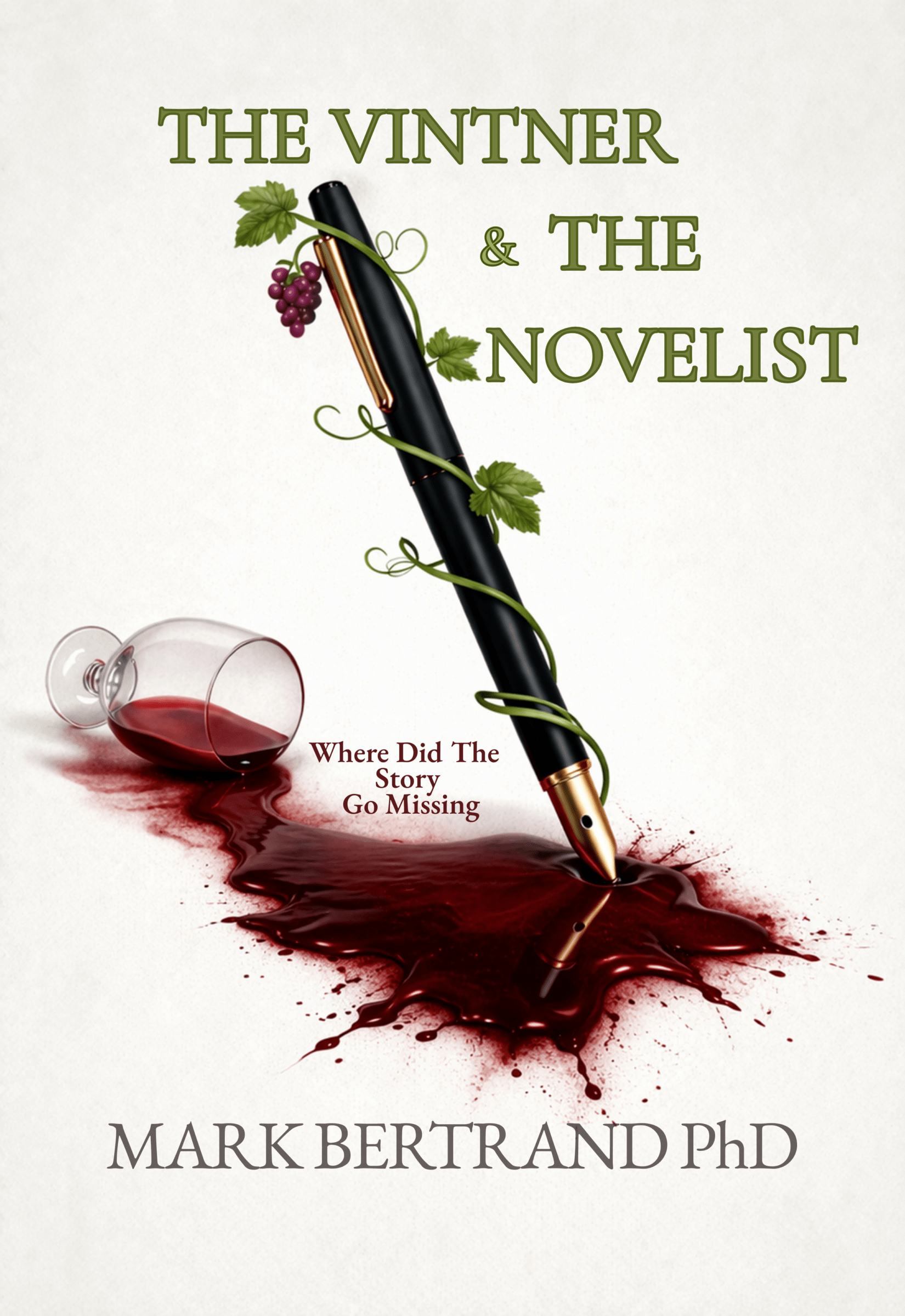
The Vintner & The Novelists

Related Reading
More articles like The Most Terrifying Villain in Modern Thrillers.
Continue exploring the evolution of the modern thriller:
Readers interested in psychological systems thrillers, institutional pressure, crime infrastructure, and modern suspense should also explore:
From Books Like:
From Authors Like: