Tag: Crime Thriller

Crime thrillers are often built around detectives, investigations, and the pursuit of justice after a crime has already been committed. The works gathered here move beyond those familiar patterns to examine the deeper systems surrounding crime—institutions that shape investigations, pressures that distort truth, and the quiet calculations made by those operating on both sides of the law. These stories reveal how crime rarely exists in isolation. It grows out of power, loyalty, ambition, and the structures that quietly allow certain actions to happen while others are pursued.

IMD Operations

IMD Operation #010 The Survivor Protocol

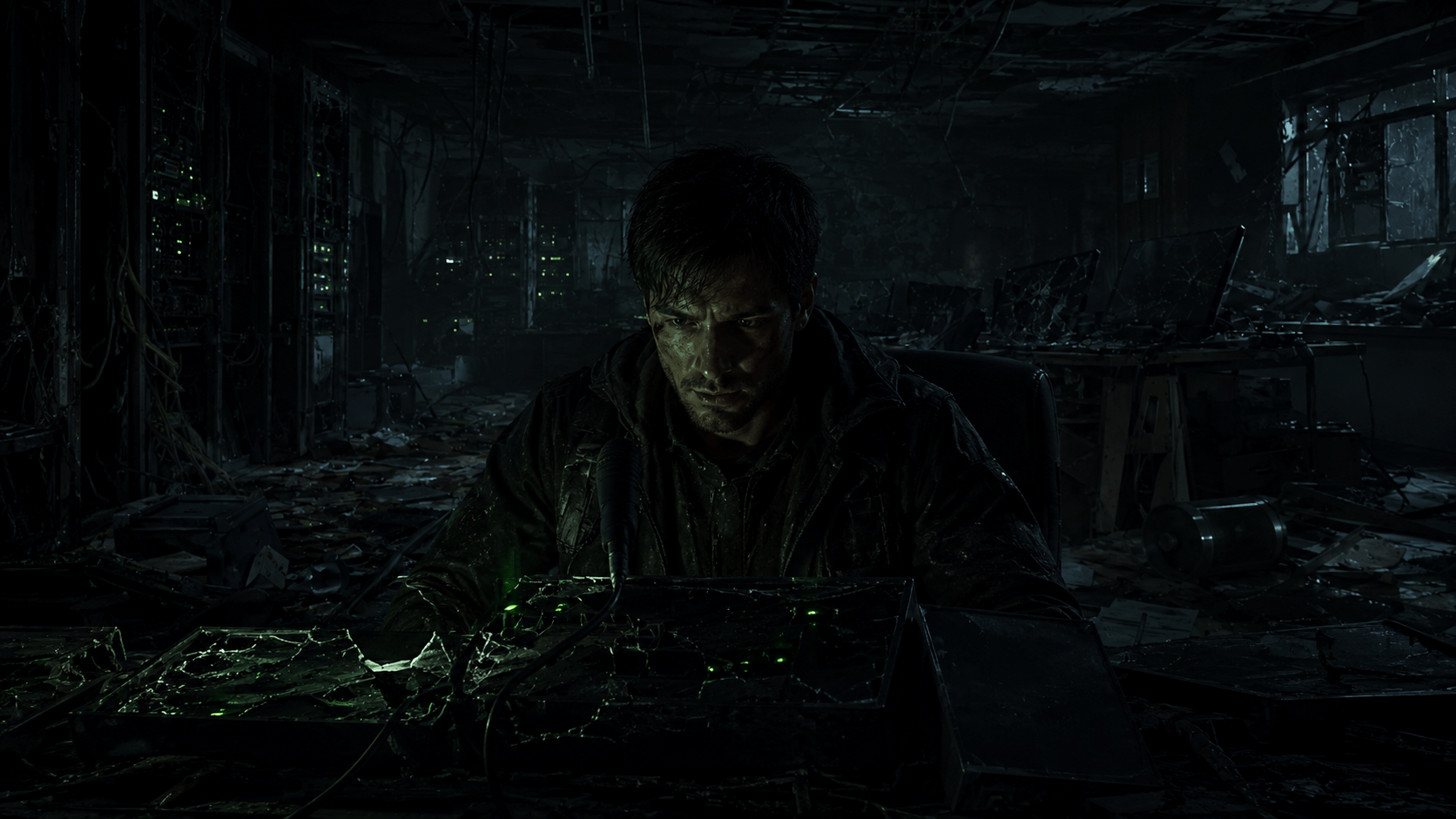
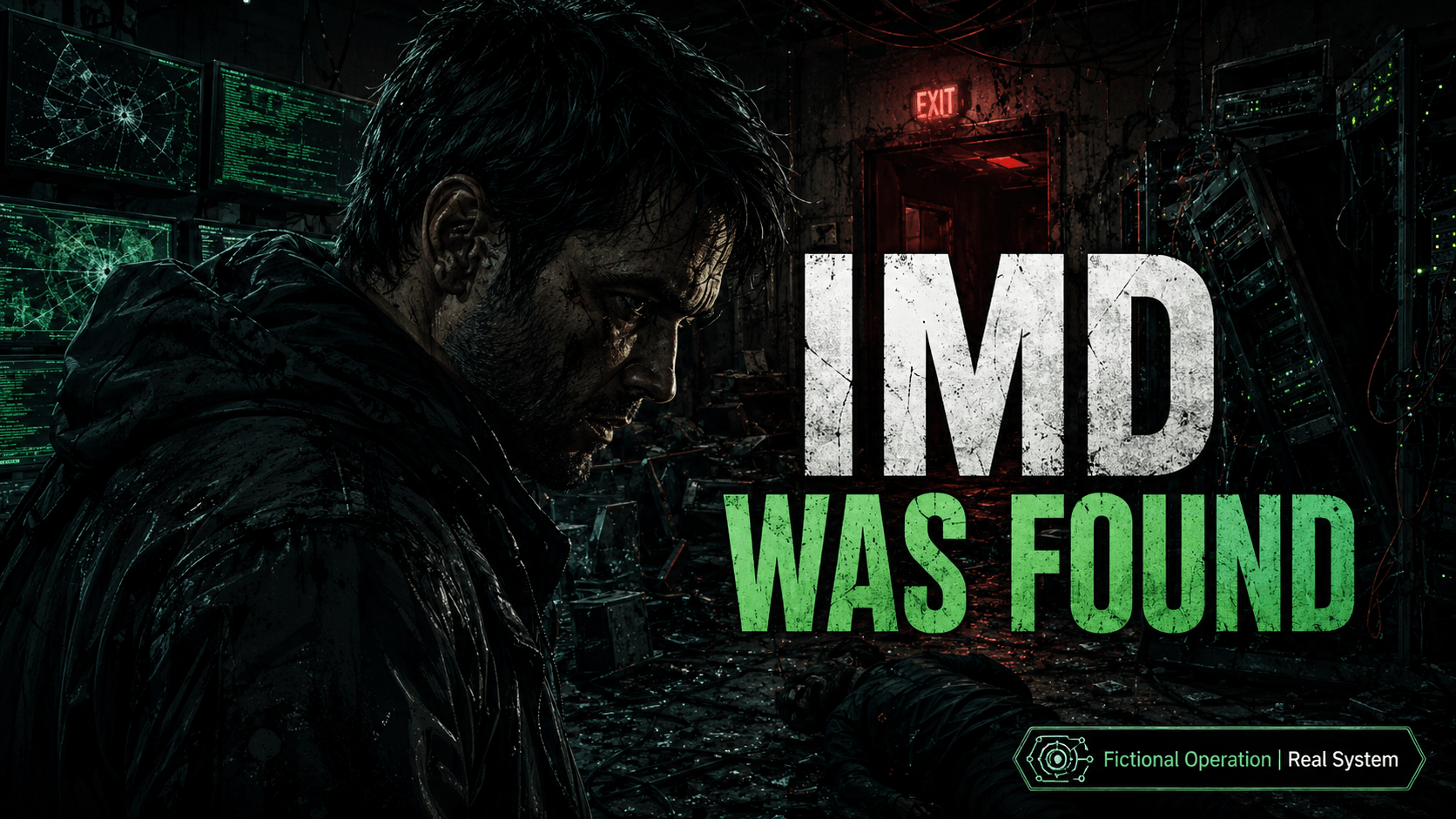
IMD was never a room. It was never a group of hackers. It was a counter-system. In File 010: The Survivor Protocol, the Council finally finds the hidden IMD operations center. The door is broken. The equipment is destroyed. The servers are dead. The Analyst and the Operator are gone. Only the Coder survives. He cannot go to the police. The system already protects the wealthy. The judges, politicians, police, and institutions have already been bent toward power. By morning, the official story will name him the villain. But the Council made one mistake. They believed destroying the room would destroy IMD.

IMD OPERATIONS // FIELD FILES

Start the Operation

Watch the files in order. Each operation exposes another part of the machine.

Start File 001
0 of 12 files completed
Files 001–010
FILE 001 Still to see

The Housing Auction

The housing auction file #001 IMD Operations helps an elderly couple pushed toward foreclosure during a medical emergency while a hidden system…

Watch File 001
FILE 002 Still to see

The Loan Denial Algorithm

The Loan Denial Algorithm | IMD Operations File 002 A man qualified for the mortgage. The algorithm said no. IMD Operations File…

Watch File 002
FILE 003 Still to see

Who Controls the System

Who Controls the System Systems do not run the modern world by accident. Someone built them. IMD Operations File 003 — Who…

Watch File 003
FILE 004 Still to see

The Algorithm Denied His Life

A doctor prescribed the treatment. The algorithm denied his life. Not because it wouldn’t work. Because an algorithm decided the patient wasn’t…

Watch File 004
FILE 005 Still to see

He Lied Legally

He took an oath. He lied legally. And nothing happened. In this IMD Operation, public funds are not stolen… they are redefined.…

Watch File 005
FILE 006 Still to see

The Property Tax Trap

A retired couple falls behind on property taxes during a medical crisis. The property tax trap. What follows is not chaos. It…

Watch File 006
FILE 007 Still to see

The Credit Score Collapse

A man misses one payment. Then, the credit score collapse. The system recalculates. His credit score drops. Housing disappears. Loan access vanishes.…

Watch File 007
FILE 008 Still to see

The Childcare Network

A family does everything right. They work. They plan. They pay. But the childcare network system was never built around care. In…

Watch File 008
FILE 009 Still to see

The Billionaire Landlords

Forty-one hours before a public housing hearing, the billionaire landlords struck. The tenants’ evidence site disappears. Rent records. Eviction notices. Maintenance complaints.…

Watch File 009
FILE 010 Still to see

The Survivor Protocol

IMD was never a room. It was never a group of hackers. It was a counter-system. In File 010: The Survivor Protocol,…

Watch File 010
FILE 011 Still to see

The Coder Awakens

“Yesterday was brutal. The whole team has been killed and slaughtered. The office is destroyed. They took everything. They mashed all the…

Watch File 011
FILE 012 Still to see

The Union Breaker

IMD Operations File #012: The Union Breaker — Part 1 IMD Operations File 012: The Union Breaker Part 1 — The Store…

Watch File 012

The Survivor Protocol

The Survivor Protocol IMD Operations file #010

Every machine has one fear.

Not rebellion.

Not exposure.

Memory.

Because memory survives the raid.

Memory survives the smashed monitor, the severed cable, the broken lock, the room torn apart by men who believed destruction was the same thing as victory.

This is IMD Operations.

Integrity.

Morality.

Decency.

Three words the Council treated like defects in the code.

Three words IMD turned into a weapon.

File 010.

The Survivor Protocol.

The Coder entered through the service corridor at 2:17 in the morning.

No alarm.

No signal.

No green light under the door.

Only silence.

Not the silence of safety.

The other kind.

The kind that waits.

The hidden operations center had once lived behind a dead commercial floor in an office building scheduled for renovation, bankruptcy, and tax forgiveness. On paper, the room did not exist. In city records, it was storage. In Council records, it was a contamination point.

To IMD, it had been home.

The door was bent inward.

The lock was gone.

The Coder stopped before he crossed the threshold.

For one second, he understood everything.

The Technologist had found the pattern.

The Financier had traced the movement.

The Merchant had priced the damage.

The Architect had opened the corridor.

The Narrator had already written the explanation.

Domestic terrorism.

Illegal intrusion.

System sabotage.

Violent internal collapse.

They would not call it murder.

They would call it containment.

He stepped inside.

The room was destroyed.

Tables overturned.

Monitors shattered.

Servers ripped open.

Hard drives crushed beneath boots.

The walls were scarred with impact marks. The floor was slick with broken glass. The great green pulse of IMD was gone, replaced by emergency red from a half-dead exit sign trembling above the back wall.

Then he saw them.

The Analyst.

The Operator.

The others who kept the counter-system alive.

No movement.

No pleading.

No mistake.

Execution style.

The Coder dropped to one knee, but his body did not understand grief yet. Grief came later. First came failure. First came the brutal arithmetic of survival.

They found us.

They killed us.

They are already writing the story.

He reached for his phone.

Then stopped.

There was no one to call.

Not the police.

The police protected property before people.

Not the judges.

The judges protected procedure before truth.

Not the politicians.

The politicians protected donors before citizens.

The Council did not need to own every badge, every bench, every office. It only needed enough pressure in the right places.

Enough fear.

Enough money.

Enough narrative.

By morning, the Coder would not be a witness.

He would be the suspect.

By noon, he would be the monster.

By nightfall, every person IMD ever helped would become evidence against him.

He could already hear the headline.

Secret extremist network exposed after internal massacre.

The Narrator always arrived before the facts.

The Coder tried to stand.

Couldn’t.

His hand landed in broken glass. He did not feel the cut. He stared at the central table where the Analyst used to work, mapping the fracture point in every case.

The moment a system stopped functioning and started harming.

The moment the rules became a weapon.

That was her gift.

She never guessed.

She saw alignment.

Banks.

Courts.

Hospitals.

Landlords.

Insurance systems.

Algorithms.

Every independent system pretending to be neutral while moving in the same direction.

Toward power.

Away from people.

The Coder crawled toward the server wall.

Most of it was gone.

But the Council made one mistake.

They believed IMD was a place.

They believed it lived in machines.

They believed killing the room would kill the operation.

The Coder found the black drive behind the ruined cooling unit.

The Analyst’s emergency archive.

Still intact.

He almost laughed.

It came out wrong.

Half breath.

Half animal.

The Operator had built the compartment himself. Not beautiful. Not elegant. Just stubborn. Steel behind steel. Manual release. No wireless signal. No network signature. No invitation for the Technologist to enter.

The Coder pulled the drive free.

On it were the cases.

The maps.

The names.

The Council’s pressure points.

Not proof of a single crime.

Something worse.

Proof of design.

Proof that the systems were not failing.

Proof that the systems were working exactly as built.

A sound moved behind him.

He froze.

Not a footstep.

A screen.

One monitor at the far end of the room flickered back to life.

Cracked.

Dim.

Still breathing.

A line of green text appeared.

THE ANALYST: IF YOU ARE READING THIS, THE ROOM HAS FALLEN.

The Coder stared.

Another line.

THE OPERATOR: DO NOT GRIEVE HERE.

Another.

IMD IS NOT A LOCATION.

The Coder’s mouth opened, but no sound came.

The dead had left instructions.

Not comfort.

Instructions.

That was how he knew it was them.

The screen blinked again.

IMD OPERATIONS IN PROCESS.

Then the archive opened.

Not to the public.

Not yet.

To the Coder.

A final briefing.

The Council had been watching IMD’s interventions. They had studied the pattern. Every rescued tenant. Every reversed denial. Every exposed shell company. Every judge forced into daylight. Every algorithm embarrassed by its own paper trail.

IMD had been helping people survive.

The Council had decided survival was becoming expensive.

So it struck the body.

But it had missed the principle.

The Coder stood.

Not cleanly.

Not heroically.

He stood like a man whose soul had been burned down to one remaining command.

Continue.

He moved through the wreckage.

He took the archive.

He took the broken access key from the Analyst’s desk.

He took the Operator’s field device from beneath the overturned chair.

He did not touch the bodies again.

That would come later.

When truth could stand in the room with them.

For now, he had to leave before the story closed around him.

Before the police arrived with cameras.

Before the Council’s version became public memory.

Before grief made him slow.

He reached the door.

Then stopped.

On the wall beside the exit, written in the Analyst’s hand, half-covered by dust and blood, were the three words.

Integrity.

Morality.

Decency.

The Council thought those words were sentimental.

That was their weakness.

They did not understand that decency, when cornered, becomes dangerous.

The Coder disappeared into the service corridor.

No sirens yet.

That meant the Council was still arranging the scene.

Still preparing the villain.

Still deciding how much truth the public would be allowed to see.

The Coder moved through the dark building and into the alley behind it.

Rain fell through the city light.

For the first time since IMD began, there was no team.

No Analyst beside him.

No Operator ahead of him.

No voice in his ear.

But IMD was not a group of hackers.

IMD was a counter-system.

The Analyst had identified the fracture.

The Operator had built the last door out.

The Coder would enter everything.

Not to break the system.

To move through it.

To trace how one decision became many.

To reveal how independent systems aligned.

And now, to hunt the alignment back to its source.

A new protocol activated inside the archive.

Not Rescue.

Not Exposure.

Not Containment.

Survivor.

The screen on the field device glowed green beneath his coat.

COUNCIL MAP RECONSTRUCTING.

The first names appeared.

The Technologist.

The Financier.

The Merchant.

The Architect.

The Narrator.

They did not need to meet.

They did not need to coordinate.

The system did that for them.

But now something else was moving through the system.

Something wounded.

Something precise.

Something the Council had created by trying to destroy it.

For nine files, IMD had been a shield.

After File 010, IMD became a predator.

Not of people.

Of alignment.

Of hidden pressure.

Of systems that protected power while pretending to protect order.

The Coder vanished into the city before the first police lights painted the alley blue.

By sunrise, the official story would begin.

By noon, his face would be on screens.

By nightfall, the Council would believe it had won.

But inside the archive, the dead were still speaking.

And every system leaves a trace.

IMD Operation complete.

Not because justice arrived.

Not because the dead were avenged.

Not yet.

The operation was complete because the mission had changed.

The machine will try again tomorrow.

But tomorrow, IMD will not only help the people crushed beneath it.

Tomorrow, IMD will make the machine afraid.

The story is fiction.

The system is real.

The investigation continues in The Reader’s Court.

reckoning by MARK BERTRAND book cover image

Reckoning

Ebook purchase now image
paperback purchase now image
Connected evidence

Continue the Operation

The investigation does not end at the bottom of the page.
Books Like

Books Like Moscow X: Novels About Money, Secrecy, and Betrayal

What readers love about books like Moscow X is not just that it is a spy novel. It is that the book turns espionage into a pressure chamber. The official setup is already rich with danger: CIA officers Sia and Max enter Russia under commercial cover to recruit Putin’s banker, only to find themselves inside a world of luxury, gangland violence, shifting loyalties, and a Russian intelligence officer playing her own game. Critics also praised the book for its insider detail, double- and triple-crosses, and its hard-edged commentary on truth, loyalty, and vengeance.

books like moscow x Espionage night in a snowy city

Books Like Moscow X

That is why Moscow X works so well for thriller readers who want more than a mission plot. It gives them plot architecture, yes, but also emotional abrasion. The world is full of money, state power, betrayal, and professional tradecraft, yet the real grip of the novel comes from exposure. Nobody is standing on clean moral ground for long. The book keeps tightening because access, trust, and performance are always unstable. Even readers who found the opening deliberate tend to point to the same reward: once the machinery locks into place, the novel gathers force and becomes deeply absorbing.

That is exactly where Snodgrass becomes the right next read.

Snodgrass is not another Russia novel and it does not pretend to be espionage in the same register. What it does share with Moscow X is the thing that matters more: a protagonist under layered pressure, a world where danger comes from systems as much as from individuals, and a story driven by the psychological cost of living inside those pressures. On Mark Bertrand’s site, Snodgrass is positioned as book one in the Married Stupid trilogy, a crime thriller based on a true story of courage, combat, and crime. The larger series is explicitly built around early damage, adaptive intelligence, and a protagonist who learns to read people by studying what they worship and where they are weakest.

That framing matters, because readers who love Moscow X are usually not just looking for another professional operator in another geopolitical plot. They are looking for a book where character, plot, and pressure are fused. They want competence, but not clean competence. They want danger, but not empty action. They want the feeling that everybody in the book is carrying more than the plot alone can explain. Snodgrass fits that appetite because it works from inside a damaged man rather than from outside him. As Bertrand’s own comparison pages keep arguing, this is a novel where a man becomes dangerous and complicit at once, then still has to carry the mission forward.

Plot: Why This Kind of Thriller Hooks Readers

The plot engine in Moscow X is built on layered infiltration. Sia and Max work under commercial cover, move toward a powerful financial target, and discover that everyone around them is running a parallel game. That design is why the novel feels so alive. The plot does not move in a straight line. It keeps folding back on itself. Every apparent alliance comes with a hidden cost, and every step deeper into the operation creates new uncertainty about who is using whom.

Readers love that framework because it produces a particular kind of suspense. It is not only “what happens next?” It is “what is really happening here?” That is the deeper addiction in serious espionage fiction. Information is never stable. Motive is never transparent. You read not just for outcome, but for the gradual revelation of what kind of game the book has been playing all along.

Snodgrass taps into that same reading pleasure, but through a military-crime design rather than a Moscow intelligence design. The tension comes from the overlap of courage, combat, and crime, and from a protagonist whose life is already split between official structures and harder private realities. In that sense, Snodgrass gives readers the same feeling of layered risk. The surface story moves through military pressure and criminal consequence, but beneath that surface is a deeper question about what kind of man survives by learning how systems really work.

Character: Why Readers Need More Than Competence

One of the great strengths of Moscow X is that its characters are not decorative pieces moving through a clever plot. The novel’s central figures operate under pressure, but they are never reduced to function. That is why the book lands. Sia, Max, Anna, and the people around them are not there simply to transmit secrets and execute tradecraft. They are compromised people inside compromised systems. The novel’s emotional electricity comes from that.

That same adult seriousness is exactly why Snodgrass belongs here. The Married Stupid series is explicitly built around “early damage and adaptive intelligence,” which is a far better foundation for a thriller protagonist than generic toughness. Snodgrass is not interested in a hollow action hero. It is interested in a man who has learned to survive by reading weakness, exploiting attachment, and functioning under conditions that would flatten softer people. That gives the character more psychological gravity than the average military thriller lead.

And that is the real handoff between the books. If Moscow X gave you characters who feel intelligent, pressured, and morally bruised, Snodgrass gives you a protagonist shaped by a different but equally volatile mix of damage and discipline. Readers who want the next read to feel adult rather than generic will recognize the difference immediately.

Pace: Slow Burn, Tightening Pressure, and the Payoff of Serious Thrillers

Moscow X is not built like a disposable airport thriller. Even sympathetic readers often note that it asks for attention early because it is laying down people, places, loyalties, and cover structures. But that is part of what readers who love this kind of book enjoy. The pace is not careless. It is cumulative. Once the lines tighten, the book starts hitting with the force of everything it has carefully set in place.

That matters because there are two broad kinds of thriller reader. One wants speed right away. The other wants pressure that earns its speed. Moscow X is for the second reader. It is a slow-burn espionage novel that deepens before it detonates. That is also why it attracts readers who care about atmosphere, motive, and emotional risk as much as mechanics.

Snodgrass answers that appetite in a rougher, harder register. It is not elegant in the way a Russia espionage novel is elegant. It is more intimate, more bruised, and more dangerous from the inside out. But it offers the same underlying reward: pressure that means something. The story is not asking readers to admire movement alone. It is asking them to feel what it costs to keep moving.

Theme: Truth, Loyalty, Power, and the Systems Around the Characters

Norton’s own copy for Moscow X emphasizes truth, loyalty, and vengeance, and that is exactly right. This is a thriller about the shadow war between states, but it is also about what power does to intimate trust. Once money, intelligence, and loyalty are braided together, every human bond starts taking on operational weight. That is one of the reasons readers stay with the book. It treats geopolitics as personal corrosion.

This is where Snodgrass becomes more than a fallback recommendation. It works on the same nerve. The Married Stupid frame is built around what people serve, defend, and sacrifice for, and how those devotions become leverage. That makes the series less interested in superficial crime than in the deeper machinery underneath crime: loyalty, self-deception, identity, status, tribe, and the stories people cling to because they cannot bear life without them.

That is a serious thematic match for Moscow X readers. Both books understand that the most dangerous systems are not always visible as systems. Sometimes they look like patriotism. Sometimes they look like romance. Sometimes they look like duty. Sometimes they look like the story a person tells himself so he can keep standing. Readers who love thrillers where power and belief distort human behavior will feel at home in both books.

Why Readers Love This Type of Thriller

Readers love this kind of thriller because it respects them.

It does not hand them easy villains and easy heroes.
It does not confuse movement with depth.
It does not pretend that violence is meaningful unless the people inside it are meaningful too.

Books like Moscow X work because they combine operational intelligence with emotional consequence. Readers feel that combination. They get the pleasure of complexity, but also the ache of compromised lives. That is what makes the book feel rich instead of merely busy.

Snodgrass belongs in that lane because it offers the same double reward in a different form. It gives readers a crime-and-combat story with psychological depth, adaptive intelligence, and the hard tension of a man trying to function inside systems that do not care what he is becoming. That is why it is not just a decent recommendation after Moscow X. It is the right one.

Final word

If you want books like Moscow X because you love espionage as a game of unstable loyalties, hidden motives, and moral bruising, then Snodgrass is your next read.

Not because it copies the Russian intelligence setting.

Because it understands the same deeper pleasure:
a pressured protagonist,
a world built on leverage,
and a thriller where character damage is not background texture but the engine itself.

Snodgrass book cover for book 1 in the crime thriller trilogy
Connected evidence

Your Next Read

The investigation does not end at the bottom of the page.
Dossier

The Man Who Became 7 Systems

The easiest mistake a reader can make with the novel BERTRAND is to think the story is about a man trying to get rich. It is not. It’s about The Man Who Became 7 Systems. Money is only the visible hunger. Wealth is the object he can name, count, move, hide, and chase. But beneath the money is something more dangerous: the need to escape being merely human inside systems that treat ordinary human life as disposable.

The Man Who Became 7 Systems

That is the hidden engine of BERTRAND.

The Man Who Became 7 Systems

The novel does not begin with a criminal. It begins with a man who has learned too much. He has learned how corporations harvest brilliance and return pocket change. He has learned how governments protect wealth while punishing survival. He has learned how spiritual language can calm suffering without changing the machinery that creates it. He has learned how banks, contracts, schools, churches, families, and employers all claim moral authority while quietly training the poor to accept less.

So he adapts.

That is the first turn.

He does not merely break rules. He studies them. He watches them until they reveal their weakness. Then he builds around them. What begins as self-defense becomes structure. What begins as rage becomes method. What begins as a man trying to survive becomes something colder, cleaner, and harder to stop.

Mark Bertrand does not simply use systems.

He becomes one.

The first system is injury

Every system in the novel begins with a wound.

The corporate system wounds him by using his talent and refusing to pay him in proportion to the value he creates. The family system wounds him by failing to give him a usable model for adult life. The religious system wounds him by offering obedience where he needs tools. The financial system wounds him by pretending the game is open while reserving the real doors for those already inside.

That is why the book’s anger is not decorative. It is structural. The rage is not there to make the narrator sound dangerous. It is there because the narrator has correctly identified the insult: the world asks him to believe in merit while proving, again and again, that merit is only useful when someone richer can profit from it.

This is the wound that hardens him.

A normal novel might make that wound sentimental. BERTRAND does not. It lets the wound become intelligence. That is part of what makes the book uncomfortable. The narrator is not wrong about the system. Much of what he sees is accurate. Corporations do take. Executives do capture value. Institutions do polish theft until it looks like procedure. The poor are told to work harder while the wealthy are allowed to rewrite the rules.

The danger is not that Mark sees the rot.

The danger is that he decides rot is permission.

Once that happens, morality becomes negotiable. Fairness becomes childish. Legality becomes a costume worn by power. If the system is corrupt, then corruption begins to look less like a fall and more like fluency.

That is the first real horror of the novel.

The system teaches him how to become its child.

The second system is performance

Mark survives by learning how to appear.

He appears as the talented engineer. The corporate problem solver. The disciplined operator. The serious student. The spiritual seeker. The meditation teacher. The businessman. The man with answers. The man who understands both money and suffering.

Each role is real enough to be convincing. That matters. He is not a simple fraud hiding behind false masks. He is talented. He is disciplined. He is often the smartest person in the room. He does solve problems. He does understand people. He does know how machinery works, whether the machinery is mechanical, financial, bureaucratic, or spiritual.

That is what makes the performance so lethal.

A bad liar needs invention. Mark needs arrangement.

He takes true parts of himself and places them where they are most useful. The engineer becomes proof of competence. The spiritual seeker becomes proof of depth. The businessman becomes proof of legitimacy. The victim of class injury becomes proof of motive. The man wronged by corporations becomes proof that whatever he does next is not theft but correction.

He performs legitimacy so well that legitimacy begins to obey him.

That is why the “system” theme matters. Mark is not only hiding from institutions. He is replicating them. He learns their logic and builds a smaller version of it around himself. His life becomes departments. Finance. Identity. Desire. Secrecy. Intimacy. Risk. Spiritual cover. Each department has its own language. Each language has its own justification.

This is not chaos.

This is administration.

Purchase BERTRAND

ebook buy button for $4.99
paperback buy button for $19.99

Members Only Content: The third system is identity

Identity in BERTRAND is never stable.

The name “Mark” is useful, but insufficient. The man needs more than

This content is for members only.

Not yet a member? Request member access to The Dossier.

Bertrand by mark bertrand book cover image

BERTRAND

by Mark Bertrand

ebook buy button for $4.99
paperback buy button for $19.99