
There’s a scene at Denny’s where the novel Snodgrass stops behaving like a crime memoir and starts behaving like a psychological case study. Remember? The kite: Crime as intelligence.
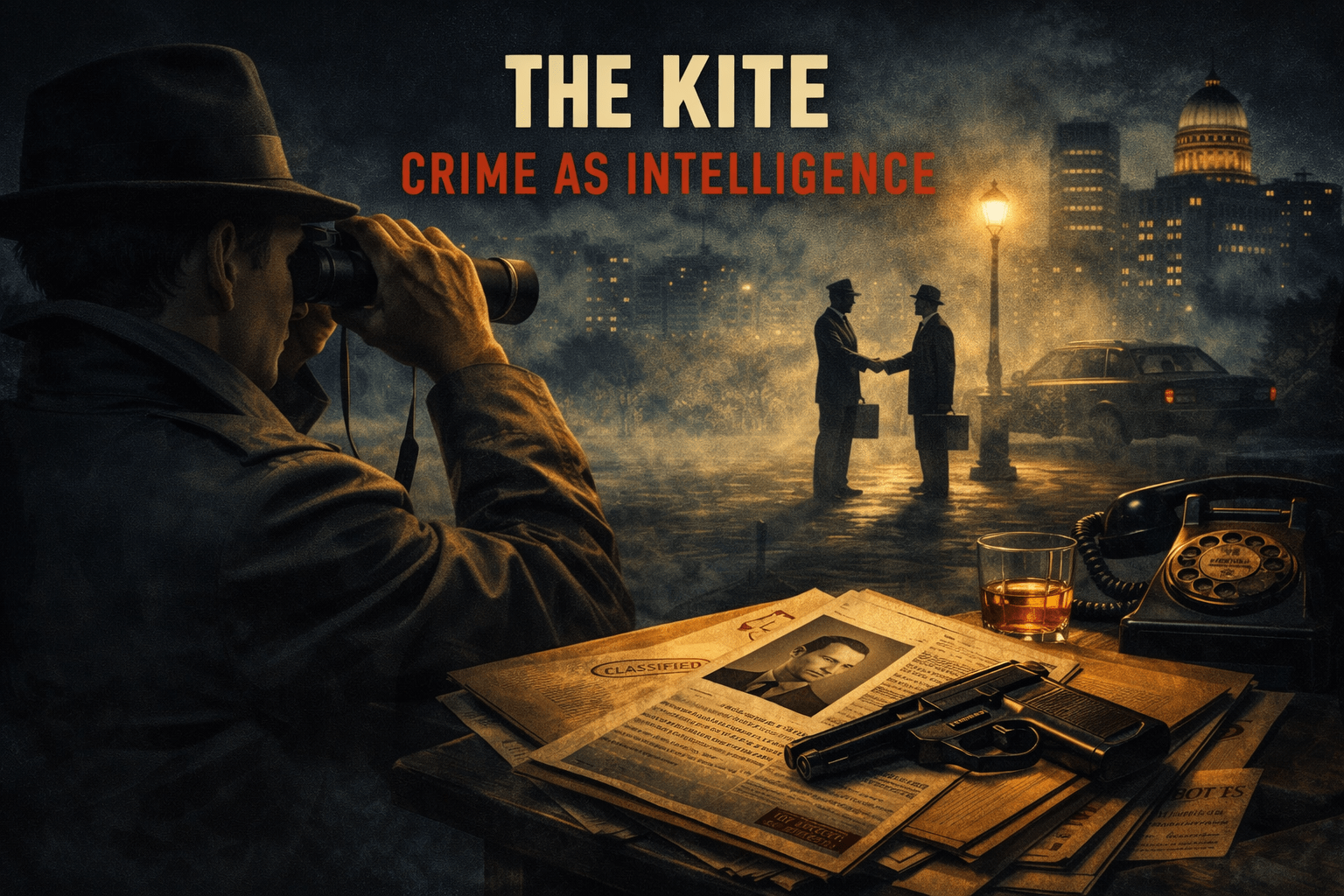
The Kite: Crime as Intelligence
Detective Snodgrass explains the political pressure first: election year, press, “muscle up,” end the streak fast.
He’s telling you the system’s true motive: not justice, but optics.
Then he tells Mark about a clever scheme out of Idaho—dozens of accounts, checks deposited across banks, a model required just to track the flow.
Mark doesn’t recoil. He starts building the mathematical model in his head, testing loopholes, stalling with food while he finishes the architecture.
Then Snodgrass asks the key question: do you see the weakness?
Mark’s answer doesn’t sound like criminality. It sounds like a worldview.
The scheme fails because it requires loyal members. You can’t trust people.
Here’s the trick that makes you cooperate: the narrative makes the crime feel like competence, and competence is seductive.
Members Only: How the Book Turns the Reader into an Accomplice
The unveiling is in Mark’s inner questions. He doesn’t
Not yet a member? Request access to The Dossier.



0 comments
Write a comment