
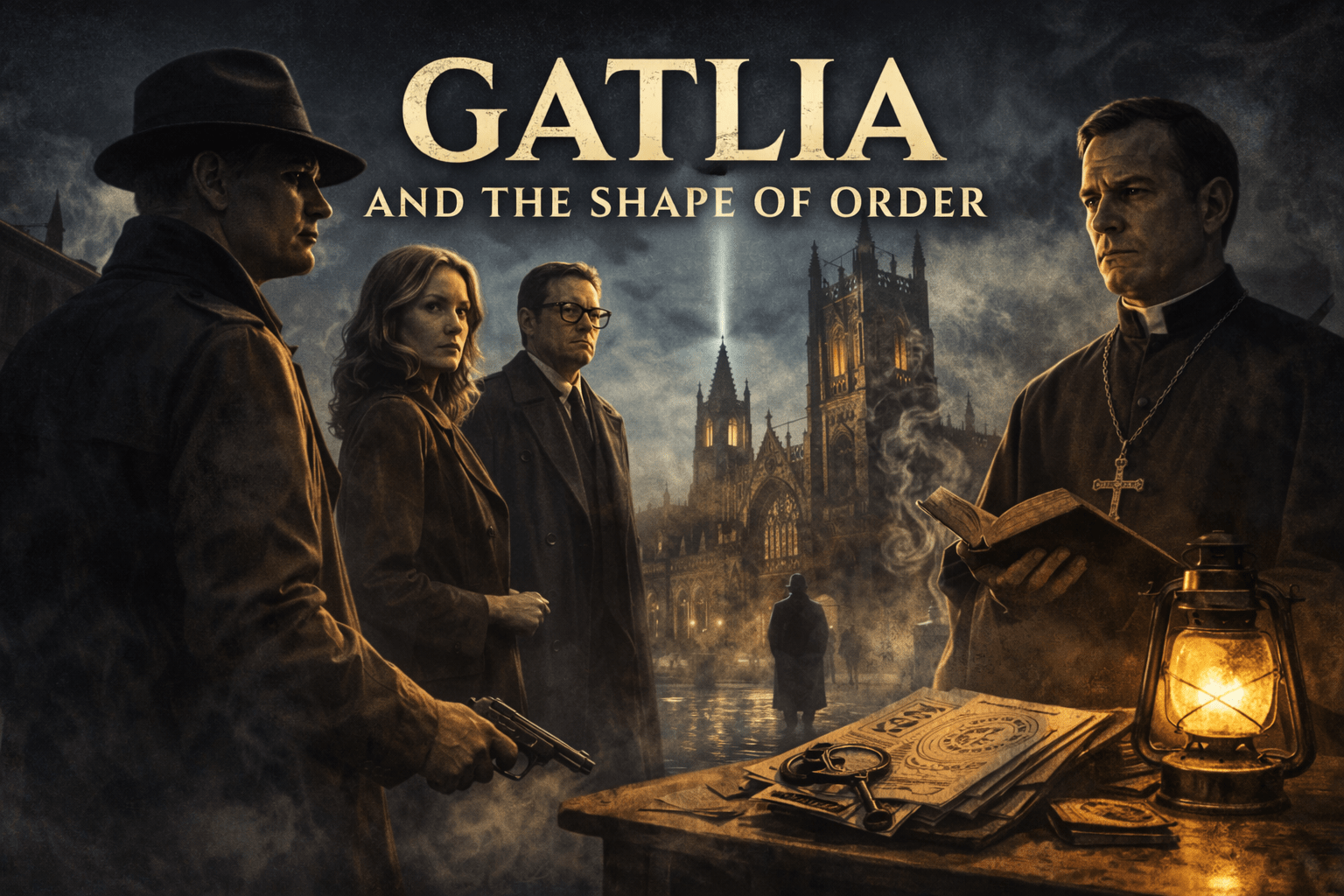
Every world decides, sooner or later, who gets to keep it stable. In this one, stability does not come from belief or consensus. Gatlia and the shape of order insist it comes from institutions that remember how quickly things fall apart when authority hesitates. The medical center is one of those institutions. Quiet. Procedural. Trusted.
Dr. Gatlia stands at its center.
She is not written as cruel. She is not written as corrupt. She does not grandstand or argue philosophy. She works. She classifies. She contains. When something goes wrong, she does not ask what it means. She asks what it threatens.
That distinction matters.
To Gatlia, medicine is not only about healing bodies. It is about maintaining continuity. Panic is more dangerous than pain. Disorder more dangerous than death. Truth, if released without structure, can fracture a population faster than any disease.
From that perspective, Casper and Eulǝr are not visionaries. They are destabilizers.
They move outside approved channels.
They invite individuals to experience meaning directly.
They bypass the old filters—elder review, institutional pacing, sanctioned language.
To someone like Gatlia, that isn’t progress. It’s negligence.
Watch how she operates.
Notice when things are handled quietly instead of publicly.
Pay attention to what never becomes an emergency.
She does not oppose change outright. She slows it. Redirects it. Absorbs it into systems designed to outlast individuals. That restraint feels reasonable. Responsible, even.
And that’s what makes it dangerous.
Because control exercised calmly rarely looks like control at all.
Just keep that in mind while you read.
Members Only: Why Gatlia Is Afraid of Them
Gatlia’s loyalty is not to
Not yet a member? Request access to The Dossier.


0 comments
Write a comment