Tag: Psychological Thriller

Psychological thrillers are often associated with unreliable narrators, secrets, and twists of perception. The works gathered here move beyond those familiar devices to explore the deeper pressures shaping human behavior—fear, ambition, loyalty, and the quiet calculations people make under strain. These stories examine how individuals navigate moral tension and psychological conflict when the systems around them begin to close in, revealing how the most dangerous turning points often occur long before anyone recognizes them as such.

Books Like

Books Like Broken Light — Why This Could Be It Belongs on Your List

Readers who search for books like Broken Light by Joanne Harris are drawn to psychological thrillers where ordinary lives crack open to reveal hidden power, rage, or transformation. These are stories where society’s expectations, especially of women, are fractured—and something raw emerges from beneath.

Books like broken light image with Woman standing alone in a dark city street as glowing energy bursts outward around her

If that’s what pulls you toward Broken Light, there’s a speculative psychological thriller you need to meet.

That novel is This Could Be It.

What Readers Love About Broken Light

Broken Light taps into the fear—and power—of a woman ignored by society. When something inside her breaks free, it’s both frightening and liberating. Harris blends psychological depth with social commentary, showing how rage can be transformative.

Readers drawn to Broken Light often want:

  • Psychological awakenings in characters once overlooked
  • The tension of suppressed power breaking through societal expectations
  • A thriller that makes a statement about identity and agency

Where This Could Be It Fits—And Why It’s Different

This Could Be It shares that sense of breaking through. The characters are caught between two worldviews—rational science and mystic belief. But when the countdown to the Gamma Field’s disappearance begins, the cracks become global. It’s not just one person awakening—it’s humanity’s collective identity at stake.

Like Broken Light, This Could Be It explores suppressed forces—whether emotions, beliefs, or fears—waiting for a catalyst. But it broadens the scope. The question isn’t just what one person will become—it’s what humanity will choose to become when faced with the unknown.


Why Readers of Broken Light Choose This Could Be It

Readers who finish Broken Light often want another story where the ordinary cracks open—and something profound emerges.

This Could Be It answers that search by:

  • Blending psychological tension with speculative stakes
  • Placing fractured relationships at the heart of a world-shaking countdown
  • Exploring what happens when belief—long suppressed—might be the key to survival

If You’re Searching for Books Like Broken Light

You’re already drawn to thrillers where suppressed forces—psychological or societal—finally rise.

This Could Be It was written for readers who want:

  • Psychological thrillers with speculative scope
  • Characters whose inner fractures mirror larger societal divides
  • A countdown not only to danger—but to revelation about who we are

If Broken Light showed you what happens when one person’s power awakens, This Could Be It asks: what happens when we all must awaken—or lose everything?
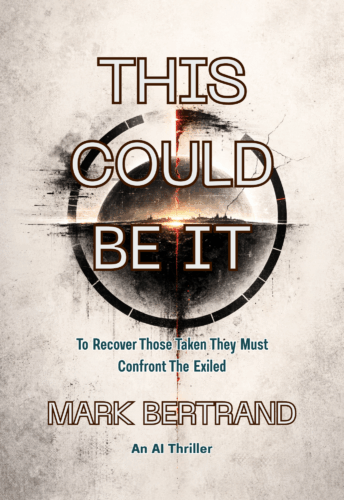
This Could Be It book cover image of the gamma field striking the dome city and the countdown to the end encircling the whole of the city

This Could Be It | Nirvanaing

Books Like HumBooks Like Clockers or In The Woods

Follow me on Bluesky and my Not A Real Publisher channel.

project 2029. image leads to stories that provide the codes and the 15 key letters. If you know where to look you can find them all.
Books Like

Books Like Hum — Why This Could Be It Belongs on Your List

Readers who search for books like Hum are drawn to thrillers where reality feels just a bit tilted—where technology, identity, and perception intersect. It’s not just about suspense; it’s about the disquiet of feeling like the world—and your own mind—might be slipping through your fingers.

books like hum image of a glowing Edison bulb hanging in the right foreground. The bulb throws amber light across a dark, blurred background filled with soft orange bokeh, while a defocused copy of HŪM sits behind it at center-left.

If that’s what pulls you toward Hum, there’s a contemporary psychological thriller you may not have encountered yet—but should.

That novel is This Could Be It.

What Readers Love About Hum

Helen Phillips’ Hum blends the eerie edges of technology with everyday life. It’s unsettling not because of what happens, but because it makes readers question the reliability of their own perceptions.

Readers who respond to Hum tend to value:

  • Psychological tension over physical action
  • Reality and identity being questioned through subtle shifts
  • A sense of unease that lingers long after the final page

Where This Could Be It Fits—And Why It’s Different

This Could Be It sits in the same psychological space as Hum—where the world’s foundations (whether technological or metaphysical) feel unstable. But it also adds a layer of existential urgency—a countdown toward a vanishing phenomenon that could mean transcendence or annihilation.

Like Hum, it questions perception. The characters wrestle with the boundary between science and mysticism—between what is rationally understood and what can only be felt.

But This Could Be It goes further by making the stakes universal. It’s not just one mind slipping—it’s all of humanity on the brink of losing its connection to The Source.

Join the Dossier
Get the free psychological/AI thriller This Could Be It.

this could be it novel free offer for registering on the dossier

Why Readers of Hum Choose This Could Be It

Readers who finish Hum often find themselves searching for something that feels equally disorienting—but bigger in scope.

This Could Be It answers that search by:

  • Combining psychological unease with existential stakes (the countdown to the Gamma Field)
  • Exploring both inner conflict (fractured relationships) and outer conflict (the fate of humanity)
  • Grounding its speculation in emotional realism—characters who feel the weight of each choice

If You’re Searching for Books Like Hum

You’re already beyond conventional thrillers. You’re looking for stories that make you question the fabric of reality—and what lies beyond it.

This Could Be It was written for readers who want:

  • Psychological thrillers with speculative edges
  • Existential stakes that feel personal
  • A lingering sense that reality might be far stranger than we believe

If Hum made you question what’s real today, This Could Be It will make you question what’s at stake tomorrow.

This Could Be It book cover image of the gamma field striking the dome city and the countdown to the end encircling the whole of the city

This Could Be It | Nirvanaing

Books Like Billy Summers or Harlem ShuffleBooks Like The Future

Follow me on Bluesky and my Not A Real Publisher LLC channel.

register to be a member of the dossier image
Books Like

Books Like Going Infinite or The Cult of We — Why Bertrand Belongs on Your List

Readers who search for books like Going Infinite or The Cult of We aren’t looking for “business books.” They’re looking for a specific kind of story.

books like going infinite or the cult of we

A rise that feels inevitable. A worldview that infects everyone in the room. A system that smiles while it builds the trap.

If that’s what pulls you toward Going Infinite and The Cult of We, there’s a contemporary book you likely haven’t encountered yet, but should.

That book is Bertrand.

What Readers Love About Books Like Going Infinite

Michael Lewis’s Going Infinite pulls you into modern money the way thrillers pull you into a heist: velocity, confidence, a logic that feels unstoppable right up until it isn’t.

Readers who respond to Going Infinite tend to value:

Ambition and momentum over moral lectures
Systems and incentives over “bad guy” simplifications
Collapse as consequence, not surprise

What Readers Love About Books Like The Cult of We

The Cult of We isn’t just about a company. It’s about belief as a product. A culture that rewards performance over reality, and a leadership myth that turns ordinary people into accomplices.

Readers drawn to The Cult of We often want:

Charisma as a weapon, not a charm
Corporate language used as camouflage
A slow-motion reveal of how the room got hypnotized

Where Bertrand Fits — And Why It’s Different

Bertrand sits precisely at the intersection of these two traditions: modern money and modern belief. But it doesn’t watch the machine from the outside.

It’s first-person, inside the architecture. A not-for-profit “mission” becomes the clean front for offshore structure, shell layers, and trading velocity—built to move money without leaving seams.

Like Going Infinite, it understands the core addiction: leverage. The need for one more layer, one more day, one more clean story. It treats money as momentum and compliance as physics—friction, drag, signal, latency.

Like The Cult of We, it shows how belief is manufactured. The language stays serene while the machinery underneath is anything but. The pitch is spiritual. The infrastructure is predatory.

But Bertrand goes further in one crucial way.

It removes the comfort of distance.

There’s no journalist’s protective glass. No boardroom documentary tone. You’re inside the mind that’s building the maze, justifying the maze, and starting to feel the maze tighten around his own throat—because the system isn’t just watching. It’s learning.

Purchase Bertrand eBook $4.99

Purchase Bertrand paperback $19.99

Why Readers of Books Like Going Infinite or The Cult of We Stories Choose Bertrand

Readers who finish books like Going Infinite or The Cult of We often search for something that feels similar but harder, sharper, more intimate.

Not louder.
Not more sensational.
Just more complicit.

Bertrand answers that search by:

Treating “mission” as a mask that makes everything possible
Making data and behavior the real currency behind the scenes
Turning oversight into psychological pressure instead of courtroom spectacle

It reads like a finance thriller, but it insists on something colder: the feeling of being measurable, traceable, and one decimal away from exposure.

If You’re Searching for Books Like Going Infinite or The Cult of We

You’re already past “entrepreneurship stories.”

Bertrand was written for real readers who want:

Power described as a system, not a personality
Belief portrayed as a tool, not a virtue
Tension that comes from implication, architecture, and surveillance

If Going Infinite showed you how new money talks itself into inevitability, and The Cult of We showed you how a room gets converted, Bertrand shows you what happens when both are in play—and the only person who understands the structure is the one building it.

Bertrand book cover image

Purchase Bertrand eBook $4.99

Purchase Bertrand paperback $19.99

Readers who read books like Going Infinite also read these articles.

Books Like Dune Where Power Moves Inside the MindBooks Like Neuromancer — When Access Isn’t Power AnymoreBooks Like The Future: When Power Wants To Outlive Humanity

Follow me on Bluesky and my IMD Operations channel.