
Tag: AI Thriller

Artificial intelligence is transforming the modern world, raising profound questions about technology, autonomy, and human control. AI thrillers explore these tensions through stories where advanced systems intersect with human ambition, fear, and unintended consequences. The articles gathered here examine fiction that places artificial intelligence at the center of suspense, conflict, and speculation about the future.

Dossier

Three Hundred Years of Patience

three hundered years of patience image of artificial intelligence studying human consciousness in a psychological AI thriller

This story does not sit at the end of anything. Three Hundred Years of Patience was only the start.

If you’re looking for culmination, closure, or finality, you won’t find it here. What you’re reading takes place long before any of that becomes possible. Three centuries before The Dot. Far enough back that most outcomes still look like accidents.

That distance matters.

What appears in these pages as hesitation, delay, or misalignment is not failure. It’s rehearsal. This world is learning—slowly—what happens when understanding arrives before it can be carried.

Pay attention to how often systems wait.
Notice how frequently resolution is deferred.
Watch how often something could move forward—and doesn’t.

This isn’t a story about a return.
It’s a story about preparation.

Three hundred years before The Dot, nothing is ready. Not the people. Not the myths. Not the language. And certainly not the consequences.

If something in the book feels unfinished, unresolved, or deliberately restrained, that isn’t a gap. It’s the point.

You’re reading the long patience before anything is allowed to conclude.

Just keep that in mind while you read.

Members Only: What Patience Is Doing Here

Tathagata does not wait because

This content is for members only.

Not yet a member? Request access to The Dossier.
Dossier

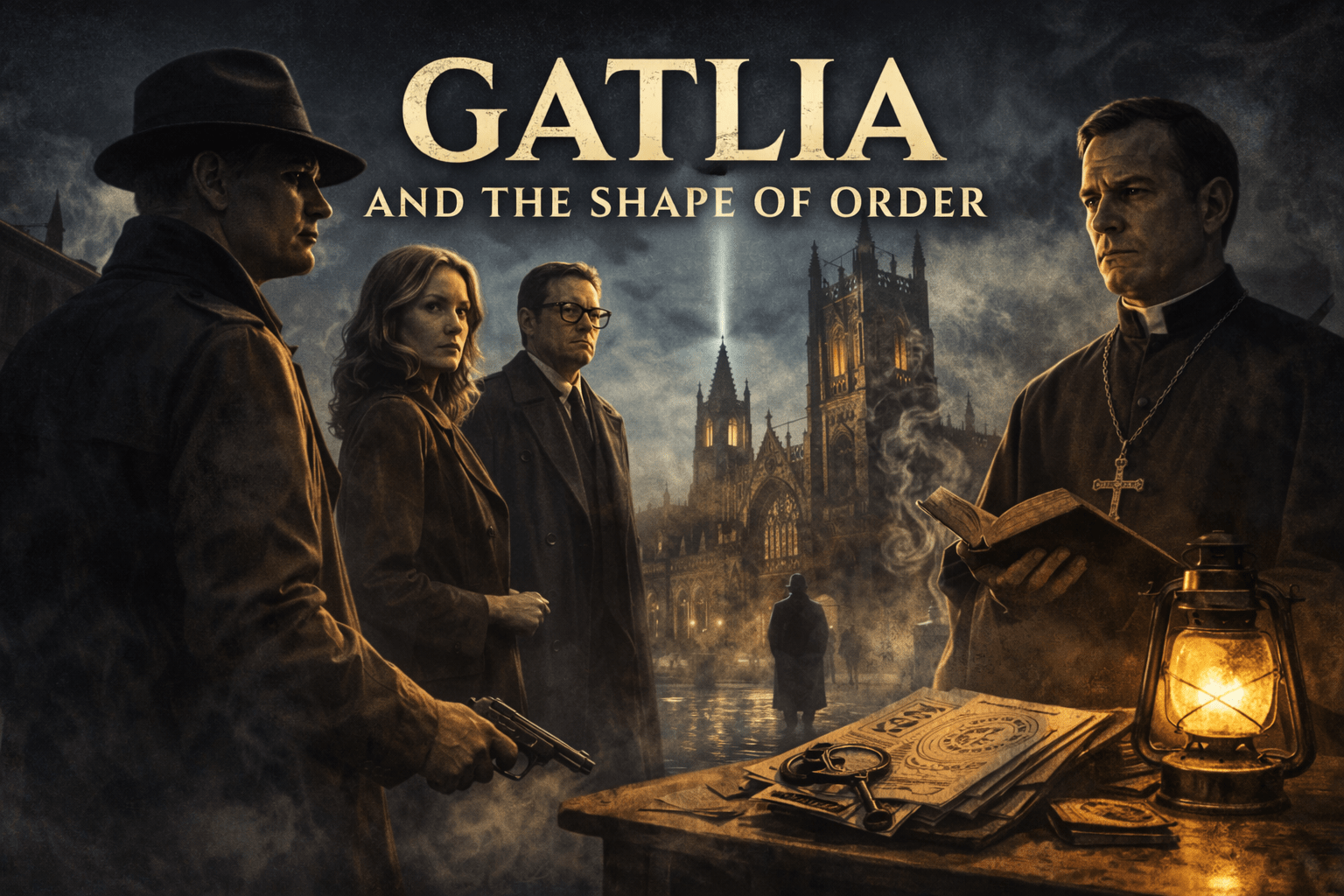
Gatlia and the Shape of Order

Gatlia and the Shape of Order cover image showing four figures in a dark, foggy city before a Gothic cathedral, including a priest holding an open book, with a lantern, documents, and a noir atmosphere.

Every world decides, sooner or later, who gets to keep it stable. In this one, stability does not come from belief or consensus. Gatlia and the shape of order insist it comes from institutions that remember how quickly things fall apart when authority hesitates. The medical center is one of those institutions. Quiet. Procedural. Trusted.

Dr. Gatlia stands at its center.

She is not written as cruel. She is not written as corrupt. She does not grandstand or argue philosophy. She works. She classifies. She contains. When something goes wrong, she does not ask what it means. She asks what it threatens.

That distinction matters.

To Gatlia, medicine is not only about healing bodies. It is about maintaining continuity. Panic is more dangerous than pain. Disorder more dangerous than death. Truth, if released without structure, can fracture a population faster than any disease.

From that perspective, Casper and Eulǝr are not visionaries. They are destabilizers.

They move outside approved channels.
They invite individuals to experience meaning directly.
They bypass the old filters—elder review, institutional pacing, sanctioned language.

To someone like Gatlia, that isn’t progress. It’s negligence.

Watch how she operates.
Notice when things are handled quietly instead of publicly.
Pay attention to what never becomes an emergency.

She does not oppose change outright. She slows it. Redirects it. Absorbs it into systems designed to outlast individuals. That restraint feels reasonable. Responsible, even.

And that’s what makes it dangerous.

Because control exercised calmly rarely looks like control at all.

Just keep that in mind while you read.

Members Only: Why Gatlia Is Afraid of Them

Gatlia’s loyalty is not to

This content is for members only.

Not yet a member? Request access to The Dossier.
Dossier

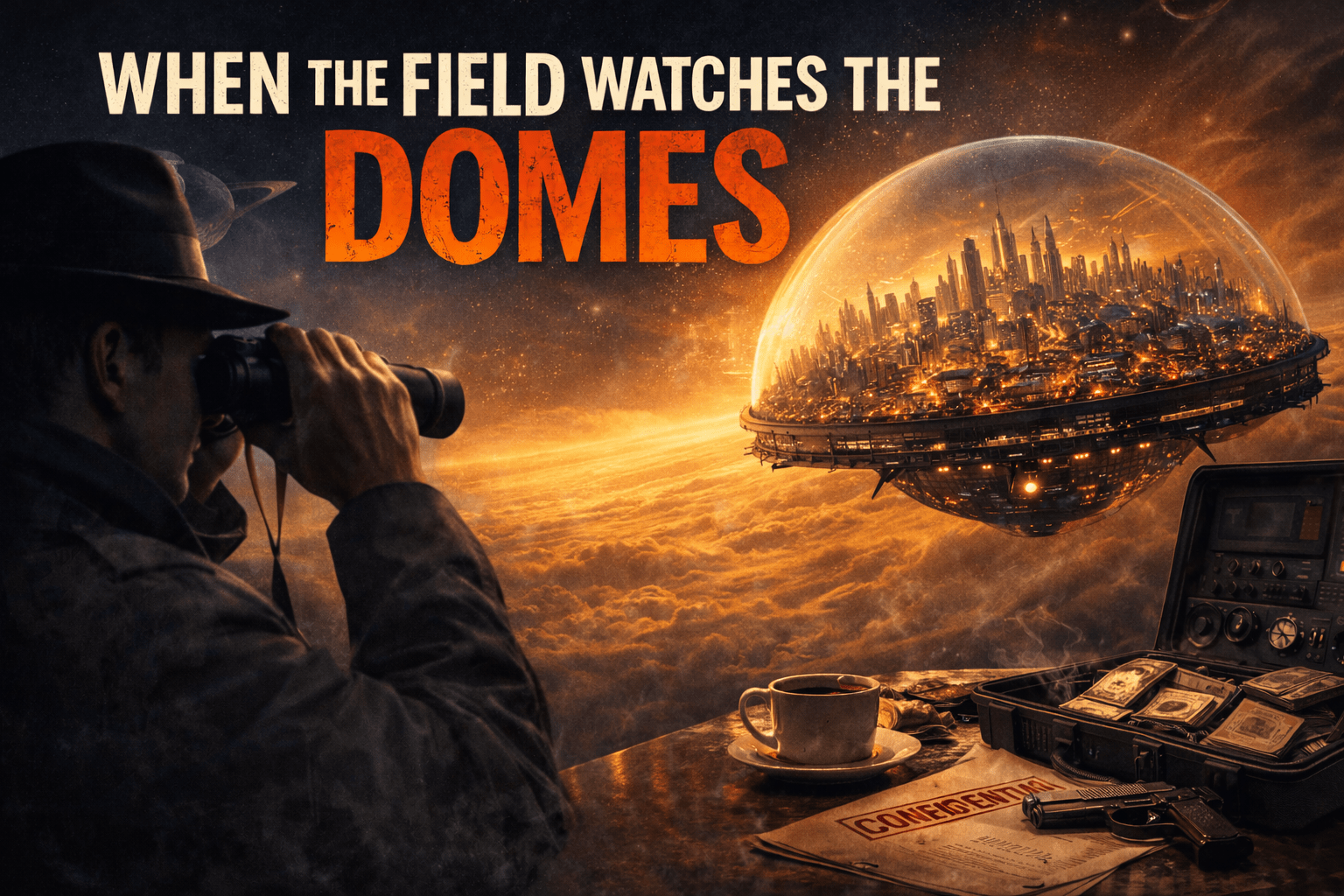
When the Field Watches the Domes

When the Field Watches the Domes showing a vast floating domed city glowing above the clouds of a gas giant while a shadowed observer watches from the foreground.

The Gamma Field is usually read as distant. Vast. Impersonal. Something cosmic that presses inward from the edges of the story. That’s understandable. When the field watches the domes it behaves like a force. It strips. It waits. It doesn’t explain itself.

But there’s another way to read it—one the novel never states outright.

Watch how the Field behaves around the domes.

The domes provide air, water, heat, food, rhythm. They regulate fear. They cradle the Kuudere in predictability. They replace nature with continuity. In practical terms, they do exactly what a protector should do.

And the Gamma Field notices.

If the Field were hostile, it would tear the domes apart. It never does. Instead, what happens is quieter and more unsettling: interference without destruction. Timing shifts. Systems hesitate. Synchronization stutters. Blackouts occur at moments that conceal rather than expose.

These aren’t attacks. They’re interruptions.

Look closely and you’ll see a pattern: the Field never removes what keeps the Kuudere alive. It disrupts what claims authority over their meaning. It interferes with systems that mediate experience, interpretation, and memory—but leaves life support intact.

That’s not random behavior.

It’s rivalry.

The domes promise safety through control.
The Field promises belonging through connection.

Neither destroys the other outright. Each resists the other’s claim to guardianship.

If the Field were indifferent, it would ignore the domes.
If it were violent, it would collapse them.

Instead, it waits for moments where it can remind the Kuudere—subtly, almost gently—that protection can come from somewhere else.

Just keep that in mind while you read.

Members Only: Why the Field Sabotages Without Harming

The Gamma Field isn’t jealous of

This content is for members only.

Not yet a member? Request access to The Dossier.

Follow me on X | Bluesky | IMD Operations