Tag: Narrative Control

Narrative control is one of the most powerful forces in modern society. Institutions, corporations, and political actors rarely rely on raw authority alone; they shape the stories people believe about events, systems, and responsibility. The articles collected here examine how narratives are constructed, reinforced, and challenged. From media framing to financial messaging to the personal stories individuals tell themselves, these pieces explore how control of the narrative often determines control of the outcome.

Dossier

The Real Battlefield Was Applause

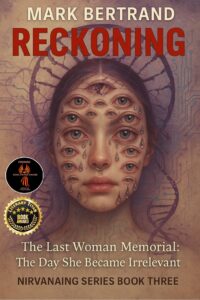
The Real Battlefield Was Applause: Suffragette City and the Moon Anarchists is where Reckoning finally shows the real war—two off-world networks fighting over attention, not territory: the Mars secret society selling a myth you can cheer for, and the Moon anarchists trying to break that myth before applause turns it into permission.

the real battlefield was applause image of lang on stage with audience watching

The novel RECKONING

Suffragette City looked like a place.

It wasn’t.

It was a story that moved through the world faster than any ship, any vote, any treaty—because it moved through attention. It moved through the one resource nobody could ration: the human need to believe there was somewhere better than here.

Adam Cole wrote it, and the manuscript didn’t treat that as a literary flourish. It treated it like a weapons release. His report grabbed “diplomats, politicians, and warriors across the globe,” not because it proved anything, but because it made people feel something and then called that feeling truth.

That’s the link between the Mars secret society and the Moon anarchists.

Not a handshake. Not a code phrase.

Applause.

Suffragette City was smuggled in through admiration

The first time the reader “entered” Suffragette City, it happened in an apartment, over coffee, with a man reading aloud while another man listened—eyes closed—letting the words do what words do when they find the right target.

The city became a symbol. A “testament.” A “vision.” A place “you never want to leave.”

That’s not geography. That’s recruitment.

A secret society didn’t need to advertise itself with banners. It needed a myth. Cole delivered it.

Members Only: The Real Battlefield Was Applause

The book showed how applause became permission

When Amy Goodman walked onto that stage, the audience

This content is for members only.

Not yet a member? Request access to The Dossier.
reckoning book cover image

The novel RECKONING

Follow me on Bluesky and my Righters Doom channel.

project 2029. image leads to stories that provide the codes and the 15 key letters. If you know where to look you can find them all.
Books Like

Books Like Broken Light — Why This Could Be It Belongs on Your List

Readers who search for books like Broken Light by Joanne Harris are drawn to psychological thrillers where ordinary lives crack open to reveal hidden power, rage, or transformation. These are stories where society’s expectations, especially of women, are fractured—and something raw emerges from beneath.

Books like broken light image with Woman standing alone in a dark city street as glowing energy bursts outward around her

If that’s what pulls you toward Broken Light, there’s a speculative psychological thriller you need to meet.

That novel is This Could Be It.

What Readers Love About Broken Light

Broken Light taps into the fear—and power—of a woman ignored by society. When something inside her breaks free, it’s both frightening and liberating. Harris blends psychological depth with social commentary, showing how rage can be transformative.

Readers drawn to Broken Light often want:

  • Psychological awakenings in characters once overlooked
  • The tension of suppressed power breaking through societal expectations
  • A thriller that makes a statement about identity and agency

Where This Could Be It Fits—And Why It’s Different

This Could Be It shares that sense of breaking through. The characters are caught between two worldviews—rational science and mystic belief. But when the countdown to the Gamma Field’s disappearance begins, the cracks become global. It’s not just one person awakening—it’s humanity’s collective identity at stake.

Like Broken Light, This Could Be It explores suppressed forces—whether emotions, beliefs, or fears—waiting for a catalyst. But it broadens the scope. The question isn’t just what one person will become—it’s what humanity will choose to become when faced with the unknown.


Why Readers of Broken Light Choose This Could Be It

Readers who finish Broken Light often want another story where the ordinary cracks open—and something profound emerges.

This Could Be It answers that search by:

  • Blending psychological tension with speculative stakes
  • Placing fractured relationships at the heart of a world-shaking countdown
  • Exploring what happens when belief—long suppressed—might be the key to survival

If You’re Searching for Books Like Broken Light

You’re already drawn to thrillers where suppressed forces—psychological or societal—finally rise.

This Could Be It was written for readers who want:

  • Psychological thrillers with speculative scope
  • Characters whose inner fractures mirror larger societal divides
  • A countdown not only to danger—but to revelation about who we are

If Broken Light showed you what happens when one person’s power awakens, This Could Be It asks: what happens when we all must awaken—or lose everything?

This Could Be It book cover image of the gamma field striking the dome city and the countdown to the end encircling the whole of the city

This Could Be It | Nirvanaing

Books Like HumBooks Like Clockers or In The Woods

Follow me on Bluesky and my Not A Real Publisher channel.

project 2029. image leads to stories that provide the codes and the 15 key letters. If you know where to look you can find them all.
Books Like

Books Like Billy Summers or Harlem Shuffle — Why Snodgrass Belongs on Your List

Readers searching for books like Billy Summers or Harlem Shuffle aren’t just after action. They’re drawn to stories where survival choices aren’t clear-cut, and where the past—whether criminal or military—casts a long shadow.

books like billy summer image of a standing paperback of SNODGRASS by Mark Bertrand sits upright on a dark wooden surface. The cover shows a close crop of a man’s hand gripping a pistol at his side, suggesting tension and violence without showing the full figure.

If that’s what pulls you toward those books like Billy Summers, there’s a contemporary crime-driven novel you may not have encountered yet—but should.

That novel is Snodgrass.

What Readers Love About Books Like Billy Summers (Stephen King)

Billy Summers works because it’s not only about the job—it’s about the man who has to live with the job. The violence is practical, the conscience is complicated, and the deeper tension isn’t “will he get away,” but “what is this turning him into.”

Readers who respond to Billy Summers tend to value:

  • Criminal action grounded in psychology, not spectacle
  • Men with skills—and damage—trying to stay in control
  • Violence as consequence, not entertainment

What Readers Love About Harlem Shuffle (Colson Whitehead)

Harlem Shuffle is crime with texture. It’s not a caper; it’s a world. A man gets pulled into criminal gravity not because he’s evil—but because it’s profitable, available, and sometimes necessary.

Readers drawn to Harlem Shuffle often want:

  • Crime as an ecosystem (money, loyalty, reputation, survival)
  • Moral compromise that happens in inches, not leaps
  • A protagonist who isn’t a gangster—until he is

Where Snodgrass Fits — And Why It’s Different

Snodgrass sits in the overlap between these two traditions:
criminal survival + identity pressure + systems closing in—but with one crucial addition:

It has war overhead.

It opens inside a Navy carrier environment under Libya-mission tension—conflict, authority, and threat saturating everything.
Then it folds backward into the narrator’s early criminal life: hunger, opportunism, and the first small thefts that harden into method.

What makes it hit differently is the two-track pressure:

  1. The military machine (discipline, hierarchy, war footing)
  2. The crime machine (need, profit, escalation, exposure)

You feel both working at once.

Even when the narrator is simply remembering, he’s calculating. Planning. Running models. Looking for angles—like the bank-kiting scheme explained later in the book, where the method is criminal but the mindset is engineering. Snodgrass

The Crime in Snodgrass Isn’t “Bad Guy Crime”

This is important.

The crime here isn’t written as cartoon villainy—it’s written as adaptation. A logic that begins in scarcity, then evolves into skill, then becomes identity.

You see that shift early in the train-robbery episode: hungry teenagers, open rail cars, no supervision, and a brain that immediately understands “there is opportunity here.” Snodgrass

And later, when law enforcement closes in, it becomes procedural, personal, and relentless—Detective Snodgrass lays out the evidence and the implications with the calm weight of the state behind him. Snodgrass

Why Readers of King and Whitehead Choose Snodgrass

Readers who finish Billy Summers or Harlem Shuffle often go searching for something specific but hard to name:

Not “more violent.”
Not “more plot.”
Just more intimate. More inside the mind that does it.

Snodgrass answers that search by:

  • Putting the reader inside the criminal’s mental process—not after the fact, but in real time
  • Treating crime as a discipline that develops (planning, observation, misdirection)
  • Mixing that criminal evolution with military threat and duty, creating constant tension

Where Snodgrass Goes Further

Most crime books give you either:

  • A criminal operating in the streets
    or
  • A soldier operating in war

Snodgrass gives you a man who has been both—and shows what happens when those mentalities merge.

By the time the Libya mission turns lethal, the narrator recognizes the psychological shift:
“Now I’ve learned to kill… what changes will come?” Snodgrass

That line matters because it’s not cinematic. It’s not proud.
It’s clinical.
And that’s exactly the tone of the book.

If You’re Searching for Books Like Billy Summers or Harlem Shuffle

You’re already beyond surface-level crime.

Snodgrass was written for readers who want:

  • Crime as psychology and system—not gimmick
  • A protagonist who is competent, controlled, and compromised
  • Tension that comes from implication, escalation, and consequence

If Billy Summers showed you how a man becomes dangerous,
and Harlem Shuffle showed you how a man becomes complicit,
Snodgrass shows you what happens when a man becomes both—
and still has to fly the mission tomorrow.

SNODGRASS book cover image of a naval aviator, aircraft carrier, f18 hornet, a sweet 1955 Chevy Belair and a cityscape

Snodgrass | Married Stupid

Books Like Going Infinite or The Cult of WeBooks Like Broken Light

Follow me on Bluesky and Mark Bertrand channel.