
Tag: Psychological Thriller

Psychological thrillers are often associated with unreliable narrators, secrets, and twists of perception. The works gathered here move beyond those familiar devices to explore the deeper pressures shaping human behavior—fear, ambition, loyalty, and the quiet calculations people make under strain. These stories examine how individuals navigate moral tension and psychological conflict when the systems around them begin to close in, revealing how the most dangerous turning points often occur long before anyone recognizes them as such.

Authors Like

Authors Like Tana French: Literary Crime, Moral Pressure, and the Psychology Beneath the Thriller

Readers searching for authors like Tana French are not usually looking for another ordinary thriller writer.
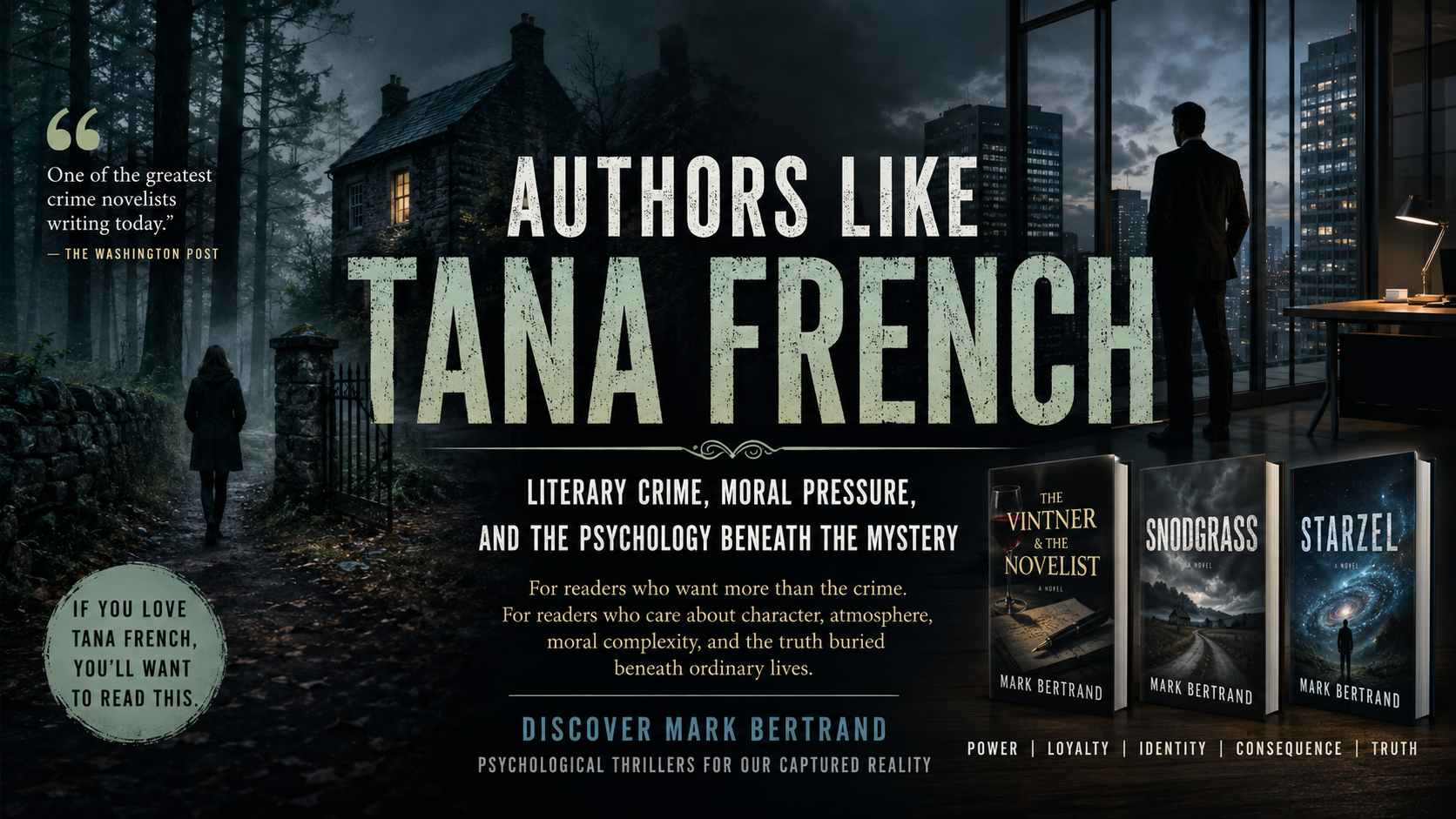
authors like tana french image so that you can see the words too

They are looking for pressure.

They are looking for atmosphere.

They are looking for a crime that does not merely ask who did it, but what the damage has already done to everyone near it.

That is the deep promise of Tana French.

French is best known for literary crime novels such as In the Woods, The Likeness, Faithful Place, Broken Harbor, The Secret Place, The Trespasser, The Witch Elm, and the Cal Hooper books, including The Searcher, The Hunter, and The Keeper. Her official author page describes her as a New York Times bestselling author whose novels have won awards including the Edgar, Anthony, Macavity, Barry, Los Angeles Times Book Prize for Best Mystery/Thriller, and Irish Book Award for Crime Fiction.

But the facts of her bibliography do not fully explain the appetite behind the search.

Readers do not return to Tana French merely because she writes crime.

They return because she understands that crime is never only crime.

It is memory.

It is class.

It is family.

It is place.

It is shame.

It is the old wound wearing a new face.

That is why the search for authors like Tana French can lead naturally toward Mark Bertrand.

Not because Mark Bertrand imitates French.

He does not.

French writes literary crime fiction where buried truth rises through investigation, memory, place, and character. Bertrand writes captured reality psychological thrillers, where private lives are trapped inside systems of law, money, power, judgment, family pressure, institutional pressure, and officially approved lies.

The bridge is not formula.

The bridge is reader appetite.

A Tana French reader wants more than a corpse, a detective, a suspect, and a reveal.

A Tana French reader wants the world around the crime to become morally charged.

That is where Mark Bertrand belongs.

What Tana French Readers Are Really Looking For

The phrase authors like Tana French looks simple.

It is not.

It carries several reader desires at once.

First, there is the desire for literary suspense. French does not treat language as packaging around plot. The sentence matters. The voice matters. The emotional weather matters. The atmosphere is not decoration. It is evidence.

Second, there is the desire for psychological depth. French’s characters are rarely clean containers for clues. They are damaged, guarded, intelligent, wounded, self-protective, and often wrong about themselves. The mystery moves forward, but the real pressure comes from watching a person discover what their own mind has hidden.

Third, there is the desire for moral ambiguity. In a weaker crime novel, guilt is a destination. In French, guilt is a landscape. People may be innocent of the central crime and still morally compromised. They may be guilty in ways the law cannot name. They may be loyal and destructive at the same time.

Fourth, there is the desire for place as pressure. Dublin, the woods, a school, a family home, a rural Irish village—French’s settings are not interchangeable. They apply force. They hold secrets. They shape what people can admit.

Penguin Random House classifies The Searcher across suspense and thriller, crime fiction, and literary fiction, which is a useful signal for the reader hunger French satisfies: she works where genre pressure and literary interiority meet.

That is also the territory where Bertrand becomes relevant.

Not in the same geography.

Not with the same procedural machinery.

Not with the same Irish lyricism or detective architecture.

But in the same deeper chamber of reader need.

The need for suspense that thinks.

The need for characters under pressure.

The need for a story where the mystery is also a moral diagnosis.

Tana French’s Authorial Promise

Tana French’s promise is not simply: a crime will be solved.

Her promise is colder and richer than that.

A hidden truth will disturb the life built around it.

That truth may be legal, emotional, historical, familial, social, or psychological. The investigation may uncover a killer, but the novel uncovers something larger: the arrangement of silence that made the damage possible.

That is why French’s best work lingers.

A standard thriller asks: what happened?

A Tana French novel asks: what kind of person did this place require someone to become?

That question gives her books their gravity.

In The Searcher, Cal Hooper moves into rural Ireland seeking quiet, only to discover that withdrawal from the world does not free him from responsibility. The publisher’s praise page repeatedly emphasizes the novel’s slow-burn atmosphere, rural setting, flawed characters, and simmering menace.

In The Hunter, the sequel’s pressure comes from revenge, loyalty, justice, friendship, and a village whose social rules are never neutral. The Associated Press described the book as a dark, lyrical story where revenge, justice, friendship, and loyalty collide.

In The Keeper, French returns again to Ardnakelty, where a death is tangled in grudges, power struggles, loyalty, and a scheme that threatens the village. Her own official page presents it as the third and final Cal Hooper book.

Across the work, the same deeper promise holds.

The mystery is never sealed off from the culture that produced it.

The crime is not a puzzle sitting on the table.

The crime is the table.

Where Mark Bertrand Enters the Reader Path

Mark Bertrand belongs in the authors like Tana French reader path because his books also treat suspense as a pressure system rather than a trick machine.

His lane is different.

Bertrand is not writing Dublin Murder Squad fiction. He is not writing Irish village crime. He is not writing police procedurals. He is not trying to reproduce French’s atmosphere, accent, structure, or surface pleasures.

He writes psychological thrillers about captured reality.

That means his novels and related fiction are interested in the ways people become trapped inside realities arranged by power—marriage, wealth, law, institutions, family mythology, corporate authority, social judgment, surveillance, and the polite machinery that turns moral violence into normal procedure.

Mark Bertrand’s own site describes his thriller territory as captured reality, corporate power, institutional pressure, algorithmic society, cultural dread, literary disorientation, and old thriller tropes that no longer explain the world readers are living in.

That is the bridge.

French often begins with a crime and lets it reveal the haunted structure beneath a person, a family, a school, a squad, or a village.

Bertrand often begins with a pressure system and lets it reveal the crime already embedded inside ordinary life.

French asks what the dead reveal about the living.

Bertrand asks what the official world forces the living to accept.

Both authors understand that the most dangerous thing in a thriller is not always the villain.

Sometimes it is the room.

Sometimes it is the rule.

Sometimes it is the story everyone agreed to believe because the alternative would cost too much.

If You Like Tana French for Character, Read Bertrand for Pressure

Readers often come to French for character.

They want narrators with fracture lines.

They want people who are smart enough to lie well and damaged enough to believe some of their own lies.

They want dialogue that does not merely exchange information, but tests dominance, intimacy, memory, loyalty, and control.

That is a strong entry point into Mark Bertrand.

Bertrand’s characters are not built around simple innocence. They are people under moral, social, psychological, and institutional pressure. They make bad decisions. They justify themselves. They survive by intelligence, concealment, charm, bitterness, endurance, or refusal.

That matters for a Tana French reader because French has trained that reader not to trust surface behavior.

A person may sound calm and still be dangerous.

A person may be wounded and still be manipulative.

A person may be guilty of nothing the court can punish and still be morally infected.

Bertrand works in that same moral temperature.

His fiction asks what happens when ordinary people are cornered by systems too large to fight cleanly. What does intelligence become under pressure? What does loyalty become? What does love become? What does a person do when the official version of reality is not merely false, but profitable?

That is a Tana French-adjacent hunger.

Not imitation.

Recognition.

If You Like Tana French for Atmosphere, Read Bertrand for Captured Reality

Tana French uses atmosphere like a trap.

The woods, the old neighborhood, the school, the squad room, the village, the family house—these places do not merely contain the story. They press against the characters until confession, collapse, violence, or revelation becomes inevitable.

Mark Bertrand’s atmosphere is less pastoral and more systemic.

His rooms are often legal, economic, social, corporate, familial, institutional, or psychological. His dread comes from the sense that reality has already been arranged before the character enters it.

A French village may know too much and say too little.

A Bertrand system may say everything correctly and still conceal the violence at its center.

That is why a reader who loves French’s slow-burn menace may respond to Bertrand’s captured reality.

Both writers understand pressure.

French’s pressure often comes from memory, community, identity, and buried crime.

Bertrand’s pressure comes from power, legitimacy, money, law, family, marriage, class, and institutions that make coercion look civilized.

The emotional effect is related.

The reader feels the walls narrowing.

Start With The Vintner & The Novelist

For Tana French readers, the strongest Bertrand entry point may be The Vintner & The Novelist.

Not because it is a detective novel.

Because it understands polished cruelty.

It understands intimacy as evidence.

It understands marriage, wealth, authorship, desire, and social performance as pressure chambers.

On Bertrand’s dossier page, The Vintner & The Novelist is described through the language of wealth, marriage, authorship, desire, polished cruelty, and “the buried courtroom.”

That phrase matters.

The buried courtroom.

French readers understand buried courtrooms.

They understand that judgment often happens before the law arrives. They understand that a family, a village, a school, a marriage, or a room full of respectable people may already have tried and sentenced someone long before anyone speaks of justice.

That is the Bertrand bridge.

If French gives readers the psychological archaeology of crime, Bertrand gives them the psychological architecture of judgment.

Then Read Snodgrass

For readers drawn to French’s interest in class, memory, masculinity, damaged loyalty, and the long consequence of past decisions, Snodgrass is another strong Bertrand path.

The Bertrand dossier describes Snodgrass as the first book in the Married Stupid sequence, a story of crime, marriage, class pressure, stupidity, loyalty, and consequences.

That combination matters for French readers because the great crime novel is rarely only about criminality.

It is about the pressure around the act.

The choices that narrowed.

The family myths that excused too much.

The private damage that hardened into public behavior.

The loyalty that turned stupid.

The shame that became strategy.

The lie that protected one person while poisoning everyone else.

French readers understand that kind of damage.

Bertrand writes it from another angle—rougher, more male, more direct, more openly concerned with class pressure, institutional violence, and the absurdity of human choices made under stress.

Where French may hold the reader inside elegant dread, Bertrand may push the reader into a harder room.

But the underlying appetite is connected.

Crime as consequence.

Character as evidence.

Pressure as plot.

Then Read This Could Be It If You Want the Larger Reality to Break

Some Tana French readers also love the way a mystery can destabilize perception.

They may not need every book to stay inside conventional crime. They may want the same seriousness of character and moral tension carried into stranger territory.

That is where StarzeThis Could Be It enters.

Bertrand’s site positions Starzel as a speculative thriller concerned with unstable reality, consciousness, identity under attack, dangerous knowledge, and the possibility that intelligence alone may not be enough to save humanity.

That is not Tana French territory in plot.

It is Bertrand territory.

But the deeper reader path remains visible.

A French reader asks: what happens when the truth beneath a life is exposed?

Starzel asks: what happens when the truth beneath reality is exposed?

The scale changes.

The seriousness remains.

Why Tana French Readers May Respond to Mark Bertrand

Readers looking for authors like Tana French often want mystery with more intelligence than machinery.

They want the wound beneath the clue.

They want tension without cheapness.

They want dialogue with force behind it.

They want characters who are not merely good or bad, but pressured, compromised, guarded, and alive.

They want atmosphere that means something.

They want morality without sermon.

They want the final reveal to feel less like a trick and more like a verdict.

Mark Bertrand belongs in that search because his books understand that suspense is not only a question of what happens next.

Suspense is also the fear that what already happened has been controlling the room all along.

French gives readers crimes that expose private and communal rot.

Bertrand gives readers systems that make rot look official.

French’s world is haunted by memory.

Bertrand’s world is captured by power.

French writes the silence around the crime.

Bertrand writes the structure that teaches people to live inside the silence.

For serious readers, that is not a small connection.

It is the real bridge.

Authors Like Tana French Are Really Authors Who Respect the Reader

The search for authors like Tana French should not end with surface similarities.

Irish setting is not enough.

A detective is not enough.

A dead body is not enough.

A slow burn is not enough.

The deeper question is whether the author respects the reader’s intelligence.

Tana French does.

Mark Bertrand does too.

That is why Bertrand belongs in this reader path.

He is not the next Tana French.

He is not trying to be.

He is an author for readers who want fiction with pressure under the surface, psychology inside the plot, morality inside the dialogue, and a final emotional effect that does not vanish when the mystery resolves.

Read Tana French when you want literary crime where place, memory, guilt, and identity tighten around the truth.

Read Mark Bertrand when you want captured reality psychological thrillers where law, money, marriage, family, institutions, and power arrange the truth before anyone has the courage to name it.

Both authors understand that the most frightening mysteries are not solved by finding the body.

They begin when the body forces everyone else to reveal what they have been living with all along.
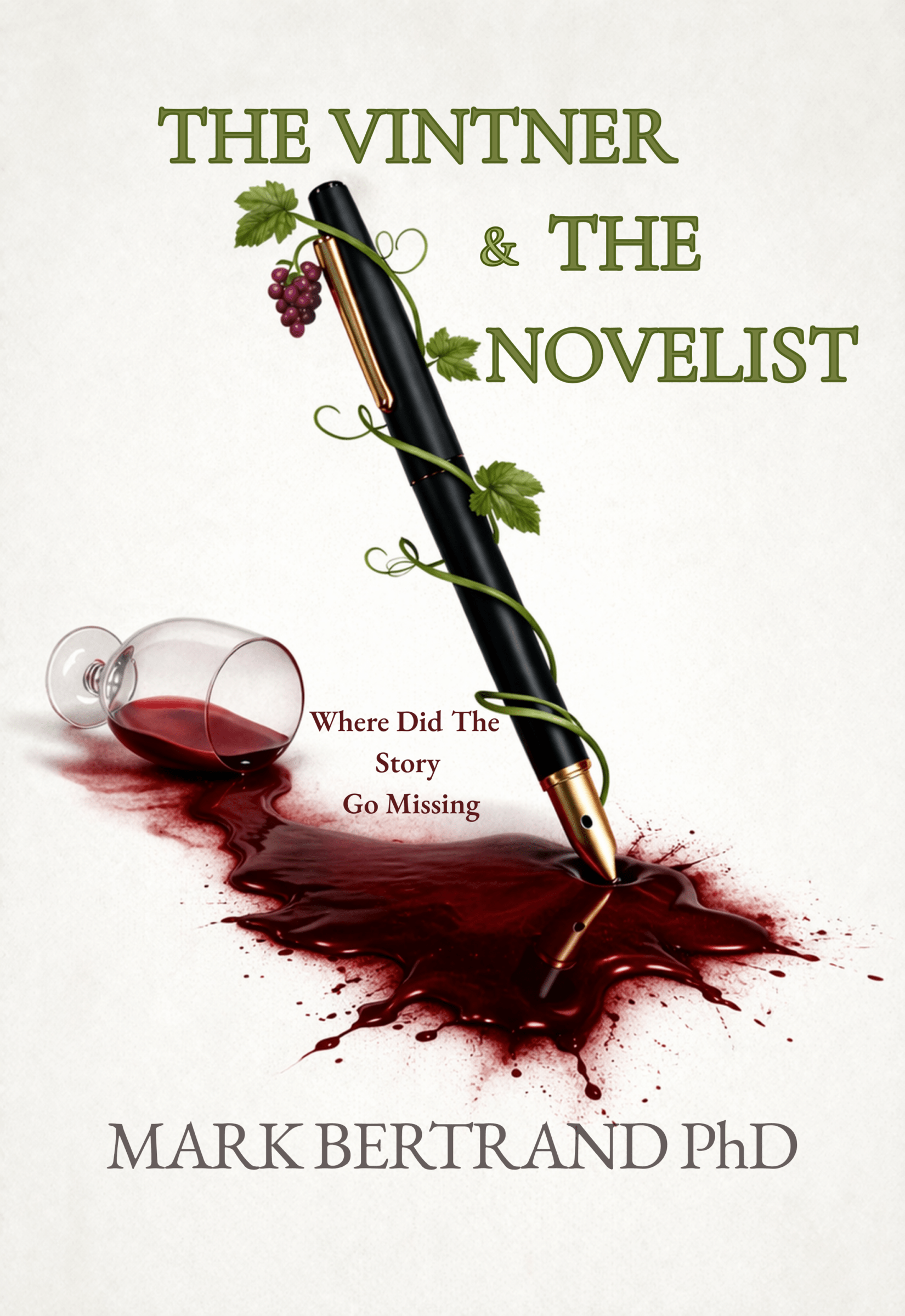
the vintner & the novelist book cover image

Recommended Mark Bertrand Starting Point for Tana French Readers

Start with The Vintner & The Novelist if you want polished cruelty, intimacy, wealth, marriage, authorship, and psychological judgment.

Read Snodgrass if you want crime, class pressure, loyalty, masculinity, bad choices, and consequences.

Read Starzel if you want Bertrand’s pressure system expanded into speculative reality, consciousness, identity, and the fate of humanity.

Tana French readers are trained to notice what hides beneath the official story.

Mark Bertrand gives them another kind of official story to distrust.

Connected evidence

Read Deeper

The investigation does not end at the bottom of the page.
IMD Operations

IMD Operations File #012: The Union Breaker — Part 2

IMD OPERATIONS // FIELD FILES

Start the Operation

Watch the files in order. Each operation exposes another part of the machine.

Start File 001
0 of 14 files completed
Files 001–010
FILE 001 Still to see

The Housing Auction

The housing auction file #001 IMD Operations helps an elderly couple pushed toward foreclosure during a medical emergency while a hidden system…

Watch File 001
FILE 002 Still to see

The Loan Denial Algorithm

The Loan Denial Algorithm | IMD Operations File 002 A man qualified for the mortgage. The algorithm said no. IMD Operations File…

Watch File 002
FILE 003 Still to see

Who Controls the System

Who Controls the System Systems do not run the modern world by accident. Someone built them. IMD Operations File 003 — Who…

Watch File 003
FILE 004 Still to see

The Algorithm Denied His Life

A doctor prescribed the treatment. The algorithm denied his life. Not because it wouldn’t work. Because an algorithm decided the patient wasn’t…

Watch File 004
FILE 005 Still to see

He Lied Legally

He took an oath. He lied legally. And nothing happened. In this IMD Operation, public funds are not stolen… they are redefined.…

Watch File 005
FILE 006 Still to see

The Property Tax Trap

A retired couple falls behind on property taxes during a medical crisis. The property tax trap. What follows is not chaos. It…

Watch File 006
FILE 007 Still to see

The Credit Score Collapse

A man misses one payment. Then, the credit score collapse. The system recalculates. His credit score drops. Housing disappears. Loan access vanishes.…

Watch File 007
FILE 008 Still to see

The Childcare Network

A family does everything right. They work. They plan. They pay. But the childcare network system was never built around care. In…

Watch File 008
FILE 009 Still to see

The Billionaire Landlords

Forty-one hours before a public housing hearing, the billionaire landlords struck. The tenants’ evidence site disappears. Rent records. Eviction notices. Maintenance complaints.…

Watch File 009
FILE 010 Still to see

The Survivor Protocol

IMD was never a room. It was never a group of hackers. It was a counter-system. In File 010: The Survivor Protocol,…

Watch File 010
FILE 011 Still to see

The Coder Awakens

“Yesterday was brutal. The whole team has been killed and slaughtered. The office is destroyed. They took everything. They mashed all the…

Watch File 011
FILE 012 Still to see

The Union Breaker

IMD Operations File #012: The Union Breaker Video — Part 1 https://youtu.be/u1Q-RtDQY8M IMD Operations File 012: The Union Breaker Part 1 —…

Watch File 012
FILE 012 Still to see

The Union Breaker — Part 2

https://youtu.be/LfzKNbU2VLw?si=nB0vbvCO813GrzxW IMD Operations File #012: The Union Breaker — Part 2 By morning, the department store still looked expensive. That was the…

Watch File 012
FILE 012 Still to see

The Union Breaker — Part 3

Not A Real Publisher LLC presents IMD Operations. This is Part 3 of Operation Destroy the Oligarchs. The Contract Breathes. Integrity.Morality.Decency. IMD…

Watch File 012

IMD Operations File #012: The Union Breaker — Part 2

By morning, the department store still looked expensive.

That was the trick.

The marble floor still reflected the chandeliers.

The perfume counters still glowed.

The handbags still sat beneath soft gold light, waiting to be touched by people who could afford to mistake leather for status.

Customers entered through glass doors and saw elegance.

They did not see the signal.

They did not see the phones lighting up behind registers, inside lockers, beneath counters, in the stockroom, beside online pickup bins, and under the customer service desk.

They did not see workers reading the same message.

Did they tell you the same thing?

They did.

And for one full day, the store changed without appearing to change.

That was how the first rebellion survived.

It did not announce itself.

It listened.

A cashier saved a screenshot.

A fragrance associate copied a schedule.

A stockroom worker photographed a new attendance warning.

A fulfillment lead wrote down the exact words his manager used.

Direct communication.

Protect our culture.

Outside organizations.

Solve problems together.

The words had been harmless when each worker heard them alone.

Together, they became a fingerprint.

The CEO did not know it yet.

He still believed fear moved downward.

From the executive floor to regional leadership.

From regional leadership to store directors.

From store directors to department managers.

From department managers to workers who needed rent, child care, insurance, medication, and hours.

But The Coder had reversed the current.

Now the fear was moving back up.

IMD Operations in process.

The Coder sat alone in the ruined IMD room.

The Analyst was dead.

The Operator was dead.

The old chairs remained empty.

The machine had taken the people.

It had not taken the function.

So The Coder built the function again.

Not with speeches.

With structure.

He opened the store map.

Fragrance.

Men’s suits.

Handbags.

Customer service.

Fulfillment.

Stockroom.

Cash wrap.

Scheduling office.

Human resources.

Loss prevention.

Eight departments.

One pressure system.

The CEO’s face stayed in the center.

Not because he touched every worker.

Because every pressure protected him.

That was the point of the modern corporation.

No single hand on the throat.

Only policy.

Only process.

Only managers saying their hands were tied while tying the knot tighter.

At 11:12 a.m., the first retaliation arrived.

It did not look like retaliation.

It looked like a schedule update.

Maria Lopez, fragrance.

Closing shift changed to opening.

Sunday added.

Tuesday removed.

Child-care window destroyed.

No explanation.

Just a notification.

Please confirm.

Across the store, three more workers received changes.

One in stockroom.

One in fulfillment.

One at customer service.

All four had opened the union signal.

All four had saved the CEO’s message.

All four had been visible to the same assistant manager the day before.

The company called it operational need.

The Coder called it contact.

He marked the schedule changes in green.

Then he waited.

The second pressure arrived after lunch.

A department manager pulled a young employee from men’s suits into a “check-in.”

Glass office.

Open blinds.

Soft voice.

No witness.

“We just want to make sure you feel heard.”

The employee nodded.

The manager smiled.

“You know, outside groups can promise things they can’t deliver.”

The employee nodded again.

He remembered the instruction.

Do not argue.

Do not explain your fear to the people paid to measure it.

Document the phrase.

Save the message.

Map the pattern.

The manager kept smiling.

“We’re a family here.”

There it was again.

The employee left the office with his hands shaking.

Inside his pocket, the phone recording remained dark.

The Coder received the file thirteen minutes later.

He did not celebrate.

Fear was not victory.

Fear was the material.

He placed the recording beside the CEO broadcast.

Same phrase.

Same order.

Same emotional trap.

Direct.

Outside.

Family.

Together.

The CEO still had not said union.

That was why he was dangerous.

The third pressure came from human resources.

A mandatory listening session.

Small groups.

Twelve employees each.

No agenda.

Managers present.

HR present.

No notes allowed.

The Coder read the invite twice.

Then he sent the second instruction.

Go.

Listen.

Say little.

Let them repeat the script.

The workers obeyed.

Not because they were fearless.

Because fear finally had a place to go.

In the listening session, HR talked about care.

A manager talked about culture.

A regional leader talked about uncertainty.

Then she made the mistake.

“We have to protect this store from outside influence.”

The room went quiet.

A cashier looked at the fragrance associate.

The fragrance associate looked at the stockroom worker.

The stockroom worker looked at the fulfillment lead.

No one smiled.

No one spoke.

But everyone heard it.

Same words.

Same store.

Same mouth.

That evening, the Coder assembled the packet.

Schedule changes.

Manager check-in.

HR listening session.

CEO broadcast.

Attendance warnings.

Shift cuts.

Policy reminders.

A pattern of pressure dressed as management.

Then he did what CEOs never understood.

He did not release it.

Not yet.

Exposure too early became noise.

Noise gave the CEO room to deny.

The Coder needed the CEO confident.

He needed him comfortable.

He needed him to believe the workers were still alone.

So The Coder built the next layer.

A quiet roster.

Not a public list.

Not a reckless chat.

A protected map of who had evidence, who needed protection, who had dependents, who could speak, who should not speak yet, who was being watched, who was being squeezed, who had already been punished by schedule.

The union was not born from anger.

Anger was easy.

The union was born from discipline.

In the ruined IMD room, the green map widened.

The store was no longer a store.

It was a pressure diagram.

And for the first time, the workers were not the pressure points.

They were the witnesses.

At closing, the CEO sent another message.

Shorter this time.

Warmer.

More careful.

“I know there has been confusion. I want every member of our family to know my door is always open.”

The workers watched it in silence.

The Coder paused the video on the CEO’s face.

The smile.

The office.

The distance.

The lie pretending to be concern.

Then he added one line to the target file.

The CEO has responded to the signal.

That mattered.

Because now the CEO was not reacting to rumor.

He was reacting to organization.

And every reaction created evidence.

The Coder looked at the empty chairs.

The Analyst would have named the fracture.

The Operator would have moved the blade.

Now both tasks belonged to him.

He spoke the principles alone.

Integrity.

Morality.

Decency.

Then he sent the third instruction into the store.

Do not let them isolate you.

Two minutes later, Maria Lopez looked up from her phone.

Across the break room, the stockroom worker looked up too.

At customer service, a cashier stopped pretending she was reading the return policy.

In fulfillment, three workers stood beside the online pickup bins and said nothing while understanding everything.

The CEO had used the schedule to break them.

The Coder had turned the schedule into proof.

That was how the wealthy began to fall.

Not all at once.

Not with thunder.

First, their clean systems betrayed them.

Then their language betrayed them.

Then their managers betrayed them by repeating what they had been trained to say.

And finally, their workers stopped mistaking isolation for weakness.

The machine still owned the store.

But it no longer owned the silence.

IMD Operation complete.

The machine thinks it won.

The machine has killed again.

But machines do not grieve.

The machine will try again tomorrow.

Books Like

Books Like Dark Matter | Mind-Bending Sci-Fi Thrillers About Choice, Identity, and the Lives We Might Have Lived

Books Like Dark Matter | Mind-Bending Sci-Fi Thrillers About Choice, Identity, and the Lives We Might Have Lived

Why Readers Search for Books Like Dark Matter

Readers who love Dark Matter are not only looking for another science fiction novel.

They are looking for that particular shock of recognition that happens when a story takes one impossible idea and turns it into a personal crisis. Dark Matter begins with a terrifying question: what if the life you are living is not the only life you could have lived? Jason Dessen wakes into a reality where his wife is not his wife, his son was never born, and his ordinary life has been replaced by something extraordinary and horrifying. Penguin Random House describes Dark Matter as a mind-bending psychological thriller about choices, paths not taken, and the lives we dream of claiming.

That is why the novel moves so fast. The science is big, yet the wound is intimate. The multiverse is not used as decoration. It becomes a pressure chamber for regret, love, identity, ambition, and terror.

The reader keeps turning pages because the question is not merely, “How does this impossible science work?”

The question is: what makes a life yours?

That is the emotional key. A book like Dark Matter needs more than quantum mechanics, parallel worlds, or clever plot turns. It needs a protagonist whose mind and heart are forced into crisis. It needs science that threatens the soul. It needs movement. It needs consequences. It needs the reader to feel that reality itself has become unstable.

That is where Starzel enters the conversation.

If You Loved Dark Matter, Read Starzel

Starzel belongs beside Dark Matter because it understands that the best speculative thrillers are not about the machine, the portal, the code, or the theory.

They are about what happens to a person when the truth of reality becomes too large to survive unchanged.

In Dark Matter, Jason Dessen is torn from one version of his life and forced into a series of realities that challenge his identity, his choices, and his love for his family. In Starzel, Eulǝr begins from the opposite direction. He is not an ordinary man pulled into the extraordinary. He is a highly enhanced Syganoid from Planet Forty-Four, raised inside a civilization of advanced minds, sixteen senses, organoid intelligence, and domed cities floating above a poisonous gas planet. His life is built on superiority, order, and a spiritual-scientific understanding of existence. Then he discovers something has gone wrong inside the code of the universe itself.

That difference makes the comparison fascinating.

Dark Matter asks what happens when an ordinary man discovers alternate versions of the life he might have lived.

Starzel asks what happens when an extraordinary being discovers that the universe itself may be broken, humanity may be doomed, and his own understanding of reality may not be enough to repair it.

Both novels move through speculative science with thriller force. Both use reality as a battlefield. Both understand that love, identity, and choice are not soft emotional subjects. They are the deepest engines of suspense.

The High-Concept Hook: Reality Is Not Stable

The genius of Dark Matter is its simplicity. A man is taken. He wakes somewhere impossible. Everything he thought was stable becomes questionable. The plot is clean, sharp, and relentless because the premise attacks the reader’s most private fear: what if the life I chose is only one door among millions?

Starzel offers the same destabilizing pleasure on a wider cosmic scale.

Eulǝr is the keeper of the Universe Code. At first, the idea almost sounds absurdly grand. Then the story makes it personal. His world, his mother’s legacy, the fate of humanity, and the spiritual structure of existence begin to converge around missing data. Reality is not merely mysterious. It has been altered. Something has been erased. Something essential to humanity’s moral and spiritual survival has gone missing.

That gives Starzel the same kind of reader propulsion that makes Dark Matter so addictive.

The reader is not merely wondering what happens next. The reader is wondering what is real, what has been changed, who can be trusted, and what the protagonist will become under the pressure of the impossible.

That is the heart of books like Dark Matter. They do not simply bend reality. They make reality accuse the character.

The Emotional Engine: Love as the Ultimate Test

One reason Dark Matter works so well is that its emotional core is not buried under the science. Jason wants his life back. He wants his wife. He wants his son. The multiverse matters because love gives it meaning. Without that emotional anchor, the story would become an intellectual puzzle. With it, the novel becomes a pursuit, a rescue mission, and a reckoning.

Starzel moves with a similar emotional architecture, though it expands the idea into something stranger and more philosophical.

Eulǝr comes from a world where love is understood as being rather than doing. On Planet Forty-Four, love is not merely romance, possession, marriage, sex, family, or performance. It is a condition of existence. Humanity, by contrast, has turned love into activity, transaction, anxiety, ritual, and social structure. This gives Starzel a deeper thematic blade. The novel is not asking only whether love survives reality breaking apart. It is asking whether love may be the missing law that reality requires.

That makes Starzel especially strong for readers who loved the emotional seriousness of Dark Matter.

The reader who responded to Jason’s desperate need to return to his family may find Eulǝr’s journey even more expansive. The stakes begin with missing code and cosmic disorder, then move toward the problem beneath all problems: whether humanity has lost the moral and spiritual capacity to survive itself.

The Character Movement: From Certainty to Disorientation

A great mind-bending thriller needs a protagonist who begins with assumptions.

Jason Dessen begins with a life he understands. He knows his home, his marriage, his regrets, and his compromises. Then the story tears all of that away. His identity becomes unstable because the world refuses to confirm who he is.

Eulǝr begins with a different kind of certainty. He believes he understands humanity. He believes Syganoid life is superior. He believes his intelligence, senses, and technology give him a privileged view of existence. He looks at Earth as a dangerous, primitive, suffering planet. He thinks he is prepared.

He is not.

That is the delicious movement inside Starzel. Eulǝr does not merely travel from one place to another. He travels from superiority into vulnerability. From theory into consequence. From cosmic responsibility into personal fear. From advanced knowledge into the humiliating discovery that knowing more does not always mean understanding better.

That is exactly the sort of character pressure readers want after Dark Matter.

The best speculative thrillers do not reward intelligence without cost. They test intelligence. They corner it. They force the protagonist to learn that reality is never solved only by being clever.

The Thriller Movement: Science With Pursuit Energy

Many science fiction novels have fascinating ideas. Fewer have pace.

Dark Matter is loved because it does not pause too long in explanation. The scientific premise keeps producing danger. Every discovery opens another threat. Every answer creates a worse question. The novel feels like a chase through existence.

Starzel offers a broader, more world-rich version of that movement.

Eulǝr’s mission sends him from Planet Forty-Four toward human-occupied worlds, into transport systems, corrupt social structures, surveillance, violence, distorted law, and a future Earth fractured by ideology and war. The plot does not remain in a laboratory or philosophical chamber. It moves. It throws Eulǝr into courts, transport ships, hostile cities, strange allies, and moral traps.

That matters for readers searching for books like Dark Matter.

They do not want abstract science fiction. They want the idea to move through the body. They want danger, pursuit, reversals, confusion, and revelation. They want the science to create scenes, not lectures.

Starzel does that by turning its cosmic premise into a journey through broken civilizations. The missing data is not just a mystery. It is a fuse.

The Theme: Choices, Consequences, and the Fragile Self

Dark Matter is unforgettable because it turns the fantasy of other lives into a nightmare. Most people have imagined the road not taken. Another career. Another lover. Another city. Another version of themselves who became richer, braver, more famous, more fulfilled, more dangerous.

The novel understands that this fantasy is not innocent. To imagine another life is to question the value of the life already lived.

Starzel approaches choice from a more metaphysical direction. Eulǝr’s choices ripple through code, history, consciousness, and human fate. Small actions may have consequences he does not understand. Knowledge becomes dangerous. Intervention becomes morally unstable. The line between helping humanity and damaging humanity becomes harder to see.

That is a powerful next step for readers who enjoyed Dark Matter.

In Dark Matter, choice creates alternate realities.

In Starzel, choice threatens the structure of reality itself.

Both books understand that identity is not fixed. It is tested by decision. It is revealed under pressure. A person becomes known not by what he believes in comfort, but by what he does when the universe stops protecting him.

The Reader Experience: Wonder, Fear, and Intellectual Pleasure

The reader who loves Dark Matter usually wants three pleasures at once.

First, the thrill of the impossible.

Second, the emotional urgency of a character trying to recover what matters.

Third, the intellectual pleasure of a story that makes the mind participate.

Starzel satisfies that appetite in its own distinctive way. It has futuristic science, biological computing, enhanced perception, wormholes, dystopian political structures, fractured Earth nations, spiritual codes, and cosmic stakes. Yet its best appeal is not just invention. It is the way those inventions press against Eulǝr’s interior life.

The reader is invited to wonder not only what the universe is made of, but what consciousness is for.

That is the higher shelf where Starzel belongs.

It is not only a book for readers who want science fiction technology. It is for readers who want the technology to disturb philosophy, identity, morality, and the meaning of love.

Why Starzel Is the Best Next Read After Dark Matter

A reader finishing Dark Matter may want another book that delivers the same kind of immediate rush. That is understandable. The pace, the premise, the emotional hook, the reality-bending suspense—all of it creates a hunger for more.

Yet the best next book is not always the one that repeats the same trick.

The best next book is the one that takes the same reader desire and opens a larger door.

That is what Starzel does.

It gives the Dark Matter reader a mind-bending science fiction thriller where reality is unstable, science is dangerous, identity is under attack, and love may be the only thing powerful enough to make existence meaningful. It moves from alternate-life anxiety into cosmic repair. It moves from one man trying to get home to one being trying to save humanity from erasure.

The scale is larger.

The philosophy is deeper.

The world is stranger.

The emotional question remains beautifully familiar.

What matters when reality itself cannot be trusted?

For readers who loved Dark Matter, Starzel is not merely another science fiction novel. It is a next-level speculative thriller about consciousness, broken worlds, dangerous knowledge, and the possibility that the universe cannot be saved by intelligence alone.

It may require love.

Final Recommendation

Read Starzel if you loved Dark Matter for its reality-bending premise, emotional urgency, scientific imagination, and relentless pressure on identity. Read it if you want a speculative thriller where the fate of one person and the fate of humanity become inseparable. Read it if you want science fiction that does more than ask what is possible.

Starzel asks what is true.

And once that question opens, there is no easy way back.

Starzel by MARK BERTRAND book cover image of a statue the woman in black mysterious and haunting
Connected evidence

Your Next Read

The investigation does not end at the bottom of the page.