Authors Like

This authors like category explores how my thriller writing intersects with some of the most compelling novelists in the genre. Each article examines the shared DNA of suspense—character pressure, moral conflict, and systems of power—while revealing where the stories diverge. If you enjoy thrillers that expose the forces shaping ordinary lives, these comparisons offer a deeper look inside the craft.

Authors Like

Authors Like Lawrence Osborne: The Danger Hidden Inside Taste, Power, and Control

Readers who seek out authors like Lawrence Osborne are drawn to a specific tension: worlds built on taste, status, and restraint that conceal something far more dangerous. These are not stories about chaos. They are stories about control—who has it, who believes they have it, and what they’re willing to justify to keep it. That is the terrain Mark Bertrand enters, where refinement is never neutral and every surface is working harder than it appears.

authors like Lawrence Osborne image of a man in reflection at a restaurant

Cultivated Worlds That Hide Something Rotten

Osborne’s fiction often unfolds in places that appear composed, even enviable—sunlit villas, expatriate enclaves, rooms filled with wine, art, and educated conversation. But the deeper you go, the more those environments begin to feel unstable. Taste becomes a disguise. Leisure becomes exposure.

Bertrand operates inside that same contradiction.

What appears refined is not safe.
What appears controlled is already slipping.

He understands, as Osborne does, that luxury does not remove danger—it refines it. It gives it better language, better manners, better camouflage.

Dialogue as Seduction and Weapon

In Osborne’s work, people rarely say exactly what they mean. Dialogue becomes a test. A lure. A quiet negotiation of power.

Bertrand sharpens this instinct even further.

Conversation is not filler between events—it is the event. Every exchange carries intention. Every line spoken is doing something beneath what is heard. The reader is not just following what is said, but decoding what is being positioned.

This creates a different kind of tension:

Not “what will happen next?”
But “what is really happening right now?”

Intelligent Characters Who Are Not in Control

Osborne’s characters are perceptive, cultured, self-aware—and still move toward decisions that expose their blind spots.

Mark Bertrand builds from that same foundation but tightens the screws.

His characters understand systems, narrative, identity. They believe they can manage outcomes.

They are wrong.

What emerges is not incompetence, but something more unsettling:
the limits of intelligence when it serves desire instead of truth.

Appetite Beneath Refinement

Osborne writes about appetite through restraint. The surface remains composed even as something underneath fractures.

Bertrand’s work moves in that same space, but colder.

Appetite is not chaotic. It is deliberate. It is justified. It is often disguised as taste, as authorship, as control.

Which makes it more dangerous.

Because the characters are not overwhelmed by desire.
They choose it, and then construct the narrative that allows them to live with that choice.

Authors like Lawrence Osborne and The System Beneath the Scene

Here is where Bertrand separates himself.

Osborne leaves you inside the atmosphere.

Bertrand reveals the structure.

Beneath conversation and relationship, there are systems of legitimacy, control, and narrative ownership shaping what can be said, believed, and denied.

You begin to see that the characters are not just making choices—
they are operating inside frameworks designed to protect those choices.

Where the Comparison Becomes Exact

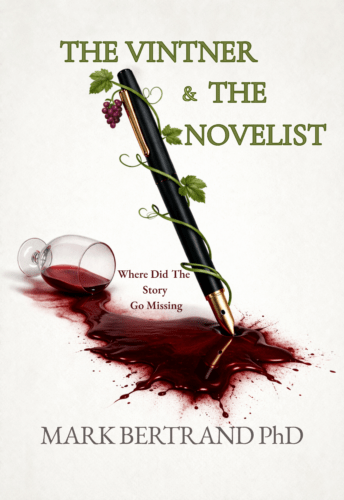
This is where The Vintner & The Novelist makes the connection unmistakable.

The same cultivated environments.
The same intelligent negotiation of power.
The same quiet drift toward consequence.

But with a sharper pressure.

Bertrand does not let the moment pass. He holds it. Extends it. Forces the reader to sit inside the decision long enough to recognize what is actually being chosen.

The Inevitable Next Read

Readers who are drawn to Lawrence Osborne will recognize the current immediately.

But they will also feel the difference.

Where Osborne lingers, Bertrand tightens.
Where Osborne observes, Bertrand pressures.
Where Osborne reveals corrosion, Bertrand exposes the structure that sustains it.

And once that structure is visible, it does not disappear.

the vintner & the novelist book cover image

Readers of Authors like Lawrence Osborne also read these articles.

Authors Like William GibsonAuthors Like Michel HouellebecqAuthors Like Don Winslow

Book Finder AI tool from NARP

Authors Like

Authors Like Lauren Beukes and Mark Bertrand

Readers searching for authors like Lauren Beukes are not looking for safe thrillers. They are looking for fiction with bite. They want danger, but not empty danger. They want a world that feels warped by power, pressure, technology, identity, violence, and social distortion. They want suspense with nerve endings still attached.

That is where Mark Bertrand belongs.

authors like lauren beukes style psychological thriller fractured woman urban chaos suspense

Like Beukes, Bertrand writes fiction that does not separate the thriller engine from the world around it. The pressure in the story is never just plot. It comes from systems. From cultural inversion. From human beings trying to stay intact inside conditions that are already bending reality, morality, and perception. The result is not just tension. It is tension with consequence.

That is why readers who admire Lauren Beukes should pay close attention to Starzel.

What Lauren Beukes Readers Are Really Looking For

Lauren Beukes has a rare gift. She can write speculative fiction that feels sharp, contemporary, and dangerous without draining it of emotion or strangeness. Her novels often carry social critique inside the bloodstream of the narrative. They do not stop to lecture. They let the world itself expose what has gone wrong.

That matters.

Readers come to Beukes because she offers more than premise. Yes, her ideas are strong. Yes, her worlds are vivid. Yes, her thrillers move. But underneath that motion is something harder to fake: a sense that the story understands how power works on the body, the mind, the social order, and the language people use to justify damage.

Her readers want fiction that feels alive to the ugliness beneath modern systems.

They want speculative suspense that is stylish without becoming hollow.
They want psychological tension that grows out of the world itself.
They want a novel that entertains them while also making them feel the deeper distortion underneath the action.

That is exactly the lane where Mark Bertrand becomes a compelling recommendation.

Where Mark Bertrand Aligns with Lauren Beukes

The first major overlap is speculative pressure fused to social reality.

Lauren Beukes does not build worlds that feel detached from human consequence. Her speculative elements are never just decorative. They shape status, threat, vulnerability, and desire. Bertrand works in that same serious way. In his fiction, the altered world is not an abstract trick. It changes how people live, fear, interpret, and survive.

That gives both writers real force.

The second overlap is distortion as revelation.

Beukes often uses strange or destabilized conditions to reveal what a culture really is. Once the pressure rises, the hidden logic comes into view. Bertrand does something similar. He is deeply interested in what systems reveal when their official language starts to crack. He is interested in hierarchy, inversion, control, and the way institutions or social orders try to make their violence look normal.

That makes his work feel adjacent to Beukes in the best way.

The third overlap is psychological tension inside a destabilized world.

Neither writer is satisfied with surface suspense. They want the inner life to matter. Their characters do not just run from threat. They interpret it. They absorb it. They are changed by it. The mind is not a camera following the plot. It is part of the battleground.

That is one reason Starzel works so well for readers who enjoy Beukes. It does not merely place a character in danger. It makes perception itself part of the danger.

Where Mark Bertrand Becomes More Complex and Intriguing

This is where the comparison becomes useful instead of lazy.

Lauren Beukes is often praised for her energy, her edge, and her ability to make speculative fiction feel immediate and culturally alive. Mark Bertrand shares that appetite for unsettling worlds and morally charged suspense, but his voice moves differently. He is more discursive, more metaphysical, more willing to let the narrative think in public. His fiction leans harder into philosophical unease and psychological argument.

That is not a weakness. It is his distinction.

Where Beukes often cuts with vivid sharpness, Bertrand lingers more deliberately inside implication. He lets the pressure spread. He is interested not only in what is happening, but in what kind of world would make such things possible, and what kind of mind can still think clearly inside it.

That makes his work more layered.

It also makes it more intriguing for the right reader.

A Lauren Beukes reader is already comfortable with fiction that refuses to stay simple. That reader is not frightened by complexity. What they want is complexity that still carries momentum. Bertrand delivers that. His novels do not drift into abstraction. They keep the suspense alive while deepening the intellectual and psychological charge of the story.

Why Starzel Belongs on the Shelf Beside Lauren Beukes

If you admire Lauren Beukes because she writes thrillers shaped by systems, identity pressure, and destabilized social realities, then Starzel is the Mark Bertrand novel most likely to get under your skin.

What makes Starzel stand out is not just that it is speculative. Plenty of novels are speculative. What matters is how Bertrand uses that pressure. He builds a world that does not feel strange for the sake of novelty. It feels strange because the order governing it is warped at a deep level. That warped order affects behavior, status, fear, power, and meaning.

That is very close to the pleasure Beukes readers are looking for.

But Bertrand also brings something distinctly his own. His voice is more intricate. More inwardly charged. More willing to let the story carry philosophical voltage alongside suspense. The mystery and thriller elements matter, but they are intensified by a richer sense of implication. The reader is not only asking what happens next. The reader is asking what this world says about human beings, about power, about the rules people accept when those rules begin to deform them.

That is where Starzel becomes more than a genre exercise.

It becomes the kind of novel that follows the reader after the chapter ends.

Lauren Beukes Readers Who Want a Darker Intellectual Edge Should Read Mark Bertrand

A lot of comparison pieces flatten novels into a shopping list of genre labels. Dystopian thriller. psychological suspense. speculative mystery. Those labels are not false, but they are not enough.

Lauren Beukes matters because her fiction is charged with more than plot. It has social teeth. It has imaginative nerve. It understands that strangeness becomes most powerful when it exposes something real.

Mark Bertrand earns the comparison because he works with that same seriousness.

He writes suspense that is shaped by systems, not merely events.
He writes destabilized worlds that carry moral and psychological consequence.
He writes characters who must think their way through pressure instead of merely survive it.

And in Starzel, he gives readers exactly the kind of experience Lauren Beukes readers tend to value most: a novel that is unsettling, intelligent, socially charged, and difficult to shake.

Final Word

Readers who love Lauren Beukes are usually looking for fiction that does more than entertain. They want a novel with velocity, yes, but also one with edge, implication, and a world that feels charged by deeper distortions.

That is why Mark Bertrand is such a strong recommendation.

He works in adjacent territory, but with his own darker intelligence and his own more complex and intriguing voice. His fiction carries speculative unease, psychological tension, mystery pressure, and social inversion without losing narrative force.

If Lauren Beukes is already on your shelf, Starzel deserves a place beside her.

It is not a copy of what she does.
It is a sharper, more philosophical, more inwardly charged companion for readers who want speculative thriller fiction with real weight.

For readers who like Lauren Beukes and want another novel that is intelligent, destabilizing, and hard to forget, read Starzel.

Starzel cover image

Readers who read authors like Lauren Beukes also read these articles:

Authors Like Blake Crouch:Authors Like Tobias WolffAuthors Like James Ellroy

Book Finder

Authors Like

Authors Like Blake Crouch: Why Readers of Blake Crouch Should Read Mark Bertrand

Readers searching for authors like Blake Crouch are usually looking for more than speed. They want pressure. They want concept fused with suspense. They want a novel that moves like a thriller but keeps opening deeper questions about identity, control, memory, reality, and the systems shaping human life.

That is exactly where Mark Bertrand belongs.

Authors Like Blake Crouch psychological thriller man between two realities fractured identity suspense

Start with STARZEL.
If you read Blake Crouch for reality-bending suspense, unstable identity, conceptual pressure, and thrillers that make the mind part of the danger, STARZEL is the Mark Bertrand novel written for you.

It is a psychological dystopian thriller about perception, control, mystery, and the terror of discovering that the world beneath the world may not be what you were told.

Read STARZEL by Mark Bertrand.

Like Crouch, Bertrand writes fiction driven by destabilization. The ground shifts. The rules do not stay fixed. The protagonist is forced to think under pressure while the world around him becomes stranger, more hostile, and more revealing. But Bertrand does not simply imitate the high-concept thriller model. His fiction moves with a more layered, more intellectually charged voice. Where Crouch often strikes with clean acceleration, Bertrand presses harder into philosophical tension, social inversion, and psychological complexity.

If you admire Blake Crouch because his novels make you ask what is real, what can be trusted, and what human identity becomes under technological or systemic pressure, Starzel should be on your list.

What Blake Crouch Readers Are Really Looking For

Blake Crouch has built a large readership because he understands a rare balance. He can take a speculative premise and make it feel immediate, dangerous, and personal. His books are not cold exercises in concept. They are thrillers with heart, velocity, and existential risk. The best of his work traps ordinary or near-ordinary people inside extraordinary conditions and forces them to think their way through terror.

That is why his readers keep coming back.

They are not just chasing twists. They are chasing the feeling that reality has become unstable and that the instability means something. They want intelligent suspense. They want plots that move fast but still carry moral and psychological weight. They want novels that are entertaining on the surface and disturbing underneath.

That is the same territory Mark Bertrand works.

Where Mark Bertrand Aligns with Authors Like Blake Crouch

The first major overlap is high-concept pressure.

Both writers understand that a thriller premise should not sit still. It should keep generating consequence. In a Blake Crouch novel, the concept is not decorative. It is the engine. Bertrand works the same way. His fiction does not treat speculative material as background texture. It shapes power, behavior, fear, desire, and perception. The premise changes the world, and the world changes the people trapped inside it.

The second overlap is psychological urgency.

Crouch is good at making the mind itself part of the suspense. The character is not only escaping danger. He is also trying to understand what is happening before understanding arrives too late. Bertrand does this as well, but with an even sharper taste for mental and emotional complication. His protagonists are not passive passengers inside strange systems. They are thinking beings. They interpret, doubt, resist, and misread. Their interior life matters because the stakes are not merely physical. They are existential.

The third overlap is reality under siege.

Crouch’s fiction often asks what happens when the fabric of experience is altered by technology, memory, parallelism, or manipulation. Bertrand asks related questions, but he often drives them into darker social and moral territory. In his work, destabilized reality is not just a puzzle. It becomes an exposure of power. Who defines the rules. Who benefits from the distortion. Who gets erased. Who gets watched. Who is permitted to remain human.

That gives Bertrand’s work a different flavor from Crouch’s, but it is a flavor many Crouch readers will want.

Where Mark Bertrand Becomes More Complex and Intriguing

This is where the comparison gets more interesting.

Blake Crouch is brilliant at clarity under pressure. His prose tends to move with stripped force. He knows how to simplify the line so the reader feels the chase. Mark Bertrand, by contrast, is more willing to let the voice carry deeper layers of argument, irony, metaphysical unease, and social critique. His fiction is not less suspenseful for it. It becomes more textured.

That complexity matters.

Bertrand’s voice does not merely report danger. It interprets the shape of danger. It notices systems. It notices power reversals. It notices the strange logic beneath a social order that claims to be rational while revealing itself to be warped. His work feels more intellectually haunted. There is a stronger sense that the world is not just malfunctioning, but that it has been built on ideas that are themselves unstable.

That is what makes his work intriguing in a different way.

A Blake Crouch reader comes for velocity, disorientation, and conceptual suspense. A Mark Bertrand reader gets all of that, but also a denser field of meaning. The pressure is not only, “What happens next?” It is also, “What kind of world produces this?” and “What kind of human being survives it without becoming part of it?”

That added dimension is one reason Starzel works so well for readers who want more than a standard thriller rush.

Why Starzel Belongs on the Shelf Beside Blake Crouch

If you enjoy Blake Crouch because he bends reality until the reader feels both thrilled and unsettled, Starzel is the Mark Bertrand novel most likely to grab you.

The Mark Bertrand Novel for Blake Crouch Readers

STARZEL by Mark Bertrand

For readers who want a thriller where reality bends, identity fractures, and every answer opens a deeper threat.

Blake Crouch readers understand the pleasure of a premise that will not sit still. STARZEL delivers that same kind of forward pressure, but with a darker psychological charge and a more dangerous social imagination.

This is not another disposable high-concept thriller.
This is mystery, perception, dystopian pressure, and psychological suspense moving through the same body.

Read STARZEL now.
Ebook $4.99
Paperback $19.99

This is not a copy of Crouch’s formula. It does not need to be. What it offers is something more distinctive: a speculative thriller with mystery pressure, dystopian distortion, and a mind at the center that must navigate a world whose rules are shifting beneath him. The novel carries the energy of discovery, but also the unease of implication. What unfolds is not just a sequence of events. It is a confrontation with a social and psychological order that keeps revealing deeper fractures.

That is where Bertrand becomes especially compelling.

He does not rely on gimmick. He builds unease through structure, implication, inversion, and voice. The effect is that the reader feels both pulled forward and drawn inward. You want answers, but you also feel the widening threat beneath the answers. You are not simply solving a problem. You are entering a condition.

For Blake Crouch readers, that is familiar territory in the best sense. But Bertrand brings a different instrument to it. He is more philosophically charged. More socially barbed. More willing to let voice and perception do some of the heavy lifting. The result is a thriller that feels both intelligent and dangerous.

That is why STARZEL is the right first Mark Bertrand novel for Blake Crouch readers. It has the destabilizing premise, the mystery pressure, the altered reality, and the deeper question underneath the chase.

Buy STARZEL by Mark Bertrand.

Blake Crouch Readers Who Want More Should Read Mark Bertrand

A lot of “authors like” recommendations flatten writers into lazy categories. Fast thriller. Sci-fi mystery. Mind-bending suspense. Those labels are not wrong, but they are too thin to explain why certain books stay with real readers and others do not.

Blake Crouch stays with readers because he makes concept feel human and urgent.

Mark Bertrand earns the comparison because he does something equally difficult. He makes complexity feel dangerous. He writes novels where ideas are not abstract decoration. They are live wires inside the narrative. They shape the suspense. They sharpen the mystery. They turn the psychological pressure into something darker and more memorable.

That is why Starzel is such an easy recommendation for Blake Crouch readers.

If you want another disposable high-concept thriller, this is not that book.

If you want a novel that combines speculative pressure, mystery tension, psychological instability, and a more intricate, more intellectually provocative voice, Starzel is exactly the kind of novel you should be reading next.

Final Word

Readers who love Blake Crouch often think they are only looking for pace and premise. They are not. They are looking for novels that destabilize reality without losing emotional and psychological force.

That is why Mark Bertrand fits.

He writes with the same appetite for tension, destabilization, and conceptual risk, but he brings a more complex and intriguing voice to the page. His fiction cuts deeper into the mind, deeper into systems, and deeper into the strange moral distortions that appear when reality starts to bend.

If Blake Crouch is already on your shelf, put Starzel there too.

It is not a lesser echo. It is the work of a novelist operating in adjacent territory with his own darker intelligence, his own sharper social imagination, and his own command of psychological suspense.

Starzel by MARK BERTRAND book cover image of a statue the woman in black mysterious and haunting

Read STARZEL now.
Ebook $4.99
Paperback $19.99

Readers who read authors like Blake Crouch also read these articles:

Authors like Lauren BeukesAuthors Like Neal Stephenson: When Systems Think and Freedom Has a CostAuthors Like Dennis Lehane: Crime Fiction Where the Past Never Lets Go

Mark Bertrand