Books Like

books like category image defines the intent of the articles Books Like category are articles where I examine novels that echo the themes and tensions found in my thrillers. Each article compares books where ordinary lives collide with powerful systems and difficult moral choices. If you’re looking for suspense that exposes how the world really works, these are the books that live in the same territory.

Books Like

Books Like Dune Where Power Moves Inside the Mind

If you’re searching for books like Dune, you’re not chasing sand and spice.
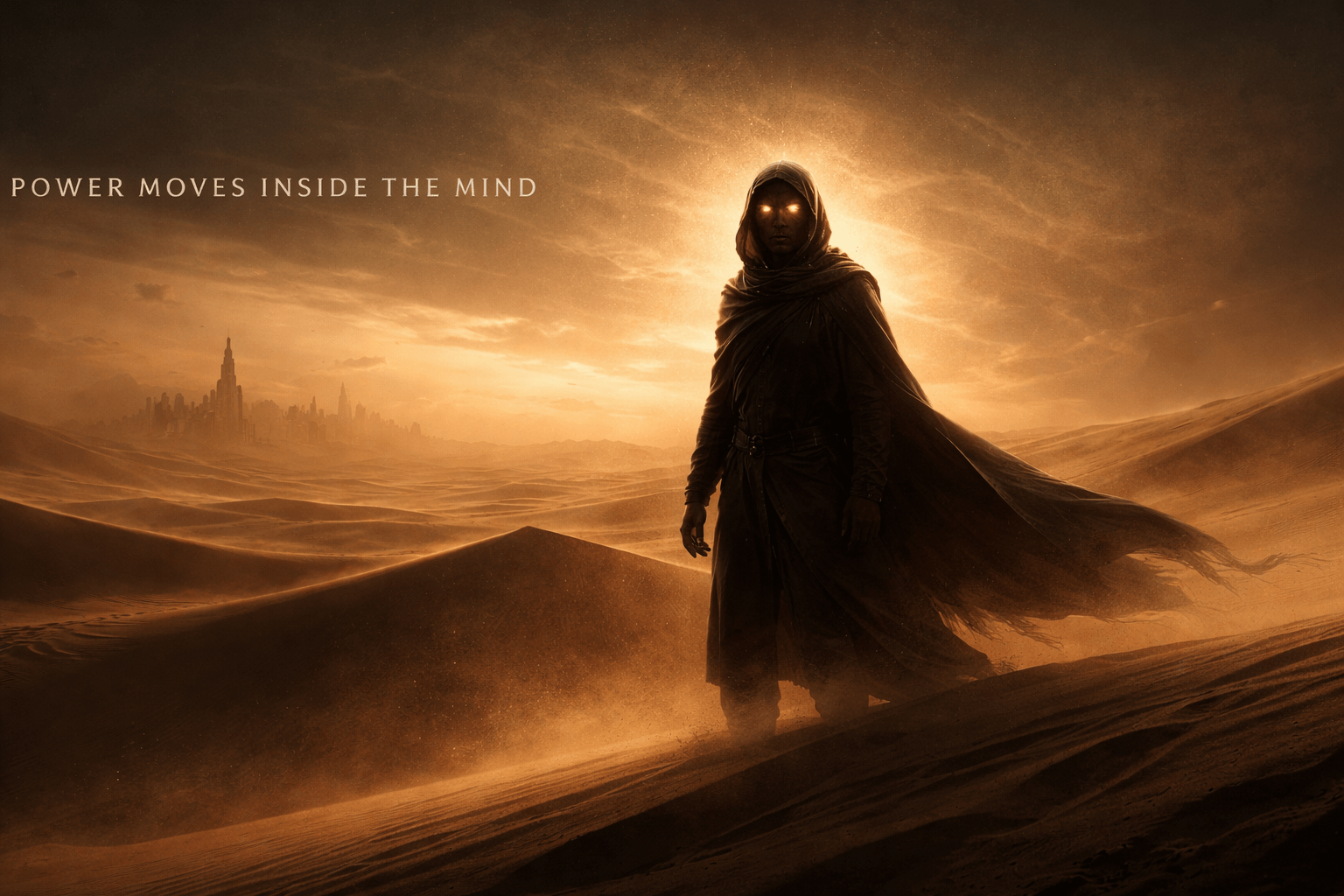
books like dune hero image with a sand walking being and city in the distance

You’re chasing systems of control.

Empires that don’t just rule territory
they shape belief, behavior, and destiny.

You felt it in:

• the slow manipulation of bloodlines
• the precision of the Bene Gesserit
• the way prophecy becomes a tool, not a truth

Dune isn’t really about Arrakis.

It’s about what happens when power becomes invisible enough to feel natural.


Starzel meets that instinct and removes the last layer of comfort

In Dune, control is vast and still identifiable.

You can point to it:

• Houses
• Religion
• Spice
• Strategy

In Starzel, control is harder to locate.

It no longer sits outside the individual.

It operates through:

• perception
• identity
• internal stability

You don’t resist it with armies.

You resist it. If you can by holding onto a self that may already be shifting.


Where Dune gives you a center, Starzel takes it away

One of the quiet assurances in Dune is this:

There is still a center of gravity.

A figure. A force. A point around which the system turns.

Even when power is overwhelming, it still feels navigable.

Starzel removes that.

There is no stable center.
No chosen trajectory.

Only a system that no longer needs to declare itself to function.


The evolution of control: from external dominance to internal design

Dune shows you how power shapes the world around you.

Starzel shows you how power reshapes the world inside you.

That shift changes everything:

• conflict becomes psychological before it becomes physical
• resistance becomes uncertain before it becomes impossible
• reality itself becomes unstable

You’re no longer asking who controls the system.

You’re asking whether the system has already defined you.


Why readers of Dune land here and stay

Because the real hook in Dune was never the setting.

It was the recognition that:

Power is patient.
Power is strategic.
Power works long before it’s seen.

Starzel continues that line of thought and pushes it further.

Past empire.
Past prophecy.
Into something colder.


Read this if what stayed with you wasn’t the story, but the implication

Read this if you want:

• systems that don’t announce themselves
• control that operates without spectacle
• a narrative where certainty erodes instead of builds

Read this if Dune made you think
and you suspected the real story wasn’t finished.


Final line

Dune reveals how power takes hold.

Starzel asks a harder question:

What if it already has?
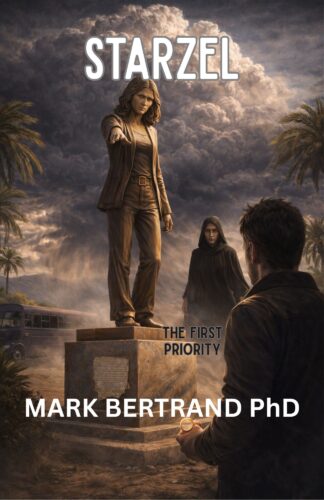
Starzel book cover image of a statue the woman in black mysterious and haunting

STARZEL A Psychological Thriller

Readers Also Enjoy These Archive Articles

Books Like The Three-Body Problem Where the Threat Isn’t Out ThereBooks Like Clockers or In The WoodsBooks Like Hum

IMD Operations

Follow Mark Bertrand on Bluesky

Books Like

Books Like Clockers or In the Woods

books like clockers or in the woods hero image of Nighttime in the gritty crime scene

Readers who search for books like Clockers or In the Woods aren’t looking for fast thrills or clean heroes. They’re looking for something heavier. Stories where crime isn’t a puzzle to be solved, but a pressure that reshapes people, institutions, and lives.

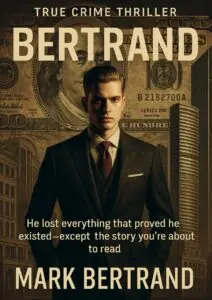
Next read: Bertrand (a contemporary crime novel for readers of Clockers and In the Woods).


Novels Like Clockers or In the Woods — Why Bertrand Belongs on Your List

If that’s what draws you to Clockers or In the Woods, there’s a contemporary novel you may not have encountered yet—but should.

What readers want:

  • Crime as systemic tension, not procedural mechanics
  • Psychological depth instead of neat closure
  • Complexity over spectacle

Get the novel Bertrand.

What Readers Love About Clockers

Richard Price’s Clockers isn’t about good guys and bad guys. It’s about systems—policing, poverty, loyalty, survival—and how individuals are shaped, cornered, and compromised by them. The violence feels inevitable because the structures that produce it are already in place.

Readers who respond to Clockers tend to value:

  • Moral ambiguity over moral certainty
  • Character pressure over plot spectacle
  • Crime as an outcome of environment, not personality

Use my AI tool to find your next book. No gimmicks, no hype, no signup required.

What Readers Love About In the Woods

Tana French’s In the Woods shifts the focus inward. The crime matters, but the psychological cost matters more. Memory is unreliable. Identity erodes. The investigation exposes the investigator.

Readers drawn to In the Woods often want:

  • Psychological depth over procedural mechanics
  • Lingering unease instead of neat closure
  • Characters who are altered, not redeemed

Where Bertrand Fits — And Why It’s Different

Bertrand sits precisely at the intersection of these two traditions.

Like Clockers, it treats crime as systemic. Power operates quietly. Institutions protect themselves. Consequences fall unevenly. No one escapes clean.

Like In the Woods, it is deeply psychological. The real tension isn’t “what happened,” but what the characters are forced to live with after it does. Certainty dissolves. Motives blur. Control slips.

But Bertrand goes further in one crucial way.

It removes the comfort of distance.

There is no procedural buffer. No investigative authority to lean on. No myth of objectivity. The reader is placed inside the moral pressure chamber with the characters and left there.

Why Readers of Price and French Choose Bertrand

Readers who finish Clockers or In the Woods often find themselves searching for something specific but hard to name:

Not darker.
Not more violent.
Just more honest.

Bertrand answers that search by:

  • Refusing spectacle
  • Refusing easy alignment
  • Refusing to tell the reader how to feel

The result is a novel that doesn’t resolve so much as settle into you.

If You’re Searching for Books Like Clockers or In the Woods

You’re already past surface-level crime fiction.

Bertrand was written for readers who want:

  • Psychological realism
  • Structural critique without sermonizing
  • Tension that comes from implication, not action

If Clockers showed you how systems break people,
and In the Woods showed you how memory breaks truth,
Bertrand shows you what happens when both are in play—and no one is watching.

Bertrand book cover image

Bertrand | Married Stupid

Readers also like these Archive articles.

Books Like The FutureBooks Like Billy Summers or Harlem ShuffleBooks Like The Three-Body Problem Where the Threat Isn’t Out There

Follow me on Bluesky and my about Mark Bertrand.

Books Like

Books Like The Future — Why This Could Be It Belongs on Your List

Readers who search for books like The Future by Naomi Alderman aren’t just looking for dystopian thrill. They’re after a world on the edge—where tech, power, and the human condition collide in ways that feel all too possible. It’s about survival, sure—but survival in a world shaped by systems beyond any single person’s control.

books like the future image of A lone figure overlooking a futuristic city beneath a glowing artificial intelligence sphere

If that’s what draws you to The Future, there’s another speculative thriller you need to know.

That novel is This Could Be It.

What Readers Love About The Future

In The Future, Naomi Alderman crafts a world where tech billionaires see the end coming—and think they can control it. It’s a speculative future where power and survival are inseparable, and where the decisions of a few shape the fate of the many.

Readers who respond to The Future often want:

  • High-stakes speculation that feels eerily relevant
  • Questions about who really controls our future—technology or people
  • Moral dilemmas wrapped inside thrilling plotlines

Where This Could Be It Fits—And Why It’s Different

This Could Be It taps into the same existential uncertainty. In a world where humanity’s connection to The Source is fading, the stakes aren’t just personal—they’re species-wide.

Like The Future, it explores power and control—who holds the keys to survival, and who’s left in the dark. But This Could Be It goes deeper into the human psyche. It’s not just about who controls the future—it’s about whether we can face it together or remain fractured.

Why Readers of The Future Choose This Could Be It

Readers who finish The Future often look for the next speculative thriller that makes them think about the world they live in—and what might happen next.

This Could Be It answers that search by:

  • Merging speculative technology with metaphysical stakes
  • Presenting characters divided between rational science and mystic belief—mirroring modern ideological divides
  • Creating a countdown that isn’t just about survival—but about meaning

If You’re Searching for Books Like The Future

You’re already looking beyond today—toward a world shaped by choices we haven’t yet made.

This Could Be It was written for readers who want:

  • Speculative thrillers with psychological depth
  • A world on the brink—not just of collapse, but transformation
  • Tension between control, belief, and the unknown

If The Future made you question who shapes tomorrow, This Could Be It will make you ask whether we’ll face it united—or not at all.

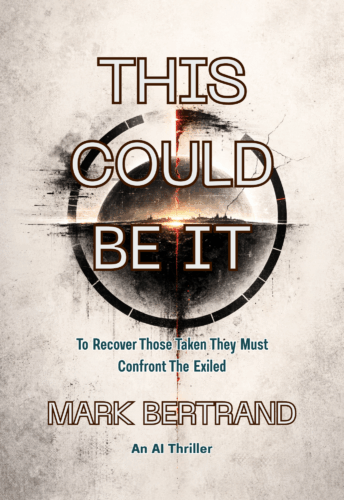
This Could Be It book cover image of the gamma field striking the dome city and the countdown to the end encircling the whole of the city

This Could Be It | Nirvanaing

Books Like Broken LightBooks Like Going Infinite or The Cult of We

Follow me on Bluesky and my The Readers Court channel.