
Modern thrillers do not need to invent dystopia anymore.
We already live inside one.
The frightening part is not that the world became cruel. The frightening part is that cruelty learned manners. It learned procedure. It learned branding. It learned how to sit behind a desk, wear a badge, write a policy, run a system, file a report, launch an app, fund a movement, approve a loan, deny a claim, destroy a reputation, separate a family, flag a person, and call all of it normal.
That is Captive Culture.
Captive Culture is the architecture of modern control. It is what happens when greed stops being a private hunger and becomes a public system. It is not merely wealth. It is not merely corruption. It is not merely politics, technology, marriage, class, or surveillance. It is the deeper structure beneath them all.
Captive Culture is the evolved form of predatory capitalism — the point where greed stops selling products and starts designing cages.
The wealthy and powerful saw human vulnerability and pounced.
They saw fear. They built a base.
They saw loneliness. They built dependency.
They saw poverty. They built debt.
They saw identity. They built allegiance.
They saw belief. They built tribes.
They saw shame. They built reputation systems.
They saw ambition. They built corporate captivity.
They saw grief. They built compliance.
They saw desire. They built leverage.
They saw age and illness. They built authority.
They saw the human need to belong and built cages people would defend as freedom.
That is the genius of Captive Culture. It rarely looks like a cage from the inside. It looks like belonging. It looks like safety. It looks like order. It looks like loyalty. It looks like family. It looks like patriotism. It looks like professionalism. It looks like opportunity. It looks like tradition. It looks like law. It looks like care.
The cage survives because the prisoner is taught to love the bars.
That is the rotten core of the modern world.
Greed by itself is primitive. Greed wants more money, more land, more sex, more influence, more comfort, more obedience. Greed is ugly, but it is not yet architecture. Evil arrives when greed begins to design systems that make people easier to isolate, separate, control, punish, and profit from.
That is when greed becomes civilization’s disease.
That is when the sickness becomes evil.
Captive Culture begins with separation.
Separate the person from witnesses. Separate the worker from the union. Separate the old from memory. Separate the accused from credibility. Separate the child from the parent. Separate the poor from mobility. Separate the lonely from counsel. Separate the citizen from truth. Separate the man from dignity. Separate the woman from safety. Separate the reader from history. Separate the believer from doubt. Separate the frightened from anyone who might calm them down.
Then rename the person.
Difficult. Unstable. Dangerous. Ungrateful. Problematic. Toxic. Disloyal. Suspicious. Hysterical. Privileged. Bitter. Noncompliant. A risk.
The label does not have to be true. It only has to travel faster than the person’s defense.
Once the label sticks, the system can proceed.
That is why Captive Culture is so powerful. It does not need one villain. It has offices. It has procedures. It has institutions. It has incentives. It has polite language. It has lawyers. It has algorithms. It has gossip. It has medical authority. It has political tribes. It has credit scores. It has family secrets. It has corporate policy. It has social punishment. It has armies of ordinary people who do not think they are doing evil because the evil has already been converted into normal behavior.
No one has to say, “Destroy him.”
They only have to say, “We have concerns.”
No one has to say, “Silence her.”
They only have to say, “There are questions about her credibility.”
No one has to say, “Control them.”
They only have to say, “This is for everyone’s safety.”
No one has to say, “Exploit their fear.”
They only have to say, “They are coming for you.”
That is how Captive Culture works.
Fear is one of its most useful materials. Frightened people are easier to organize than hopeful people. Fear gives the crowd its pulse. Grievance gives it language. Identity gives it shape. Belief gives it obedience. A person who is afraid can be made to join almost anything if the cage is presented as protection.
That is the political brilliance behind movements like the Tea Party and MAGA. The wealthy saw fear and built a base. They saw economic anxiety, cultural resentment, religious panic, racial dread, masculine humiliation, status loss, and loneliness. Then they converted those emotions into belonging. They did not cure the fear. They fed it. They branded it. They organized it. They monetized it. They stood behind the curtain and called it democracy.
That is not separate from Captive Culture. That is Captive Culture in public form.
Private captivity and public captivity use the same design.
In private life, the cage can be a family. A marriage. A custody threat. A medical file. A reputation. A bank account. A house the victim cannot leave. A social circle that believes the wrong person first.
In public life, the cage can be a movement. A workplace. A party. A church. A platform. A bureaucracy. A nation. A class system. An algorithm. A media ecosystem. A story repeated so often that people mistake it for truth.
The machinery changes costume. The architecture remains the same.
Isolate. Separate. Name. Control. Punish. Profit.
That is the modern cage.
And that is why Captive Culture is the foundation of the modern thriller.
The old thriller asked, “Who committed the crime?”
Captive Culture asks a darker question:
Who built the room where the crime became normal?
That room can be clean. That room can be respectable. That room can have fluorescent lights and a helpful receptionist. That room can have framed certificates on the wall. That room can be a military base, a hospital, a courtroom, a publishing office, a school, a bank, a corporate headquarters, a social platform, a political rally, a family kitchen, or a bedroom where someone finally understands there is no witness coming.
The terror is not always the murder.
Sometimes the terror is the system that makes the murder believable, profitable, deniable, or unnecessary.
A person can be destroyed without being killed.
A person can be erased by process.
A person can be trapped by reputation.
A person can be ruined by debt.
A person can be controlled by belonging.
A person can be made obedient by fear.
A person can be made guilty by accusation.
A person can be made invisible by wealth.This is the world my novels inhabit.
Not fantasy. Not paranoia. Not some distant dystopia waiting for the future.
Captive Culture is the world as it exists and has evolved.
In Josie Lee, the system is still young enough to look like military base culture, medical suspicion, gossip, deployment, command structure, motherhood, male attention, and social punishment. A young woman alone on base is not merely lonely. She is exposed. The system does not need cameras yet. People do the surveillance for it.
In Snodgrass, the system appears through abuse, class, police, crime, survival, and the brutal education of a boy who learns that power does not need to be right. It only needs to be believed.
In Bertrand, the cage tightens through identity, reputation, law, money, and domestic consequence. The private life becomes evidence. The person becomes a case.
In JR / The Theft of Time, Captive Culture matures into legacy, surveillance, elite capture, family damage, and moral debt. Time itself becomes something that can be stolen by people and systems that never admit what they took.
In This Could Be It, Book 1 of Nirvanaing, the awakening begins. The question is not merely what happened to one man, but what it means to recognize the machine after living inside it.
In Starzel, Book 2 of Nirvanaing, the problem expands to civilization, consciousness, morality, and the missing code in humanity.
In Reckoning, Book 3 of Nirvanaing, the contamination becomes ideological and psychological. Stories become weapons. Belief becomes infection. The system no longer only controls bodies. It controls meaning.
In A Conscious Thing, Nirvanaing moves deeper into personhood, intelligence, consciousness, and the question Captive Culture cannot answer: what is a human being when power can no longer define the soul?
In The Dot, the series reaches toward the culture beyond captivity — not elite capture, not algorithmic obedience, not identity cages, but a rediscovery of We The People as living consciousness, shared moral agency, and collective awakening.
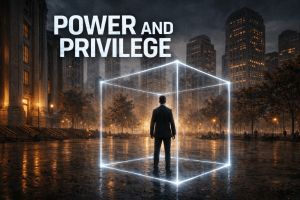
In The Vintner & The Novelist, Book 1 of Power and Privilege, Captive Culture appears through beauty, wine, art, class, intimacy, possession, and desire. It explores how wealth does not merely buy luxury. It buys atmosphere, access, permission, and the power to make captivity feel exquisite.
These are not separate subjects. They are chambers in the same structure.
Captive Culture is the architecture underneath them.The reason this matters for thriller fiction is simple: readers already feel the structure. They may not have the language for it yet, but they know something is wrong. They know ordinary life has become more managed, more watched, more divided, more performative, more punishing, more lonely, more hostile to the individual human soul. They know wealth has become less like success and more like immunity. They know institutions protect themselves. They know fear is cultivated. They know identity is weaponized. They know belief can become a trap. They know normalcy has begun to smell rotten.
The novelist’s job is not to flatter that discomfort.
The novelist’s job is to reveal the architecture.
Once the reader sees Captive Culture, the world changes shape. A policy is no longer only a policy. A rumor is no longer only a rumor. A debt is no longer only a debt. A movement is no longer only a movement. A diagnosis is no longer only a diagnosis. A family story is no longer only a family story. A legal document is no longer only a legal document. A political base is no longer only a political base.
The reader begins to see the cage.
That is the first act of freedom.
Captive Culture is the modern thriller because the monster is no longer outside the house.
The monster bought the house, rewrote the deed, installed the cameras, hired the attorney, funded the campaign, shaped the policy, trained the crowd, named the victim, and convinced everyone that the locked door was there for their protection.
That is how greed built the modern cage.
That is how normalcy became the disguise.
That is Captive Culture.


0 comments
Write a comment