Books Like Misery: When the Reader Owns the Writer
Readers searching for books like Misery usually want more than a trapped-writer thriller. They want the pressure of a story turning against the person who created it. They want the claustrophobia of being judged by someone who believes the book belongs to them. They want the terrible intimacy between writer and reader, where admiration becomes control, and control becomes punishment.
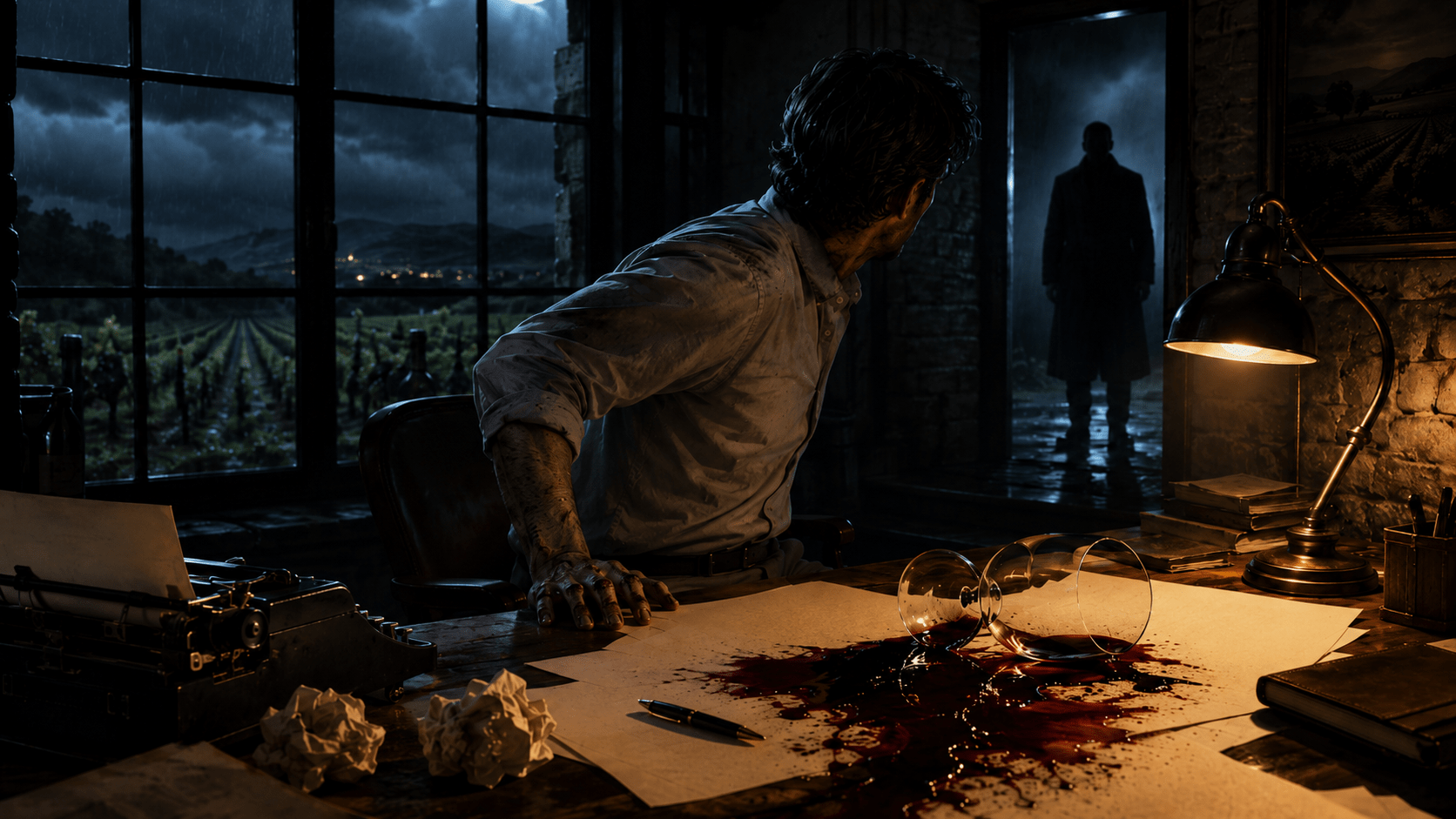
That is why The Vintner & The Novelist belongs in the conversation.
Not because it repeats the plot of Misery. It does not. There is no simple hostage room. No ordinary fan with a hammer. No single house where the writer’s body is trapped while the manuscript becomes a weapon.
Instead, Mark Bertrand takes the same essential terror and moves it into stranger, deeper, more psychological ground: What if the reader did not merely demand a better book? What if the reader became the court? What if the writer was not imprisoned by a person, but by the judgment of reading itself?
In The Vintner & The Novelist, the writer is not only afraid of failure. He is afraid of being erased.
For readers who want books like Misery but darker, more intellectual, and more reality-bending, The Vintner & The Novelist is the next novel to read.
Why Misery Still Holds Readers by the Throat
Misery works because it understands a brutal truth about storytelling: once a book enters the world, the writer no longer fully owns it.
The reader brings expectation. Hunger. Anger. Love. Possession.
That is the genius pressure inside Misery. The novelist has written something. The reader has received it. But reception turns into entitlement. The reader does not merely want the story. The reader wants authority over the story.
That is why Misery still frightens. The physical violence matters, of course. But the deeper horror is artistic captivity. The writer is forced to confront a reader who believes devotion grants ownership.
You wrote this for me.
You owe me.
You will fix it.
That is the nerve Misery presses.
The strongest books like Misery do not simply trap another writer in another room. They find new ways to ask the same ugly question:
Who owns the story once someone else needs it?
How The Vintner & The Novelist Pushes That Terror Further
The Vintner & The Novelist begins in grounded physical pain: a vineyard, a storm, a damaged body, a tractor accident, a man trying to hold together land, labor, money, injury, marriage, and purpose.
Then the novel moves.
The vintner is also a novelist. His manuscript is no longer merely a manuscript. It becomes evidence. A charge. A possession. A thing he must defend before forces that do not care about his intention.
That is where Bertrand’s novel becomes a natural successor for readers looking for books like Misery.
In Misery, one reader takes control.
In The Vintner & The Novelist, The Readers become a system.
They are not fans in the soft, flattering sense. They are not the cozy imagined audience writers dream about while drafting. They are judgment. They are consequence. They are the unforgiving pressure behind every page that fails to matter.
The charge is not that the novelist wrote badly.
The charge is worse.
He wasted the reader’s time.
That idea gives the novel its blade.
Purchase The Vintner & The Novelist
Ebook just $4.99
Paperback just $24.99
The Reader as Judge, Jury, and Executioner
The best psychological thrillers understand that fear is not always a man with a weapon. Sometimes fear is a verdict. Books like Misery.
In The Vintner & The Novelist, the writer enters a kind of impossible court where the manuscript is treated as something dangerous to possess. Not a private object. Not a harmless draft. Not an unfinished artistic experiment.
A manuscript.
A charge.
A risk.
The terror is not only that The Readers may hate the book. The terror is that they may be right to hate it.
That is a sharper kind of pressure than simple captivity. It attacks the writer where he is most exposed. Not his body first. His purpose. His talent. His authority. His belief that his suffering, discipline, imagination, and craft mean anything unless the reader experiences the work as alive.
This is where The Vintner & The Novelist becomes a powerful recommendation for readers who loved Misery. It understands the same closed-loop dread between writer and reader, then turns the room into a metaphysical trial.
The question is no longer only: Can the writer survive the reader?
The question becomes: Can the writer survive being read?
That is the sales hook. If Misery made you afraid of the obsessed reader, The Vintner & The Novelist makes you afraid of the true reader — the one who can tell when the story is lying.
Writing as Punishment
One reason Misery remains so effective is that writing itself becomes labor under threat. The novelist cannot retreat into romantic myths about inspiration. He must produce. He must revise. He must satisfy someone who has turned reading into domination.
The Vintner & The Novelist takes that same pressure and makes it colder.
Here, writing is not a refuge. It is evidence of guilt or innocence. The manuscript must justify the time it takes from real readers. Every passage has to earn its place. Every delay has a cost. Every drift, every indulgence, every decorative emptiness becomes a crime against attention.
That makes the novel unusually alive for serious readers.
This is not just a thriller about what happens to a man. It is a thriller about what happens to a story when the excuses are stripped away.
Atmosphere is not enough.
Style is not enough.
Intention is not enough.
The Readers want encounter.
They want the book to do something to them.
And if it does not, punishment follows.
That is a viciously good idea for a psychological thriller because it turns the act of reading into the source of dread. The real reader, sitting outside the novel, starts to feel implicated. The question sneaks out of the fictional court and moves into the room.
Am I one of The Readers?
Do I judge this way?
Should I?
Why The Vintner & The Novelist Is Not a Copy of Books Like Misery
A weaker “books like Misery” recommendation would simply point to another novel about an author in danger.
That is not enough.
The better comparison is structural and emotional.
Misery gives readers confinement, obsession, bodily vulnerability, and the horror of creative coercion.
The Vintner & The Novelist gives readers vineyard realism, chronic pain, artistic terror, metaphysical judgment, and a court of readers who turn manuscript failure into existential punishment.
The overlap is not plot.
The overlap is pressure.
Both novels understand that writers are never entirely safe from the people who read them. Both understand that fiction is intimate enough to become dangerous. Both understand that the reader’s love can become a form of ownership.
But Bertrand’s novel adds a new layer: the reader is not merely unstable. The reader may be necessary.
The Readers are terrifying because they represent the standard every writer fears.
Did the story matter?
Did it move?
Did it waste me?
Did it tell the truth?
The Vintner, the Novelist, and the Cost of Being Judged
The vineyard material matters because it grounds the book before reality begins to bend.
The protagonist is not floating in clever literary abstraction. He is a man with a damaged body, a failing margin, land under pressure, a wife, taxes, repairs, and pain that has become part of his daily weather. That gives the later surreal and judicial material weight. The strange does not feel decorative. It feels like pressure breaking through the skin of ordinary life.
That is one of the reasons The Vintner & The Novelist can reach readers beyond the usual literary puzzle audience.
The book has dirt under its nails.
The vineyard is not scenery. It is a clock. The body is not backstory. It is a debt. The manuscript is not a prop. It is the trial.
And The Readers are waiting.
For readers who loved the artistic captivity of Misery, that movement matters. Bertrand does not simply ask whether a writer can endure punishment. He asks whether the work itself can endure judgment.
That is the deeper nightmare.
Read This If You Want Books Like Misery With a Sharper Psychological Edge
Read The Vintner & The Novelist if you want:
a trapped-writer thriller without the familiar room,
a manuscript that becomes dangerous,
a story where readers are not passive,
a psychological thriller with surreal and literary force,
a book about authorship, judgment, possession, and erasure,
and a novel that treats reading as an act of power.
Misery made the obsessed reader unforgettable.
The Vintner & The Novelist makes the act of being read feel like standing trial.
That is why this novel belongs on any serious list of books like Misery. Not because it imitates the surface. Because it understands the wound underneath.
The writer writes.
The reader judges.
And somewhere between them, the story either lives or disappears.
If you are looking for books like Misery, read The Vintner & The Novelist by Mark Bertrand next. This is the novel for readers who know the most dangerous person in the room is not always the writer. Sometimes it is the one turning the page.
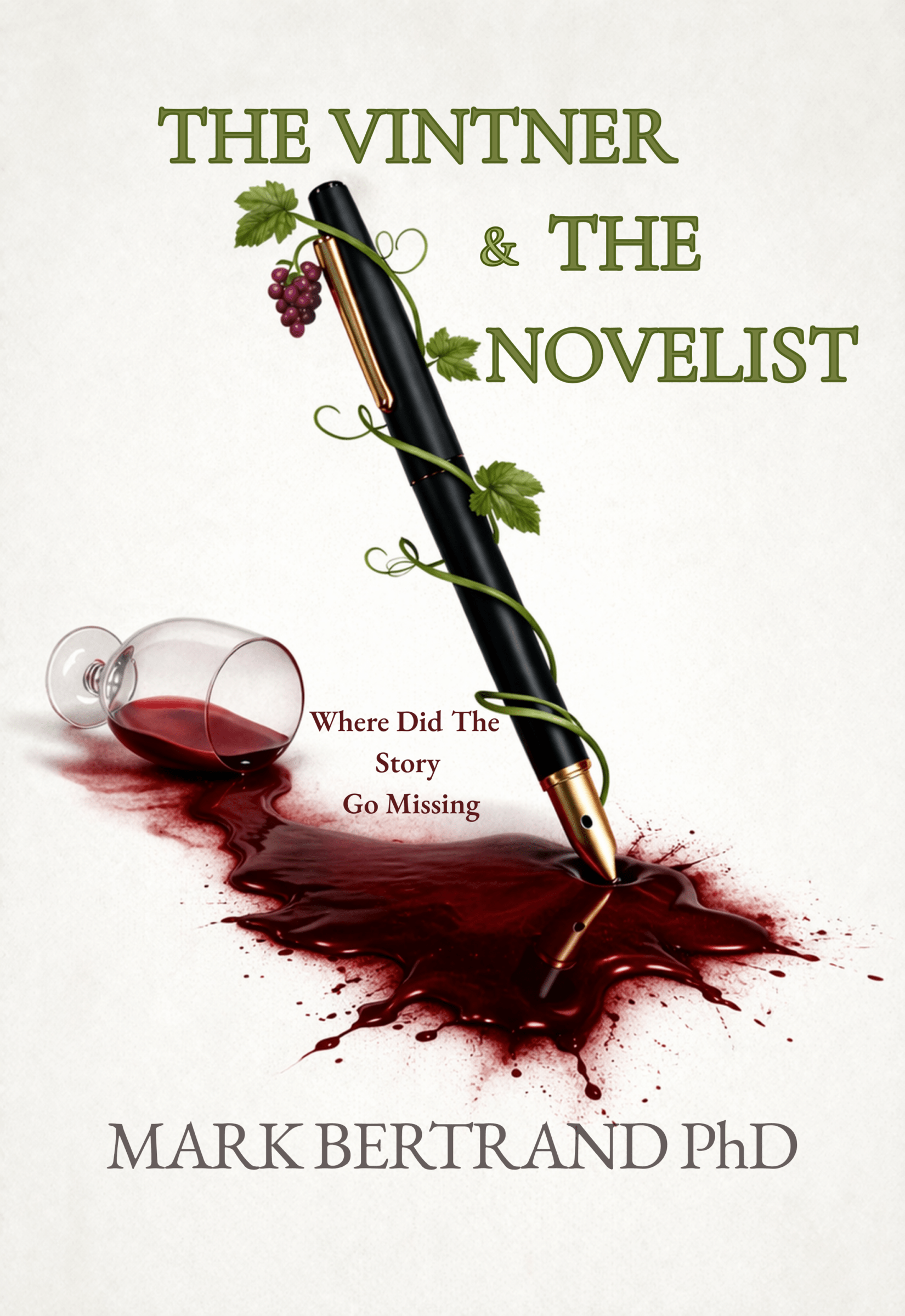
Purchase The Vintner & The Novelist
Ebook just $4.99
Paperback just $24.99
Readers who read books like Misery also read these articles.