
Readers who love books like Red Clocks were not looking for spectacle. They were looking for pressure—the kind that builds slowly, politically, and inside the body—until the question is no longer what the system does, but what it makes a woman become.

Readers who loved Red Clocks were not chasing explosions or collapse. They were drawn to something colder. A near-future where laws reshape private life, where ideology walks into the most intimate spaces, and where women must navigate not just restriction, but identity under pressure.
That is where Reckoning meets them.
Not at the level of surface dystopia, but at the level of intrusion. In Reckoning, the system does not simply regulate behavior. It presses into relationships, into ambition, into pregnancy, into the fragile space where a person tries to decide what her life is allowed to mean. Lydia Daniels is already breaking under the weight of marriage, business collapse, and impending motherhood, while Laura Benton stands on the opposite axis—controlled, strategic, and locked in ideological war against a future that threatens to redefine the human itself.
Why readers love Books Like Red Clocks
What gives books like Red Clocks its power is restraint.
The novel imagines a near-future America where abortion is illegal and new laws restrict the autonomy of women in increasingly invasive ways. But it does not rely on spectacle. It works through multiple women, each facing a different form of constraint, and builds a quiet, accumulating dread.
Readers responded to that control. The sense that nothing dramatic needs to happen for a life to be narrowed, redirected, or erased. The law becomes the atmosphere. The pressure becomes normal.
That is the experience readers are looking for when they search for books like Red Clocks.
Where Reckoning hits the same nerve
Reckoning delivers that same pressure, but with sharper psychological edges and more visible ideological conflict.
Lydia’s pregnancy is not a symbol. It is a pressure point. It sits inside a failing marriage, a collapsing professional identity, and a mind that cannot stabilize itself. Every decision she makes is colored by that reality. Every interaction is charged.
Laura Benton carries the other side of the argument. Where Lydia is collapsing inward, Laura is pushing outward. She sees the coming transhuman future not as liberation but as control disguised as progress. Her resistance is political, but also deeply personal. She has already lost something to that future. She refuses to lose the rest.
This is where Reckoning aligns with books like Red Clocks. Both novels understand that control is not only enforced. It is lived. It changes how a woman thinks, feels, chooses, and survives.
Strong female characters under pressure, not above it
One of the defining strengths of Red Clocks is that its women are not heroic in a conventional sense. They are constrained, uncertain, compromised, and forced into decisions that reveal the cost of the system rather than defeat it.
Reckoning operates in that same space, but with more volatility.
Lydia is not composed. She is reactive, unstable, and painfully aware of her own unraveling. Her strength is not clean. It is contested moment by moment. She lashes out, withdraws, questions herself, and keeps moving anyway.
Laura is strength in a different form. Controlled, ideological, and sharpened by loss. She does not drift through the system. She studies it. Plans against it. Prepares for confrontation.
Readers who connected with Red Clocks will recognize this immediately. These are not symbolic women. These are women inside pressure.
Theme: control of the body, control of the future
The obvious connection between these novels is political control over women’s lives. But the deeper connection is about authorship.
Who gets to decide what a life is for?
In Red Clocks, that question is framed through reproductive law, social expectation, and the quiet violence of limitation.
In Reckoning, the question expands. It is no longer only about the body. It is about the future of the human itself. Victor Lang’s transhuman vision offers enhancement, efficiency, and evolution—but at the cost of the very imperfections that make human life meaningful. Laura Benton’s resistance is therefore not only political. It is philosophical. She is fighting for the right to remain human.
That escalation is what makes Reckoning the natural next read. It takes the same core fear—control of women’s lives—and pushes it into the next stage: control of what a human being is allowed to become.
Plot movement: quiet pressure versus converging force
Red Clocks moves through accumulation. Small pressures. Quiet decisions. Parallel lives tightening under the same system.
Reckoning builds through convergence.
Lydia’s internal collapse.
Laura’s ideological resistance.
Victor Lang’s expanding influence.
A media environment shaping public truth in real time.
These forces do not sit side by side. They move toward each other. The result is a different kind of tension. Less quiet, more volatile. But rooted in the same foundation: systems pressing inward until something gives.
Why Reckoning is the next best read after Red Clocks
If you love books like Red Clocks because it showed how the state can enter the most private parts of life and reshape them without spectacle, Reckoning gives you that same intrusion.
But it does not stop there.
It is more volatile.
More confrontational.
More willing to push the argument beyond control into transformation.
It asks a harder question.
Not just who controls women’s lives?
But what happens when power decides to redesign the human being entirely—and calls it progress?
That is where Reckoning becomes the next read.
It takes the quiet dread of Red Clocks and sharpens it into a psychological and ideological thriller where the body, the mind, and the future are all under negotiation—and none of it is safe.
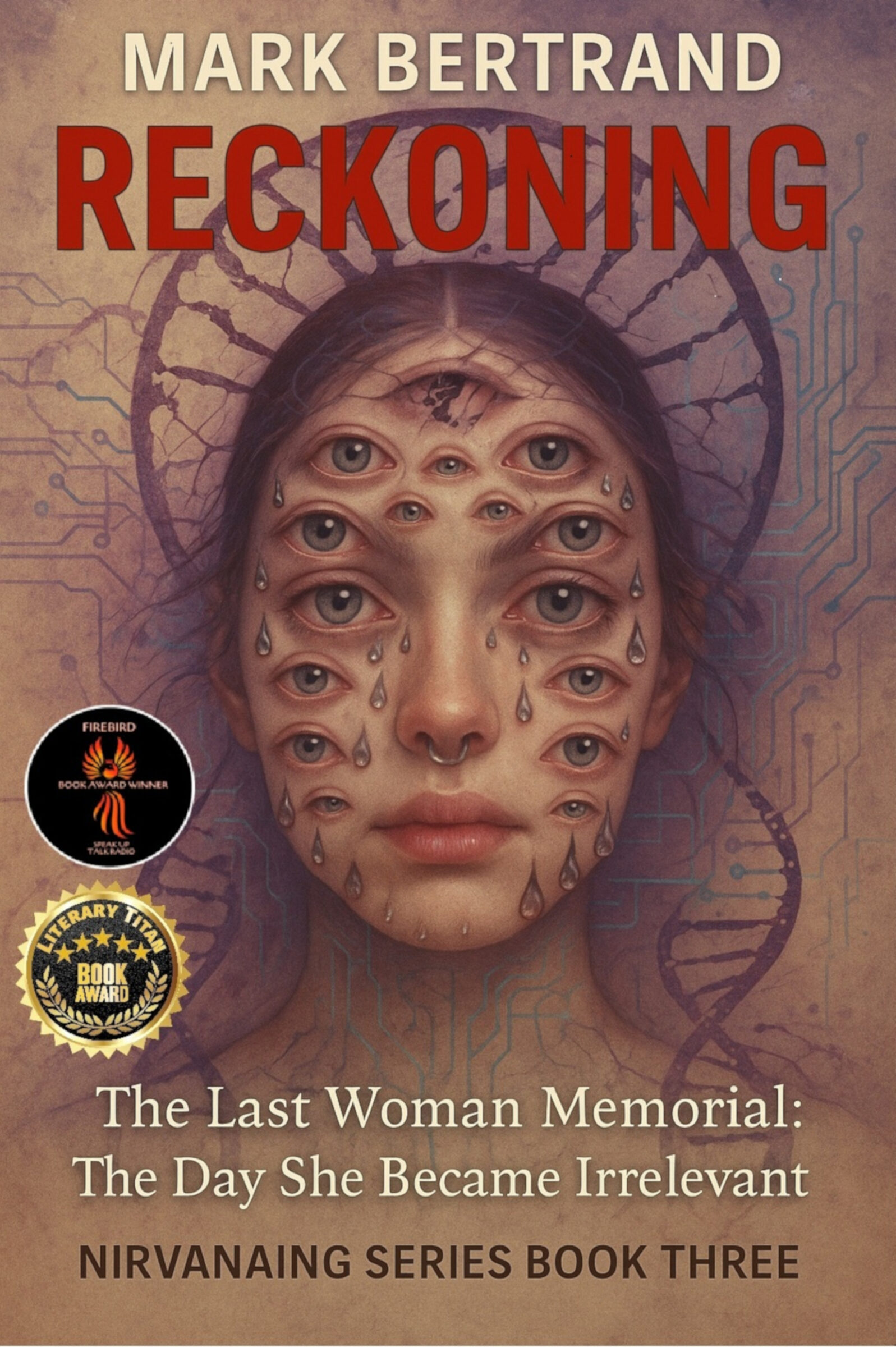
Discover more about Reckoning and buy the novel.
Readers who read books like Red Clocks also enjoy these articles.


0 comments
Write a comment