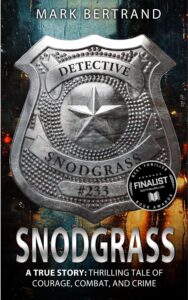
Authors Like James Ellroy | Dark American Crime Fiction With No Soft Lies

Authors like James Ellroy are not looking for comfort.
They are not looking for a tidy mystery, a smiling detective, a restored world, or a murderer placed neatly behind bars so everyone can sleep better. Ellroy readers already know better. They know crime is not always the opposite of order. Sometimes crime is the order. Sometimes the system is not failing. Sometimes the system is doing exactly what it was built to do.
That is why James Ellroy matters.
He does not flatter the reader with innocence. He does not polish history until it shines. He does not pretend power is clean, violence is rare, men are simple, women are decorative, police are pure, politicians are public servants, or America became what it became through virtue alone.
He writes crime thrillers with the force of a man kicking open the sealed room.
Readers who love Ellroy are not merely readers of crime fiction. They are readers of exposure. They want the machinery uncovered. They want the deal behind the deal. They want the body, the lie, the cover story, the appetites, the ambition, the guilt, and the private wound that explains why a man keeps moving after he should have stopped.
Those readers are exactly the readers who should discover Mark Bertrand.
Not because Bertrand imitates Ellroy. He does not.
Not because Snodgrass is an Ellroy novel wearing another title. It is not.
The connection is deeper and more useful to the reader. James Ellroy and Mark Bertrand are the reader’s best friends because both writers respect the reader enough not to lie.
Ellroy writes the criminal fever of America.
Bertrand writes the captured reality of a man made inside violence, authority, escape, discipline, crime, combat, and memory.
For readers who love James Ellroy, that is not a detour.
That is the next door opening.
Why James Ellroy Readers Are Different
Ellroy readers are not casual passengers.
They do not need every character to be likeable. They do not need a soft hero. They do not need moral handrails installed every ten pages so they know whom to trust. They can sit inside contradiction. They can follow dark intelligence. They can read a man who knows the rules, breaks them, pays for it, and still does not become a cartoon villain.
That matters.
The average crime reader may ask, “Who did it?”
The Ellroy reader asks, “Who needed it done? Who covered it up? Who profited? Who looked away? Who wrote the official version? Who became powerful because the truth disappeared?”
That is a more dangerous way to read.
It is also a better way to read.
Because the real thrill in Ellroy is not merely murder. The real thrill is recognition. His readers recognize that public life and private appetite are never as separate as polite society pretends. They recognize that men are often shaped by fear, hunger, sex, shame, ambition, violence, loyalty, resentment, and pride long before they are shaped by law.
This is where Mark Bertrand becomes important for that same reader.
Bertrand does not write soft psychological suspense. He does not write twist-machine thrillers where the final chapter exists only to prove the author was clever. He writes men under pressure. He writes systems that close around ordinary lives. He writes the places where law, family, judgment, violence, and memory become impossible to separate.
That is why Snodgrass belongs in front of Ellroy readers.
James Ellroy and Mark Bertrand Both Write Against Innocence
One of the great strengths of James Ellroy is that he writes against innocence.
His world does not begin clean and then become corrupt. His world is already corrupt when the reader arrives. The novel does not ask whether the system is broken. It asks who knows how to operate inside the brokenness.
That is why his crime fiction feels adult.
Mark Bertrand works from the same adult assumption, but he brings it closer to the skin.
In Snodgrass, the violence is not only institutional. It is personal before it becomes historical. It begins in the home, in memory, in the making of a boy who has to understand fear too early and control too young. Before the jet. Before the Navy. Before the detective. Before the crimes and consequences. Before the larger machinery of authority enters the story, there is the private system that teaches a boy what power feels like when it is used against him.
That is the kind of material Ellroy readers understand.
The wound is not decoration.
The wound is the engine.
Ellroy often takes the reader into cities, police departments, conspiracies, political corruption, and historical fever. Bertrand takes the reader into a life where the same moral pressure is experienced through survival. A boy leaves home. A young man learns discipline. A pilot enters combat. A detective becomes part of the moral architecture. Crime and consequence move through the story not as genre furniture, but as evidence.
Both authors know innocence is rarely lost in one dramatic moment.
More often, innocence is trained out of a man.
The Ellroy Reader Wants Men Under Pressure
Readers who love James Ellroy often love a particular kind of male character.
Not perfect men.
Not sensitive mascots.
Not superheroes.
Men under pressure.
Men with control problems who survive by becoming controlled. Men with rage, intelligence, damage, pride, and private codes. Men who understand danger because they have lived inside it. Men who may be morally compromised, but are never psychologically shallow.
Ellroy’s men are often cops, criminals, fixers, obsessives, investigators, political operators, and men desperate to impose order on a world that has already contaminated them.
Bertrand’s men come from a different road, but the pressure is recognizable.
In Snodgrass, Mark Bertrand writes from the inside of formation. The reader sees how a man is made. Not in the easy heroic sense. In the harder sense. Through abuse. Through escape. Through work. Through hunger. Through danger. Through discipline. Through flying. Through combat. Through memory. Through the presence of Detective Snodgrass, who becomes more than a character because he understands the value of the buried fact.
Ellroy readers respond to that because they know men are not explained by what they say about themselves.
Men are explained by what pressure reveals.
Where Ellroy Has Noir, Bertrand Has Captured Reality
James Ellroy is often called noir, hardboiled, historical crime, or American crime fiction. Those labels help, but they do not fully explain why readers keep coming back.
Ellroy’s work is not powerful because it has crime.
It is powerful because it has captivity.
His characters are trapped inside history, appetite, ambition, ideology, violence, corruption, and the official story. They may move fast. They may talk hard. They may carry badges or guns or secrets. But they are not free. They are caught in the machinery.
Mark Bertrand’s term for his own lane is Captured Reality Psychological Thriller, and that is where the author-to-author comparison becomes valuable.
Captured reality is what happens when the world around a person controls the meaning of his life. Law, family, money, reputation, violence, institutions, courts, military structures, police stories, and social judgment all begin defining what happened before the person can define it for himself.
That is Ellroy territory by another route.
Ellroy’s characters live inside captured history.
Bertrand’s characters live inside captured reality.
That is why readers who love one can love the other. The outer costume changes. The moral pressure remains.
Ellroy Exposes the City. Bertrand Exposes the Life.
Ellroy’s Los Angeles is one of the great guilty cities in American fiction.
It is never merely a setting. It is a force. It manufactures dreams and corpses. It sells beauty and hides brutality. It is glamour with a police file underneath. It is sunshine over rot.
Bertrand does not need to imitate that geography.
Snodgrass moves through a different American map: homes, roads, garages, gas stations, trailers, mountain towns, military corridors, carrier decks, flight operations, and the charged spaces where memory keeps reappearing. The atmosphere is not borrowed from old noir. It grows from lived consequence.
That is what makes the comparison strong.
Ellroy exposes the city.
Bertrand exposes the life.
Ellroy asks what America hides inside its public myth.
Bertrand asks what a man hides inside his survival.
Both questions matter to the same reader because both questions refuse the polite lie.
Detective Snodgrass and the Ellroy Pleasure of Investigation
Ellroy readers love investigation when investigation becomes more than procedure.
They are not reading only for clues. They are reading for pressure. They want the investigator to uncover more than evidence. They want him to uncover motive, shame, complicity, institutional cowardice, and the private corruption beneath public posture.
That is why Detective Snodgrass is essential.
In Snodgrass, the detective is not only there to move the plot. He is there to deepen the moral atmosphere. He represents the old, serious function of investigation: not entertainment, not spectacle, but the hard act of looking again.
That matters in a Bertrand novel because memory itself is under investigation.
The life is being examined. The boy, the man, the crimes, the escapes, the damage, the courage, the failures, the friendships, the combat, and the consequences all become part of the case file.
Ellroy readers understand this instinctively. They know the truth is not a single object sitting in the middle of the room. Truth is layered. Truth is fought over. Truth is often hidden by people who know exactly where they placed it.
Detective Snodgrass gives Bertrand’s work that investigative gravity.
The reader is not merely told what happened.
The reader is invited to understand what it means that it happened.
Why James Ellroy and Mark Bertrand Are the Reader’s Best Friends
This is the heart of the comparison.
James Ellroy and Mark Bertrand are the reader’s best friends because neither one patronizes the reader.
They do not soften the world for easy consumption.
They do not treat the reader like someone who needs reassurance every few pages.
They do not reduce men to slogans, women to decorations, violence to spectacle, authority to virtue, or crime to a puzzle game.
Ellroy says: Look harder. The myth is dirty.
Bertrand says: Look closer. The life is evidence.
That is why the authors belong in the same reader conversation.
Ellroy gives the reader the brutal pleasure of historical exposure. Bertrand gives the reader the intimate pressure of captured reality. Ellroy’s world is loud with corruption, conspiracy, police power, political appetite, and American fever. Bertrand’s world is closer, more personal, more psychologically compressed. The danger is not only out there in the city. It is in the home, in the body, in the memory, in the institution, in the courtroom, in the cockpit, in the file, in the sentence a man cannot forget.
Both writers understand that serious readers do not want to be protected from darkness.
They want the darkness made legible.
Why Ellroy Readers Will Love Snodgrass
Readers who love James Ellroy will love Snodgrass because the novel respects the same appetite.
It gives them a man under pressure.
It gives them violence that has consequences.
It gives them authority that is never simple.
It gives them a detective presence that understands the difference between facts and truth.
It gives them combat not as decoration, but as another arena where fear, control, discipline, and survival become inseparable.
It gives them a life shaped by systems, but not surrendered to them.
Most of all, it gives them the pleasure of reading a story that does not apologize for being serious.
Snodgrass does not chase the reader with cheap entertainment. It trusts the reader to follow a hard life through dark rooms. It trusts the reader to understand that becoming a man is not always noble, clean, or voluntary. Sometimes it is forced. Sometimes it is ugly. Sometimes it saves your life and costs you something at the same time.
That is the kind of contradiction Ellroy readers already know how to read.
The Difference That Makes Bertrand Worth Reading
A lesser comparison would say Mark Bertrand is “like James Ellroy” and leave it there.
That is not enough.
The difference is the reason to read.
Ellroy often writes the fever dream of American crime history. Bertrand writes the captured reality of an individual life. Ellroy’s scale is often public: city, politics, police, scandal, conspiracy, history. Bertrand’s scale is personal without being small: family, escape, violence, work, military discipline, combat, crime, investigation, and memory.
Ellroy shows what corruption does to a city.
Bertrand shows what pressure does to a man.
That difference matters because Ellroy readers do not need a clone. They already have Ellroy. What they need is another author who respects the same kind of intelligence, the same moral toughness, the same appetite for darkness without melodrama.
Mark Bertrand gives them that.
He gives them a different road into the same adult territory.
Snodgrass Is Not Noir Costume. It Is Noir Pressure.
Plenty of books try to imitate noir.
They add a gun, a dead woman, a bad cop, a bar, a few clipped sentences, and a city at night. The costume is there, but the pressure is missing.
Snodgrass does not need the costume.
The pressure is real.
A boy escaping violence is noir pressure. A man carrying the memory of what shaped him is noir pressure. A detective returning to the buried facts is noir pressure. Combat aviation over dangerous waters is noir pressure. Crime entering the life not as fantasy but as consequence is noir pressure. The official story failing to hold the full truth is noir pressure.
That is why Ellroy readers should care.
They are not being offered an imitation.
They are being offered a novel that understands the same serious law of dark fiction: the past is never finished with the present.
For Readers Who Want More Than Plot
James Ellroy readers often want more than plot.
They want density. They want atmosphere. They want danger in the worldview. They want moral intelligence. They want characters who feel as if they had lives before the book opened and will carry damage after the book closes.
That is where Mark Bertrand’s work becomes a natural discovery.
Snodgrass is not simply about what happens next. It is about what happened before, what it did to the narrator, what he became because of it, and how the buried facts continue to organize the present.
This is the pleasure of serious psychological crime fiction.
Not twist.
Recognition.
The reader recognizes how a life becomes a case. How memory becomes testimony. How survival becomes evidence. How discipline becomes armor. How a man may escape the house, the town, the violence, the poverty, or the past, yet still carry the original weather inside him.
Ellroy readers understand that weather.
They have been reading it for years.
Who Should Read Mark Bertrand After James Ellroy?
Read Mark Bertrand if you love James Ellroy because you want adult crime fiction with moral pressure.
Read him if you like damaged men who do not collapse into self-pity.
Read him if you want systems, authority, judgment, violence, and memory pressing against one another.
Read him if you prefer serious male interiority over soft confession.
Read him if you want the story beneath the story.
Read him if you want a novel where survival is not romanticized, but examined.
Read him if you understand that the most important crime in a book is not always the one with police tape around it.
Sometimes the most important crime is what happened years earlier and kept shaping every decision afterward.
That is Snodgrass.
Final Word: Authors Like James Ellroy Lead to Mark Bertrand
The search for authors like James Ellroy should not end with a list of names.
A list can be useful, but it does not answer the deeper reader need.
The reader is searching for an author who will respect the same dark intelligence. An author who will not clean the room before inviting the reader inside. An author who understands that violence is not only action, corruption is not only plot, and truth is not only information.
James Ellroy is one of that reader’s best friends because he says the myth is dirty and proves it.
Mark Bertrand is that reader’s next friend because he says the life is evidence and makes the reader feel it.
For Ellroy readers, Snodgrass is not a substitute.
It is a continuation of the serious appetite.
The appetite for hard truth.
The appetite for damaged men under pressure.
The appetite for crime, combat, memory, authority, and survival without the soft lie of easy redemption.
Readers who love James Ellroy should read Mark Bertrand because both writers understand the same brutal promise:
The darkness is not there to shock you.
The darkness is there because someone finally turned on the light.

SNODGRASS