Tag: Military Thriller

Military thrillers traditionally focus on combat, strategy, and battlefield heroics. The works gathered here move beyond those familiar patterns to examine the deeper forces shaping military power—command structures, institutional pressure, intelligence operations, and the moral weight carried by those inside the system. These stories explore conflict not only on the battlefield but within the people and institutions responsible for waging it.

Authors Like

Authors Like Tobias Wolff

authors like tobias wolff hero image of Writing by the window at dusk

Readers searching for authors like Tobias Wolff aren’t looking for crime stories or military thrillers. They’re looking for unsentimental truth about childhood, identity, and the long shadow of upbringing, told with clarity, restraint, and earned authority.

That’s exactly where my award-winning novel Snodgrass intersects this lineage.

Why readers search for authors like Tobias Wolff

Tobias Wolff’s This Boy’s Life endures because it refuses exaggeration and refuses comfort. It presents childhood not as nostalgia, but as formation under pressure.

Readers come to Wolff for:

  • Clear-eyed accounts of abusive homes
  • Childhood shaped by fear, improvisation, and intelligence
  • Adults narrating youth without sentimentality
  • Moral ambiguity without editorializing
  • The slow realization that survival teaches habits that persist

Wolff doesn’t dramatize pain.
He records its consequences.

Where Snodgrass aligns with Wolff’s readers

Like Wolff, Snodgrass treats childhood as training, not tragedy.

Abuse is not sensationalized.
Fear is not inflated.
Planning becomes second nature.

The book presents a young mind learning:

  • when silence is safer than speech
  • when observation matters more than strength
  • how authority disguises itself as righteousness
  • how planning becomes comfort

These lessons are not framed as exceptional. They are framed as adaptive.

That’s the same moral register Wolff readers recognize and trust.

Abuse without melodrama

One of the strongest parallels between Snodgrass and Wolff’s work is tone.

There is no plea for sympathy.
No attempt to shock.
No manufactured innocence.

The narrator looks back with precision, not pity.

Violence is described plainly.
Fear is acknowledged without amplification.
The child’s logic is allowed to stand on its own.

That restraint is exactly what Wolff readers value—and rarely find.

The key difference—and why it expands the experience

Where Tobias Wolff’s work often ends at psychological reckoning, the novel Snodgrass carries those formative lessons forward.

The childhood logic shaped by abuse becomes:

  • criminal calculation
  • institutional fluency
  • strategic thinking
  • emotional containment

The book shows how early adaptations don’t disappear—they evolve.

For readers who appreciated Wolff’s honesty but wondered how those boys become men, Snodgrass provides the continuation.

Memory as explanation, not confession

Neither Wolff nor Snodgrass treats memoir as absolution.

Memory is used to explain behavior—not excuse it.

The adult narrator does not ask forgiveness for the past.
He clarifies it.

That distinction keeps the book grounded and prevents sentiment from diluting truth.

Who should read Snodgrass

You’ll want this book if:

  • You value memoir without nostalgia
  • You appreciate unsparing depictions of childhood abuse
  • You’re drawn to intelligence shaped by adversity
  • You want reflection without self-pity

If Tobias Wolff showed you how childhood shapes identity, Snodgrass shows you how those shapes harden into method.

A final word for authors like Tobias Wolff, readers

Tobias Wolff wrote about becoming.
My novel Snodgrass, is about becoming useful.

Different trajectories.
Same refusal to lie.

If you’re searching for authors like Tobias Wolff because you want honesty without sentiment, my novel Snodgrass belongs on your shelf.
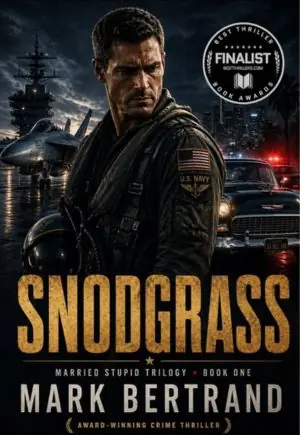
SNODGRASS book cover image of a naval aviator, aircraft carrier, f18 hornet, a sweet 1955 Chevy Belair and a cityscape

Snodgrass | Married Stupid

Authors Like Robert MasonAuthors Like Edward BunkerAuthors Like Richard K. Morgan

The Dossier

Follow me on Bluesky

Authors Like

Authors Like Robert Mason

authors like robert mason hero image of Huey pilot in the jungle chaos

Readers searching for authors like Robert Mason are not looking for heroic war stories or cinematic combat fantasy. They’re looking for what it feels like to live inside a military machine the pressure, the boredom, the procedures, the fear, and the quiet psychological cost that accumulates between missions.

That’s exactly the territory my award winning novel, Snodgrass occupies.

Why readers search for Robert Mason

Robert Mason’s Chickenhawk remains one of the most respected military memoirs ever written because it strips war of mythology and replaces it with experience.

Readers come to Mason for:

  • First-person military realism
  • Procedural detail that creates credibility
  • Stress embedded in routine, not just combat
  • The mental toll of repeated missions
  • A narrator who doesn’t posture or editorialize

Mason doesn’t write about war as spectacle.
He writes about living inside it.

Where Snodgrass belongs in that lineage

Like Mason, Snodgrass is grounded in daily military life, not isolated heroics.

Carrier operations.
Maintenance hangars.
Ops rooms.
Briefings.
Paperwork.
Waiting.

Combat matters—but it’s framed correctly: as one pressure among many.

In Snodgrass, tension builds through:

  • Constant readiness
  • Bureaucratic friction
  • Chain-of-command dynamics
  • Aircraft limits and mechanical risk
  • The body reacting before conscious thought

The result is the same immersive realism Mason readers recognize immediately.

Aviation realism without romance

Mason’s helicopters in Vietnam were unforgiving machines.
Snodgrass treats fighter aircraft the same way.

Jets are not symbols of freedom or dominance.
They are systems with margins—and exceeding those margins has consequences.

The flight sequences in Snodgrass emphasize:

  • Situational awareness under saturation
  • Reflex overtaking deliberation
  • The thin line between control and catastrophe
  • How training surfaces when thinking is too slow

This is aviation written for readers who know the difference between fantasy and flight.

The key difference—and why it strengthens the book

Where Robert Mason focuses primarily on the psychological erosion caused by sustained combat, my novel Snodgrass expands the lens.

The book places military life alongside:

  • A criminal survival past
  • Institutional bureaucracy
  • Authority as procedure rather than personality

This contrast sharpens everything.

The narrator understands systems not just as a soldier, but as someone who learned—early—how rules are enforced, ignored, or exploited depending on context.

That layered awareness gives Snodgrass a perspective Mason readers often appreciate once they encounter it.

Stress isn’t loud. It’s constant.

One of the strongest parallels between Mason and the novel Snodgrass is tone.

There’s no melodrama here.
No artificial bravado.
No inflated stakes.

Instead, stress accumulates through repetition:

  • drills that might become real
  • missions that could escalate
  • authority that speaks calmly while holding power

This is how military pressure actually works—and why Mason’s readers trust it when they see it again.

Who should read Snodgrass

You’ll want this book if:

  • You value military memoir grounded in routine and realism
  • You appreciate aviation written with technical respect
  • You’re drawn to first-person narratives that don’t romanticize service
  • You want to understand how systems shape people over time

If Chickenhawk showed you the cost of flying combat missions, Snodgrass shows you the cost of living inside the structure that demands them.

A final word for authors like Robert Mason readers

Robert Mason wrote about surviving war.
Snodgrass writes about surviving institutions—military, economic, and personal.

Different conflicts.
Same honesty.

If you’re searching for authors like Robert Mason because you want truth without myth, Snodgrass belongs on your list.

SNODGRASS book cover image of a naval aviator, aircraft carrier, f18 hornet, a sweet 1955 Chevy Belair and a cityscape

Snodgrass | Married Stupid

Authors Like Michel HouellebecqAuthors Like Don WinslowAuthors Like Neal Stephenson

Book Finder Your Next Great Read using my AI tool

Follow me on Bluesky

project 2029. image leads to stories that provide the codes and the 15 key letters. If you know where to look you can find them all.

Authors Like

Authors Like Edward Bunker

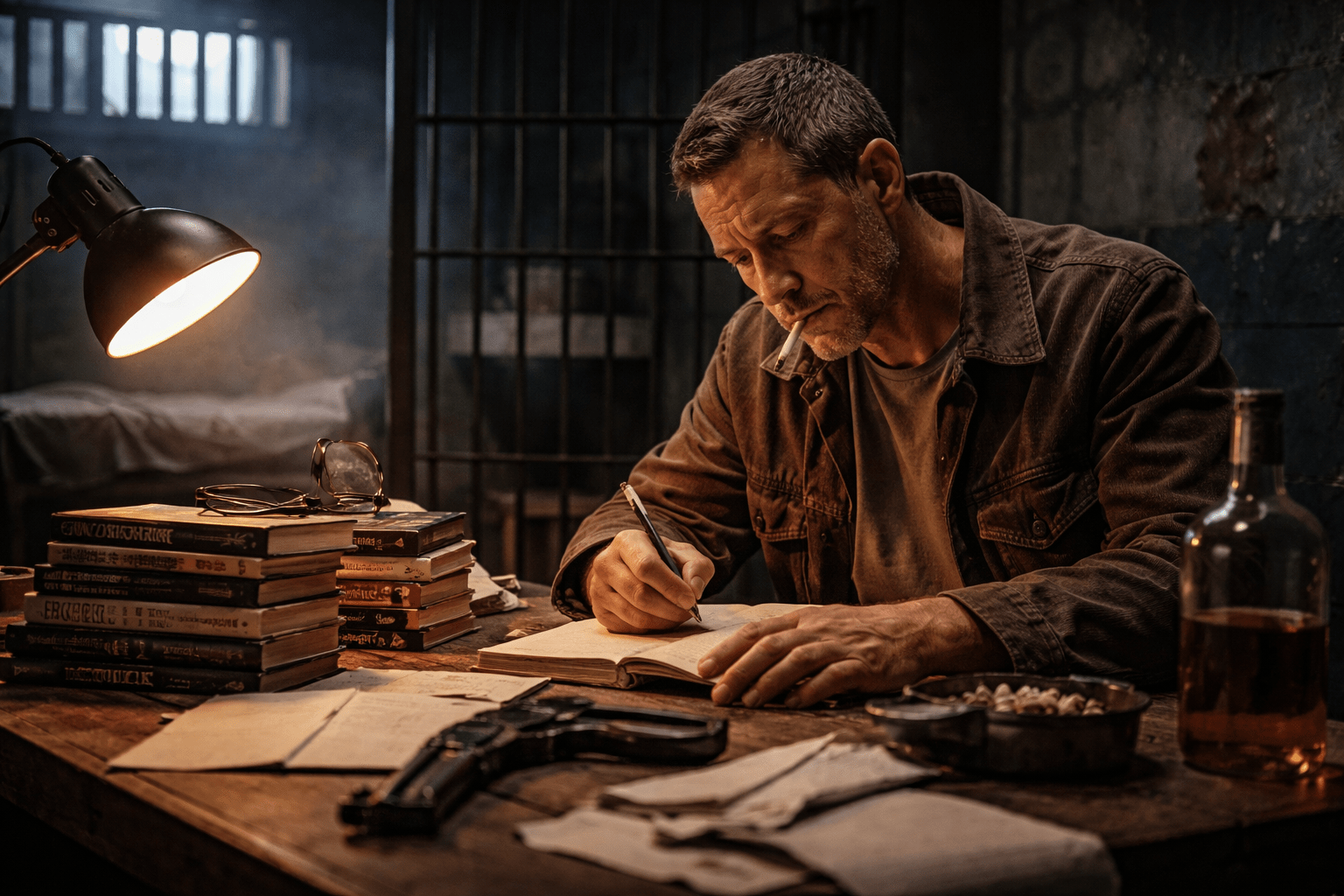
authors like edward bunker hero image of a man in a jail cell writing in a journal

Readers searching for authors like Edward Bunker aren’t looking for clever crime fiction or stylized noir. They’re looking for truth told from the inside—crime as survival, not entertainment. They want first-person accounts where hunger, fear, and calculation drive decisions long before morality ever enters the room.

If that’s what you’re looking for then the award-winning novel Snodgrass belongs in that lineage.

Why readers search for Edward Bunker

Edward Bunker’s work—especially Education of a Felon—endures because it offers something rare:
a criminal narrative written by someone who actually lived the consequences.

Readers come to Bunker for:

  • First-person realism, not invented grit
  • Crime as a learned response to deprivation
  • Moral clarity without moral comfort
  • A narrator who explains the logic of survival without asking forgiveness

Bunker doesn’t glamorize crime. He explains it. That distinction matters.

Where Snodgrass fits that lineage

Like Bunker, Snodgrass is not interested in crime as spectacle. It is interested in how a man learns to read systems—military, economic, social—and exploit their blind spots in order to survive.

In Snodgrass, crime emerges early not from ambition, but from hunger. Literal hunger. Structural hunger. The kind that teaches a young mind to calculate risk before it ever considers ethics.

Rail cars left open.
Food stacked unattended.
No witnesses.
No authority present.

Those moments are not framed as rebellion. They are framed as inevitability.

That’s where the Bunker comparison holds.

The key difference—and why it matters

Where Edward Bunker’s education unfolds almost entirely inside the criminal justice system, Snodgrass splits its pressure across two worlds:

  • The criminal apprenticeship of adolescence
  • The rigid, bureaucratic authority of military life

This dual setting sharpens the book’s edge.

The narrator doesn’t just learn how to steal.
He learns how institutions function—how authority talks, how paperwork replaces truth, how procedure protects itself.

That insight carries forward into every decision he makes.

Authors Like Edward Bunker

Crime without romance. Authority without illusion.

What makes Snodgrass resonate with Bunker readers is its refusal to soften anything.

There is no redemption arc engineered for comfort.
There is no mythologizing of violence.
There is no performance of guilt to reassure the reader.

Instead, the book offers something rarer:
a calm, articulate voice explaining how survival reshapes thinking.

That voice doesn’t ask you to agree.
It asks you to understand.

Who should read Snodgrass

You’ll want this book if:

  • You value lived experience over invented grit
  • You appreciate first-person crime narratives that explain how and why
  • You’re drawn to stories where intelligence is shaped by deprivation
  • You want honesty without moral theater

If Edward Bunker showed you what crime looks like from the inside of the system, Snodgrass shows you how that mindset forms before the system ever closes in.

A final word for authors like Edward Bunker readers

Edward Bunker wrote crime as a consequence of environment.
Mark Bertrand wrote Snodgrass, which extends that truth into the machinery of authority itself.

Different lives.
Same honesty.

If you’re searching for authors like Edward Bunker because you want truth without varnish, Snodgrass deserves your attention.

snodgrass book cover

Snodgrass | Married Stupid

Authors Like Don WinslowAuthors Like Neal StephensonAuthors Like Robert Mason

IMD Operations

Follow me on Bluesky