Tag: Military Thriller

Military thrillers traditionally focus on combat, strategy, and battlefield heroics. The works gathered here move beyond those familiar patterns to examine the deeper forces shaping military power—command structures, institutional pressure, intelligence operations, and the moral weight carried by those inside the system. These stories explore conflict not only on the battlefield but within the people and institutions responsible for waging it.

Authors Like

Authors Like Dan Hampton

Readers searching for authors like Dan Hampton are not looking for cinematic dogfights or patriotic gloss. They want pilot-written truth—what it’s like to fly high-performance aircraft under real operational pressure, where training, machine limits, and human reflex collide.

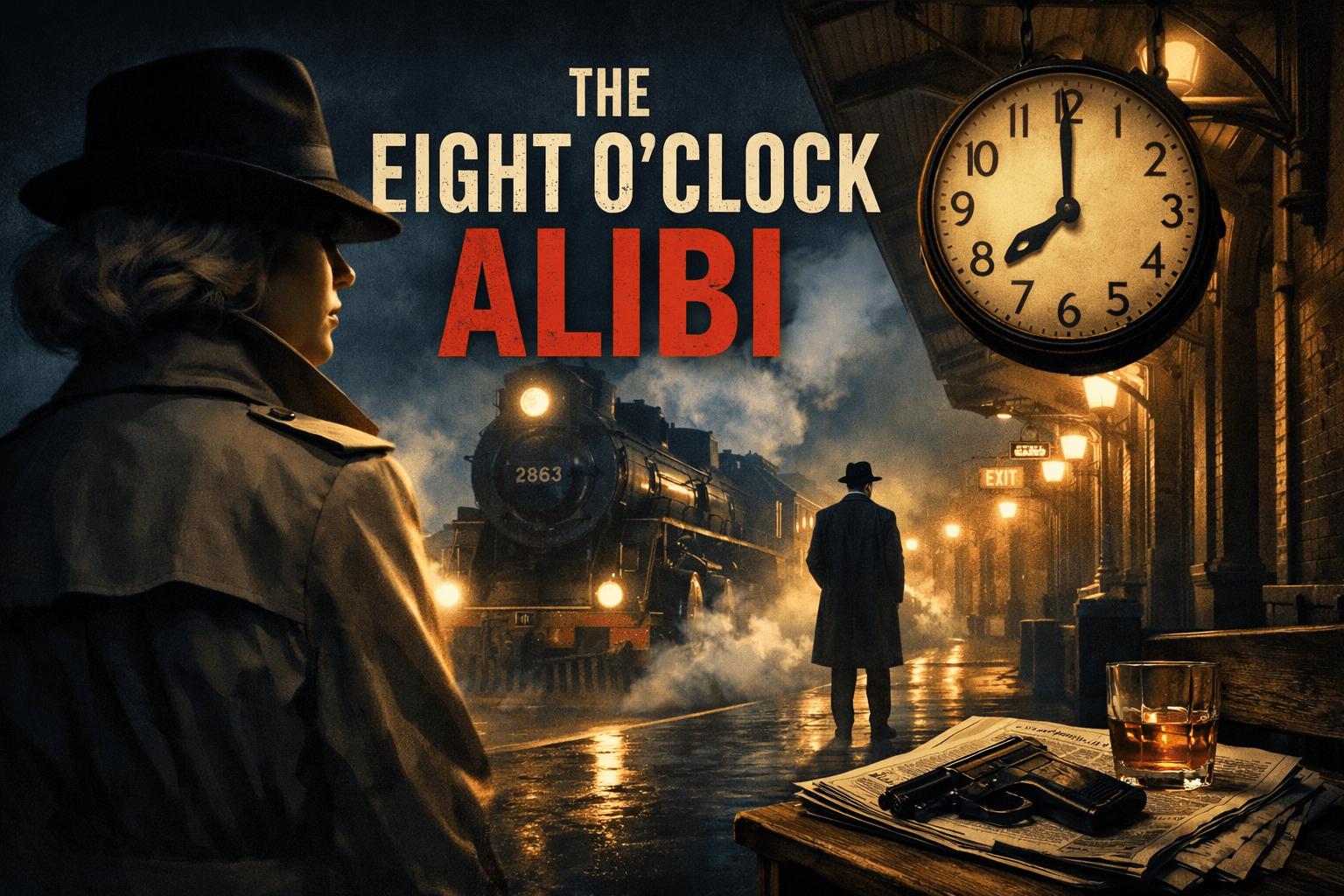
Authors Like Dan Hampton image showing a battlefield at dusk with fighter jets, helicopters, two armed soldiers overlooking a city under attack, and maps and weapons in the foreground.

If that’s the experience you’re after then my award-winning novel Snodgrass belongs in this conversation.

Why readers search for Dan Hampton

Dan Hampton’s aviation books endure because they’re written from inside the cockpit, not from the press box.

Readers come to Hampton for:

  • Fighter-pilot perspective without Hollywood varnish
  • Aircraft treated as systems, not symbols
  • Tactical awareness under saturation
  • The body reacting faster than conscious thought
  • A pilot’s understanding of risk, margins, and failure

Hampton doesn’t mythologize flight.
He explains what it demands.

Where Snodgrass aligns with Hampton’s readership

Like Hampton, my novel Snodgrass treats aviation as work performed under constraint.

The aircraft is central—but not glorified.
The mission matters—but not more than the machine’s limits.
Skill is assumed—but never absolute.

Flight sequences in Snodgrass focus on:

  • Situational overload
  • Alarms, locks, and threat vectors
  • Muscle memory overtaking cognition
  • The aircraft protesting misuse
  • The thin line between mastery and loss of control

This is aviation writing that pilots recognize immediately—and casual readers feel viscerally.

Fighter aircraft as unforgiving partners

In Hampton’s work, jets are not loyal companions. They are demanding, precise, and indifferent to ego.

Snodgrass adopts that same discipline.

When speed climbs too high, the airframe speaks.
When maneuvers exceed tolerance, the aircraft resists.
When margins collapse, consequences are immediate.

There’s no fantasy here—only physics, training, and restraint.

The key difference—and why it deepens the book

Where Dan Hampton’s narratives remain focused primarily on combat aviation, the novel Snodgrass widens the frame.

The pilot’s mind in Snodgrass is shaped not only by flight, but by:

  • Institutional bureaucracy
  • Chain-of-command politics
  • Maintenance realities
  • A pre-military survival background

That broader context gives aviation sequences added weight. The pilot understands systems—not just aircraft systems, but organizational systems—and recognizes when they’re functioning and when they’re merely performing competence.

This perspective resonates strongly with experienced readers.

No heroics. Just execution.

One reason Hampton’s readers trust him is tone.
Snodgrass earns the same trust by refusing drama-for-drama’s sake.

There’s no chest-thumping.
No cinematic pause.
No artificial climax.

Just execution under pressure—and the quiet aftermath when adrenaline fades and routine resumes.

Who should read Snodgrass

You’ll want this book if:

  • You read Dan Hampton for cockpit-level realism
  • You appreciate aviation written with technical respect
  • You want flight scenes driven by consequence, not spectacle
  • You value first-person accounts grounded in lived experience

If Dan Hampton showed you what it’s like to fly fighters in hostile airspace, Snodgrass shows you what it’s like to live as a pilot inside the machine that demands it.

A final word for authors like Dan Hampton readers

Dan Hampton writes about combat from the pilot’s seat.
Snodgrass writes about the pilot’s life—before, during, and after the sortie.

Different scope.
Same discipline.

If you’re searching for authors like Dan Hampton because you want aviation written without illusion, my novel Snodgrass deserves your attention.
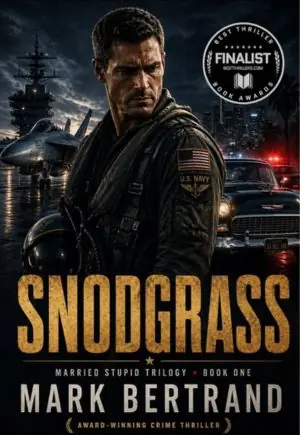
SNODGRASS book cover image of a naval aviator, aircraft carrier, f18 hornet, a sweet 1955 Chevy Belair and a cityscape

Snodgrass | Married Stupid

Authors Like Richard K. MorganAuthors Like Tobias WolffAuthors Like James Ellroy

Dossier

Follow me on Bluesky and my IMD Operations channel.
Books Like

Books Like Billy Summers or Harlem Shuffle — Why Snodgrass Belongs on Your List

Readers searching for books like Billy Summers or Harlem Shuffle aren’t just after action. They’re drawn to stories where survival choices aren’t clear-cut, and where the past—whether criminal or military—casts a long shadow.

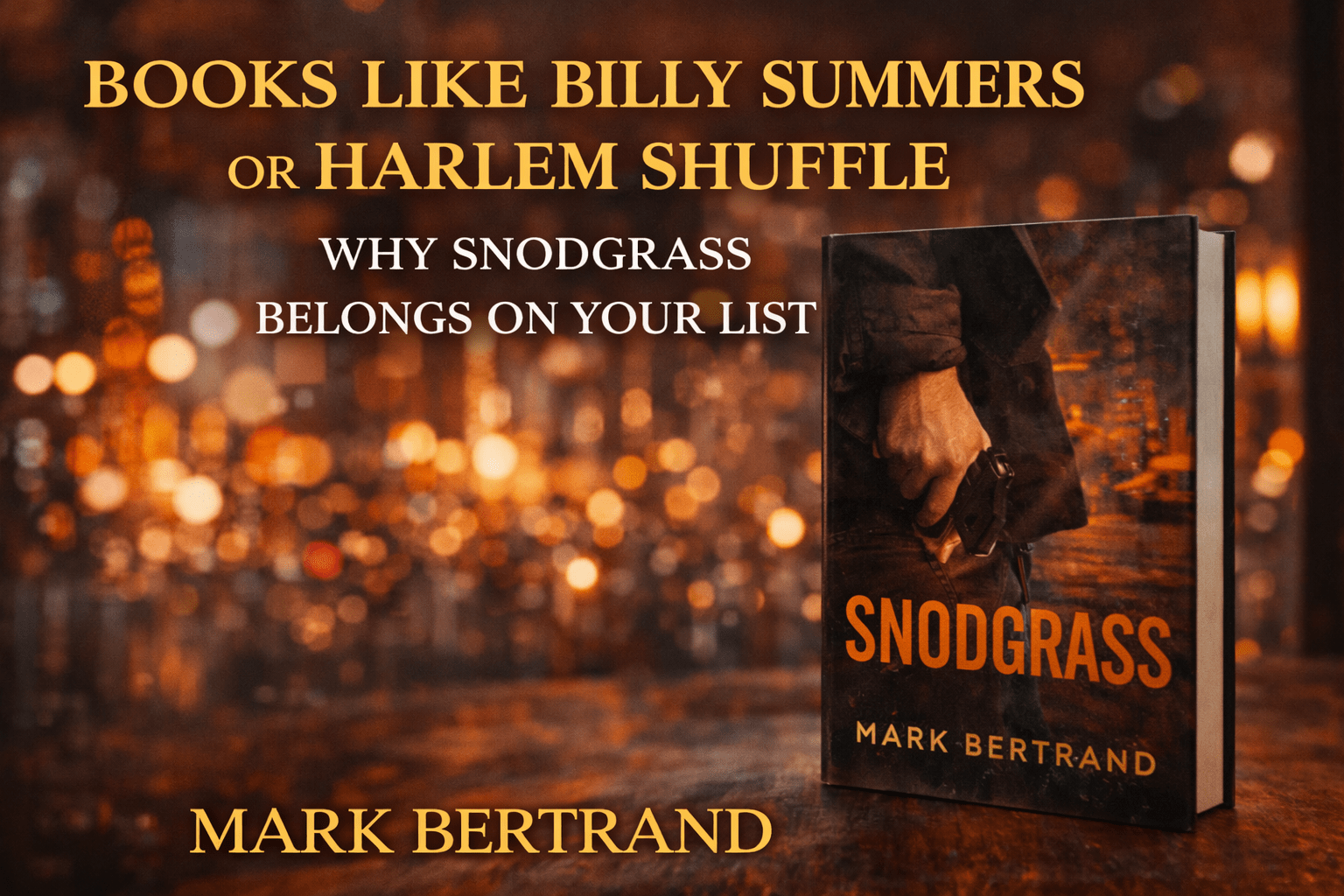
books like billy summer image of a standing paperback of SNODGRASS by Mark Bertrand sits upright on a dark wooden surface. The cover shows a close crop of a man’s hand gripping a pistol at his side, suggesting tension and violence without showing the full figure.

If that’s what pulls you toward those books like Billy Summers, there’s a contemporary crime-driven novel you may not have encountered yet—but should.

That novel is Snodgrass.

What Readers Love About Books Like Billy Summers (Stephen King)

Billy Summers works because it’s not only about the job—it’s about the man who has to live with the job. The violence is practical, the conscience is complicated, and the deeper tension isn’t “will he get away,” but “what is this turning him into.”

Readers who respond to Billy Summers tend to value:

  • Criminal action grounded in psychology, not spectacle
  • Men with skills—and damage—trying to stay in control
  • Violence as consequence, not entertainment

What Readers Love About Harlem Shuffle (Colson Whitehead)

Harlem Shuffle is crime with texture. It’s not a caper; it’s a world. A man gets pulled into criminal gravity not because he’s evil—but because it’s profitable, available, and sometimes necessary.

Readers drawn to Harlem Shuffle often want:

  • Crime as an ecosystem (money, loyalty, reputation, survival)
  • Moral compromise that happens in inches, not leaps
  • A protagonist who isn’t a gangster—until he is

Where Snodgrass Fits — And Why It’s Different

Snodgrass sits in the overlap between these two traditions:
criminal survival + identity pressure + systems closing in—but with one crucial addition:

It has war overhead.

It opens inside a Navy carrier environment under Libya-mission tension—conflict, authority, and threat saturating everything.
Then it folds backward into the narrator’s early criminal life: hunger, opportunism, and the first small thefts that harden into method.

What makes it hit differently is the two-track pressure:

  1. The military machine (discipline, hierarchy, war footing)
  2. The crime machine (need, profit, escalation, exposure)

You feel both working at once.

Even when the narrator is simply remembering, he’s calculating. Planning. Running models. Looking for angles—like the bank-kiting scheme explained later in the book, where the method is criminal but the mindset is engineering. Snodgrass

The Crime in Snodgrass Isn’t “Bad Guy Crime”

This is important.

The crime here isn’t written as cartoon villainy—it’s written as adaptation. A logic that begins in scarcity, then evolves into skill, then becomes identity.

You see that shift early in the train-robbery episode: hungry teenagers, open rail cars, no supervision, and a brain that immediately understands “there is opportunity here.” Snodgrass

And later, when law enforcement closes in, it becomes procedural, personal, and relentless—Detective Snodgrass lays out the evidence and the implications with the calm weight of the state behind him. Snodgrass

Why Readers of King and Whitehead Choose Snodgrass

Readers who finish Billy Summers or Harlem Shuffle often go searching for something specific but hard to name:

Not “more violent.”
Not “more plot.”
Just more intimate. More inside the mind that does it.

Snodgrass answers that search by:

  • Putting the reader inside the criminal’s mental process—not after the fact, but in real time
  • Treating crime as a discipline that develops (planning, observation, misdirection)
  • Mixing that criminal evolution with military threat and duty, creating constant tension

Where Snodgrass Goes Further

Most crime books give you either:

  • A criminal operating in the streets
    or
  • A soldier operating in war

Snodgrass gives you a man who has been both—and shows what happens when those mentalities merge.

By the time the Libya mission turns lethal, the narrator recognizes the psychological shift:
“Now I’ve learned to kill… what changes will come?” Snodgrass

That line matters because it’s not cinematic. It’s not proud.
It’s clinical.
And that’s exactly the tone of the book.

If You’re Searching for Books Like Billy Summers or Harlem Shuffle

You’re already beyond surface-level crime.

Snodgrass was written for readers who want:

  • Crime as psychology and system—not gimmick
  • A protagonist who is competent, controlled, and compromised
  • Tension that comes from implication, escalation, and consequence

If Billy Summers showed you how a man becomes dangerous,
and Harlem Shuffle showed you how a man becomes complicit,
Snodgrass shows you what happens when a man becomes both—
and still has to fly the mission tomorrow.

SNODGRASS book cover image of a naval aviator, aircraft carrier, f18 hornet, a sweet 1955 Chevy Belair and a cityscape

Snodgrass | Married Stupid

Books Like Going Infinite or The Cult of WeBooks Like Broken Light

Follow me on Bluesky and Mark Bertrand channel.

Dossier

The Eight O’Clock Alibi

Janice doesn’t enter Mark’s life like a teenage crush. She enters like a schedule. That’s why Janice is the eight o’clock alibi.

the eight o'clock alibi cover image showing a foggy noir train platform at night, a large clock near eight o’clock, a steam locomotive, a shadowed man, and a pistol with whiskey on a table.

Janice: The Eight O’Clock Alibi

She shows up at eight o’clock every night, not because romance keeps perfect time, but because she has already built the lie that makes it possible. Dinner at home. Dishes. Then she tells her mother she’s going to a friend’s house to do homework—only she comes to see him instead.

The novel Snodgrass

That’s the first thing many real readers slide past: Janice’s “sweetness” is also practice. She’s already living double. Already managing risk.

Watch how she handles questions. Mark tries to pin down her age and grade; she dodges, redirects, offers logistics, keeps the conversation moving where she wants it. The vibe reads playful. Underneath it is a survival skill.

Then, when Mark is sick—migraine, blurred vision, can’t drive—Janice doesn’t panic. She produces a solution: an apartment, a key, a place where nobody will notice them.

And when the police kick the door, she does something even more telling: she argues. She challenges the charges. She insists he didn’t assault her. She refuses to let the room rewrite her into a victim on command.

Doorway Line (Paywall)
Now the part most real readers miss: Janice isn’t just in Mark’s story—she’s in Snodgrass’s strategy.

Members Only (Deeper Unveiling): Detective Snodgrass flat-out tells you what Janice is in this machine.

He says she’ll bring him in—and that if she

This content is for members only.

Not yet a member? Request access to The Dossier.

SNODGRASS book cover image of a naval aviator, aircraft carrier, f18 hornet, a sweet 1955 Chevy Belair and a cityscape

Follow the author Mark Bertrand on The Readers Court

project 2029. image leads to stories that provide the codes and the 15 key letters. If you know where to look you can find them all.