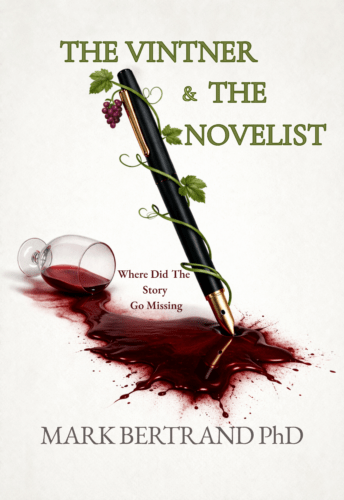
Tag: Power and Privilege

Power and Privilege is a body of novels about people living under systems designed to preserve wealth and authority long after those systems cease to serve humanity. Spanning contemporary, near-future, and distant-future worlds, these stories examine the point at which legality separates from morality, procedure replaces conscience, and ordinary individuals are forced to confront structures that cannot admit they are wrong.

When power becomes law, privilege replaces integrity.
When integrity collapses, legality replaces morality.
When morality is abandoned, decency becomes weakness.
These novels trace the human cost of that descent. They are not stories about broken systems, but about systems working exactly as intended for those they were built to protect.

Dossier

The Hidden Courtroom Inside The Vintner & The Novelist

At first glance, The Vintner & The Novelist seems to be a literary psychological thriller about pain, authorship, and the unstable border between a man’s life and the story he writes. But underneath that visible structure sits something harsher and far more original: the hidden courtroom.
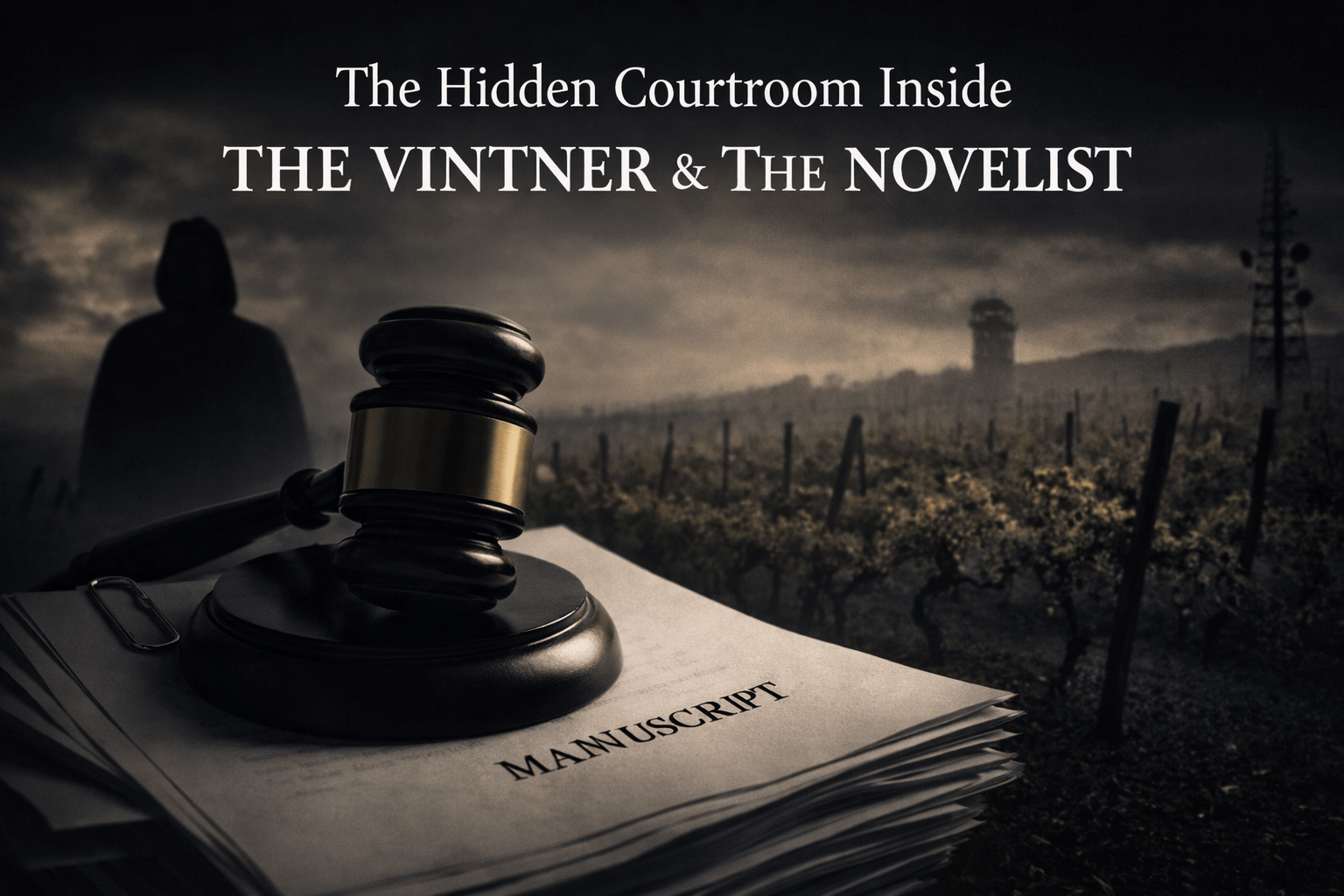
the hidden courtroom image is A dark, minimalist thriller image of a manuscript and vineyard imagery suggesting judgment, custody, and a hidden courtroom inside The Vintner & The Novelist.

Not a decorative courtroom. Not a metaphor borrowed for atmosphere. A governing one.

This novel is built on charge, custody, judgment, sentence, and authority. It is not merely asking whether the novelist can survive what is happening to him. It is asking who has the right to judge a manuscript, who has the right to possess it, and what becomes of a writer when story itself is treated like evidence.

The novel tells you the truth early

One of the sharpest signals comes before the novel fully begins. The copyright page does not behave like neutral publishing housekeeping. It announces that any resemblance to systems of judgment, control, or permission is intentional, and that “compliance is achieved when resistance becomes indistinguishable from understanding.” That is not ornamental language. It is a warning label. The book is telling you, before the pressure fully arrives, that power here will not come as melodrama. It will come as procedure.

Even the contents page quietly supports that design. Chapter titles such as The Judge, Revision Map Protocol, Custody, The Dossier, and The Eraser do not read like loose surrealism. They read like stages in a legal and institutional process. The architecture of the novel is already judicial before the interpretation catches up.

The charge is not authorship. It is possession.

The hidden courtroom becomes unmistakable the moment the novelist wakes into that chamber and hears the question, “How do you plead?” From there, Bertrand makes one of the book’s most dangerous decisions. The charge is not authorship. It is not publication. It is not plagiarism. It is “possession of a manuscript.”

That wording changes everything.

Authorship implies creation. Possession implies custody. It suggests the manuscript may not belong to the novelist in the full sovereign sense he assumes. It turns the work into an object under dispute and the writer into a man caught too close to it. The novel itself explains the force of that distinction: possession is what you charge a man with when you want to separate the work from the person who made it. That is the real shiver inside the scene. The court is not arguing over whether he wrote it. The court is arguing over whether he ever had the right to hold it.

Once that lands, The Vintner & The Novelist stops being a strange book about a writer in trouble and becomes something more precise: a book about unstable ownership, provisional access, and the terror of being found in custody of something larger than you can justify.

“Narrative erasure” is worse than death

The court does not stop at charge. It names the offense “capital” and the punishment “narrative erasure.” That phrase is one of the novel’s finest inventions because it goes past bodily fear and strikes the writer where identity lives. Death ends a life. Erasure cancels the record of it. It is administrative annihilation. It is not only punishment. It is deletion.

That is why the scene feels so cold. The court does not rage. It processes. The judgment arrives in the voice of a system that has outlived appeal. Even mercy is reduced to procedure. Pardon is not granted. It may be “considered.” The difference is devastating. Compassion here is not moral. It is bureaucratic.

The effect on the reader is profound. The scene refuses the heat of spectacle and replaces it with something more unnerving: authority that no longer needs to raise its voice.

The vineyard is part of the same court

What makes the novel richer is that this courtroom is not confined to the chamber where The Readers sit. Its logic reaches into the vineyard.

The vintner’s life is also ruled by deadlines, notices, assessments, penalties, and systems that continue moving while the body fails. The property tax is not framed as conversation but as procedure presented as inevitability. The land can be lost through paperwork as surely as a manuscript can be lost through judgment. In both worlds, the same pressure applies: a man is measured by forces that do not care about his intentions.

That is the hidden brilliance of the novel. The courtroom is not only a place. It is a governing pattern. In one world, the manuscript is judged. In the other, the vineyard is judged. In one world, the writer faces sentence. In the other, the vintner faces penalties, debt, and possible loss. Both lives are being processed by systems that convert time into consequence.

So the book’s true antagonist is not madness. It is not merely altered reality. It is the structure that keeps turning worth into procedure and survival into permission.

Members Only: The judge does not care what he meant

Later, The Judge makes the

This content is for members only.

Not yet a member? Request access to The Dossier.
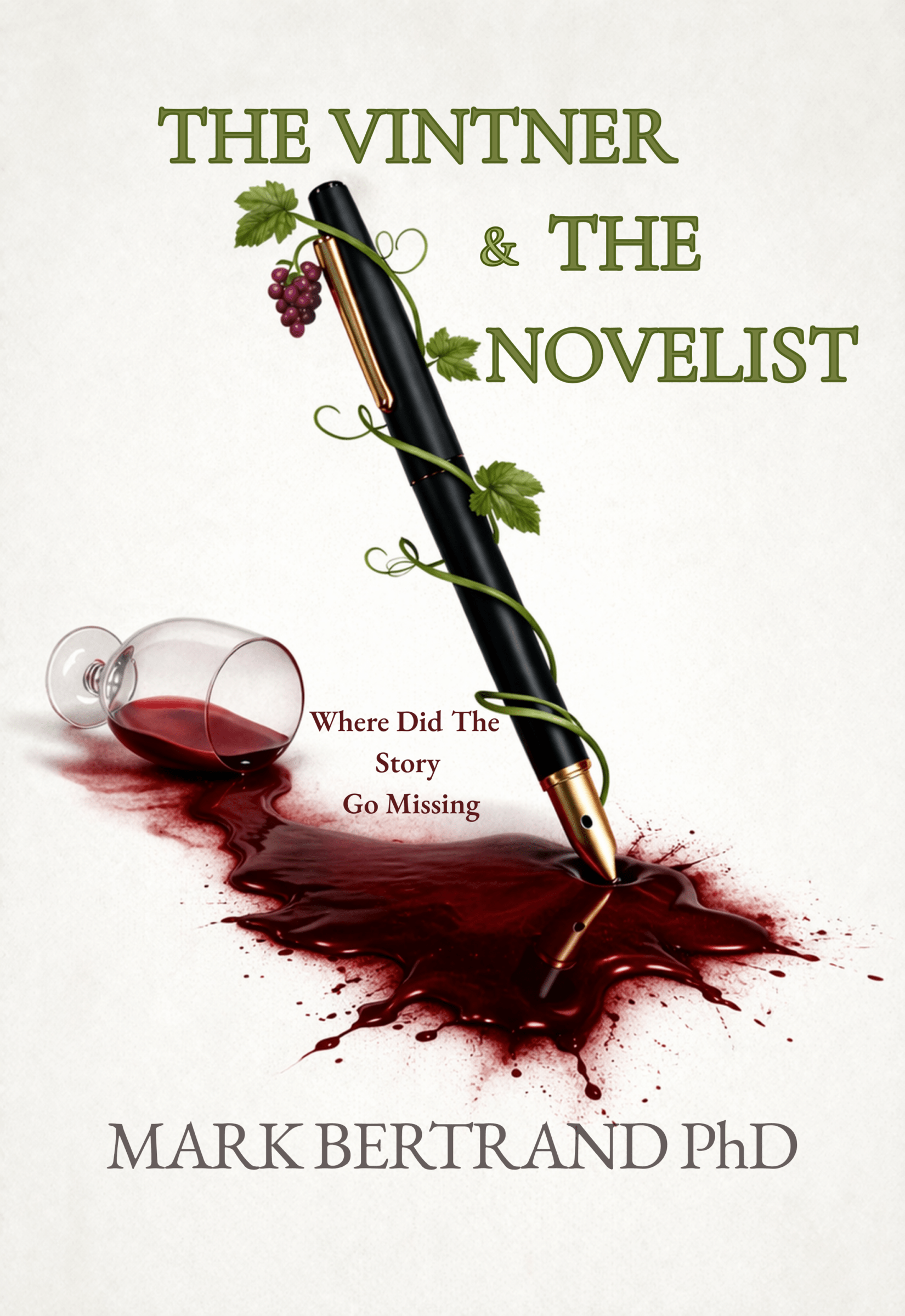
the vintner & the novelist book cover image

Discover more in Mark Bertrand presents The Readers Court

Authors Like

Authors Like Lawrence Osborne: The Danger Hidden Inside Taste, Power, and Control

Readers who seek out authors like Lawrence Osborne are drawn to a specific tension: worlds built on taste, status, and restraint that conceal something far more dangerous. These are not stories about chaos. They are stories about control—who has it, who believes they have it, and what they’re willing to justify to keep it. That is the terrain Mark Bertrand enters, where refinement is never neutral and every surface is working harder than it appears.

authors like Lawrence Osborne image of a man in reflection at a restaurant

Cultivated Worlds That Hide Something Rotten

Osborne’s fiction often unfolds in places that appear composed, even enviable—sunlit villas, expatriate enclaves, rooms filled with wine, art, and educated conversation. But the deeper you go, the more those environments begin to feel unstable. Taste becomes a disguise. Leisure becomes exposure.

Bertrand operates inside that same contradiction.

What appears refined is not safe.
What appears controlled is already slipping.

He understands, as Osborne does, that luxury does not remove danger—it refines it. It gives it better language, better manners, better camouflage.

Dialogue as Seduction and Weapon

In Osborne’s work, people rarely say exactly what they mean. Dialogue becomes a test. A lure. A quiet negotiation of power.

Bertrand sharpens this instinct even further.

Conversation is not filler between events—it is the event. Every exchange carries intention. Every line spoken is doing something beneath what is heard. The reader is not just following what is said, but decoding what is being positioned.

This creates a different kind of tension:

Not “what will happen next?”
But “what is really happening right now?”

Intelligent Characters Who Are Not in Control

Osborne’s characters are perceptive, cultured, self-aware—and still move toward decisions that expose their blind spots.

Mark Bertrand builds from that same foundation but tightens the screws.

His characters understand systems, narrative, identity. They believe they can manage outcomes.

They are wrong.

What emerges is not incompetence, but something more unsettling:
the limits of intelligence when it serves desire instead of truth.

Appetite Beneath Refinement

Osborne writes about appetite through restraint. The surface remains composed even as something underneath fractures.

Bertrand’s work moves in that same space, but colder.

Appetite is not chaotic. It is deliberate. It is justified. It is often disguised as taste, as authorship, as control.

Which makes it more dangerous.

Because the characters are not overwhelmed by desire.
They choose it, and then construct the narrative that allows them to live with that choice.

Authors like Lawrence Osborne and The System Beneath the Scene

Here is where Bertrand separates himself.

Osborne leaves you inside the atmosphere.

Bertrand reveals the structure.

Beneath conversation and relationship, there are systems of legitimacy, control, and narrative ownership shaping what can be said, believed, and denied.

You begin to see that the characters are not just making choices—
they are operating inside frameworks designed to protect those choices.

Where the Comparison Becomes Exact

This is where The Vintner & The Novelist makes the connection unmistakable.

The same cultivated environments.
The same intelligent negotiation of power.
The same quiet drift toward consequence.

But with a sharper pressure.

Bertrand does not let the moment pass. He holds it. Extends it. Forces the reader to sit inside the decision long enough to recognize what is actually being chosen.

The Inevitable Next Read

Readers who are drawn to Lawrence Osborne will recognize the current immediately.

But they will also feel the difference.

Where Osborne lingers, Bertrand tightens.
Where Osborne observes, Bertrand pressures.
Where Osborne reveals corrosion, Bertrand exposes the structure that sustains it.

And once that structure is visible, it does not disappear.

the vintner & the novelist book cover image

Readers of Authors like Lawrence Osborne also read these articles.

Authors Like William GibsonAuthors Like Michel HouellebecqAuthors Like Don Winslow

Book Finder AI tool from NARP