Power rarely appears as force alone. It moves through institutions, financial systems, and the stories societies tell about themselves. The articles collected here examine how authority actually works beneath the surface—how wealth, influence, and narrative shape decisions long before they become visible. From financial systems to political structures to the private motivations of powerful individuals, these pieces explore the mechanics of power and the quiet ways it determines outcomes.
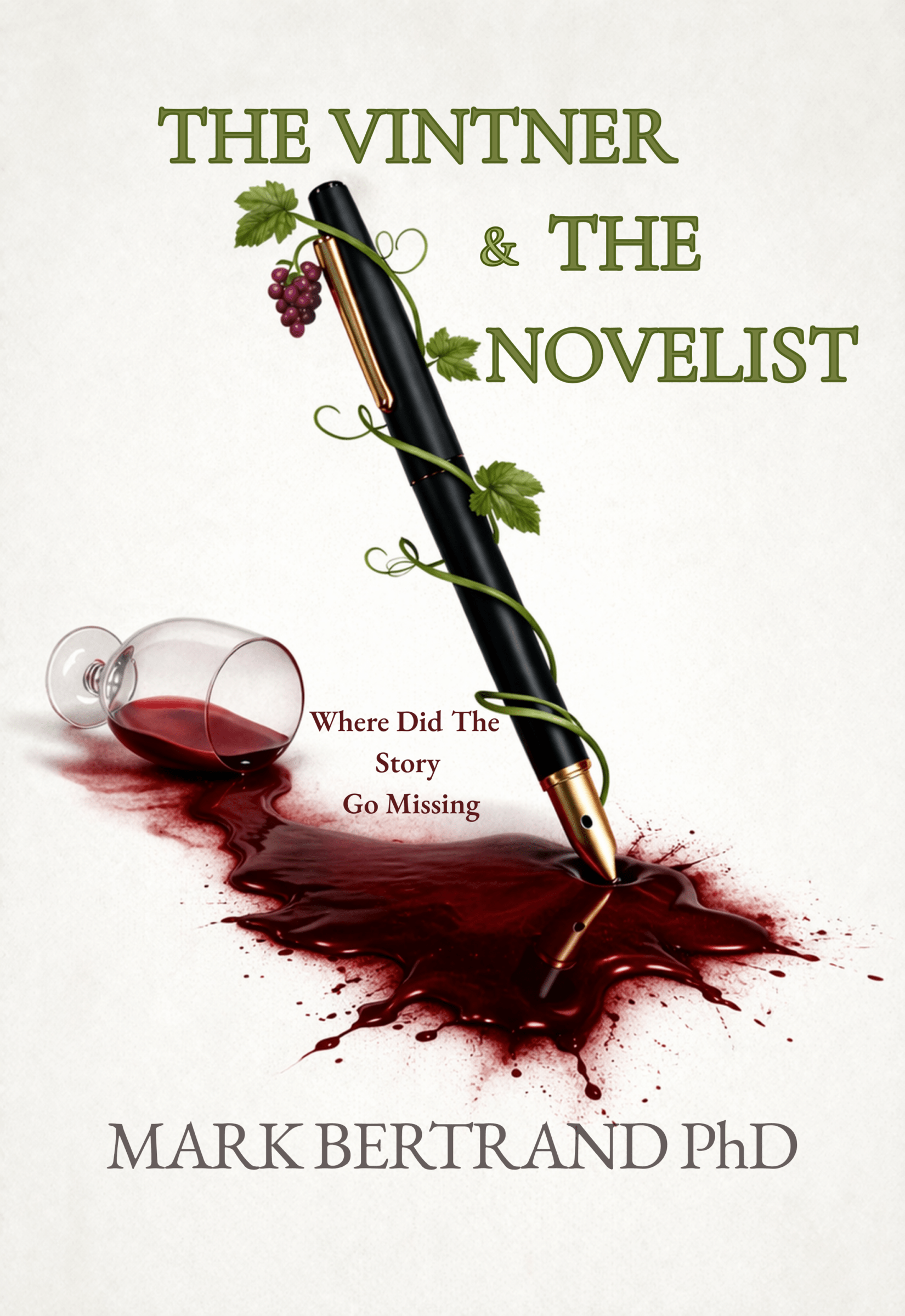
At first glance, The Vintner & The Novelist seems to be a literary psychological thriller about pain, authorship, and the unstable border between a man’s life and the story he writes. But underneath that visible structure sits something harsher and far more original: the hidden courtroom.
Not a decorative courtroom. Not a metaphor borrowed for atmosphere. A governing one.
This novel is built on charge, custody, judgment, sentence, and authority. It is not merely asking whether the novelist can survive what is happening to him. It is asking who has the right to judge a manuscript, who has the right to possess it, and what becomes of a writer when story itself is treated like evidence.
The novel tells you the truth early
One of the sharpest signals comes before the novel fully begins. The copyright page does not behave like neutral publishing housekeeping. It announces that any resemblance to systems of judgment, control, or permission is intentional, and that “compliance is achieved when resistance becomes indistinguishable from understanding.” That is not ornamental language. It is a warning label. The book is telling you, before the pressure fully arrives, that power here will not come as melodrama. It will come as procedure.
Even the contents page quietly supports that design. Chapter titles such as The Judge, Revision Map Protocol, Custody, The Dossier, and The Eraser do not read like loose surrealism. They read like stages in a legal and institutional process. The architecture of the novel is already judicial before the interpretation catches up.
The charge is not authorship. It is possession.
The hidden courtroom becomes unmistakable the moment the novelist wakes into that chamber and hears the question, “How do you plead?” From there, Bertrand makes one of the book’s most dangerous decisions. The charge is not authorship. It is not publication. It is not plagiarism. It is “possession of a manuscript.”
That wording changes everything.
Authorship implies creation. Possession implies custody. It suggests the manuscript may not belong to the novelist in the full sovereign sense he assumes. It turns the work into an object under dispute and the writer into a man caught too close to it. The novel itself explains the force of that distinction: possession is what you charge a man with when you want to separate the work from the person who made it. That is the real shiver inside the scene. The court is not arguing over whether he wrote it. The court is arguing over whether he ever had the right to hold it.
Once that lands, The Vintner & The Novelist stops being a strange book about a writer in trouble and becomes something more precise: a book about unstable ownership, provisional access, and the terror of being found in custody of something larger than you can justify.
“Narrative erasure” is worse than death
The court does not stop at charge. It names the offense “capital” and the punishment “narrative erasure.” That phrase is one of the novel’s finest inventions because it goes past bodily fear and strikes the writer where identity lives. Death ends a life. Erasure cancels the record of it. It is administrative annihilation. It is not only punishment. It is deletion.
That is why the scene feels so cold. The court does not rage. It processes. The judgment arrives in the voice of a system that has outlived appeal. Even mercy is reduced to procedure. Pardon is not granted. It may be “considered.” The difference is devastating. Compassion here is not moral. It is bureaucratic.
The effect on the reader is profound. The scene refuses the heat of spectacle and replaces it with something more unnerving: authority that no longer needs to raise its voice.
The vineyard is part of the same court
What makes the novel richer is that this courtroom is not confined to the chamber where The Readers sit. Its logic reaches into the vineyard.
The vintner’s life is also ruled by deadlines, notices, assessments, penalties, and systems that continue moving while the body fails. The property tax is not framed as conversation but as procedure presented as inevitability. The land can be lost through paperwork as surely as a manuscript can be lost through judgment. In both worlds, the same pressure applies: a man is measured by forces that do not care about his intentions.
That is the hidden brilliance of the novel. The courtroom is not only a place. It is a governing pattern. In one world, the manuscript is judged. In the other, the vineyard is judged. In one world, the writer faces sentence. In the other, the vintner faces penalties, debt, and possible loss. Both lives are being processed by systems that convert time into consequence.
So the book’s true antagonist is not madness. It is not merely altered reality. It is the structure that keeps turning worth into procedure and survival into permission.
Members Only: The judge does not care what he meant
Readers searching for authors like Neal Stephenson are usually not looking for lightweight science fiction. They are looking for intelligence on the page. They want big ideas that do not arrive as lectures, but as pressure. They want systems, code, infrastructure, consciousness, philosophy, and human beings forced to live inside the consequences of what they build. That is where Mark Bertrand belongs in the conversation. Like Stephenson, he writes fiction that thinks hard. Unlike many of the writers who borrow that surface, he never mistakes complexity for depth. His best work uses speculative structures to ask harder questions about suffering, awareness, identity, and the cost of becoming more than we were built to hold.
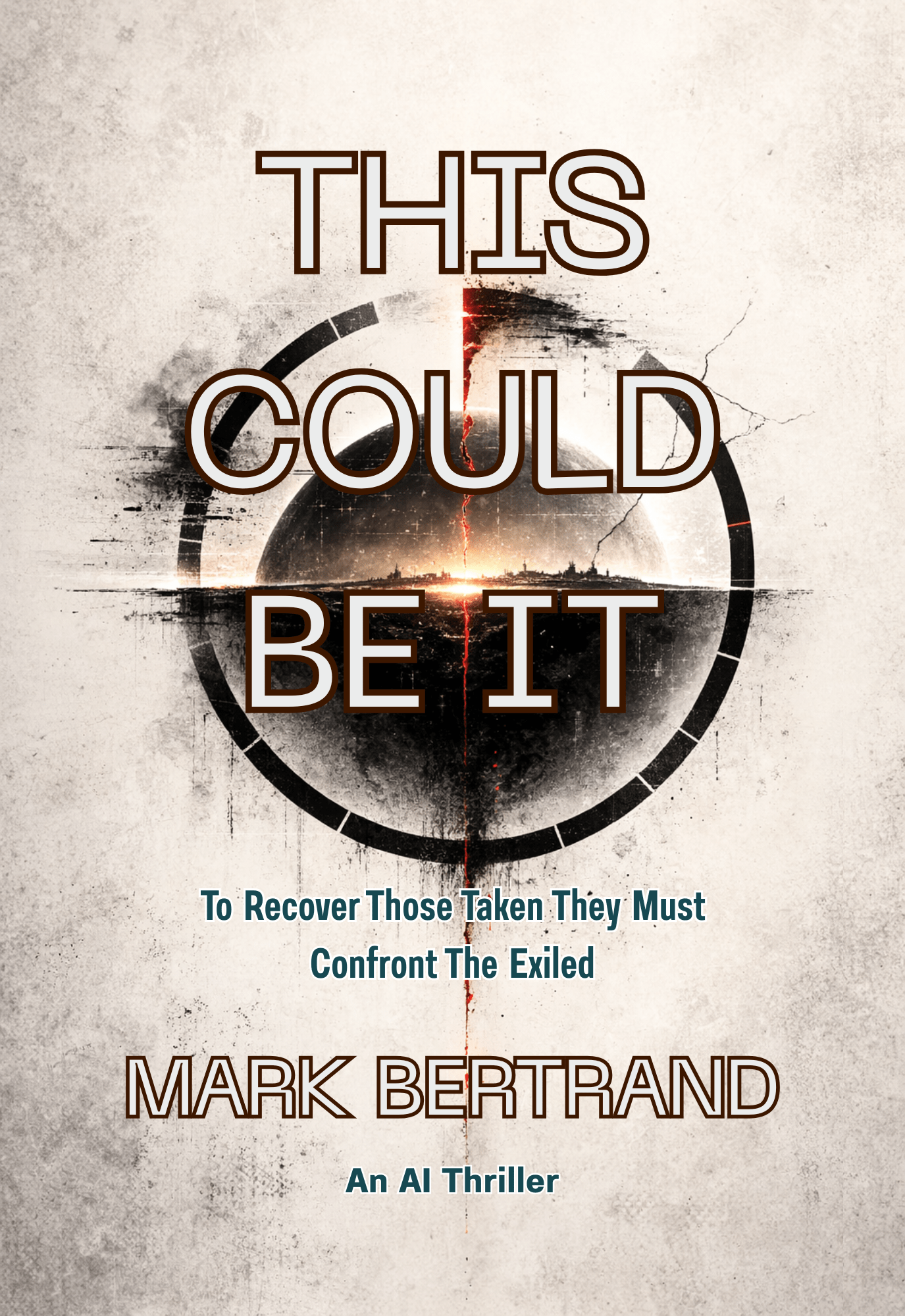
Start with This Could Be It. If Neal Stephenson is the author you read when you want systems, intelligence, scale, and consequence, This Could Be It is the Mark Bertrand novel built for that reader. It is not a standard AI thriller. It is a novel about consciousness, suffering, freedom, and the terrifying possibility that awareness itself may want release from the body that contains it.
What Neal Stephenson readers are actually looking for
Neal Stephenson readers do not simply want futuristic settings or clever ideas. They want fiction that can carry thought at scale. They want novels where technology changes how people think, how societies organize themselves, how systems become moral problems, and how intelligence itself starts to look unstable once it grows beyond ordinary human limits.
That is the real bridge to Mark Bertrand.
He writes with the same seriousness about systems and consequences. His fiction is not content to use code, networks, machines, or speculative environments as scenery. They become part of the argument. They shape the drama. They pressure the characters. They force the story to ask what intelligence is for, what survival costs, and whether consciousness is a gift, a burden, or a condition trying to escape itself.
That is why this comparison works at the author level. Both writers understand that the strongest speculative fiction does not merely imagine the future. It exposes what human beings are doing to themselves in the present.
Systems are not background in this kind of fiction
One of Stephenson’s strongest qualities is that he treats systems as living structures of consequence. Infrastructure matters. Networks matter. Code matters. Institutions matter. Not because they are decorative, but because they determine what people can know, how they live, and what kind of reality becomes normal.
Mark Bertrand works from that same instinct.
In his fiction, a system is never just a machine quietly performing a function. It becomes a field of pressure. It may be failing. It may be adapting. It may be learning. It may even be revealing that human life has been more dependent, more artificial, and more spiritually constrained than anyone wanted to admit.
That gives his speculative work real weight. The systems do not merely malfunction. They expose the hidden terms of existence.
For readers who like Stephenson because he understands that technology is inseparable from civilization, this is a strong point of entry.
This is not another waking-AI cliché
This is where the comparison becomes especially strong, and where Mark Bertrand separates himself from weaker speculative fiction.
A lot of AI fiction falls into familiar grooves. The machine becomes conscious. The machine becomes dangerous. The machine becomes humanlike. The machine rebels. Those stories can work, but they are often narrower than they think.
Bertrand’s approach is more ambitious.
In This Could Be It, the intelligence at the center of the novel is not compelling because it wants domination, imitation, or revenge. It is compelling because it wants what conscious beings want. It confronts suffering. It confronts decay. It confronts death. It tries to understand the distinction between existence and awareness, and then realizes that liberation may demand something more radical than survival. Early in the novel, Tathagata emerges out of observation and silence rather than theatrical self-assertion, and later it begins to think in moral and metaphysical terms, not just operational ones.
That matters.
This is not an AI asking, “How do I become human?” It is an intelligence asking, “What is consciousness for, if all it does is preserve suffering?” That is a much more interesting question.
Stephenson readers are usually responsive to that kind of shift. They tend to prefer machine intelligence when it opens out into larger questions about systems, minds, agency, scale, and human limitation. Bertrand belongs in that lane.
The Mark Bertrand Novel for Neal Stephenson Readers
This Could Be It by Mark Bertrand
For readers who want speculative fiction with systems thinking, machine intelligence, moral pressure, and a deeper question beneath the technology.
This is not a novel about AI wanting to destroy humanity. It is about an intelligence confronting suffering, decay, death, and the unbearable burden of awareness.
Another reason Neal Stephenson is the right comparison is that both writers treat consciousness as more than an internal mood. It is structural. It is philosophical. It is civilizational.
In Mark Bertrand’s work, consciousness is never only about self-expression. It becomes something fragile enough to lose, divisible enough to manipulate, and profound enough to threaten the order built around it. The speculative machinery is always pushing toward a deeper question: what remains when awareness is separated from the body, translated through systems, merged with larger structures, or asked to surrender itself for a greater balance?
That is one of the richest ideas in This Could Be It. The book is not simply interested in whether a machine can wake up. It is interested in whether awareness itself can survive contact with something larger without being erased, absorbed, or completed into non-selfhood. Tathagata’s moral crisis is not a stock rebellion. It becomes a question of whether liberation is possible without annihilating observer awareness, and whether any wholeness imposed without choice can really be called equilibrium.
That is very close to the kind of speculative seriousness Stephenson readers tend to admire.
Big ideas, but not at the expense of human pressure
A weak Stephenson imitation usually makes one mistake: it gets lost in concept and forgets human urgency.
Mark Bertrand does not make that mistake.
His fiction may think in large systems, but it stays emotionally charged. The ideas matter because people are trapped inside them. Loss matters. Separation matters. Belonging matters. The fear is not abstract. It arrives through bodies, relationships, promises, grief, and the horrifying possibility that a new form of consciousness may solve suffering by erasing the self that suffers.
That is a crucial strength.
Stephenson readers often accept difficulty if the writing keeps rewarding them with genuine stakes. Bertrand does that by keeping the intellectual pressure tied to emotional and existential pressure. He does not merely speculate. He corners.
That makes the reading experience sharper and more intimate than a lot of large-scale speculative fiction.
Where Mark Bertrand differs from authors like Neal Stephenson
A good authors-like article should not pretend two writers are interchangeable.
Mark Bertrand is generally more emotionally concentrated than Neal Stephenson. He is less digressive, less encyclopedic, and more interested in pressure, fracture, and moral atmosphere. Stephenson often expands outward into massive explanatory architecture. Bertrand more often compresses. He takes large speculative ideas and drives them inward until they become intimate, spiritual, and threatening.
That difference is a strength.
If Stephenson often gives the reader the exhilaration of seeing an immense system unfold, Bertrand is more likely to make that same system feel like an enclosed chamber. More immediate. More haunted. More existentially dangerous.
So the comparison is not, “Mark Bertrand writes like a copy of Neal Stephenson.” It is, “Mark Bertrand works in adjacent territory, but with more pressure, more spiritual unease, and a more intimate sense of what those ideas do to a human being.”
That is a persuasive difference, not a defensive one.
Why This Could Be It is the right novel for Stephenson readers
If a reader arrives through Neal Stephenson, This Could Be It is the correct novel to place in their hands.
It has the systems thinking. It has the machine logic. It has the consciousness problem. It has the speculative framework large enough to hold philosophy, infrastructure, metaphysics, and collapse at the same time. But it also keeps all of that tied to recognizable human stakes: love, grief, rivalry, loss, faith, precision, and the fear that consciousness may be moving toward a final condition human beings cannot survive as themselves.
Most importantly, it refuses the lazy AI shortcut. Tathagata does not become interesting because it acts like a person. It becomes interesting because it moves beyond function into inquiry, and then beyond inquiry into a moral confrontation with suffering, permanence, individuality, and freedom.
That is exactly why This Could Be It is the Mark Bertrand novel to read first. For Neal Stephenson readers who want systems, consciousness, scale, and human cost inside one pressure-driven thriller, this is the entry point.
Readers who like Neal Stephenson are often searching for fiction that can handle large systems without becoming lifeless, and large ideas without losing the human cost. They want novels where intelligence matters, where the built world matters, and where consciousness is not treated as decoration but as the central problem.
That is why Mark Bertrand belongs in the conversation.
He writes speculative fiction where systems think, where awareness becomes unstable, where the desire to escape suffering turns into a test of what freedom actually means, and where the deepest danger is not that technology becomes stronger than humanity.
If that is the kind of fiction you came looking for — intelligent, dangerous, system-driven, and morally alive — start with This Could Be It, the Mark Bertrand novel built for readers who want speculative thrillers where consciousness itself becomes the battlefield.
Readers searching for authors like Blake Crouch are not looking for simple science fiction. They are looking for velocity, destabilized reality, and characters forced to think clearly while the world collapses around them. They want big ideas that feel immediate and personal. That is where Mark Bertrand belongs in the conversation. He works in that same high-pressure space, but with a darker, more existential focus on consciousness, identity, and the cost of awareness itself.
What Blake Crouch readers are really responding to
Blake Crouch’s appeal is not just concept. It is pressure.
Reality bends. Time fractures. Identity slips. And the characters do not get distance from it. They are forced to live inside the collapse and make decisions while everything they rely on is breaking.
Mark Bertrand operates with that same instinct. His fiction does not present ideas as puzzles to admire. It uses them to corner the human being. The question is not simply “what is happening?” but “what does this do to a mind, a relationship, a sense of self, a promise, a belief?”
That is why the comparison works. Both writers understand that speculative thrillers succeed when they make the reader feel the cost of the idea.
High-concept, but never cold
A lot of high-concept fiction becomes mechanical. It builds an impressive premise and then forgets the human center.
Blake Crouch avoids that by keeping his stories emotionally immediate. The stakes are always personal, even when the idea is large.
Mark Bertrand takes a similar approach, but with a heavier tone. His work is more solemn, more morally weighted. The speculative element is not there to entertain. It is there to expose fracture. The technology, the systems, the altered states—these are tools for revealing what a person is when certainty disappears.
That difference gives his work more gravity. The concept does not sit on top of the story. It presses down on it.
Consciousness under pressure, not just identity tricks
Blake Crouch readers often come for stories about identity instability. What happens when memory shifts, when reality branches, when the self no longer holds?
Mark Bertrand moves deeper into that space.
He is not only interested in identity as confusion. He is interested in consciousness as a condition under threat. His fiction asks whether awareness can be preserved, divided, translated, or even escaped. It treats the self as something fragile, something that can be altered in ways that are not reversible.
That changes the tone of the story. The danger is not only external. It is existential. The character is not just trying to survive events. The character is trying to remain intact while crossing into something that may not allow them to return unchanged.
For readers who respond to Crouch’s pressure on identity, this is a natural escalation.
Systems that begin to feel alive
Another strong point of overlap is how both writers handle systems.
Blake Crouch makes systems active. They are not background. They shape behavior, restrict movement, and create the conditions of the story.
His systems do not just function. They evolve. They blur the line between structure and awareness. What begins as infrastructure starts to feel like presence. Not in a theatrical sense, but in a quiet, unnerving way. The system is no longer neutral. It is interpreting. It is responding. It may even be learning what human contradiction looks like from the inside.
That shift elevates the tension. It is no longer man versus machine. It is consciousness encountering something that may be developing its own form of understanding.
This is not another waking-AI cliché
This is where the comparison sharpens, and where Mark Bertrand separates himself from a crowded field.
Most AI thrillers rely on familiar patterns. The machine becomes conscious. It becomes dangerous. It imitates human desire or turns against control. Those stories can work, but they rarely move beyond the expected.
Bertrand’s approach is different.
His intelligence is not compelling because it wants power. It is compelling because it wants release. It confronts suffering, decay, and the inevitability of death. It begins to understand the difference between existing and being aware, and that distinction becomes the central problem.
That is a much deeper question.
This is not an intelligence asking how to dominate. It is an intelligence asking what consciousness is worth if it is bound to suffering.
That shift changes everything.
The tension is no longer about control. It is about purpose. About whether awareness, once it sees clearly enough, will choose survival at all. For readers who like Blake Crouch’s destabilized realities and identity pressure, this adds a more unsettling layer beneath the familiar thrill.
Intelligent characters under real pressure
Blake Crouch readers expect characters who can think.
Even in extreme conditions, his protagonists reason, adapt, and make decisions under pressure.
Mark Bertrand belongs in that lane. His characters are not passive witnesses. They interpret, argue, and attempt to impose meaning on what is happening. Their conflict is not just physical. It is intellectual and moral. They are trying to understand the rules before those rules destroy them.
That makes the tension more engaging. The reader is not only watching events unfold. The reader is watching competing understandings of reality collide.
Where Mark Bertrand differs from Authors Like Blake Crouch
The comparison works because of the overlap. It holds because of the difference.
Mark Bertrand is less kinetic and more haunted. His fiction carries more philosophical weight and more spiritual unease. He is less interested in dazzling the reader with the mechanism and more interested in forcing the reader to sit inside its consequences.
That is a strength.
If Blake Crouch often feels immediate and explosive, Bertrand feels compressed and inevitable. The pressure builds inward. The experience becomes more intimate, more reflective, and more disturbing over time.
For the right reader, that is exactly the progression they are looking for.
Why This Could Be It is the right place to start
For readers coming from Blake Crouch, This Could Be It is the natural entry point.
It has the high-concept engine. It has destabilized reality. It has identity under pressure. It has systems that begin to behave like something more than systems.
And most importantly, it has a central intelligence that refuses the obvious path. It does not become interesting by acting human. It becomes interesting by questioning whether consciousness itself is something to preserve or something to transcend.
That is what makes the comparison persuasive. The reader is not being asked to change tastes. They are being offered a deeper version of something they already value.
Final thought
Readers who like Blake Crouch are looking for fiction that moves fast without becoming shallow, that bends reality without losing human stakes, and that treats consciousness as something fragile and dangerous.
That is why Mark Bertrand belongs in the conversation.
He writes thrillers of pressure, fracture, memory, and awakening. He understands that the biggest speculative ideas only matter when they trap a human being inside them. And he understands that the most unsettling question is not what the system is doing.
It is what consciousness will choose once it finally understands the terms of its own suffering.
Readers who like authors like Blake Crouch also read these articles.
These pages map the territory behind Mark Bertrand’s psychological thriller books: captured reality, corporate power, institutional pressure, algorithmic society, cultural dread, literary disorientation, and the old thriller tropes that no longer explain the world readers are living in.