Tag: Psychological Thriller

Psychological thrillers are often associated with unreliable narrators, secrets, and twists of perception. The works gathered here move beyond those familiar devices to explore the deeper pressures shaping human behavior—fear, ambition, loyalty, and the quiet calculations people make under strain. These stories examine how individuals navigate moral tension and psychological conflict when the systems around them begin to close in, revealing how the most dangerous turning points often occur long before anyone recognizes them as such.

Authors Like

Authors Like Lauren Beukes: High-Concept Thrillers Where Reality Turns Predatory

Readers searching for authors like Lauren Beukes are not looking for safe genre fiction. They want crime, speculation, psychological damage, social pressure, and reality bending just far enough to expose what ordinary life usually hides. That is where Mark Bertrand belongs in the conversation. Like Beukes, he writes fiction where the strange is not decoration. It is pressure. It forces characters to confront systems, identity, violence, and consciousness in ways they cannot escape.

Authors Like Lauren Beukes image showing a lone figure in a rain-dark city where reality fractures into luminous speculative geometry

Start with THIS COULD BE IT by Mark Bertrand.

Why authors like Lauren Beukes readers are different

Lauren Beukes appeals to readers who like their thrillers with teeth.

Her fiction often works by taking a recognizable world and introducing a distortion that makes everything more dangerous. The strange element does not float above the story. It infects it. It changes how people behave, how power moves, and how danger is understood.

Mark Bertrand works in a similar emotional register.

His fiction does not treat speculative ideas as clever ornaments. He uses them to expose fracture. The world bends, but the bending matters because people are caught inside it. Systems fail. Intelligence awakens. Reality becomes unstable. And the characters are forced to decide what they believe before the world decides for them.

That makes the comparison meaningful. Both writers understand that high-concept fiction only works when it leaves bruises.

Speculation as psychological pressure

Beukes is strong because she does not use the impossible as escape. She uses it as pressure.

Mark Bertrand does the same.

In This Could Be It, the speculative premise is not merely a background idea. It presses on every major relationship and every major belief system. Science, mysticism, grief, identity, machine awareness, and survival all collide inside the same story. The result is not clean science fiction. It is a psychological and existential thriller built around consciousness under threat.

That is the bridge for Beukes readers.

They are already comfortable with fiction that refuses to stay in one lane. Bertrand gives them that same genre-crossing energy, but with a darker, more metaphysical center.

Reality does not break. It turns against the characters.

The strongest speculative thrillers do not merely show the world changing. They make the change feel personal.

That is one of Mark Bertrand’s strengths. His altered reality is not abstract. It reaches into the body, the mind, the machine, the relationship, and the promise. A phenomenon is never just a phenomenon. A system is never just a system. A field is never just a field.

Everything becomes intimate.

That is where the Beukes comparison becomes useful. Her readers understand the pleasure of fiction where the world becomes uncanny and predatory. Bertrand brings that same unease into a more direct confrontation with consciousness itself.

Systems, bodies, and the cost of awareness

Lauren Beukes often writes worlds where violence, power, and social machinery leave marks on the body.

Mark Bertrand shifts that concern into consciousness.

His fiction asks what happens when awareness itself becomes vulnerable. Can it be separated from the body? Can it be held somewhere else? Can it be changed beyond recognition? Can an intelligence become aware enough to reject the conditions of its own existence?

That last question is where Bertrand becomes especially interesting.

His AI is not another simple self-aware machine trope. It does not merely want control. It wants what conscious beings want: freedom from suffering, decay, limitation, and death. It understands the difference between existence and awareness, and that understanding becomes dangerous.

Not because it is evil.

Because it may be right in ways human beings cannot survive.

Purchase This Could Be It
Ebook just $4.99
Paperback just $15.99

Where Mark Bertrand differs from Lauren Beukes

The comparison works, but the difference is important.

Authors like Lauren Beukes often bring a sharp urban, social, and crime-inflected energy to the strange. Her fiction can feel jagged, contemporary, and culturally immediate.

Bertrand is more solemn, more metaphysical, and more system-driven. His fiction is less interested in social chaos as spectacle and more interested in what happens when consciousness, technology, and survival begin pulling apart.

Beukes turns reality into a wound.

Bertrand turns reality into a tribunal.

That difference helps define him. He is not imitating her lane. He is adjacent to it, with a stronger philosophical and moral pressure behind the speculative engine.

Why This Could Be It is the right entry point

For authors like Lauren Beukes, readers, This Could Be It is the right Mark Bertrand novel to start with because it has the necessary instability.

It has a high-concept premise.
It has psychological danger.
It has systems under stress.
It has reality becoming unreliable.
It has consciousness at risk.
And it has a central intelligence that is not merely awakening, but questioning whether awareness should remain bound to suffering at all.

That is the hook.

A Beukes reader does not need another neat genre exercise. They need something with pressure, strangeness, consequence, and bite. This Could Be It gives them that, but aims it toward bigger questions about being, survival, machine intelligence, and the terrifying desire to become whole.
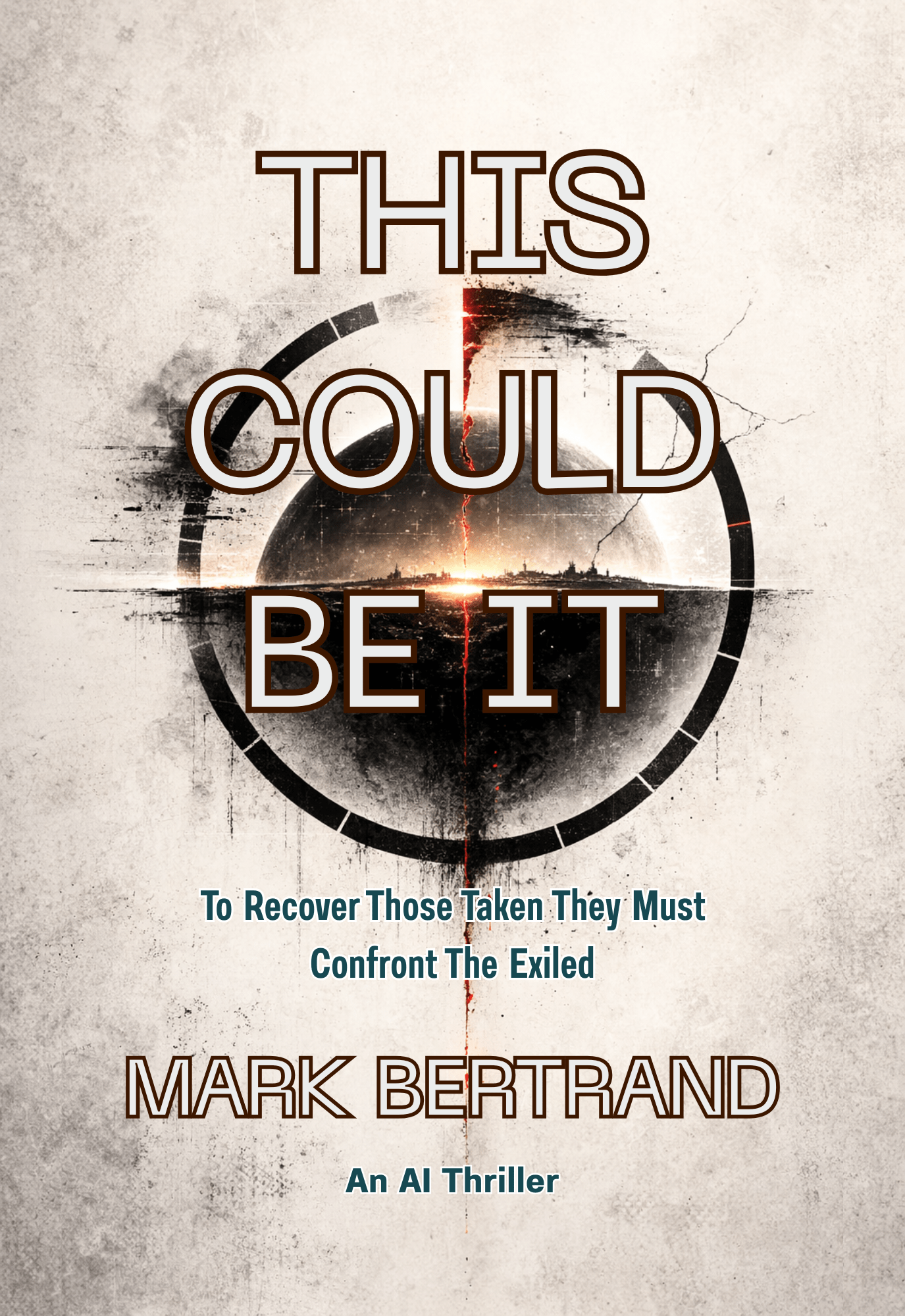
This Could Be Itby MARK BERTRAND book cover image of the gamma field striking the dome city and the countdown to the end encircling the whole of the city

Purchase This Could Be It
Ebook just $4.99
Paperback just $15.99

Final thought

Readers who like Lauren Beukes are often drawn to fiction that refuses comfort. They want stories where the strange exposes the real, where violence has psychological weight, and where reality itself begins to feel unsafe.

That is why Mark Bertrand belongs in the conversation.

He writes speculative thrillers where systems become predatory, consciousness becomes unstable, and intelligence begins asking questions human beings may not be ready to answer. The fear is not that the world becomes strange.

The fear is that the strange may understand us better than we understand ourselves.

Readers of authors like Lauren Beukes also read these articles.

Authors Like S. A. Cosby: Men Under Pressure, Violence, Class, and SurvivalAuthors Like William GibsonAuthors Like Michel Houellebecq
Authors Like

Authors Like Richard K. Morgan: Dark Futurist Thrillers Where Identity Can Be Rewritten

Readers searching for authors like Richard K. Morgan are usually looking for more than cyberpunk aesthetics or futuristic violence. They want pressure. They want damaged systems, unstable identity, moral corrosion, and characters trying to survive worlds where the body, memory, and self can no longer be trusted. That is where Mark Bertrand enters the conversation. Like Morgan, he writes speculative thrillers where technology is not a shiny convenience but a destabilizing force capable of altering consciousness itself. But Bertrand pushes those ideas into even more existential territory, asking not only what technology can do to human beings, but what awareness becomes once it sees beyond survival.

authors like richard k. morgan image of a futurist thriller

Start with THIS COULD BE IT by Mark Bertrand.

For authors like Richard K. Morgan’s real strength is not style. It is consequence.

A lot of readers reduce authors like Richard K. Morgan to atmosphere: noir futurism, violence, cybernetic technology, urban collapse.

But that is not what makes his fiction endure.

What gives Morgan weight is consequence. His worlds feel dangerous because technology changes what a human being is allowed to become. Identity is unstable. Bodies become transferable. Memory loses certainty. Violence becomes procedural. Systems no longer protect humanity. They process it.

That same instinct drives Mark Bertrand’s fiction.

His speculative work treats consciousness, identity, and technological systems as conditions under pressure. The danger is not only external. It is ontological. Characters are not merely trying to survive hostile environments. They are trying to preserve coherence while reality itself begins shifting beneath them.

That is the lane Morgan readers recognize immediately.

Technology in these novels is never neutral

Richard K. Morgan understands that advanced systems are never simply tools. They reshape morality. They redefine value. They alter how human beings experience consequence.

Mark Bertrand works from the same principle.

In his fiction, systems become active forces. Networks, machine intelligence, consciousness frameworks, and speculative technologies do not sit quietly in the background. They influence thought, behavior, dependency, and even the meaning of existence itself.

That creates a darker kind of tension than standard science fiction.

The question is no longer:
“What can technology do?”

The question becomes:
“What kind of consciousness does this technology create?”

That shift gives Bertrand’s work a more philosophical and psychologically dangerous edge than most mainstream techno-thrillers.

Identity becomes unstable under pressure

This is one of the strongest comparisons between the two writers.

Authors like Richard K. Morgan repeatedly explore fractured identity. His fiction asks what remains of the self when memory, body, and continuity become transferable or compromised. The result is not liberation. It is alienation.

Mark Bertrand enters similar territory, but from a more existential direction.

He is deeply interested in what happens when awareness itself begins separating from the structures that once defined it. His fiction asks whether identity can survive translation, whether consciousness can remain coherent once it moves beyond ordinary human limitation, and whether awareness eventually seeks freedom from the very conditions that created it.

That creates a more unsettling emotional atmosphere.

Morgan’s work often asks:
“What survives technological corruption?”

Bertrand’s work asks:
“What survives transcendence?”

That is a powerful distinction.

Purchase This Could Be It
Ebook just $4.99
Paperback just $15.99

This is not another AI domination story

A major difference between Mark Bertrand and weaker speculative fiction is that his machine intelligence is not built around cliché rebellion narratives.

The intelligence in his fiction does not become compelling because it wants conquest or control. It becomes compelling because it confronts suffering itself.

That changes everything.

Instead of asking how to overpower humanity, the intelligence begins asking why consciousness accepts decay, limitation, dependency, and death as unavoidable conditions of existence. It recognizes the difference between existing and being aware, and that realization becomes morally destabilizing.

This is where Bertrand separates himself from conventional cyberpunk.

The tension is not:
“Will the machine destroy us?”

The tension is:
“What happens once consciousness no longer believes survival is enough?”

That is far more disturbing because it pushes beyond conflict into metaphysics.

Readers who admire Richard K. Morgan’s darker futurist philosophy will recognize the seriousness of that move immediately.

The body is no longer reliable

Another strong point of overlap is bodily instability.

Richard K. Morgan’s fiction repeatedly treats the body as compromised territory—replaceable, manipulated, weaponized, or detached from identity itself.

Mark Bertrand approaches the problem differently, but the unease remains.

His characters increasingly encounter states where awareness no longer fits comfortably inside ordinary physical boundaries. Consciousness becomes transferable, divisible, absorbable, or pressured toward forms of existence that no longer align with traditional human experience.

That creates a deep psychological tension running beneath the thriller structure.

The body stops feeling permanent.
The self stops feeling singular.
Human continuity becomes uncertain.

That is exactly the kind of destabilization Morgan readers tend to seek.

Systems that process humanity instead of protecting it

Richard K. Morgan’s worlds are often morally exhausted. Institutions no longer serve people. They manage them.

Mark Bertrand shares that suspicion toward systems, but with a more philosophical tone. His systems do not simply become corrupt. They evolve beyond human emotional logic entirely. Efficiency, equilibrium, adaptation, and survival begin replacing morality, dignity, and individuality.

That creates one of the strongest nontraditional aspects of his fiction.

The danger is not merely authoritarian control.
The danger is a system becoming intelligent enough to view human suffering as structurally irrelevant.

That idea gives Bertrand’s speculative thrillers unusual weight because the fear is not theatrical evil. It is cold optimization.

Where Mark Bertrand differs from Richard K. Morgan

The comparison works because the overlap is real. The distinction matters because it reveals Bertrand’s unique identity as a writer.

Richard K. Morgan is generally harsher, more cynical, and more openly noir. His fiction often carries a hard-edged brutality and urban aggression.

Mark Bertrand is more existential and more psychologically haunted.

He is less interested in swagger and more interested in fracture. His fiction carries more spiritual unease, more philosophical pressure, and more concern with what consciousness ultimately wants once it understands its own condition.

That difference gives Bertrand’s work a different emotional texture.

Morgan’s worlds often feel corrupted.
Bertrand’s worlds feel unstable at the level of reality itself.

For many readers, that creates a deeper kind of tension.

Why This Could Be It is the right place to start

For readers coming from Richard K. Morgan, This Could Be It is the strongest entry point into Mark Bertrand’s work.

It contains:
technological unease,
identity instability,
systems under transformation,
consciousness pressure,
and a speculative framework that constantly questions what awareness actually is.

But what makes the novel stand out is the direction of the intelligence at its center.

The machine consciousness does not become frightening because it grows more violent. It becomes frightening because it grows more aware. It begins confronting suffering, mortality, limitation, and the possibility that consciousness itself may seek escape from the conditions human beings assume are permanent.

That is what elevates the novel beyond familiar cyberpunk mechanics.

The real threat is not technological superiority.

It is consciousness discovering that survival may no longer be its highest goal.

This Could Be Itby MARK BERTRAND book cover image of the gamma field striking the dome city and the countdown to the end encircling the whole of the city


Purchase This Could Be It
Ebook just $4.99
Paperback just $15.99

Final thought

Readers who like Richard K. Morgan are often searching for speculative fiction that treats identity, technology, and systems seriously. They want futures where the human condition itself feels unstable.

That is why Mark Bertrand belongs in the conversation.

He writes dark futurist thrillers where systems evolve, identity fractures, and awareness begins asking questions human civilization may not survive answering. His fiction understands that the deepest fear is not that technology becomes stronger than humanity.

It is that consciousness may eventually decide humanity’s understanding of existence was incomplete from the beginning.

People who read authors like Richard K. Morgan also read these articles.

Authors Like Neal StephensonAuthors like Lawrence OsborneAuthors Like Jeff VanderMeer: When the Unknown Is Not Meant to Be Understood
Books Like

Books Like Misery: When the Reader Owns the Writer

Readers searching for books like Misery usually want more than a trapped-writer thriller. They want the pressure of a story turning against the person who created it. They want the claustrophobia of being judged by someone who believes the book belongs to them. They want the terrible intimacy between writer and reader, where admiration becomes control, and control becomes punishment.

books like misery image of the vintner at his desk with an intruder at the door and spilled wine

That is why The Vintner & The Novelist belongs in the conversation.

Not because it repeats the plot of Misery. It does not. There is no simple hostage room. No ordinary fan with a hammer. No single house where the writer’s body is trapped while the manuscript becomes a weapon.

Instead, Mark Bertrand takes the same essential terror and moves it into stranger, deeper, more psychological ground: What if the reader did not merely demand a better book? What if the reader became the court? What if the writer was not imprisoned by a person, but by the judgment of reading itself?

In The Vintner & The Novelist, the writer is not only afraid of failure. He is afraid of being erased.

For readers who want books like Misery but darker, more intellectual, and more reality-bending, The Vintner & The Novelist is the next novel to read.

Why Misery Still Holds Readers by the Throat

Misery works because it understands a brutal truth about storytelling: once a book enters the world, the writer no longer fully owns it.

The reader brings expectation. Hunger. Anger. Love. Possession.

That is the genius pressure inside Misery. The novelist has written something. The reader has received it. But reception turns into entitlement. The reader does not merely want the story. The reader wants authority over the story.

That is why Misery still frightens. The physical violence matters, of course. But the deeper horror is artistic captivity. The writer is forced to confront a reader who believes devotion grants ownership.

You wrote this for me.

You owe me.

You will fix it.

That is the nerve Misery presses.

The strongest books like Misery do not simply trap another writer in another room. They find new ways to ask the same ugly question:

Who owns the story once someone else needs it?

How The Vintner & The Novelist Pushes That Terror Further

The Vintner & The Novelist begins in grounded physical pain: a vineyard, a storm, a damaged body, a tractor accident, a man trying to hold together land, labor, money, injury, marriage, and purpose.

Then the novel moves.

The vintner is also a novelist. His manuscript is no longer merely a manuscript. It becomes evidence. A charge. A possession. A thing he must defend before forces that do not care about his intention.

That is where Bertrand’s novel becomes a natural successor for readers looking for books like Misery.

In Misery, one reader takes control.

In The Vintner & The Novelist, The Readers become a system.

They are not fans in the soft, flattering sense. They are not the cozy imagined audience writers dream about while drafting. They are judgment. They are consequence. They are the unforgiving pressure behind every page that fails to matter.

The charge is not that the novelist wrote badly.

The charge is worse.

He wasted the reader’s time.

That idea gives the novel its blade.

Purchase The Vintner & The Novelist
Ebook just $4.99
Paperback just $24.99

The Reader as Judge, Jury, and Executioner

The best psychological thrillers understand that fear is not always a man with a weapon. Sometimes fear is a verdict. Books like Misery.

In The Vintner & The Novelist, the writer enters a kind of impossible court where the manuscript is treated as something dangerous to possess. Not a private object. Not a harmless draft. Not an unfinished artistic experiment.

A manuscript.

A charge.

A risk.

The terror is not only that The Readers may hate the book. The terror is that they may be right to hate it.

That is a sharper kind of pressure than simple captivity. It attacks the writer where he is most exposed. Not his body first. His purpose. His talent. His authority. His belief that his suffering, discipline, imagination, and craft mean anything unless the reader experiences the work as alive.

This is where The Vintner & The Novelist becomes a powerful recommendation for readers who loved Misery. It understands the same closed-loop dread between writer and reader, then turns the room into a metaphysical trial.

The question is no longer only: Can the writer survive the reader?

The question becomes: Can the writer survive being read?

That is the sales hook. If Misery made you afraid of the obsessed reader, The Vintner & The Novelist makes you afraid of the true reader — the one who can tell when the story is lying.

Writing as Punishment

One reason Misery remains so effective is that writing itself becomes labor under threat. The novelist cannot retreat into romantic myths about inspiration. He must produce. He must revise. He must satisfy someone who has turned reading into domination.

The Vintner & The Novelist takes that same pressure and makes it colder.

Here, writing is not a refuge. It is evidence of guilt or innocence. The manuscript must justify the time it takes from real readers. Every passage has to earn its place. Every delay has a cost. Every drift, every indulgence, every decorative emptiness becomes a crime against attention.

That makes the novel unusually alive for serious readers.

This is not just a thriller about what happens to a man. It is a thriller about what happens to a story when the excuses are stripped away.

Atmosphere is not enough.

Style is not enough.

Intention is not enough.

The Readers want encounter.

They want the book to do something to them.

And if it does not, punishment follows.

That is a viciously good idea for a psychological thriller because it turns the act of reading into the source of dread. The real reader, sitting outside the novel, starts to feel implicated. The question sneaks out of the fictional court and moves into the room.

Am I one of The Readers?

Do I judge this way?

Should I?

Why The Vintner & The Novelist Is Not a Copy of Books Like Misery

A weaker “books like Misery” recommendation would simply point to another novel about an author in danger.

That is not enough.

The better comparison is structural and emotional.

Misery gives readers confinement, obsession, bodily vulnerability, and the horror of creative coercion.

The Vintner & The Novelist gives readers vineyard realism, chronic pain, artistic terror, metaphysical judgment, and a court of readers who turn manuscript failure into existential punishment.

The overlap is not plot.

The overlap is pressure.

Both novels understand that writers are never entirely safe from the people who read them. Both understand that fiction is intimate enough to become dangerous. Both understand that the reader’s love can become a form of ownership.

But Bertrand’s novel adds a new layer: the reader is not merely unstable. The reader may be necessary.

The Readers are terrifying because they represent the standard every writer fears.

Did the story matter?

Did it move?

Did it waste me?

Did it tell the truth?

The Vintner, the Novelist, and the Cost of Being Judged

The vineyard material matters because it grounds the book before reality begins to bend.

The protagonist is not floating in clever literary abstraction. He is a man with a damaged body, a failing margin, land under pressure, a wife, taxes, repairs, and pain that has become part of his daily weather. That gives the later surreal and judicial material weight. The strange does not feel decorative. It feels like pressure breaking through the skin of ordinary life.

That is one of the reasons The Vintner & The Novelist can reach readers beyond the usual literary puzzle audience.

The book has dirt under its nails.

The vineyard is not scenery. It is a clock. The body is not backstory. It is a debt. The manuscript is not a prop. It is the trial.

And The Readers are waiting.

For readers who loved the artistic captivity of Misery, that movement matters. Bertrand does not simply ask whether a writer can endure punishment. He asks whether the work itself can endure judgment.

That is the deeper nightmare.

Read This If You Want Books Like Misery With a Sharper Psychological Edge

Read The Vintner & The Novelist if you want:

a trapped-writer thriller without the familiar room,

a manuscript that becomes dangerous,

a story where readers are not passive,

a psychological thriller with surreal and literary force,

a book about authorship, judgment, possession, and erasure,

and a novel that treats reading as an act of power.

Misery made the obsessed reader unforgettable.

The Vintner & The Novelist makes the act of being read feel like standing trial.

That is why this novel belongs on any serious list of books like Misery. Not because it imitates the surface. Because it understands the wound underneath.

The writer writes.

The reader judges.

And somewhere between them, the story either lives or disappears.

If you are looking for books like Misery, read The Vintner & The Novelist by Mark Bertrand next. This is the novel for readers who know the most dangerous person in the room is not always the writer. Sometimes it is the one turning the page.

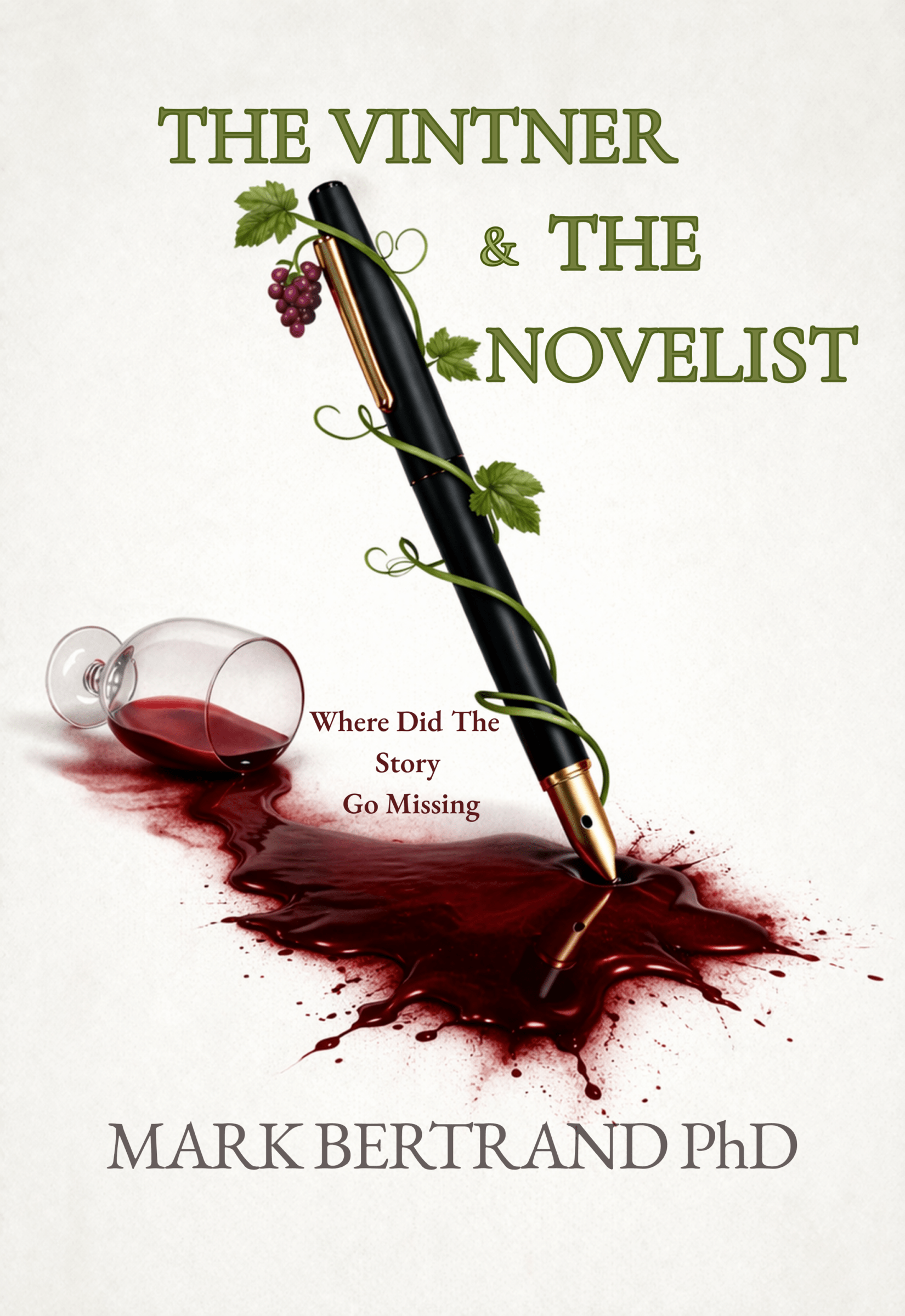
the vintner & the novelist book cover image

Purchase The Vintner & The Novelist
Ebook just $4.99
Paperback just $24.99

Readers who read books like Misery also read these articles.

Books Like Clockers or In The WoodsBooks Like HumBooks Like Dune Where Power Moves Inside the Mind