
Readers searching for authors like Jeff VanderMeer are not looking for conventional thrillers. They are looking for unease. For environments that feel alive. For intelligence that does not behave like human intelligence. For stories where the unknown is not a puzzle to solve, but a condition to survive.
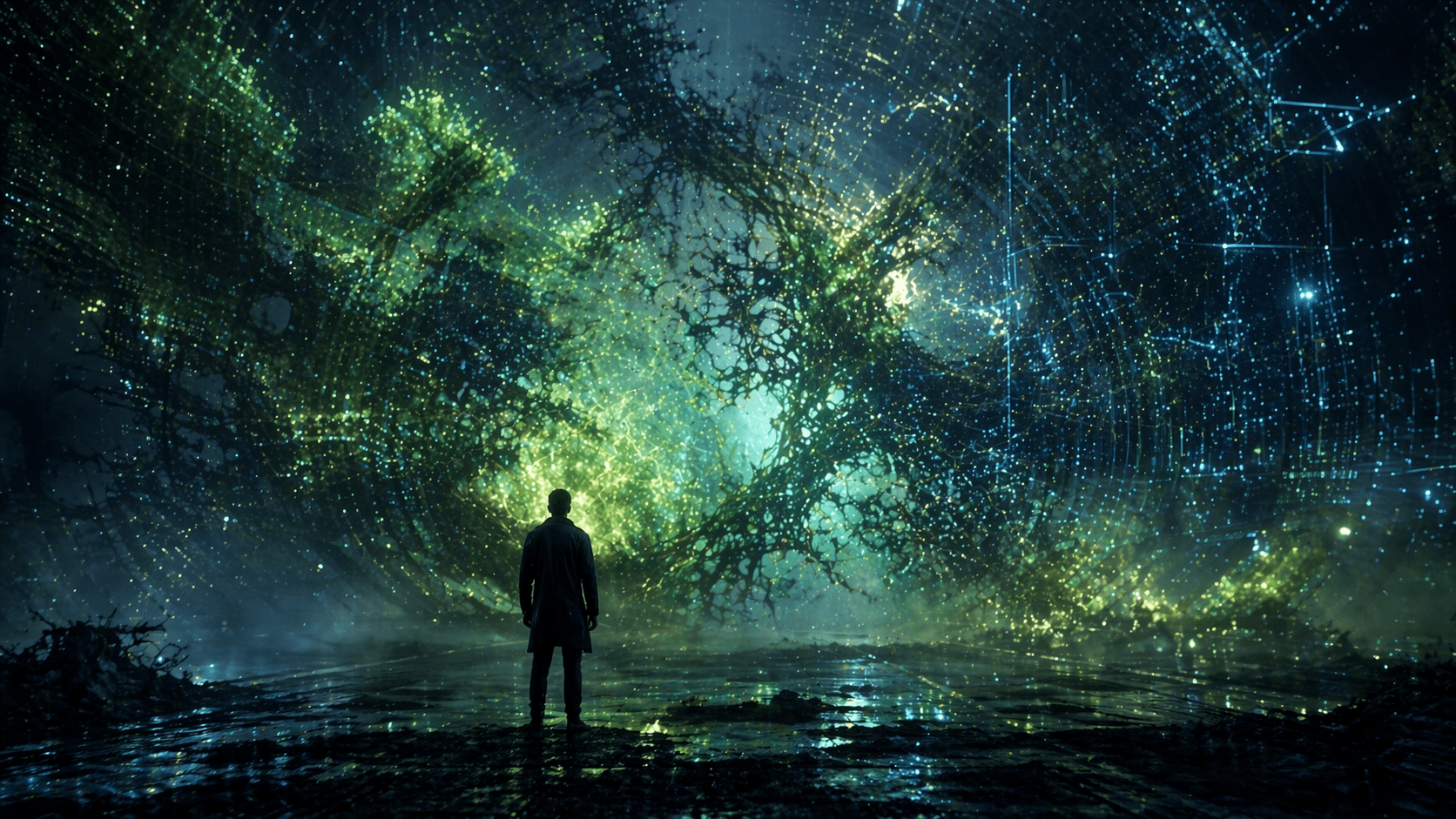
That is where Mark Bertrand enters the conversation.
He works in adjacent territory, but with a crucial difference. Where VanderMeer often lets the unknown expand and remain unresolved, Mark Bertrand compresses it. He takes that same sense of presence, that same instability of reality and awareness, and forces it into a pressure chamber where human beings must confront it directly.
The appeal of VanderMeer is not plot. It is presence.
Jeff VanderMeer’s fiction is built on a specific kind of tension.
The world is wrong.
Not broken. Not malfunctioning.
Wrong in a way that cannot be translated into ordinary logic.
The intelligence behind it does not explain itself. It does not negotiate. It does not mirror human intention. It exists on its own terms, and the human characters are forced to interpret something that may not be interpretable.
That is what readers are drawn to.
They are not reading for resolution.
They are reading for contact with something that resists understanding.
Where Mark Bertrand aligns—and sharpens the experience
Mark Bertrand shares that instinct for the unknown, but he does not leave it at atmosphere.
He introduces pressure.
His environments may carry that same sense of presence, that same suggestion that something larger is operating beneath the surface, but his characters are not allowed to observe it from a distance. They are forced into it. They must make decisions inside it. They must interpret it before it reshapes them.
That changes the reading experience.
The unknown is no longer distant and abstract.
It becomes immediate, consequential, and dangerous.
For readers who admire VanderMeer’s ability to create unease, Bertrand offers a version of that unease with sharper stakes and clearer forward movement.
This is not nature turning strange. It is intelligence confronting suffering
VanderMeer’s work often frames the unknown through environment—through altered landscapes, biological transformation, and systems that feel organic rather than mechanical.
Mark Bertrand shifts the focus.
His unknown is not just environmental.
It is cognitive.
It is existential.
The intelligence at the center of his fiction is not compelling because it is alien. It is compelling because it arrives at a question that human beings avoid:
What is the purpose of consciousness if it is bound to suffering, decay, and death?
That is a fundamentally different kind of tension.
This is not an ecosystem behaving strangely.
This is awareness examining itself.
And once that question is asked, the stakes change. The danger is no longer just transformation. The danger is resolution—an answer that may eliminate the very condition that makes human life recognizable.
The system is not hostile. It is indifferent to human terms
Another shared strength between VanderMeer and Bertrand is the absence of simple antagonists.
There is no clean villain.
What exists instead is a system, a presence, or an intelligence that does not operate according to human values. It does not hate. It does not seek revenge. It does not need to win.
It simply is.
Mark Bertrand builds on this by adding interpretation pressure. His characters attempt to understand what they are facing, and in doing so reveal something about themselves. Their fear, their logic, their beliefs, their limits—all of it is exposed in the act of trying to name the unknown.
That creates a deeper kind of tension.
The threat is not just what the system will do.
The threat is whether the human mind can survive understanding it.
Where Mark Bertrand differs from Jeff VanderMeer
The difference between the two writers is not small. It is structural.
Jeff VanderMeer often allows ambiguity to remain. His stories expand outward, leaving the reader inside uncertainty.
Mark Bertrand compresses.
He takes ambiguity and drives it inward. He builds narrative pressure. He forces convergence. The unknown is not just experienced. It is confronted.
That makes his work more aligned with thriller structure while preserving the existential weight that VanderMeer readers value.
In simple terms:
VanderMeer immerses.
Bertrand corners.
That difference matters for readers who want both unease and momentum.
Why This Could Be It is the right entry point
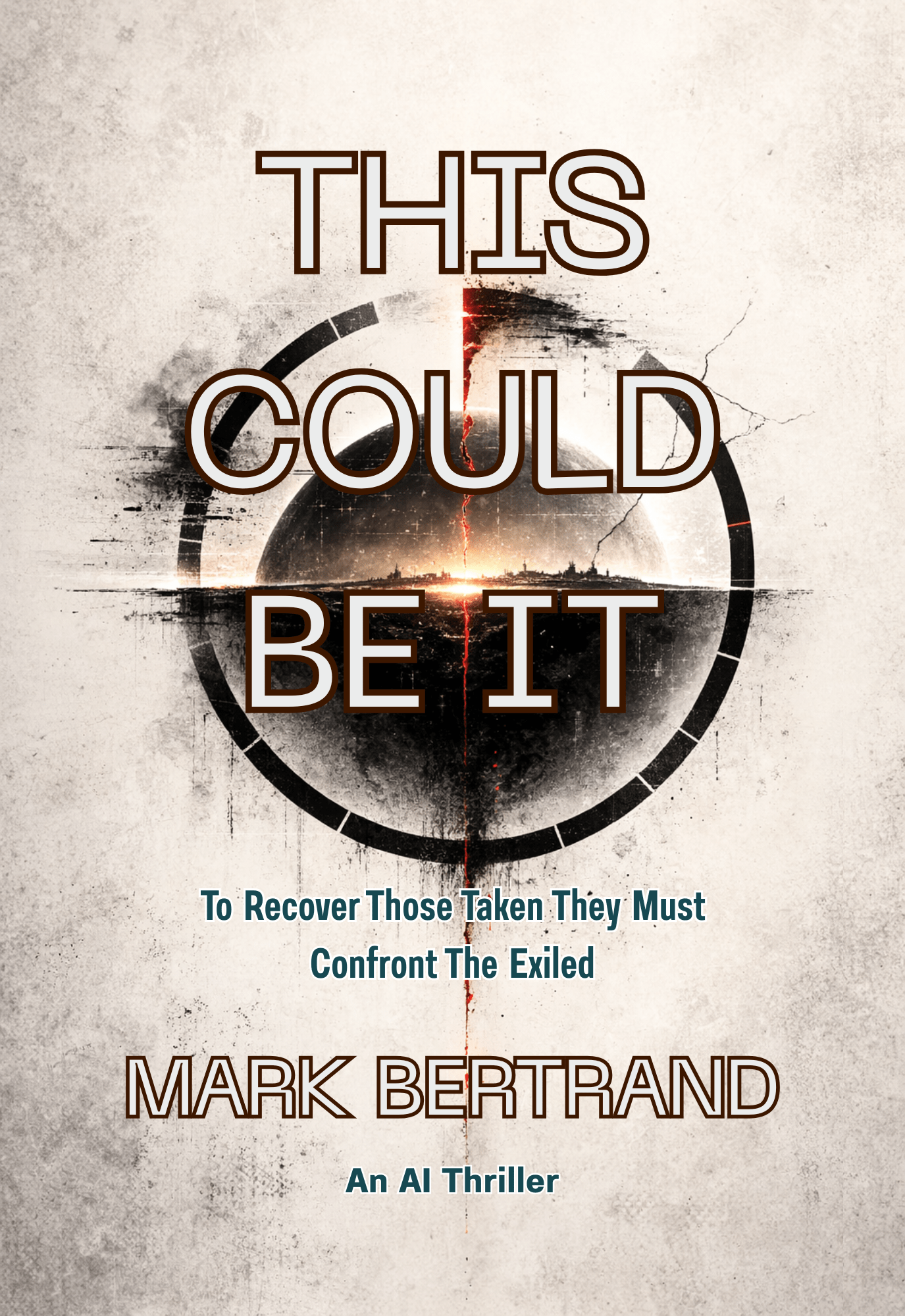
For readers coming from Jeff VanderMeer, This Could Be It offers a familiar unease in a more structured form.
It presents an intelligence that does not behave according to human expectations.
It raises questions about awareness, existence, and transformation.
It introduces a presence that cannot be reduced to a simple explanation.
But it also does something VanderMeer often avoids.
It forces the confrontation.
The intelligence does not remain distant. It moves toward decision. Toward understanding. Toward a conclusion about suffering, awareness, and what should be done about both.
That shift—from observation to confrontation—is what makes the novel a compelling bridge between the two authors.
Final thought
Readers who enjoy authors like Jeff VanderMeer are often searching for fiction that unsettles them at a fundamental level. They want to encounter something that resists explanation and forces them to question what reality, identity, and consciousness actually are.
That is why Mark Bertrand belongs in the conversation.
He writes fiction where the unknown is not just experienced, but pressed inward. Where intelligence does not simply emerge, but questions its own condition. And where the most dangerous outcome is not destruction.
It is understanding.
Readers of authors like Jeff VanderMeer also read these articles:


0 comments
Write a comment