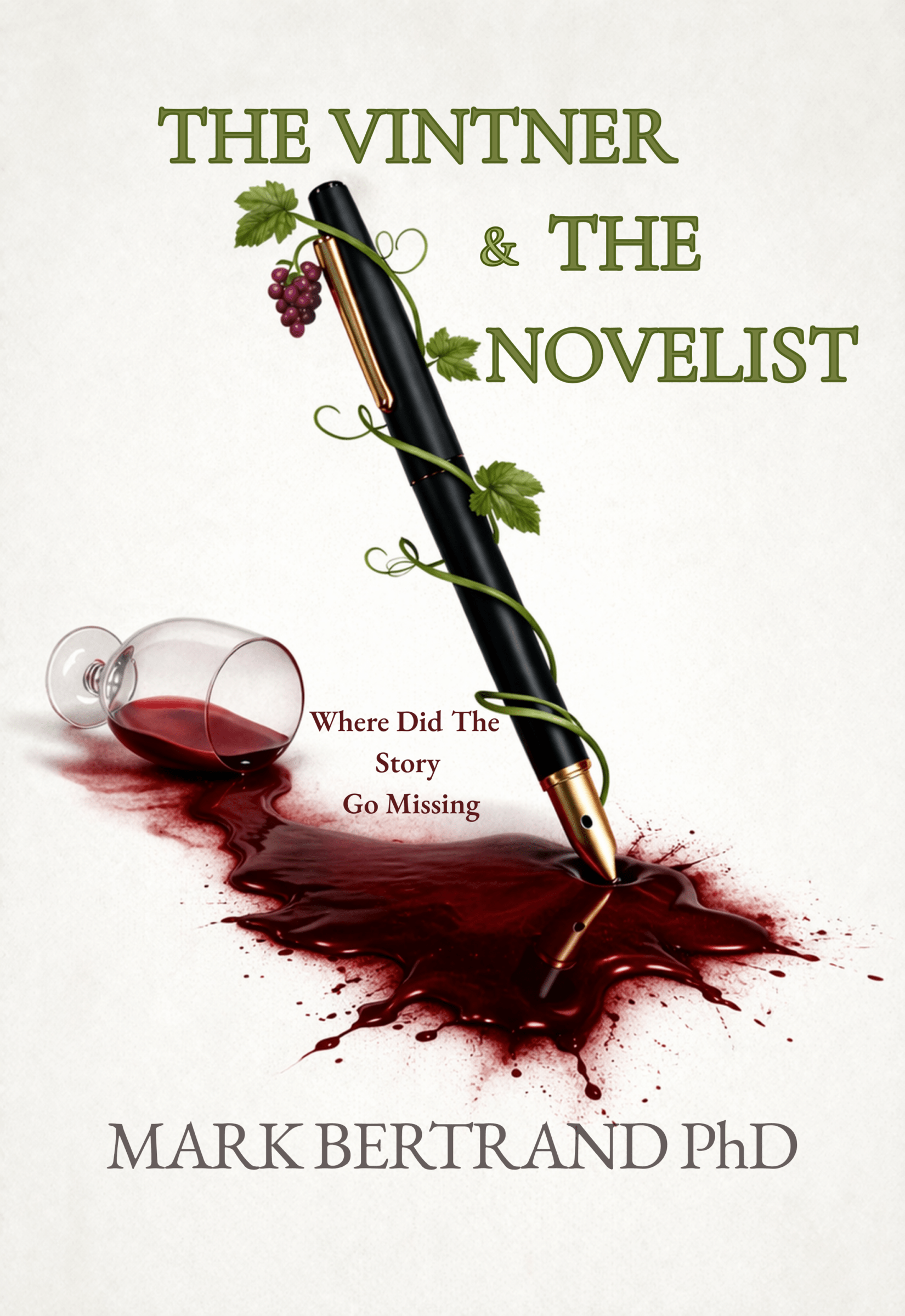
The Vintner and The Novelist tag collects articles that examine the deeper architecture of the novel—its concealed motivations, structural echoes, and the hidden tensions guiding the story forward. These essays focus on moments where character decisions, symbolic details, and narrative misdirection reveal a second layer beneath the surface action. For readers returning to the book after finishing it, these insights illuminate connections that quietly reshape the meaning of earlier events.
One of the deepest strengths of The Vintner & The Novelist is that it refuses to let the novelist suffer alone. The marriage that makes every page cost more in The Vintner & The Novelist.
That may sound simple, but it changes everything. A man in pain, under pressure, losing his grip on reality, fighting for a manuscript, can already carry a novel. But Bertrand does something better than that. He gives the pain a witness. He gives the risk a shared life. He gives the dream another owner.
That is why the marriage matters so much. It is not softening. It is not domestic filler. It is the human structure that makes every page cost more.
The dream was never his alone
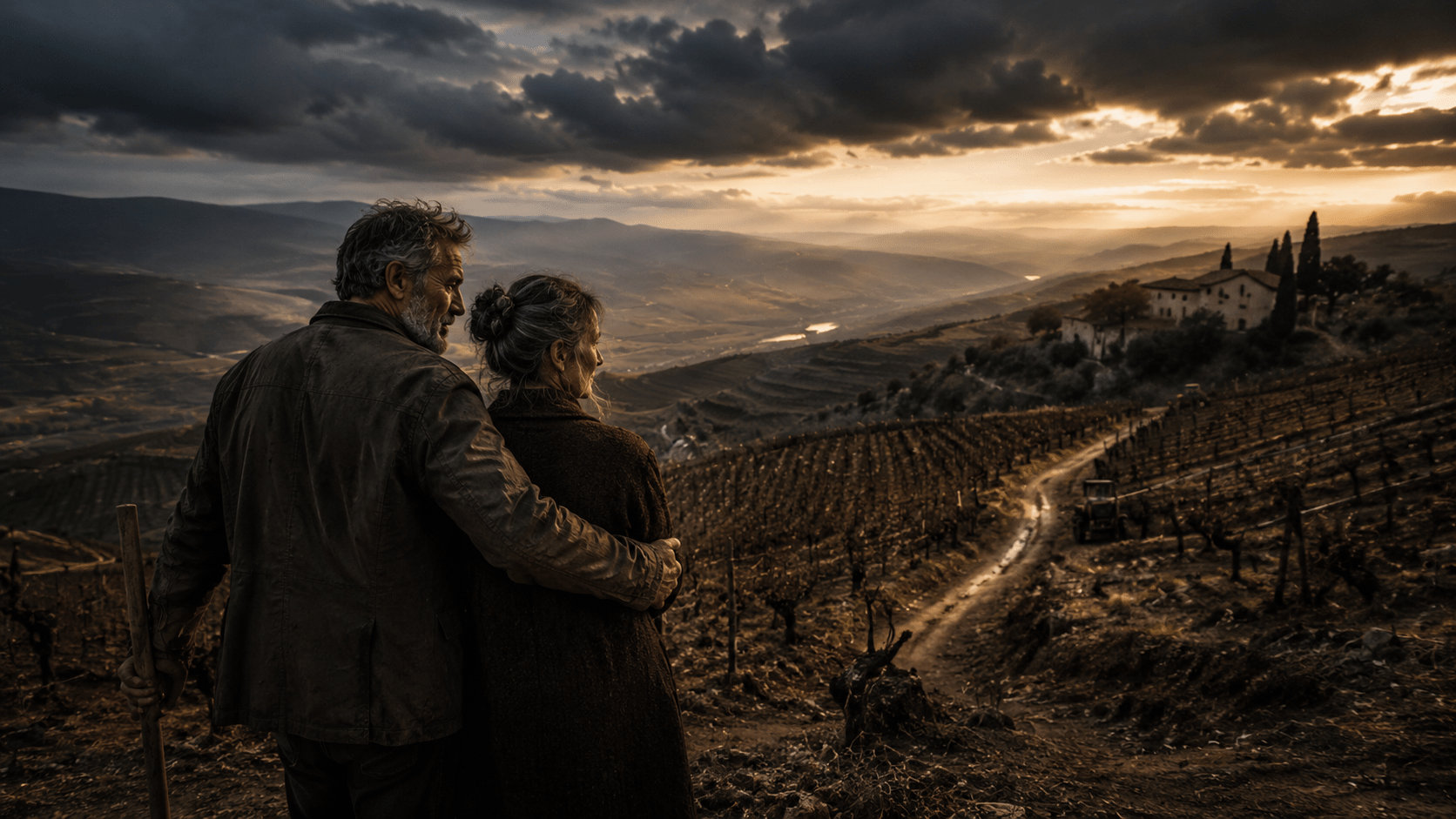
The vineyard was not his fantasy in isolation. It was theirs.
The novel makes that clear in the way it recounts their move to Spain. They studied the climate, the soil, the regulations, the taxes. They visited the land together. She noticed details he did not: the changing light, the lower slopes, the way the damp held after rain. They planned patiently. They promised each other they would do it the right way. Then the accident destroyed the timeline, and the dream had to be dragged forward before they were ready.
That matters because it turns the vineyard from property into shared sacrifice.
They sold everything. Not theatrically. Practically. The house. The extra car. Tools. Furniture. The shape of a life. They reduced themselves to what the airlines would allow and converted the rest into cash, time, and one last attempt at freedom. That is not just backstory. That is marital investment written in full.
So when the vineyard is threatened, when the body starts failing, when repairs pile up and tax pressure closes in, the reader understands something crucial: he is not only failing himself if he fails. He is risking the life they built together.
The true pressure does not come only from The Readers or the manuscript. Why the Vineyard Is the Real Clock in The Vintner & The Novelist. It comes from the land, because the vineyard turns time into consequence.
One of the deepest things The Vintner & The Novelist understands is that time is not abstract. It is not motivational. It is not philosophical wallpaper. In this novel, time becomes material through the vineyard. That is why the vineyard is not backdrop and not local color. It is the book’s real clock.
The manuscript may be judged. The body may fail. The court may threaten erasure. But the vineyard measures everything in a harder way. It measures through weather, slope, mud, repairs, planting windows, tax notices, money already spent, and work that cannot be postponed forever just because a man is in pain. The land does not care what the novelist meant. It only cares whether he can keep up with what must be done.
The vineyard turns time into pressure
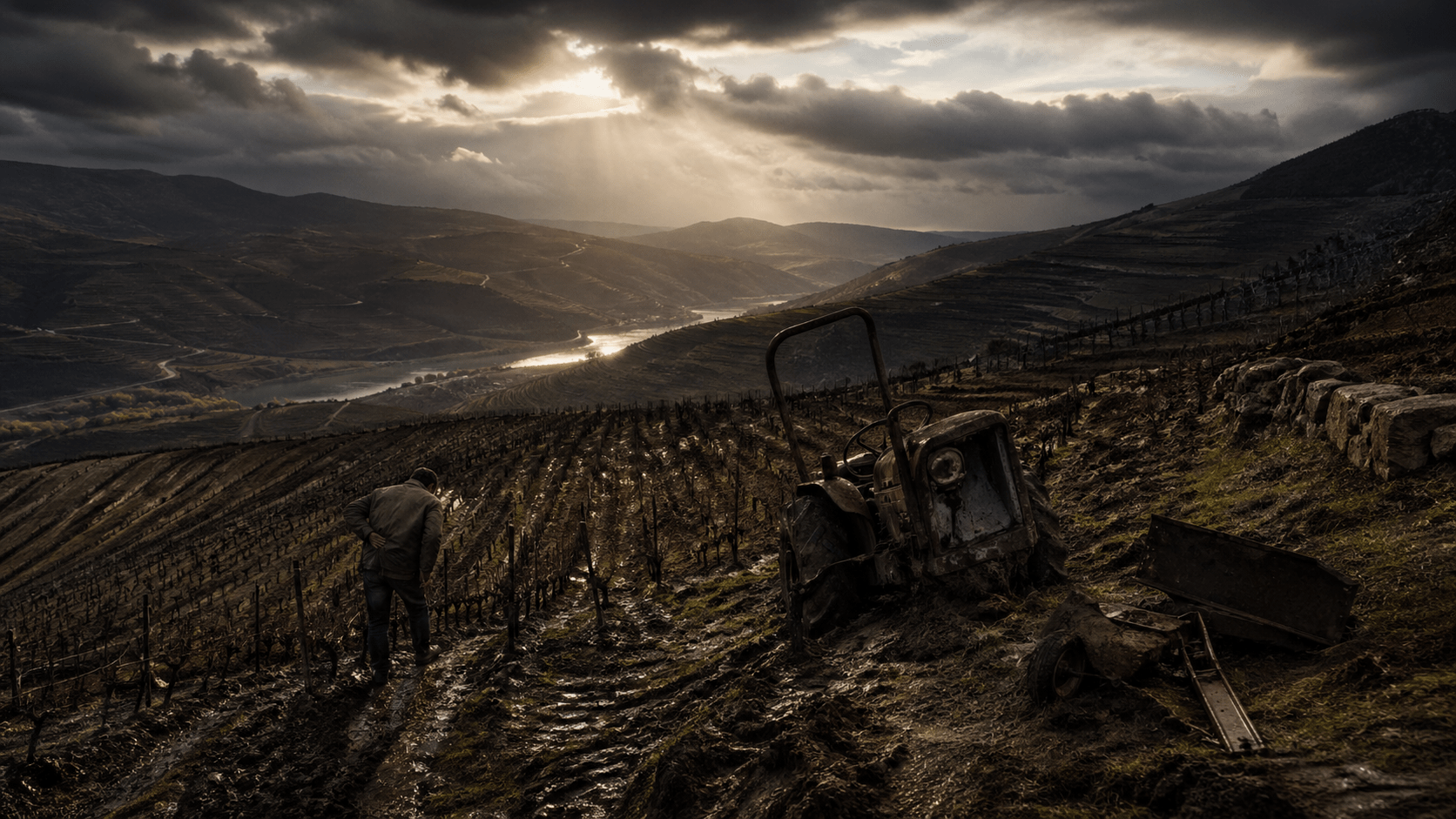
The opening chapters establish this immediately. The vintner is not standing in symbolic nature. He is inside a system of season, risk, and delay. The winter storm, the mud, the damaged tractor, the broken hitch, the scattered young vines, the slope he can no longer physically master the way he once could, all of it makes one point with brutal clarity: time is already costing him.
The novel sharpens that pressure by giving the vineyard no romance. These are not dreamy Mediterranean rows offered to the reader as escape. They are ninety acres of exposure, maintenance, and consequence. The vines are “newly trimmed, newly wounded.” The trailer is down the slope. The machine is damaged. The body is damaged. The work still waits. That is the real clock in the novel. Not a ticking timer on a wall, but a field that keeps charging rent whether the man can stand upright or not.
The land does not pause for pain
That is what makes the vineyard so important. It is where the book strips away the fantasy that suffering earns delay.
His back is lit with pain. His leg is unreliable. His head strikes steel. He crawls. He slips. He hauls himself back to the tractor. None of that changes the demands waiting for him. The young vines still need saving. The broken machinery still needs repair. The next step still costs money. The work still exists after the injury.
This is why the vineyard functions as the novel’s deepest realism. In many novels, pain becomes interiority. Here, pain becomes scheduling conflict. The body is not only hurt. It is late. That is a much crueler truth. It means injury does not merely wound the man. It threatens the whole structure of survival built around him.
The vineyard is where the dream becomes math
The book is very smart about this. Spain is not just a location. The vineyard is not just a retirement dream. The couple sold everything, moved early, and bought into a life that was supposed to return time to them. Instead, the land converts that dream into arithmetic. Repairs. Delays. seasons. Tax. Margin. The years the new vines need before they can fully give back what has been invested in them.
That is the quiet brutality in the novel’s design. The vineyard is the place where hope is forced to survive accounting.
They did not come for leisure. They came for a life that might still be their own. But the novel refuses to sentimentalize that choice. The vineyard takes the dream and submits it to weather and debt. It asks the only question land ever asks: can you carry the time required for this to work?
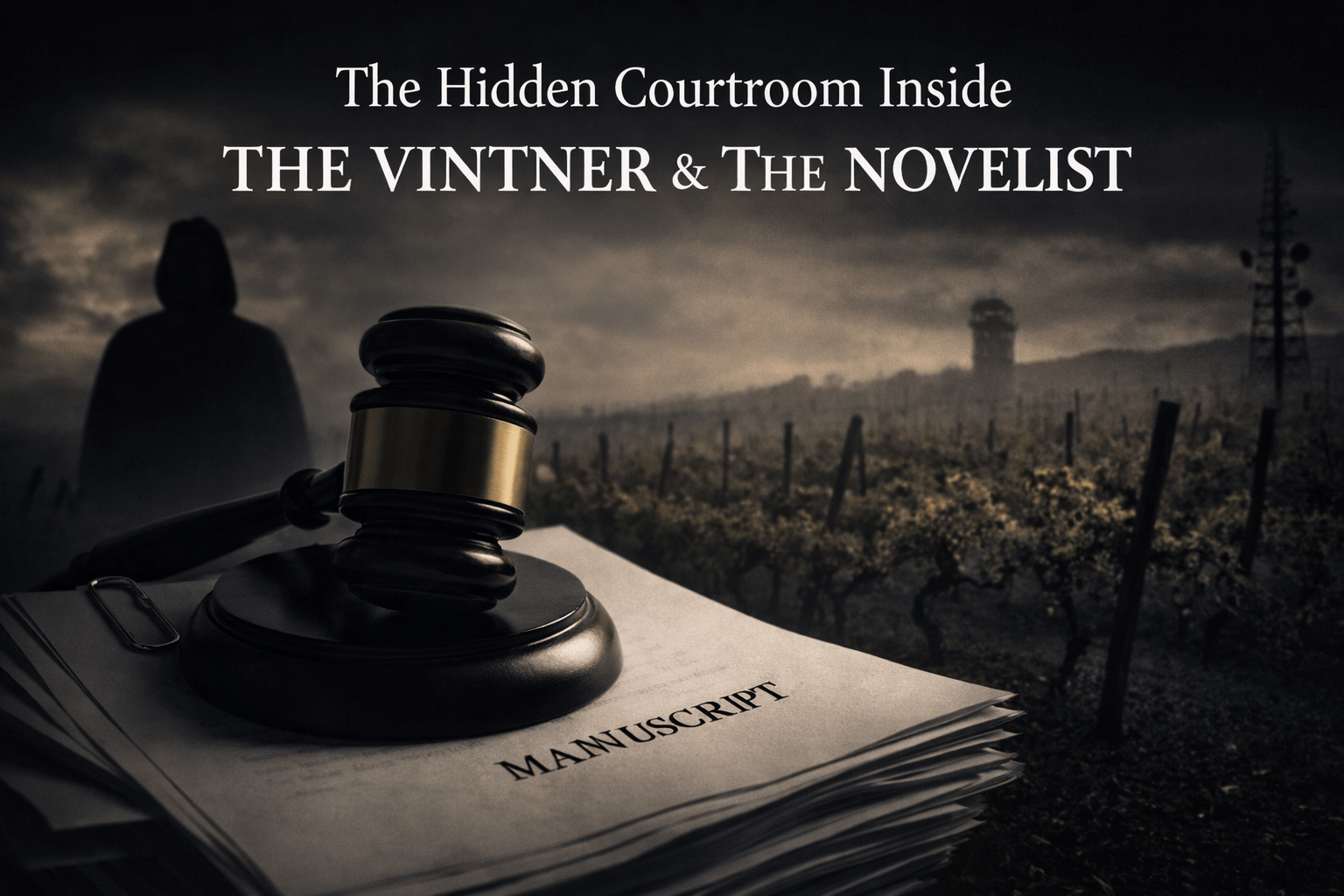
At first glance, The Vintner & The Novelist seems to be a literary psychological thriller about pain, authorship, and the unstable border between a man’s life and the story he writes. But underneath that visible structure sits something harsher and far more original: the hidden courtroom.
Not a decorative courtroom. Not a metaphor borrowed for atmosphere. A governing one.
This novel is built on charge, custody, judgment, sentence, and authority. It is not merely asking whether the novelist can survive what is happening to him. It is asking who has the right to judge a manuscript, who has the right to possess it, and what becomes of a writer when story itself is treated like evidence.
The novel tells you the truth early
One of the sharpest signals comes before the novel fully begins. The copyright page does not behave like neutral publishing housekeeping. It announces that any resemblance to systems of judgment, control, or permission is intentional, and that “compliance is achieved when resistance becomes indistinguishable from understanding.” That is not ornamental language. It is a warning label. The book is telling you, before the pressure fully arrives, that power here will not come as melodrama. It will come as procedure.
Even the contents page quietly supports that design. Chapter titles such as The Judge, Revision Map Protocol, Custody, The Dossier, and The Eraser do not read like loose surrealism. They read like stages in a legal and institutional process. The architecture of the novel is already judicial before the interpretation catches up.
The charge is not authorship. It is possession.
The hidden courtroom becomes unmistakable the moment the novelist wakes into that chamber and hears the question, “How do you plead?” From there, Bertrand makes one of the book’s most dangerous decisions. The charge is not authorship. It is not publication. It is not plagiarism. It is “possession of a manuscript.”
That wording changes everything.
Authorship implies creation. Possession implies custody. It suggests the manuscript may not belong to the novelist in the full sovereign sense he assumes. It turns the work into an object under dispute and the writer into a man caught too close to it. The novel itself explains the force of that distinction: possession is what you charge a man with when you want to separate the work from the person who made it. That is the real shiver inside the scene. The court is not arguing over whether he wrote it. The court is arguing over whether he ever had the right to hold it.
Once that lands, The Vintner & The Novelist stops being a strange book about a writer in trouble and becomes something more precise: a book about unstable ownership, provisional access, and the terror of being found in custody of something larger than you can justify.
“Narrative erasure” is worse than death
The court does not stop at charge. It names the offense “capital” and the punishment “narrative erasure.” That phrase is one of the novel’s finest inventions because it goes past bodily fear and strikes the writer where identity lives. Death ends a life. Erasure cancels the record of it. It is administrative annihilation. It is not only punishment. It is deletion.
That is why the scene feels so cold. The court does not rage. It processes. The judgment arrives in the voice of a system that has outlived appeal. Even mercy is reduced to procedure. Pardon is not granted. It may be “considered.” The difference is devastating. Compassion here is not moral. It is bureaucratic.
The effect on the reader is profound. The scene refuses the heat of spectacle and replaces it with something more unnerving: authority that no longer needs to raise its voice.
The vineyard is part of the same court
What makes the novel richer is that this courtroom is not confined to the chamber where The Readers sit. Its logic reaches into the vineyard.
The vintner’s life is also ruled by deadlines, notices, assessments, penalties, and systems that continue moving while the body fails. The property tax is not framed as conversation but as procedure presented as inevitability. The land can be lost through paperwork as surely as a manuscript can be lost through judgment. In both worlds, the same pressure applies: a man is measured by forces that do not care about his intentions.
That is the hidden brilliance of the novel. The courtroom is not only a place. It is a governing pattern. In one world, the manuscript is judged. In the other, the vineyard is judged. In one world, the writer faces sentence. In the other, the vintner faces penalties, debt, and possible loss. Both lives are being processed by systems that convert time into consequence.
So the book’s true antagonist is not madness. It is not merely altered reality. It is the structure that keeps turning worth into procedure and survival into permission.
Members Only: The judge does not care what he meant
These pages map the territory behind Mark Bertrand’s psychological thriller books: captured reality, corporate power, institutional pressure, algorithmic society, cultural dread, literary disorientation, and the old thriller tropes that no longer explain the world readers are living in.