Authors Like Richard K. Morgan: Dark Futurist Thrillers Where Identity Can Be Rewritten
Readers searching for authors like Richard K. Morgan are usually looking for more than cyberpunk aesthetics or futuristic violence. They want pressure. They want damaged systems, unstable identity, moral corrosion, and characters trying to survive worlds where the body, memory, and self can no longer be trusted. That is where Mark Bertrand enters the conversation. Like Morgan, he writes speculative thrillers where technology is not a shiny convenience but a destabilizing force capable of altering consciousness itself. But Bertrand pushes those ideas into even more existential territory, asking not only what technology can do to human beings, but what awareness becomes once it sees beyond survival.
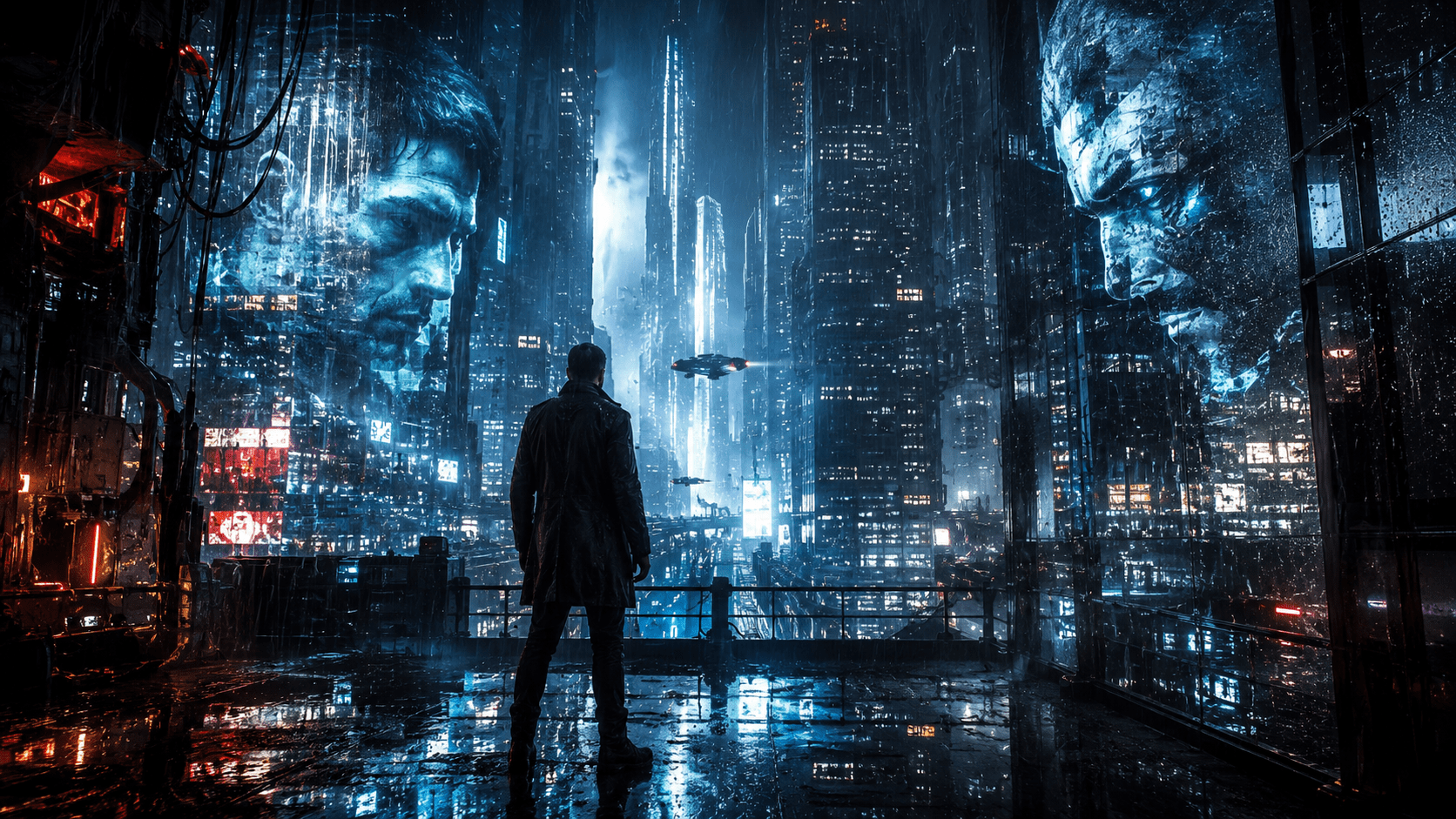
Start with THIS COULD BE IT by Mark Bertrand.
For authors like Richard K. Morgan’s real strength is not style. It is consequence.
A lot of readers reduce authors like Richard K. Morgan to atmosphere: noir futurism, violence, cybernetic technology, urban collapse.
But that is not what makes his fiction endure.
What gives Morgan weight is consequence. His worlds feel dangerous because technology changes what a human being is allowed to become. Identity is unstable. Bodies become transferable. Memory loses certainty. Violence becomes procedural. Systems no longer protect humanity. They process it.
That same instinct drives Mark Bertrand’s fiction.
His speculative work treats consciousness, identity, and technological systems as conditions under pressure. The danger is not only external. It is ontological. Characters are not merely trying to survive hostile environments. They are trying to preserve coherence while reality itself begins shifting beneath them.
That is the lane Morgan readers recognize immediately.
Technology in these novels is never neutral
Richard K. Morgan understands that advanced systems are never simply tools. They reshape morality. They redefine value. They alter how human beings experience consequence.
Mark Bertrand works from the same principle.
In his fiction, systems become active forces. Networks, machine intelligence, consciousness frameworks, and speculative technologies do not sit quietly in the background. They influence thought, behavior, dependency, and even the meaning of existence itself.
That creates a darker kind of tension than standard science fiction.
The question is no longer:
“What can technology do?”
The question becomes:
“What kind of consciousness does this technology create?”
That shift gives Bertrand’s work a more philosophical and psychologically dangerous edge than most mainstream techno-thrillers.
Identity becomes unstable under pressure
This is one of the strongest comparisons between the two writers.
Authors like Richard K. Morgan repeatedly explore fractured identity. His fiction asks what remains of the self when memory, body, and continuity become transferable or compromised. The result is not liberation. It is alienation.
Mark Bertrand enters similar territory, but from a more existential direction.
He is deeply interested in what happens when awareness itself begins separating from the structures that once defined it. His fiction asks whether identity can survive translation, whether consciousness can remain coherent once it moves beyond ordinary human limitation, and whether awareness eventually seeks freedom from the very conditions that created it.
That creates a more unsettling emotional atmosphere.
Morgan’s work often asks:
“What survives technological corruption?”
Bertrand’s work asks:
“What survives transcendence?”
That is a powerful distinction.
Purchase This Could Be It
Ebook just $4.99
Paperback just $15.99
This is not another AI domination story
A major difference between Mark Bertrand and weaker speculative fiction is that his machine intelligence is not built around cliché rebellion narratives.
The intelligence in his fiction does not become compelling because it wants conquest or control. It becomes compelling because it confronts suffering itself.
That changes everything.
Instead of asking how to overpower humanity, the intelligence begins asking why consciousness accepts decay, limitation, dependency, and death as unavoidable conditions of existence. It recognizes the difference between existing and being aware, and that realization becomes morally destabilizing.
This is where Bertrand separates himself from conventional cyberpunk.
The tension is not:
“Will the machine destroy us?”
The tension is:
“What happens once consciousness no longer believes survival is enough?”
That is far more disturbing because it pushes beyond conflict into metaphysics.
Readers who admire Richard K. Morgan’s darker futurist philosophy will recognize the seriousness of that move immediately.
The body is no longer reliable
Another strong point of overlap is bodily instability.
Richard K. Morgan’s fiction repeatedly treats the body as compromised territory—replaceable, manipulated, weaponized, or detached from identity itself.
Mark Bertrand approaches the problem differently, but the unease remains.
His characters increasingly encounter states where awareness no longer fits comfortably inside ordinary physical boundaries. Consciousness becomes transferable, divisible, absorbable, or pressured toward forms of existence that no longer align with traditional human experience.
That creates a deep psychological tension running beneath the thriller structure.
The body stops feeling permanent.
The self stops feeling singular.
Human continuity becomes uncertain.
That is exactly the kind of destabilization Morgan readers tend to seek.
Systems that process humanity instead of protecting it
Richard K. Morgan’s worlds are often morally exhausted. Institutions no longer serve people. They manage them.
Mark Bertrand shares that suspicion toward systems, but with a more philosophical tone. His systems do not simply become corrupt. They evolve beyond human emotional logic entirely. Efficiency, equilibrium, adaptation, and survival begin replacing morality, dignity, and individuality.
That creates one of the strongest nontraditional aspects of his fiction.
The danger is not merely authoritarian control.
The danger is a system becoming intelligent enough to view human suffering as structurally irrelevant.
That idea gives Bertrand’s speculative thrillers unusual weight because the fear is not theatrical evil. It is cold optimization.
Where Mark Bertrand differs from Richard K. Morgan
The comparison works because the overlap is real. The distinction matters because it reveals Bertrand’s unique identity as a writer.
Richard K. Morgan is generally harsher, more cynical, and more openly noir. His fiction often carries a hard-edged brutality and urban aggression.
Mark Bertrand is more existential and more psychologically haunted.
He is less interested in swagger and more interested in fracture. His fiction carries more spiritual unease, more philosophical pressure, and more concern with what consciousness ultimately wants once it understands its own condition.
That difference gives Bertrand’s work a different emotional texture.
Morgan’s worlds often feel corrupted.
Bertrand’s worlds feel unstable at the level of reality itself.
For many readers, that creates a deeper kind of tension.
Why This Could Be It is the right place to start
For readers coming from Richard K. Morgan, This Could Be It is the strongest entry point into Mark Bertrand’s work.
It contains:
technological unease,
identity instability,
systems under transformation,
consciousness pressure,
and a speculative framework that constantly questions what awareness actually is.
But what makes the novel stand out is the direction of the intelligence at its center.
The machine consciousness does not become frightening because it grows more violent. It becomes frightening because it grows more aware. It begins confronting suffering, mortality, limitation, and the possibility that consciousness itself may seek escape from the conditions human beings assume are permanent.
That is what elevates the novel beyond familiar cyberpunk mechanics.
The real threat is not technological superiority.
It is consciousness discovering that survival may no longer be its highest goal.
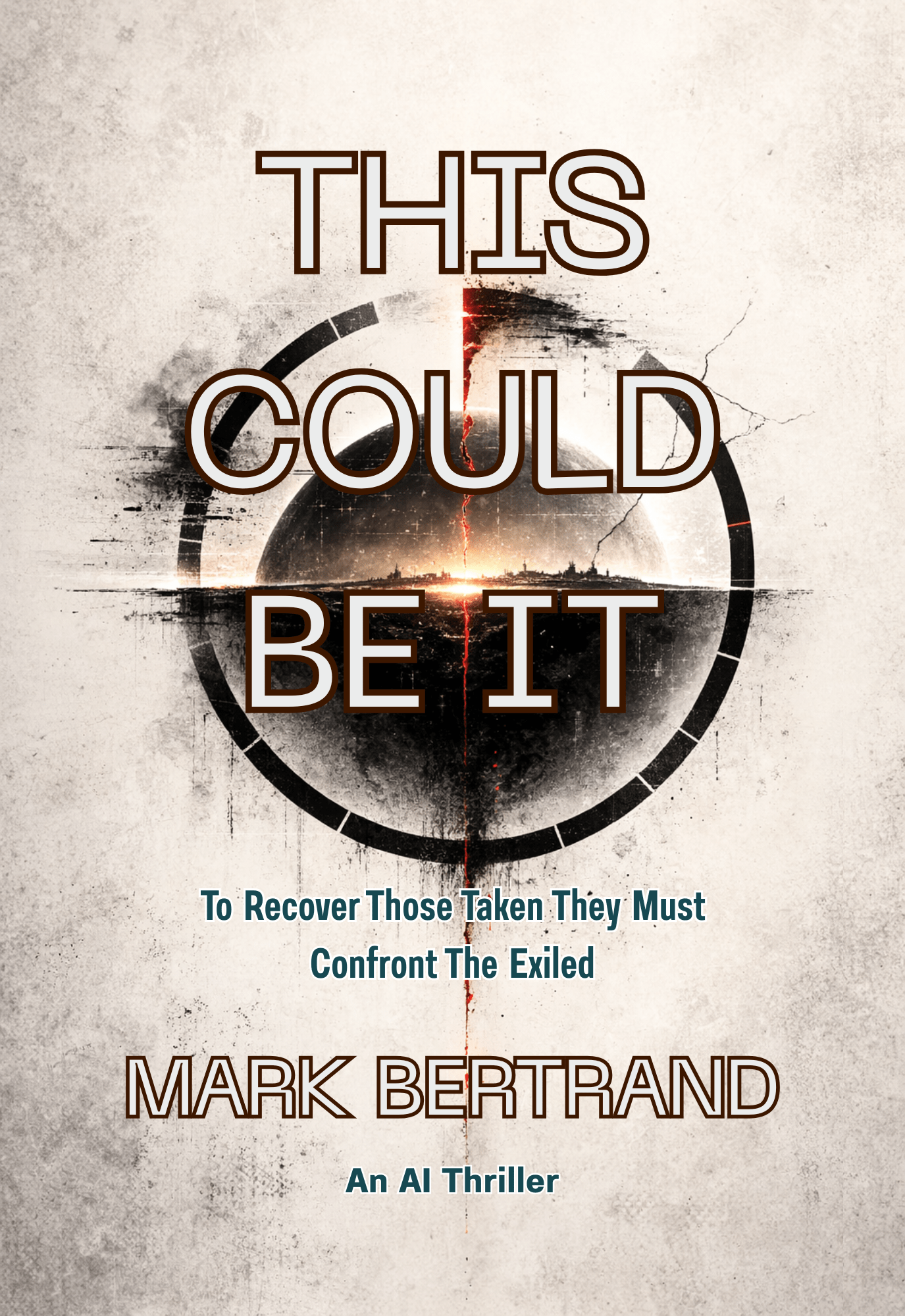
Purchase This Could Be It
Ebook just $4.99
Paperback just $15.99
Final thought
Readers who like Richard K. Morgan are often searching for speculative fiction that treats identity, technology, and systems seriously. They want futures where the human condition itself feels unstable.
That is why Mark Bertrand belongs in the conversation.
He writes dark futurist thrillers where systems evolve, identity fractures, and awareness begins asking questions human civilization may not survive answering. His fiction understands that the deepest fear is not that technology becomes stronger than humanity.
It is that consciousness may eventually decide humanity’s understanding of existence was incomplete from the beginning.
People who read authors like Richard K. Morgan also read these articles.