
Readers searching for authors like Stephen King are not simply looking for another haunted house, murderous clown, psychic child, or supernatural apocalypse.

They are looking for an author who understands that fear begins long before the monster appears.
It begins inside the family.
Inside the marriage.
Inside the damaged man who still believes he is in control.
Inside the town that knows what happened and has agreed not to speak about it.
Inside the institution that protects itself while ordinary people absorb the consequences.
Stephen King built his career by forcing ordinary people into extraordinary terror and watching what the pressure reveals.
Mark Bertrand enters the same territory after the monster has learned to wear a suit, write policy, control information, manipulate memory, and call human suffering procedure.
King exposes the evil hiding beneath ordinary life.
Bertrand exposes the system that made the evil ordinary.
That is why readers searching for authors like Stephen King should read Mark Bertrand.
What Stephen King Promises His Readers
Stephen King does not merely promise horror.
He promises revelation.
He takes recognizable people—parents, children, writers, prisoners, teachers, policemen, drifters, addicts, husbands, wives—and places them under enough pressure to strip away every lie they tell themselves.
The monster matters.
The pressure matters more.
King’s greatest strength is his refusal to separate terror from character. The supernatural threat is rarely frightening by itself. It becomes frightening because it enters a life already weakened by grief, addiction, guilt, resentment, poverty, loneliness, violence, or shame.
The hotel does not create Jack Torrance from nothing.
Annie Wilkes does not merely imprison Paul Sheldon. She turns his dependence, fear, vanity, and physical helplessness against him.
The town in It is not only endangered by a creature. It has learned how to ignore suffering.
The prison in The Green Mile does not simply contain evil. It forces men to confront the moral cost of participating in a system that can destroy innocence while calling the destruction lawful.
King’s authorial promise is clear:
He will place human beings where denial no longer works.
That is the appetite behind the search for authors like Stephen King.
Readers want dread with intelligence.
They want violence with consequence.
They want damaged people who cannot escape themselves merely because they survive the plot.
They want evil that enters the room and changes the moral temperature.
They want stories that ask not only who lives, but what survival turns them into.
Mark Bertrand writes directly into that appetite.
Stephen King Shows You the Monster
Mark Bertrand Shows You Who Built It
The bridge between Stephen King and Mark Bertrand is not imitation.
Bertrand is not trying to reproduce King’s voice, supernatural mythology, small-town Maine atmosphere, or expansive horror universe.
The connection is deeper.
Both authors are interested in what happens when a human being discovers that the world is more dangerous than he was taught to believe.
King often gives that danger a supernatural body.
Bertrand gives it authority.
In Bertrand’s novels, the threat may be a government, a family, a court, a corporation, a surveillance structure, a political order, an artificial intelligence, a military legacy, or an economic system that can destroy a life without ever admitting that destruction was its purpose.
King asks what happens when evil enters the house.
Bertrand asks what happens when evil owns the house, financed the mortgage, wrote the law, controls the police, and has convinced the family that resistance is irrational.
King’s characters often discover that the nightmare is real.
Bertrand’s characters discover that the nightmare is functioning exactly as designed.
The Shared Territory: Pressure, Damage, Morality, and Dread
Stephen King and Mark Bertrand both write about people forced beyond the point where social performance can protect them.
Politeness collapses.
Loyalty becomes dangerous.
Love becomes leverage.
Memory becomes evidence.
Power reveals its actual purpose.
The reader is not merely watching events unfold. The reader is watching character become unavoidable.
That is the central connection.
Ordinary men carrying abnormal damage
Neither author depends on clean heroes.
Their men are wounded, compromised, proud, frightened, intelligent, violent, loyal, selfish, and often capable of both courage and destruction.
They do not enter danger morally complete.
Danger completes the exposure.
Families as emotional battlegrounds
The family is not automatically safe.
It is where history survives.
It is where silence becomes inheritance.
It is where damaged adults teach children what must never be discussed.
Both authors understand that the most powerful threat is often the one a character still loves.
Institutions that normalize cruelty
King repeatedly places people inside schools, prisons, hospitals, police departments, religious communities, and towns that have learned how to absorb evil.
Bertrand pushes this further.
His institutions do not merely fail to stop the harm.
They profit from it, justify it, administer it, and distribute responsibility so widely that no individual person has to admit guilt.
Survival without innocence
A weak thriller ends when the protagonist escapes.
King and Bertrand understand that escape is not the same as restoration.
The body may survive.
The marriage may not.
The father may return.
The lost years do not.
The government may fall.
The machinery of obedience remains inside the people it trained.
Survival becomes the beginning of the reckoning.
Start with Snodgrass
The strongest entry point for Stephen King readers is Snodgrass.
This is not because Snodgrass contains a supernatural threat.
It does not need one.
The novel enters the darker territory King readers already understand: damaged men, criminal pressure, family consequence, buried violence, obsession, fear, money, memory, and the terrible adaptability of the human mind.
At the center is a former military pilot whose courage does not protect him from corruption, criminal entanglement, or the choices that follow him home.
War has already taught him how to survive.
Civilian life teaches him what survival costs.
That distinction gives Snodgrass its force.
The novel does not ask whether a man is good or bad. It asks what he becomes when every available choice has been contaminated.
The diamonds matter.
The crimes matter.
The pursuit matters.
But the real tension comes from the man himself.
What does he justify?
What does he protect?
What does he refuse to admit?
How much of the danger comes from the people hunting him—and how much comes from the part of him that understands them?
Stephen King readers who prefer his crime novels, damaged male protagonists, family secrets, moral ambiguity, and human evil should begin here.
Snodgrass does not offer a clean hero standing against darkness.
It offers a man who has already been shaped by darkness and must decide whether he can use what it taught him without becoming its property.
Read JR When the Crime Is Over but the Punishment Continues
JR is where Bertrand turns family damage into a long psychological sentence.
A father and son confront twenty-five stolen years.
Prison has ended.
Captivity has not.
The law may say a man is free while surveillance, parole, public shame, poverty, memory, and institutional suspicion continue to define the boundaries of his life.
That is Bertrand’s territory at its most severe.
The institution does not need to kill a man.
It can take his youth, his fatherhood, his future, his reputation, and his ability to participate fully in the world. Then it can release what remains and describe the process as justice.
The emotional horror of JR comes from irreversibility.
A reunion cannot return a childhood.
An apology cannot rebuild a life.
A father cannot walk back into the years he missed and occupy them properly.
Time is not background in this novel.
Time is the stolen property.
Stephen King readers who respond to damaged fathers and sons, imprisonment, guilt, institutional cruelty, aging, and the consequences that survive violence will recognize the power of JR immediately.
This is not horror produced by a creature.
It is horror produced by a system that can destroy a family while keeping perfect records of the destruction.
Read Starzel When Reality Has Been Edited
Starzel moves the King-Bertrand connection into psychological and dystopian territory.
The danger begins with absence.
Something essential has disappeared.
The world continues.
The society functions.
People accept the reality they have been given.
That is what makes the premise disturbing.
There is no immediate apocalypse to warn anyone.
No obvious monster announces itself.
The terror lies in the possibility that memory, history, identity, and social reality have already been altered—and that almost everyone has adapted.
Bertrand understands that control becomes strongest when it no longer feels like control.
A population does not have to be chained if it has been taught that the cage is reality.
A history does not have to be publicly burned if the people can be made to forget that another history ever existed.
A man does not have to be silenced if his discovery can be made to sound insane.
That is the pressure inside Starzel.
One person sees the fracture.
The rest of the world has accepted the surface.
The deeper he goes, the more dangerous knowledge becomes.
Stephen King readers drawn to hidden forces, altered perception, missing history, manipulated communities, and the gradual collapse of certainty should read Starzel.
The fear is not that reality might fail.
The fear is that reality has already been rewritten successfully.
Read Reckoning When Humanity Becomes the Battlefield
Reckoning expands the conflict from individual survival to the ownership of human destiny.
The question is no longer whether people will survive.
The question is who gets to define what people are allowed to become.
That is where Bertrand’s work separates itself from conventional dystopian thrillers.
Survival is not treated as an automatic victory.
A civilization can defeat an enemy and still lose its humanity.
A rebellion can overthrow power and inherit its methods.
A leader can save millions and still become the person who decides that consent is inefficient.
A technology can remove suffering by removing the freedom that makes moral life possible.
This is large-scale horror without supernatural machinery.
The terror comes from intelligence without restraint.
Power without accountability.
Improvement without consent.
Humanity redesigned by people who consider ordinary human weakness a defect.
King often places ordinary characters inside battles larger than themselves. Bertrand does the same, but directs the conflict toward political power, engineered identity, artificial intelligence, and the seduction of imposed perfection.
Reckoning is for the King reader who wants civilization under pressure, rebellion with moral cost, human identity at risk, and victory that may become another name for surrender.
The Difference Matters
Stephen King and Mark Bertrand are not interchangeable authors.
They should not be.
King’s territory often includes supernatural evil, psychic violence, haunted places, ancient forces, and horror entering the visible world.
Bertrand’s territory is institutional and psychological.
His monsters are systems.
His haunted houses are governments, marriages, courtrooms, prisons, corporations, military legacies, engineered societies, and families that continue enforcing the past long after the original violence has ended.
King turns fear into a presence.
Bertrand turns power into a presence.
King shows how evil possesses people.
Bertrand shows how institutions make possession unnecessary by controlling the conditions under which people must live.
That difference is exactly why Bertrand belongs in the Stephen King reader path.
He does not offer imitation.
He offers escalation.
He takes the serious appetite beneath King’s work—pressure, dread, damaged character, moral consequence, corrupted communities, and the destruction of innocence—and moves it into a world where the threat no longer needs to hide in the sewer.
It has an office.
It has legal counsel.
It has a public-relations department.
It has data.
It has authority.
And it has already decided what your life is worth.
Which Mark Bertrand Book Should Stephen King Readers Read First?
Read Snodgrass first if you want:
Damaged men, crime, violence, family history, moral ambiguity, stolen wealth, buried consequences, and human beings more dangerous than supernatural creatures.
Read JR if you want:
Fathers and sons, prison, surveillance, stolen time, guilt, institutional punishment, and emotional damage that outlives the sentence.
Read Starzel if you want:
Altered reality, manipulated history, hidden intelligence, missing memory, psychological isolation, and a society that has forgotten it is controlled.
Read Reckoning if you want:
Civilizational danger, rebellion, artificial intelligence, political control, human transformation, and victory that threatens to become another form of defeat.
Why Mark Bertrand Belongs Beside Authors Like Stephen King
Stephen King understands that monsters become terrifying when they know where people are weak.
Mark Bertrand understands that systems become powerful when they manufacture the weakness themselves.
They create the dependency.
They control the information.
They define the crime.
They administer the punishment.
They preserve the family secret.
They decide which memories count.
They take the years.
Then they call the result normal.
Readers searching for authors like Stephen King are searching for more than horror.
They are searching for psychological pressure.
Moral confrontation.
Damaged people.
Dangerous authority.
Emotional consequence.
The moment when the character finally sees what has been standing in the room all along.
Stephen King brings the monster into ordinary life.
Mark Bertrand reveals that ordinary life was built by the monster.
Begin with Snodgrass.
Then read Bertrand, JR, This Could Be It, Starzel, and Reckoning.
The supernatural is not required.
The horror is already here.
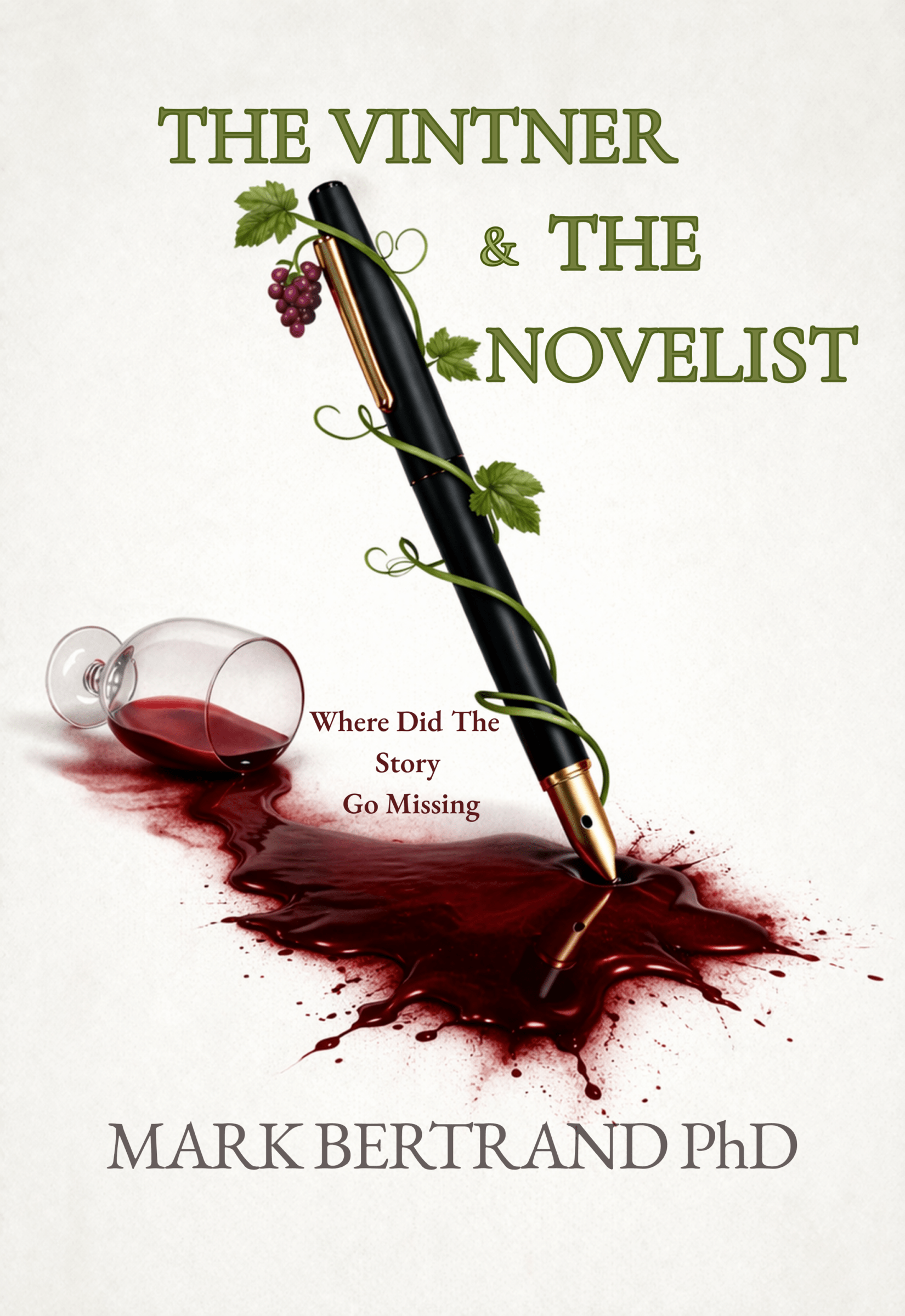
Recommended Mark Bertrand Starting Point for Tana French Readers
Start with The Vintner & The Novelist if you want polished cruelty, intimacy, wealth, marriage, authorship, and psychological judgment.
Read Snodgrass if you want crime, class pressure, loyalty, masculinity, bad choices, and consequences.
Read Starzel if you want Bertrand’s pressure system expanded into speculative reality, consciousness, identity, and the fate of humanity.
Tana French readers are trained to notice what hides beneath the official story.
Mark Bertrand gives them another kind of official story to distrust.


0 comments
Write a comment