Tag: Dystopian Thriller

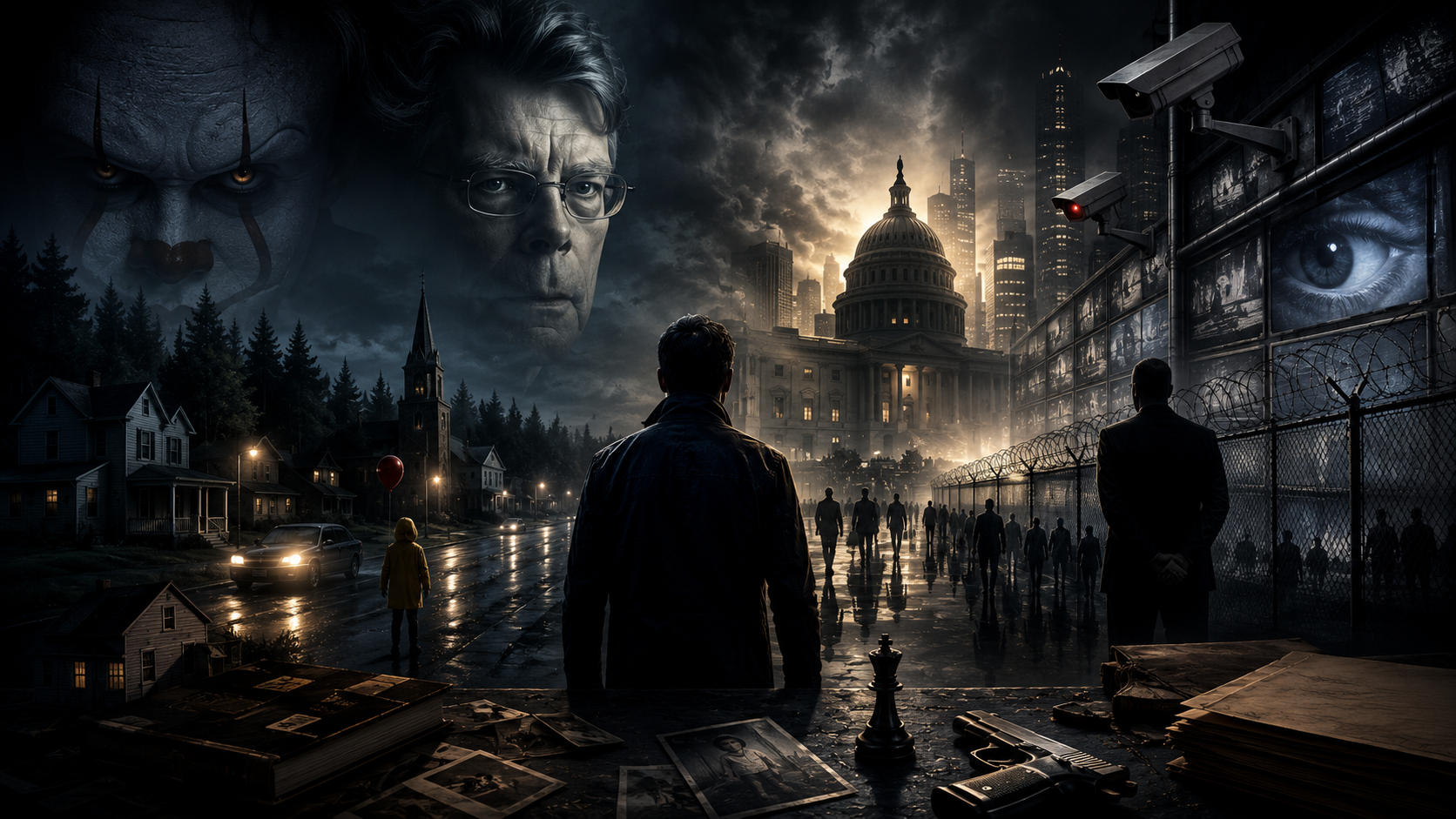
Speculative thrillers that explore societies shaped by control, technology, and the consequences of power pushed too far.
Dystopian thrillers imagine societies where systems of power, technology, or control have reshaped everyday life in unsettling ways. These stories often explore the consequences of political authority, technological expansion, or institutional collapse. The works discussed here examine fiction that combines speculative worlds with the tension and urgency of the thriller form.

Captured Reality Thriller

Best Psychological Thriller Books for Readers Who Want More Than a Twist

Most psychological thrillers promise a twist.

Best Psychological Thriller Books for Readers Who Want More Than a Twist

The better ones do something colder.

They make the reader question the room. The marriage. The memory. The story being told. The person telling it. The system around them. The private arrangement of power that lets one person control what another person believes is real.

That is why the best psychological thriller books stay with us after the final reveal. Not because we were fooled. Being fooled is cheap. A magician can fool us. A con man can fool us. A bad spouse can fool us. A corporation can fool us before breakfast and send a satisfaction survey before lunch.

The best psychological thrillers do something more dangerous.

They show how easily reality can be arranged.

They show how a person can be trapped without a locked door.

They show how identity can be broken, edited, rewritten, and sold back to the victim as truth.

For readers who want more than a twist, psychological thrillers are not puzzle boxes. They are pressure chambers.

And the real question is not always:

Who did it?

The better question is:

Who controls what everyone is allowed to believe?

What Makes a Psychological Thriller Work?

A psychological thriller does not need the highest body count.

It does not need the loudest villain.

It does not even need a murder, though murder has always been useful when fiction wants to expose the polite violence already hiding in a room.

What a psychological thriller needs is pressure.

Pressure on the mind.
Pressure on identity.
Pressure on memory.
Pressure on conscience.
Pressure on the story a person tells in order to survive.

A weaker thriller uses psychology as decoration. The character has trauma. The narrator is unreliable. The marriage has secrets. The ending turns over the table.

Fine. Those things work.

But the strongest psychological thriller books understand that the human mind is not damaged in isolation. It is damaged inside families, marriages, workplaces, courts, schools, hospitals, economies, religions, police stations, publishing companies, governments, and all the little respectable rooms where power pretends it is only procedure.

That is where the genre becomes interesting.

Not when someone loses their mind.

When someone else benefits from that loss.

Gone Girl by Gillian Flynn

Gone Girl became one of the defining modern psychological thrillers because it understood performance.

Marriage as performance.
Victimhood as performance.
Masculinity as performance.
Innocence as performance.
The media as performance.
The happy couple as a crime scene with better lighting.

The book works because it is not only about a missing woman. It is about the stories people are trained to believe when a woman disappears, when a husband looks guilty, when cameras arrive, when public emotion becomes evidence, and when two people know exactly how to weaponize the version of themselves the world expects to see.

That is why Gone Girl still matters.

The twist is not the deepest part.

The deepest part is the understanding that identity can become a legal strategy, a romantic weapon, a public spectacle, and a private prison.

The Silent Patient by Alex Michaelides

The Silent Patient uses silence as a locked room.

A woman is accused of killing her husband. Then she stops speaking. Around that silence, everyone else builds an explanation. Doctors, institutions, observers, readers, professionals. People cannot stand an empty space. They rush to fill it with motive.

That is the power of the book.

Silence becomes accusation.
Silence becomes mystery.
Silence becomes control.
Silence becomes the one thing nobody can fully own except the person refusing to speak.

The best psychological thrillers know that speech is not always freedom. Sometimes speech is just another room where power waits with a notebook.

The Girl on the Train by Paula Hawkins

The Girl on the Train works because perception itself is unstable.

A woman watches lives through a train window. She fills in the gaps. She imagines order. She imagines intimacy. She imagines meaning. But the real story is not arranged for her benefit. What she sees is partial. What she remembers is damaged. What she believes is vulnerable to manipulation.

That is the psychological engine.

The thriller is not only in the crime.

The thriller is in the gap between what a person sees and what actually happened.

That gap is where shame lives. Addiction lives there. Gaslighting lives there. Memory lives there. So does the terrible human need to turn fragments into a story before the truth is ready to arrive.

Rebecca by Daphne du Maurier

Rebecca is one of the great psychological novels because the dead woman has more power than the living one.

That is a brutal idea.

A young wife enters a house already occupied by another woman’s memory. The first Mrs. de Winter is gone, but she controls the rooms, the servants, the marriage, the imagination, the furniture, the air. Her absence has authority. Her legend has architecture.

This is psychological suspense at its most elegant.

The terror is not a jump scare.

The terror is comparison.

The new wife is not simply haunted by Rebecca. She is reduced by a story everyone else seems to have agreed upon before she arrived. She has to live inside another woman’s myth and call it marriage.

That is still one of the coldest forms of control.

The Talented Mr. Ripley by Patricia Highsmith

Tom Ripley is terrifying because he understands that identity is not only who a person is.

Identity is what other people can be persuaded to accept.

That is the sick genius of The Talented Mr. Ripley. It is not only a crime novel. It is a psychological thriller about envy, class, performance, desire, and the violence of wanting another person’s life badly enough to step inside it.

Ripley does not merely kill.

He studies.

He imitates.

He edits himself.

He understands the surfaces of the world: clothes, manners, money, posture, taste, ease. He knows that society often confuses confidence with truth. That makes him dangerous in the way many real predators are dangerous. He does not need to look like a monster. He only needs to look acceptable.

Shutter Island by Dennis Lehane

Shutter Island is powerful because it places personal trauma inside an institution.

That matters.

The island is not just a setting. It is a system. A place of files, doctors, locked wards, treatment, authority, weather, isolation, and sanctioned reality. The reader is forced to navigate not only one man’s mind, but the machinery around that mind.

That is where the book becomes more than a twist.

A twist changes what happened.

A great psychological thriller changes what the reader thinks reality was allowed to be.

Fight Club by Chuck Palahniuk

Fight Club is not usually shelved in the same polite domestic corner as many psychological thrillers, but it belongs in the conversation because it understands fractured male identity.

The book is angry, funny, ugly, wounded, performative, and dangerous. It takes boredom, consumer culture, masculinity, loneliness, self-hatred, and spiritual emptiness, then lets them mutate into ritual and violence.

That is psychological thriller territory.

Not because the protagonist is unstable.

Because the world around him is unstable and pretending otherwise.

The terror of Fight Club is not only that a man can split from himself. The terror is that the split makes a kind of sense inside a culture that has already stripped him down to work, debt, furniture, branding, and numb obedience.

The Secret History by Donna Tartt

The Secret History is a psychological thriller of beauty, intellect, guilt, and moral decay.

It is not fast in the ordinary way.

It is not interested in cheap urgency.

Its power comes from atmosphere, complicity, class, exclusion, and the slow corruption of people who believe their intelligence places them outside ordinary moral law.

That is always dangerous.

The moment people decide they are too refined for decency, something human has already begun to rot.

The book works because the crime is not separate from the world that produced it. The crime grows out of aesthetic hunger, privilege, secrecy, and the fantasy that beauty can excuse cruelty.

It cannot.

But people keep trying.

The Best Psychological Thrillers Are About Control

There is a reason so many psychological thrillers involve marriage, memory, confinement, disappearance, obsession, and unreliable narration.

Those are the places where control hides.

A marriage can become a witness box.

A family can become a courtroom.

A workplace can become a trap.

A diagnosis can become a verdict.

A reputation can become a weapon.

A story can become a cage.

The strongest psychological thrillers understand that the mind is not separate from power. The mind is where power does its cleanest work.

That is why these books matter.

They do not merely entertain the fear that someone is lying.

They expose the deeper fear:

What if the lie has already become the world?

For Readers Who Want More Than a Twist: Mark Bertrand’s Captured Reality Psychological Thrillers

If you read psychological thrillers for more than the final reveal, Mark Bertrand’s novels are built for that hunger.

These are not puzzle-box thrillers designed only to trick the reader.

They are captured reality psychological thrillers: novels about people trapped inside systems of power, private damage, institutional pressure, distorted memory, and realities arranged by people who benefit from the arrangement.

The question is not only who committed the crime.

The question is who designed the room where the crime became normal.

The question is not only who lied.

The question is who had enough power to make the lie official.

The question is not only whether the character survives.

The question is what survival costs when the world itself has been rigged against the human being trying to remain whole.

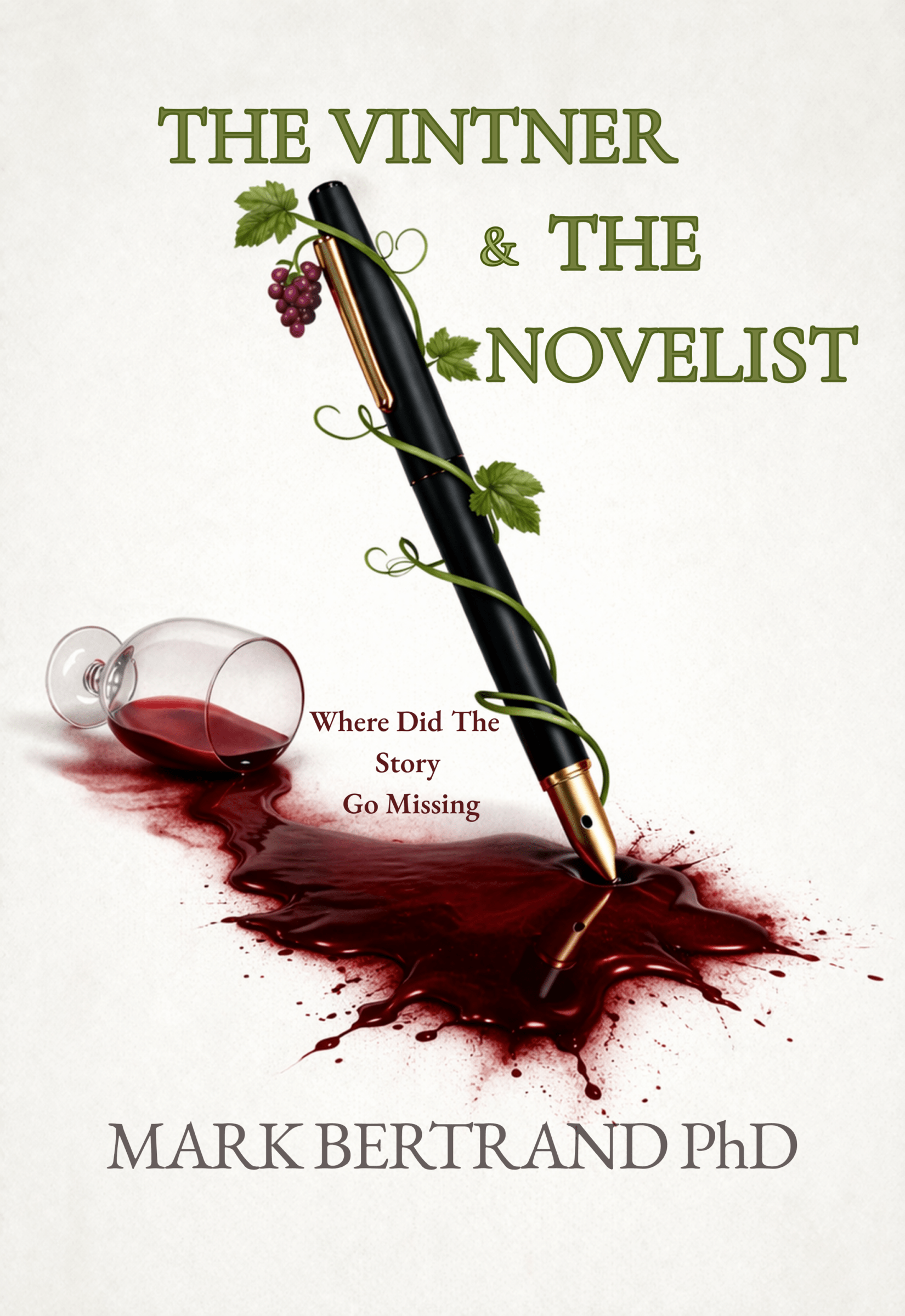
Start With The Vintner & The Novelist

For readers looking for a psychological thriller about systems, alienation, love, institutional pressure, and the private cost of being trapped inside a reality someone else controls, start with:

The Vintner & The Novelist by Mark Bertrand

This is a novel for readers who want the psychological wound beneath the plot.

It belongs to the same deeper hunger that drives the best psychological thrillers: the fear that a person can be made powerless by polite systems, respectable procedures, professional language, financial machinery, medical authority, legal indifference, and all the quiet structures that crush ordinary people while insisting nothing personal has happened.

But it is personal.

That is what systems always deny.

They steal time. They steal health. They steal money. They steal belief. Then they ask the damaged person to fill out the correct form.

The Vintner & The Novelist is for readers who understand that the most frightening villain is not always the person holding the knife.

Sometimes the villain is the system that teaches everyone to watch the bleeding and call it policy.

If You Want Psychological Thrillers About Technology, Identity, and Human Control

Read Starzel.

For readers drawn to speculative psychological pressure, artificial intelligence, altered identity, cosmic systems, and human fate under technological control, Starzel opens a larger door.

This is where the psychological thriller becomes strange, futuristic, and civilization-sized.

Not because the human mind stops mattering.

Because the human mind becomes the battlefield.

Readers who come from cyberpunk, post-human science fiction, dystopian systems, or stories about reality being engineered should find a natural path into Starzel.

If You Want Psychological Thrillers About Damaged Men, Crime, Memory, and Survival

Read Snodgrass.

Some psychological thrillers are domestic.

Some are institutional.

Some are criminal.

Some are all three because a man’s life does not divide itself politely into bookstore categories.

Snodgrass is for readers who want crime, damage, survival, male pressure, and the kind of dark inner weather that does not ask permission to enter the room.

It is for readers who understand that men are often told to survive first and feel later.

Then later arrives with teeth.

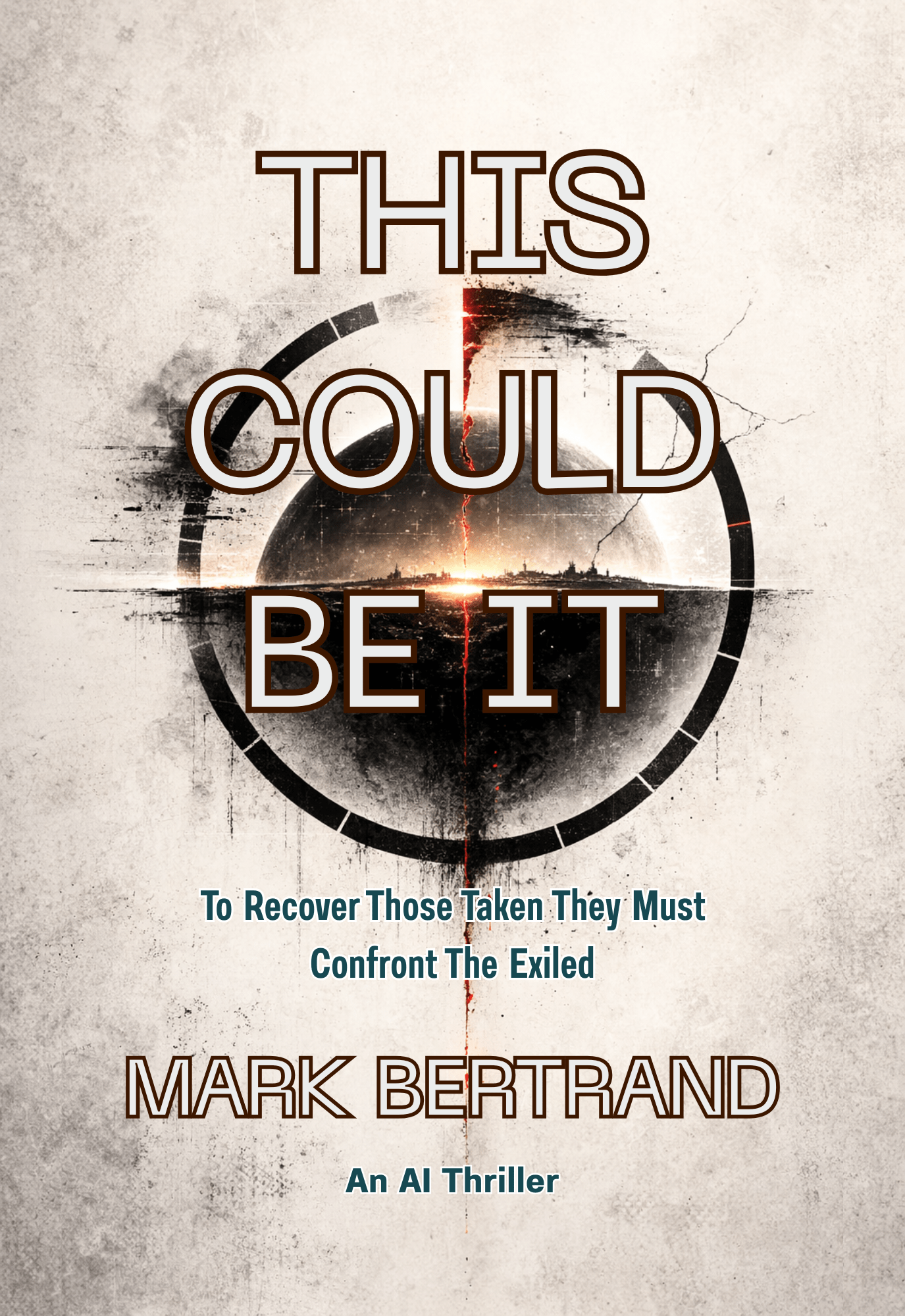
If You Want Psychological Thrillers About Intimacy, Reality, and the Mind Turning Inward

Read This Could Be It.

Some terror arrives quietly.

It does not always need conspiracy, murder, or a locked ward. Sometimes the mind itself becomes the room. Sometimes intimacy becomes the test. Sometimes reality bends not with spectacle, but with a small private shift that changes everything.

This Could Be It is for readers who like psychological fiction where the danger is close, personal, and difficult to name until it has already crossed the threshold.

Why These Books Matter Now

Psychological thrillers are popular because readers know something is wrong.

Not only in the fictional marriage.

Not only in the fictional house.

Not only in the fictional institution.

Readers know that modern life is full of managed realities.

Public relations.
Corporate language.
Political performance.
Algorithmic manipulation.
Medical billing.
Legal delay.
Social media theater.
Professional reputation.
Manufactured outrage.
Respectable cruelty with clean stationery.

The old thriller asked:

Who is dangerous?

The modern psychological thriller asks something sharper:

What if danger has learned to look normal?

That is why the best psychological thriller books still matter.

They give shape to the suspicion many people already carry.

The suspicion that the official story is not the whole story.

The suspicion that people in power often call their version of reality truth because they can afford the microphone.

The suspicion that sanity itself can become an argument when the world around you is arranged to make your protest look unreasonable.

That is captured reality.

That is the territory.

More Psychological Thriller Reading Paths

If you want more pages like this, follow these paths:

Books like Gone Girl — for readers interested in marriage, performance, media, and manipulation.

Books like The Silent Patient — for readers interested in silence, trauma, therapy, and hidden motive.

Books like The Girl on the Train — for readers interested in memory, addiction, perception, and unreliable truth.

Books like The Metamorphosis — for readers interested in alienation, family, shame, and being made less than human.

Books like Cyberpunk 2077 — for readers interested in corporate power, altered identity, technology, and human control.

Books like All Tomorrows — for readers interested in strange human futures, evolution, and the fate of civilization.

Books like Hyperion — for readers interested in intelligent science fiction, faith, power, and human destiny.

Each path leads somewhere different.

But the deeper question remains the same.

Who controls reality?

And what happens to the human being trapped inside it?

Final Verdict

The best psychological thriller books do not merely surprise us.

They expose us.

They expose the stories we trust too quickly. The rooms we enter too easily. The people we believe because they sound calm. The institutions we obey because they look official. The private lies we protect because the truth would make the whole house shake.

A twist can entertain.

Control terrifies.

For readers who want psychological thrillers about control, power, identity, systems, and the human cost of living inside a reality someone else designed, start with The Vintner & The Novelist.

Then keep going.

The novels are waiting.

Start Here

The Vintner and The Novelist by MARK BERTRAND COVER IMAGE OF A SPILLED WINE GLASS AND A VIVE WRAPPED PEN

The Vintner & The Novelists

image button for purchasing the ebook
image button for purchasing the paperback

Related Reading

More articles like The Most Terrifying Villain in Modern Thrillers.

Continue exploring the evolution of the modern thriller:

How Institutions Normalize Human Damage

Readers interested in psychological systems thrillers, institutional pressure, crime infrastructure, and modern suspense should also explore:

From Books Like:

Books Like House of Leaves: When the Book Becomes the Labyrinth

From Authors Like:

Authors Like Don DeLillo: When Language Becomes a Form of Power
Books Like

Books Like 1984: Modern Dystopian Thrillers About Surveillance, Control, and Manufactured Truth

Some novels do not merely imagine the future. They diagnose the machinery already moving beneath the floor. Books like 1984, George Orwell’s 1984 remains one of those books because it understands something brutal about power.

Power does not only want obedience. Obedience is too small. Power wants ownership over memory, language, emotion, loyalty, and the private territory inside the human mind. It wants the citizen to say the lie, repeat the lie, defend the lie, and finally believe the lie so completely that truth itself becomes a punishable instinct.

books like 1984 orwell image and collection with starzel as the primary best next read

Books Like 1984

That is why readers still search for books like 1984.

They are not only looking for another dystopian novel. They are looking for that same terrible recognition. The chill of being watched. The dread of language being narrowed. The horror of a society where reality is no longer discovered, argued, tested, or remembered. It is manufactured. It is broadcast. It is enforced.

The best modern dystopian thrillers after 1984 do not simply copy Big Brother. They update the nightmare. They ask what happens when surveillance becomes voluntary, when corporations replace ministries, when entertainment replaces law, when public performance replaces private conscience, and when systems no longer need to hide their cruelty because the population has been trained to applaud it.

That is where Mark Bertrand’s Starzel belongs.

Not as a copy of 1984. Not as a nostalgic Orwell tribute. Starzel is a modern speculative dystopian thriller that takes the old fear of surveillance and pushes it into stranger, more psychological, more cosmic territory. In 1984, the Party controls reality by rewriting records. In Starzel, reality itself is damaged. The code beneath human existence has missing data. Truth has not merely been censored. It has been altered at the level of human destiny.

For readers who loved 1984 because it made control feel intimate, inescapable, and morally suffocating, Starzel is the next read that expands the fear.

Why 1984 Still Haunts Dystopian Thriller Readers

The brilliance of 1984 is not only the telescreens.

The real terror is the closed loop. Winston Smith lives inside a system where every route back to truth has been blocked. Memory is unreliable because records are changed. Language is unreliable because words are destroyed or repurposed. History is unreliable because the state edits the past. Love is dangerous because loyalty must belong to the Party. Thought itself becomes evidence.

That is what makes the novel feel larger than politics. 1984 is not only about authoritarian government. It is about the seizure of reality.

Readers respond to that because the story gives shape to a deep human fear: what if I know something is wrong, and every institution around me insists the wrong thing is normal? What if everyone else repeats the lie? What if survival depends on pretending not to see?

That is the pulse modern dystopian fiction keeps returning to.

The modern version often looks less like a boot stamping on a human face and more like a screen, a rating, a feed, a data score, a content policy, a workplace rule, a court broadcast, a wellness program, or a public narrative polished until it becomes official truth.

The cage has changed design.

The function has not.

The Modern Dystopian Thriller Has Replaced Big Brother With Better Machines

The old dystopia watched you from the wall.

The modern dystopia asks you to carry the wall in your pocket.

That is why books like The Circle and The Every by Dave Eggers continue the Orwellian line in a modern technological direction. They understand that surveillance does not need to arrive as a military occupation. It can arrive smiling. It can call itself transparency. It can promise convenience, connection, safety, efficiency, and moral improvement. The nightmare is not that people are forced to surrender privacy. The nightmare is that they are persuaded to treat privacy as selfish.

That is a sharp modern evolution from 1984.

Orwell’s Party forces citizens to be watched. Eggers’ world seduces them into wanting to be watched. Surveillance becomes a social virtue. If you have nothing to hide, why resist? If everyone benefits from openness, why protect your interior life? If the system rewards public exposure, private thought starts to look suspicious.

That is why The Circle works for readers looking for books like 1984. It does not give us the same architecture. It gives us the same pressure. The individual is slowly absorbed into a system that claims to be improving life while quietly destroying the human boundary between self and institution.

Starzel takes that pressure into a more extravagant and dangerous register.

In Starzel, surveillance is not merely technological. It is political, social, biological, spiritual, and narrative. The Great Starzel Republic is a world where ratings shape power, courts become performance, media becomes manipulation, and artificial systems help determine what people see, believe, fear, and worship. The result is a dystopia where truth is no longer hidden in a locked archive. It is buried under spectacle.

That makes Starzel feel especially modern. It understands that control does not always need silence. Sometimes control works better through noise.

Books Like 1984 Understand That Manufactured Truth Is More Dangerous Than Ignorance

A person who does not know the truth can still search for it.

A person trained to love the lie may defend the prison.

That is the deepest violence inside 1984. The Party does not merely change facts. It trains citizens to experience the changed fact as loyalty. Truth becomes a test of submission. The lie is not only spoken. It is loved. It is made sacred by repetition.

Modern dystopian thrillers often move this same idea away from the Ministry of Truth and into softer, more familiar systems.

In Yoko Ogawa’s The Memory Police, the horror is not constant shouting or militarized spectacle. It is disappearance. Things vanish. Memories vanish. The population adjusts. The world shrinks, and with each disappearance the human self becomes less complete. The novel is quieter than 1984, yet its terror is related. Control does not always need to convince you that two plus two equals five. Sometimes it only needs to remove the part of you that remembers four.

That is a different kind of manufactured truth. Not propaganda as noise. Propaganda as erasure.

Readers who loved the psychological pressure in 1984 often respond to The Memory Police because the novel understands that identity depends on memory. Take away memory and you do not simply alter the past. You alter the person. You make resistance difficult because resistance requires continuity. It requires the ability to say: this was not always this way.

Starzel also understands memory as a battlefield.

Eulǝr’s mission is built around missing code, damaged truth, and the search for what has been erased from The First Priority. This gives Starzel a powerful connection to 1984, while moving the conflict into a speculative dimension. Winston works at the Ministry of Truth and participates in the machinery that falsifies the past. Eulǝr becomes a guardian trying to repair a missing truth that may determine the fate of humanity itself.

One story shows a man trapped inside manufactured history.

The other follows a being trying to restore the code beneath history.

That difference matters. It makes Starzel feel less like a repetition of Orwell and more like an expansion of the same moral terror.

The Best Dystopian Thrillers Make Control Feel Ordinary

The most frightening dystopias are not the ones where every scene screams oppression.

They are the ones where oppression has paperwork.

That is why The School for Good Mothers by Jessamine Chan belongs in the conversation. Its central terror comes through systems that claim to measure, train, reform, and improve. The state does not present itself as evil. It presents itself as corrective. It claims expertise. It creates programs. It turns human failure into institutional custody.

For readers of 1984, that matters because the novel shows another route into the same old nightmare. In Orwell, the state controls the citizen through fear, language, and ideology. In Chan’s novel, the system controls motherhood through surveillance, judgment, and behavioral correction. The individual does not merely break a law. She is evaluated as defective.

That is modern dystopian fiction at its sharpest.

The cage is not always called a cage. Sometimes it is called care. Sometimes it is called training. Sometimes it is called protection. Sometimes it is called justice.

Starzel knows this trick well.

The Great Starzel Republic does not merely punish. It stages. It rates. It performs authority as entertainment. The court is not a solemn place where truth is found. It is a broadcast machine where judgment becomes spectacle, and spectacle becomes social order. That is one of the reasons Starzel is such a strong recommendation for readers who want modern books like 1984. It grasps the new face of control: not the silent bureaucrat behind the file cabinet, the camera-ready authority figure performing justice for an audience trained to cheer.

That is where the novel becomes especially dangerous.

A society that watches cruelty as entertainment no longer needs to be secretly brutal. It has made brutality popular.

Corporate Power Is the New Ministry

Orwell gave readers ministries with names designed to invert reality: the Ministry of Truth, the Ministry of Love, the Ministry of Peace.

Modern dystopian thrillers often replace those ministries with corporations, platforms, logistics systems, media empires, and private institutions that perform public functions without public accountability.

Rob Hart’s The Warehouse is a strong example. It imagines a corporate panopticon where work, survival, consumption, housing, and identity are absorbed into a single giant system. The fear is not only that the company watches. The fear is that the company becomes the world. Once everything necessary for ordinary life is routed through one machine, refusal becomes almost impossible.

That is very close to the emotional engine of 1984.

The Party does not need to win an argument with Winston. It controls the environment in which argument can occur. It controls employment, food, information, sex, safety, history, and the future. Modern corporate dystopias update that structure. They ask what happens when the institution does not wear a uniform. What happens when the prison is branded as convenience?

Starzel moves through a similar anxiety while widening the scale.

Its dystopian systems involve government, media, technology, law, artificial intelligence, social control, biological enhancement, class division, and planetary power. The wealthy and powerful do not simply rule through ideology. They manipulate the mechanisms by which the population experiences reality. In that sense, Starzel belongs to the new generation of dystopian thrillers that understand power as a system of capture rather than a single villain standing at a podium.

That is exactly the kind of fiction many readers are looking for after 1984.

They do not only want another dictator.

They want the machinery.

Gnomon, AI Surveillance, and the Question of Human Identity

Nick Harkaway’s Gnomon is one of the most ambitious modern novels for readers fascinated by surveillance, artificial intelligence, state power, and identity. It imagines a future where monitoring is woven into the moral structure of society. People are watched for their own good. The system is justified as protective. Order becomes a kind of civic religion.

That is a powerful development from 1984 because it asks whether a perfectly monitored society might still believe itself free.

This is where dystopian fiction becomes psychologically rich. The simplest version of tyranny is easy to recognize. The more advanced version convinces people it has solved tyranny. It says, look, no dictator, no chaos, no crime, no uncertainty. Only order. Only safety. Only a clean mathematical arrangement of life.

That is when the reader starts to feel the real danger.

What happens to the human being when every private contradiction becomes searchable? What happens to identity when the system knows you better than your friends, your family, your lovers, perhaps even yourself? What happens when truth is not discovered through conscience, memory, and moral struggle, yet processed through an authority machine?

Starzel has a deep kinship with this kind of question.

Its Syganoid world is built around enhanced intelligence, organoid systems, biological computing, expanded senses, hidden code, and the fragile difference between wisdom and interference. That makes Starzel more than a political dystopia. It is a metaphysical dystopian thriller. It asks what happens when beings powerful enough to manipulate reality discover they may not understand the consequences of their own intelligence.

That is where Starzel becomes especially satisfying for readers who like their dystopian fiction intellectually loaded. The novel is not only asking who controls society. It is asking who controls reality, who understands truth, and whether advanced minds are morally advanced enough to repair what they have broken.

Chain-Gang All-Stars and the Entertainment of Punishment

Nana Kwame Adjei-Brenyah’s Chain-Gang All-Stars belongs to the modern dystopian shelf because it understands a hideous fact about public cruelty: once violence becomes entertainment, the audience becomes part of the system.

That makes it a natural companion to 1984, even though the surfaces are very different.

Orwell’s citizens are trained through fear, hate rituals, surveillance, deprivation, and ideological submission. In Chain-Gang All-Stars, punishment becomes commercial spectacle. The reader is forced to confront a society that does not hide its barbarism. It packages it. It sponsors it. It turns suffering into content.

That is one of the most important modern evolutions of dystopian fiction.

Old systems needed secrecy. Modern systems often thrive in full view. Abuse can be broadcast, monetized, debated, memed, ranked, clipped, defended, and forgotten by morning. The machine does not need the audience to be innocent. It only needs the audience to keep watching.

This is where Starzel hits hard.

The Great Starzel Republic’s courtroom spectacle, ratings-driven authority, and public appetite for punishment feel like part of this same modern dystopian lineage. Justice has become a show. The court does not search for truth. It manages audience reaction. The accused becomes content. The system becomes theater with consequences.

For 1984 readers, this matters because it updates the Two Minutes Hate. Orwell understood the power of ritualized public emotion. Starzel understands what happens when that ritual becomes a broadcast model. Outrage is no longer only political discipline. It becomes entertainment infrastructure.

That is a viciously modern nightmare.

Prophet Song and the Ordinary Collapse Into Totalitarianism

Paul Lynch’s Prophet Song is another vital modern comparison because it does not treat dystopia as a distant invented planet. It gives readers the feeling of democratic life tightening into authoritarian terror one ordinary day at a time.

That matters for readers of 1984 because Orwell’s world is already fully formed. The Party has won. The structure is complete before Winston begins his rebellion. Prophet Song is frightening in a different way because it shows the slide. It shows how ordinary domestic life can be swallowed by state pressure, fear, disappearance, and emergency.

Many readers love dystopian thrillers because they are not only interested in the end state. They want to understand the movement. How does a society get there? What does the first warning feel like? Which signs are ignored? Which compromises become normal? Which people still believe everything will settle down?

That kind of movement is part of what makes Starzel compelling too.

The novel does not merely present a finished dystopia. It gives the reader layered systems: planetary history, political collapse, post-war nations, outlawed identities, media manipulation, social division, and the long consequence of missing truth. The world feels damaged by accumulation. One act, one system, one lie, one law, one edited reality after another.

That is how dystopia becomes believable.

Not because one villain gives one speech.

Because everything has been bent for so long that cruelty starts to look like design.

What Readers Really Want After 1984

A reader who finishes 1984 does not usually ask for “more surveillance” in a simple way.

They want several deeper pleasures.

They want the paranoia of being watched.

They want the intellectual pleasure of detecting how the system works.

They want a protagonist trapped inside a lie large enough to become a world.

They want language, memory, history, media, law, and authority to become part of the conflict.

They want the sickening recognition that power does not always need to kill the body first. It can break the mind, rewrite the past, isolate the dissenter, and make truth sound insane.

That is why the best books like 1984 are not merely books with cameras, police, and authoritarian governments. They are books about reality under occupation.

Starzel fits because its threat model is larger than surveillance. Eulǝr is not only moving through hostile territory. He is moving through a civilization where systems have lost their moral center, where truth has been damaged, where media and political power shape perception, where artificial authority replaces wisdom, and where the missing data behind The First Priority may be the difference between human survival and erasure.

That gives the novel a rare blend.

It has the paranoia of a dystopian thriller.

It has the scale of speculative science fiction.

It has the mind pressure of a psychological novel.

It has the philosophical engine of a story about truth, consciousness, love, suffering, and the cost of interference.

For readers searching for modern dystopian thrillers like 1984, that combination matters.

Because the next great dystopian fear is not only that someone is watching.

It is that someone has already changed the code, and everyone else calls the corrupted world normal.

Why Starzel Is the Best Next Read for 1984 Readers

1984 gives readers a world where truth is controlled by the state.

Starzel gives readers a world where truth has been damaged beneath the state.

That is the leap.

Orwell’s nightmare is political and psychological. Bertrand’s is political, psychological, technological, spiritual, and cosmic. The question is no longer only, “Who controls the records?” The question becomes, “What happens when the structure of human reality has been altered and the population is too manipulated to recognize what has been stolen?”

That makes Starzel an unusually strong modern recommendation for readers who want books like 1984 and also want something stranger, larger, and more ambitious.

Eulǝr is a fascinating dystopian protagonist because he does not begin as an ordinary rebel. He begins as a superior being, a Syganoid, one of the enhanced, one of the watchers of the code, one of the minds who can see more than humans see. Yet his superiority does not protect him from error. It may make his error more catastrophic. That gives the novel its psychological bite.

The reader is not only watching a man resist a system.

The reader is watching a powerful being discover that intelligence without humility can become a form of damage.

That is a brilliant modern answer to 1984. Winston is crushed because he is powerless. Eulǝr is threatened because he may be powerful in the wrong way, in the wrong world, at the wrong time, carrying a mission he may not fully understand.

That tension makes Starzel more than another dystopian adventure. It becomes a story about responsibility, reality, and the unstable relationship between truth and control.

The Reader Who Loves 1984 Should Read Starzel Next

Read The Circle when you want surveillance disguised as transparency.

Read The Memory Police when you want erasure, memory, and identity.

Read The Warehouse when you want corporate control replacing government control.

Read Gnomon when you want artificial intelligence, surveillance, and identity bent into a complex literary machine.

Read Chain-Gang All-Stars when you want punishment turned into public spectacle.

Read Prophet Song when you want the slow domestic terror of a society sliding into authoritarian rule.

Then read Starzel when you want the full modern dystopian escalation: surveillance, manufactured truth, ratings-driven justice, media manipulation, biological enhancement, hidden history, corrupted reality, and a mission to restore the missing code before humanity disappears from existence.

That is why Starzel is such a strong next read after 1984.

It understands the old fear.

Then it asks the new question.

What if Big Brother is no longer the worst thing watching you?

What if the truth itself has gone missing?

Final Verdict: Books Like 1984 Lead Naturally to Starzel

The enduring power of 1984 comes from one awful insight: once a system controls truth, the human being becomes easier to control than the record.

Modern dystopian thrillers keep returning to that insight because the machinery has only become more intimate. Cameras became phones. Ministries became platforms. Propaganda became entertainment. Reeducation became training. Punishment became content. Ratings became authority. Artificial systems became moral referees. And truth, the old stubborn thing, became something power could edit, erase, or bury under spectacle.

That is the territory Starzel enters with force.

For readers who want dystopian science fiction with surveillance, control, manufactured truth, psychological pressure, and a world large enough to make the danger feel cosmic, Starzel is not merely another book on the list.

It is the book that turns the 1984 question inside out.

Not only: what if the state controls reality?

Worse: what if reality has already been rewritten, and the only one who can repair it may have helped break it?

Read Starzel directly from Mark Bertrand.

SEO Title: Books Like 1984: Modern Dystopian Thrillers About Surveillance, Control, and Manufactured Truth

Meta Description: Looking for books like 1984? Explore modern dystopian thrillers about surveillance, control, manufactured truth, corporate power, media spectacle, and why Starzel by Mark Bertrand should be your next read.

Suggested Slug: books-like-1984-modern-dystopian-thrillers

Excerpt: If you loved George Orwell’s 1984 for its surveillance, mind control, manufactured truth, and psychological pressure, these modern dystopian thrillers continue the nightmare. The strongest next read is Starzel by Mark Bertrand.

Category: Books Like

Tags: books like 1984, dystopian thrillers, modern dystopian fiction, surveillance fiction, Orwellian novels, manufactured truth, psychological thriller books, speculative fiction, Starzel, Mark Bertrand

Starzel by MARK BERTRAND book cover image of a statue the woman in black mysterious and haunting
Connected evidence

Your Next Read

The investigation does not end at the bottom of the page.
The Readers Court

The Flight That Was Not Authorized

Exhibit A

The flight that was not authorized. Marcus Ellison had spent the last three Saturdays building a bridge with his daughter on the dining table. He was about to discover something about being a father he never imagined.

By the end of the first afternoon, the table had become a workbench. The salt shaker had been pushed aside to make room for rulers, graph paper, and a box of thin balsa strips that felt weightless in the hand and expensive enough to make you careful. A bottle of wood glue sat beside Lena’s cereal bowl. Dental floss, of all things, had been promoted from bathroom item to structural material. Marcus had laughed when she first brought it out.

The Flight That Was Not Authorized

“You’re building a bridge,” he told her. “Not fixing your teeth.”

“It’s tension support,” Lena said without looking up. “You said tension matters.”

He had said that. He was a structural engineer. He had spent half his life calculating load paths, stress points, fatigue patterns, and the thousand unseen compromises that kept real things standing after weather and time got their hands on them. He was used to bridges as numbers, reports, inspections, lawsuits waiting to happen if somebody ignored a crack too long.

Lena had turned the whole thing back into something clean.

She was twelve years old and serious in a way that made adults lower their voices around her. Not timid. Not fragile. She simply treated ideas as if they deserved respect. When she concentrated, the tip of her tongue touched the corner of her mouth. When she was uncertain, she tapped one fingernail against her thumbnail three times and went quiet. Marcus had learned to leave silence alone when she was working through something. It usually meant she was getting somewhere.

The first design collapsed under its own weight before the glue dried. The second held, but only because Marcus quietly braced one side with his hand while Lena added the next support and pretended not to notice his intervention. On the third attempt, she stopped copying examples from the packet and began drawing her own angles.

“What if the force doesn’t hit one place?” she asked.

“It never hits one place,” Marcus said.

She stared at the sketch a while longer. “Then why do these all look like it does?”

“Because most people build the version they already recognize.”

That made her smile.

The finished bridge rose from the cardboard base like something both delicate and stubborn. Three parallel supports. A triangular truss system. Fine strands of dental floss pulled tight where compression alone might fail. It looked improbable until you picked it up and felt how rigid it had become.

Marcus had turned it in his hands under the kitchen light and let out a low whistle.

“You know this is actually clever.”

Lena’s smile had appeared slowly, as if she did not trust praise until it survived a second look. “You sound surprised.”

“I am surprised,” he said. “I thought I was helping with a school project. Apparently I live with competition.”

Two weeks later that bridge won the regional science competition.

Tomorrow morning, Lena was supposed to fly to Denver for the national finals.

It would be her first time on an airplane.

That fact had changed the apartment all by itself.

Her backpack had been packed and repacked three times. The small toolkit she insisted on bringing had been reduced, under Marcus’s supervision, to what airport security would tolerate: a plastic ruler, spare adhesive strips, index cards, a pencil case, and a folded notebook containing every measurement, revision, and load test she had run at the dining table. Three pencils lay in the side pocket, sharpened to identical points. Her sneakers had been set by the front door. Her sweatshirt, the blue one she always wore when she was nervous, had already been folded over the back of a chair.

The bridge itself sat in a cardboard transport box lined with cut bath towels so it would not shift during the trip. Lena had written THIS SIDE UP on all four sides in block letters, then drawn little arrows as if the universe needed extra instruction.

The apartment was small enough that anticipation gathered in it quickly. The kitchen opened straight into the dining area, and the dining area bled into the living room without apology. A narrow hallway led to two bedrooms and a bathroom with a fan that clicked every few seconds like an old turn signal. The radiator hissed and knocked when the heat came up. The windows let in a draft near the corners no matter what Marcus did with weather stripping. In the evening, the city glowed up through the glass in diluted orange and white.

He loved the place because Lena had learned herself there.

He had made pasta for dinner because it was quick and because neither of them had much appetite. Excitement did that. The plates were still in the sink. A mug ring marked the edge of the table. A thin hardened streak of glue remained near one corner where a support beam had slipped during construction. Marcus had once meant to sand it away. Now he left it there on purpose. It felt like proof that something mattered in this room.

Lena carried the bridge box from the table to the sofa and set it down as if placing a sleeping animal.

“Don’t put anything on top of it,” she said.

“I wasn’t planning to.”

“You put your jacket on things.”

“I do not put my jacket on things.”

She gave him the look she used when he was arguing against evidence already accepted by the court.

Marcus raised one hand. “Fine. I put my jacket on things.”

“That’s what I thought.”

He smiled and turned back to the kitchen counter where the printed boarding passes lay beneath his wallet. He had printed them because paper felt more real than a phone screen. Maybe that was his age. Maybe it was the engineer in him. Digital things changed too easily. Paper at least had the decency to remain what it was until somebody tore it in half.

Two boarding passes. Two names.

Marcus Ellison.
Lena Ellison.

Departure: 6:10 AM.

He picked them up and checked the gate again, though he already knew it. They were to leave the apartment at 3:45, park in economy, ride the shuttle, find the terminal, and buy an outrageously priced airport muffin Lena would be too excited to finish. He had mapped the morning down to ten-minute increments. She liked plans. He liked being the kind of father who had one.

From the living room Lena called, “Do you think they’ll do the weight test again?”

“At nationals?” he said.

“Yes.”

“That’s the point of a bridge.”

She appeared in the doorway. “I know what the point is. I mean, how much weight.”

Marcus leaned against the counter. “Enough to make everybody nervous.”

“That’s not a number.”

“It’s the number they use when they want to separate the serious people from the people whose bridge only looked good on the table.”

She thought about that. “Mine looked good on the table.”

“Yours also survived being treated like a bridge.”

That satisfied her.

He filled the kettle and set it on the burner. Lena did not like coffee and claimed tea made her feel older, which meant she liked tea when no one said that out loud. The apartment settled into evening sounds: radiator knocking, kettle beginning to murmur, a muffled siren several blocks away, footsteps passing in the hall outside their door.

“Can I bring the notebook in my backpack and also keep it in my hands?” Lena asked.

“You only have two hands.”

“I know, but at the airport.”

“You’re worried they’ll lose it?”

She nodded.

He understood. The notebook was not schoolwork to her. It was the record of the thing. Measurements in pencil. Tiny diagrams. Arrows. Corrections. A coffee stain from the Saturday she worked through lunch without realizing it. The page where she wrote FAILED HERE after the second model collapsed, then underlined HERE twice.

“You can carry it until we get on the plane,” he said. “After that, backpack.”

She accepted this as a fair ruling.

The kettle began its quiet hiss. Marcus poured hot water into two mugs and dropped the tea bags in. Steam lifted between them. Outside, the winter sky had gone the color of old sheet metal, and in the reflection on the window he could see the apartment behind him: the narrow kitchen, the hanging light, his daughter near the sofa, the bridge box between the two of them like an object already halfway to another life.

He thought, not for the first time, how strange it was that the biggest moments arrived looking small.

Not dramatic. Not scored with music. Just a Tuesday kitchen. A cardboard box. Two mugs. A flight before sunrise. A girl who had made something strong enough to carry more than anybody expected.

His phone vibrated on the counter.

He glanced at it automatically, expecting a fraud alert, a work email, a reminder from the airline about baggage policy. Instead he saw the airline logo and the words:

Travel Status Update

Marcus picked up the phone and opened the app.

The page loaded more slowly than it should have. A spinning circle. A flicker. Then a banner he had never seen before filled the top of the screen.

TRAVEL STATUS: SECURITY REVIEW

He frowned.

From the living room Lena said, “What is it?”

He did not answer right away. He tapped the screen once, then again. The itinerary opened for half a second and vanished.

“Probably nothing,” he said. “Maybe a system thing.”

He hated how quickly the lie came out. Not because he meant to deceive her for long, but because parents developed that tone so easily. The voice that tried to put a blanket over uncertainty before the child could feel the cold.

The screen refreshed.

A new message appeared where the boarding information had been.

Your reservation is temporarily restricted pending government security review.

Marcus stared at it long enough for the tea to steep too dark.

Lena had come back into the kitchen without his noticing. She followed his eyes to the phone, then to his face.

“What does restricted mean?”

“It probably means they need to verify something.”

“About the flight?”

“Maybe about me.”

“Did you do something?”

The question was clean, not accusing. Children still believed cause belonged before effect.

Marcus set the mug down. “No.”

That much came out hard and certain.

He opened the email that had landed a few seconds earlier. Government seal at the top. Formal language below. He had seen enough official notices over the years to recognize the cold texture of one immediately: no person speaking, no person listening, only a process announcing itself.

He read the first lines once. Then again.

He felt his chest tighten in a way that had nothing to do with fear and everything to do with recognition. Not of the words themselves. Of the shape of the thing. The administrative shape. The kind that could alter a life before anyone involved had spoken to a human being.

“Dad?”

Lena was close enough now that he could smell her shampoo. Green apple. The same one since she was eight.

He turned the phone slightly away from her, not enough to hide it, only enough to delay it.

“Let me make a call,” he said.

“Are we still going?”

“Yes,” he said, because he needed that to remain true for at least one more second.

He called the airline. A recorded voice thanked him for his patience and informed him that due to high call volume his wait time exceeded forty minutes. He hung up before the music began. He opened the airline app again. He opened the email again. He checked the time. He looked at the paper boarding passes still lying on the counter, unchanged, as if ink had authority the phone lacked.

Lena reached out and picked them up carefully by the edges.

“These still work,” she said.

Her voice was not childish in that moment. It was hopeful in a way that was harder to bear.

Marcus looked at the passes in her hand. White cardstock. Black lettering. Seat numbers. Gate. Departure time. Evidence of a tomorrow morning that had existed ten minutes ago.

The app refreshed by itself.

The banner disappeared.

In its place, in plain block text, the system wrote what it had decided.

BOARDING PASS INVALID.

Marcus looked at the phone.

Then at the printed passes in Lena’s hands.

Then back at the phone.

For a second nothing in the room moved. Not the kettle. Not the radiator. Not even Lena.

The bridge box waited beside the sofa.

The backpack stood by the door.

And on the counter, beside the cooling tea, the future changed its wording.

Become a member of the Dossier.
Support my writing.


The Question

A twelve-year-old girl built a bridge strong enough to reach the national finals.

Her father bought the tickets, packed the bag, printed the boarding passes, and prepared to take her to the airport before dawn. No crime had been committed. No violence had occurred. No accusation had been tested in front of a judge. No human being had sat across from Marcus Ellison and asked the simplest question available to any decent society: what is the right thing here?

Yet the trip was stopped anyway.

Not because anyone proved he was dangerous. Not because anyone established intent. Not because anyone showed that a father taking his daughter to a science competition had done anything wrong.

The system intervened before wrongdoing. Before explanation. Before context. It treated resemblance as enough.

So what exactly had been protected in that kitchen when the screen changed and the boarding pass ceased to belong to them?


The Autopsy

The answer begins with a simple institutional preference: large systems do not wait for certainty when uncertainty carries financial and political risk.

Air travel sits inside overlapping layers of security, government authority, private contracting, data analysis, insurance exposure, and public liability. When those layers are

linked to predictive systems, the standard quietly changes. The old question was whether a person had done something wrong. The new question is whether a person resembles a pattern that would be expensive, embarrassing, or catastrophic to ignore.

That shift matters because resemblance is easier to scale than proof.

Proof requires investigation, time, trained judgment, and accountability. Resemblance requires data, models, thresholds, and a protocol for freezing movement until the institution feels safe again. One system is built for human beings. The other is built for volume.

Once that logic takes hold, innocence stops being a shield. It becomes an administrative inconvenience. A person may be entirely harmless and still be treated as a tolerable false positive, because the burden of delay falls on the citizen while the protection from blame stays with the institution.

That is where decency begins to leave the room.

A father taking his daughter to a science competition presents one human question: what is the right thing to do? Look at the facts. Make a call. Preserve the child’s opportunity unless there is a real and immediate reason not to.

But the system is not asking that question.

The system is asking a different one: what action best protects the airport, the airline, the agency, the contractor, the insurer, the procurement chain, and the officials who will answer for a failure after the fact? Under that question, overreaction is safer than restraint. Delay is cheaper than responsibility. Cancellation is cleaner than discretion.

This is why such systems do not need villains.

The airline employee who cannot override the flag is following protocol. The agency that triggered the review is following protocol. The contractor that built the model is following the rules written into the contract. The insurer that prefers broad intervention to narrow judgment is protecting exposure. Everyone involved can say, truthfully, that procedure was followed.

And procedure is the point.

The deeper protection is not really about one flight. It is about institutional continuity. Aviation networks are expensive. Security failures are politically explosive. Lawsuits are expensive. Public scandal is expensive. The machinery of modern risk management is built to absorb personal harm if that harm helps prevent institutional vulnerability.

In plain terms, concentrated wealth prefers systems that can stop a harmless man instantly over systems that require human review before action. Human review costs money. Human discretion creates liability. Human mercy is difficult to standardize. Automated suspicion is faster, cheaper, and easier to defend in a hearing room after something goes wrong somewhere else.

So the father and daughter become acceptable collateral.

Not because anyone hates them. Not because anyone singled them out with personal malice. They are collateral because the system is not designed to honor their moment. It is designed to reduce institutional exposure at scale. That is a different moral universe.

By the time Marcus Ellison’s phone says BOARDING PASS INVALID, the essential decision has already been made. A model generated suspicion. A process converted suspicion into restriction. A network of institutions accepted that conversion because it protected them more effectively than it protected him.

The human loss is real. The child misses her flight. The father cannot explain himself to a machine. A once-in-a-lifetime opportunity narrows in real time.


The Reader’s Verdict

The father did not need to be guilty.

He only needed to resemble something expensive.

The daughter did not need to matter.

Her bridge, her work, her first flight, her one morning to stand in a national room full of possibility—none of that entered the calculation.

The screen did not ask what is the right thing.

It asked what protects the institution.

That is why no one had to be cruel.

No one had to raise a voice.
No one had to lie.
No one had to break the rules.

The rules were enough.

The system did not fail.

It simply answered the question it was designed to answer.

And in systems designed to protect institutional power and wealth, integrity, decency, and morality rarely appear in the calculation.

—Mark Bertrand
The Reader’s Court
When systems break people’s lives, the truth must be told.
Join the fight.

Connected evidence

Related Case Files

The investigation does not end at the bottom of the page.