Tag: Crime Thriller

Crime thrillers are often built around detectives, investigations, and the pursuit of justice after a crime has already been committed. The works gathered here move beyond those familiar patterns to examine the deeper systems surrounding crime—institutions that shape investigations, pressures that distort truth, and the quiet calculations made by those operating on both sides of the law. These stories reveal how crime rarely exists in isolation. It grows out of power, loyalty, ambition, and the structures that quietly allow certain actions to happen while others are pursued.

Books Like

Books Like Clockers or In the Woods

books like clockers or in the woods hero image of Nighttime in the gritty crime scene

Readers who search for books like Clockers or In the Woods aren’t looking for fast thrills or clean heroes. They’re looking for something heavier. Stories where crime isn’t a puzzle to be solved, but a pressure that reshapes people, institutions, and lives.

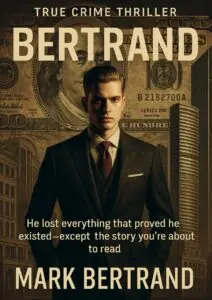
Next read: Bertrand (a contemporary crime novel for readers of Clockers and In the Woods).


Novels Like Clockers or In the Woods — Why Bertrand Belongs on Your List

If that’s what draws you to Clockers or In the Woods, there’s a contemporary novel you may not have encountered yet—but should.

What readers want:

  • Crime as systemic tension, not procedural mechanics
  • Psychological depth instead of neat closure
  • Complexity over spectacle

Get the novel Bertrand.

What Readers Love About Clockers

Richard Price’s Clockers isn’t about good guys and bad guys. It’s about systems—policing, poverty, loyalty, survival—and how individuals are shaped, cornered, and compromised by them. The violence feels inevitable because the structures that produce it are already in place.

Readers who respond to Clockers tend to value:

  • Moral ambiguity over moral certainty
  • Character pressure over plot spectacle
  • Crime as an outcome of environment, not personality

Use my AI tool to find your next book. No gimmicks, no hype, no signup required.

What Readers Love About In the Woods

Tana French’s In the Woods shifts the focus inward. The crime matters, but the psychological cost matters more. Memory is unreliable. Identity erodes. The investigation exposes the investigator.

Readers drawn to In the Woods often want:

  • Psychological depth over procedural mechanics
  • Lingering unease instead of neat closure
  • Characters who are altered, not redeemed

Where Bertrand Fits — And Why It’s Different

Bertrand sits precisely at the intersection of these two traditions.

Like Clockers, it treats crime as systemic. Power operates quietly. Institutions protect themselves. Consequences fall unevenly. No one escapes clean.

Like In the Woods, it is deeply psychological. The real tension isn’t “what happened,” but what the characters are forced to live with after it does. Certainty dissolves. Motives blur. Control slips.

But Bertrand goes further in one crucial way.

It removes the comfort of distance.

There is no procedural buffer. No investigative authority to lean on. No myth of objectivity. The reader is placed inside the moral pressure chamber with the characters and left there.

Why Readers of Price and French Choose Bertrand

Readers who finish Clockers or In the Woods often find themselves searching for something specific but hard to name:

Not darker.
Not more violent.
Just more honest.

Bertrand answers that search by:

  • Refusing spectacle
  • Refusing easy alignment
  • Refusing to tell the reader how to feel

The result is a novel that doesn’t resolve so much as settle into you.

If You’re Searching for Books Like Clockers or In the Woods

You’re already past surface-level crime fiction.

Bertrand was written for readers who want:

  • Psychological realism
  • Structural critique without sermonizing
  • Tension that comes from implication, not action

If Clockers showed you how systems break people,
and In the Woods showed you how memory breaks truth,
Bertrand shows you what happens when both are in play—and no one is watching.

Bertrand book cover image

Bertrand | Married Stupid

Readers also like these Archive articles.

Books Like The FutureBooks Like Billy Summers or Harlem ShuffleBooks Like The Three-Body Problem Where the Threat Isn’t Out There

Follow me on Bluesky and my about Mark Bertrand.

Authors Like

Authors Like William Gibson

Authors Like William Gibson - Psychological Thriller Novels by Mark Bertrand, neon cyber-thriller scene with VR headset, smartphone, glowing circuit board, cash, weapon, and a lone figure above a futuristic city

Readers searching for authors like William Gibson are not looking for futurism or spectacle. They’re looking for stories that understand power as infrastructure quiet, invisible, and already in place. That’s where my novel Bertrand aligns.

Why readers search for William Gibson

  • Systems that shape behavior without announcing themselves
  • Power exercised through networks, latency, and access
  • Characters surviving by comprehension, not force
  • Worlds where control is ambient rather than enforced
  • Institutions that feel inevitable rather than villainous
  • Narratives that assume the reader can connect the dots

Gibson doesn’t predict. He reveals.

Where the novel Bertrand fits this lineage

Mark Bertrand shares Gibson’s fixation on structure over drama. The tension arises not from confrontation but from proximity—how close a person can operate to the core of a system without triggering its defenses.

The overlap appears in:

  • Invisible architectures governing outcomes
  • Characters fluent in process, timing, and concealment
  • Power that manifests through compliance, not threat
  • A world where legality and danger frequently overlap

Like Gibson’s work, the story assumes the real action happens offstage, in protocols and decisions that never make headlines.

The key difference—and why it matters

Where William Gibson places his characters inside emerging technological systems, Mark Bertrand’s novel Bertrand places that experience alongside mature financial, legal, and ideological systems that have already consolidated power.

The danger is not novelty. It’s stability. The system isn’t forming—it’s watching. That shift reframes the tension from exploration to containment.

No neon. No prophecy.

There are no futuristic aesthetics.
No technological awe.
No mythologizing of innovation.

The tone is restrained, grounded, and procedural. The narrative treats systems as facts of life, not symbols. The reader is trusted to recognize how control actually operates.

Who should read Mark Bertrand

This book is for readers who:

  • Value systems literacy over plot acceleration
  • Are interested in how power hides inside process
  • Prefer implication to exposition
  • Read for cognition, not reassurance

A final word for authors like William Gibson readers

Authors like William Gibson write about systems coming online.
Author Mark Bertrand provides novels about systems that never log off.

Both understand that the most dangerous forces don’t announce themselves—they normalize. For readers drawn to Gibson’s clarity about how power moves through networks, Bertrand offers a parallel study in how those same mechanics operate once the future has already arrived.

Bertrand book cover image authors like william gibson

Bertrand | Married Stupid

Authors Like Tobias WolffAuthors Like James EllroyAuthors Like Dan Hampton

Book Finder

Follow me on Bluesky and my Not A Real Publisher channel.

Authors Like

Authors Like Tobias Wolff

authors like tobias wolff hero image of Writing by the window at dusk

Readers searching for authors like Tobias Wolff aren’t looking for crime stories or military thrillers. They’re looking for unsentimental truth about childhood, identity, and the long shadow of upbringing, told with clarity, restraint, and earned authority.

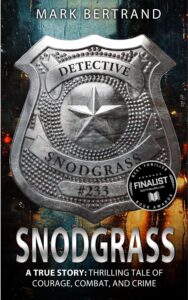
That’s exactly where my award-winning novel Snodgrass intersects this lineage.

Why readers search for authors like Tobias Wolff

Tobias Wolff’s This Boy’s Life endures because it refuses exaggeration and refuses comfort. It presents childhood not as nostalgia, but as formation under pressure.

Readers come to Wolff for:

  • Clear-eyed accounts of abusive homes
  • Childhood shaped by fear, improvisation, and intelligence
  • Adults narrating youth without sentimentality
  • Moral ambiguity without editorializing
  • The slow realization that survival teaches habits that persist

Wolff doesn’t dramatize pain.
He records its consequences.

Where Snodgrass aligns with Wolff’s readers

Like Wolff, Snodgrass treats childhood as training, not tragedy.

Abuse is not sensationalized.
Fear is not inflated.
Planning becomes second nature.

The book presents a young mind learning:

  • when silence is safer than speech
  • when observation matters more than strength
  • how authority disguises itself as righteousness
  • how planning becomes comfort

These lessons are not framed as exceptional. They are framed as adaptive.

That’s the same moral register Wolff readers recognize and trust.

Abuse without melodrama

One of the strongest parallels between Snodgrass and Wolff’s work is tone.

There is no plea for sympathy.
No attempt to shock.
No manufactured innocence.

The narrator looks back with precision, not pity.

Violence is described plainly.
Fear is acknowledged without amplification.
The child’s logic is allowed to stand on its own.

That restraint is exactly what Wolff readers value—and rarely find.

The key difference—and why it expands the experience

Where Tobias Wolff’s work often ends at psychological reckoning, the novel Snodgrass carries those formative lessons forward.

The childhood logic shaped by abuse becomes:

  • criminal calculation
  • institutional fluency
  • strategic thinking
  • emotional containment

The book shows how early adaptations don’t disappear—they evolve.

For readers who appreciated Wolff’s honesty but wondered how those boys become men, Snodgrass provides the continuation.

Memory as explanation, not confession

Neither Wolff nor Snodgrass treats memoir as absolution.

Memory is used to explain behavior—not excuse it.

The adult narrator does not ask forgiveness for the past.
He clarifies it.

That distinction keeps the book grounded and prevents sentiment from diluting truth.

Who should read Snodgrass

You’ll want this book if:

  • You value memoir without nostalgia
  • You appreciate unsparing depictions of childhood abuse
  • You’re drawn to intelligence shaped by adversity
  • You want reflection without self-pity

If Tobias Wolff showed you how childhood shapes identity, Snodgrass shows you how those shapes harden into method.

A final word for authors like Tobias Wolff, readers

Tobias Wolff wrote about becoming.
My novel Snodgrass, is about becoming useful.

Different trajectories.
Same refusal to lie.

If you’re searching for authors like Tobias Wolff because you want honesty without sentiment, my novel Snodgrass belongs on your shelf.

SNODGRASS book cover image of a naval aviator, aircraft carrier, f18 hornet, a sweet 1955 Chevy Belair and a cityscape

Snodgrass | Married Stupid

Authors Like Robert MasonAuthors Like Edward BunkerAuthors Like Richard K. Morgan

The Dossier

Follow me on Bluesky