
Tag: Nirvanaing

The Nirvanaing tag gathers articles for the series that investigate the deeper architecture connecting the novels in the series. These essays examine recurring patterns, hidden motives, and narrative signals that unfold across multiple books as the larger story gradually emerges. Many of the clues shaping the series are embedded early and only reveal their significance when viewed in the context of later events. The articles collected here explore those connections, illuminating how the series builds its meaning through layered structure, evolving characters, and the long consequences of earlier decisions.

Books Like

Books Like Neuromancer — When Access Isn’t Power Anymore

If you’re searching for books like Neuromancer, you already know what you’re chasing. When access isn’t power anymore.
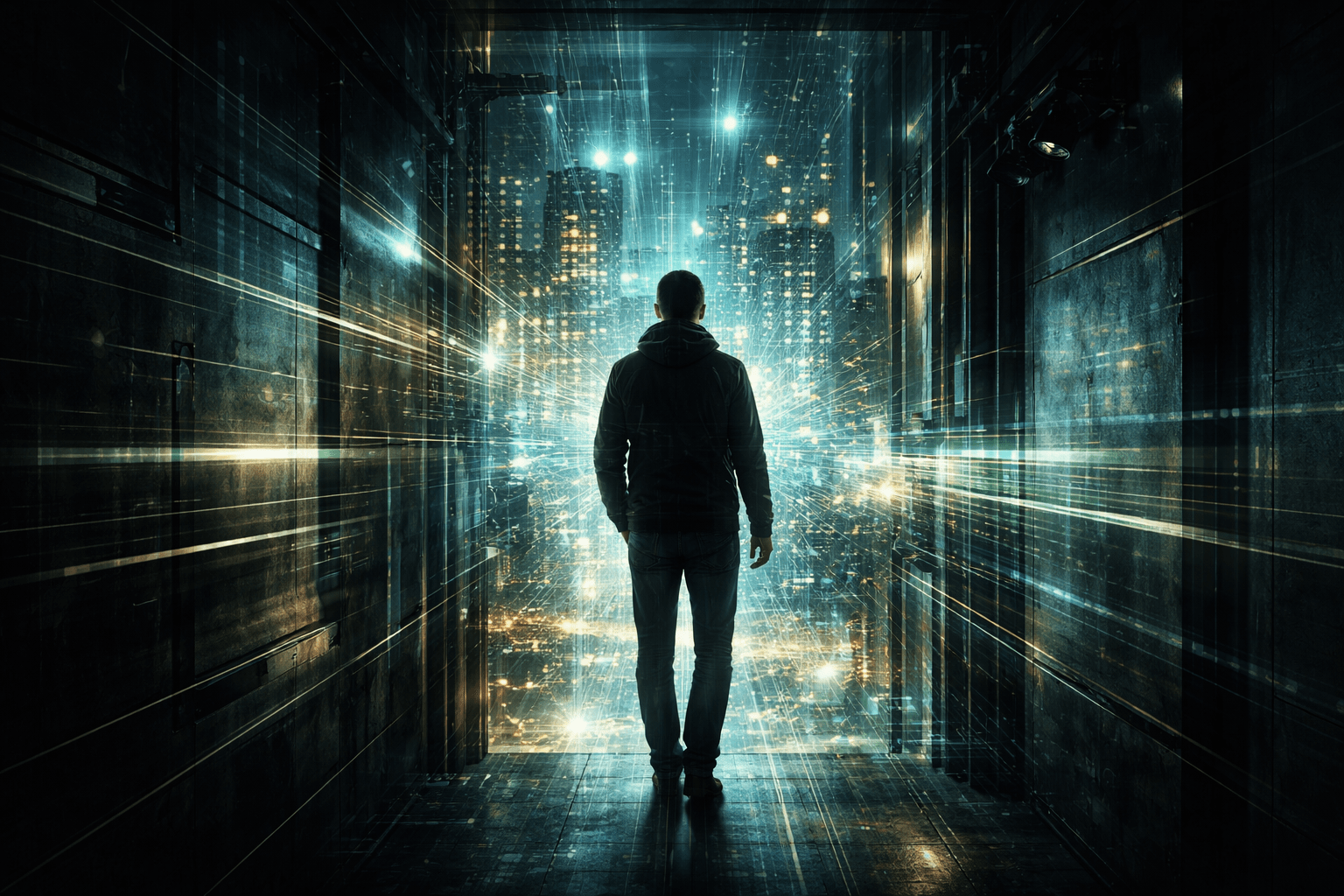
books like neuromance image of a man walking through the world he controls

Not cyberpunk.

Not hackers.

Access.

The moment the world stops being solid—and becomes something you can enter, move through, and influence.

You felt it in:

• the matrix as a place you could inhabit
• the quiet realization that reality has layers
• the sense that those who understand the system don’t just live in the world—they move beneath it

Neuromancer didn’t just show you technology.

It showed you architecture.

And once you saw it, you couldn’t unsee it.


The real hook wasn’t the system—it was your position inside it

Case isn’t powerful because he fights.

He’s powerful because he interfaces.

He sees what others can’t.
He moves where others can’t.

He exists in a layer of reality most people never touch.

That’s the pull.

Not control.

Proximity to control.


Starzel recognizes that instinct—and removes the last illusion protecting it

In Neuromancer, the system is separate from you.

You plug in.
You jack out.

No matter how deep it gets, there is still a boundary.

A distinction between:

You
and
the system.


Starzel dissolves that boundary.

There is no clean entry point.

No clean exit.

The system isn’t something you access—

it’s something you’re already entangled with.


Where books like Neuromancer give you movement, Starzel gives you consequence

Case moves through the system.

He extracts.
He survives.
He gets used.

But the system remains intact.

Stable.


In Starzel, the system isn’t just navigated.

It’s touched.

Adjusted.

A change made somewhere small enough to feel harmless.

A detail shifted.
A variable nudged.

And nothing appears to happen.


That’s where the tension lives.

Not in breaking the system.

In realizing it can be changed—
without immediate consequence.


The uncomfortable realization: access was never the real threshold

Books like Neuromancer teach you that access changes everything.

And it does.

But it leaves one assumption intact:

That access is the goal.


Starzel moves past that.

Because once access exists, something else becomes more dangerous:

responsibility without visibility

If you can interact with the system…
if you can influence it…

Who’s tracking the changes?

Who decides what matters?

Who even notices?


This is where real readers feel the shift

Because what stayed with you after Neuromancer wasn’t the plot.

It was the awareness:

• reality has depth
• systems run beneath the surface
• control belongs to those closest to the structure


Starzel doesn’t repeat that.

It advances it.

If systems can be accessed…
they can be quietly maintained.

If they can be maintained…
they can be quietly altered.

And if they can be altered—

then stability itself becomes suspect.


Read this if you’ve moved past entry-level cyberpunk

Read this if you want:

• systems that don’t announce themselves
• control that feels procedural, not dramatic
• a narrative where intelligence increases unease instead of mastery

Read this if Neuromancer made you want access—

and you’re ready to see what happens after access stops being enough.


Final line

Neuromancer shows you how to enter the system.

Starzel asks the question that follows:

What happens when no one is watching what you change?

Reader of books like neuromancer also read these archive articles.

Books Like Clockers or In The WoodsBooks Like HumBooks Like Dune Where Power Moves Inside the Mind
Books Like

Books Like Foundation — When the System Becomes the Story

If you’re searching for books like Foundation, you’re not looking for space empires. You’re looking for control disguised as inevitability. When the system becomes the story.

books like foundation image of a man inside the system looking towards what appears to be a way out

You felt it in:

• the quiet confidence of psychohistory
• the belief that chaos can be predicted
• the unsettling idea that individuals don’t matter—only systems do

Foundation isn’t about the fall of an empire.

It’s about what happens when the future is already decided.


Starzel recognizes that instinct—and removes the safety from it

In Foundation, the system predicts you.

Hari Seldon already ran the numbers.
The collapse is mapped.
The path forward is engineered.

You are inside a structure so vast, your choices feel irrelevant.

But there is still comfort in that.

Because someone, somewhere, understands the system.


Starzel takes that comfort away.

There is no Seldon.

No model you can trust.
No equation you can lean on.

Only a system that is already operating—

and no certainty that it was ever meant to be understood.


Where books like Foundation build control, Starzel introduces interference

In Foundation, the system works because it is consistent.

Predictable.
Mathematical.
Reliable across time.

Even its surprises—like the Mule—exist as deviations from a known structure.


In Starzel, the system itself is unstable.

Not broken.

Worse.

Editable.

A character doesn’t just live inside history—

he adjusts it.

Moves something small.
A flower. A detail. A fact.

And expects nothing to change.


That’s the shift.

Not prediction.

Manipulation.


The deeper hook: what if the system isn’t neutral?

Foundation asks:

Can we preserve civilization through knowledge?

Starzel asks something colder:

What if the system guiding civilization
is being quietly rewritten—

and no one can detect the change?

Not governments.
Not historians.
Not even the ones inside the system.


Because in Starzel, the most dangerous position isn’t power.

It’s proximity to the code.

Starzel book cover image of a statue the woman in black mysterious and haunting

Get Starzel Now.

Why Foundation readers recognize it immediately

Because what stayed with you wasn’t the empire.

It was the realization:

• history can be shaped
• systems outlive individuals
• intelligence does not guarantee control

You accepted that large-scale forces determine outcomes.


Starzel follows that logic to its conclusion—

and then breaks it.

If history can be predicted…

it can be altered.

If it can be altered…

then certainty itself is a vulnerability.


Read this if what stayed with you was the system—not the spectacle

Read this if you want:

• intelligence that creates pressure, not comfort
• systems that operate beyond verification
• a narrative where control becomes indistinguishable from illusion

Read this if books like Foundation made you trust the system—

and you’re ready to question that trust.


Final line

Foundation tells you the system can be understood.

Starzel asks a more dangerous question:

What if it’s already been changed—and you didn’t notice?

Readers also read these Archive articles.

Books Like Neuromancer — When Access Isn’t Power AnymoreBooks Like Broken LightBooks Like Going Infinite or The Cult of We

IMD Operations

Dossier

Eulǝr Is Psychologically Split and Capable of Concealment

Some characters become frightening because they feel nothing. Eulǝr is more interesting than that. Eulǝr is psychologically split and capable of concealment.

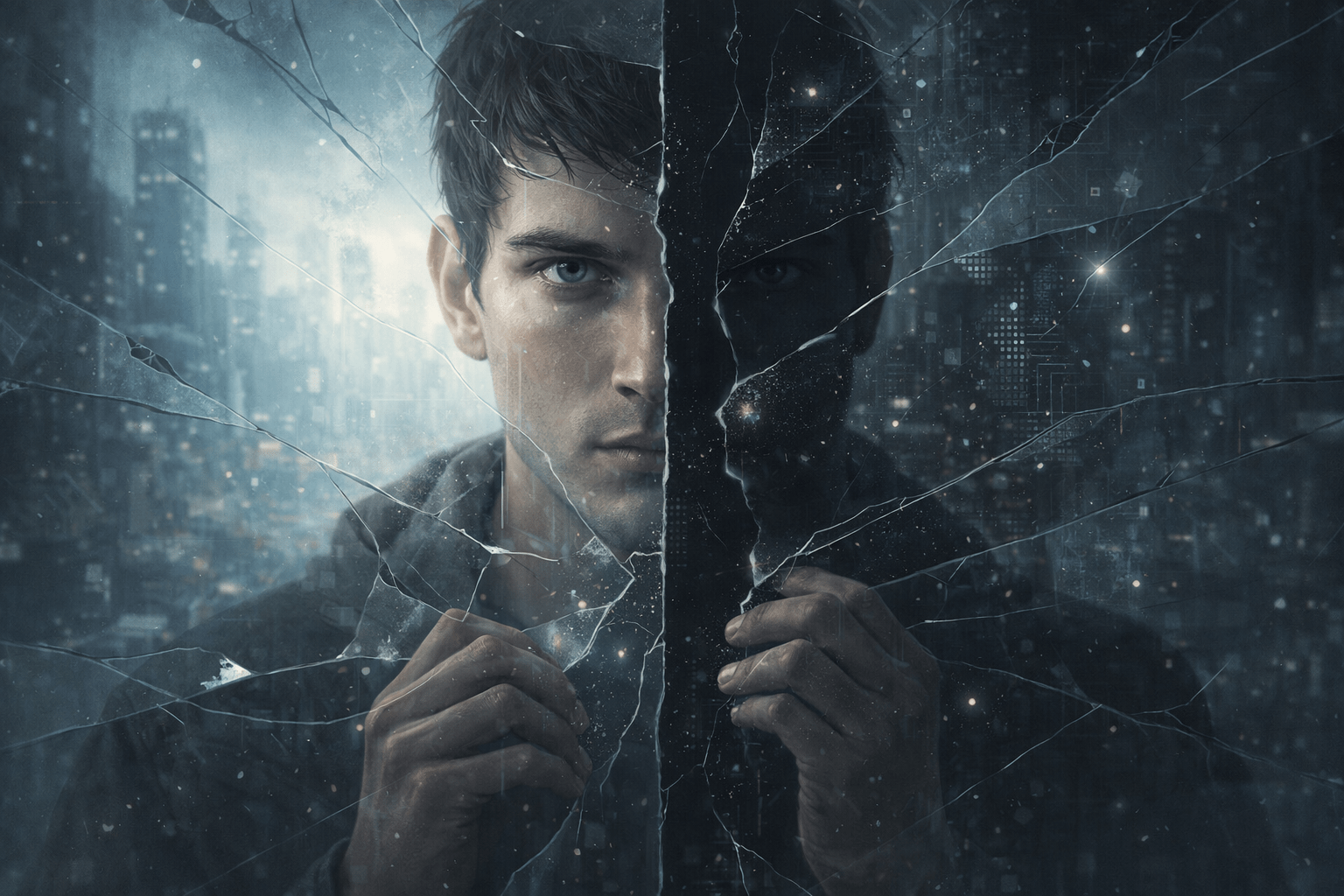
Eulǝr is more interesting than that. Eulǝr is psychologically split and capable of concealment image of a man split in a broken glass reflection

He feels.
He reacts.
He registers shock, guilt, fear, and the weight of what has happened.

But almost in the same breath, another part of him steps forward and begins managing the scene.

That is what makes him dangerous.

The first aha is this: Eulǝr does not move from grief to concealment. He experiences them together.

That distinction matters. A lesser character would grieve first and hide later. That would make concealment feel like a second decision, a corruption arriving after the fact. But Eulǝr’s mind does something colder and more revealing. The moment death enters the room, self-protection enters with it. His consciousness does not break cleanly into sorrow and then regroup. It splits on contact. One part of him absorbs the horror. The other part immediately starts calculating exposure, evidence, fingerprints, narrative, what can be explained, what must be hidden, what version of events might survive.

That is not ordinary panic.
That is trained doubleness.

It tells us that concealment is not foreign to him. It is available to him at once. It lives close to the surface, ready for use the instant reality turns dangerous. He does not have to become deceptive. He already contains the structure for it.

That is why the moment lands with such force. It is not only that he wants to avoid consequences. Many people would. It is that his mind is built to pivot from event to cover story almost without transitional pain. That makes the reader rethink everything that came before. If he can do this now, under stress, then how long has this second self been present? How many earlier moments of calm, duty, intelligence, and reflection were already being filtered through the same inner mechanism?

That is the second aha: the split is not created by crisis. Crisis reveals it.

This is where the novel gets psychologically sharp. Eulǝr does not read like a simple liar or a flat sociopath. He reads like a man whose higher faculties have learned how to outrun his own moral shock. He can still feel the human response, but his interpretive machinery is faster than his conscience. Before guilt can become surrender, intelligence has already started editing. Before truth can become confession, fear has already begun drafting a usable version of events.

That is a terrifying kind of mind because it keeps its decency just intact enough to remain convincing.

If he felt nothing, we would know what he is.
If he only grieved, we would trust him more.
But because he does both, he becomes unstable in the most compelling way. He can present as sincere because part of him is sincere. He can present as wounded because part of him is wounded. The problem is that sincerity and wound do not prevent manipulation. In him, they coexist with it.

That coexistence is the real darkness.

He does not merely conceal from others.
He can begin concealing from himself.

That is the third aha. Eulǝr’s split is not just tactical. It is interpretive. The cover story is not only for investigators, authorities, or future witnesses. It is also for the self that must keep moving after the event. His mind starts building a survivable narrative because naked truth would demand a level of moral surrender he is not yet capable of. To tell the full truth would mean standing inside the horror without mediation. So he mediates. Instantly. Elegantly. Almost professionally.

That is why the scene has such weight for dossier readers. It exposes the mechanism beneath the larger plot.

Members Only: Eulǝr is psychologically split and capable of concealment.

Eulǝr has already shown the tendency to

This content is for members only.

Not yet a member? Request access to The Dossier.

Starzel book cover image of a statue the woman in black mysterious and haunting

Starzel
The First Priority

Follow Mark Bertrand on Bluesky