
Some characters become frightening because they feel nothing. Eulǝr is more interesting than that. Eulǝr is psychologically split and capable of concealment.
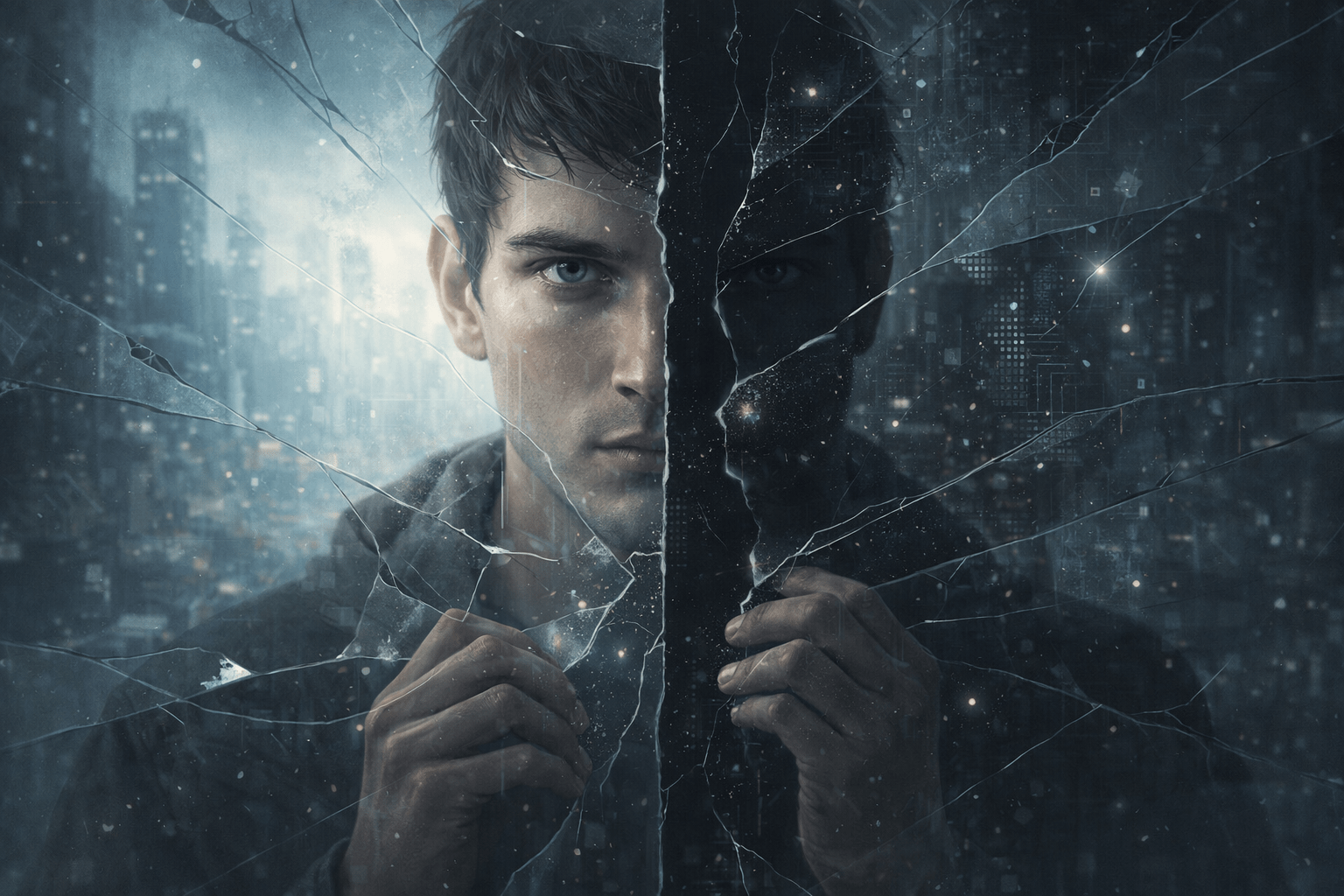
He feels.
He reacts.
He registers shock, guilt, fear, and the weight of what has happened.
But almost in the same breath, another part of him steps forward and begins managing the scene.
That is what makes him dangerous.
The first aha is this: Eulǝr does not move from grief to concealment. He experiences them together.
That distinction matters. A lesser character would grieve first and hide later. That would make concealment feel like a second decision, a corruption arriving after the fact. But Eulǝr’s mind does something colder and more revealing. The moment death enters the room, self-protection enters with it. His consciousness does not break cleanly into sorrow and then regroup. It splits on contact. One part of him absorbs the horror. The other part immediately starts calculating exposure, evidence, fingerprints, narrative, what can be explained, what must be hidden, what version of events might survive.
That is not ordinary panic.
That is trained doubleness.
It tells us that concealment is not foreign to him. It is available to him at once. It lives close to the surface, ready for use the instant reality turns dangerous. He does not have to become deceptive. He already contains the structure for it.
That is why the moment lands with such force. It is not only that he wants to avoid consequences. Many people would. It is that his mind is built to pivot from event to cover story almost without transitional pain. That makes the reader rethink everything that came before. If he can do this now, under stress, then how long has this second self been present? How many earlier moments of calm, duty, intelligence, and reflection were already being filtered through the same inner mechanism?
That is the second aha: the split is not created by crisis. Crisis reveals it.
This is where the novel gets psychologically sharp. Eulǝr does not read like a simple liar or a flat sociopath. He reads like a man whose higher faculties have learned how to outrun his own moral shock. He can still feel the human response, but his interpretive machinery is faster than his conscience. Before guilt can become surrender, intelligence has already started editing. Before truth can become confession, fear has already begun drafting a usable version of events.
That is a terrifying kind of mind because it keeps its decency just intact enough to remain convincing.
If he felt nothing, we would know what he is.
If he only grieved, we would trust him more.
But because he does both, he becomes unstable in the most compelling way. He can present as sincere because part of him is sincere. He can present as wounded because part of him is wounded. The problem is that sincerity and wound do not prevent manipulation. In him, they coexist with it.
That coexistence is the real darkness.
He does not merely conceal from others.
He can begin concealing from himself.
That is the third aha. Eulǝr’s split is not just tactical. It is interpretive. The cover story is not only for investigators, authorities, or future witnesses. It is also for the self that must keep moving after the event. His mind starts building a survivable narrative because naked truth would demand a level of moral surrender he is not yet capable of. To tell the full truth would mean standing inside the horror without mediation. So he mediates. Instantly. Elegantly. Almost professionally.
That is why the scene has such weight for dossier readers. It exposes the mechanism beneath the larger plot.
Members Only: Eulǝr is psychologically split and capable of concealment.
Eulǝr has already shown the tendency to
Not yet a member? Request access to The Dossier.

Starzel
The First Priority
Follow Mark Bertrand on Bluesky


0 comments
Write a comment