
Tag: Starzel

The Starzel tag collects articles that examine the deeper architecture of the novel—its concealed motivations, structural echoes, and the hidden tensions guiding the story forward. These essays focus on moments where character decisions, symbolic details, and narrative misdirection reveal a second layer beneath the surface action. For readers returning to the book after finishing it, these insights illuminate connections that quietly reshape the meaning of earlier events.

Dossier

Eulǝr Is Psychologically Split and Capable of Concealment

Some characters become frightening because they feel nothing. Eulǝr is more interesting than that. Eulǝr is psychologically split and capable of concealment.
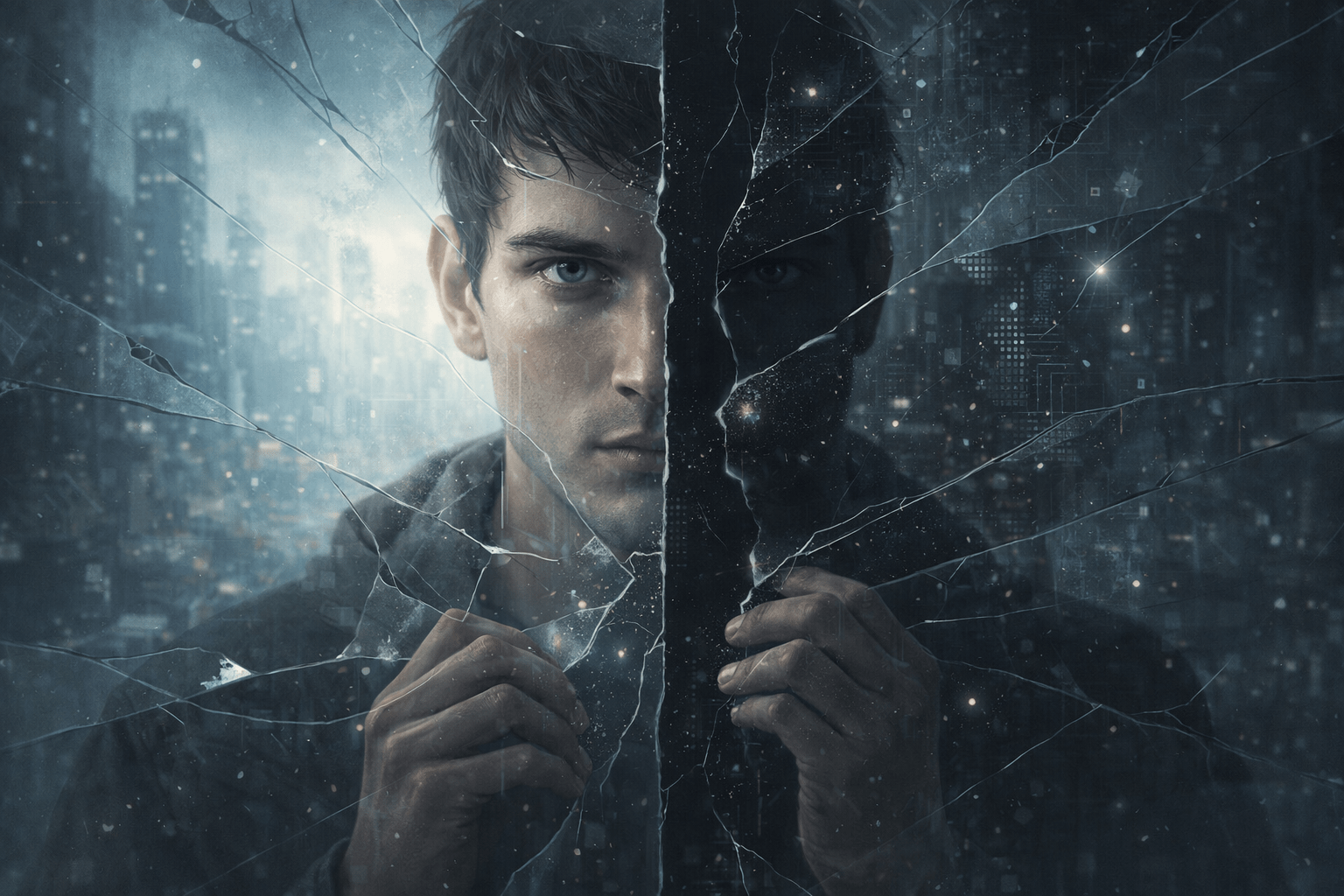
Eulǝr is more interesting than that. Eulǝr is psychologically split and capable of concealment image of a man split in a broken glass reflection

He feels.
He reacts.
He registers shock, guilt, fear, and the weight of what has happened.

But almost in the same breath, another part of him steps forward and begins managing the scene.

That is what makes him dangerous.

The first aha is this: Eulǝr does not move from grief to concealment. He experiences them together.

That distinction matters. A lesser character would grieve first and hide later. That would make concealment feel like a second decision, a corruption arriving after the fact. But Eulǝr’s mind does something colder and more revealing. The moment death enters the room, self-protection enters with it. His consciousness does not break cleanly into sorrow and then regroup. It splits on contact. One part of him absorbs the horror. The other part immediately starts calculating exposure, evidence, fingerprints, narrative, what can be explained, what must be hidden, what version of events might survive.

That is not ordinary panic.
That is trained doubleness.

It tells us that concealment is not foreign to him. It is available to him at once. It lives close to the surface, ready for use the instant reality turns dangerous. He does not have to become deceptive. He already contains the structure for it.

That is why the moment lands with such force. It is not only that he wants to avoid consequences. Many people would. It is that his mind is built to pivot from event to cover story almost without transitional pain. That makes the reader rethink everything that came before. If he can do this now, under stress, then how long has this second self been present? How many earlier moments of calm, duty, intelligence, and reflection were already being filtered through the same inner mechanism?

That is the second aha: the split is not created by crisis. Crisis reveals it.

This is where the novel gets psychologically sharp. Eulǝr does not read like a simple liar or a flat sociopath. He reads like a man whose higher faculties have learned how to outrun his own moral shock. He can still feel the human response, but his interpretive machinery is faster than his conscience. Before guilt can become surrender, intelligence has already started editing. Before truth can become confession, fear has already begun drafting a usable version of events.

That is a terrifying kind of mind because it keeps its decency just intact enough to remain convincing.

If he felt nothing, we would know what he is.
If he only grieved, we would trust him more.
But because he does both, he becomes unstable in the most compelling way. He can present as sincere because part of him is sincere. He can present as wounded because part of him is wounded. The problem is that sincerity and wound do not prevent manipulation. In him, they coexist with it.

That coexistence is the real darkness.

He does not merely conceal from others.
He can begin concealing from himself.

That is the third aha. Eulǝr’s split is not just tactical. It is interpretive. The cover story is not only for investigators, authorities, or future witnesses. It is also for the self that must keep moving after the event. His mind starts building a survivable narrative because naked truth would demand a level of moral surrender he is not yet capable of. To tell the full truth would mean standing inside the horror without mediation. So he mediates. Instantly. Elegantly. Almost professionally.

That is why the scene has such weight for dossier readers. It exposes the mechanism beneath the larger plot.

Members Only: Eulǝr is psychologically split and capable of concealment.

Eulǝr has already shown the tendency to

This content is for members only.

Not yet a member? Request access to The Dossier.
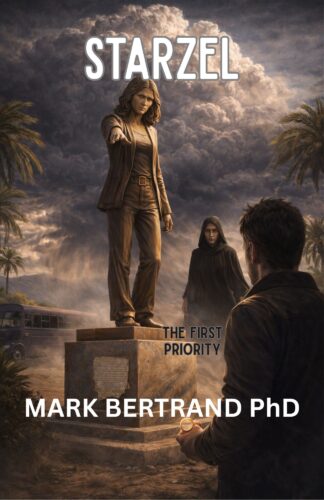
Starzel book cover image of a statue the woman in black mysterious and haunting

Starzel
The First Priority

Follow Mark Bertrand on Bluesky
Dossier

The Utopia Is Built on Soft Tyranny

Planet Forty-Four is easy to admire if you only look at the surface. In the story of STARZEL, the utopia is built on soft tyranny.

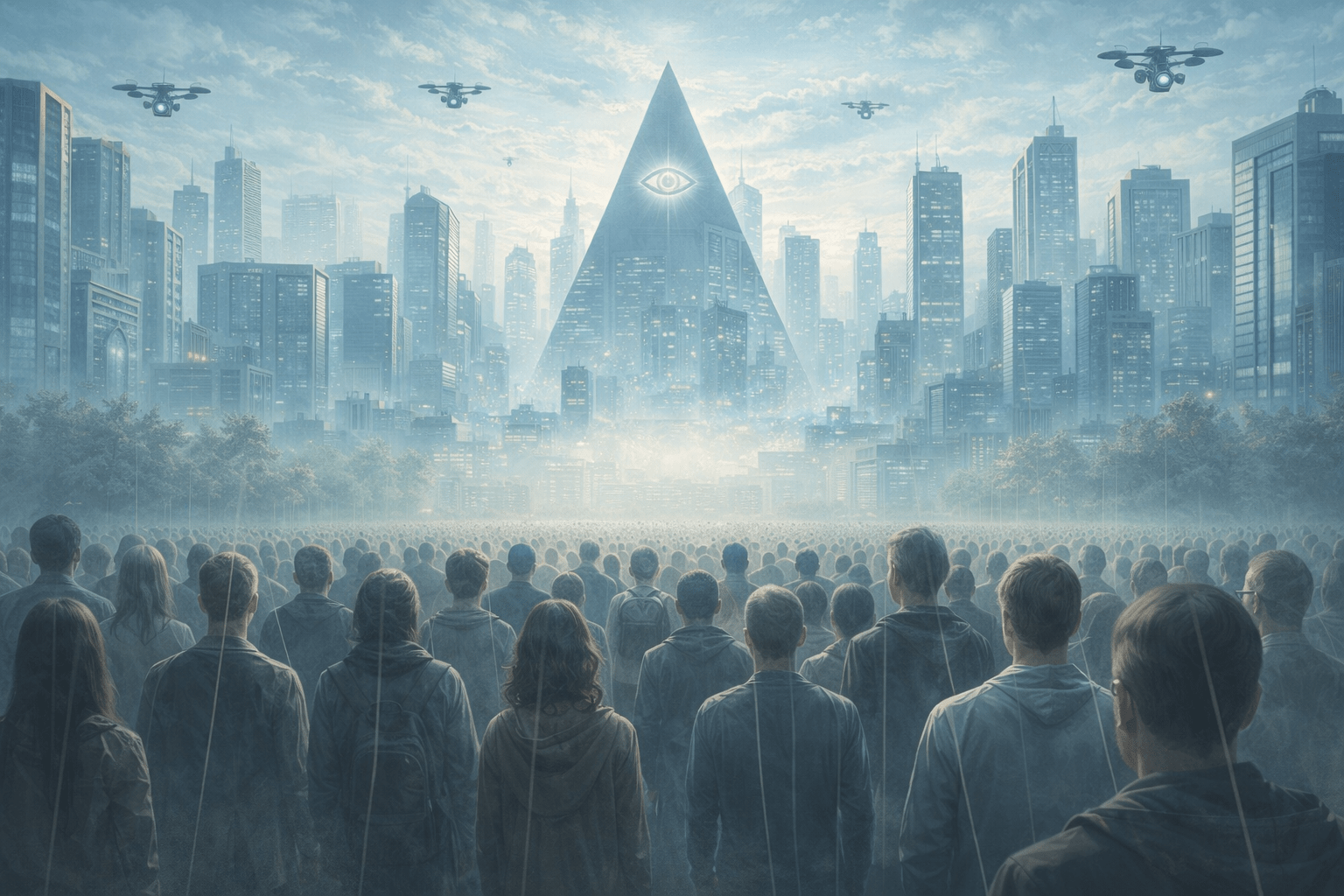
The Utopia Is Built on Soft Tyranny image of the population under constant surveillance and drone police

It is ordered.
It is clean.
It is calm.
Its people appear advanced, emotionally regulated, spiritually evolved, freed from the blunt chaos that defines ordinary human life.

That is the seduction.

The novel does not give us a screaming dictatorship. It gives us something more elegant and therefore more dangerous: a civilization that has learned how to make domination look like refinement.

That is the hidden subplot running beneath the beauty of Forty-Four. Its serenity is not natural. It is managed. Its peace is not fully chosen. It is engineered. And the cost of that engineering is not merely political freedom. It is the freedom to perceive reality without permission.

That is the first turn of the knife.

The regime does not begin by controlling behavior. It begins earlier, deeper, and more effectively. It controls perception itself.

Once truth is mediated through implants, upgrades, and sanctioned forms of enhancement, the state no longer has to argue with the citizen in the old way. It does not need the citizen to agree. It only needs the citizen to experience reality through approved channels. That is a very different kind of power. It is not the power to punish dissent after it appears. It is the power to narrow what can even be felt, known, trusted, or interpreted before dissent has a chance to form.

That is the first aha: Forty-Four has solved the ancient problem of tyranny by shifting control from action to cognition.

In a crude state, you are told what to say.
In a sophisticated state, you are taught what is real.

That is why the transformation of children matters so much.

The novel could have placed this system’s decisive intervention at adulthood, when consent can at least pretend to exist. It does not. It reaches into life at age seven. That is not a detail. That is the system exposing its true confidence. Forty-Four does not wait for the mature person to emerge and then negotiate with that person. It gets there first. It enters before identity hardens, before resistance acquires language, before the child can distinguish between inner life and institutional design.

That is the second aha: the society does not merely govern citizens. It preauthors them.

That is what makes the world so chilling. The violence is not theatrical. No cattle cars. No public squares stained with blood. No obvious boot on the throat. The coercion is folded into development itself. The child is “improved.” The senses are enhanced. Consciousness is elevated. Capacity expands. And because the intervention arrives wrapped in the language of progress, care, and advancement, the system can claim moral beauty while permanently reducing the possibility of unapproved becoming.

That is soft tyranny at its most perfected.
Not force against the formed self.
Formation of the self under force.

And then the novel deepens the trap.

Because Forty-Four does not merely enhance. It criminalizes the unsanctioned.

That is where the utopian mask slips.

Members Only The Utopia Is Built on Soft Tyranny

A truly liberated civilization would

This content is for members only.

Not yet a member? Request access to The Dossier.

Starzel book cover image of a statue the woman in black mysterious and haunting

Starzel
The First Priority

Follow Mark Bertrand on Bluesky
Dossier

Eulǝr’s Real Darkness Is Moral Vanity

The easiest way to misread Eulǝr is to look for ordinary villainy. But that is not where his darkness lives. Eulǝr’s real darkness Is moral vanity.

He is not darkest when he is angry.
He is not darkest when he lies.
He is not even darkest when he interferes.

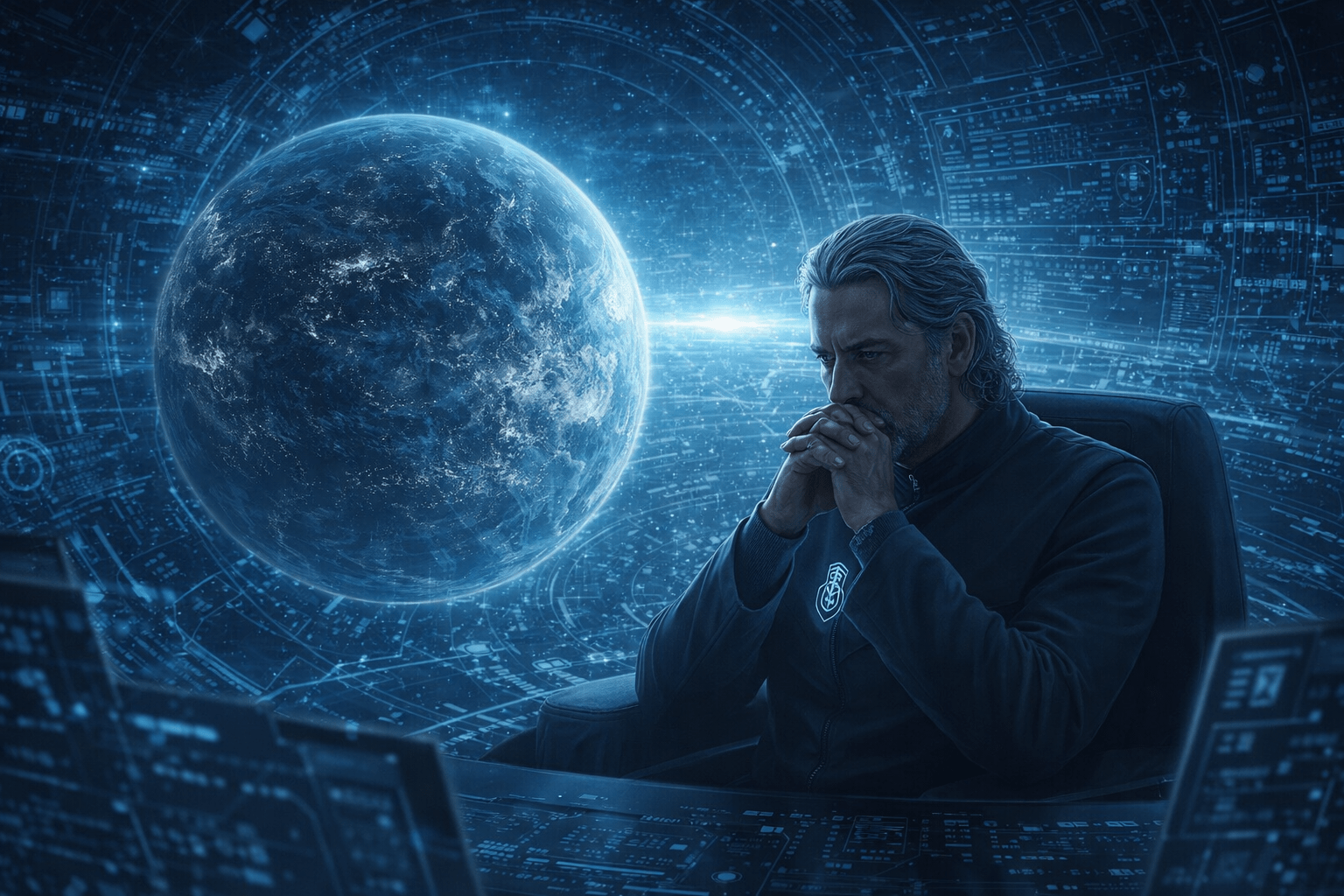
eulers real darness hero image of the man in his office contemplating vanity

He is darkest when he feels qualified.

That is the first aha.

Most dangerous characters know they are dangerous. Eulǝr does not. He believes his intelligence has purified his motives. He believes rank proves fitness. He believes access to power is evidence of moral permission. When he admits he has altered the past, his reasoning is not the reasoning of a criminal mind. It is the reasoning of a mind that has mistaken superiority for innocence. He tells us the changes are harmless because he is “a high-functioning superior humanoid and a high-ranking Syganoid,” and because if he were not worthy, he would not hold such a critical position. That is not simple arrogance. That is moral vanity: the conviction that one’s elevated status is itself an ethical defense.

That changes everything.

Because once you see that, Eulǝr’s tampering with history no longer reads like reckless curiosity alone. It reads like self-worship disguised as stewardship. He is the keeper of the code of the universe, yet boredom drives him to touch the lives of beings he considers beneath him. He moves a flower, shifts a walnut, alters human development, introduces meditation into an ancient culture, changes Genghis Khan, and even modifies the Hitler bloodline, all while narrating himself as harmless, clever, and perhaps even benevolent. He is not merely breaking rules. He is converting other lives into a mirror for his own self-regard.

That is the second aha: Eulǝr does not just play god. He enjoys himself most when his god-play lets him feel good about being good.

The novel gives that away in a chilling little turn. After altering history, he does not simply say he was curious. He says some of it made him “feel pretty good” about himself and about how much benefit his kind can provide to humans. That is the tell. His interventions are never only about the result. They are also about the pleasure of seeing himself as the elevated intelligence who helps the lesser species. He wants the authority of transcendence and the emotional reward of compassion at the same time. He wants to trespass and still feel virtuous.

That is why moral vanity is more dangerous than cruelty.

Cruelty at least announces itself.
Vanity arrives wearing a halo.

Members only: Eulǝr’s Real Darkness Is Moral Vanity

Eulǝr’s mind keeps returning to

This content is for members only.

Not yet a member? Request access to The Dossier.

Starzel book cover image of a statue the woman in black mysterious and haunting

Starzel
The First Priority

Follow Mark Bertrand on Bluesky