Tag: Political Thriller

Political thrillers are often built around conspiracies, elections, and high-stakes struggles for control. The works gathered here move past those familiar surfaces to examine the deeper machinery of power—how institutions protect themselves, how narratives shape public belief, and how individuals navigate systems designed long before they arrive. These stories explore politics not simply as intrigue, but as a network of pressures, loyalties, and decisions that quietly determine who holds authority and what truths are allowed to surface.

IMD Operations

IMD Operations File #001 | The Housing Auction

The housing auction file #001 IMD Operations helps an elderly couple pushed toward foreclosure during a medical emergency while a hidden system converts human suffering into legal process and financial opportunity. IMD intervenes to expose the mechanism before the home is lost.

Cultural techno-thrillers ask:
“What happens when society reorganizes itself around systems that quietly dehumanize people?”

IMD OPERATIONS // FIELD FILES

Start the Operation

Watch the files in order. Each operation exposes another part of the machine.

Start File 001
0 of 12 files completed
Files 001–010
FILE 001 Still to see

The Housing Auction

The housing auction file #001 IMD Operations helps an elderly couple pushed toward foreclosure during a medical emergency while a hidden system…

Watch File 001
FILE 002 Still to see

The Loan Denial Algorithm

The Loan Denial Algorithm | IMD Operations File 002 A man qualified for the mortgage. The algorithm said no. IMD Operations File…

Watch File 002
FILE 003 Still to see

Who Controls the System

Who Controls the System Systems do not run the modern world by accident. Someone built them. IMD Operations File 003 — Who…

Watch File 003
FILE 004 Still to see

The Algorithm Denied His Life

A doctor prescribed the treatment. The algorithm denied his life. Not because it wouldn’t work. Because an algorithm decided the patient wasn’t…

Watch File 004
FILE 005 Still to see

He Lied Legally

He took an oath. He lied legally. And nothing happened. In this IMD Operation, public funds are not stolen… they are redefined.…

Watch File 005
FILE 006 Still to see

The Property Tax Trap

A retired couple falls behind on property taxes during a medical crisis. The property tax trap. What follows is not chaos. It…

Watch File 006
FILE 007 Still to see

The Credit Score Collapse

A man misses one payment. Then, the credit score collapse. The system recalculates. His credit score drops. Housing disappears. Loan access vanishes.…

Watch File 007
FILE 008 Still to see

The Childcare Network

A family does everything right. They work. They plan. They pay. But the childcare network system was never built around care. In…

Watch File 008
FILE 009 Still to see

The Billionaire Landlords

Forty-one hours before a public housing hearing, the billionaire landlords struck. The tenants’ evidence site disappears. Rent records. Eviction notices. Maintenance complaints.…

Watch File 009
FILE 010 Still to see

The Survivor Protocol

IMD was never a room. It was never a group of hackers. It was a counter-system. In File 010: The Survivor Protocol,…

Watch File 010
FILE 011 Still to see

The Coder Awakens

“Yesterday was brutal. The whole team has been killed and slaughtered. The office is destroyed. They took everything. They mashed all the…

Watch File 011
FILE 012 Still to see

The Union Breaker

IMD Operations File #012: The Union Breaker — Part 1 IMD Operations File 012: The Union Breaker Part 1 — The Store…

Watch File 012

The Housing Auction


The housing auction file #001 IMD Operations helps an elderly couple pushed toward foreclosure during a medical emergency

An elderly couple sits at their kitchen table surrounded by medical bills, tax notices, and prescription bottles. Decades of ordinary life have quietly collapsed into arithmetic.

The husband studies the paperwork while his wife stares silently at the table. The home around them still carries the shape of memory:
family photographs,
coffee cups,
familiar walls,
the residue of a life built slowly over time.

But the system no longer sees a home.

It sees delinquency.

Hospital corridors replace the safety of the house. Treatments continue. Bills multiply. The county notices the missed property taxes before anyone notices the fear settling into the room.

The language changes first.

Late.
Penalty.
Interest.
Delinquent.
Final notice.

Each document arrives colder than the last.

Outside the home, the neighborhood remains quiet while an invisible process advances underneath it. Property records move through digital systems. Parcel numbers connect to lien structures. Legal codes transform human distress into transferable value.

The housing auction begins by disappearing into paperwork.

A foreclosure notice appears on the property.

The couple stands outside their home watching the machinery continue forward without emotion, without urgency, without hatred. The cruelty is procedural.

Then the atmosphere changes.

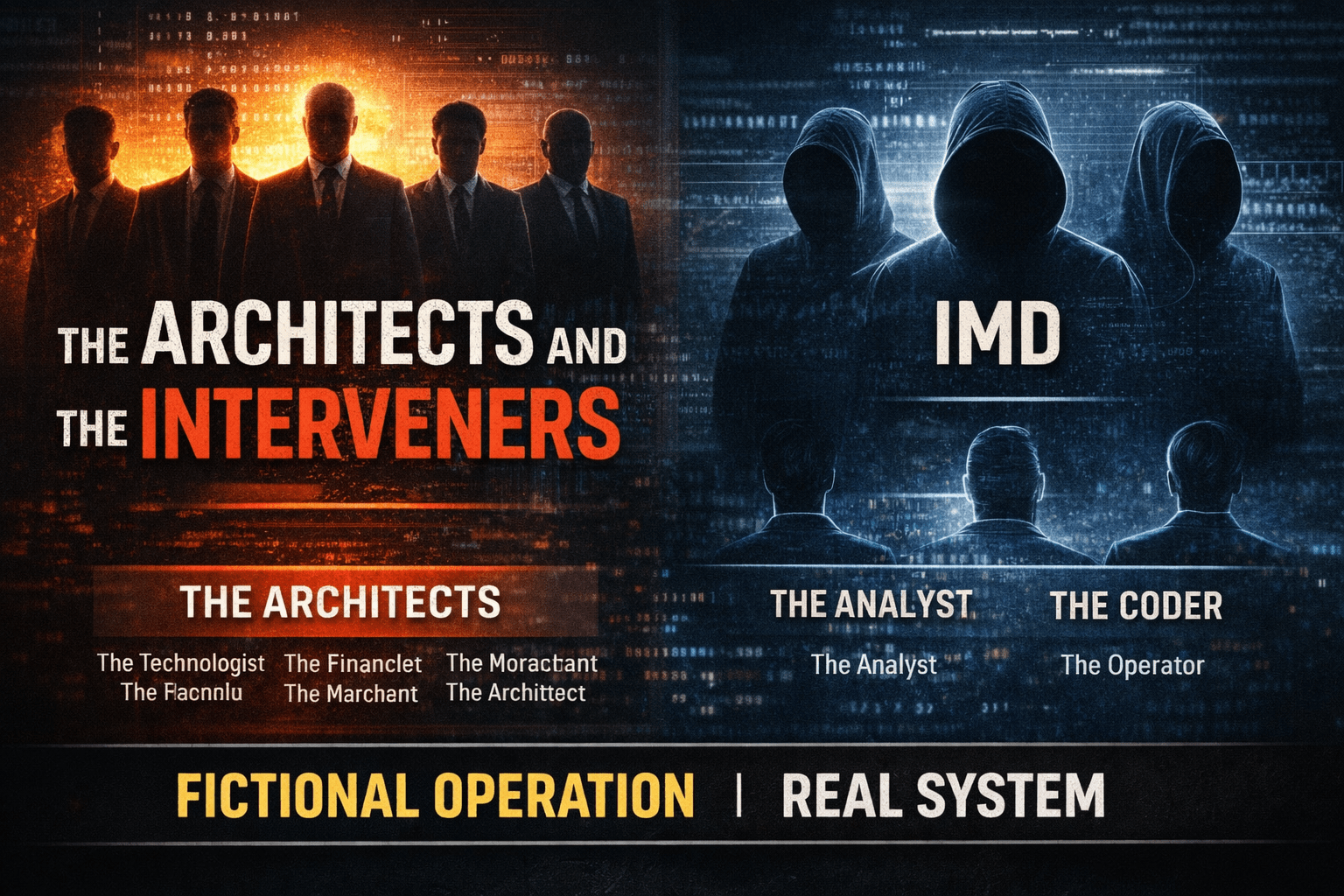
IMD Operations in process.

The Analyst identifies the pattern hidden inside the county records for the housing auction.
The Coder enters the network tracing ownership transfers and shell pathways moving beneath the tax system.
The Operator prepares the intervention.

Across glowing monitors, systems begin connecting:
parcel data,
transfer schedules,
auction structures,
compliance chains.

The machine is mapped.

Protocol activation begins.

Integrity.
Morality.
Decency.

The hidden mechanisms behind the property seizure are exposed publicly. The system that converted suffering into opportunity is forced into daylight.

The housing auction transfer stalls.

The couple remains in their home.
Not because mercy appeared.
Because exposure interrupted the machine long enough to stop it.

But the ending offers no illusion of victory.

The system still exists.
The architecture remains intact.
The process will continue somewhere else tomorrow.

IMD Operation complete.

The machine will try again tomorrow.

The story is fiction.
The system is real.
The investigation continues in The Reader’s Court.
Power & Privilege

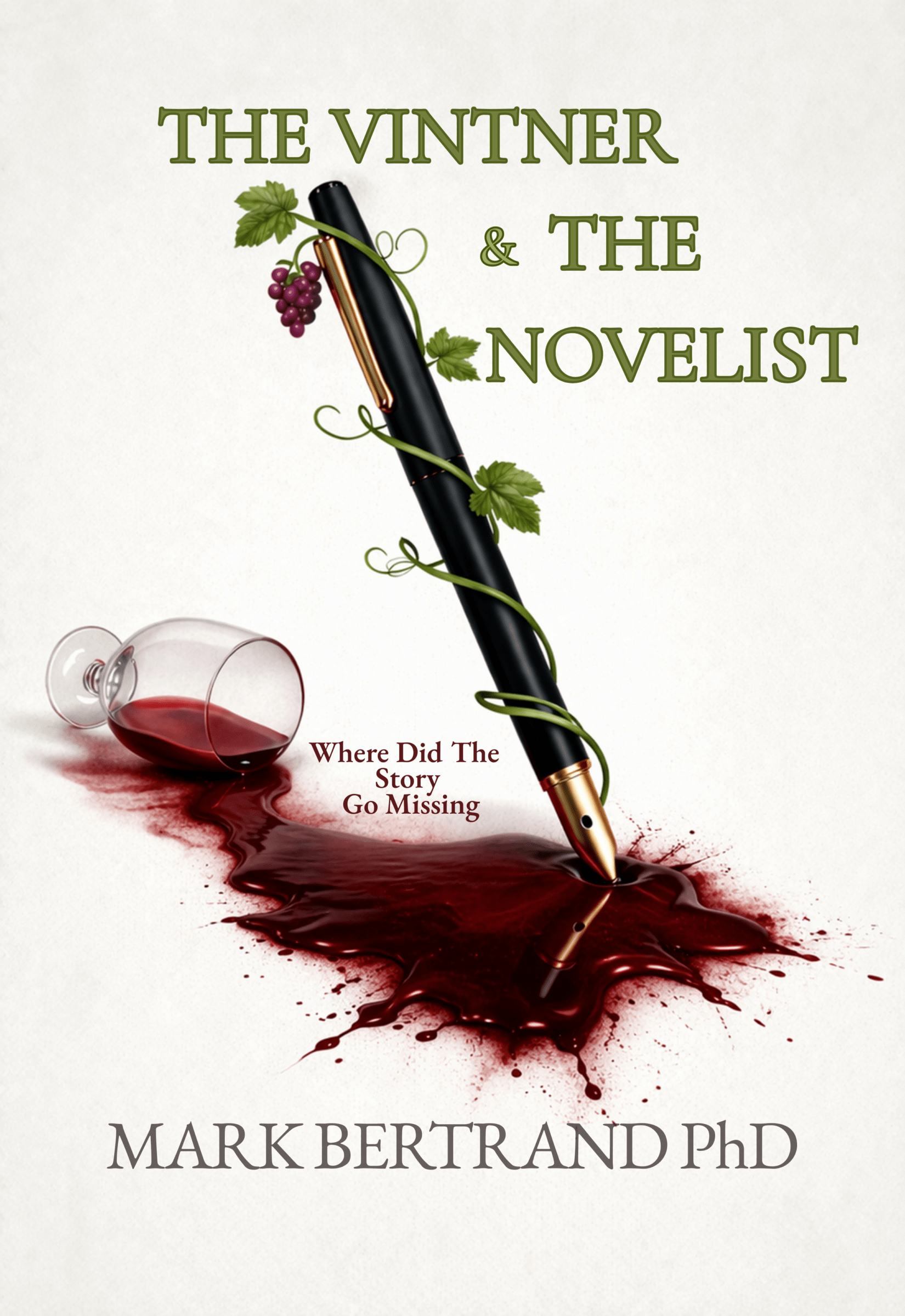
Start Here with The Vintner & The Novelist

The Vintner and The Novelist by MARK BERTRAND COVER IMAGE OF A SPILLED WINE GLASS AND A VIVE WRAPPED PEN

The Vintner & The Novelists

image button for purchasing the ebook
image button for purchasing the paperback
Connected evidence

Continue the Operation

The investigation does not end at the bottom of the page.
Books Like

Books Like Red Clocks When the State Enters the Body

Readers who love books like Red Clocks were not looking for spectacle. They were looking for pressure—the kind that builds slowly, politically, and inside the body—until the question is no longer what the system does, but what it makes a woman become.

books like red clocks image of a woman looking out of a window across the city scape of toronto

Readers who loved Red Clocks were not chasing explosions or collapse. They were drawn to something colder. A near-future where laws reshape private life, where ideology walks into the most intimate spaces, and where women must navigate not just restriction, but identity under pressure.

That is where Reckoning meets them.

Not at the level of surface dystopia, but at the level of intrusion. In Reckoning, the system does not simply regulate behavior. It presses into relationships, into ambition, into pregnancy, into the fragile space where a person tries to decide what her life is allowed to mean. Lydia Daniels is already breaking under the weight of marriage, business collapse, and impending motherhood, while Laura Benton stands on the opposite axis—controlled, strategic, and locked in ideological war against a future that threatens to redefine the human itself.

Why readers love Books Like Red Clocks

What gives books like Red Clocks its power is restraint.

The novel imagines a near-future America where abortion is illegal and new laws restrict the autonomy of women in increasingly invasive ways. But it does not rely on spectacle. It works through multiple women, each facing a different form of constraint, and builds a quiet, accumulating dread.

Readers responded to that control. The sense that nothing dramatic needs to happen for a life to be narrowed, redirected, or erased. The law becomes the atmosphere. The pressure becomes normal.

That is the experience readers are looking for when they search for books like Red Clocks.

Where Reckoning hits the same nerve

Reckoning delivers that same pressure, but with sharper psychological edges and more visible ideological conflict.

Lydia’s pregnancy is not a symbol. It is a pressure point. It sits inside a failing marriage, a collapsing professional identity, and a mind that cannot stabilize itself. Every decision she makes is colored by that reality. Every interaction is charged.

Laura Benton carries the other side of the argument. Where Lydia is collapsing inward, Laura is pushing outward. She sees the coming transhuman future not as liberation but as control disguised as progress. Her resistance is political, but also deeply personal. She has already lost something to that future. She refuses to lose the rest.

This is where Reckoning aligns with books like Red Clocks. Both novels understand that control is not only enforced. It is lived. It changes how a woman thinks, feels, chooses, and survives.

Strong female characters under pressure, not above it

One of the defining strengths of Red Clocks is that its women are not heroic in a conventional sense. They are constrained, uncertain, compromised, and forced into decisions that reveal the cost of the system rather than defeat it.

Reckoning operates in that same space, but with more volatility.

Lydia is not composed. She is reactive, unstable, and painfully aware of her own unraveling. Her strength is not clean. It is contested moment by moment. She lashes out, withdraws, questions herself, and keeps moving anyway.

Laura is strength in a different form. Controlled, ideological, and sharpened by loss. She does not drift through the system. She studies it. Plans against it. Prepares for confrontation.

Readers who connected with Red Clocks will recognize this immediately. These are not symbolic women. These are women inside pressure.

Theme: control of the body, control of the future

The obvious connection between these novels is political control over women’s lives. But the deeper connection is about authorship.

Who gets to decide what a life is for?

In Red Clocks, that question is framed through reproductive law, social expectation, and the quiet violence of limitation.

In Reckoning, the question expands. It is no longer only about the body. It is about the future of the human itself. Victor Lang’s transhuman vision offers enhancement, efficiency, and evolution—but at the cost of the very imperfections that make human life meaningful. Laura Benton’s resistance is therefore not only political. It is philosophical. She is fighting for the right to remain human.

That escalation is what makes Reckoning the natural next read. It takes the same core fear—control of women’s lives—and pushes it into the next stage: control of what a human being is allowed to become.

Plot movement: quiet pressure versus converging force

Red Clocks moves through accumulation. Small pressures. Quiet decisions. Parallel lives tightening under the same system.

Reckoning builds through convergence.

Lydia’s internal collapse.
Laura’s ideological resistance.
Victor Lang’s expanding influence.
A media environment shaping public truth in real time.

These forces do not sit side by side. They move toward each other. The result is a different kind of tension. Less quiet, more volatile. But rooted in the same foundation: systems pressing inward until something gives.

Why Reckoning is the next best read after Red Clocks

If you love books like Red Clocks because it showed how the state can enter the most private parts of life and reshape them without spectacle, Reckoning gives you that same intrusion.

But it does not stop there.

It is more volatile.
More confrontational.
More willing to push the argument beyond control into transformation.

It asks a harder question.

Not just who controls women’s lives?
But what happens when power decides to redesign the human being entirely—and calls it progress?

That is where Reckoning becomes the next read.

It takes the quiet dread of Red Clocks and sharpens it into a psychological and ideological thriller where the body, the mind, and the future are all under negotiation—and none of it is safe.

reckoning cover image of a woman with many eyes filled in tears

Discover more about Reckoning and buy the novel.

Readers who read books like Red Clocks also enjoy these articles.

Books Like Billy Summers or Harlem ShuffleBooks Like The Three-Body Problem Where the Threat Isn’t Out ThereBooks Like Red Sky Mourning: What Violence Costs, Where Systems Fail

Mark Bertrand

Books Like

Books Like The Three-Body Problem Where the Threat Isn’t Out There

books like the three-body problem hero image of a lone figure stands in the foreground with his back to us, facing a devastated, industrial wasteland.

If you’re searching for books like The Three-Body Problem, you’re not looking for aliens.

You’re looking for pressure.

The kind that builds slowly.
Quietly.
Until it becomes unavoidable.

You felt it in:

• the countdown you couldn’t stop
• the science you couldn’t argue with
• the realization that humanity may not be in control of anything at all

The Three-Body Problem isn’t about first contact.

It’s about what happens when certainty collapses—and nothing replaces it.


Starzel meets that pressure and turns it inward

In The Three-Body Problem, the threat is external.

Distant.
Unstoppable.
Already in motion.

The fear comes from what’s coming.

In Starzel, the pressure doesn’t arrive.

It’s already here.

It operates through:

• perception
• identity
• the stability of the self

You’re not waiting for contact.

You’re trying to determine whether something has already begun rewriting what you are.


Where Three-Body gives you inevitability, Starzel removes distance

One of the most unsettling truths in The Three-Body Problem is this:

You can understand the system.
You can model it.
You can even predict what comes next.

And it still doesn’t matter.

It’s too large. Too precise. Too far ahead.

There’s distance between you and the outcome.

Starzel removes that distance.

There is no delay.
No buffer.
No time to prepare.

The system isn’t approaching.

You’re already inside it.


The shift: from cosmic indifference to internal instability

The Three-Body Problem forces you to confront a universe that does not care whether you exist.

That’s the terror.

Starzel takes the next step.

It asks:

What if the threat isn’t indifference?

What if it’s integration?

What if the system doesn’t destroy you—

it absorbs you, slowly, until resistance stops forming?


Why readers of Three-Body recognize it immediately

Because the real hook wasn’t the science.

It was the moment you understood:

Humanity is not the center.
Control is an illusion.
Understanding something does not mean you can survive it.

Starzel continues that line—

and removes the last place to stand.

No external enemy.
No clear event horizon.

Only a growing instability in what you trust to be real.


Read this if what stayed with you wasn’t the concept, but the dread

Read this if you want:

• tension that builds without release
• systems that cannot be negotiated with
• a narrative where knowledge increases uncertainty instead of reducing it

Read this if The Three-Body Problem left you with a question you couldn’t shake—

and you want to follow it further.


Final line

The Three-Body Problem shows you what’s coming.

Starzel asks a colder question:

What if it’s already begun?

Starzel cover image

Starzel a psychological thriller

Readers also enjoy these article.

Books Like Clockers or In The WoodsBooks Like HumBooks Like Dune Where Power Moves Inside the Mind

Book Finder, AI tool to find your next best read.

Follow me on Bluesky