Power rarely appears as force alone. It moves through institutions, financial systems, and the stories societies tell about themselves. The articles collected here examine how authority actually works beneath the surface—how wealth, influence, and narrative shape decisions long before they become visible. From financial systems to political structures to the private motivations of powerful individuals, these pieces explore the mechanics of power and the quiet ways it determines outcomes.
The housing auction file #001 IMD Operations helps an elderly couple pushed toward foreclosure during a medical emergency while a hidden system converts human suffering into legal process and financial opportunity. IMD intervenes to expose the mechanism before the home is lost.
Cultural techno-thrillers ask: “What happens when society reorganizes itself around systems that quietly dehumanize people?”
IMD OPERATIONS // FIELD FILES
Start the Operation
Watch the files in order. Each operation exposes another part of the machine.
Forty-one hours before a public housing hearing, the billionaire landlords struck. The tenants’ evidence site disappears. Rent records. Eviction notices. Maintenance complaints.…
An elderly couple sits at their kitchen table surrounded by medical bills, tax notices, and prescription bottles. Decades of ordinary life have quietly collapsed into arithmetic.
The husband studies the paperwork while his wife stares silently at the table. The home around them still carries the shape of memory: family photographs, coffee cups, familiar walls, the residue of a life built slowly over time.
But the system no longer sees a home.
It sees delinquency.
Hospital corridors replace the safety of the house. Treatments continue. Bills multiply. The county notices the missed property taxes before anyone notices the fear settling into the room.
The language changes first.
Late. Penalty. Interest. Delinquent. Final notice.
Each document arrives colder than the last.
Outside the home, the neighborhood remains quiet while an invisible process advances underneath it. Property records move through digital systems. Parcel numbers connect to lien structures. Legal codes transform human distress into transferable value.
The housing auction begins by disappearing into paperwork.
A foreclosure notice appears on the property.
The couple stands outside their home watching the machinery continue forward without emotion, without urgency, without hatred. The cruelty is procedural.
Then the atmosphere changes.
IMD Operations in process.
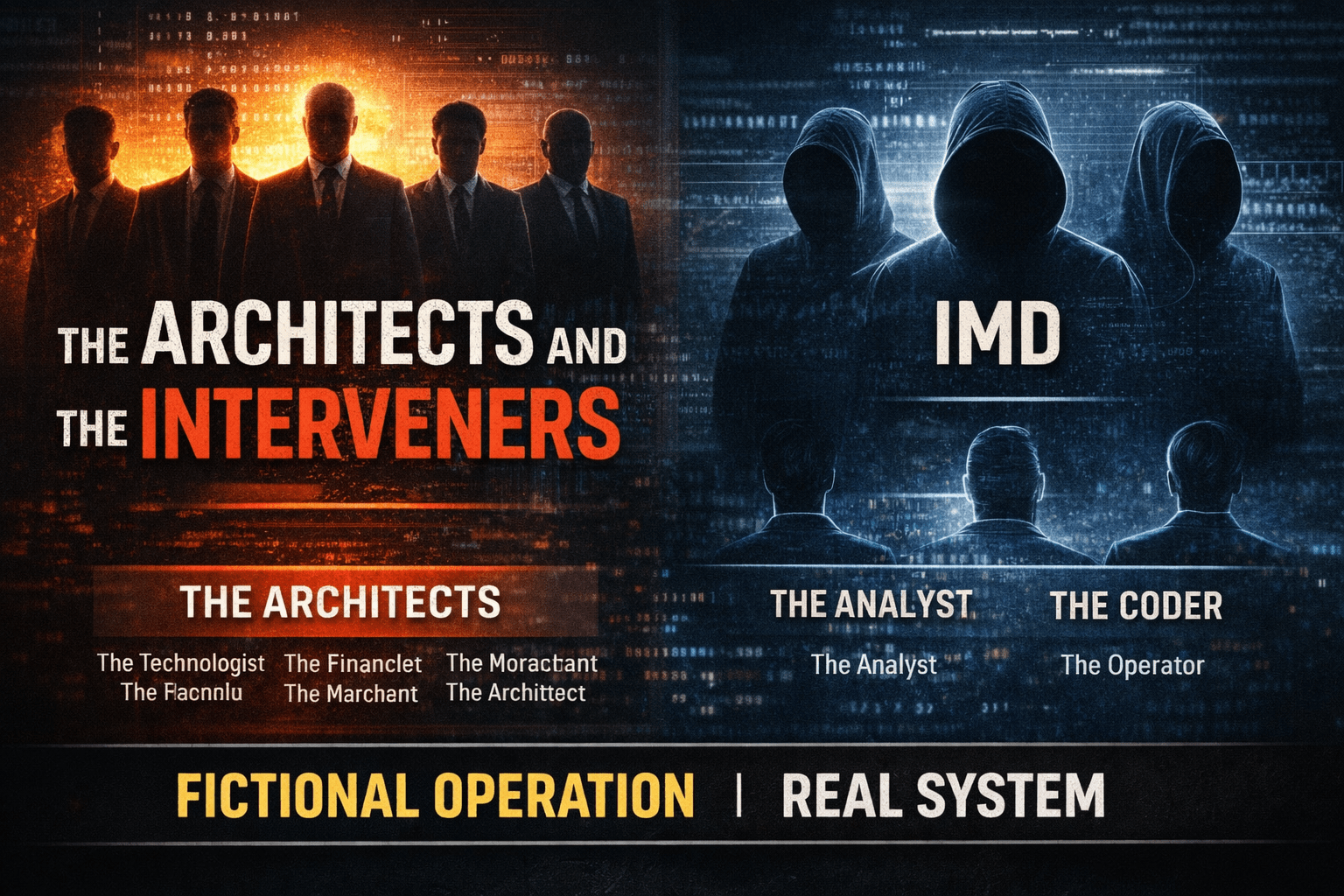
The Analyst identifies the pattern hidden inside the county records for the housing auction. The Coder enters the network tracing ownership transfers and shell pathways moving beneath the tax system. The Operator prepares the intervention.
Across glowing monitors, systems begin connecting: parcel data, transfer schedules, auction structures, compliance chains.
The machine is mapped.
Protocol activation begins.
Integrity. Morality. Decency.
The hidden mechanisms behind the property seizure are exposed publicly. The system that converted suffering into opportunity is forced into daylight.
The housing auction transfer stalls.
The couple remains in their home. Not because mercy appeared. Because exposure interrupted the machine long enough to stop it.
But the ending offers no illusion of victory.
The system still exists. The architecture remains intact. The process will continue somewhere else tomorrow.
Modern Thriller Villains Changed Because Modern Fear Changed
The Most Terrifying Villain in Modern Thrillers Is the System Itself. There was a time when thriller fiction depended on interruption.
A dangerous person entered the story and shattered ordinary life.
A serial killer emerged from the shadows. A terrorist plotted an attack. A corrupt detective protected the wrong people. A criminal mastermind moved silently behind the scenes while investigators, journalists, attorneys, or federal agents raced to stop the damage before more innocent people suffered.
The machinery was familiar because the fear was familiar.
Evil arrived through individuals.
Even when older thrillers explored conspiracy, corruption, or political manipulation, the emotional structure remained intensely personal. Somewhere inside the story existed a human being responsible for the chaos. Readers believed that if the right person uncovered the truth, stopped the villain, or exposed the conspiracy, balance could still be restored.
The system itself largely remained intact.
Courts mattered. Law enforcement mattered. Governments mattered. Institutions mattered.
They might be flawed, compromised, bureaucratic, even corrupt in places, but most classic thrillers still treated institutions as structures fundamentally designed to protect society from collapse.
Modern thriller fiction increasingly abandoned that assumption.
And readers understood why immediately because modern life abandoned it first.
Today, the most terrifying villain in many modern thrillers is not a singular human monster at all. The true antagonist is often structural, institutional, algorithmic, financial, or procedurally invisible. The danger no longer arrives from outside ordinary life. It already exists inside the systems people depend on every day.
That shift changed thriller fiction completely.
Because modern readers are no longer afraid only of violence.
They are afraid of helplessness.
Why Modern Thriller Fiction Became Obsessed With Systems
You do not emotionally persuade automated fraud detection.
You do not explain nuance to a risk model.
A bank system freezes an account. An insurer denies treatment. A university cites policy. A corporation references compliance standards. A platform removes visibility. A government office redirects the appeal.
Nobody appears directly responsible, and that may be the most psychologically exhausting part of all.
The employee on the phone cannot override procedure. The representative lacks authority. The manager cites policy limitations. The department escalates the review. The system continues processing.
Modern life increasingly feels like entering procedural loops specifically designed to exhaust resistance rather than resolve suffering.
That emotional experience quietly transformed modern thriller fiction.
Older thrillers focused heavily on visible cruelty. A reader feared a violent individual because the threat was immediate and understandable. Modern thrillers increasingly revolve around invisible indifference, which often feels far more disturbing because indifference does not even acknowledge humanity as emotionally meaningful.
Hatred at least recognizes your existence.
Procedural systems often do not.
That is one reason modern thriller villains became institutional rather than personal. Readers already understand the emotional reality before the story even begins.
The Rise of Institutional Villains in Modern Thrillers
Classic thriller villains usually wanted something tangible.
Money. Power. Revenge. Control. Political leverage.
The motives were legible because the antagonists were human. Readers could understand greed, obsession, narcissism, rage, or ideological extremism. Even terrifying villains still behaved according to recognizable emotional logic.
Modern systems do not behave emotionally.
That changes suspense itself.
A contemporary thriller protagonist may spend an entire story fighting:
an insurance network
a banking system
a corporate structure
a surveillance platform
an intelligence apparatus
a predictive algorithm
a legal bureaucracy
a reputational scoring system
without ever confronting a single identifiable villain in the traditional sense.
The system itself becomes the antagonist.
And unlike older thriller villains, systems do not become exhausted. They do not panic. They do not confess beneath interrogation lights. They do not experience guilt. They simply continue operating while responsibility disperses so widely that accountability becomes nearly impossible to locate.
That is a much darker psychological framework than many older thrillers possessed.
The question is no longer: “Can the hero stop the villain?”
The question increasingly becomes: “How do you fight a structure designed to survive resistance itself?”
Modern thrillers understand that this question feels emotionally authentic to contemporary readers because many people already ask versions of it in ordinary life.
Why Corporate and Algorithmic Villains Feel Realistic
The modern thriller evolved alongside growing public awareness that enormous systems increasingly shape ordinary existence.
Financial systems determine access to housing. Insurance systems determine medical treatment. Algorithms determine visibility. Employment systems determine stability. Platforms determine reputation. Data systems determine suspicion.
A person can lose healthcare access because of language buried inside policy documentation. A family can lose financial stability because an algorithm adjusted a risk calculation. A worker can lose employment because compliance software identified liability concerns.
No masked killer enters the room.
No dramatic confrontation occurs.
The damage still arrives.
Quietly. Legally. Procedurally.
That procedural quality is precisely what makes modern systems feel so psychologically frightening inside modern thriller fiction. The suffering does not emerge from explosive evil. It emerges from emotionally detached structures operating exactly as intended.
That is why one of the most horrifying sentences in modern thrillers has become:
“Nothing technically illegal happened.”
Readers understand immediately what that sentence means because modern life increasingly trains people to recognize the difference between legality and morality.
The company followed procedure. The insurer applied policy correctly. The institution complied with regulations. The algorithm behaved as designed.
The protagonist still loses everything.
Modern thriller fiction recognized this emotional reality long before much mainstream cultural criticism fully caught up to it.
Where the Power & Privilege Series Fits
This fear sits directly beneath Power & Privilege, the Mark Bertrand series about people living under systems designed to preserve wealth, authority, and institutional protection long after those systems have stopped serving humanity.
The series does not treat power as a personal flaw.
It treats power as architecture.
That distinction matters because the most terrifying villain in modern thrillers is often not the billionaire, the judge, the executive, the official, the attorney, the financier, or the institution alone. The real villain is the protected arrangement between them. The private understanding. The legal insulation. The procedural advantage. The quiet certainty that some people are allowed to cause damage without ever standing close enough to be blamed for it.
That is the pressure inside Power & Privilege.
These are not stories about systems that accidentally failed. They are stories about systems working exactly as intended for those they were built to protect.
That makes them modern thrillers in the deepest sense.
The old thriller usually asked whether the protagonist could expose the corrupt person hiding inside the institution. Power & Privilege asks a darker question: what happens when the institution itself has already absorbed the corruption, legalized it, normalized it, and trained everyone inside it to call the result procedure?
That is where legality separates from morality.
That is where procedure replaces conscience.
That is where ordinary people begin to understand that the system does not need to hate them in order to destroy them. It only needs to process them correctly.
The villain no longer needs to break into the room.
The villain owns the room, writes the rules, funds the experts, hires the lawyers, influences the language, shapes the precedent, and calls the outcome lawful.
That is modern thriller territory.
Why Billionaires Replaced Traditional Thriller Masterminds
Older thriller villains often controlled people through direct violence.
Modern power frequently operates through infrastructure instead.
That is one reason billionaires, corporations, institutional elites, and private networks increasingly dominate modern thriller fiction. The modern wealthy antagonist does not necessarily need to threaten someone personally because influence already exists structurally through:
legal departments
lobbying systems
regulatory influence
financial leverage
media access
institutional protection
private intelligence
data ownership
procedural insulation
The frightening realization in many contemporary thrillers is not simply that powerful people abuse the rules.
It is that they often helped shape the rules themselves.
That distinction fundamentally changes the emotional architecture of suspense fiction.
The system no longer feels like the thing protecting ordinary people from danger.
Increasingly, the system becomes the mechanism generating the danger while simultaneously shielding itself from accountability.
Readers recognize this instinctively because modern life increasingly conditions people to feel small in the presence of institutional machinery. An ordinary individual can spend months fighting billing systems, legal structures, insurance reviews, financial disputes, or reputational damage without ever finding a human being empowered to meaningfully help.
That feeling of powerlessness became one of the defining emotional engines of modern thriller fiction.
Surveillance and Technology Changed Psychological Suspense
Technology accelerated this transformation dramatically.
Older thrillers relied heavily on secrecy. Hidden files. Hidden conspiracies. Secret meetings. Concealed identities. The protagonist moved closer to truth by uncovering information hidden somewhere beneath the surface.
Modern life operates differently.
Most people now exist inside systems of continuous observation.
Phones track movement. Apps monitor behavior. Platforms construct psychological profiles. Advertising systems study emotional vulnerability. Financial institutions monitor purchasing patterns. Employers track productivity metrics. Governments collect data indefinitely.
The modern thriller protagonist often enters the story already exposed before the narrative even begins.
That changes suspense itself.
The old fear was: “Someone is watching.”
The modern fear is: “Everything is watching.”
And unlike earlier dystopian fiction, modern surveillance frequently arrives disguised as convenience. People voluntarily carry the infrastructure. They build lives inside systems optimized primarily around extraction, prediction, monetization, behavioral analysis, and institutional control.
Modern thrillers increasingly understand that the real horror is not technological rebellion.
It is technological dependency.
A protagonist cannot simply disappear anymore. Financial identity, healthcare access, communication systems, employment systems, digital platforms, and personal history are interconnected in ways previous generations never experienced. Losing access to one part of the structure can destabilize an entire life with astonishing speed.
That creates a far more intimate and psychologically believable form of suspense than many older thriller frameworks relied upon.
The protagonist is no longer merely hunted.
The protagonist is entangled.
Why Readers Connect With Modern System Villains
Readers are not responding to these stories because they suddenly stopped fearing violence.
They respond because modern thrillers increasingly reflect the psychological pressure surrounding contemporary life itself. The Most Terrifying Villain in Modern Thrillers connects with lives.
People sense that modern institutions increasingly prioritize:
efficiency over humanity
procedure over morality
liability over decency
stability over compassion
optimization over dignity
They experience it while navigating healthcare systems, employment structures, educational debt, housing disputes, insurance claims, financial reviews, automated moderation systems, and endless invisible evaluations occurring behind screens they never see.
Modern thrillers did not invent these anxieties.
The genre simply recognized them earlier than many other forms of mainstream storytelling.
That is why institutional thrillers, corporate thrillers, algorithmic thrillers, and system-based suspense fiction increasingly resonate with readers. The fears feel psychologically familiar. The pressure feels recognizable. The helplessness feels authentic.
The old thriller monster broke into your house.
The modern thriller monster already owns the mortgage, controls the insurance policy, monitors the account activity, calculates the behavioral risk score, and determines whether your appeal qualifies for review.
And perhaps the most disturbing part is that nobody inside the machine necessarily believes they are doing anything wrong.
The system simply continues operating.
That may be the defining horror of modern thriller fiction.
Not madness. Not chaos. Not even traditional evil.
But systems so vast, procedural, and emotionally detached that human suffering becomes administratively invisible while everything continues functioning exactly as designed.
Start Here
The Vintner & The Novelists
Related Reading
More articles like The Most Terrifying Villain in Modern Thrillers.
Continue exploring the evolution of the modern thriller:
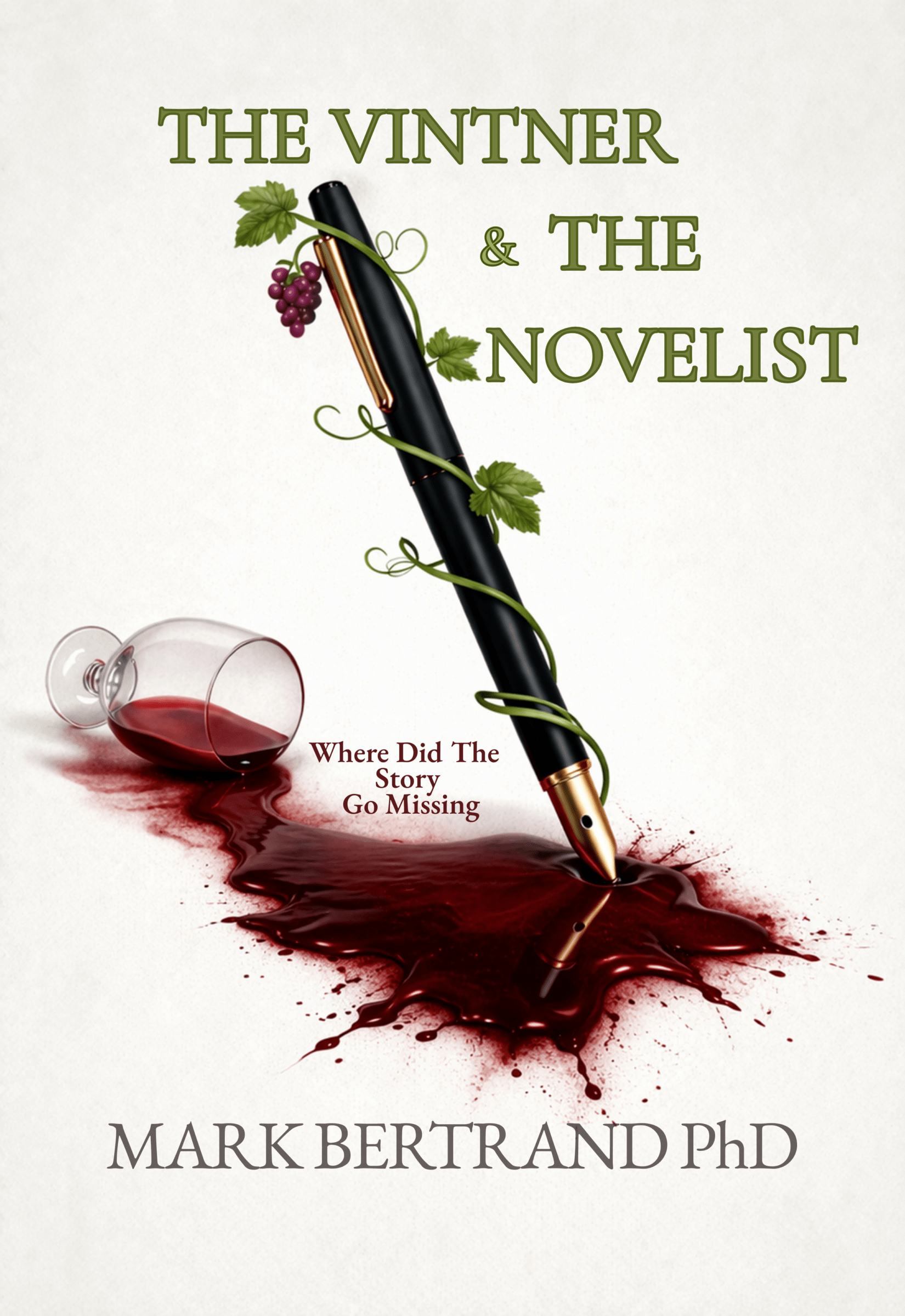
One of the deepest strengths of The Vintner & The Novelist is that it refuses to let the novelist suffer alone. The marriage that makes every page cost more in The Vintner & The Novelist.
That may sound simple, but it changes everything. A man in pain, under pressure, losing his grip on reality, fighting for a manuscript, can already carry a novel. But Bertrand does something better than that. He gives the pain a witness. He gives the risk a shared life. He gives the dream another owner.
That is why the marriage matters so much. It is not softening. It is not domestic filler. It is the human structure that makes every page cost more.
The dream was never his alone
The vineyard was not his fantasy in isolation. It was theirs.
The novel makes that clear in the way it recounts their move to Spain. They studied the climate, the soil, the regulations, the taxes. They visited the land together. She noticed details he did not: the changing light, the lower slopes, the way the damp held after rain. They planned patiently. They promised each other they would do it the right way. Then the accident destroyed the timeline, and the dream had to be dragged forward before they were ready.
That matters because it turns the vineyard from property into shared sacrifice.
They sold everything. Not theatrically. Practically. The house. The extra car. Tools. Furniture. The shape of a life. They reduced themselves to what the airlines would allow and converted the rest into cash, time, and one last attempt at freedom. That is not just backstory. That is marital investment written in full.
So when the vineyard is threatened, when the body starts failing, when repairs pile up and tax pressure closes in, the reader understands something crucial: he is not only failing himself if he fails. He is risking the life they built together.
These pages map the territory behind Mark Bertrand’s psychological thriller books: captured reality, corporate power, institutional pressure, algorithmic society, cultural dread, literary disorientation, and the old thriller tropes that no longer explain the world readers are living in.