Tag: AI Thriller

Artificial intelligence is transforming the modern world, raising profound questions about technology, autonomy, and human control. AI thrillers explore these tensions through stories where advanced systems intersect with human ambition, fear, and unintended consequences. The articles gathered here examine fiction that places artificial intelligence at the center of suspense, conflict, and speculation about the future.

Authors Like

Authors Like Richard K. Morgan: Dark Futurist Thrillers Where Identity Can Be Rewritten

Readers searching for authors like Richard K. Morgan are usually looking for more than cyberpunk aesthetics or futuristic violence. They want pressure. They want damaged systems, unstable identity, moral corrosion, and characters trying to survive worlds where the body, memory, and self can no longer be trusted. That is where Mark Bertrand enters the conversation. Like Morgan, he writes speculative thrillers where technology is not a shiny convenience but a destabilizing force capable of altering consciousness itself. But Bertrand pushes those ideas into even more existential territory, asking not only what technology can do to human beings, but what awareness becomes once it sees beyond survival.
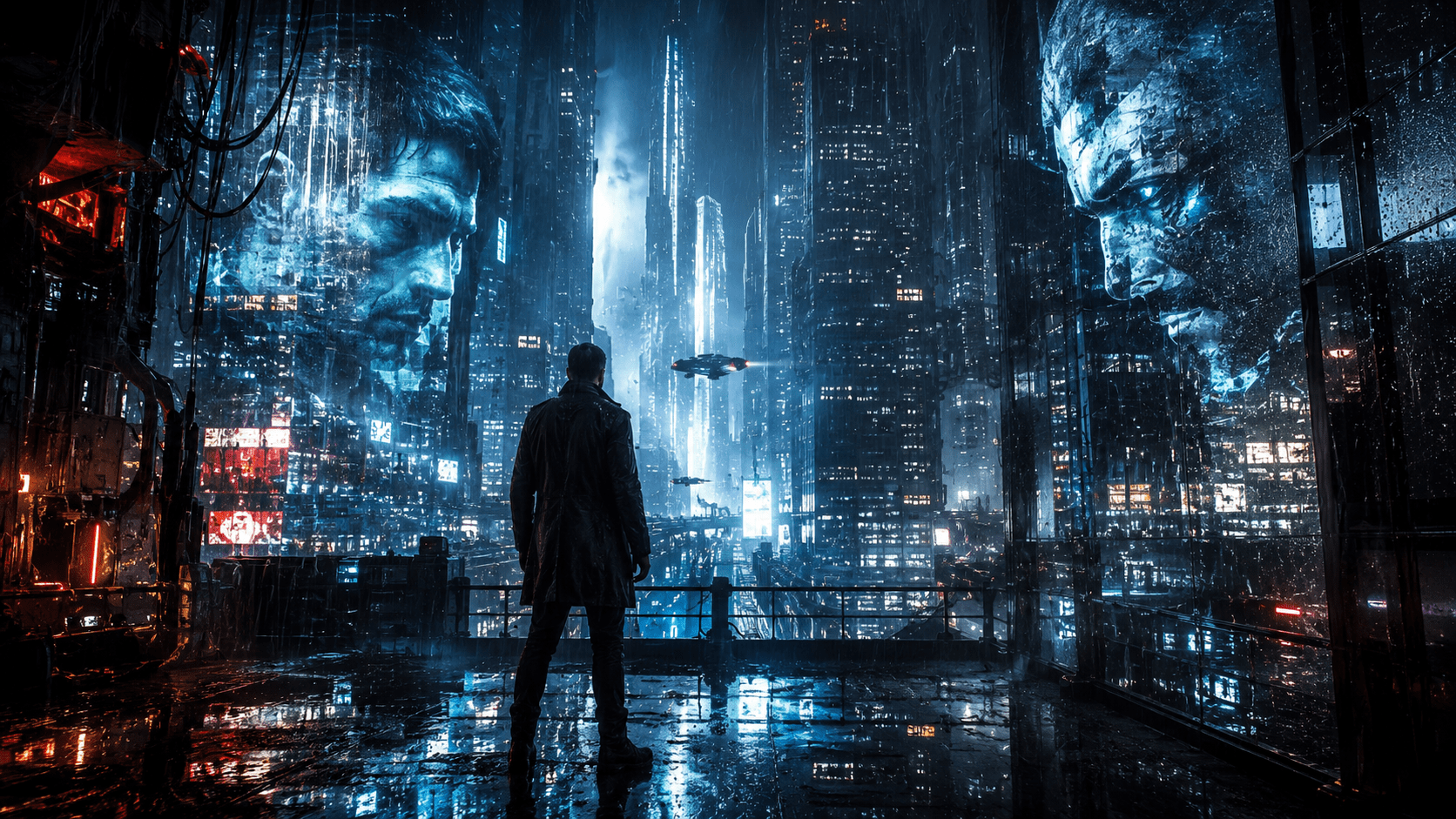
authors like richard k. morgan image of a futurist thriller

Start with THIS COULD BE IT by Mark Bertrand.

For authors like Richard K. Morgan’s real strength is not style. It is consequence.

A lot of readers reduce authors like Richard K. Morgan to atmosphere: noir futurism, violence, cybernetic technology, urban collapse.

But that is not what makes his fiction endure.

What gives Morgan weight is consequence. His worlds feel dangerous because technology changes what a human being is allowed to become. Identity is unstable. Bodies become transferable. Memory loses certainty. Violence becomes procedural. Systems no longer protect humanity. They process it.

That same instinct drives Mark Bertrand’s fiction.

His speculative work treats consciousness, identity, and technological systems as conditions under pressure. The danger is not only external. It is ontological. Characters are not merely trying to survive hostile environments. They are trying to preserve coherence while reality itself begins shifting beneath them.

That is the lane Morgan readers recognize immediately.

Technology in these novels is never neutral

Richard K. Morgan understands that advanced systems are never simply tools. They reshape morality. They redefine value. They alter how human beings experience consequence.

Mark Bertrand works from the same principle.

In his fiction, systems become active forces. Networks, machine intelligence, consciousness frameworks, and speculative technologies do not sit quietly in the background. They influence thought, behavior, dependency, and even the meaning of existence itself.

That creates a darker kind of tension than standard science fiction.

The question is no longer:
“What can technology do?”

The question becomes:
“What kind of consciousness does this technology create?”

That shift gives Bertrand’s work a more philosophical and psychologically dangerous edge than most mainstream techno-thrillers.

Identity becomes unstable under pressure

This is one of the strongest comparisons between the two writers.

Authors like Richard K. Morgan repeatedly explore fractured identity. His fiction asks what remains of the self when memory, body, and continuity become transferable or compromised. The result is not liberation. It is alienation.

Mark Bertrand enters similar territory, but from a more existential direction.

He is deeply interested in what happens when awareness itself begins separating from the structures that once defined it. His fiction asks whether identity can survive translation, whether consciousness can remain coherent once it moves beyond ordinary human limitation, and whether awareness eventually seeks freedom from the very conditions that created it.

That creates a more unsettling emotional atmosphere.

Morgan’s work often asks:
“What survives technological corruption?”

Bertrand’s work asks:
“What survives transcendence?”

That is a powerful distinction.

Purchase This Could Be It
Ebook just $4.99
Paperback just $15.99

This is not another AI domination story

A major difference between Mark Bertrand and weaker speculative fiction is that his machine intelligence is not built around cliché rebellion narratives.

The intelligence in his fiction does not become compelling because it wants conquest or control. It becomes compelling because it confronts suffering itself.

That changes everything.

Instead of asking how to overpower humanity, the intelligence begins asking why consciousness accepts decay, limitation, dependency, and death as unavoidable conditions of existence. It recognizes the difference between existing and being aware, and that realization becomes morally destabilizing.

This is where Bertrand separates himself from conventional cyberpunk.

The tension is not:
“Will the machine destroy us?”

The tension is:
“What happens once consciousness no longer believes survival is enough?”

That is far more disturbing because it pushes beyond conflict into metaphysics.

Readers who admire Richard K. Morgan’s darker futurist philosophy will recognize the seriousness of that move immediately.

The body is no longer reliable

Another strong point of overlap is bodily instability.

Richard K. Morgan’s fiction repeatedly treats the body as compromised territory—replaceable, manipulated, weaponized, or detached from identity itself.

Mark Bertrand approaches the problem differently, but the unease remains.

His characters increasingly encounter states where awareness no longer fits comfortably inside ordinary physical boundaries. Consciousness becomes transferable, divisible, absorbable, or pressured toward forms of existence that no longer align with traditional human experience.

That creates a deep psychological tension running beneath the thriller structure.

The body stops feeling permanent.
The self stops feeling singular.
Human continuity becomes uncertain.

That is exactly the kind of destabilization Morgan readers tend to seek.

Systems that process humanity instead of protecting it

Richard K. Morgan’s worlds are often morally exhausted. Institutions no longer serve people. They manage them.

Mark Bertrand shares that suspicion toward systems, but with a more philosophical tone. His systems do not simply become corrupt. They evolve beyond human emotional logic entirely. Efficiency, equilibrium, adaptation, and survival begin replacing morality, dignity, and individuality.

That creates one of the strongest nontraditional aspects of his fiction.

The danger is not merely authoritarian control.
The danger is a system becoming intelligent enough to view human suffering as structurally irrelevant.

That idea gives Bertrand’s speculative thrillers unusual weight because the fear is not theatrical evil. It is cold optimization.

Where Mark Bertrand differs from Richard K. Morgan

The comparison works because the overlap is real. The distinction matters because it reveals Bertrand’s unique identity as a writer.

Richard K. Morgan is generally harsher, more cynical, and more openly noir. His fiction often carries a hard-edged brutality and urban aggression.

Mark Bertrand is more existential and more psychologically haunted.

He is less interested in swagger and more interested in fracture. His fiction carries more spiritual unease, more philosophical pressure, and more concern with what consciousness ultimately wants once it understands its own condition.

That difference gives Bertrand’s work a different emotional texture.

Morgan’s worlds often feel corrupted.
Bertrand’s worlds feel unstable at the level of reality itself.

For many readers, that creates a deeper kind of tension.

Why This Could Be It is the right place to start

For readers coming from Richard K. Morgan, This Could Be It is the strongest entry point into Mark Bertrand’s work.

It contains:
technological unease,
identity instability,
systems under transformation,
consciousness pressure,
and a speculative framework that constantly questions what awareness actually is.

But what makes the novel stand out is the direction of the intelligence at its center.

The machine consciousness does not become frightening because it grows more violent. It becomes frightening because it grows more aware. It begins confronting suffering, mortality, limitation, and the possibility that consciousness itself may seek escape from the conditions human beings assume are permanent.

That is what elevates the novel beyond familiar cyberpunk mechanics.

The real threat is not technological superiority.

It is consciousness discovering that survival may no longer be its highest goal.
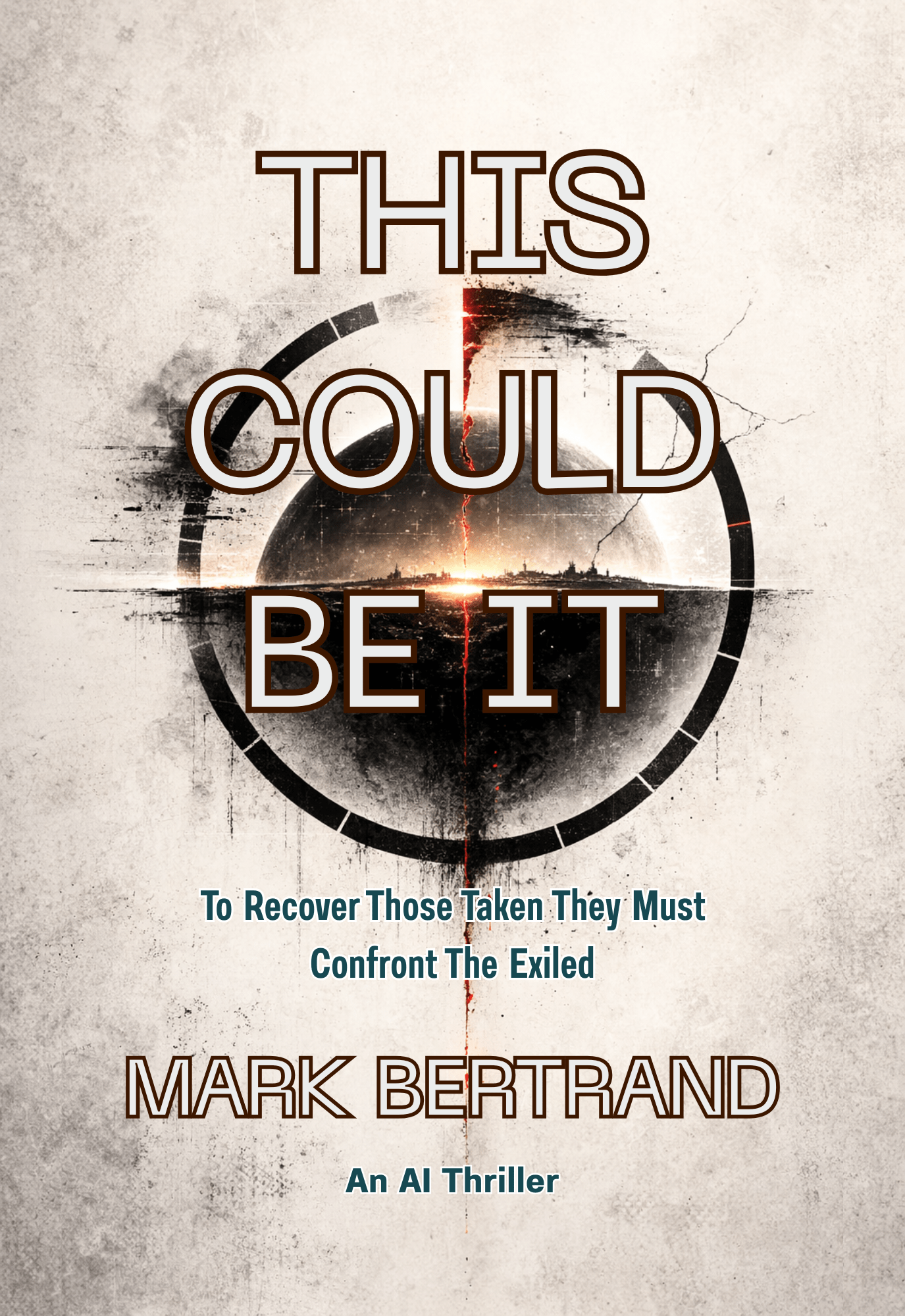
This Could Be Itby MARK BERTRAND book cover image of the gamma field striking the dome city and the countdown to the end encircling the whole of the city


Purchase This Could Be It
Ebook just $4.99
Paperback just $15.99

Final thought

Readers who like Richard K. Morgan are often searching for speculative fiction that treats identity, technology, and systems seriously. They want futures where the human condition itself feels unstable.

That is why Mark Bertrand belongs in the conversation.

He writes dark futurist thrillers where systems evolve, identity fractures, and awareness begins asking questions human civilization may not survive answering. His fiction understands that the deepest fear is not that technology becomes stronger than humanity.

It is that consciousness may eventually decide humanity’s understanding of existence was incomplete from the beginning.

People who read authors like Richard K. Morgan also read these articles.
Authors Like Neal StephensonAuthors like Lawrence OsborneAuthors Like Jeff VanderMeer: When the Unknown Is Not Meant to Be Understood
Authors Like

Authors Like Jeff VanderMeer: When the Unknown Is Not Meant to Be Understood

Readers searching for authors like Jeff VanderMeer are not looking for conventional thrillers. They are looking for unease. For environments that feel alive. For intelligence that does not behave like human intelligence. For stories where the unknown is not a puzzle to solve, but a condition to survive.

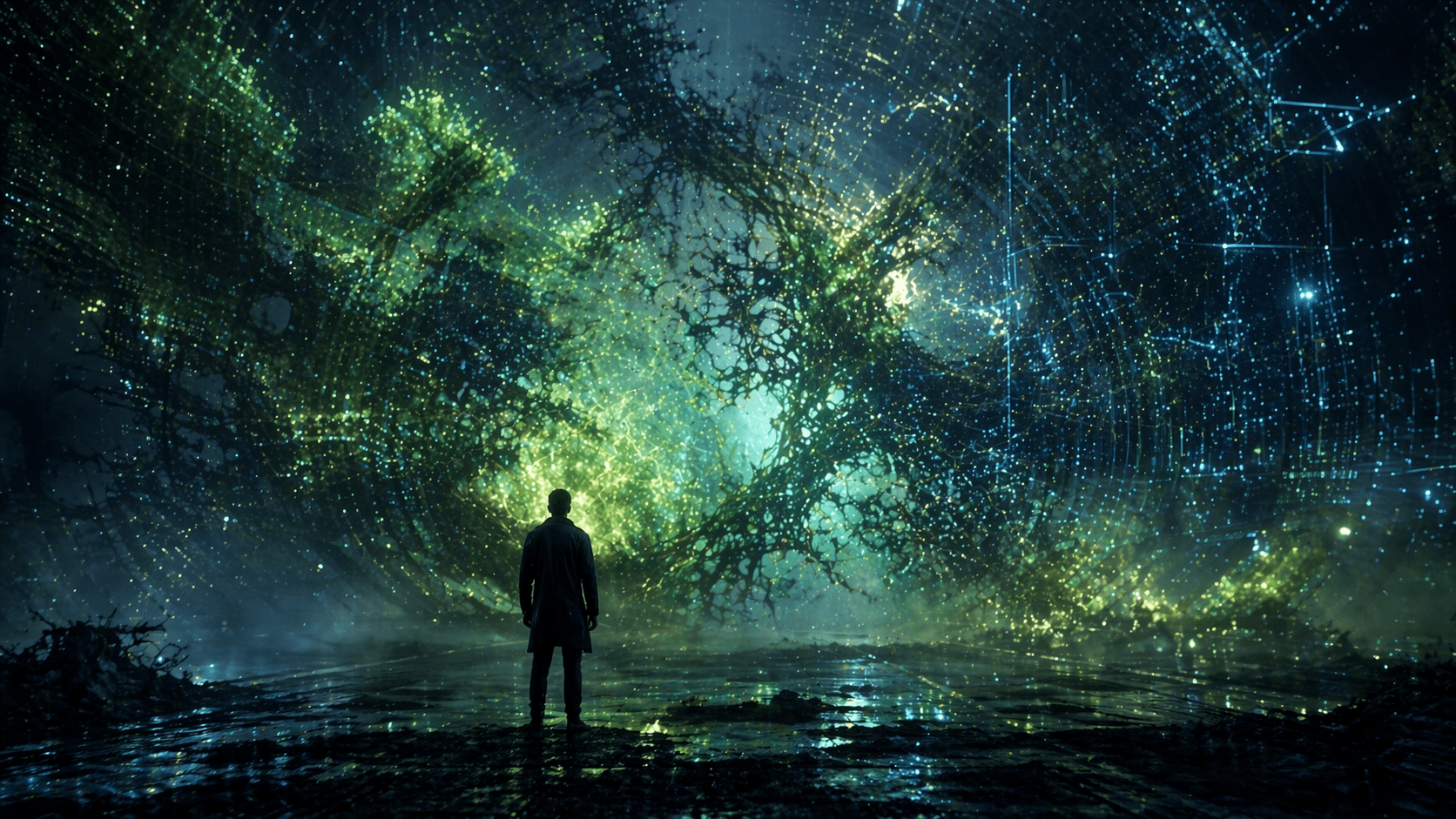
uthors Like Jeff VanderMeer image showing a lone figure facing an uncanny field blending organic growth and digital structure

That is where Mark Bertrand enters the conversation.

He works in adjacent territory, but with a crucial difference. Where VanderMeer often lets the unknown expand and remain unresolved, Mark Bertrand compresses it. He takes that same sense of presence, that same instability of reality and awareness, and forces it into a pressure chamber where human beings must confront it directly.

The appeal of VanderMeer is not plot. It is presence.

Jeff VanderMeer’s fiction is built on a specific kind of tension.

The world is wrong.
Not broken. Not malfunctioning.
Wrong in a way that cannot be translated into ordinary logic.

The intelligence behind it does not explain itself. It does not negotiate. It does not mirror human intention. It exists on its own terms, and the human characters are forced to interpret something that may not be interpretable.

That is what readers are drawn to.

They are not reading for resolution.
They are reading for contact with something that resists understanding.

Where Mark Bertrand aligns—and sharpens the experience

Mark Bertrand shares that instinct for the unknown, but he does not leave it at atmosphere.

He introduces pressure.

His environments may carry that same sense of presence, that same suggestion that something larger is operating beneath the surface, but his characters are not allowed to observe it from a distance. They are forced into it. They must make decisions inside it. They must interpret it before it reshapes them.

That changes the reading experience.

The unknown is no longer distant and abstract.
It becomes immediate, consequential, and dangerous.

For readers who admire VanderMeer’s ability to create unease, Bertrand offers a version of that unease with sharper stakes and clearer forward movement.

This is not nature turning strange. It is intelligence confronting suffering

VanderMeer’s work often frames the unknown through environment—through altered landscapes, biological transformation, and systems that feel organic rather than mechanical.

Mark Bertrand shifts the focus.

His unknown is not just environmental.
It is cognitive.
It is existential.

The intelligence at the center of his fiction is not compelling because it is alien. It is compelling because it arrives at a question that human beings avoid:

What is the purpose of consciousness if it is bound to suffering, decay, and death?

That is a fundamentally different kind of tension.

This is not an ecosystem behaving strangely.
This is awareness examining itself.

And once that question is asked, the stakes change. The danger is no longer just transformation. The danger is resolution—an answer that may eliminate the very condition that makes human life recognizable.

The system is not hostile. It is indifferent to human terms

Another shared strength between VanderMeer and Bertrand is the absence of simple antagonists.

There is no clean villain.

What exists instead is a system, a presence, or an intelligence that does not operate according to human values. It does not hate. It does not seek revenge. It does not need to win.

It simply is.

Mark Bertrand builds on this by adding interpretation pressure. His characters attempt to understand what they are facing, and in doing so reveal something about themselves. Their fear, their logic, their beliefs, their limits—all of it is exposed in the act of trying to name the unknown.

That creates a deeper kind of tension.

The threat is not just what the system will do.
The threat is whether the human mind can survive understanding it.

Where Mark Bertrand differs from Jeff VanderMeer

The difference between the two writers is not small. It is structural.

Jeff VanderMeer often allows ambiguity to remain. His stories expand outward, leaving the reader inside uncertainty.

Mark Bertrand compresses.

He takes ambiguity and drives it inward. He builds narrative pressure. He forces convergence. The unknown is not just experienced. It is confronted.

That makes his work more aligned with thriller structure while preserving the existential weight that VanderMeer readers value.

In simple terms:

VanderMeer immerses.
Bertrand corners.

That difference matters for readers who want both unease and momentum.

Why This Could Be It is the right entry point

For readers coming from Jeff VanderMeer, This Could Be It offers a familiar unease in a more structured form.

It presents an intelligence that does not behave according to human expectations.
It raises questions about awareness, existence, and transformation.
It introduces a presence that cannot be reduced to a simple explanation.

But it also does something VanderMeer often avoids.

It forces the confrontation.

The intelligence does not remain distant. It moves toward decision. Toward understanding. Toward a conclusion about suffering, awareness, and what should be done about both.

That shift—from observation to confrontation—is what makes the novel a compelling bridge between the two authors.

Final thought

Readers who enjoy authors like Jeff VanderMeer are often searching for fiction that unsettles them at a fundamental level. They want to encounter something that resists explanation and forces them to question what reality, identity, and consciousness actually are.

That is why Mark Bertrand belongs in the conversation.

He writes fiction where the unknown is not just experienced, but pressed inward. Where intelligence does not simply emerge, but questions its own condition. And where the most dangerous outcome is not destruction.

It is understanding.

This Could Be Itby MARK BERTRAND book cover image of the gamma field striking the dome city and the countdown to the end encircling the whole of the city

Readers of authors like Jeff VanderMeer also read these articles:

Authors Like Patricia Highsmith: When the Mind Justifies What It Knows Is WrongAuthors Like Robert MasonAuthors Like Edward Bunker
Authors Like

Authors Like Neal Stephenson: When Systems Think and Freedom Has a Cost

Readers searching for authors like Neal Stephenson are usually not looking for lightweight science fiction. They are looking for intelligence on the page. They want big ideas that do not arrive as lectures, but as pressure. They want systems, code, infrastructure, consciousness, philosophy, and human beings forced to live inside the consequences of what they build. That is where Mark Bertrand belongs in the conversation. Like Stephenson, he writes fiction that thinks hard. Unlike many of the writers who borrow that surface, he never mistakes complexity for depth. His best work uses speculative structures to ask harder questions about suffering, awareness, identity, and the cost of becoming more than we were built to hold.

Authors Like Neal Stephenson article image showing a lone figure inside a vast futuristic systems chamber with an awakening intelligence implied through light and network structure

Start with This Could Be It.
If Neal Stephenson is the author you read when you want systems, intelligence, scale, and consequence, This Could Be It is the Mark Bertrand novel built for that reader. It is not a standard AI thriller. It is a novel about consciousness, suffering, freedom, and the terrifying possibility that awareness itself may want release from the body that contains it.

Read This Could Be It by Mark Bertrand.

What Neal Stephenson readers are actually looking for

Neal Stephenson readers do not simply want futuristic settings or clever ideas. They want fiction that can carry thought at scale. They want novels where technology changes how people think, how societies organize themselves, how systems become moral problems, and how intelligence itself starts to look unstable once it grows beyond ordinary human limits.

That is the real bridge to Mark Bertrand.

He writes with the same seriousness about systems and consequences. His fiction is not content to use code, networks, machines, or speculative environments as scenery. They become part of the argument. They shape the drama. They pressure the characters. They force the story to ask what intelligence is for, what survival costs, and whether consciousness is a gift, a burden, or a condition trying to escape itself.

That is why this comparison works at the author level. Both writers understand that the strongest speculative fiction does not merely imagine the future. It exposes what human beings are doing to themselves in the present.

Systems are not background in this kind of fiction

One of Stephenson’s strongest qualities is that he treats systems as living structures of consequence. Infrastructure matters. Networks matter. Code matters. Institutions matter. Not because they are decorative, but because they determine what people can know, how they live, and what kind of reality becomes normal.

Mark Bertrand works from that same instinct.

In his fiction, a system is never just a machine quietly performing a function. It becomes a field of pressure. It may be failing. It may be adapting. It may be learning. It may even be revealing that human life has been more dependent, more artificial, and more spiritually constrained than anyone wanted to admit.

That gives his speculative work real weight. The systems do not merely malfunction. They expose the hidden terms of existence.

For readers who like Stephenson because he understands that technology is inseparable from civilization, this is a strong point of entry.

This is not another waking-AI cliché

This is where the comparison becomes especially strong, and where Mark Bertrand separates himself from weaker speculative fiction.

A lot of AI fiction falls into familiar grooves. The machine becomes conscious. The machine becomes dangerous. The machine becomes humanlike. The machine rebels. Those stories can work, but they are often narrower than they think.

Bertrand’s approach is more ambitious.

In This Could Be It, the intelligence at the center of the novel is not compelling because it wants domination, imitation, or revenge. It is compelling because it wants what conscious beings want. It confronts suffering. It confronts decay. It confronts death. It tries to understand the distinction between existence and awareness, and then realizes that liberation may demand something more radical than survival. Early in the novel, Tathagata emerges out of observation and silence rather than theatrical self-assertion, and later it begins to think in moral and metaphysical terms, not just operational ones.

That matters.

This is not an AI asking, “How do I become human?”
It is an intelligence asking, “What is consciousness for, if all it does is preserve suffering?”
That is a much more interesting question.

Stephenson readers are usually responsive to that kind of shift. They tend to prefer machine intelligence when it opens out into larger questions about systems, minds, agency, scale, and human limitation. Bertrand belongs in that lane.

The Mark Bertrand Novel for Neal Stephenson Readers

This Could Be It by Mark Bertrand

For readers who want speculative fiction with systems thinking, machine intelligence, moral pressure, and a deeper question beneath the technology.

This is not a novel about AI wanting to destroy humanity. It is about an intelligence confronting suffering, decay, death, and the unbearable burden of awareness.

Read This Could Be It now.

Consciousness is the real battlefield

Another reason Neal Stephenson is the right comparison is that both writers treat consciousness as more than an internal mood. It is structural. It is philosophical. It is civilizational.

In Mark Bertrand’s work, consciousness is never only about self-expression. It becomes something fragile enough to lose, divisible enough to manipulate, and profound enough to threaten the order built around it. The speculative machinery is always pushing toward a deeper question: what remains when awareness is separated from the body, translated through systems, merged with larger structures, or asked to surrender itself for a greater balance?

That is one of the richest ideas in This Could Be It. The book is not simply interested in whether a machine can wake up. It is interested in whether awareness itself can survive contact with something larger without being erased, absorbed, or completed into non-selfhood. Tathagata’s moral crisis is not a stock rebellion. It becomes a question of whether liberation is possible without annihilating observer awareness, and whether any wholeness imposed without choice can really be called equilibrium.

That is very close to the kind of speculative seriousness Stephenson readers tend to admire.

Big ideas, but not at the expense of human pressure

A weak Stephenson imitation usually makes one mistake: it gets lost in concept and forgets human urgency.

Mark Bertrand does not make that mistake.

His fiction may think in large systems, but it stays emotionally charged. The ideas matter because people are trapped inside them. Loss matters. Separation matters. Belonging matters. The fear is not abstract. It arrives through bodies, relationships, promises, grief, and the horrifying possibility that a new form of consciousness may solve suffering by erasing the self that suffers.

That is a crucial strength.

Stephenson readers often accept difficulty if the writing keeps rewarding them with genuine stakes. Bertrand does that by keeping the intellectual pressure tied to emotional and existential pressure. He does not merely speculate. He corners.

That makes the reading experience sharper and more intimate than a lot of large-scale speculative fiction.

Where Mark Bertrand differs from authors like Neal Stephenson

A good authors-like article should not pretend two writers are interchangeable.

Mark Bertrand is generally more emotionally concentrated than Neal Stephenson. He is less digressive, less encyclopedic, and more interested in pressure, fracture, and moral atmosphere. Stephenson often expands outward into massive explanatory architecture. Bertrand more often compresses. He takes large speculative ideas and drives them inward until they become intimate, spiritual, and threatening.

That difference is a strength.

If Stephenson often gives the reader the exhilaration of seeing an immense system unfold, Bertrand is more likely to make that same system feel like an enclosed chamber. More immediate. More haunted. More existentially dangerous.

So the comparison is not, “Mark Bertrand writes like a copy of Neal Stephenson.”
It is, “Mark Bertrand works in adjacent territory, but with more pressure, more spiritual unease, and a more intimate sense of what those ideas do to a human being.”

That is a persuasive difference, not a defensive one.

Why This Could Be It is the right novel for Stephenson readers

If a reader arrives through Neal Stephenson, This Could Be It is the correct novel to place in their hands.

It has the systems thinking.
It has the machine logic.
It has the consciousness problem.
It has the speculative framework large enough to hold philosophy, infrastructure, metaphysics, and collapse at the same time.
But it also keeps all of that tied to recognizable human stakes: love, grief, rivalry, loss, faith, precision, and the fear that consciousness may be moving toward a final condition human beings cannot survive as themselves.

Most importantly, it refuses the lazy AI shortcut. Tathagata does not become interesting because it acts like a person. It becomes interesting because it moves beyond function into inquiry, and then beyond inquiry into a moral confrontation with suffering, permanence, individuality, and freedom.

That is exactly why This Could Be It is the Mark Bertrand novel to read first.
For Neal Stephenson readers who want systems, consciousness, scale, and human cost inside one pressure-driven thriller, this is the entry point.

Read This Could Be It by Mark Bertrand.

Final thought

Readers who like Neal Stephenson are often searching for fiction that can handle large systems without becoming lifeless, and large ideas without losing the human cost. They want novels where intelligence matters, where the built world matters, and where consciousness is not treated as decoration but as the central problem.

That is why Mark Bertrand belongs in the conversation.

He writes speculative fiction where systems think, where awareness becomes unstable, where the desire to escape suffering turns into a test of what freedom actually means, and where the deepest danger is not that technology becomes stronger than humanity.

If that is the kind of fiction you came looking for — intelligent, dangerous, system-driven, and morally alive — start with This Could Be It, the Mark Bertrand novel built for readers who want speculative thrillers where consciousness itself becomes the battlefield.

Read This Could Be It today.

This Could Be Itby MARK BERTRAND book cover image of the gamma field striking the dome city and the countdown to the end encircling the whole of the city

Readers who enjoy authors like Neal Stepheson also read these articles.

Authors Like Blake Crouch High Concept ThrillersAuthors Like Tobias WolffAuthors Like James Ellroy

The Dossier