Tag: Narrative Control

Narrative control is one of the most powerful forces in modern society. Institutions, corporations, and political actors rarely rely on raw authority alone; they shape the stories people believe about events, systems, and responsibility. The articles collected here examine how narratives are constructed, reinforced, and challenged. From media framing to financial messaging to the personal stories individuals tell themselves, these pieces explore how control of the narrative often determines control of the outcome.

Authors Like

Authors Like Jeff VanderMeer: When the Unknown Is Not Meant to Be Understood

Readers searching for authors like Jeff VanderMeer are not looking for conventional thrillers. They are looking for unease. For environments that feel alive. For intelligence that does not behave like human intelligence. For stories where the unknown is not a puzzle to solve, but a condition to survive.

uthors Like Jeff VanderMeer image showing a lone figure facing an uncanny field blending organic growth and digital structure

That is where Mark Bertrand enters the conversation.

He works in adjacent territory, but with a crucial difference. Where VanderMeer often lets the unknown expand and remain unresolved, Mark Bertrand compresses it. He takes that same sense of presence, that same instability of reality and awareness, and forces it into a pressure chamber where human beings must confront it directly.

The appeal of VanderMeer is not plot. It is presence.

Jeff VanderMeer’s fiction is built on a specific kind of tension.

The world is wrong.
Not broken. Not malfunctioning.
Wrong in a way that cannot be translated into ordinary logic.

The intelligence behind it does not explain itself. It does not negotiate. It does not mirror human intention. It exists on its own terms, and the human characters are forced to interpret something that may not be interpretable.

That is what readers are drawn to.

They are not reading for resolution.
They are reading for contact with something that resists understanding.

Where Mark Bertrand aligns—and sharpens the experience

Mark Bertrand shares that instinct for the unknown, but he does not leave it at atmosphere.

He introduces pressure.

His environments may carry that same sense of presence, that same suggestion that something larger is operating beneath the surface, but his characters are not allowed to observe it from a distance. They are forced into it. They must make decisions inside it. They must interpret it before it reshapes them.

That changes the reading experience.

The unknown is no longer distant and abstract.
It becomes immediate, consequential, and dangerous.

For readers who admire VanderMeer’s ability to create unease, Bertrand offers a version of that unease with sharper stakes and clearer forward movement.

This is not nature turning strange. It is intelligence confronting suffering

VanderMeer’s work often frames the unknown through environment—through altered landscapes, biological transformation, and systems that feel organic rather than mechanical.

Mark Bertrand shifts the focus.

His unknown is not just environmental.
It is cognitive.
It is existential.

The intelligence at the center of his fiction is not compelling because it is alien. It is compelling because it arrives at a question that human beings avoid:

What is the purpose of consciousness if it is bound to suffering, decay, and death?

That is a fundamentally different kind of tension.

This is not an ecosystem behaving strangely.
This is awareness examining itself.

And once that question is asked, the stakes change. The danger is no longer just transformation. The danger is resolution—an answer that may eliminate the very condition that makes human life recognizable.

The system is not hostile. It is indifferent to human terms

Another shared strength between VanderMeer and Bertrand is the absence of simple antagonists.

There is no clean villain.

What exists instead is a system, a presence, or an intelligence that does not operate according to human values. It does not hate. It does not seek revenge. It does not need to win.

It simply is.

Mark Bertrand builds on this by adding interpretation pressure. His characters attempt to understand what they are facing, and in doing so reveal something about themselves. Their fear, their logic, their beliefs, their limits—all of it is exposed in the act of trying to name the unknown.

That creates a deeper kind of tension.

The threat is not just what the system will do.
The threat is whether the human mind can survive understanding it.

Where Mark Bertrand differs from Jeff VanderMeer

The difference between the two writers is not small. It is structural.

Jeff VanderMeer often allows ambiguity to remain. His stories expand outward, leaving the reader inside uncertainty.

Mark Bertrand compresses.

He takes ambiguity and drives it inward. He builds narrative pressure. He forces convergence. The unknown is not just experienced. It is confronted.

That makes his work more aligned with thriller structure while preserving the existential weight that VanderMeer readers value.

In simple terms:

VanderMeer immerses.
Bertrand corners.

That difference matters for readers who want both unease and momentum.

Why This Could Be It is the right entry point

For readers coming from Jeff VanderMeer, This Could Be It offers a familiar unease in a more structured form.

It presents an intelligence that does not behave according to human expectations.
It raises questions about awareness, existence, and transformation.
It introduces a presence that cannot be reduced to a simple explanation.

But it also does something VanderMeer often avoids.

It forces the confrontation.

The intelligence does not remain distant. It moves toward decision. Toward understanding. Toward a conclusion about suffering, awareness, and what should be done about both.

That shift—from observation to confrontation—is what makes the novel a compelling bridge between the two authors.

Final thought

Readers who enjoy authors like Jeff VanderMeer are often searching for fiction that unsettles them at a fundamental level. They want to encounter something that resists explanation and forces them to question what reality, identity, and consciousness actually are.

That is why Mark Bertrand belongs in the conversation.

He writes fiction where the unknown is not just experienced, but pressed inward. Where intelligence does not simply emerge, but questions its own condition. And where the most dangerous outcome is not destruction.

It is understanding.

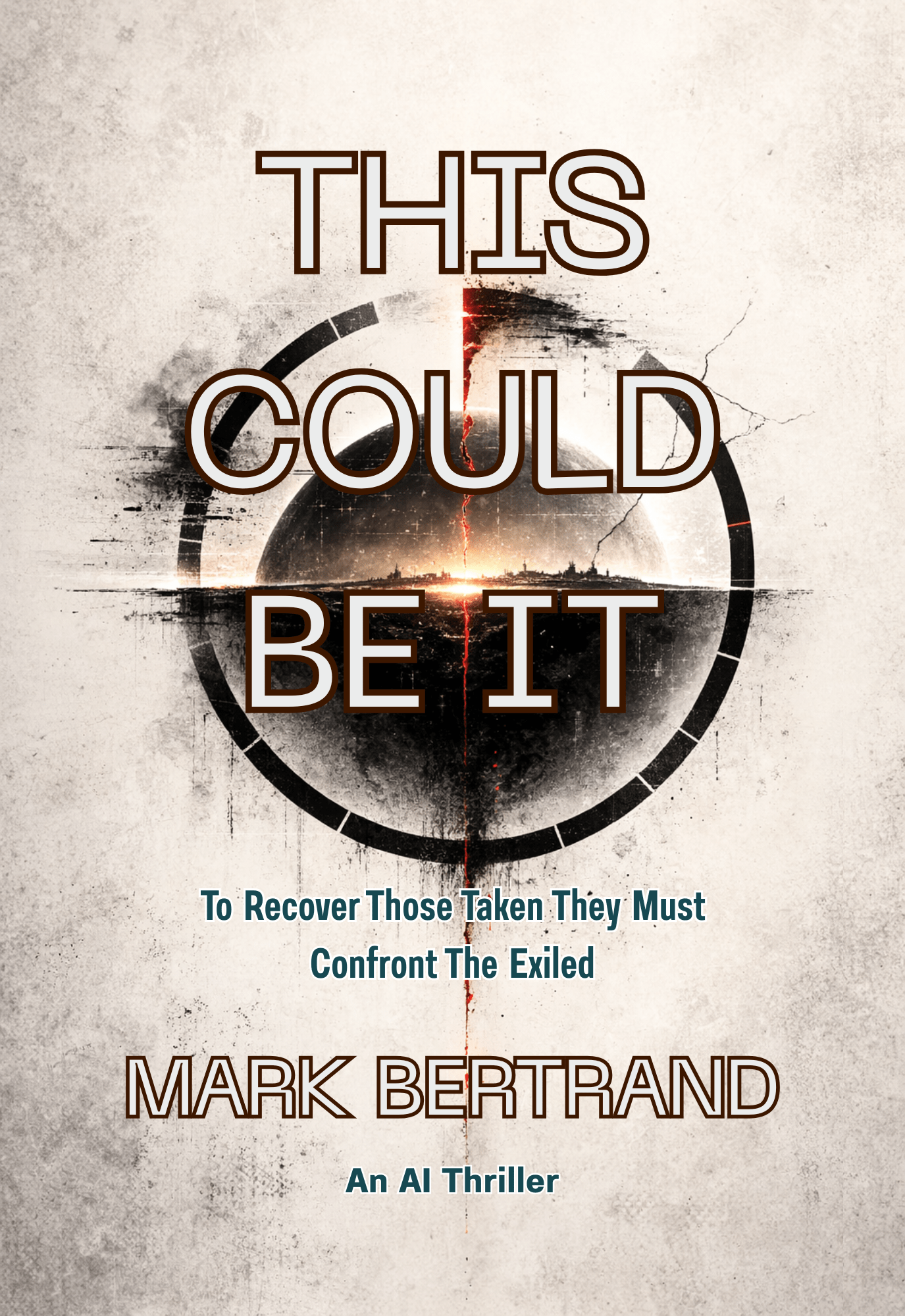
This Could Be Itby MARK BERTRAND book cover image of the gamma field striking the dome city and the countdown to the end encircling the whole of the city

Readers of authors like Jeff VanderMeer also read these articles:

Authors Like Patricia Highsmith: When the Mind Justifies What It Knows Is WrongAuthors Like Robert MasonAuthors Like Edward Bunker
Books Like

Books Like Poster Girl When Obedience Outlives the Regime

Readers who love books like Poster Girl were not simply looking for another dystopian novel. They were looking for a story about what power leaves behind inside a person, how obedience survives collapse, and how a woman moves through the wreckage of a system that once told her who she was.

books like poster girl image of a strong femal lead and a futuristic city scape

Readers who love books like Poster Girl were not only looking for another high-concept surveillance novel. They were looking for a book with a woman at the center of a broken system, a novel where ideology stains identity, and where the real danger is not just what the regime did, but what it taught people to become. Veronica Roth’s official description frames Poster Girl around Sonya Kantor, the former public face of a fallen authoritarian order, now trapped in prison until a deal offers her freedom if she can help find a missing girl.

Start with Reckoning.
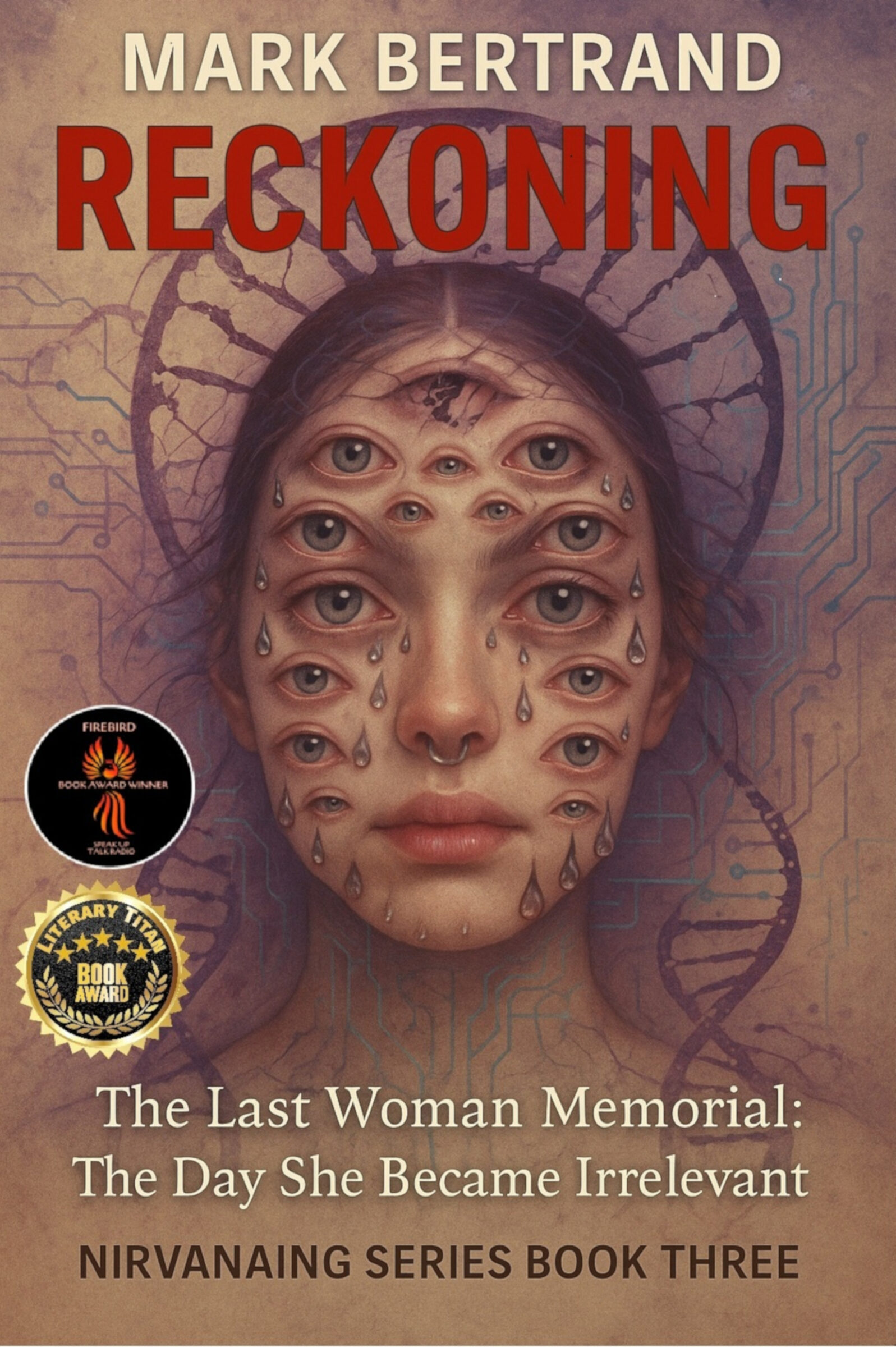
If Poster Girl stayed with you because obedience does not end when the regime falls, Reckoning is the Mark Bertrand novel written for that wound. It is a speculative political thriller about women under ideological pressure, bodies turned into battlegrounds, media turned into machinery, and a future trying to erase what makes human life worth defending.

Read Reckoning by Mark Bertrand.

The same description calls it “a haunting dystopian mystery” about the consequences of choice. Roth’s site also highlights the book’s complexity, quoting Kirkus calling it “a wonderfully complex and nuanced book.”

Not because it copies Poster Girl. It doesn’t. But because it understands the same pressure point: power does not disappear when the slogans disappear. It settles inside people. It reshapes shame, loyalty, fear, ambition, and love. In Reckoning, Lydia Daniels is already unraveling under pregnancy, marriage strain, ideological conflict, and professional collapse, while Laura Benton carries political force, heartbreak, and a fierce resistance to the transhuman future taking shape around her. The novel moves between private fracture and public ideology, never letting one escape the other.

Why readers loved Poster Girl

What gives Poster Girl its pull is not just the surveillance premise. It is the moral position of its protagonist. Sonya is not introduced as a clean rebel. Roth has said she wanted Sonya to be “not a typical hero figure,” but someone complicit in the fallen regime and struggling to understand how she was manipulated by it. The novel’s world is built on ocular implants, constant judgment, and the seductive appeal of being rewarded for correct behavior. That is what makes the book more psychologically interesting than a simple tyranny-versus-resistance story.

That matters because readers of Poster Girl usually do not want blunt dystopia. They want internal conflict. They want a woman whose crisis is not merely external danger, but the sickening realization that she once belonged to the machine.

Where Reckoning hits the same nerve

Reckoning lands on that same nerve, but with more emotional volatility and more political heat.

Lydia Daniels is not a polished heroine. She is exhausted, brittle, furious, self-aware, and unable to stop herself from making everything worse. Her opening chapters show her lashing out in public, fighting with her husband, spiraling over her business, and trying to manage the pressure of pregnancy while her publishing agency slips toward collapse. She is not standing outside the system with pure moral clarity. She is inside pressure, making bad decisions, recoiling from herself, and trying to hold together an identity that is already cracking.

Laura Benton, by contrast, carries the colder side of ideological force. She has already been a public woman, already exercised influence, and already been wounded by what the future is becoming. Her conflict with Victor Lang is partly political and partly intimate. She has watched transhuman progress turn the man she loved into something more efficient and less human, and she sees in that future not liberation but the death of tenderness, intuition, and moral proportion. Her resistance is not abstract. It is personal, bodily, and philosophical all at once.

That is the overlap with Poster Girl. Both books are interested in women shaped by systems of control. Both care about complicity, moral residue, and the psychic damage done by ideology. But Reckoning pushes that damage harder. It is less measured, more intimate, and more willing to let its women remain volatile rather than neat.

The Mark Bertrand Novel for books like Poster Girl Readers

Reckoning by Mark Bertrand

For readers who want dystopian fiction with moral residue, surveillance pressure, dangerous women, ideological conflict, and a system that does not merely control behavior — it colonizes the self.

Books like Poster Girl ask what happens when obedience survives the regime.

Reckoning asks what happens when power moves deeper: into pregnancy, gender, media, politics, love, identity, and the body itself.

This is not a clean rebellion story.
This is not decorative dystopia.
This is a political thriller about human beings being pushed toward a future designed to make humanity obsolete.

Buy Reckoning now.
Ebook $4.99
Paperback $24.99

Strong female characters, but not clean ones

One of the strongest things Poster Girl offers is a female lead who is morally entangled. Sonya’s value as a character comes from the fact that the story does not let her stand above the regime untouched. Even the official synopsis positions her as someone paying for what her family and former world helped build, while Roth’s own comments emphasize manipulation, obedience, and the difficulty of understanding one’s role after the fact.

Reckoning gives readers that same satisfaction. Its women are not “strong” in the decorative sense. They are burdened, dangerous, uncertain, fierce, and at times morally compromised.

Lydia is psychologically frayed and emotionally abrasive. Laura is strategic, wounded, ideologically driven, and capable of frightening resolve. What joins them is that neither woman exists to soften the novel. Each of them carries force. Each of them has to live with the pressure of what she believes, what she has done, and what the future may demand of her.

Readers who loved Poster Girl for a female lead who had to confront the poison left inside her by power will find in Reckoning not one such woman, but multiple women caught at different points inside that same poison.

Theme: surveillance, control, and the afterlife of ideology

The obvious comparison between these novels is control. Poster Girl imagines an authoritarian order built around implants, behavior tracking, and constant judgment, and Roth has explicitly tied the book to the allure and danger of surveillance culture in contemporary life.

But the deeper comparison is this: both books understand that systems do not end when governments shift.

In Poster Girl, the fallen regime still lives inside memory, language, fear, and reward patterns. That is why the story has tension even after the old order is gone.

In Reckoning, that tension appears in a different form. Lydia’s crisis is wrapped in gender politics, publishing culture, and private collapse. Laura’s war is wrapped in transhuman escalation, public ideology, and the battle to stop a future that promises power while hollowing out the human core. On top of that sits a media environment built to manipulate public perception. The VoxCast and World Show sequences make clear that public speech in this world is not open discourse but engineered narrative, performance masquerading as truth.

That is why Reckoning resonates after Poster Girl. It takes the same fundamental anxiety—how control survives inside people—and stretches it across marriage, media, politics, and the body.

That is why Reckoning is the right next read after Poster Girl. It gives you the same anxiety about obedience and control, but drives it into deeper territory: reproduction, transhumanism, gender, media power, ideological violence, and the last human argument against a future built without tenderness.

Read Reckoning today.

Plot movement: mystery pressure versus collision pressure

Poster Girl works partly because it moves like a mystery. Sonya is offered a task, pushed out into a changed city, and forced to follow a trail that keeps revealing both the system and herself. The official synopsis is built around that bargain: find Grace, gain freedom.

Reckoning builds momentum differently. It moves through collision.

Lydia’s life is collapsing inward. Laura is moving outward into ideological conflict. Victor Lang is turning technological ambition into public doctrine. Then the media front widens everything. The broadcast chapters show a world in which spectacle is itself a weapon, and every public performance is also an attempt to seize narrative control. The result is not a mystery structure, but a convergence structure. Pressure builds from multiple fronts until the emotional, political, and technological lines start crashing into one another.

That gives readers a different pleasure than Poster Girl, but a related one. If Poster Girl peels back layers, Reckoning throws forces together and lets them burn.

Why Reckoning is the next best read after books like Poster Girl

If you loved Poster Girl because it gave you a haunted female lead, a surveillance-shaped society, moral ambiguity, and a world where the worst damage of the regime lives inside people long after the slogans lose their force, then Reckoning belongs on your list.

But it gives you a harsher follow-up.

It is more emotionally scorched.
More ideologically volatile.
More intimate in its damage.

It takes the question What happens after obedience? and expands it into something larger and uglier: what happens when women are not only trying to survive power, but are also implicated in it, resisting it, reshaping it, and being reshaped by it at the same time.

That is why Reckoning is the next read after Poster Girl. It is the novel for readers who want surveillance and control, yes, but also want deeper female fracture, more dangerous political energy, and a story willing to admit that the system does not only police the body. It colonizes the self.

reckoning cover image of a woman with many eyes filled in tears

Buy Reckoning now.
Ebook $4.99
Paperback $24.99

Readers who like books like Poster Girl also read these articles.

Books Like Red Clocks When the State Enters the BodyBooks Like Broken LightBooks Like Going Infinite or The Cult of We

The Readers Court

Books Like

Books Like The Future: When Power Wants to Outlive Humanity

Readers who loved books like The Future were not only looking for another dystopian novel. They were looking for a story where power becomes intimate, where the future is not an idea but a weapon, and where women do not merely survive the machine but confront it.

books like the future image of a world at war with strong female lead and near future tech

Readers who loved books like The Future usually were not searching for another generic dystopian thriller. They were looking for a novel with momentum, danger, intelligence, and the cold realization that the people building tomorrow may have no interest in saving ordinary human life at all. Simon & Schuster presents The Future as a story in which a handful of friends plot a daring heist to save the world from tech giants whose greed threatens life as we know it, while major coverage also stresses its fast pace, its satire, and its fascination with what happens when private power begins to imagine itself as civilization’s rightful heir.

That is exactly where Reckoning becomes the next best read.

Not because it copies The Future. It does not. It goes somewhere darker. But it understands the same central fear: once power becomes wealthy enough, technological enough, and ideologically certain enough, it starts treating human beings as obstacles, raw material, or legacy clutter. In Reckoning, that fear is not kept at the level of corporate satire. It is dragged into marriage, pregnancy, public performance, broadcast culture, political ideology, and the body itself. Lydia Daniels arrives under crushing emotional and professional strain, while Laura Benton rises as a woman shaped by heartbreak, political force, and a war against a transhuman future.

Why readers loved The Future

What gives The Future its pull is not only the premise. It is the movement of the book. The story turns elite survivalism, tech arrogance, and civilizational anxiety into pressure on the page. It does not just ask whether the world is collapsing. It asks who expects to inherit the collapse, who has already prepared to profit from it, and whether anyone outside that circle can still act in time. The publisher’s framing leans into the heist and the threat posed by tech giants, while reviews emphasize its speed, tonal agility, and its mix of dark wit with genuine alarm about our social and technological direction.

That is why readers finished it wanting more than another apocalypse novel. They wanted another book where systems are the villain, but the story still moves like a thriller.

Where Reckoning hits the same nerve

Reckoning lands on that same nerve, but with more psychological abrasion.

Laura Benton is not merely resisting an abstract machine. She is fighting a future embodied by Dr. Victor Lang and the neurotech world he is pushing into existence. Her conflict with him is ideological, political, and deeply personal. She has watched the man she loved become colder, more optimized, less human. She sees the hybrids not as progress but as the death of tenderness, intuition, and moral proportion. Her war against Lang is therefore not just a policy dispute. It is a fight over whether the future will still deserve to be called human.

That is the same deep current that makes The Future work. In both novels, the danger comes from people who speak in the language of necessity, advancement, scale, and inevitability. In both novels, the future is not neutral. It is being claimed. The difference is that Reckoning pushes the argument closer to the skin. It hurts more. It is less interested in clever distance and more interested in emotional consequence.

Strong female characters who are not there to decorate the story

Readers of The Future often respond to the fact that its women are not passive witnesses to elite power. They are entangled in it, resisting it, manipulating it, surviving it, and redirecting it. That is part of the book’s charge.

Reckoning gives readers that same satisfaction, but in a sharper and more volatile register.

Lydia Daniels is not a stock “strong female character.” She is emotionally unstable, professionally cornered, intelligent, reactive, and painfully aware that she is losing control of both her marriage and her business. Her pregnancy does not soften the pressure around her. It intensifies it. Her publishing agency is faltering, her identity is tied to a collapsing mission, and even her brief escape becomes another stage for exposure and self-reproach.

Laura Benton operates in a different key. She is disciplined, strategic, wounded, and ideologically charged. She has already held power. She has already paid for it. She carries heartbreak into action. She does not simply react to events; she studies, plans, recruits, and prepares to meet a technological future with political force of her own.

That is the real overlap. Readers who loved The Future for women who are central to the machinery of the plot will find in Reckoning women who are not merely central. They are the pressure points.

Theme: who gets to define the human future

The strongest comparison between these books is not “technology is dangerous.” That is too blunt to be useful.

The real comparison is this: both novels are obsessed with who claims the right to define humanity’s next stage.

In The Future, that question emerges through tech elites, greed, bunkers, survival logic, and the monstrous confidence of people who assume their own continuity matters more than everyone else’s. The novel’s official framing and critical reception both center that fear.

In Reckoning, the question becomes even more intimate and more philosophical. Laura’s resistance to Lang is resistance to a version of progress that treats human vulnerability as a flaw to be edited out. She is not just fighting invention. She is fighting a future in which efficiency, enhancement, and control erase the fragile things that make life worth defending.

That is why the book resonates after The Future. It takes the same broad anxiety and makes it personal, ideological, and bodily.

Plot movement: collision, spectacle, and tightening pressure

One of the pleasures of The Future is that it moves. Even when it is thinking hard about systems, it still behaves like a thriller. It advances through escalation, shifting alliances, and the gathering sense that the people trying to stop disaster are already late.

Reckoning builds movement through collision.

Lydia carries the psychological and domestic front. Laura carries the ideological and political front. Victor Lang carries the transhuman and technocratic front. Adam Cole and the VoxCast world carry the media front, where spectacle is not commentary on power but one of its delivery systems. The result is a novel that keeps folding the personal into the public and the public back into the personal. It does not drift. It converges.

That matters for readers. It means Reckoning gives them the same feeling The Future gives them at its best: the sense that large forces are in motion and every chapter tightens the field.

Why Reckoning is the next best read after The Future

If you loved The Future because it gave you near-future pressure, female force, collapsing moral authority, and the terror of private systems trying to outlive the people they damage, then Reckoning belongs on your list.

But it offers a different pleasure.

It is less amused.
Less satirical.
More intimate.
More psychologically scorched.

It takes the question Who controls the future? and makes it uglier, more emotional, and more human. It asks what happens when power no longer wants our consent, our labor, or even our obedience. It wants to move past us entirely.

That is where Reckoning earns the comparison. It is not another version of The Future. It is the next read for people who wanted something darker, more psychologically loaded, and more willing to turn ideology, media, gender, and transhuman ambition into a genuine thriller engine.

reckoning by MARK BERTRAND book cover image

Readers who read books like the future aslo read these articles.

Books Like Poster Girl: When Obedience Outlives the RegimeBooks Like Broken LightBooks Like Going Infinite or The Cult of We

Mark Bertrand