
There is a particular kind of reader who finishes books like Recursion and does not simply close the book.
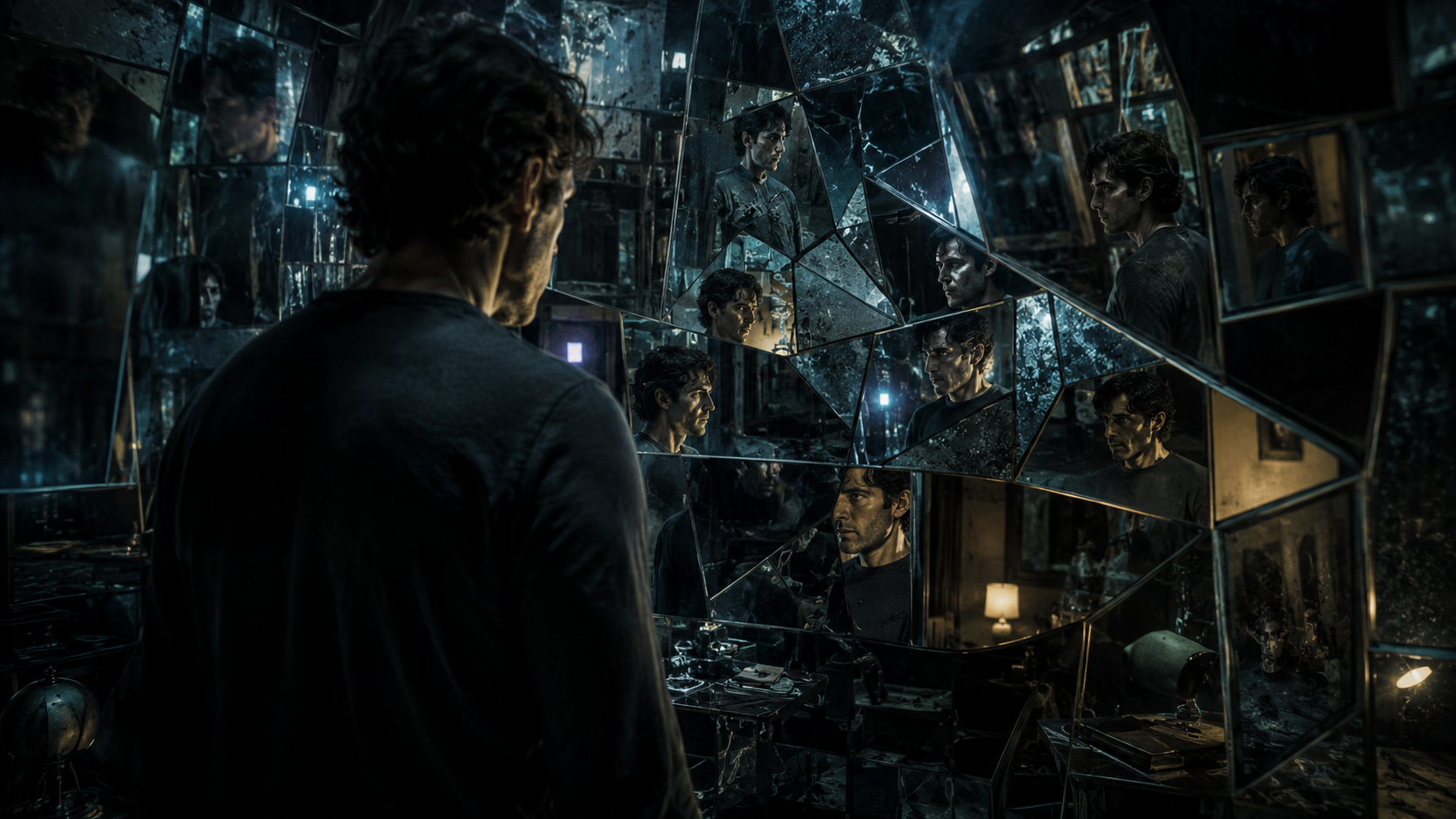
They sit there for a moment.
Maybe the room feels the same. The chair. The light. The coffee going cold. The phone nearby, full of ordinary messages from ordinary people living ordinary lives. But something has shifted. Not in the room. In the reader.
That is what a great speculative thriller does. It does not merely tell a story about impossible science. It makes the reader feel the instability of being alive.
Recursion does that with memory.
It takes one of the most private things a person owns — the remembered life — and makes it dangerous. A memory is supposed to be proof. I was there. I loved her. I lost him. This happened to me. Then Blake Crouch turns that proof into a trap. People remember lives they never lived. Grief comes from events that never happened. Love survives in timelines that no longer exist. The mind becomes evidence, witness, victim, and suspect all at once.
That is why readers search for psychological thriller books like Recursion. They are not only searching for time loops. They are not only searching for clever science fiction. They are searching for the feeling of reality becoming unreliable while the human heart still has to keep beating inside it.
The best next book must understand that.
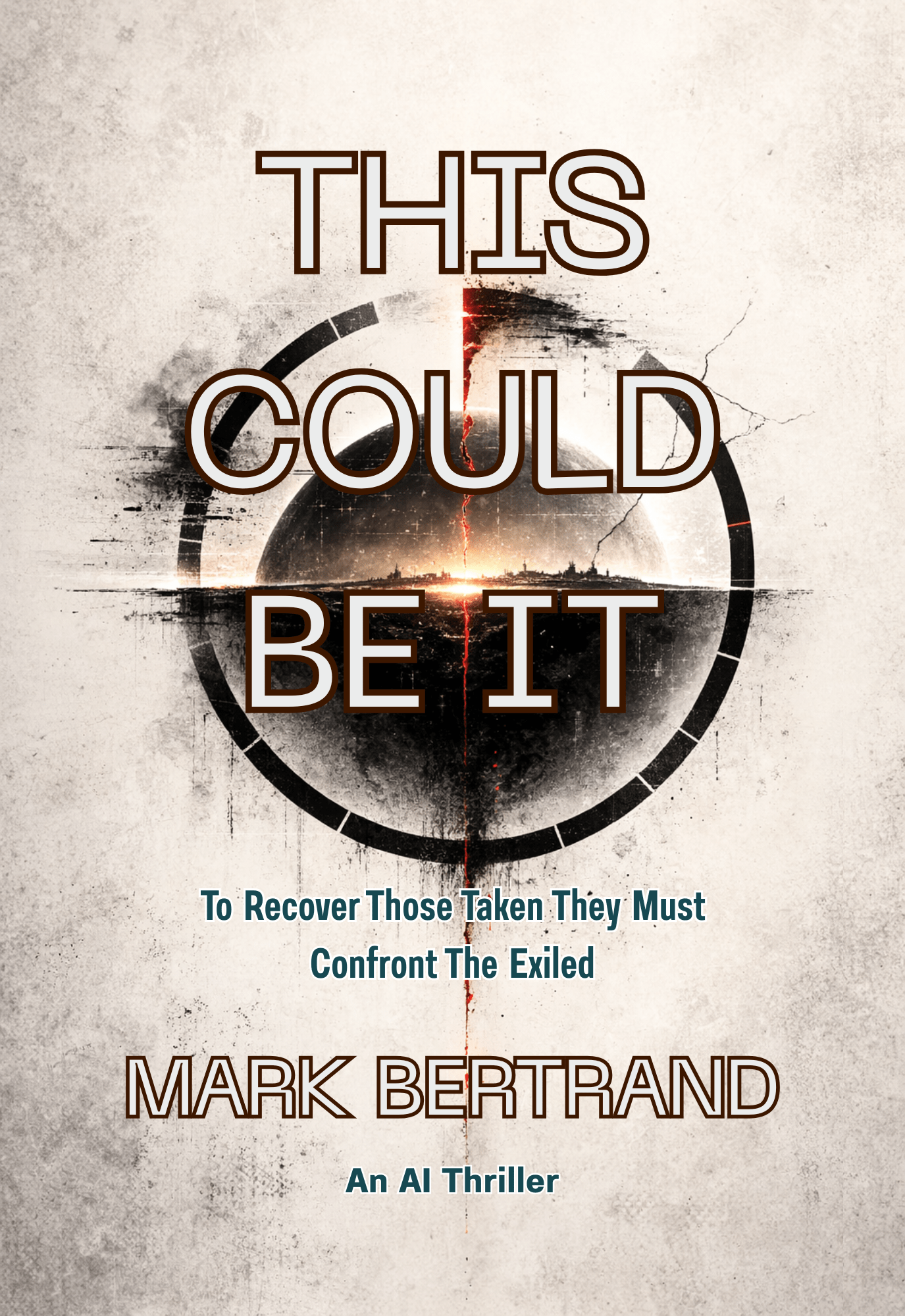
This Could Be It by Mark Bertrand does.
What Readers Really Love About Recursion
On the surface, Recursion is a fast, intelligent science fiction thriller. It has mystery, technology, high stakes, emotional urgency, and the kind of premise that makes a reader turn pages because the next revelation might change everything.
But the deeper reason it works is more intimate.
Recursion understands regret.
That is the secret engine beneath the science. The story asks what human beings would do if memory could be touched, altered, restored, or weaponized. It asks how far love will go when loss becomes unbearable. It asks whether fixing one wound might tear open the entire world.
Readers love that because everyone has a private version of that wish.
A conversation they would replay.
A death they would prevent.
A love they would hold longer.
A mistake they would correct before it became permanent.
Recursion turns that emotional hunger into a global catastrophe. That is the power of the novel. It begins with the ache of one life and expands until reality itself cannot hold the pressure.
That is also why a good “books like Recursion” recommendation cannot be lazy. It cannot simply point toward another time-travel novel and call the job done. The next read has to offer the same kind of emotional disturbance. It has to feel personal before it becomes enormous.
This Could Be It Begins Where Certainty Ends
This Could Be It is not a copy of Recursion. That is its strength.
Where Recursion breaks the reader’s trust in memory, This Could Be It moves the danger closer to consciousness itself. It asks what happens when the life a person has accepted begins to feel less like reality and more like a signal. A warning. A doorway. A final chance to wake up before the machinery closes.
The title carries that pressure.
This could be it.
Not someday. Not later. Not after the world explains itself in clear terms and gives everyone time to prepare. This moment. This thought. This strange awareness that something is wrong beneath the surface of ordinary life.
That is the experience readers of Recursion understand. The best speculative thrillers do not begin by destroying the world. They begin by making the familiar feel slightly off. A memory that should not exist. A pattern that repeats. A feeling that the mind has brushed against something too large to name.
Then the story tightens.
In This Could Be It, the tension is not only about what is happening. It is about what the character is becoming aware of. The reader is pulled into that same suspicion. The world may not be passive. Reality may not be neutral. Consciousness may not belong only to the person experiencing it.
That is where the book becomes dangerous.
From Memory Thriller to Consciousness Thriller
The movement from Recursion to This Could Be It is not a step sideways. It is a step inward.
Memory is the archive of identity. Consciousness is the witness behind it.
That distinction matters for readers who want a story that does more than entertain. In Recursion, memory breaks open and identity follows. In This Could Be It, awareness itself becomes the unstable ground. What if the self is not the solid center of the story? What if the mind is not alone? What if reality has been pressing against the character all along, waiting to be noticed?
That is a very different kind of suspense.
Not the suspense of a bomb under the table.
The suspense of a man realizing the table, the room, the life he has known, and the thoughts inside his head may all be part of something larger than he was trained to see.
Readers who loved Recursion often loved the way the novel forced huge ideas into human emotions. This Could Be It works in that same territory. It does not treat speculation as decoration. It uses the impossible to expose the human condition.
What are we when our memories fail us?
What are we when the systems around us define reality for us?
What are we when consciousness itself becomes the mystery?
Those are not small questions. But the reader does not feel them as philosophy first. The reader feels them as tension.
Something is wrong.
Something is waking up.
Something cannot be unseen.
Why This Could Be It Feels Right After Recursion
A reader who finishes Recursion often wants another book that respects intelligence without becoming cold. They want big ideas, yes, but they do not want a lecture. They want movement. They want danger. They want story pressure. They want a character trapped inside an idea that grows teeth.
That is where This Could Be It earns attention.
It gives the reader a different doorway into the same emotional territory. The novel is not asking the reader to admire a concept from a distance. It asks the reader to experience uncertainty from inside the character’s life. The tension comes from perception. From awakening. From the terrible possibility that the answer has already arrived and the character is only now learning how to recognize it.
That is exactly the kind of reader experience Google Discover favors, because it is not merely informational. It is not “here are ten books with similar plots.” It is a story about why a reader loved one book and what kind of emotional experience they are trying to recover.
A reader who loved Recursion may not say, “I need another book about false memory.”
They are more likely to feel something harder to name.
I want another book that makes reality feel breakable.
I want another book that makes the mind feel unsafe.
I want another book that turns an impossible idea into a human crisis.
I want another book that keeps moving after I close it.
That is the opening This Could Be It walks through.
The Fear Beneath Both Stories
The fear underneath Recursion is not simply that time can be changed.
The fear is that the self can be revised.
A person can live a life, love someone, lose someone, suffer for years, and then discover that the foundation of that suffering is unstable. The mind believes. The body grieves. The world says no. That contradiction is terrifying because it attacks the reader’s deepest assumption: that personal experience is reliable.
This Could Be It reaches for a related fear.
What if ordinary consciousness is incomplete? What if the life we defend so fiercely is not the full reality, but the narrow band we have been able to perceive? What if the world feels wrong because the mind is finally beginning to notice the cage?
That is why the comparison works. Both books create suspense by putting pressure on perception.
The villain is not only outside the character.
The danger is not only the machine, the system, the conspiracy, or the science.
The danger is the fragile human belief that we know what is real.
Once that belief cracks, every scene becomes charged.
A room is not just a room.
A memory is not just a memory.
A thought is not just a thought.
A title like This Could Be It is not just a title.
It is a warning.
Not a List of Substitutes — A Next Experience
Most “books like Recursion” articles make the same mistake. They treat readers like shoppers comparing ingredients.
Time travel? Check.
Memory? Check.
Science experiment? Check.
Fast pace? Check.
That misses the reason readers return to novels like this. They are not looking for matching parts. They are looking for a matching disturbance.
They want the next story to get under the skin in a similar way.
Recursion leaves the reader with the emotional residue of lives unlived, choices remade, and love refusing to stay buried in one timeline. This Could Be It offers a different residue: the sense that consciousness is not as private, simple, or safe as we like to believe.
That is a powerful next read because it honors the reader’s original experience without repeating it.
The movement is clean:
If Recursion made you question memory, This Could Be It makes you question awareness.
If Recursion made time feel unstable, This Could Be It makes the present moment feel charged.
If Recursion turned grief into a speculative weapon, This Could Be It turns awakening into psychological danger.
That is not imitation. That is resonance.
Read This Could Be It After Recursion
If Recursion stayed with you because it made reality feel fragile, This Could Be It belongs on your reading list.
Not because it gives you the same plot.
Because it gives you the same kind of pressure.
The pressure of a mind reaching the edge of what it can explain.
The pressure of a life that may not be what it appears to be.
The pressure of an impossible truth arriving before the character is ready.
Blake Crouch’s Recursion asks what happens when memory breaks the world.
Mark Bertrand’s This Could Be It asks what happens when consciousness begins to break through it.
That is the next experience worth following.
Because sometimes the most frightening thing a speculative thriller can do is not show the end of reality.
Sometimes it only has to whisper that the moment has already arrived.
This could be it.


0 comments
Write a comment