Books Like Project Hail Mary: Smart Sci-Fi Thrillers About Survival, Science, and Human Fate
Readers do not love books like Project Hail Mary only because it has a spaceship.
That is the shallow answer.

They love it because Andy Weir takes one man, strips away almost everything he knows, wakes him in the middle of an impossible scientific mystery, and makes survival feel like an act of intelligence. Not violence. Not destiny. Not prophecy. Intelligence.
Ryland Grace opens his eyes with no memory, no team, no easy map, no safe world beneath his feet, and no time to collapse into despair. The universe has placed a problem in front of him. The problem is ridiculous. The stakes are obscene. Humanity may die. Earth may perish. And the only thing standing between extinction and survival is a mind forced to work under pressure.
That is why readers search for books like Project Hail Mary.
They are not merely looking for “space books.” They are looking for smart sci-fi thrillers where science matters, survival is earned, and human fate is not handled by governments, armies, or committees, but by one person under impossible pressure trying to solve the problem before the lights go out.
Why Readers Love Project Hail Mary
The engine of Project Hail Mary is not simply plot.
It is discovery.
A man wakes up. He does not know where he is. He does not know why he is there. He does not even fully know who he is. The reader learns with him, puzzle by puzzle, memory by memory, problem by problem. That structure creates one of the strongest reader pleasures in science fiction: earned understanding.
The book does not hand the reader a big galactic lecture and say, “Here is the universe. Please admire the architecture.” It starts with immediate confusion and lets the story become a laboratory. Every revelation changes the mission. Every scientific observation becomes a clue. Every problem becomes a doorway into another problem.
That is what makes it such an addictive read.
The science is not decoration. It is movement. Chemistry, physics, biology, engineering, language, survival math, orbital thinking, alien life, and problem-solving are not pasted onto the story. They are the story’s muscle. Grace survives because he thinks. He adapts because he observes. He moves forward because he refuses to stop asking: what is really happening here?
And underneath all of that clever science, Project Hail Mary has the larger emotional charge: the fate of humanity.
That is where the book becomes more than a technical puzzle. A classroom science teacher becomes the last uncertain hand reaching across the dark. He is not a superhero. He is not a warrior. He is a frightened, brilliant, flawed man who has to become useful in the face of extinction.
Readers enjoy that because it gives science fiction its old grandeur back.
The universe is immense. The problem is massive. The hero is small. The mind still matters.
The Best Books Like Project Hail Mary Understand One Thing: Survival Is a Thinking Man’s Game
A lot of thrillers confuse survival with action.
Run faster. Shoot better. Punch harder. Blow something up.
Project Hail Mary works differently. The pressure is constant, but the true action is intellectual. The tension comes from watching a mind cornered by physics, biology, loneliness, memory loss, and time.
That is the important distinction for readers searching for the best sci-fi books like Project Hail Mary. They want survival fiction where the answer is not muscle. They want books where the danger becomes more interesting because it must be understood before it can be beaten.
That kind of story creates a special reader pleasure.
The reader gets to participate. The reader is not merely watching a character survive. The reader is invited to think alongside him. What does the evidence mean? What can be tested? What assumption is wrong? What tiny overlooked fact may save the planet?
This is why Project Hail Mary feels so alive. It gives real readers the pleasure of competence under pressure.
Not fake competence. Not the perfect genius who knows everything. The better kind. A man making mistakes, recovering, testing, improvising, failing, trying again, and learning fast because death does not care about his feelings.
That is the same deep pleasure that makes The Martian work, but Project Hail Mary raises the emotional ceiling. It is no longer one man trying to get home from Mars. It is one man trying to save Earth while learning that human survival may depend on a friendship no human being expected.
That mixture of science, isolation, humor, terror, intelligence, and unexpected connection is difficult to replace.
But readers who loved that experience have a natural next step.
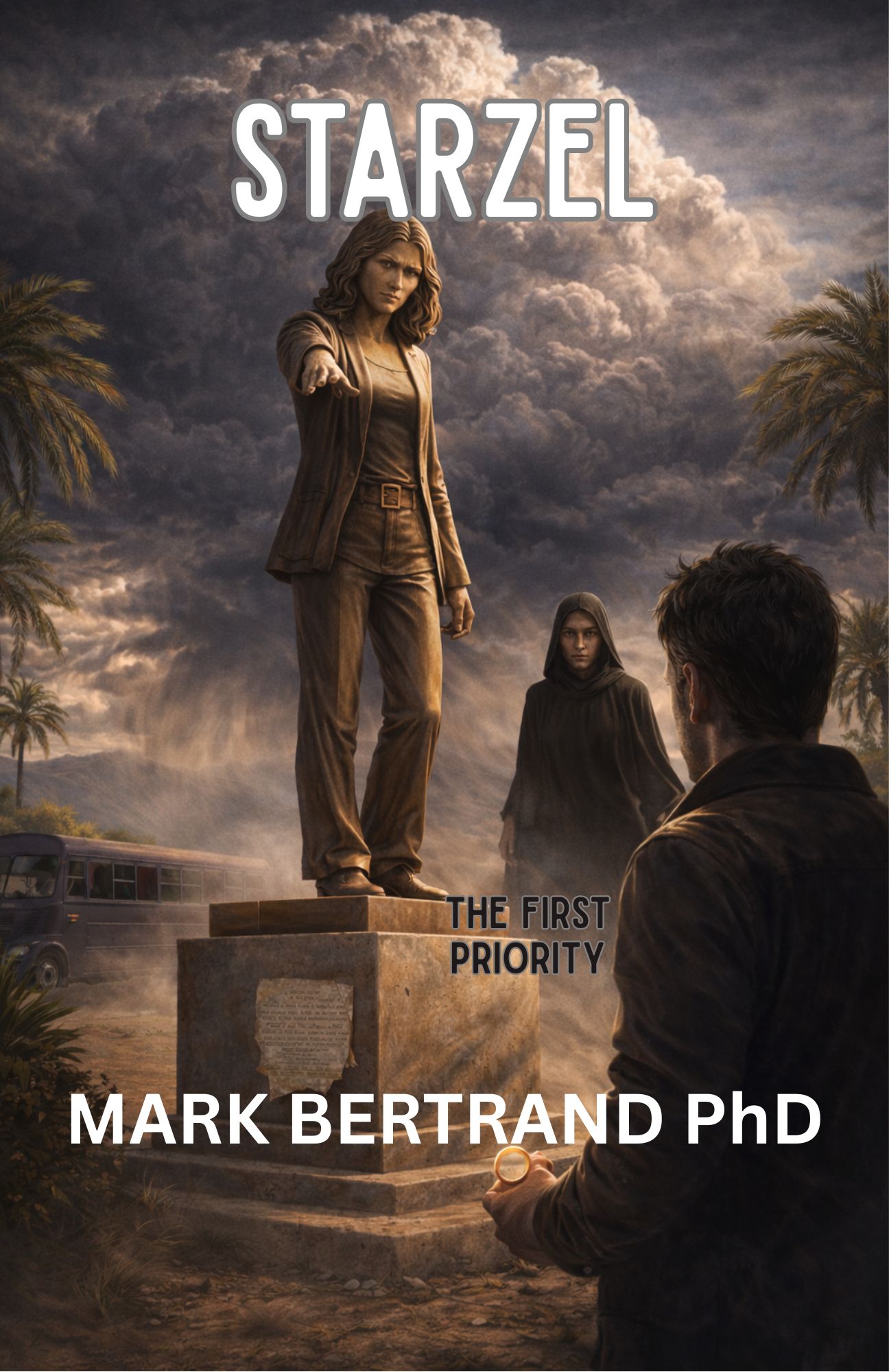
That next step is STARZEL by Mark Bertrand.
STARZEL: A Darker, Stranger Next Read for Project Hail Mary Fans
STARZEL is not a copy of Project Hail Mary.
Good.
Readers do not need the same book again with different buttons on the spaceship wall. They need the same reading hunger satisfied at a deeper, stranger, more dangerous level.
If Project Hail Mary begins with a man waking in space and discovering the science of survival, STARZEL begins from a more metaphysical wound: what if the code that holds humanity together has been damaged?
That is the central difference.
Project Hail Mary asks: can science save Earth from extinction?
STARZEL asks: what if humanity is not merely threatened from outside, but corrupted at the level of reality itself?
That is a sharper blade.
In STARZEL, Eulǝr is a Syganoid from Planet Forty-Four, a highly advanced humanoid civilization living inside domed habitats on a poisonous gas planet. He is not an ordinary human trapped in space. He is an enhanced being shaped by biomechanics, organoid intelligence, expanded perception, and a culture that understands consciousness, energy, and survival far beyond ordinary human limits.
And yet, for all that superiority, he is not safe.
That is where STARZEL becomes compelling for readers who like smart science fiction thrillers. The protagonist has astonishing tools, but the mission is larger than his tools. Eulǝr discovers missing data in the Universe Code tied to humanity’s existence. The trail leads him toward Earth, toward Banyan, toward The First Priority, and toward the possibility that humanity itself may be erased if the damage is not repaired.
That gives STARZEL the same deep reader hook as Project Hail Mary: one intelligent figure must solve an impossible problem before humanity is lost.
But STARZEL makes the problem more cosmic, more political, more psychological, and more morally unstable.
Science as Wonder, Science as Danger
One of the reasons Project Hail Mary became such a reader favorite is that science feels joyful even when the situation is catastrophic.
The book trusts the reader. It lets science be fascinating. It does not apologize for equations, experiments, alien biology, or engineering logic. Instead, it turns them into suspense.
STARZEL does something related, but with a different flavor.
The science in STARZEL is not only hard survival mechanics. It is speculative biology, organoid intelligence, artificial superintelligence, biomechanics, consciousness, epigenetics, energy fields, planetary systems, wormholes, historical code, and the question of whether advanced intelligence can repair what ordinary civilization has broken.
That matters.
Readers who loved Project Hail Mary because it made science thrilling will find a darker kind of scientific imagination in STARZEL. This is not a book where science simply builds a better rocket or solves a fuel problem. Science has altered bodies, extended perception, changed social power, created new forms of intelligence, and opened doors that perhaps should never have been opened.
That gives the story a more dangerous edge.
In Project Hail Mary, the science is often the path back toward hope.
In STARZEL, science is also the path into danger.
Every enhancement carries consequence. Every advanced system creates vulnerability. Every superior intelligence must face the same ancient problem: power does not guarantee wisdom.
That is the kind of science fiction real readers remember.
The Survival Thriller Hidden Inside the Big Idea
The smartest thing a novel like Project Hail Mary does is keep the giant idea intimate.
The sun is threatened. Earth is in danger. Humanity may die. Yet the reader stays close to Ryland Grace. His body, his fear, his jokes, his discoveries, his loneliness, his growing connection with Rocky. The huge story works because the character experience stays immediate.
STARZEL uses the same principle.
The fate of humanity may depend on missing universe code, but the story does not live only in abstract cosmic language. Eulǝr has to travel. He has to survive. He has to hide what he is. He has to move through dangerous societies, distorted governments, violent systems, and human civilizations that have turned survival into law, spectacle, and control.
That gives STARZEL thriller movement.
This is not a static philosophical sci-fi novel where characters sit around explaining the metaphysics of reality. It moves. Planet Forty-Four. Planet Te. Starzel. Earth. Transport systems. Courts. training centers. hidden histories. artificial intelligence. political collapse. social manipulation. violent authorities. All of it presses against Eulǝr’s mission.
Readers looking for books like Project Hail Mary often want that exact combination: big cosmic stakes with constant scene pressure.
STARZEL delivers that in its own captured-reality style.
The danger is not only whether the mission fails.
The danger is whether the society he enters is already too damaged to save.
A Different Kind of Alien Intelligence
One of the great pleasures of Project Hail Mary is the encounter with intelligence that is not human.
That is where the book becomes more emotionally powerful than readers expect. The alien is not merely a monster, symbol, or puzzle. The alien becomes a mind. A relationship. A second survival story. A bridge between worlds facing the same terror.
That is one reason the book stays with readers. It understands that intelligence is not meaningful until it becomes relational. The story is not only “can I survive?” It becomes “can we understand each other quickly enough to survive together?”
STARZEL approaches alien intelligence from another angle.
Eulǝr is not human, though he studies humans and moves through human worlds. He sees Earth from the outside. He sees human behavior as primitive, frantic, self-devouring, violent, and trapped in doing rather than being. That outsider perspective gives the novel much of its bite.
Where Project Hail Mary gives readers the wonder of friendship across species, STARZEL gives readers the discomfort of being studied by a superior intelligence that may be right about us.
That is a different pleasure.
It is colder. More satirical. More dangerous. More psychologically invasive.
Eulǝr’s view of humanity is often funny, arrogant, observant, and unnerving. He does not simply admire human resilience. He sees the stupidity, the systems, the appetite for destruction, the political manipulation, the social control, the endless human habit of turning survival into suffering.
For readers who like sci-fi that does not merely flatter humanity, this is where STARZEL earns its place.
It takes the survival question and twists it.
Not merely: can humanity survive the universe?
But: does humanity understand itself well enough to deserve survival?
Books Like Project Hail Mary and The Martian Need Competent Pressure
Readers often search for “books like Project Hail Mary and The Martian” because those books share a clear pleasure: competent pressure.
A character is trapped inside a problem. The problem is not emotional fluff. It has physics. It has biology. It has limits. It has time pressure. The character cannot simply believe harder or hope better. He has to solve.
That is the clean joy of Andy Weir’s fiction.
STARZEL belongs in that search because Eulǝr’s mission also depends on solving. He has to understand systems, recover missing knowledge, interpret ancient writings, navigate hostile worlds, manage failing technology, and determine what has gone wrong with humanity at the level of code and consciousness.
The difference is tonal.
The Martian is survival through engineering.
Project Hail Mary is survival through science and interspecies alliance.
STARZEL is survival through science, consciousness, systems, and cosmic repair.
That makes it a stronger match for readers who want the scale to get larger after Project Hail Mary. Not just another astronaut. Not just another hostile planet. Something stranger. Something closer to the question beneath science fiction itself.
What is reality doing to us?
And what have we done to reality?
Human Fate Is the Real Genre
The title says science fiction, but the real genre of Project Hail Mary is human fate.
That is why the book is not just clever. Clever fades. Fate stays.
Ryland Grace is not trying to win a prize. He is not chasing status. He is not trying to become famous. He is not saving the world because saving the world looks heroic on a poster. He is trying to survive long enough to complete the work that must be done.
That is a powerful masculine story engine.
A man alone with the job.
No applause. No safety. No room for self-pity. Just the work.
STARZEL understands that same pressure. Eulǝr’s task is not casual exploration. He is not touring planets for intellectual entertainment. He is trying to recover what has been lost before humanity collapses beyond repair. The mission is vast, but the emotional shape is simple: something essential is missing, and he may be the only one who can find it.
That is why STARZEL is such a strong next read after Project Hail Mary.
Both novels understand that the most gripping science fiction is not about technology. Technology is only the instrument. The deeper question is whether intelligence can arrive in time.
Can the mind solve the problem before the body dies?
Can science become wisdom before civilization collapses?
Can one person carry human fate without being crushed by it?
That is the nerve.
Other Books Like Project Hail Mary
Readers who want more books like Project Hail Mary may also enjoy other smart science fiction thrillers and survival-driven novels.
The Martian by Andy Weir remains the obvious companion, especially for readers who love practical problem-solving, isolation, humor, and science under pressure.
Seveneves by Neal Stephenson offers a larger, harder, more sprawling catastrophe story about humanity trying to survive after the moon breaks apart. It is heavier and more technical, but it shares the obsession with engineering under existential pressure.
Children of Time by Adrian Tchaikovsky works well for readers who enjoyed the alien intelligence and evolutionary imagination of Project Hail Mary. It is less of a lone-survival thriller and more of a civilization-level speculation, but its sense of nonhuman intelligence is excellent.
The Three-Body Problem by Cixin Liu gives readers a colder, more immense vision of human vulnerability inside a hostile universe. It is less warm than Project Hail Mary, but it expands the scale of the threat.
Blindsight by Peter Watts is for readers who want the alien-contact side turned darker, harder, and more psychologically disturbing. It is not a comfort read. It is the kind of book that turns consciousness itself into a threat.
And then there is STARZEL by Mark Bertrand.
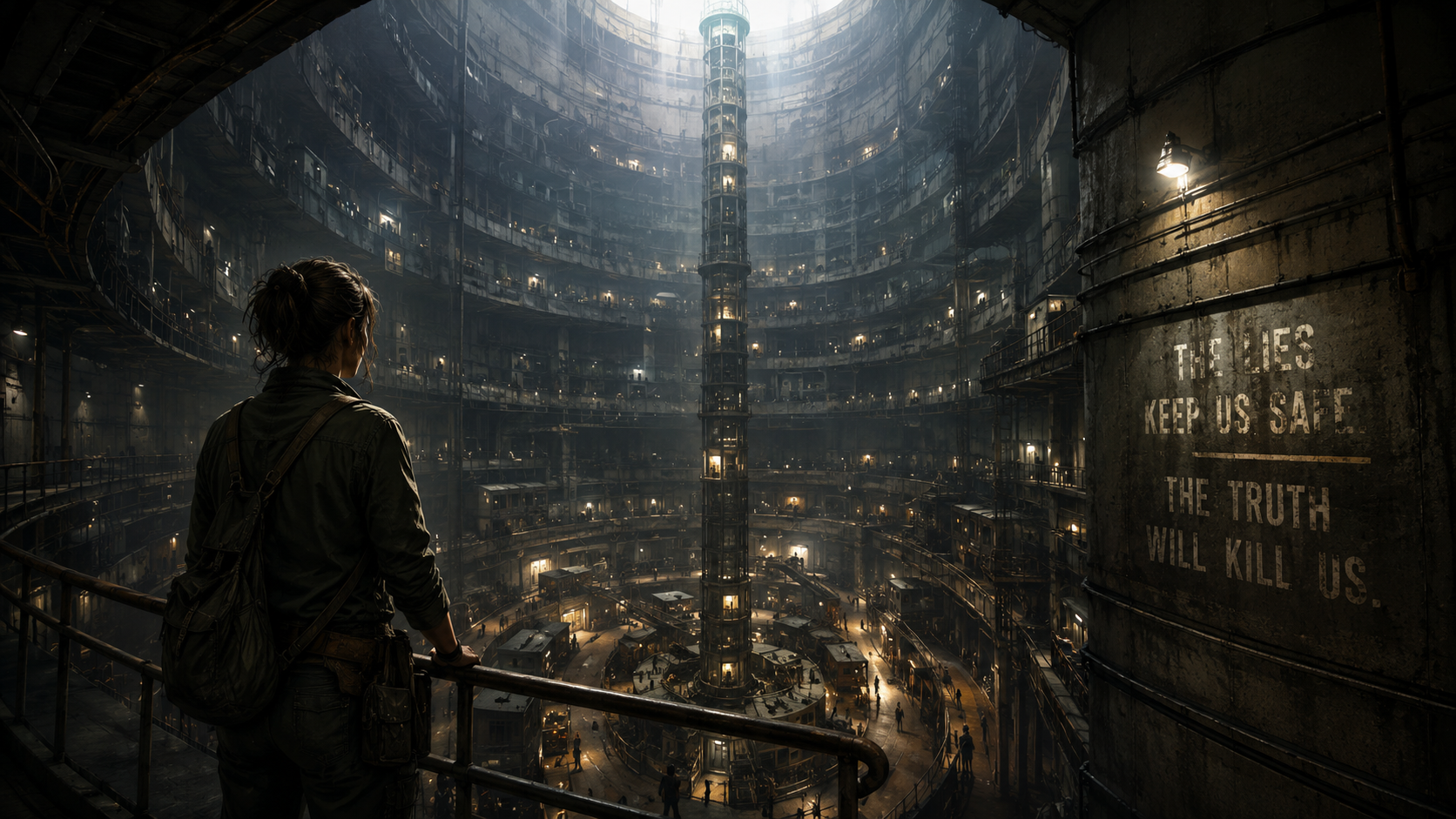
That is the one for readers who want the survival puzzle, the scientific imagination, the threat to humanity, and the outsider intelligence, but want the next book to go deeper into captured reality, damaged systems, metaphysical science, and the frightening possibility that civilization is not merely endangered by the stars.
It may already be infected from within.
Why STARZEL Should Be Your Next Read After Project Hail Mary
The best next read after Project Hail Mary should not feel like a lesser echo.
It should open a new door.
STARZEL does that.
It keeps the core pleasures that made Project Hail Mary work: intelligence under pressure, science as story movement, survival as a problem to solve, and humanity placed under existential threat. Then it changes the angle. Instead of a lone human waking up in space, it gives readers an advanced humanoid moving toward Earth to repair a missing code that may determine whether humanity continues to exist at all.
That is a rich next step.
Readers who loved the scientific puzzles in Project Hail Mary will find speculative science in STARZEL: organoid intelligence, biomechanics, artificial superintelligence, universe code, energy centers, enhanced perception, and advanced civilizations built around survival in impossible environments.
Readers who loved the survival pressure in Project Hail Mary will find Eulǝr moving through hostile worlds where exposure, capture, misunderstanding, political violence, and failing systems threaten the mission.
Readers who loved the emotional stakes of Project Hail Mary will find something darker in STARZEL: the fear that humanity is not only physically endangered, but morally, socially, and metaphysically corrupted.
That makes STARZEL less cozy, more dangerous, and more Bertrand.
It is not Andy Weir with a new coat of paint.
It is a captured reality psychological sci-fi thriller that asks what happens when the universe itself becomes the crime scene and humanity is both victim and suspect.