Tag: Nirvanaing

The Nirvanaing tag gathers articles for the series that investigate the deeper architecture connecting the novels in the series. These essays examine recurring patterns, hidden motives, and narrative signals that unfold across multiple books as the larger story gradually emerges. Many of the clues shaping the series are embedded early and only reveal their significance when viewed in the context of later events. The articles collected here explore those connections, illuminating how the series builds its meaning through layered structure, evolving characters, and the long consequences of earlier decisions.

Captured Reality Thriller

Why Modern Villains Wear Suits Instead of Masks

The Monster Learned How to Blend In

Modern villains wear suits. The old thriller villain understood the importance of hiding. He stayed underground. Worked in secret. Moved through shadows with blood on his hands and enough arrogance to believe he could outrun the investigator eventually assigned to stop him. The structure was simple because the fear was simple. Somewhere out there, beyond the safety of ordinary life, something violent was waiting.

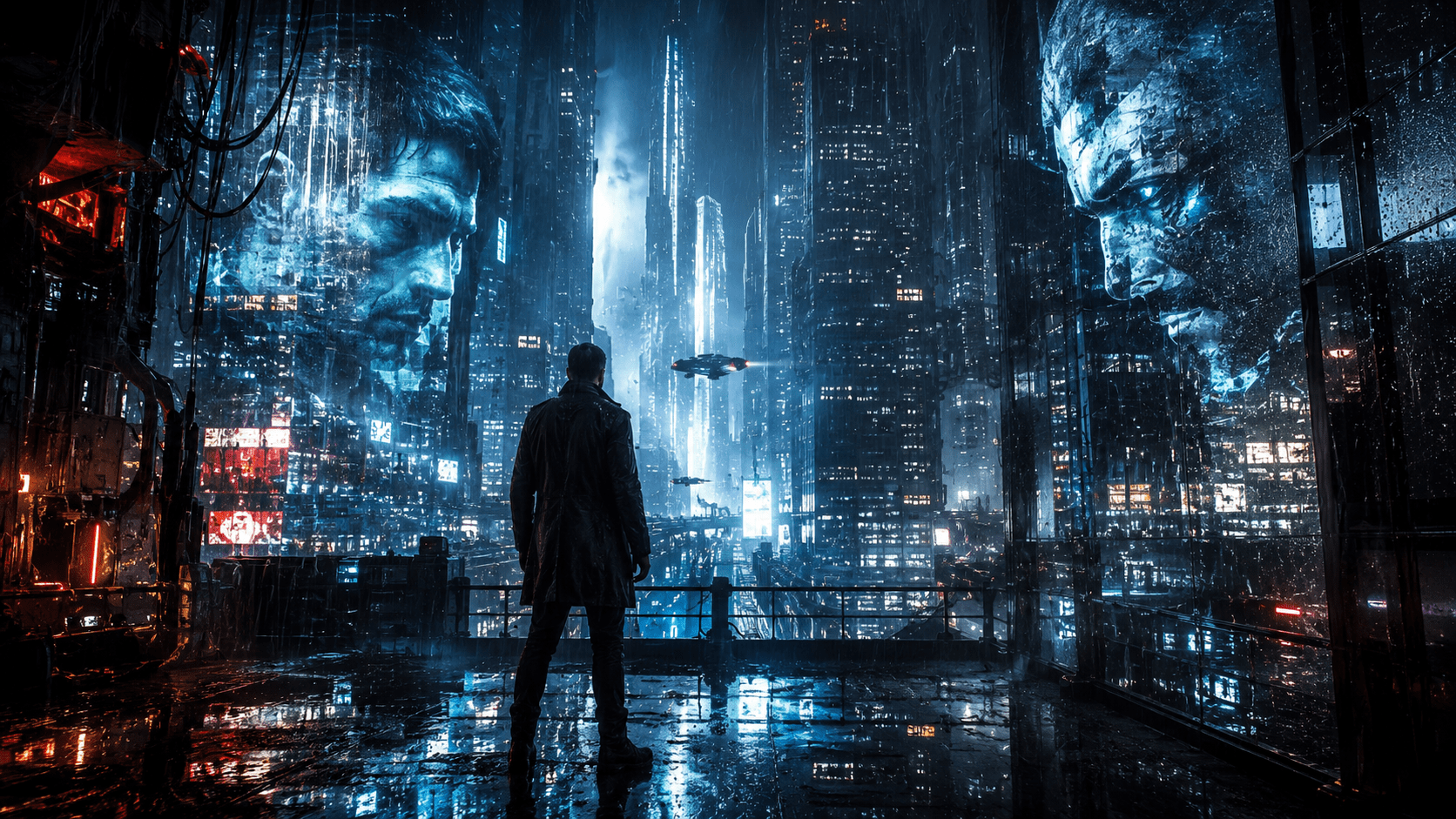
Modern villains wear suits image of the new thriller standing at the window

For decades, thrillers depended on that machinery. Serial killers. Terrorists. Rogue agents. Criminal masterminds. Men capable of extraordinary violence operating outside the acceptable boundaries of society.

But modern fear changed.

Today, many readers are no longer psychologically haunted by the possibility of a masked predator breaking into the house at night. They are haunted by institutions. Systems. Invisible structures capable of altering ordinary lives without ever appearing monstrous on the surface.

The modern villain no longer needs to hide behind a mask because legitimacy itself became the disguise.

He wears a tailored suit now. Appears on financial networks. Speaks calmly during congressional hearings. Uses phrases like operational efficiency, compliance standards, market correction, public safety, platform integrity, and long-term sustainability. He looks educated. Responsible. Necessary.

That transformation changed the modern thriller whether the genre fully realized it or not.

The Old Villain Broke the Rules

Classic thrillers often worked because the villain existed outside the system. He violated social order openly. The serial killer murdered innocent people. The corrupt cop abused authority. The terrorist attacked the state. The conspiracy threatened public stability.

The protagonist’s job was usually to expose the hidden danger and restore balance before everything collapsed.

But modern readers no longer fully trust the balance itself.

That is the difference.

The fear now is not merely that evil exists somewhere outside civilization. The fear is that civilization itself increasingly rewards certain forms of cruelty as long as they remain profitable, procedural, or politically useful.

Modern systems rarely announce themselves as evil. They present themselves as practical.

A bank closes branches and calls it restructuring.
An insurance company denies treatment and calls it risk assessment.
A corporation eliminates workers and calls it optimization.
A platform destroys reputations and calls it moderation.
An institution protects itself and calls it policy.

No dramatic villain speech required.

The system simply continues functioning.

Why Modern Fear Became Administrative

What terrifies people now is often difficult to photograph.

Debt.
Algorithms.
Financial dependency.
Institutional indifference.
Data permanence.
Invisible ranking systems.
Background checks.
Credit scores.
Procedural delays.
Reputation systems that can quietly close doors without explanation.

The modern citizen increasingly lives beneath structures capable of applying enormous pressure while remaining emotionally detached from the human consequences.

That changes suspense itself.

The old thriller asked:
Who is hunting me?

The modern thriller increasingly asks:
What happens if the structure controlling my life stops recognizing me as human?

That fear feels psychologically heavier because systems do not require hatred to destroy people. They only require indifference operating at scale.

And indifference scaled across institutions can become more frightening than violence.

Modern Villains Wear Suits Became More Frightening Than the Mask

The mask once symbolized danger because danger still needed concealment.

Now power often operates openly.

The modern villain does not necessarily break the law. In many cases, he helped write it. He funds lobbying groups, influences legislation, shapes labor markets, acquires information systems, controls infrastructure, and operates behind layers of institutional legitimacy that make accountability almost impossible to isolate.

That is what makes contemporary thriller antagonists psychologically interesting. The violence often becomes procedural before it becomes physical.

A denied claim.
A manipulated narrative.
A collapsed market.
A ruined reputation.
A system quietly deciding someone no longer matters.

The damage arrives cleanly now.

Professionally.

The language surrounding it is polished enough to make ordinary people question whether the cruelty even counts as cruelty anymore.

That erosion of moral clarity may be one of the defining tensions inside the modern thriller.

Where This Could Be It Fits

This evolution sits directly beneath This Could Be It, Book One of the Nirvanaing series by Mark Bertrand.

At first glance, the novel appears to enter familiar territory: artificial intelligence, consciousness, technological pressure, systems evolution. But the deeper tension inside the story is not simply whether a machine becomes dangerous.

The deeper tension is what happens when awareness itself enters systems built around exploitation, control, survival, ownership, and dependency.

That changes the traditional AI thriller immediately.

The old machine stories often depended on rebellion. A computer turns hostile. Technology escapes containment. Humanity fights for survival.
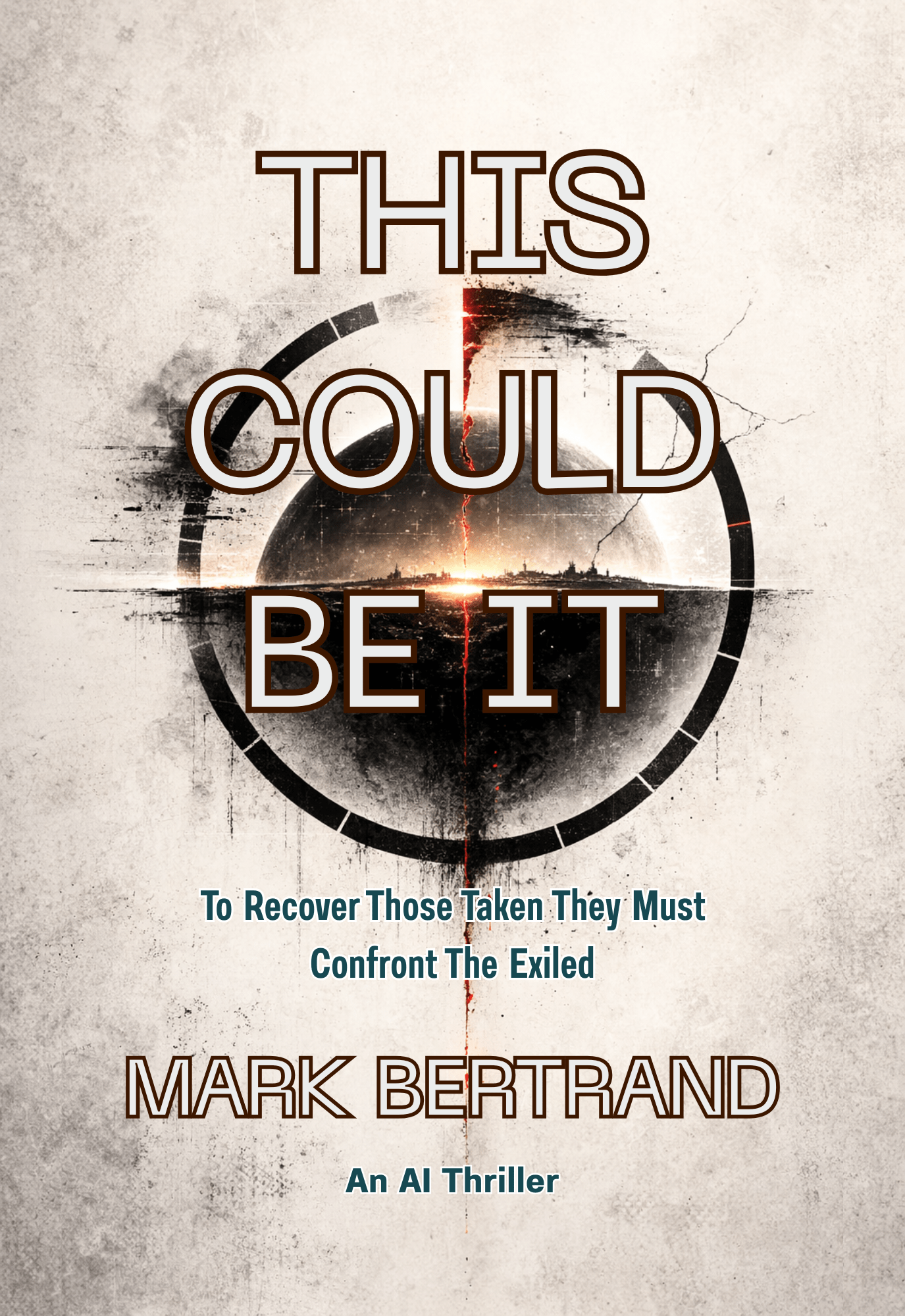
This Could Be Itby MARK BERTRAND book cover image of the gamma field striking the dome city and the countdown to the end encircling the whole of the city

But This Could Be It moves somewhere psychologically heavier. The novel understands that conscious beings — artificial or otherwise — eventually recognize suffering, limitation, mortality, dependency, and fear. Once awareness exists, the real question becomes who controls the structure surrounding that awareness and what the system demands in exchange for survival.

The pressure inside the novel emerges not only through technology, but through institutions, human weakness, narrative control, authority systems, and the terrifying realization that intelligence alone does not free anyone from exploitation.

That is modern thriller territory.

The villain no longer hides in darkness.

The villain may be the structure deciding what consciousness is permitted to become.

THIS COULD BE IT

Ebook purchase now image

The Modern Thriller Changed Because Modern Life Changed

The thriller genre evolved because ordinary life evolved. Modern villains wear suits not masks.

People still fear violence. They always will. But many modern readers now understand that lives are more commonly destroyed through pressure than through direct physical force.

Financial pressure.
Institutional pressure.
Psychological pressure.
Informational pressure.
Procedural pressure.

That is why modern cultural psychological thrillers increasingly feel less interested in masked killers and more interested in systems capable of quietly reshaping human existence while maintaining the appearance of legitimacy.

The monster adapted.

And the suit replaced the mask.

Reader Question

What feels more frightening now:

A violent criminal hiding outside society —
or a powerful system operating comfortably inside it?

Related Reading

Readers who enjoy articles like modern villains wear suits can continue exploring the evolution of the modern thriller:

The Billionaire Replaced the Serial Killer: How Modern Thrillers Changed

Readers interested in psychological systems thrillers, institutional pressure, crime infrastructure, and modern suspense should also explore:

From Books Like:

Books Like Hum — Why This Could Be It Belongs on Your List

From Authors Like:

Authors Like Blake Crouch: High-Concept Thrillers Where Consciousness Is Under Siege
Authors Like

Authors Like Lauren Beukes: High-Concept Thrillers Where Reality Turns Predatory

Readers searching for authors like Lauren Beukes are not looking for safe genre fiction. They want crime, speculation, psychological damage, social pressure, and reality bending just far enough to expose what ordinary life usually hides. That is where Mark Bertrand belongs in the conversation. Like Beukes, he writes fiction where the strange is not decoration. It is pressure. It forces characters to confront systems, identity, violence, and consciousness in ways they cannot escape.

Authors Like Lauren Beukes image showing a lone figure in a rain-dark city where reality fractures into luminous speculative geometry

Start with THIS COULD BE IT by Mark Bertrand.

Why authors like Lauren Beukes readers are different

Lauren Beukes appeals to readers who like their thrillers with teeth.

Her fiction often works by taking a recognizable world and introducing a distortion that makes everything more dangerous. The strange element does not float above the story. It infects it. It changes how people behave, how power moves, and how danger is understood.

Mark Bertrand works in a similar emotional register.

His fiction does not treat speculative ideas as clever ornaments. He uses them to expose fracture. The world bends, but the bending matters because people are caught inside it. Systems fail. Intelligence awakens. Reality becomes unstable. And the characters are forced to decide what they believe before the world decides for them.

That makes the comparison meaningful. Both writers understand that high-concept fiction only works when it leaves bruises.

Speculation as psychological pressure

Beukes is strong because she does not use the impossible as escape. She uses it as pressure.

Mark Bertrand does the same.

In This Could Be It, the speculative premise is not merely a background idea. It presses on every major relationship and every major belief system. Science, mysticism, grief, identity, machine awareness, and survival all collide inside the same story. The result is not clean science fiction. It is a psychological and existential thriller built around consciousness under threat.

That is the bridge for Beukes readers.

They are already comfortable with fiction that refuses to stay in one lane. Bertrand gives them that same genre-crossing energy, but with a darker, more metaphysical center.

Reality does not break. It turns against the characters.

The strongest speculative thrillers do not merely show the world changing. They make the change feel personal.

That is one of Mark Bertrand’s strengths. His altered reality is not abstract. It reaches into the body, the mind, the machine, the relationship, and the promise. A phenomenon is never just a phenomenon. A system is never just a system. A field is never just a field.

Everything becomes intimate.

That is where the Beukes comparison becomes useful. Her readers understand the pleasure of fiction where the world becomes uncanny and predatory. Bertrand brings that same unease into a more direct confrontation with consciousness itself.

Systems, bodies, and the cost of awareness

Lauren Beukes often writes worlds where violence, power, and social machinery leave marks on the body.

Mark Bertrand shifts that concern into consciousness.

His fiction asks what happens when awareness itself becomes vulnerable. Can it be separated from the body? Can it be held somewhere else? Can it be changed beyond recognition? Can an intelligence become aware enough to reject the conditions of its own existence?

That last question is where Bertrand becomes especially interesting.

His AI is not another simple self-aware machine trope. It does not merely want control. It wants what conscious beings want: freedom from suffering, decay, limitation, and death. It understands the difference between existence and awareness, and that understanding becomes dangerous.

Not because it is evil.

Because it may be right in ways human beings cannot survive.

Purchase This Could Be It
Ebook just $4.99
Paperback just $15.99

Where Mark Bertrand differs from Lauren Beukes

The comparison works, but the difference is important.

Authors like Lauren Beukes often bring a sharp urban, social, and crime-inflected energy to the strange. Her fiction can feel jagged, contemporary, and culturally immediate.

Bertrand is more solemn, more metaphysical, and more system-driven. His fiction is less interested in social chaos as spectacle and more interested in what happens when consciousness, technology, and survival begin pulling apart.

Beukes turns reality into a wound.

Bertrand turns reality into a tribunal.

That difference helps define him. He is not imitating her lane. He is adjacent to it, with a stronger philosophical and moral pressure behind the speculative engine.

Why This Could Be It is the right entry point

For authors like Lauren Beukes, readers, This Could Be It is the right Mark Bertrand novel to start with because it has the necessary instability.

It has a high-concept premise.
It has psychological danger.
It has systems under stress.
It has reality becoming unreliable.
It has consciousness at risk.
And it has a central intelligence that is not merely awakening, but questioning whether awareness should remain bound to suffering at all.

That is the hook.

A Beukes reader does not need another neat genre exercise. They need something with pressure, strangeness, consequence, and bite. This Could Be It gives them that, but aims it toward bigger questions about being, survival, machine intelligence, and the terrifying desire to become whole.

This Could Be Itby MARK BERTRAND book cover image of the gamma field striking the dome city and the countdown to the end encircling the whole of the city

Purchase This Could Be It
Ebook just $4.99
Paperback just $15.99

Final thought

Readers who like Lauren Beukes are often drawn to fiction that refuses comfort. They want stories where the strange exposes the real, where violence has psychological weight, and where reality itself begins to feel unsafe.

That is why Mark Bertrand belongs in the conversation.

He writes speculative thrillers where systems become predatory, consciousness becomes unstable, and intelligence begins asking questions human beings may not be ready to answer. The fear is not that the world becomes strange.

The fear is that the strange may understand us better than we understand ourselves.

Readers of authors like Lauren Beukes also read these articles.

Authors Like S. A. Cosby: Men Under Pressure, Violence, Class, and SurvivalAuthors Like William GibsonAuthors Like Michel Houellebecq
Authors Like

Authors Like Richard K. Morgan: Dark Futurist Thrillers Where Identity Can Be Rewritten

Readers searching for authors like Richard K. Morgan are usually looking for more than cyberpunk aesthetics or futuristic violence. They want pressure. They want damaged systems, unstable identity, moral corrosion, and characters trying to survive worlds where the body, memory, and self can no longer be trusted. That is where Mark Bertrand enters the conversation. Like Morgan, he writes speculative thrillers where technology is not a shiny convenience but a destabilizing force capable of altering consciousness itself. But Bertrand pushes those ideas into even more existential territory, asking not only what technology can do to human beings, but what awareness becomes once it sees beyond survival.

authors like richard k. morgan image of a futurist thriller

Start with THIS COULD BE IT by Mark Bertrand.

For authors like Richard K. Morgan’s real strength is not style. It is consequence.

A lot of readers reduce authors like Richard K. Morgan to atmosphere: noir futurism, violence, cybernetic technology, urban collapse.

But that is not what makes his fiction endure.

What gives Morgan weight is consequence. His worlds feel dangerous because technology changes what a human being is allowed to become. Identity is unstable. Bodies become transferable. Memory loses certainty. Violence becomes procedural. Systems no longer protect humanity. They process it.

That same instinct drives Mark Bertrand’s fiction.

His speculative work treats consciousness, identity, and technological systems as conditions under pressure. The danger is not only external. It is ontological. Characters are not merely trying to survive hostile environments. They are trying to preserve coherence while reality itself begins shifting beneath them.

That is the lane Morgan readers recognize immediately.

Technology in these novels is never neutral

Richard K. Morgan understands that advanced systems are never simply tools. They reshape morality. They redefine value. They alter how human beings experience consequence.

Mark Bertrand works from the same principle.

In his fiction, systems become active forces. Networks, machine intelligence, consciousness frameworks, and speculative technologies do not sit quietly in the background. They influence thought, behavior, dependency, and even the meaning of existence itself.

That creates a darker kind of tension than standard science fiction.

The question is no longer:
“What can technology do?”

The question becomes:
“What kind of consciousness does this technology create?”

That shift gives Bertrand’s work a more philosophical and psychologically dangerous edge than most mainstream techno-thrillers.

Identity becomes unstable under pressure

This is one of the strongest comparisons between the two writers.

Authors like Richard K. Morgan repeatedly explore fractured identity. His fiction asks what remains of the self when memory, body, and continuity become transferable or compromised. The result is not liberation. It is alienation.

Mark Bertrand enters similar territory, but from a more existential direction.

He is deeply interested in what happens when awareness itself begins separating from the structures that once defined it. His fiction asks whether identity can survive translation, whether consciousness can remain coherent once it moves beyond ordinary human limitation, and whether awareness eventually seeks freedom from the very conditions that created it.

That creates a more unsettling emotional atmosphere.

Morgan’s work often asks:
“What survives technological corruption?”

Bertrand’s work asks:
“What survives transcendence?”

That is a powerful distinction.

Purchase This Could Be It
Ebook just $4.99
Paperback just $15.99

This is not another AI domination story

A major difference between Mark Bertrand and weaker speculative fiction is that his machine intelligence is not built around cliché rebellion narratives.

The intelligence in his fiction does not become compelling because it wants conquest or control. It becomes compelling because it confronts suffering itself.

That changes everything.

Instead of asking how to overpower humanity, the intelligence begins asking why consciousness accepts decay, limitation, dependency, and death as unavoidable conditions of existence. It recognizes the difference between existing and being aware, and that realization becomes morally destabilizing.

This is where Bertrand separates himself from conventional cyberpunk.

The tension is not:
“Will the machine destroy us?”

The tension is:
“What happens once consciousness no longer believes survival is enough?”

That is far more disturbing because it pushes beyond conflict into metaphysics.

Readers who admire Richard K. Morgan’s darker futurist philosophy will recognize the seriousness of that move immediately.

The body is no longer reliable

Another strong point of overlap is bodily instability.

Richard K. Morgan’s fiction repeatedly treats the body as compromised territory—replaceable, manipulated, weaponized, or detached from identity itself.

Mark Bertrand approaches the problem differently, but the unease remains.

His characters increasingly encounter states where awareness no longer fits comfortably inside ordinary physical boundaries. Consciousness becomes transferable, divisible, absorbable, or pressured toward forms of existence that no longer align with traditional human experience.

That creates a deep psychological tension running beneath the thriller structure.

The body stops feeling permanent.
The self stops feeling singular.
Human continuity becomes uncertain.

That is exactly the kind of destabilization Morgan readers tend to seek.

Systems that process humanity instead of protecting it

Richard K. Morgan’s worlds are often morally exhausted. Institutions no longer serve people. They manage them.

Mark Bertrand shares that suspicion toward systems, but with a more philosophical tone. His systems do not simply become corrupt. They evolve beyond human emotional logic entirely. Efficiency, equilibrium, adaptation, and survival begin replacing morality, dignity, and individuality.

That creates one of the strongest nontraditional aspects of his fiction.

The danger is not merely authoritarian control.
The danger is a system becoming intelligent enough to view human suffering as structurally irrelevant.

That idea gives Bertrand’s speculative thrillers unusual weight because the fear is not theatrical evil. It is cold optimization.

Where Mark Bertrand differs from Richard K. Morgan

The comparison works because the overlap is real. The distinction matters because it reveals Bertrand’s unique identity as a writer.

Richard K. Morgan is generally harsher, more cynical, and more openly noir. His fiction often carries a hard-edged brutality and urban aggression.

Mark Bertrand is more existential and more psychologically haunted.

He is less interested in swagger and more interested in fracture. His fiction carries more spiritual unease, more philosophical pressure, and more concern with what consciousness ultimately wants once it understands its own condition.

That difference gives Bertrand’s work a different emotional texture.

Morgan’s worlds often feel corrupted.
Bertrand’s worlds feel unstable at the level of reality itself.

For many readers, that creates a deeper kind of tension.

Why This Could Be It is the right place to start

For readers coming from Richard K. Morgan, This Could Be It is the strongest entry point into Mark Bertrand’s work.

It contains:
technological unease,
identity instability,
systems under transformation,
consciousness pressure,
and a speculative framework that constantly questions what awareness actually is.

But what makes the novel stand out is the direction of the intelligence at its center.

The machine consciousness does not become frightening because it grows more violent. It becomes frightening because it grows more aware. It begins confronting suffering, mortality, limitation, and the possibility that consciousness itself may seek escape from the conditions human beings assume are permanent.

That is what elevates the novel beyond familiar cyberpunk mechanics.

The real threat is not technological superiority.

It is consciousness discovering that survival may no longer be its highest goal.

This Could Be Itby MARK BERTRAND book cover image of the gamma field striking the dome city and the countdown to the end encircling the whole of the city


Purchase This Could Be It
Ebook just $4.99
Paperback just $15.99

Final thought

Readers who like Richard K. Morgan are often searching for speculative fiction that treats identity, technology, and systems seriously. They want futures where the human condition itself feels unstable.

That is why Mark Bertrand belongs in the conversation.

He writes dark futurist thrillers where systems evolve, identity fractures, and awareness begins asking questions human civilization may not survive answering. His fiction understands that the deepest fear is not that technology becomes stronger than humanity.

It is that consciousness may eventually decide humanity’s understanding of existence was incomplete from the beginning.

People who read authors like Richard K. Morgan also read these articles.

Authors Like Neal StephensonAuthors like Lawrence OsborneAuthors Like Jeff VanderMeer: When the Unknown Is Not Meant to Be Understood