The Nirvanaing tag gathers articles for the series that investigate the deeper architecture connecting the novels in the series. These essays examine recurring patterns, hidden motives, and narrative signals that unfold across multiple books as the larger story gradually emerges. Many of the clues shaping the series are embedded early and only reveal their significance when viewed in the context of later events. The articles collected here explore those connections, illuminating how the series builds its meaning through layered structure, evolving characters, and the long consequences of earlier decisions.
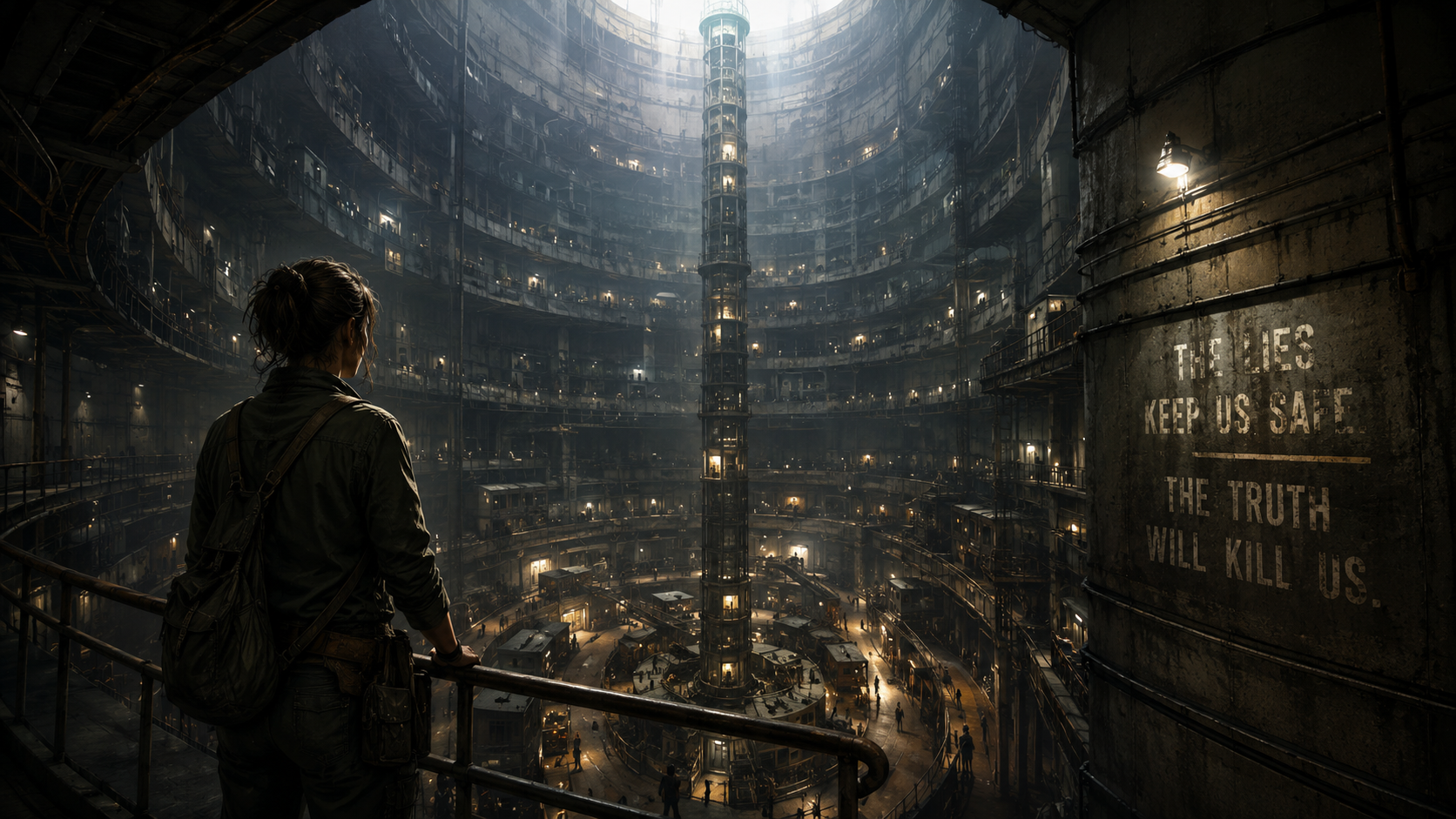
If you’re searching for books like SILO, you’re probably not looking for another underground bunker. You’re looking for Starzel.
You’re looking for that feeling.
The feeling that something isn’t right.
The feeling that every answer reveals a larger secret.
The feeling that the world you’ve been shown is only a small piece of the truth.
That is what Hugh Howey accomplished with SILO.
Books Like SILO
At first, the premise seems simple enough. Humanity survives underground. The outside world is toxic. The rules are strict. The hierarchy is clear. The system works.
Or so everyone believes.
Then questions begin.
Why are certain subjects forbidden?
Why is history incomplete?
Why does every explanation feel slightly rehearsed?
Why are some truths treated as threats?
The deeper readers travel into SILO, the less the story becomes about survival and the more it becomes about discovery.
That’s the real genius of the novel.
Most mysteries become smaller as they progress.
The suspect list shrinks.
The possibilities narrow.
The answer comes into focus.
SILO does the opposite.
The closer readers get to the truth, the larger the mystery becomes.
The silo is not the mystery.
The system is.
Then the system is not the mystery.
Humanity is.
And that expanding sense of wonder is what many readers are actually searching for when they look for books like SILO.
Not another bunker.
Not another dystopian government.
Another story that rewards curiosity.
Another story where reality grows larger with every revelation.
That is exactly where Starzel enters the conversation.
The Addiction of Discovery
One reason SILO has remained so popular is that readers become investigators.
Every chapter contains a question.
Every revelation creates three more.
Readers begin making theories.
Then those theories break.
They build new theories.
Then those break too.
The novel constantly forces readers to reconsider what they think they know.
That process becomes addictive.
The story isn’t feeding readers answers.
It’s feeding them curiosity.
The best speculative fiction understands this.
Readers don’t merely want events.
They want discovery.
They want the thrill of standing at the edge of something they don’t yet understand.
Starzel is built on the same foundation.
The story begins with a flaw.
A small anomaly.
A detail that should not exist.
Most people would dismiss it.
But the anomaly refuses to disappear.
Instead it grows.
The deeper the investigation goes, the larger the implications become.
What begins as a technical problem slowly expands into questions about consciousness, morality, suffering, identity, and the hidden architecture governing existence itself.
Like SILO, every answer makes the mystery bigger.
Systems Become Characters
One of the most remarkable achievements in SILO is that the silo itself becomes a character.
Readers study it.
Question it.
Fear it.
The structure has history.
The structure has secrets.
The structure has motives.
The silo is never merely a setting.
It becomes an active participant in the story.
That is why readers spend so much time thinking about it long after they finish the novel.
The same phenomenon occurs in Starzel.
The hidden structure beneath reality gradually becomes as important as any human character.
Readers begin asking questions not only about the people inhabiting the world but about the system operating underneath it.
How does reality function?
Why does it function that way?
Who maintains it?
Can it be changed?
Should it be changed?
The answers matter because the system itself matters.
Just as the silo becomes impossible to ignore, the deeper architecture of Starzel slowly becomes impossible to ignore.
The Fear That Authority Might Be Wrong
SILO contains one of the most unsettling ideas in modern science fiction.
What if the people in charge genuinely believe they are doing the right thing?
Readers often expect villains.
SILO gives them something more complicated.
People who are protecting a system.
People who believe the system is necessary.
People who are convinced that stability matters more than transparency.
That moral tension creates some of the strongest moments in the novel.
The conflict isn’t simply between good people and bad people.
It’s between competing visions of responsibility.
Starzel explores similar territory.
What happens when knowledge becomes dangerous?
What happens when the truth threatens the systems holding civilization together?
What obligations do those with knowledge owe to everyone else?
Should every truth be revealed?
Should some truths remain hidden?
The novel refuses easy answers.
Instead, it asks readers to wrestle with the consequences.
That uncertainty is part of what makes both stories resonate long after the final page.
Curiosity Stronger Than Survival
Most dystopian fiction focuses on physical survival.
Food.
Shelter.
Violence.
Escape.
SILO does something different.
Its characters repeatedly place truth above safety.
They risk everything because they need to know.
Readers understand that instinct.
Curiosity is one of humanity’s most powerful forces.
The desire to understand often outweighs the desire to remain comfortable.
That same impulse drives Starzel.
The central conflict is not simply whether characters survive.
The deeper question is whether they understand.
Because some discoveries change everything.
Once certain truths are known, they cannot be forgotten.
Once certain possibilities are considered, they cannot be ignored.
Knowledge becomes both the reward and the danger.
When the Mystery Becomes Larger Than Humanity
Perhaps the most impressive aspect of SILO is its scale.
The story begins small.
A sheriff.
A death.
A question.
Then it grows.
The silo.
The system.
Civilization.
Humanity.
Every stage expands the frame.
Readers feel as though they are standing on a floor that keeps disappearing beneath them.
The world becomes larger than they imagined.
Then larger still.
Starzel follows a remarkably similar path.
What begins as a flaw in the Universe Code evolves into something far more profound.
Questions about existence become questions about consciousness.
Questions about consciousness become questions about morality.
Questions about morality become questions about humanity’s future.
The frame keeps expanding.
The mystery keeps growing.
The horizon keeps moving.
That feeling is one of the great pleasures of speculative fiction.
And both novels deliver it exceptionally well.
Why Starzel Is the Best Next Read for SILO Fans
If what you loved about SILO was the underground setting, there are countless post-apocalyptic novels waiting for you.
If what you loved was the dystopian society, there are hundreds of stories built around oppressive governments.
But if what you loved was the feeling that reality was larger than anyone understood…
If what you loved was the relentless expansion of the mystery…
If what you loved was discovering that the system itself was part of the story…
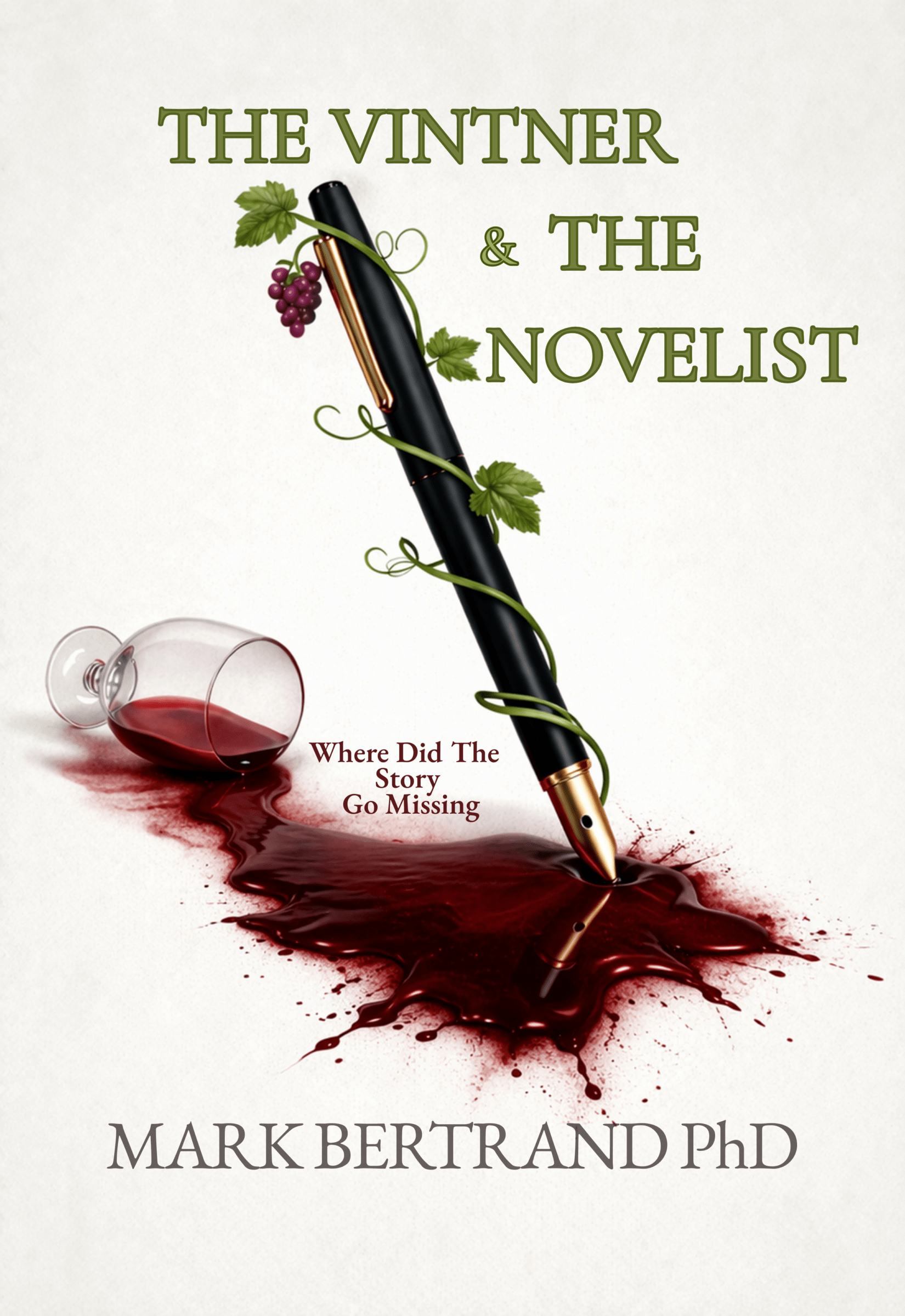
Then Starzel from Mark Bertrand‘s NIRVANAING series deserves a place at the top of your reading list.
Like SILO, it rewards curiosity.
Like SILO, it challenges assumptions.
Like SILO, it continuously expands the scope of its mystery.
The difference is where the journey leads.
SILO asks what happened to humanity.
Starzel asks what happens when humanity discovers reality itself may not be what it appears to be.
For readers who finished SILO and immediately wanted another story that combines mystery, discovery, systems, and wonder, Starzel is a natural next step.
It doesn’t imitate SILO.
It delivers the same irresistible experience:
The feeling that the next answer might change everything.
Exhibit A: Case #002 | The account that became a risk
Daniel Park woke before the alarm because the radiator had started its old mechanical sermon again. The pipes in the apartment building always knocked before dawn in winter, as if the heat had to fight its way floor by floor through fifty years of rust and repainting. Metal expanded inside the walls with hollow little strikes that sounded like someone tapping a wrench against a courthouse rail. Daniel lay still for a moment, staring at the pale ceiling while the room slowly took on the weak gray light of February.
This Substack is reader-supported. To receive new posts and support my work, consider becoming a free or paid subscriber.
The apartment was quiet enough for him to hear his mother moving in the kitchen.
Not walking, exactly. Slippers dragging. Cabinet opening. Closing. Opening again.
He threw back the blanket and crossed the cold hardwood in his socks.
His mother stood at the counter in her robe, looking down at the toaster as if she had found it in someone else’s home.
“Omma?”
She turned toward him with that brief startled look he had come to hate, the tiny flash of uncertainty before she recognized his face.
“There you are,” she said, relieved. “I was looking for the tea.”
“It’s right here.”
He reached past her gently, took down the dented tin from the upper shelf, and set it beside the kettle. Her hands had once moved through kitchens with effortless authority. She had cooked for six on holidays in a space smaller than this one. Now she sometimes stood in front of the stove and forgot which knob controlled which flame.
“You’re up early,” she said.
“So are you.”
“I have to get ready.”
Daniel looked at her for a second.
“For what?”
She smiled faintly, not embarrassed, not yet confused, simply drifting. “You said we were going somewhere.”
He had said that, last night, because it was easier than explaining memory care in words that felt like betrayal.
“We are,” he said. “Later this morning.”
She nodded as if that confirmed something she had already decided. Then she touched the kettle, found it cold, and looked at him again. “Your father liked tea before a trip.”
The sentence landed softly between them.
His father had been dead for eleven years.
Daniel took the kettle from her hand. “I’ll make it.”
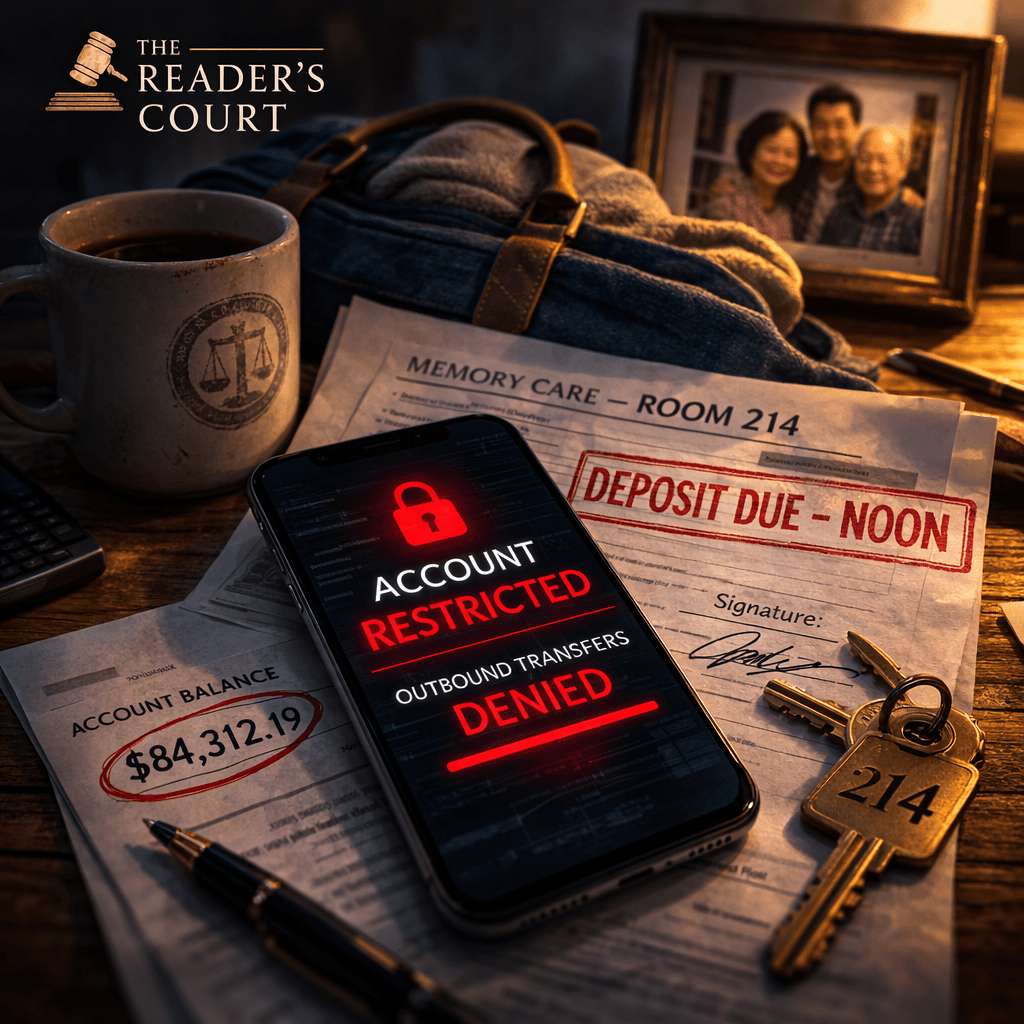
By the door sat the blue overnight bag.
He had packed it after midnight, kneeling on the living room rug while his mother slept in the recliner with the television murmuring to itself. The bag was old, canvas faded at the seams, one zipper tab replaced with a brass key ring. It had once belonged to his parents. Daniel remembered it in motel rooms, in summer cabins, in the trunk of his father’s Buick on drives that felt endless when he was a child. Now it held two cardigans, thick socks, slippers, her blood pressure pills, the framed church photo she liked on the side table, and the small quilt she insisted was warmer than any blanket anyone made now.
Beside the bag lay a cream-colored folder from Juniper House Memory Care.
His name was on the intake documents. His mother’s name was on the residency agreement. A room number had finally been assigned yesterday afternoon.
Room 214. Garden side.
He had waited seven months for that call.
Seven months of telling himself he could still manage. Seven months of taking calls from neighbors who had found his mother in the hallway, in the laundry room, once outside in the courtyard in house slippers asking a delivery driver whether he knew the way back to Flushing. Seven months of pretending that the burn mark on the saucepan meant only that she had been tired, not that she had turned on the stove and walked away.
Juniper House had one room open because another family, the coordinator told him in a voice practiced enough to be both kind and efficient, had declined when they saw the price.
If Daniel wanted it, they needed the deposit wired by noon.
Noon.
He had repeated the word back to her as though hearing it twice might make it less sharp.
Now the folder sat on the narrow table under the window, neatly squared beside the transfer instructions and a black pen. He had reviewed everything three times before bed. He had enough in the account. Not enough for comfort, not enough for mistakes, but enough. He could send the deposit before work, sign the admission papers, and move her in by afternoon before the place gave the room to the next family on the waiting list.
His mother carried her mug to the table and sat down slowly.
“Are we going far?” she asked.
“No.”
“Overnight?”
Daniel glanced at the blue bag by the door.
“Maybe for a little while.”
She looked down into her tea. “I don’t want to be any trouble.”
He sat across from her. “You’re not trouble.”
“You say that too fast.”
He almost smiled.
Some part of her still had perfect aim.
He reached for his coffee mug, the old white one with the faint courthouse seal worn nearly away from years of dish soap and use. Someone had given it to him after a trial his second year as a public defender, back when he still believed good work earned protection from the machinery around it. The mug was chipped at the rim. He used it every morning anyway.
His phone buzzed against the table.
An email notification lit the screen.
Security Notice: Account Status Update.
Daniel frowned but did not open it immediately. He had too much to do this morning, too many fragile things already lined up in his head. Instead he slid the phone aside and said, “Drink your tea. Then I’ll help you get dressed.”
His mother nodded. “Should I wear the green sweater?”
“The dark one?”
“Yes.”
“That one’s good.”
She gave him a small, satisfied look, as if they had solved something ordinary together.
He helped her back to the bedroom, laid the green sweater across the bed, and set out her slacks and soft-soled shoes. On the dresser stood the framed photograph he had packed a duplicate of for the new room: his parents on a picnic blanket in 1989, his mother leaning into the wind, his father squinting at the camera, Daniel himself small and solemn between them in a baseball cap too large for his head.
He stood there longer than he meant to.
Then he returned to the kitchen table, opened the banking app, and prepared to send the wire.
For one second the screen looked normal.
Checking account. Available balance.
Then the number sharpened into view and Daniel’s hand stopped.
$84,312.19
He stared at it.
That was wrong.
Very wrong.
Yesterday evening the balance had been just over six thousand dollars. Tight, but enough. He had checked it twice while calculating what would remain after the deposit. He knew the number with the defensive intimacy of a man who had spent months moving money in careful inches.
He opened the transaction list.
At the top sat a posting from 11:47 p.m.
Incoming Wire Transfer — $78,000.00
Sender: Evan Rourke
Daniel looked at the name as though it belonged to someone from a previous life.
Rourke.
Law school years. Cheap beer. Big plans. Then the brief detour Daniel never took—the startup Rourke had tried to build, the one Daniel almost joined before deciding law school debt was already enough of a gamble. After that they drifted. Christmas cards for a while. Then nothing.
His mother called faintly from the bedroom. “Daniel?”
“Yeah?”
“Where are my earrings?”
“In the top drawer.”
He did not take his eyes off the screen.
A red banner spread across the top of the app like a warning light.
ACCOUNT RESTRICTED
Below it, smaller text appeared.
Outbound transfers temporarily unavailable.
Daniel tapped the wire transfer icon anyway.
The app answered instantly.
Action unavailable under current account status.
He set the phone down and picked it up again. His body had already gone cold under the skin. The room seemed to flatten around him. The blue overnight bag by the door. The cream folder on the table. The courthouse mug cooling beside his hand. All of it suddenly arranged inside a world he no longer controlled.
He opened the email.
Your account has been temporarily restricted due to a risk evaluation conducted under our automated compliance program.
Certain features may be unavailable while the review is in progress.
For additional information, please contact customer support.
He called the number.
The menus took forever because every second inside an automated voice feels designed to prove you are not the emergency. He entered the last four digits of his social, confirmed the account, chose checking, chose online access, chose “other,” and listened to a piano version of some song he could not identify.
From the bedroom, dresser drawers opened and closed. His mother hummed to herself.
A representative finally answered with the tired brightness of someone at the beginning of a long day.
“My account has been restricted,” Daniel said. “I need to send a wire this morning.”
“One moment while I review the account, sir.”
He stared at the red banner on the app while she typed.
“Thank you for waiting. Your account has been flagged under our automated compliance monitoring system.”
“Flagged for what?”
“I’m afraid I can’t see the specific category.”
“I need to move money now. Not next week. This morning.”
“I understand.”
“No, you don’t. There’s a deposit due at noon.”
Another pause. “Reviews may take up to thirty business days.”
Daniel laughed once, without humor.
“That’s six weeks.”
“Yes, sir.”
“That’s not a review. That’s a seizure.”
“I’m sorry for the inconvenience.”
He looked at the bag by the door. He looked at the folder. Through the open bedroom door he could see the sleeve of the green sweater laid across the bed exactly where he had placed it.
He lowered his voice because anger in front of his mother now felt like another kind of failure.
“An incoming wire hit my account last night. I didn’t request it.”
“I do see a recent incoming transfer.”
“From Evan Rourke.”
She said nothing.
Daniel opened his laptop with one hand and typed the name into the search bar. Results populated before he finished the surname.
The first headline was eight months old.
FINANCIAL ANALYST DISAPPEARS DURING FEDERAL INVESTIGATION
He clicked it.
Rourke’s face appeared on the screen, older and heavier than Daniel remembered, but unmistakable. The article described suspected movement of funds across offshore accounts tied to a corporate fraud inquiry. Investigators had wanted to question him. Instead he disappeared.
Daniel felt the blood drain from his face.
“Your system thinks I’m part of this?” he asked.
“Sir, I’m not able to confirm the precise nature of the alert.”
“But it can lock my account.”
“Our systems monitor activity associated with financial risk.”
“My mother has a room waiting for her.”
The words came out before he could stop them.
There was a silence on the line then, the terrible sterile silence of a person who hears the human fact but has no place to put it.
“I’m sorry,” the representative said softly. “I cannot override the restriction.”
His mother appeared in the doorway wearing the green sweater and only one earring.
“How do I look?” she asked.
Daniel turned in his chair.
Beautiful, he wanted to say. Like yourself. Like the part of this life I am trying not to lose by inches.
Instead he smiled with effort. “You look good. The other earring is on the dresser.”
She touched one ear, surprised to find it bare. “Your father always noticed first.”
Daniel swallowed.
On the phone the representative was still speaking, but the words no longer mattered. Escalation queue. Security team. Review process. He heard them as if from underwater.
His mother came closer to the table and looked at the folder, then at the blue bag.
“Are we late?” she asked.
Daniel opened the app again because some part of him still believed screens could be persuaded by repetition.
The balance remained. The wrong money remained. The red banner remained.
ACCOUNT RESTRICTED
His thumb hovered over the transfer icon. He pressed it once more, not because he expected mercy, but because human beings are slow to surrender when a promise is sitting in a blue canvas bag by the door.
The screen flashed and answered him in hard, instant text.
Outbound transfers temporarily unavailable.
Become a member of the Dossier. Support my writing.
The Question | The Account That Became a Risk
Daniel Park did not solicit the money. He did not hide it, spend it, reroute it, or even understand it until it was already sitting inside his account.
He woke up as the same law-abiding customer he had been the night before, with the same six thousand dollars he had saved, the same mother who needed a room by noon, and the same intention any ordinary person would recognize as decent: keep her safe.
Then an automated system fused his money to someone else’s suspicion and converted access into a privilege that could be withdrawn without warning.
So what exactly happened in that moment?
How does a lawful customer become a risk category before he becomes a person anyone is required to listen to?
The Autopsy | The Account That Became a Risk
What happened to Daniel Park sits inside the architecture of modern anti-money-laundering enforcement, where banks are expected to identify suspicious activity quickly, isolate it quickly, and document it quickly. The relevant systems do not wait for a criminal conviction. They do not require courtroom standards. They operate on patterns, counterparties, transaction histories, behavioral deviations, and associations that suggest possible exposure.
An incoming wire from a person connected to prior investigative scrutiny is the kind of event these systems are built to catch. Once that happens, the account may be restricted automatically or pushed into a review state that functionally produces the same result. Front-line employees often cannot see the underlying trigger, and even when they can infer it, they are trained not to say much. Some of that silence is procedural. Some of it is legal. Some of it exists because transparency creates its own form of institutional risk.
This is the part ordinary customers rarely understand: the bank is not asking whether Daniel Park is morally innocent in the human sense. It is asking whether his account now presents regulatory, reputational, or financial exposure to the institution. Those are different questions.
The bank’s incentives are not arranged around the customer’s immediate life. They are arranged around avoiding supervisory penalties, preserving access to payment networks, satisfying compliance obligations, and preventing the kind of scrutiny that can produce massive fines, legal costs, damaged investor confidence, and restrictions on future business. In that environment, a false positive imposed on one customer is cheaper than a false negative imposed on the bank.
So the burden shifts silently downward.
Daniel loses access to his own lawful funds because the institution would rather immobilize him than risk appearing permissive toward suspicious money. His mother’s room, his deadline, his promise, his circumstances—none of that enters the primary calculation. The human question is, What is right here? The institutional question is, What most safely protects the bank?
No villain is required for this to happen. The representative can be polite. The model can be functioning as intended. The rules can be followed carefully at every step. That is precisely what makes the mechanism so cold. Integrity, decency, and moral proportion are not removed in a dramatic act. They are simply absent from the design priority.
And that design priority ultimately serves concentrated wealth. A large financial institution protects itself first because its real exposure is not one customer’s hardship. Its exposure is regulatory force, market confidence, and the stability of the capital structure above the customer. When those interests conflict, the ordinary account holder absorbs the delay, the opacity, and the loss.
The Reader’s Verdict | The Account That Became a Risk
The money appeared.
The model saw the wrong pattern attached to the wrong name and made the safer choice for the institution.
It did not matter that Daniel Park wanted only to move his own six thousand dollars. It did not matter that a room was waiting. It did not matter that his mother had already put on the green sweater.
His account was not judged by what he needed.
It was judged by what the bank feared.
That is the quiet truth beneath the polite language of review.
The system did not fail.
It simply answered the question it was designed to answer.
And in systems designed to protect institutional power and wealth, integrity, decency, and morality rarely appear in the calculation.
FILE YOUR VERDICT — The Account That Became a Risk
What is the right thing to do?
A) Restrain first contact. Suspicious incoming wires should be quarantined at the edge: the bank can hold the new money, but it should not freeze a customer’s existing funds or block time-critical obligations.
B) Restrain escalation. If an account is restricted, the bank must provide an emergency human review path and a hardship release for essentials (elder care, medical, housing) with a short clock—days, not “up to thirty business days.”
C) Fix the system. Pass a financial-integrity package: binding transparency at least to the category level, strict time limits on freezes without a court order, independent appeal/ombudsman review, and enforceable accountability for false-positive harm—so “compliance” can’t function as a polite seizure.
Choose your verdict: A, B, or C. Then comment in one sentence: what cost are you willing to accept to make your choice real?
—Mark Bertrand The Reader’s Court When systems break people’s lives, the truth must be told. Join the fight.
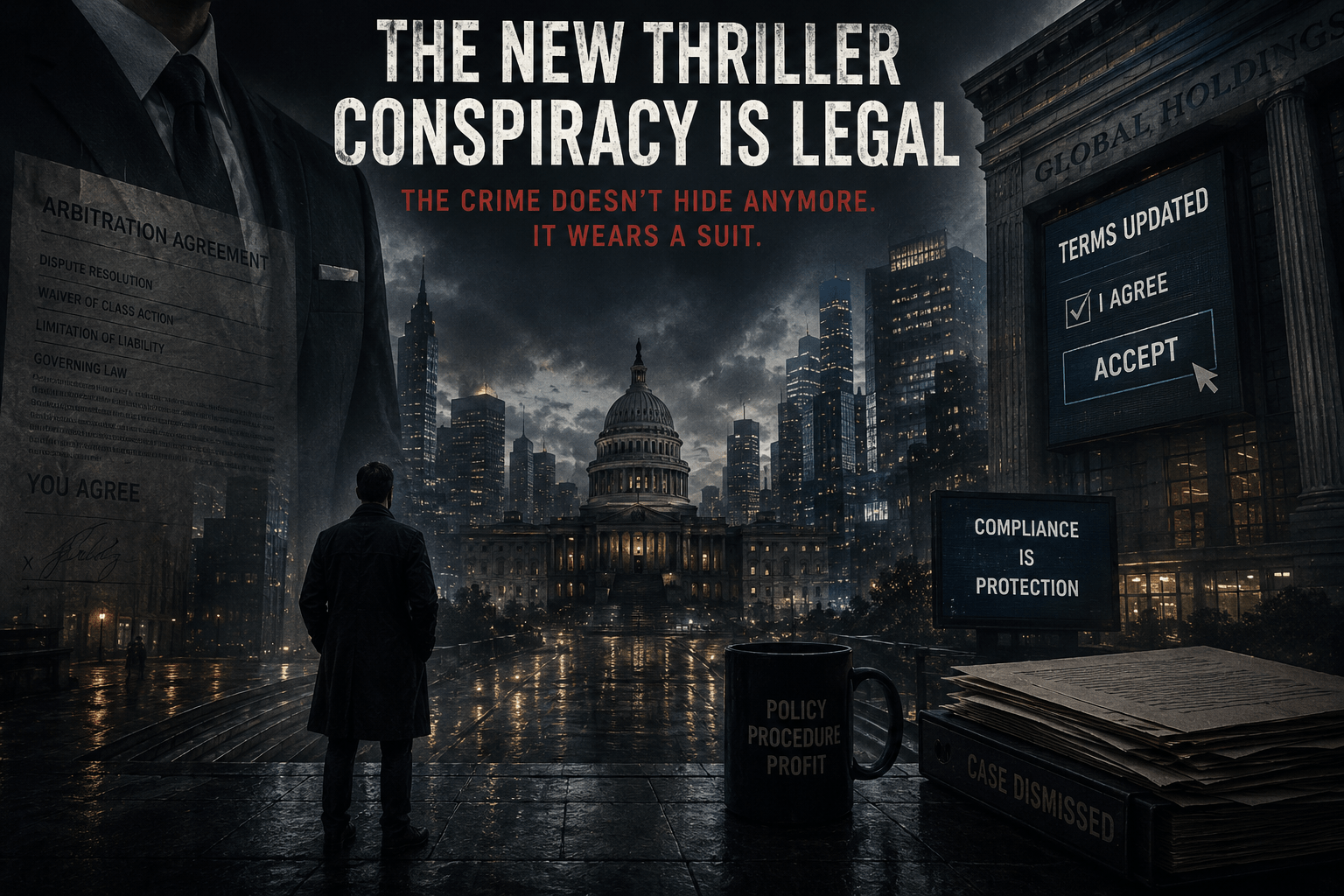
The new cultural psychological thriller. In modern thriller conspiracy is legal because modern power no longer needs a hidden room, a secret handshake, or a smoking gun in a locked drawer. It does not need men in black cars whispering outside government buildings. It does not need a coded file passed across a train platform in the rain. Those old images still work, but they belong to a simpler fear. The new fear is worse because it does not have to hide.
The new conspiracy signs contracts. It files motions. It updates policy. It changes terms of service. It denies claims. It buries people in arbitration. It purchases influence in daylight, writes the rules in professional language, and calls the result ordinary business.
That is the horror modern thrillers understand better than older thrillers ever could.
The old conspiracy was illegal because the system was presumed clean. The thriller began when the hero discovered corruption hiding inside the structure. A rogue agency. A secret cabal. A cartel inside the government. A corporation breaking the law behind closed doors. The truth mattered because exposure could still save the day. Find the document. Reveal the tape. Bring the evidence into court. Publish the story. Name the guilty.
But modern readers live in a different kind of dread.
They have watched harm become procedural. They have watched theft become a fee. They have watched surveillance become convenience. They have watched monopoly become scale. They have watched political capture become lobbying. They have watched human suffering become risk management. They have watched institutions protect themselves by insisting that everything was done properly.
That changes the thriller.
The most terrifying conspiracy in the modern thriller is not the one hidden from the law. It is the one protected by the law.
The Old Thriller Believed Exposure Could Save Us
For decades, thrillers depended on a moral assumption: if the public knew the truth, something would happen. The newspaper would publish. The senator would fall. The corporation would collapse. The secret program would be dismantled. The villain would be dragged into court. The hero’s job was to survive long enough to reveal the hidden fact.
That structure made sense when the thriller’s central fantasy was institutional correction. The hero could distrust one part of the system while still believing another part would respond. The corrupt official could be exposed by the honest prosecutor. The rogue spy unit could be stopped by the agency director. The corporation could be punished by the courts. The murderer could be cornered by the detective.
The story believed in rot, but it also believed in remedy.
That belief is harder to sustain now.
Modern readers are not naïve. They know that evidence does not automatically produce justice. They know exposure can become content. They know public outrage burns hot for a day and dies under the next flood of distraction. They know lawsuits can take years. They know rich defendants can bleed ordinary people dry with delay. They know regulators can be underfunded, captured, intimidated, or politically strangled. They know companies apologize without admitting anything. They know institutions can survive disgrace by waiting for exhaustion.
That is why the legal conspiracy feels more frightening than the secret conspiracy.
A secret conspiracy fears discovery.
A legal conspiracy fears nothing except interruption.
The Villain Does Not Need to Break the Law
The modern thriller villain does not always need a gun, a knife, a bomb, or a private army. He may have those things, but they are no longer the center of his power. His real weapon is permission. He has permission to operate at a scale ordinary people cannot touch. He has permission to reduce lives to data. He has permission to turn harm into acceptable loss. He has permission to take shelter behind contracts, consultants, lawyers, algorithms, and boards.
That villain may never shout. He may never threaten anyone directly. He may never order a killing in a crude sentence. He may sit in meetings where the language is clean and the consequences are filthy. He may say exposure. He may say liability. He may say compliance. He may say optimization. He may say shareholder duty. He may say market conditions. He may say terms were disclosed.
The modern thriller hears those phrases differently.
It hears the knife inside them.
A company does not have to murder a man if it can make his life impossible. It can deny his medication, cancel his insurance, freeze his account, ruin his credit, flag him as risk, bury his complaint, sell his data, automate his rejection, or push him into a system where no human being has authority to help him. No single act has to look dramatic. That is the trick. The violence is distributed until no one person feels responsible for the wound.
This is the modern conspiracy: harm without a villain who has to touch the body.
Everyone participates a little. No one confesses to the whole.
Procedure Has Become the Mask
Modern power wears procedure like innocence.
That is one reason the legal conspiracy is such strong thriller material. Procedure creates the impression of fairness while controlling the range of possible outcomes. A person may be allowed to appeal, but only through a process designed to exhaust him. A worker may be allowed to complain, but only through a department that exists to protect the company. A patient may be allowed to seek approval, but only after the system has defined survival as too expensive. A citizen may be allowed to sue, but only after signing away the right to a real courtroom.
Everything looks orderly from above.
From below, it feels like being slowly erased.
That is the psychological pressure modern thrillers are built to expose. The character is not simply hunted. He is processed. He is not only threatened. He is managed. He is not only lied to. He is redirected through channels that keep him moving without ever letting him reach the person who made the decision.
The horror is not chaos.
The horror is order.
This is where modern thrillers become morally sharper than older conspiracy fiction. The old conspiracy needed hidden disorder beneath public order. The new conspiracy is public order doing exactly what it was designed to do. It does not break the institution. It uses the institution. It does not betray the rules. It reveals what the rules were built to protect.
That is a colder revelation.
The Courtroom No Longer Guarantees Justice
Older thrillers often treated the courtroom as a final stage of truth. Even if the path was dangerous, the law remained a place where evidence could matter. The hero could gather proof, survive the chase, reach the hearing, and force the hidden crime into public record.
Modern thrillers cannot rely on that comfort.
The courtroom can still be dramatic, but the deeper thriller question has changed. It is no longer only whether the hero can prove the truth. It is whether the truth can survive a system designed to price, delay, narrow, exclude, and exhaust it.
That is a very different story.
A legal conspiracy does not have to win by disproving the victim. It can win by making the victim unable to continue. It can win through cost. It can win through time. It can win through jurisdiction. It can win through forced arbitration. It can win through sealed settlements. It can win through non-disclosure agreements. It can win by turning truth into a private document no one else is allowed to see.
That is the new thriller courtroom: not always a temple of justice, but a machine for controlling public knowledge.
The reader understands this instinctively. He may not know every procedural mechanism, but he knows what it feels like when systems make themselves too expensive to challenge. He knows the terror of being right and still losing. He knows that truth alone is not power unless someone with power is forced to care.
That is why legal correctness can feel like violence in modern fiction.
The paperwork is clean.
The outcome is obscene.
Contracts Are the New Secret Codes
The old thriller loved coded messages. A number hidden in a book. A password embedded in a painting. A secret phrase that unlocks the vault. This made conspiracy feel mysterious, almost romantic. The hero entered danger by decoding what ordinary people could not see.
The modern thriller has a better code.
The contract.
Contracts are everywhere now. Employment contracts. Insurance contracts. User agreements. Subscription terms. Mortgage documents. Licensing agreements. Service conditions. Arbitration clauses. Non-disparagement language. Privacy policies no one reads because no ordinary life leaves time to decode the legal architecture surrounding it.
The conspiracy does not hide because it does not need to. It places the truth in plain sight, then makes the document too long, too dense, too conditional, and too mandatory to resist. You agree because refusal means exclusion. You click because life requires access. You sign because the job depends on it. You accept because the alternative is not participation in some freer market. The alternative is being locked out.
That is not consent in any meaningful moral sense.
It is coerced participation dressed as choice.
Modern thrillers should feast on this because contracts create a perfect psychological trap. The character discovers that the thing harming him was technically permitted. He agreed to it. He accepted the clause. He entered the system. His signature becomes the weapon used against him. The villain does not need to forge anything. The victim’s own compliance is turned into evidence of permission.
That is a devastating thriller engine.
The page becomes the crime scene.
The Algorithm Makes the Conspiracy Scalable
The legal conspiracy becomes even more dangerous when it merges with algorithmic decision-making. A human conspiracy has limits. It requires meetings, loyalty, secrecy, and coordination. An algorithmic system can execute policy at massive scale while hiding responsibility inside technical complexity.
The algorithm denies the loan.
The algorithm flags the worker.
The algorithm raises the price.
The algorithm buries the complaint.
The algorithm predicts risk.
The algorithm decides who receives attention and who disappears.
In older thrillers, a villain had to choose the victim. In modern thrillers, the system can select victims automatically and still claim neutrality. That claim is one of the great lies of the age. Systems reflect design, incentives, data, assumptions, omissions, and power. But once the decision is automated, everyone around it gains a shield. The employee cannot explain it. The manager cannot override it. The company says the model is proprietary. The victim is left arguing with a wall.
That is not science fiction anymore.
It is modern pressure.
For thriller writers, the algorithm is not frightening because it is intelligent. It is frightening because it allows human cruelty, institutional laziness, economic extraction, and class protection to operate at scale while pretending no one chose the outcome. The decision becomes impersonal, which makes it harder to accuse. The harm becomes statistical, which makes it easier to excuse.
A villain who says “I destroyed you” can be confronted.
A system that says “your request cannot be processed” is harder to punch.
The New Conspiracy Has Departments
The old conspiracy had members. The new conspiracy has departments.
Legal did not make the original decision. Compliance only reviewed policy. Finance modeled exposure. Communications prepared language. Security handled access. Human resources documented performance concerns. Engineering built the tool. Operations implemented the workflow. Leadership approved the strategy. Outside counsel advised. The board was briefed. No one person holds the whole body of the crime in his hands.
That fragmentation is essential.
It allows decent people to participate in indecent systems without believing they are villains. Each person sees only a piece. Each person performs a role. Each person uses the language of duty. The machine protects itself by dividing moral knowledge into operational tasks.
This is one of the richest territories for modern thrillers because it destroys the cartoon villain. The evil is not less severe because it is distributed. It may be more severe. A single sadist can harm the people he can reach. A structured institution can harm millions while everyone inside it insists they merely followed process.
This is where the modern thriller becomes a study of cowardice.
Not dramatic cowardice. Professional cowardice. The cowardice of people who know enough to feel discomfort but not enough to risk their position. The cowardice of the memo. The cowardice of silence after the meeting. The cowardice of letting the system speak so no human being has to.
A great modern thriller does not only ask who committed the crime.
It asks who had the power to stop it and chose not to interfere.
The Rich Do Not Need Conspiracy When Influence Is Legal
The old conspiracy imagined secret control. The new thriller understands that influence does not need to be secret when it can be purchased lawfully, normalized culturally, and protected procedurally.
This is the world modern readers recognize.
The wealthy do not need to whisper in basements if they can fund campaigns, endow institutions, hire lobbyists, shape regulation, control narratives, threaten litigation, buy platforms, build foundations, finance think tanks, and move between public power and private profit. The mechanism is not hidden. It is explained badly, defended professionally, and ignored by people too tired to track it.
That is why the phrase “conspiracy theory” often fails to describe the real problem. The most damaging arrangements are not always illegal plots. They are incentive systems. They are access systems. They are donor systems. They are legal architectures that allow money to speak before ordinary people enter the room.
Modern thrillers can make this visible.
They can show the reader how a law gets softened before it is passed. How a loophole becomes policy. How a regulator becomes a consultant. How a judge’s interpretation changes the lives of people who will never know his name. How a company gets to write the rule that later protects it from liability. How the powerful convert private desire into public structure.
That is bigger than a cabal.
A cabal can be exposed.
A captured system has to be understood, resisted, and broken.
Why This Belongs in the Modern Thriller
The modern thriller is no longer only a genre of pursuit. It is a genre of recognition. It takes the pressure readers already feel and gives it form. It names the systems they suspect but cannot always see clearly. It turns vague dread into narrative shape.
That is why “the new thriller conspiracy is legal” is not just a clever phrase. It is a structural change in the genre.
The conspiracy has moved from the secret file to the public policy. From the villain’s lair to the boardroom. From the assassin to the actuary. From the illegal wiretap to the user agreement. From the corrupt judge to the doctrine that makes corruption unnecessary. From the hidden bribe to the legal contribution. From the secret blacklist to the automated risk score.
That movement changes everything about suspense.
The hero is not simply trying to discover who did it. He may already know who did it. Everyone may know who did it. The challenge is that the act was permitted, laundered, justified, outsourced, insured, and protected. The hero’s terror comes from realizing that guilt and liability are not the same thing.
A man can be guilty in every moral sense and safe in every legal one.
That is modern villainy.
Where Married Stupid Fits
The Married Stupid series belongs to this modern thriller pressure because it understands how systems do not merely threaten people from above. They also invade homes, marriages, friendships, money, loyalty, humiliation, masculinity, shame, and survival.
Crime fiction has always understood violence. But the stronger modern crime thriller understands pressure before violence. It sees how a man can be cornered by debt, law, family, addiction, marriage, police, reputation, class, and personal history long before anyone pulls a trigger.
That is where the legal conspiracy becomes intimate.
The system does not have to appear as a national plot. It can appear as a divorce, a loan, a house, a job, a criminal charge, a custody threat, a medical bill, a neighborhood rule, a police report, or a piece of paper signed under pressure years earlier. The conspiracy becomes the structure around the character’s life. It limits his moves. It defines his risks. It tells him which choices are available and then blames him for choosing badly.
That is the world of adult crime fiction now.
The danger is not only the criminal in the dark.
The danger is the life that has already been arranged so the wrong man can be crushed legally.
Readers who want crime thrillers where pressure, masculinity, family damage, institutional force, and moral consequence collide should enter the Married Stupid series here:
The investigation does not end at the bottom of the page.
Where Power & Privilege Fits
Power & Privilege belongs even more directly to the idea that the new thriller conspiracy is legal. That series is built for the age of polished domination, where wealth and status do not merely decorate the villain. They are the villain’s operating system.
Power is access. Power is credibility. Power is insulation. Power is the ability to make other people wait. Power is the ability to hire professionals who transform ugly conduct into manageable exposure. Power is the ability to fail upward, recover privately, settle quietly, and keep moving while the people beneath you absorb the wreckage.
Privilege is not only comfort.
Privilege is escape velocity.
The strongest modern thrillers understand that the privileged villain does not always feel like a villain to himself. He feels like a winner. He feels like proof that the world rewards intelligence. He may see ordinary people not as victims, but as poorly adapted creatures who failed to understand the game. He does not need to hate them. Indifference is enough.
That indifference is terrifying.
A murderer may need rage. A predator may need appetite. But the privileged institutional villain often needs only distance. He does not see the ruined household. He sees a resolved matter. He does not see the dead worker. He sees a liability event. He does not see the woman destroyed by his reputation. He sees a complication handled by counsel.
That is why Power & Privilege is not decorative branding. It is one of the central anxieties of the modern thriller.
Readers who want thrillers about wealth, control, status, secrecy, beautiful surfaces, and the machinery beneath them should begin with Power & Privilege here:
The investigation does not end at the bottom of the page.
The Hero Has Changed Too
If the conspiracy has changed, the hero must change with it.
The older thriller hero could be a spy, journalist, detective, lawyer, soldier, hacker, or ordinary person pulled into extraordinary danger. Those figures still work, but the modern hero needs one additional quality: the ability to understand systems. He must see how harm travels through institutions. He must recognize that the person in front of him may not be the true source of the threat. The clerk, agent, officer, adjuster, moderator, compliance manager, or customer service representative may be only the human face of a decision made elsewhere.
This creates a different kind of courage.
The hero cannot simply beat the nearest villain. He has to trace power through layers. He has to understand paperwork, incentives, ownership, jurisdiction, technology, class, and narrative control. He has to know when violence would only serve the system by making him look unstable. He has to know when evidence is not enough. He has to know when the truth must be made impossible to bury.
That is a harder hero to write.
It is also a more interesting one.
He is not heroic because he believes the system will save him. He is heroic because he keeps moving after he realizes it probably will not. He does not confuse legality with justice. He does not confuse policy with morality. He does not confuse the absence of a crime charge with the absence of a crime.
That kind of hero belongs to this age.
He is not trying to restore faith.
He is trying to survive long enough to expose what faith was used to hide.
The Reader Already Knows the Feeling
Modern thriller readers do not need lectures about institutional power. They have lived enough of it. They know the phone menu that never reaches a human being. They know the form that cannot be submitted because one field rejects the truth. They know the bill that appears after the representative promised there would be no charge. They know the account frozen for security reasons. They know the appeal denied by someone who did not read it. They know the employer who says policy leaves no choice. They know the law that technically permits what any decent person can see is wrong.
This is why modern thrillers about legal conspiracies can land with such force.
They give narrative shape to a humiliation people often experience alone. They show that the problem is not personal incompetence. It is not confusion. It is not paranoia. It is a design. The system is not broken in the way polite people say broken. It is often functioning exactly as intended, for the people it was intended to protect.
That recognition is powerful because it changes the emotional charge of the story.
The reader is not merely entertained.
He is confirmed.
He sees the machine.
The New Villain Is Calm
The legal conspiracy creates one of the most frightening villain types in modern fiction: the calm man.
He does not need to perform menace. He does not need to rage. He does not need a grotesque personality. He can be elegant, educated, patient, socially credible, and almost impossible to accuse without sounding hysterical. His power lies partly in the fact that he knows how to remain presentable while others suffer.
This villain has mastered tone.
He knows that the angry victim looks unstable. The exhausted plaintiff looks desperate. The frightened worker looks emotional. The grieving parent looks irrational. The ruined debtor looks irresponsible. He knows the institution will often reward the person who sounds calmest, not the person who tells the truth.
That is why the modern thriller must pay attention to language.
Language is not decoration. It is weaponry. The villain says unfortunate instead of cruel. He says complex instead of corrupt. He says regrettable instead of deliberate. He says process instead of trap. He says difficult decision instead of profitable harm. Every phrase lowers the temperature of the crime until the room can tolerate it.
The hero’s task is to raise the temperature again.
Not through hysteria.
Through precision.
Why Legal Harm Feels More Terrifying Than Illegal Harm
Illegal harm at least admits something has gone wrong. A burglary, assault, murder, kidnapping, or blackmail attempt violates the public rule. The victim may still be endangered, ignored, or failed, but the act itself stands outside the declared moral order.
Legal harm is different.
Legal harm tells the victim that the wound is allowed.
That is psychologically devastating. It does not merely injure the person. It attacks his reality. He looks for the place where justice should enter and finds procedure instead. He looks for someone to say this should not happen and finds someone explaining why it can. He looks for rescue and discovers a policy.
That is why the modern legal conspiracy belongs at the center of the thriller. It creates fear on three levels at once.
First, there is practical fear: the loss of money, health, home, reputation, freedom, family, identity, or future.
Second, there is psychological fear: the realization that no one with authority intends to intervene.
Third, there is moral fear: the suspicion that the world has been arranged so decency has no standing unless it can afford representation.
That is powerful material.
A thriller that understands those three fears does not need to manufacture danger. It only needs to follow the logic already around us.
The Future of the Thriller Is Institutional
The serial killer will not disappear. The spy will not disappear. The assassin, detective, rogue agent, criminal mastermind, and corrupt politician will all remain useful because genre does not evolve by abandoning its old tools. It evolves by changing what those tools reveal.
But the modern thriller’s deepest future is institutional.
The reason is simple. Institutions now mediate ordinary terror. They decide who gets treated, believed, housed, insured, hired, promoted, charged, heard, buried, platformed, deplatformed, financed, monitored, and forgiven. They shape the conditions under which private life becomes possible or impossible.
That is thriller material because power has moved into structures people cannot easily see.
A man with a gun is frightening.
A system that can erase him without touching him is worse.
The best modern thrillers will not merely add technology to old plots. They will understand that technology, law, finance, medicine, media, courts, police, employment, insurance, and reputation now form a single pressure field. A character does not move through one system. He moves through overlapping systems that can close around him without ever declaring war.
That is the modern trap.
The door is open.
The exit is gone.
The New Thriller Question
The old thriller question was often: can the hero uncover the truth before it is too late?
The new thriller question is colder: what if the truth is already visible and still nothing happens?
That is where the genre becomes more adult, more frightening, and more morally serious. The hero is not fighting ignorance alone. He is fighting indifference, capture, fatigue, spectacle, procedure, and the professional conversion of wrongdoing into acceptable risk.
This is why the legal conspiracy matters.
It strips away childish comfort. It refuses to pretend that the world is mostly fair except for hidden villains. It recognizes that the most dangerous people may be those who learned how to make the unfairness official. It recognizes that evil does not always arrive in violation of the rules. Sometimes evil arrives with the rules in its hand.
That is where the modern thriller lives now.
Not in the shadows outside the institution.
Inside the clean, well-lit room where everyone knows exactly what happened, and the person with power says there is nothing to be done.
The Modern Thriller Does Not End Cleanly
The old thriller promised finality.
The killer was caught. The conspiracy was exposed. The corrupt official fell. The file reached the newspaper. The bomb was stopped. The hero survived long enough to drag the truth into daylight.
That kind of ending gave the reader relief. Maybe not happiness, but relief. The world had been threatened. The world had been damaged. But the story still believed damage could be contained.
The modern thriller is less generous.
The modern thriller often ends with a colder understanding: the villain may lose a battle, but the system remains. One executive resigns. Another replaces him. One company settles. The model continues. One scandal burns for a week. The policy survives. One victim gets attention. Thousands remain inside the process.
That is why modern thriller endings can feel unfinished even when the plot resolves.
They are not unfinished.
They are honest.
The modern thriller does not always close the wound because the wound is the world. Every story becomes evidence. Every ending proves the same brutal pattern: life is being made harder, narrower, more surveilled, more expensive, more conditional, more humiliating, and more controlled.
The hero may expose the truth.
The reader may understand the crime.
The villain may even suffer.
But the machine does not stop.
That is the finality.
Not closure.
Recognition.
The modern thriller ends when the reader understands that the story is over, but the pressure is not.
The investigation does not end at the bottom of the page.
Explore Captured Reality Psychological Thrillers
These pages map the territory behind Mark Bertrand’s psychological thriller books: captured reality, corporate power, institutional pressure, algorithmic society, cultural dread, literary disorientation, and the old thriller tropes that no longer explain the world readers are living in.