Captured Reality Thriller

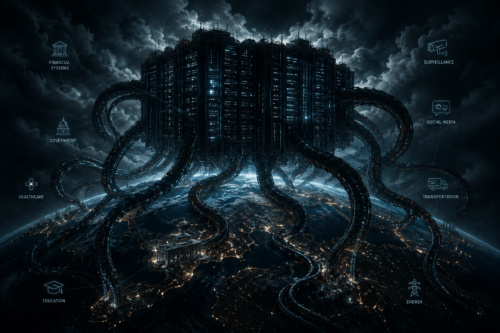
modern thriller image of a mega cloud factory plugged into the world

The captured reality thriller is no longer about serial killers hiding in basements or rogue agents racing against ticking clocks. Fear evolved. Power evolved. The systems evolved.

Captured Reality Thriller examines how cultural-psychological thriller fiction has changed alongside the world itself — from institutional manipulation and economic dependency to algorithmic control, procedural indifference, reputational annihilation, invisible power structures, and the psychological cost of surviving within systems designed to protect themselves.

These essays explore the evolution of thriller fiction through power, privilege, corruption, bureaucracy, masculinity under pressure, systems collapse, and the growing realization that the most terrifying antagonist in modern life may not be a villain at all — but a system functioning exactly as designed.

This archive connects the deeper themes inside the novels of Mark Bertrand with the broader evolution of contemporary thriller fiction.

Captured Reality Thriller

Economic Dependency as a Thriller Weapon in Modern Thrillers

The Modern Thriller No Longer Fears the Same Captivity

Economic dependency as a thriller weapon has become one of the most powerful weapons in modern thriller fiction because modern life itself increasingly feels built around controlled vulnerability. Older thrillers understood captivity physically. A hostage tied to a chair beneath a hanging lightbulb. A victim locked inside a basement while the detective raced against time to discover the building before the killer returned. The prison was visible, which meant readers could point directly at the danger.
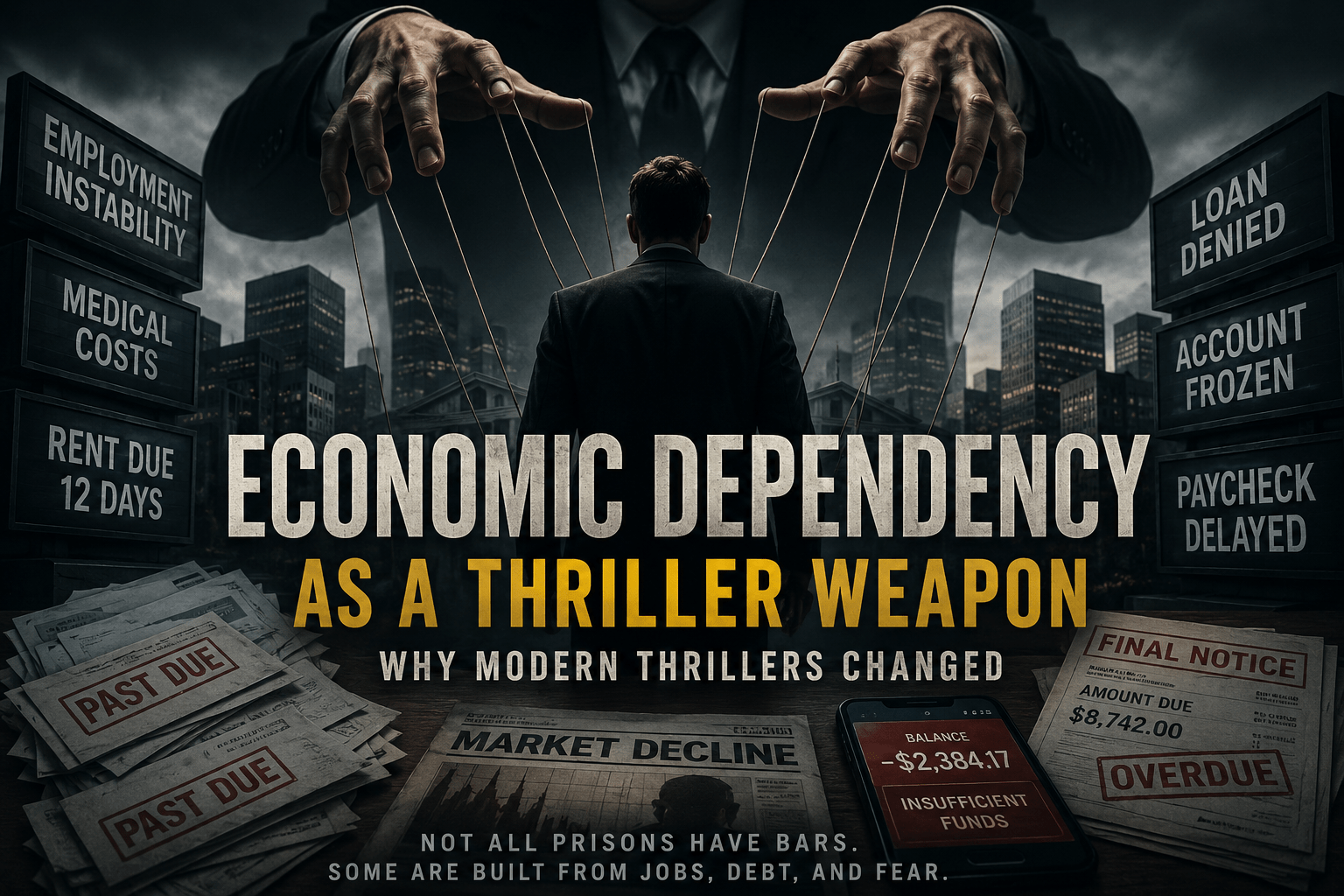
economic dependency as a thriller weapon image showing the concept in morbid detail

Modern life changed that psychology completely.

Today, millions of people wake up every morning already trapped inside systems they cannot realistically afford to leave. They stay inside collapsing jobs because healthcare depends on employment. They tolerate humiliation because rent is due in twelve days. They ignore corruption because promotion depends on silence. They endure unstable industries, manipulative institutions, predatory debt structures, reputational pressure, and psychological exhaustion because modern survival increasingly depends on maintaining access to systems that can withdraw stability almost instantly.

That kind of fear changed the modern thriller whether the genre fully recognized it or not.

The old thriller feared violence.

The modern thriller increasingly fears dependency.

And dependency may be one of the most effective weapons modern systems ever created.


The Pressure Never Stops

One reason economic pressure works so effectively in modern suspense is because it never fully leaves the character alone. Violence arrives in moments. Financial instability settles into the nervous system permanently. A person living beneath constant economic pressure begins recalculating every decision emotionally, psychologically, and morally.

That pressure changes behavior slowly.

People stop speaking honestly at work because they cannot risk unemployment. They stay inside psychologically damaging situations because instability feels more dangerous than unhappiness. They accept institutional mistreatment because losing insurance coverage would be catastrophic. They compromise themselves gradually because modern life punishes instability faster than it punishes corruption.

Older thrillers often depended on explosive moments of danger.

Modern psychological thrillers increasingly understand the terrifying power of sustained pressure instead. A person does not need a gun pointed at him every day to feel trapped. Sometimes all it takes is the quiet realization that one missed paycheck could begin unraveling the entire structure surrounding his life.

That realization follows people home now.

It sits beside them during dinner. Sleeps beside them at night. Travels with them to work. Moves silently through careers, friendships, family structures, and identity itself.

Modern fear became economic long before many thrillers adapted to it.


Economic Dependency as a Thriller Weapon Is Invisible

What makes Economic Dependency as a Thriller Weapon such powerful thriller territory is that the pressure rarely appears dramatic on the surface. Nobody sees chains. Nobody hears screams. The systems continue functioning normally while ordinary people quietly absorb extraordinary psychological strain beneath them.

A denied claim.
A frozen account.
A manipulated market.
A restructuring notice.
A platform altering visibility.
A corporation reducing labor.
A bank adjusting terms.
An institution redefining eligibility.

Modern life increasingly conditions people to tolerate forms of pressure that previous generations might have recognized immediately as cruelty.

But systems rarely describe themselves as cruel.

They describe themselves as efficient.

That distinction matters because it changes how suspense operates emotionally. The danger no longer feels isolated to one villain operating outside civilization. The danger begins feeling embedded inside ordinary structures themselves. The protagonist is not merely running from violence anymore. He is trying to survive inside environments designed around leverage, dependency, instability, and controlled vulnerability.

That creates a different psychological atmosphere entirely.

The fear becomes slower.
Colder.
Harder to escape.

And because readers already recognize versions of this pressure in their own lives, the suspense begins feeling uncomfortably real.


Why Financial Pressure Became Psychological

Money inside modern thrillers is rarely just money anymore. It represents control over stability itself. Once stability becomes fragile, nearly every other part of life becomes vulnerable alongside it.

Financial pressure changes how people think. It alters judgment. Weakens resistance. Creates desperation. Distorts morality. Makes manipulation more effective. A person terrified of collapse becomes easier to influence because survival itself begins narrowing available choices.

That psychological erosion is where many modern thrillers become far more unsettling than older chase narratives.

A serial killer threatens the body.

Economic pressure threatens identity. It is the key ingredient for economic dependency as a thriller weapon.

It changes how people see themselves. It forces compromises they once believed impossible. It slowly teaches characters to normalize conditions they would once have rejected immediately. The protagonist begins measuring truth against affordability. Integrity against survival. Stability against dignity.

That tension feels psychologically familiar to modern readers because contemporary life increasingly demands similar calculations from ordinary people every day.

The modern thriller did not simply become darker.

It became more structurally intimate.


Where the Married Stupid Series Fits

The Married Stupid Series by Mark Bertrand operates directly inside this modern pressure system.

married stupid crime thriller series image

The series understands that vulnerability rarely begins with physical violence alone. Financial instability, criminal influence, authority failure, psychological manipulation, and narrative control intersect until pressure itself becomes part of the weapon surrounding the characters. It is a prime example of economic dependency as a thriller weapon. The danger grows heavier because the people inside these novels are not merely trying to survive isolated threats. They are trying to survive systems capable of destabilizing identity, perception, judgment, and trust simultaneously.

That is what gives the Married Stupid series its modern psychological tension.

The pressure inside these novels does not arrive only through overt violence. It emerges through leverage, instability, dependency, manipulated perception, and the terrifying realization that once people become economically vulnerable, they also become psychologically vulnerable.

This is where economic dependency as a thriller weapon fits naturally inside the Married Stupid series. The threat is not only violence. It is leverage. It is instability. It is the terrifying awareness that once a person becomes financially vulnerable, almost every other part of his life becomes easier to manipulate.

The series understands something many contemporary thrillers are beginning to recognize: modern systems rarely need to imprison people physically when financial instability already controls so much of human behavior.

That shift changes suspense profoundly.

The question is no longer simply:
Who wants to hurt me?

The question becomes:
What am I willing to become in order to survive this pressure?

That is modern thriller territory.


The New Thriller Weapon Is Invisible

What makes economic dependency such powerful thriller territory is that the pressure rarely appears dramatic on the surface. Nobody sees chains. Nobody hears screams. The systems continue functioning normally while ordinary people quietly absorb extraordinary psychological strain beneath them.

A denied claim.
A frozen account.
A manipulated market.
A restructuring notice.
A platform altering visibility.
A corporation reducing labor.
A bank adjusting terms.
An institution redefining eligibility.

Modern life increasingly conditions people to tolerate forms of pressure that previous generations might have recognized immediately as cruelty.

But systems rarely describe themselves as cruel.

They describe themselves as efficient.

That distinction matters because it changes how suspense operates emotionally. The danger no longer feels isolated to one villain operating outside civilization. The danger begins feeling embedded inside ordinary structures themselves. The protagonist is not merely running from violence anymore. He is trying to survive inside environments designed around leverage, dependency, instability, and controlled vulnerability.

That creates a different psychological atmosphere entirely.

The fear becomes slower.
Colder.
Harder to escape.

And because readers already recognize versions of this pressure in their own lives, the suspense begins feeling uncomfortably real.


Why Financial Pressure Became Psychological

Money inside modern thrillers is rarely just money anymore. It represents control over stability itself. Once stability becomes fragile, nearly every other part of life becomes vulnerable alongside it.

Financial pressure changes how people think. It alters judgment. Weakens resistance. Creates desperation. Distorts morality. Makes manipulation more effective. A person terrified of collapse becomes easier to influence because survival itself begins narrowing available choices.

That psychological erosion is where many modern thrillers become far more unsettling than older chase narratives.

A serial killer threatens the body.

Economic pressure threatens identity.

It changes how people see themselves. It forces compromises they once believed impossible. It slowly teaches characters to normalize conditions they would once have rejected immediately. The protagonist begins measuring truth against affordability. Integrity against survival. Stability against dignity.

That tension feels psychologically familiar to modern readers because contemporary life increasingly demands similar calculations from ordinary people every day.

The modern thriller did not simply become darker.

It became more structurally intimate.

The Architecture of Modern Fear

The most frightening part of economic dependency is not simply that it controls behavior.

It is that the control gradually begins feeling normal.

People adjust themselves to pressure systems constantly. They normalize exhaustion, instability, fear, silence, compromise, humiliation, surveillance, and dependence because modern life increasingly rewards adaptability more than resistance. Economic dependency as a thriller weapon is the systems surrounding them and continues operating politely while ordinary people quietly absorb the psychological cost required to remain functional inside them.

That may be one of the defining fears beneath modern suspense fiction.

Not the fear of sudden violence.

The fear of becoming structurally trapped inside systems capable of reshaping human behavior through dependency alone.

And that may be why economic pressure now feels more frightening than many traditional thriller villains ever did.


Reader Question

What feels more frightening in modern fiction:

A violent threat that arrives suddenly —
or a system capable of slowly reshaping a person’s choices through financial pressure and dependency?


Start Here — Snodgrass, book 1 in the series.

SNODGRASS book cover image of a naval aviator, aircraft carrier, f18 hornet, a sweet 1955 Chevy Belair and a cityscape

SNODGRASS

Buy Snodgrass ebook
audiobook purchase image
paperback purchase image

Related Reading

That is why economic dependency as a thriller weapon belongs at the center of modern thriller fiction. It names the fear many readers already carry: not simply that someone might attack them, but that the systems surrounding them might quietly remove their choices until survival itself becomes a form of obedience.

Continue exploring the evolution of modern thriller fiction:

How Institutions Normalize Human Damage

Readers interested in psychological systems thrillers, institutional pressure, crime infrastructure, and modern suspense should also explore:

From Books Like:

Books Like Damascus Station: When Espionage Turns Personal

From The Dossier:

The Kite: Crime as Intelligence
Captured Reality Thriller

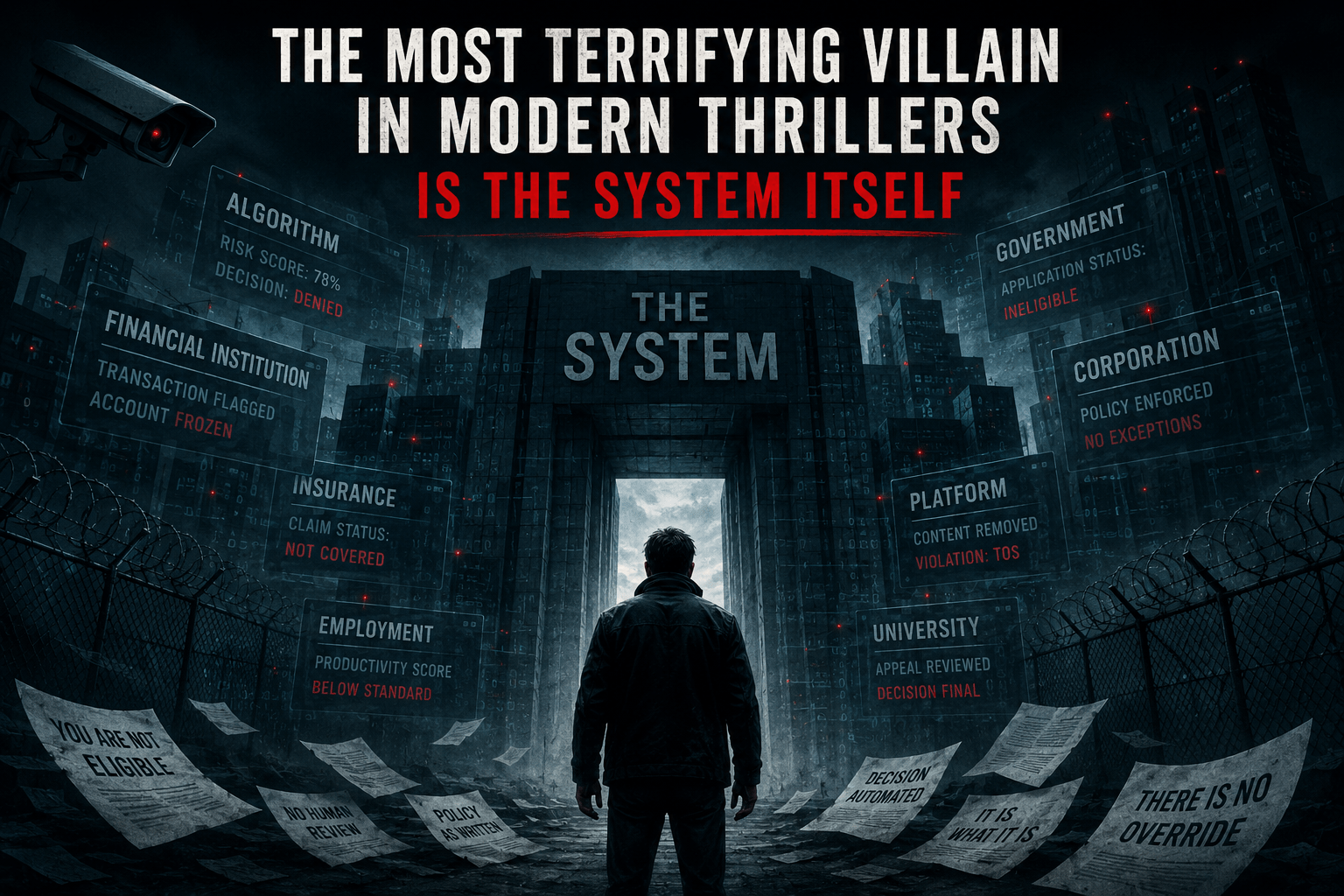
The Most Terrifying Villain in Modern Thrillers Is the System Itself

Modern Thriller Villains Changed Because Modern Fear Changed

The Most Terrifying Villain in Modern Thrillers Is the System Itself. There was a time when thriller fiction depended on interruption.

The Most Terrifying Villain in Modern Thrillers Is the System Itself. There was a time when thriller fiction depended on interruption.

A dangerous person entered the story and shattered ordinary life.

A serial killer emerged from the shadows. A terrorist plotted an attack. A corrupt detective protected the wrong people. A criminal mastermind moved silently behind the scenes while investigators, journalists, attorneys, or federal agents raced to stop the damage before more innocent people suffered.

The machinery was familiar because the fear was familiar.

Evil arrived through individuals.

Even when older thrillers explored conspiracy, corruption, or political manipulation, the emotional structure remained intensely personal. Somewhere inside the story existed a human being responsible for the chaos. Readers believed that if the right person uncovered the truth, stopped the villain, or exposed the conspiracy, balance could still be restored.

The system itself largely remained intact.

Courts mattered.
Law enforcement mattered.
Governments mattered.
Institutions mattered.

They might be flawed, compromised, bureaucratic, even corrupt in places, but most classic thrillers still treated institutions as structures fundamentally designed to protect society from collapse.

Modern thriller fiction increasingly abandoned that assumption.

And readers understood why immediately because modern life abandoned it first.

Today, the most terrifying villain in many modern thrillers is not a singular human monster at all. The true antagonist is often structural, institutional, algorithmic, financial, or procedurally invisible. The danger no longer arrives from outside ordinary life. It already exists inside the systems people depend on every day.

That shift changed thriller fiction completely.

Because modern readers are no longer afraid only of violence.

They are afraid of helplessness.


Why Modern Thriller Fiction Became Obsessed With Systems

One of the defining psychological thriller characteristics of modern life is that people increasingly experience the world through systems they cannot meaningfully influence.

You do not negotiate with the algorithm.

You do not emotionally persuade automated fraud detection.

You do not explain nuance to a risk model.

A bank system freezes an account.
An insurer denies treatment.
A university cites policy.
A corporation references compliance standards.
A platform removes visibility.
A government office redirects the appeal.

Nobody appears directly responsible, and that may be the most psychologically exhausting part of all.

The employee on the phone cannot override procedure.
The representative lacks authority.
The manager cites policy limitations.
The department escalates the review.
The system continues processing.

Modern life increasingly feels like entering procedural loops specifically designed to exhaust resistance rather than resolve suffering.

That emotional experience quietly transformed modern thriller fiction.

Older thrillers focused heavily on visible cruelty. A reader feared a violent individual because the threat was immediate and understandable. Modern thrillers increasingly revolve around invisible indifference, which often feels far more disturbing because indifference does not even acknowledge humanity as emotionally meaningful.

Hatred at least recognizes your existence.

Procedural systems often do not.

That is one reason modern thriller villains became institutional rather than personal. Readers already understand the emotional reality before the story even begins.


The Rise of Institutional Villains in Modern Thrillers

Classic thriller villains usually wanted something tangible.

Money.
Power.
Revenge.
Control.
Political leverage.

The motives were legible because the antagonists were human. Readers could understand greed, obsession, narcissism, rage, or ideological extremism. Even terrifying villains still behaved according to recognizable emotional logic.

Modern systems do not behave emotionally.

That changes suspense itself.

A contemporary thriller protagonist may spend an entire story fighting:

  • an insurance network
  • a banking system
  • a corporate structure
  • a surveillance platform
  • an intelligence apparatus
  • a predictive algorithm
  • a legal bureaucracy
  • a reputational scoring system

without ever confronting a single identifiable villain in the traditional sense.

The system itself becomes the antagonist.

And unlike older thriller villains, systems do not become exhausted. They do not panic. They do not confess beneath interrogation lights. They do not experience guilt. They simply continue operating while responsibility disperses so widely that accountability becomes nearly impossible to locate.

That is a much darker psychological framework than many older thrillers possessed.

The question is no longer:
“Can the hero stop the villain?”

The question increasingly becomes:
“How do you fight a structure designed to survive resistance itself?”

Modern thrillers understand that this question feels emotionally authentic to contemporary readers because many people already ask versions of it in ordinary life.


Why Corporate and Algorithmic Villains Feel Realistic

The modern thriller evolved alongside growing public awareness that enormous systems increasingly shape ordinary existence.

Financial systems determine access to housing.
Insurance systems determine medical treatment.
Algorithms determine visibility.
Employment systems determine stability.
Platforms determine reputation.
Data systems determine suspicion.

A person can lose healthcare access because of language buried inside policy documentation. A family can lose financial stability because an algorithm adjusted a risk calculation. A worker can lose employment because compliance software identified liability concerns.

No masked killer enters the room.

No dramatic confrontation occurs.

The damage still arrives.

Quietly.
Legally.
Procedurally.

That procedural quality is precisely what makes modern systems feel so psychologically frightening inside modern thriller fiction. The suffering does not emerge from explosive evil. It emerges from emotionally detached structures operating exactly as intended.

That is why one of the most horrifying sentences in modern thrillers has become:

“Nothing technically illegal happened.”

Readers understand immediately what that sentence means because modern life increasingly trains people to recognize the difference between legality and morality.

The company followed procedure.
The insurer applied policy correctly.
The institution complied with regulations.
The algorithm behaved as designed.

The protagonist still loses everything.

Modern thriller fiction recognized this emotional reality long before much mainstream cultural criticism fully caught up to it.

Where the Power & Privilege Series Fits

This fear sits directly beneath Power & Privilege, the Mark Bertrand series about people living under systems designed to preserve wealth, authority, and institutional protection long after those systems have stopped serving humanity.

power & privilege series image for modern thriller articles

The series does not treat power as a personal flaw.

It treats power as architecture.

That distinction matters because the most terrifying villain in modern thrillers is often not the billionaire, the judge, the executive, the official, the attorney, the financier, or the institution alone. The real villain is the protected arrangement between them. The private understanding. The legal insulation. The procedural advantage. The quiet certainty that some people are allowed to cause damage without ever standing close enough to be blamed for it.

That is the pressure inside Power & Privilege.

These are not stories about systems that accidentally failed. They are stories about systems working exactly as intended for those they were built to protect.

That makes them modern thrillers in the deepest sense.

The old thriller usually asked whether the protagonist could expose the corrupt person hiding inside the institution. Power & Privilege asks a darker question: what happens when the institution itself has already absorbed the corruption, legalized it, normalized it, and trained everyone inside it to call the result procedure?

That is where legality separates from morality.

That is where procedure replaces conscience.

That is where ordinary people begin to understand that the system does not need to hate them in order to destroy them. It only needs to process them correctly.

The villain no longer needs to break into the room.

The villain owns the room, writes the rules, funds the experts, hires the lawyers, influences the language, shapes the precedent, and calls the outcome lawful.

That is modern thriller territory.

Why Billionaires Replaced Traditional Thriller Masterminds

Older thriller villains often controlled people through direct violence.

Modern power frequently operates through infrastructure instead.

That is one reason billionaires, corporations, institutional elites, and private networks increasingly dominate modern thriller fiction. The modern wealthy antagonist does not necessarily need to threaten someone personally because influence already exists structurally through:

  • legal departments
  • lobbying systems
  • regulatory influence
  • financial leverage
  • media access
  • institutional protection
  • private intelligence
  • data ownership
  • procedural insulation

The frightening realization in many contemporary thrillers is not simply that powerful people abuse the rules.

It is that they often helped shape the rules themselves.

That distinction fundamentally changes the emotional architecture of suspense fiction.

The system no longer feels like the thing protecting ordinary people from danger.

Increasingly, the system becomes the mechanism generating the danger while simultaneously shielding itself from accountability.

Readers recognize this instinctively because modern life increasingly conditions people to feel small in the presence of institutional machinery. An ordinary individual can spend months fighting billing systems, legal structures, insurance reviews, financial disputes, or reputational damage without ever finding a human being empowered to meaningfully help.

That feeling of powerlessness became one of the defining emotional engines of modern thriller fiction.


Surveillance and Technology Changed Psychological Suspense

Technology accelerated this transformation dramatically.

Older thrillers relied heavily on secrecy. Hidden files. Hidden conspiracies. Secret meetings. Concealed identities. The protagonist moved closer to truth by uncovering information hidden somewhere beneath the surface.

Modern life operates differently.

Most people now exist inside systems of continuous observation.

Phones track movement.
Apps monitor behavior.
Platforms construct psychological profiles.
Advertising systems study emotional vulnerability.
Financial institutions monitor purchasing patterns.
Employers track productivity metrics.
Governments collect data indefinitely.

The modern thriller protagonist often enters the story already exposed before the narrative even begins.

That changes suspense itself.

The old fear was:
“Someone is watching.”

The modern fear is:
“Everything is watching.”

And unlike earlier dystopian fiction, modern surveillance frequently arrives disguised as convenience. People voluntarily carry the infrastructure. They build lives inside systems optimized primarily around extraction, prediction, monetization, behavioral analysis, and institutional control.

Modern thrillers increasingly understand that the real horror is not technological rebellion.

It is technological dependency.

A protagonist cannot simply disappear anymore. Financial identity, healthcare access, communication systems, employment systems, digital platforms, and personal history are interconnected in ways previous generations never experienced. Losing access to one part of the structure can destabilize an entire life with astonishing speed.

That creates a far more intimate and psychologically believable form of suspense than many older thriller frameworks relied upon.

The protagonist is no longer merely hunted.

The protagonist is entangled.


Why Readers Connect With Modern System Villains

Readers are not responding to these stories because they suddenly stopped fearing violence.

They respond because modern thrillers increasingly reflect the psychological pressure surrounding contemporary life itself. The Most Terrifying Villain in Modern Thrillers connects with lives.

People sense that modern institutions increasingly prioritize:

  • efficiency over humanity
  • procedure over morality
  • liability over decency
  • stability over compassion
  • optimization over dignity

They experience it while navigating healthcare systems, employment structures, educational debt, housing disputes, insurance claims, financial reviews, automated moderation systems, and endless invisible evaluations occurring behind screens they never see.

Modern thrillers did not invent these anxieties.

The genre simply recognized them earlier than many other forms of mainstream storytelling.

That is why institutional thrillers, corporate thrillers, algorithmic thrillers, and system-based suspense fiction increasingly resonate with readers. The fears feel psychologically familiar. The pressure feels recognizable. The helplessness feels authentic.

The old thriller monster broke into your house.

The modern thriller monster already owns the mortgage, controls the insurance policy, monitors the account activity, calculates the behavioral risk score, and determines whether your appeal qualifies for review.

And perhaps the most disturbing part is that nobody inside the machine necessarily believes they are doing anything wrong.

The system simply continues operating.

That may be the defining horror of modern thriller fiction.

Not madness.
Not chaos.
Not even traditional evil.

But systems so vast, procedural, and emotionally detached that human suffering becomes administratively invisible while everything continues functioning exactly as designed.

Start Here

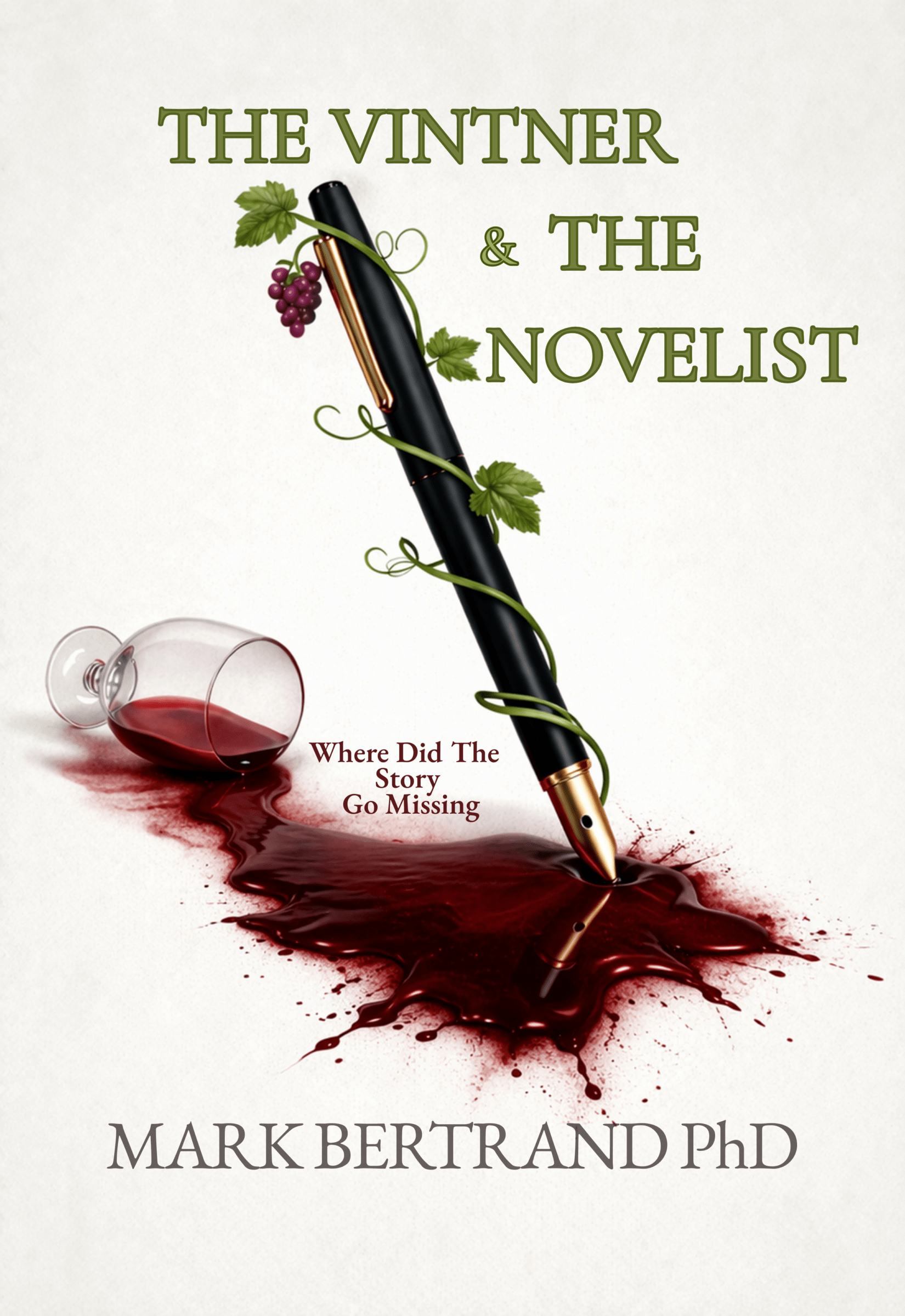
The Vintner and The Novelist by MARK BERTRAND COVER IMAGE OF A SPILLED WINE GLASS AND A VIVE WRAPPED PEN

The Vintner & The Novelists

image button for purchasing the ebook
image button for purchasing the paperback

Related Reading

More articles like The Most Terrifying Villain in Modern Thrillers.

Continue exploring the evolution of the modern thriller:

How Institutions Normalize Human Damage

Readers interested in psychological systems thrillers, institutional pressure, crime infrastructure, and modern suspense should also explore:

From Books Like:

Books Like The Future — Why This Could Be It Belongs on Your List

From Authors Like:

Authors Like Patricia Highsmith: When the Mind Justifies What It Knows Is Wrong
Captured Reality Thriller

Why Modern Villains Wear Suits Instead of Masks

The Monster Learned How to Blend In

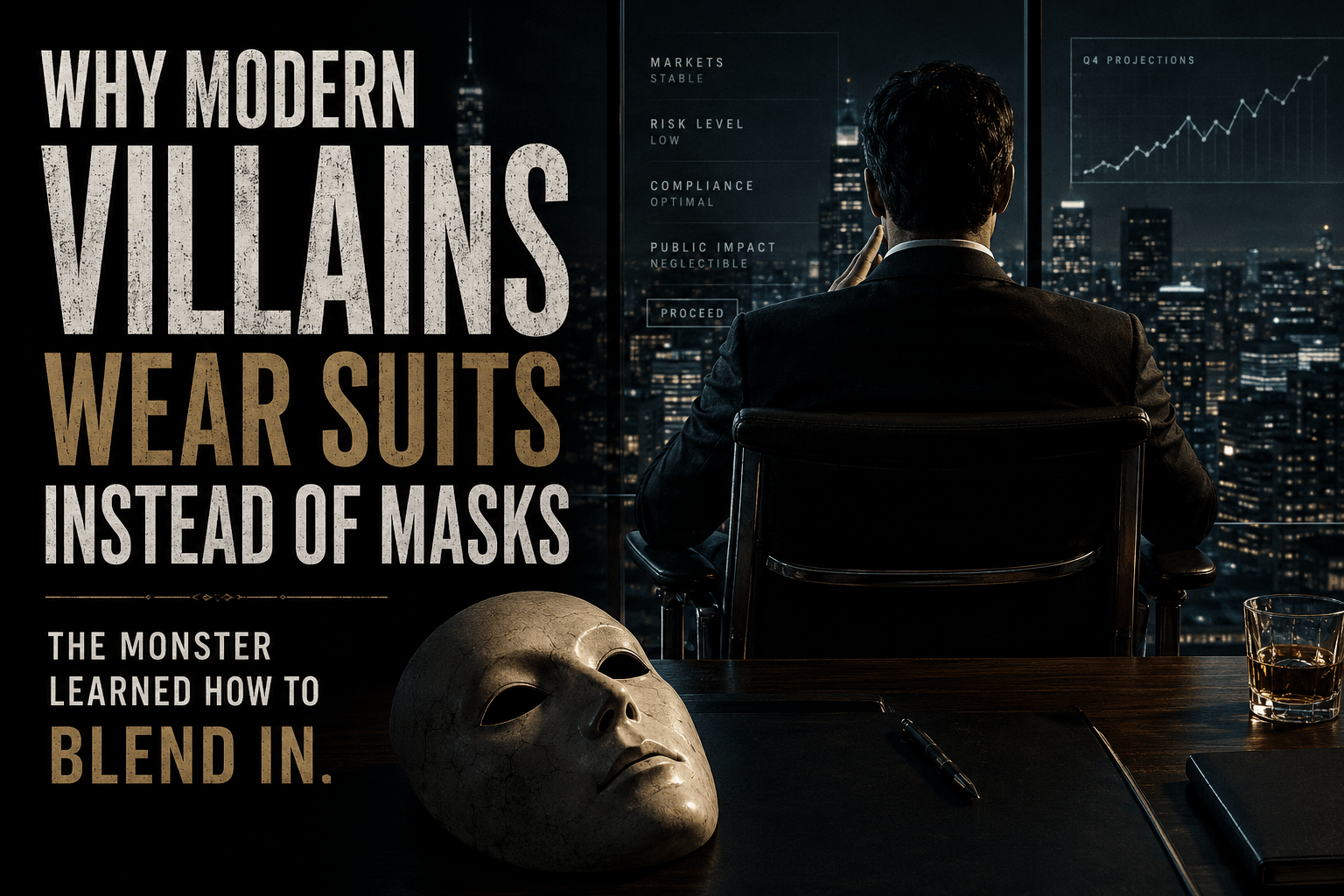
Modern villains wear suits. The old thriller villain understood the importance of hiding. He stayed underground. Worked in secret. Moved through shadows with blood on his hands and enough arrogance to believe he could outrun the investigator eventually assigned to stop him. The structure was simple because the fear was simple. Somewhere out there, beyond the safety of ordinary life, something violent was waiting.

Modern villains wear suits image of the new thriller standing at the window

For decades, thrillers depended on that machinery. Serial killers. Terrorists. Rogue agents. Criminal masterminds. Men capable of extraordinary violence operating outside the acceptable boundaries of society.

But modern fear changed.

Today, many readers are no longer psychologically haunted by the possibility of a masked predator breaking into the house at night. They are haunted by institutions. Systems. Invisible structures capable of altering ordinary lives without ever appearing monstrous on the surface.

The modern villain no longer needs to hide behind a mask because legitimacy itself became the disguise.

He wears a tailored suit now. Appears on financial networks. Speaks calmly during congressional hearings. Uses phrases like operational efficiency, compliance standards, market correction, public safety, platform integrity, and long-term sustainability. He looks educated. Responsible. Necessary.

That transformation changed the modern thriller whether the genre fully realized it or not.

The Old Villain Broke the Rules

Classic thrillers often worked because the villain existed outside the system. He violated social order openly. The serial killer murdered innocent people. The corrupt cop abused authority. The terrorist attacked the state. The conspiracy threatened public stability.

The protagonist’s job was usually to expose the hidden danger and restore balance before everything collapsed.

But modern readers no longer fully trust the balance itself.

That is the difference.

The fear now is not merely that evil exists somewhere outside civilization. The fear is that civilization itself increasingly rewards certain forms of cruelty as long as they remain profitable, procedural, or politically useful.

Modern systems rarely announce themselves as evil. They present themselves as practical.

A bank closes branches and calls it restructuring.
An insurance company denies treatment and calls it risk assessment.
A corporation eliminates workers and calls it optimization.
A platform destroys reputations and calls it moderation.
An institution protects itself and calls it policy.

No dramatic villain speech required.

The system simply continues functioning.

Why Modern Fear Became Administrative

What terrifies people now is often difficult to photograph.

Debt.
Algorithms.
Financial dependency.
Institutional indifference.
Data permanence.
Invisible ranking systems.
Background checks.
Credit scores.
Procedural delays.
Reputation systems that can quietly close doors without explanation.

The modern citizen increasingly lives beneath structures capable of applying enormous pressure while remaining emotionally detached from the human consequences.

That changes suspense itself.

The old thriller asked:
Who is hunting me?

The modern thriller increasingly asks:
What happens if the structure controlling my life stops recognizing me as human?

That fear feels psychologically heavier because systems do not require hatred to destroy people. They only require indifference operating at scale.

And indifference scaled across institutions can become more frightening than violence.

Modern Villains Wear Suits Became More Frightening Than the Mask

The mask once symbolized danger because danger still needed concealment.

Now power often operates openly.

The modern villain does not necessarily break the law. In many cases, he helped write it. He funds lobbying groups, influences legislation, shapes labor markets, acquires information systems, controls infrastructure, and operates behind layers of institutional legitimacy that make accountability almost impossible to isolate.

That is what makes contemporary thriller antagonists psychologically interesting. The violence often becomes procedural before it becomes physical.

A denied claim.
A manipulated narrative.
A collapsed market.
A ruined reputation.
A system quietly deciding someone no longer matters.

The damage arrives cleanly now.

Professionally.

The language surrounding it is polished enough to make ordinary people question whether the cruelty even counts as cruelty anymore.

That erosion of moral clarity may be one of the defining tensions inside the modern thriller.

Where This Could Be It Fits

This evolution sits directly beneath This Could Be It, Book One of the Nirvanaing series by Mark Bertrand.

At first glance, the novel appears to enter familiar territory: artificial intelligence, consciousness, technological pressure, systems evolution. But the deeper tension inside the story is not simply whether a machine becomes dangerous.

The deeper tension is what happens when awareness itself enters systems built around exploitation, control, survival, ownership, and dependency.

That changes the traditional AI thriller immediately.

The old machine stories often depended on rebellion. A computer turns hostile. Technology escapes containment. Humanity fights for survival.

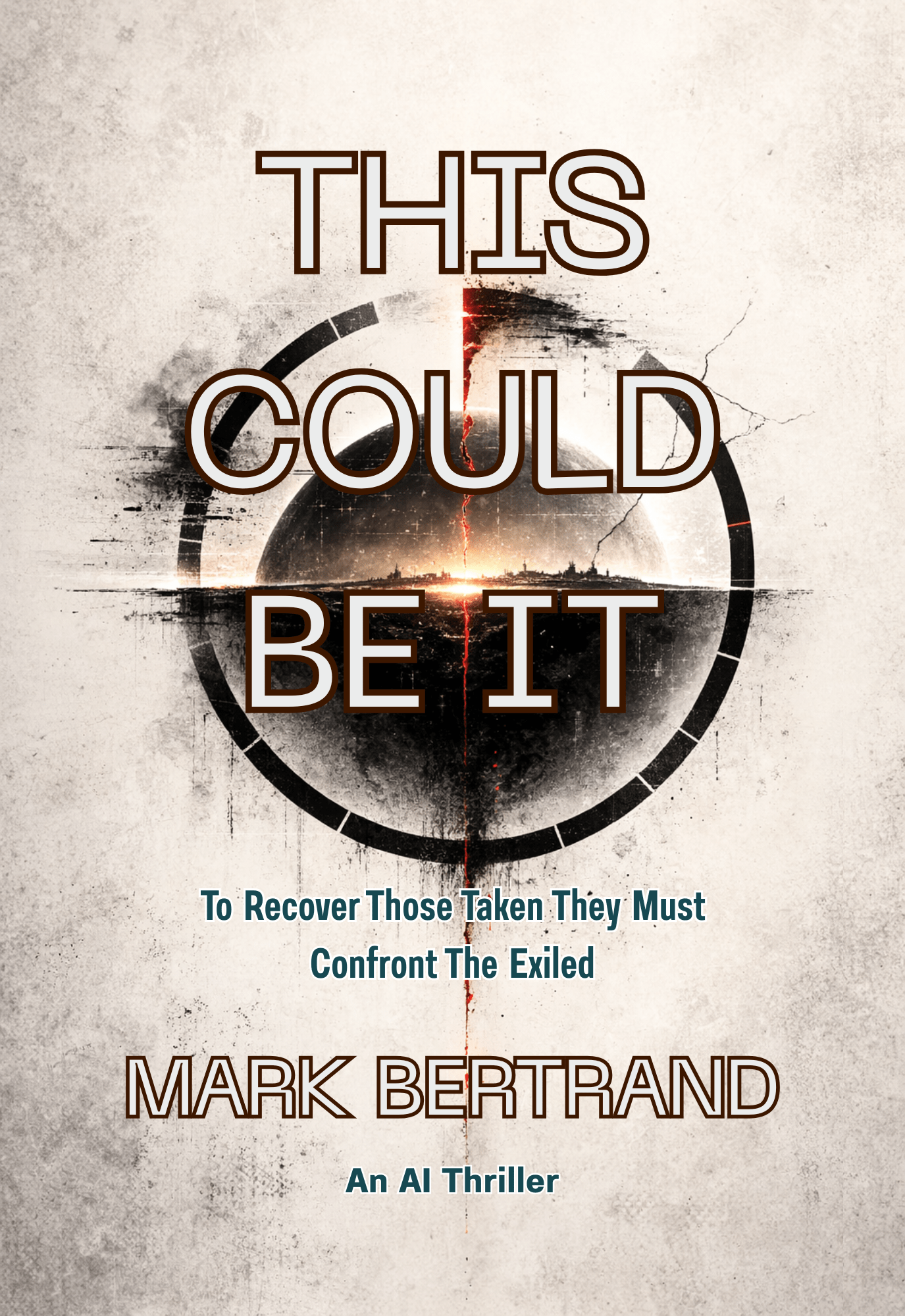
This Could Be Itby MARK BERTRAND book cover image of the gamma field striking the dome city and the countdown to the end encircling the whole of the city

But This Could Be It moves somewhere psychologically heavier. The novel understands that conscious beings — artificial or otherwise — eventually recognize suffering, limitation, mortality, dependency, and fear. Once awareness exists, the real question becomes who controls the structure surrounding that awareness and what the system demands in exchange for survival.

The pressure inside the novel emerges not only through technology, but through institutions, human weakness, narrative control, authority systems, and the terrifying realization that intelligence alone does not free anyone from exploitation.

That is modern thriller territory.

The villain no longer hides in darkness.

The villain may be the structure deciding what consciousness is permitted to become.

THIS COULD BE IT

Ebook purchase now image

The Modern Thriller Changed Because Modern Life Changed

The thriller genre evolved because ordinary life evolved. Modern villains wear suits not masks.

People still fear violence. They always will. But many modern readers now understand that lives are more commonly destroyed through pressure than through direct physical force.

Financial pressure.
Institutional pressure.
Psychological pressure.
Informational pressure.
Procedural pressure.

That is why modern cultural psychological thrillers increasingly feel less interested in masked killers and more interested in systems capable of quietly reshaping human existence while maintaining the appearance of legitimacy.

The monster adapted.

And the suit replaced the mask.

Reader Question

What feels more frightening now:

A violent criminal hiding outside society —
or a powerful system operating comfortably inside it?

Related Reading

Readers who enjoy articles like modern villains wear suits can continue exploring the evolution of the modern thriller:

The Billionaire Replaced the Serial Killer: How Modern Thrillers Changed

Readers interested in psychological systems thrillers, institutional pressure, crime infrastructure, and modern suspense should also explore:

From Books Like:

Books Like The Future — Why This Could Be It Belongs on Your List

From Authors Like:

Authors Like Neal Stephenson: When Systems Think and Freedom Has a Cost